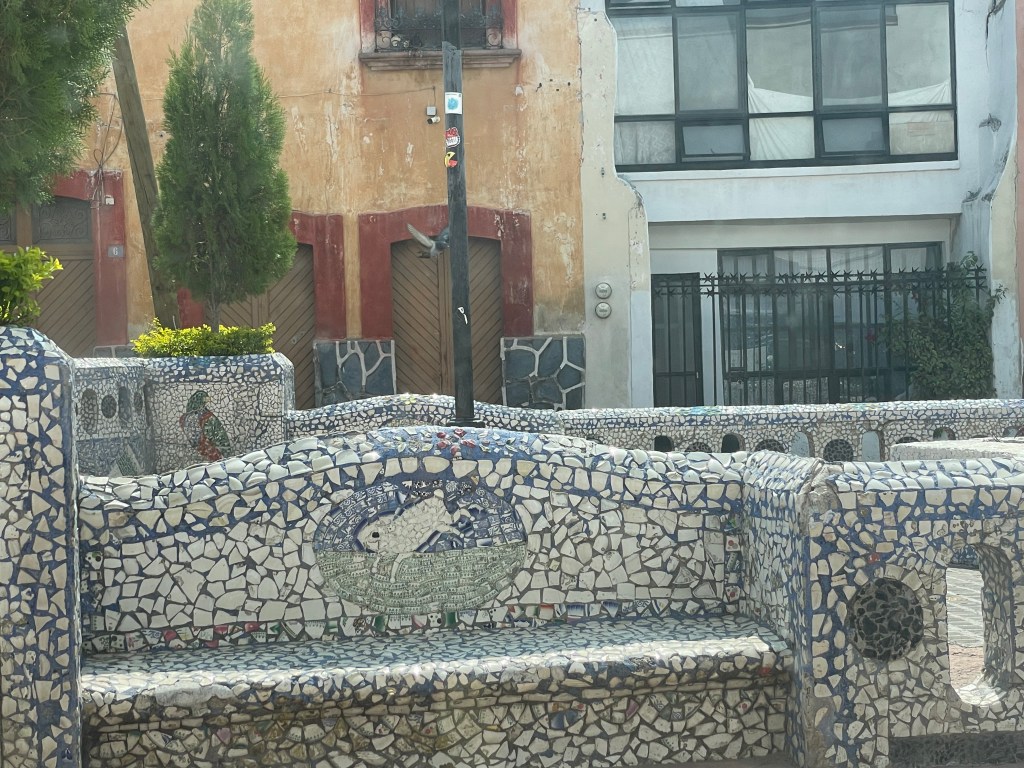
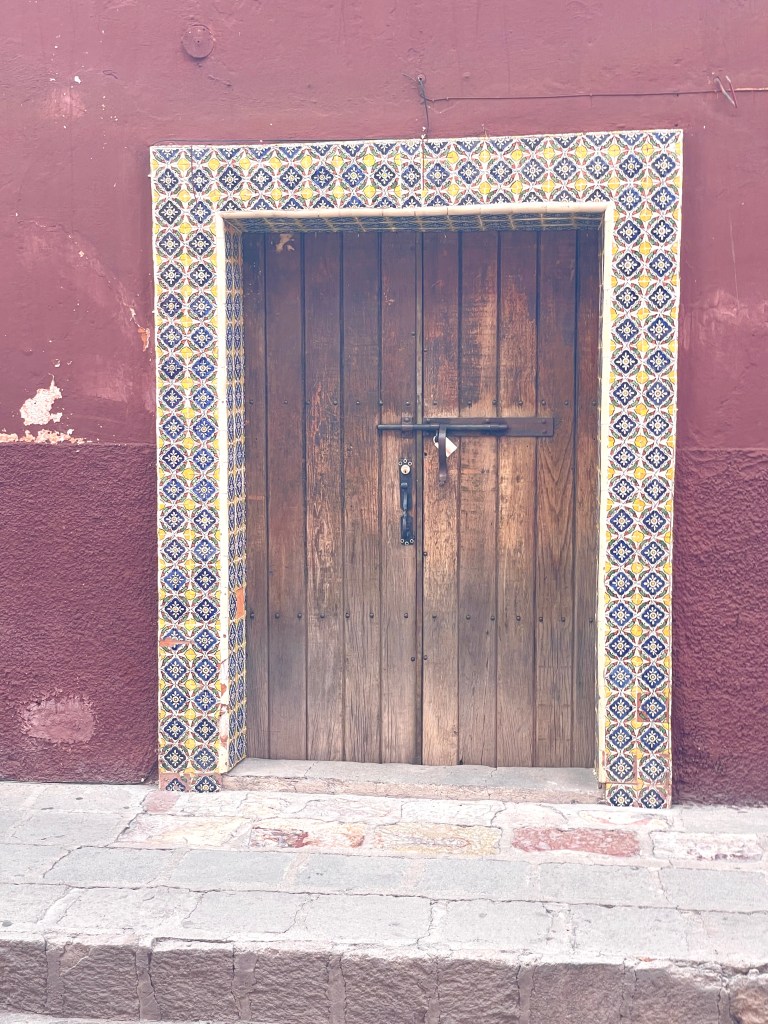
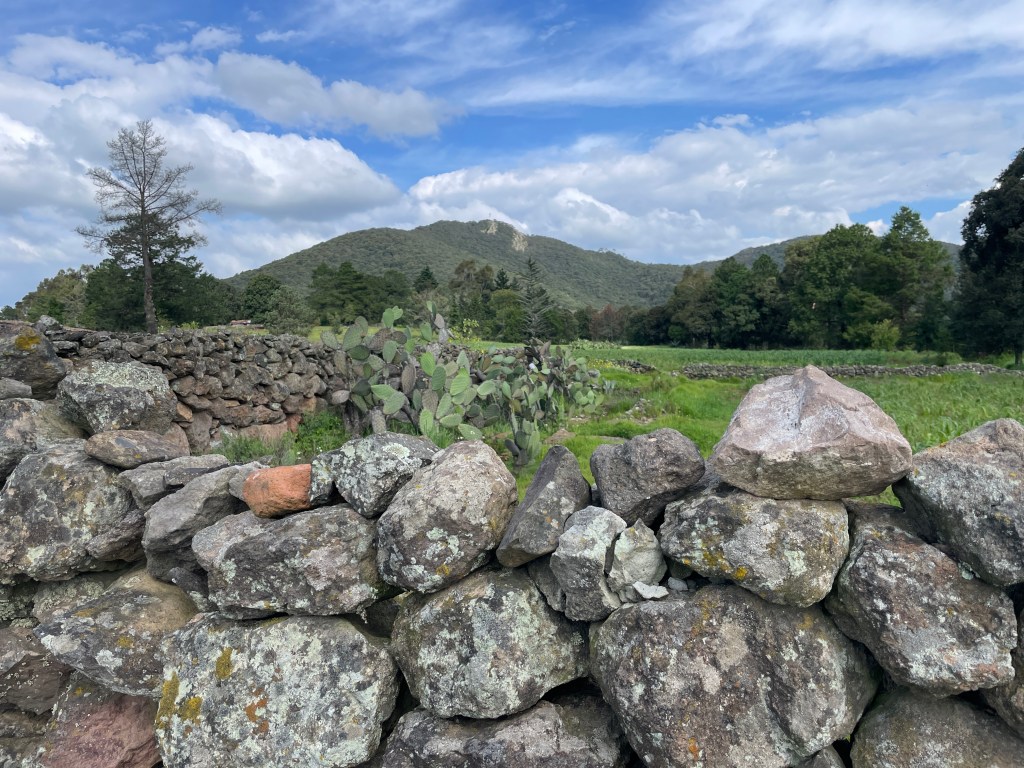
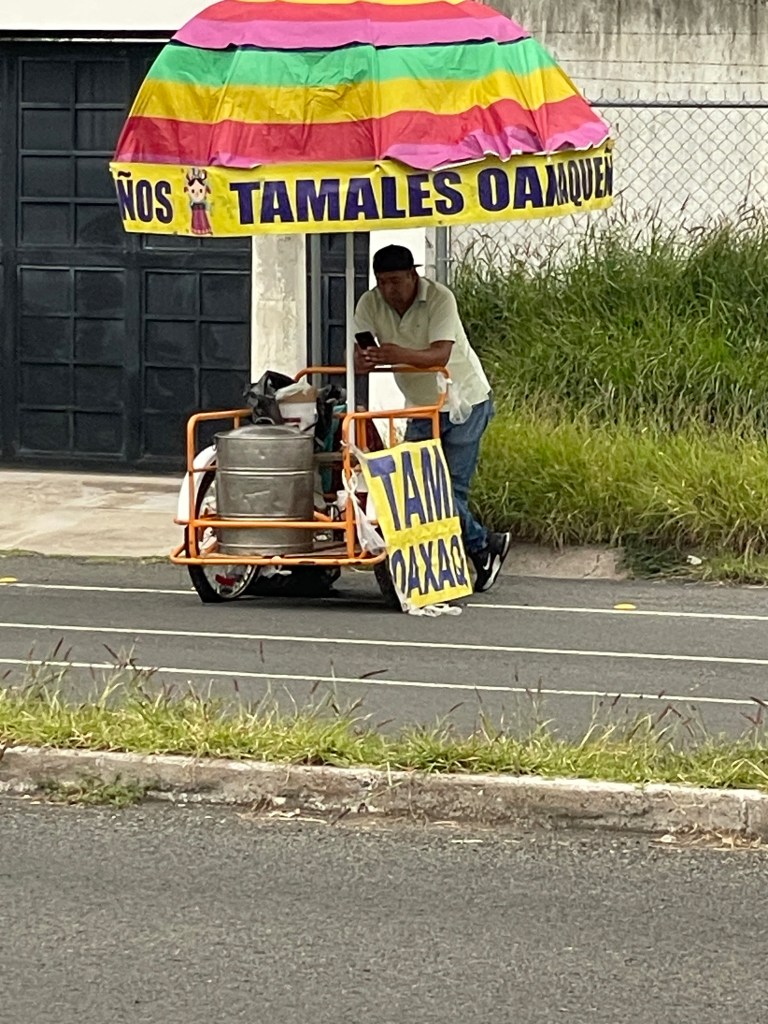
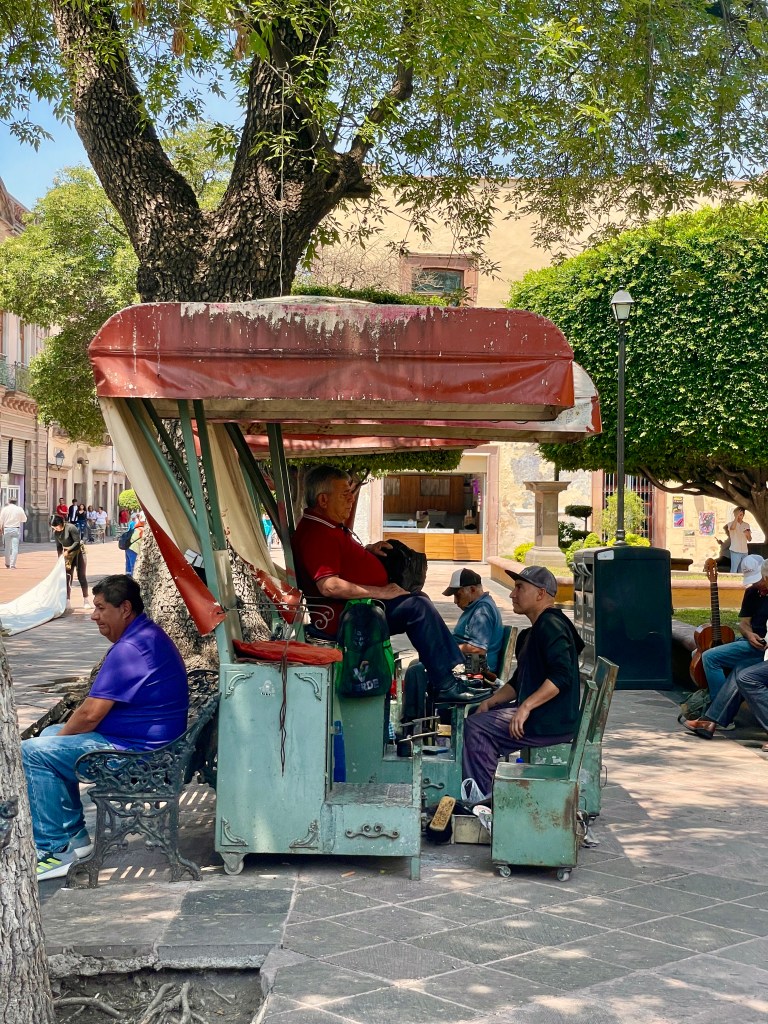
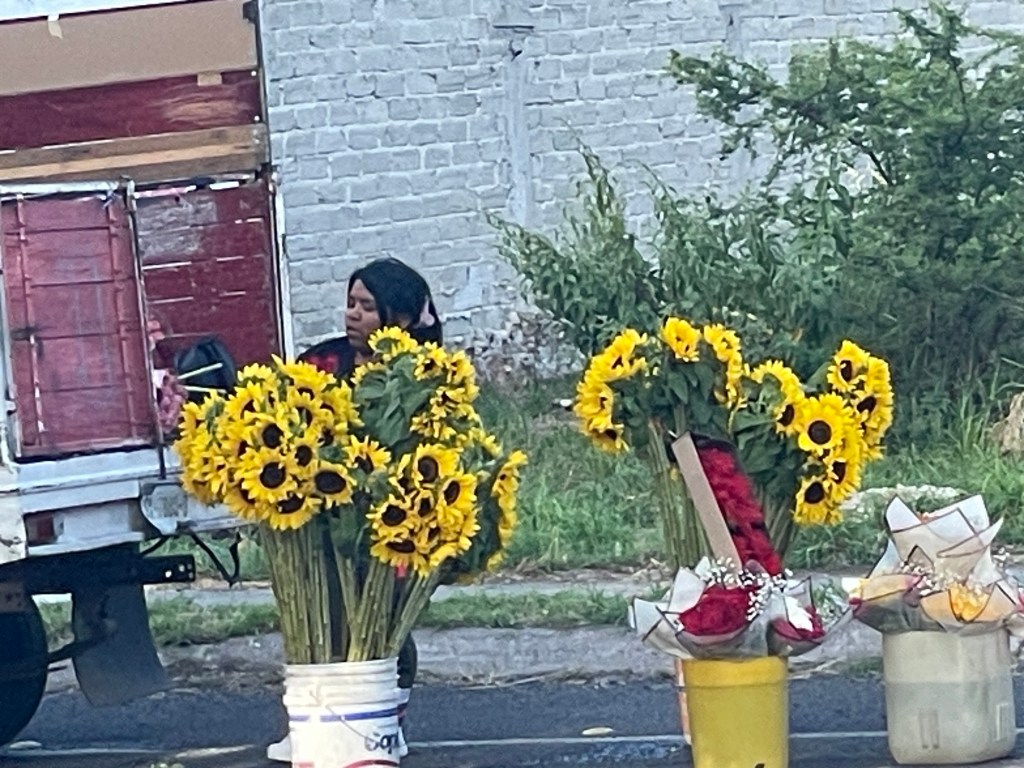
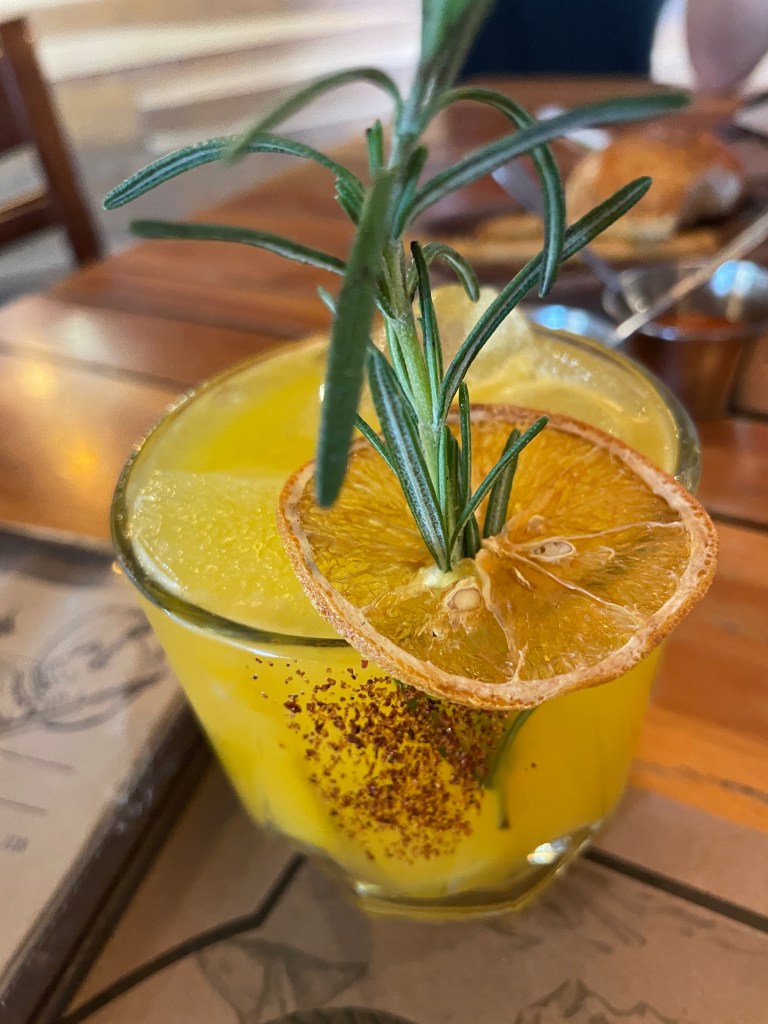
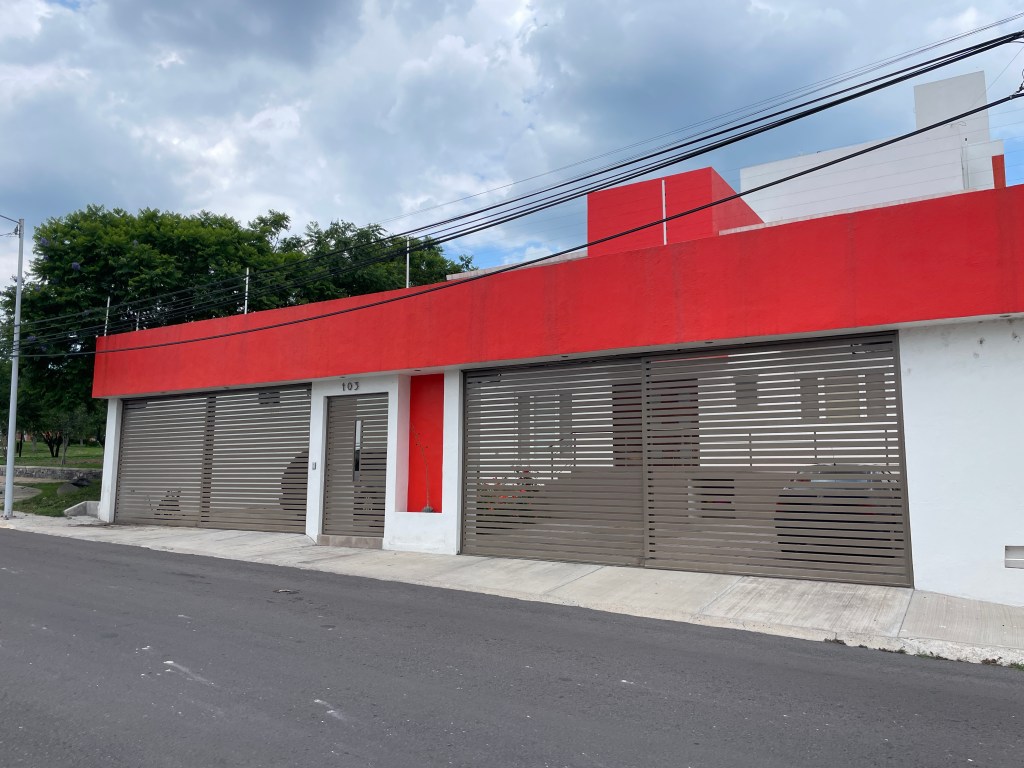
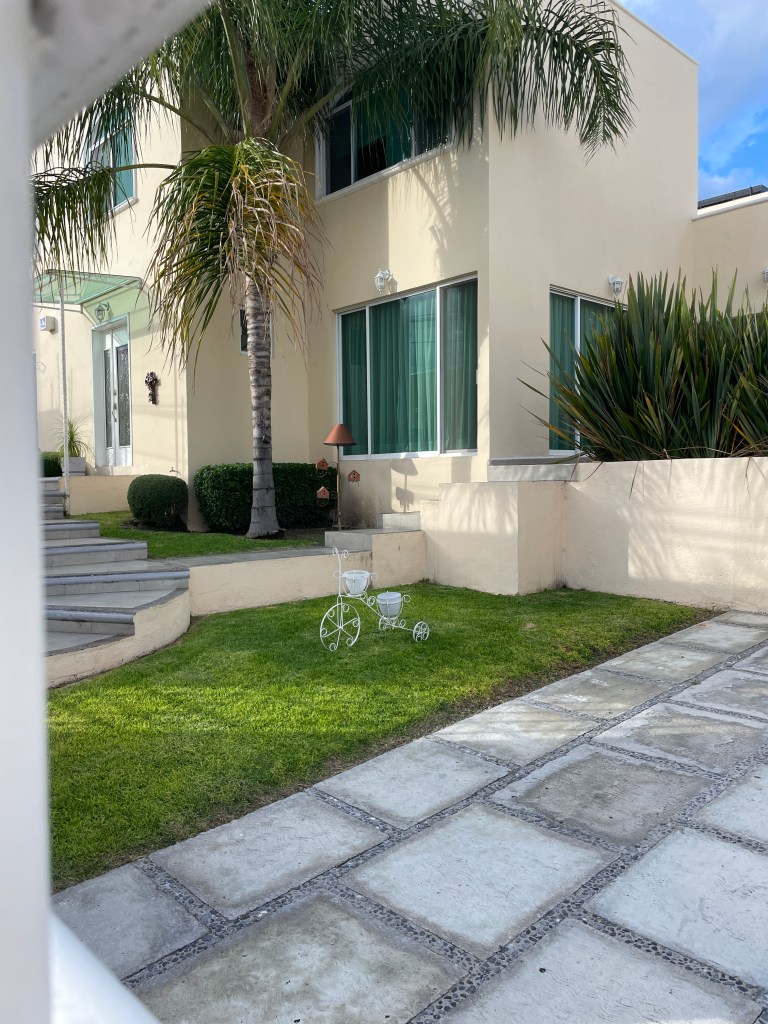
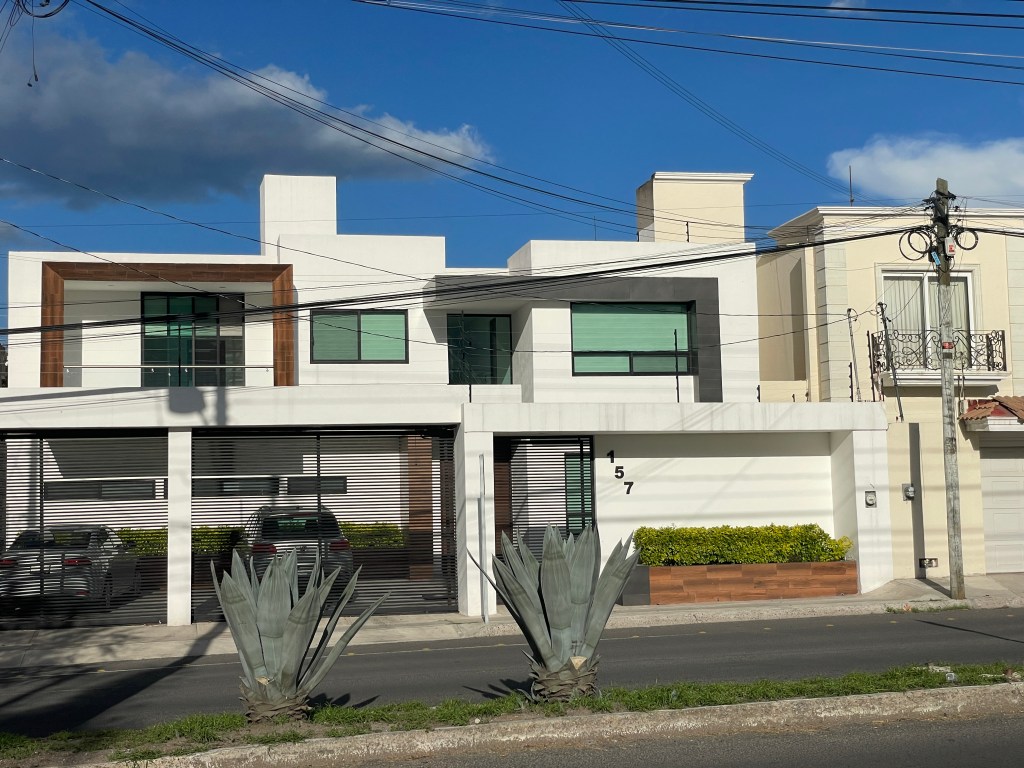
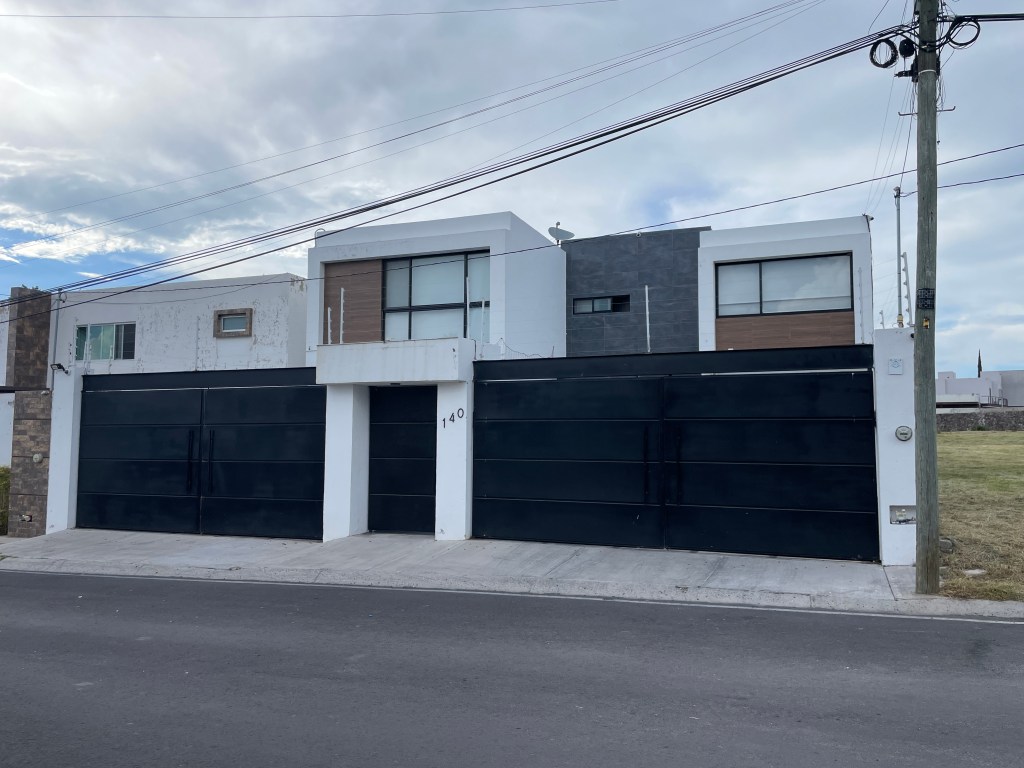
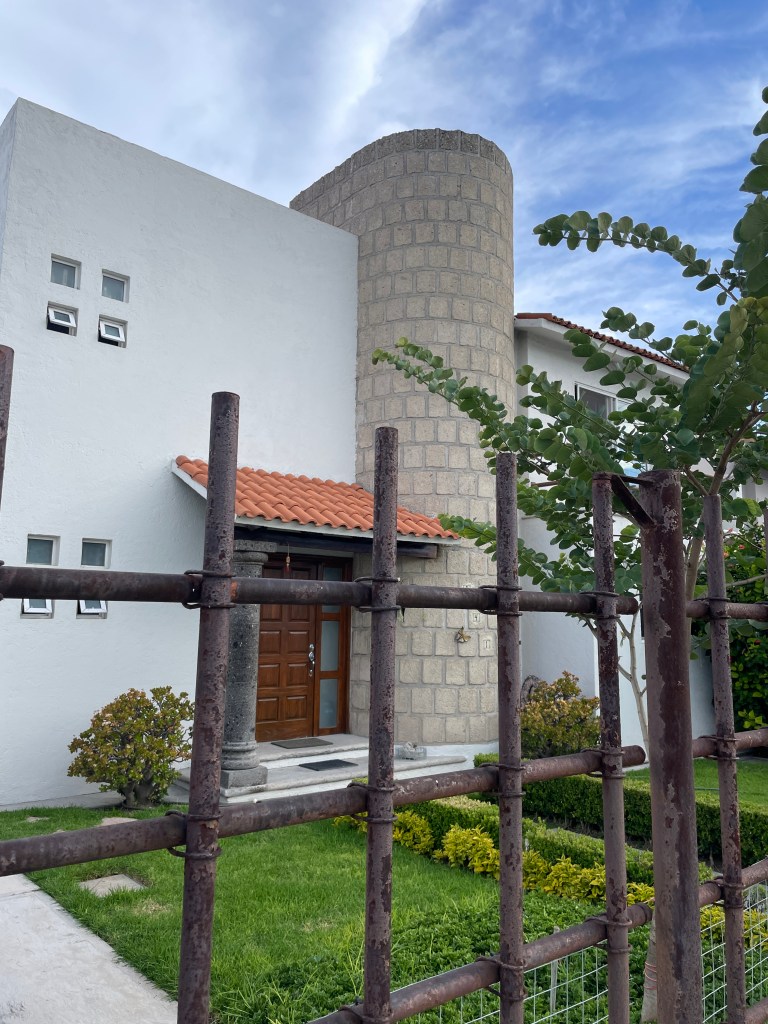
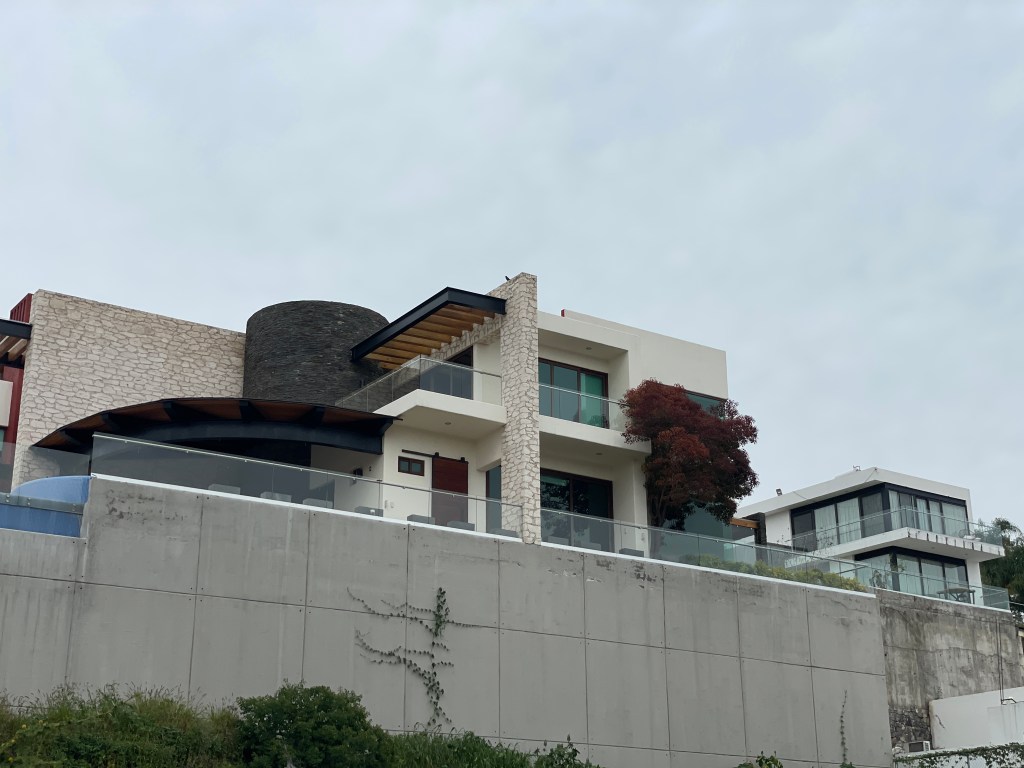
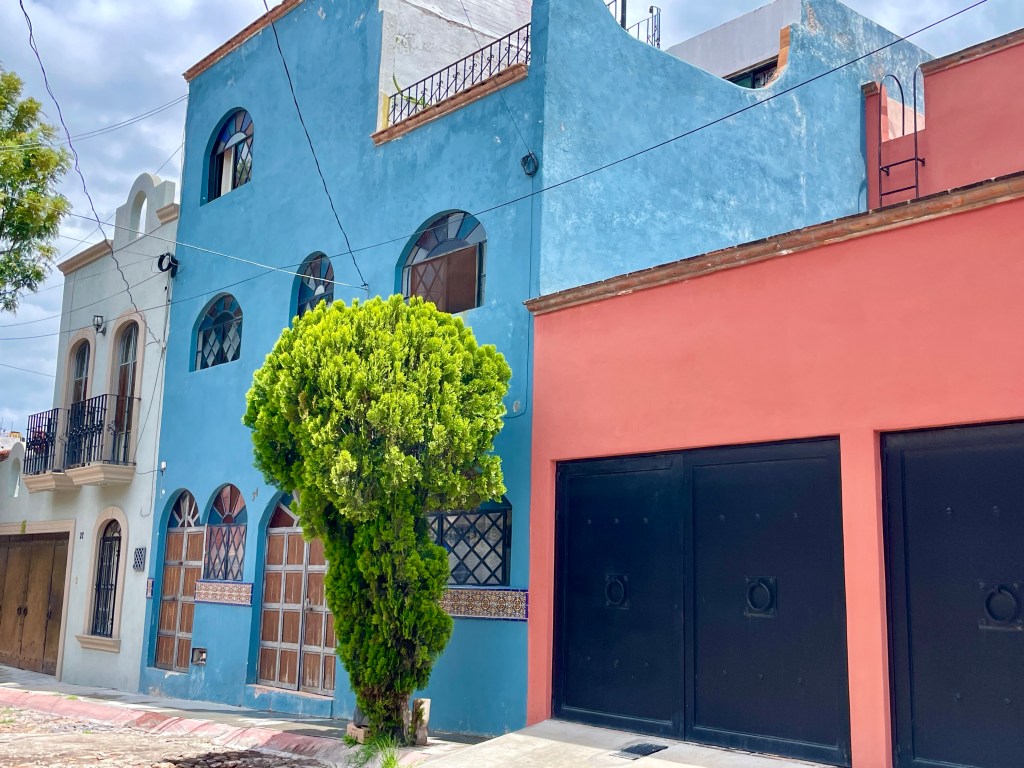
One of the things that surprised me when I moved here was the very modern architecture where I am living and the high standard of living. I had only visited Tijuana before where I visited neighborhoods with Barbarita which were composed of houses created by old garage doors so I wasn’t sure what to expect but I can guarantee you that this wasn’t it. Of course, Juriquilla is a suburb of Queretaro and most of it is shiny and new. Parks and plazas are everywhere. This doesn’t mean that there are not places in the city where housing is not in dire straits but since I believe many people think that Mexico only consists of sub-standard housing I wanted you to see the other side. So here are some pictures of the area and a few houses in different parts of the state too. I will miss this place. I will miss my neighborhood strolls. It is almost time to leave and I will leave a piece of my heart here. Enjoy!
Here are some other houses located in the State of Queretaro
And here is the local dog walker in the local park with his charges….
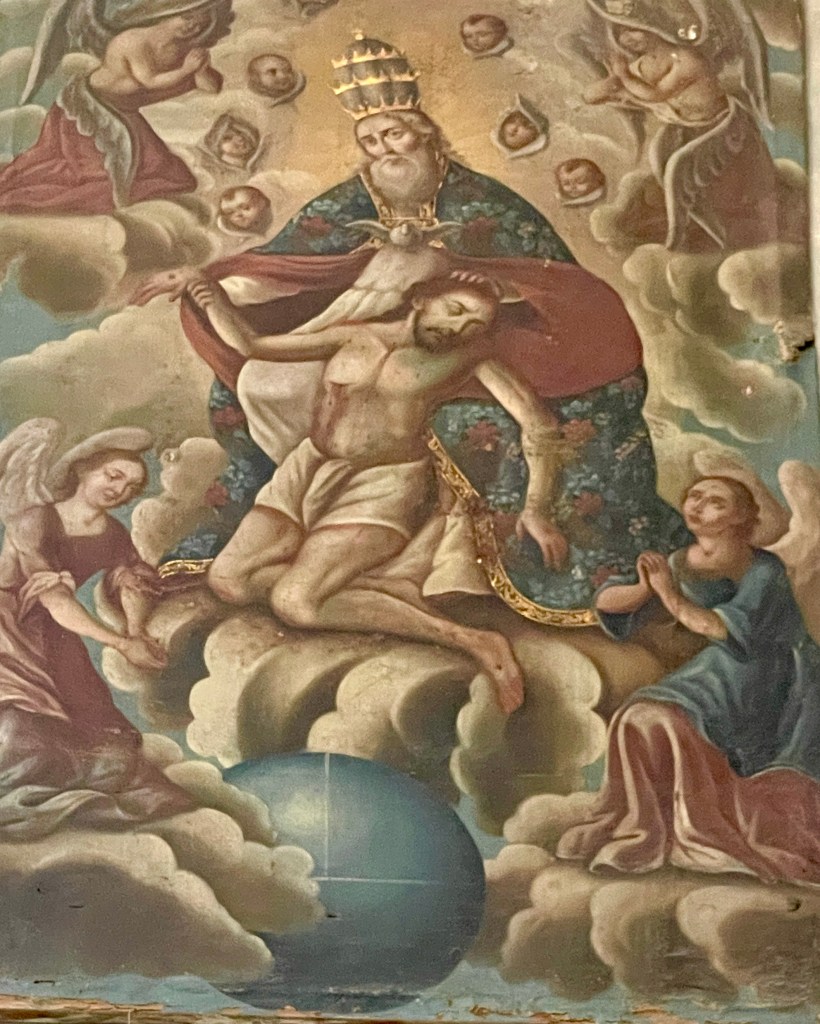
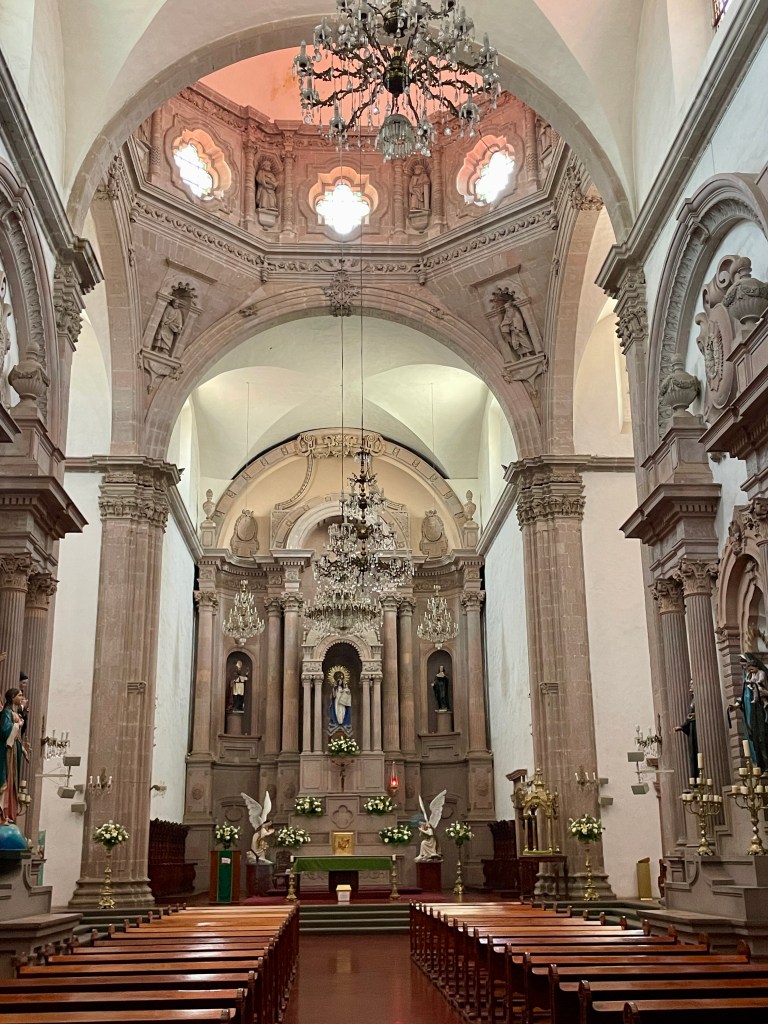
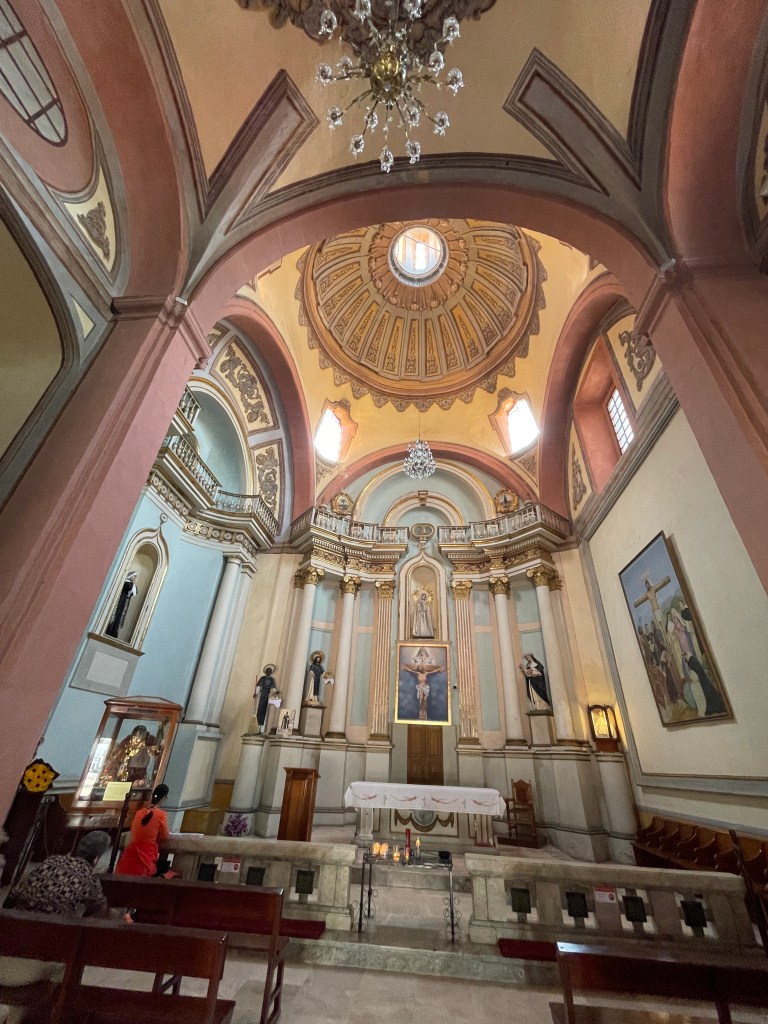
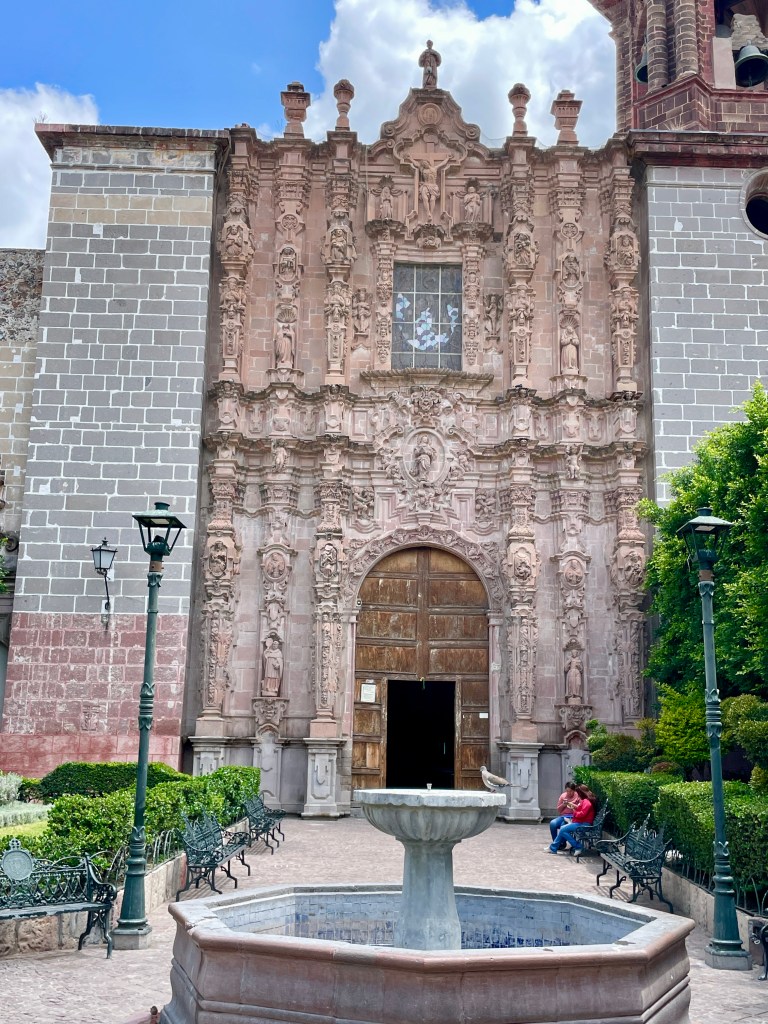
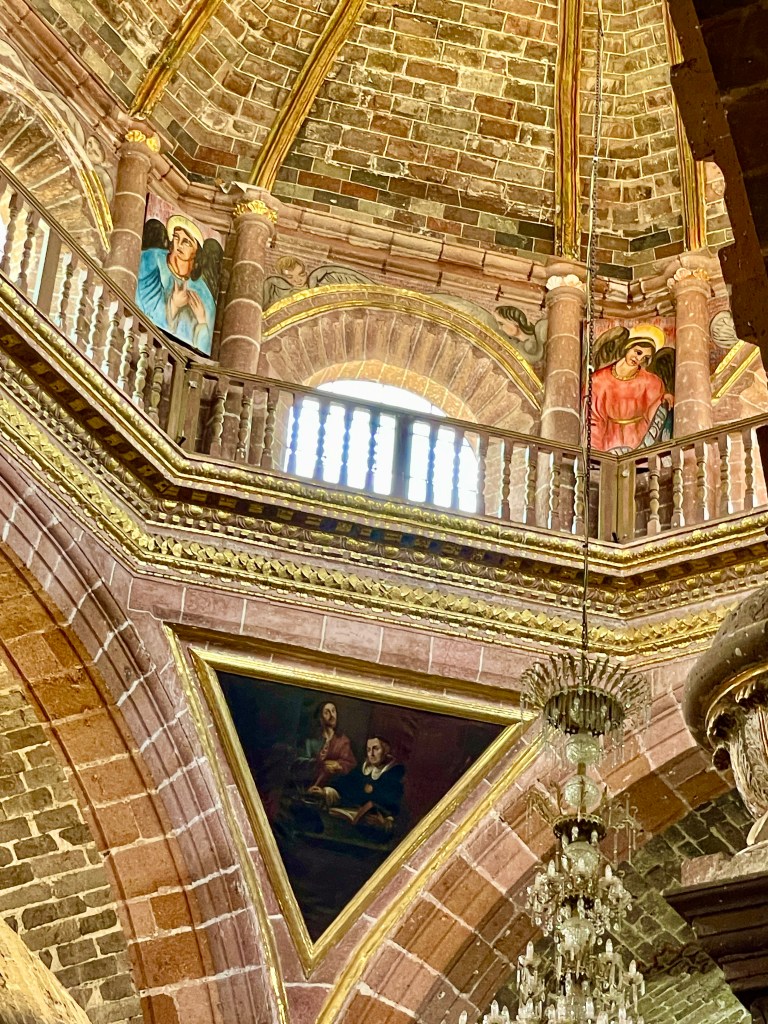
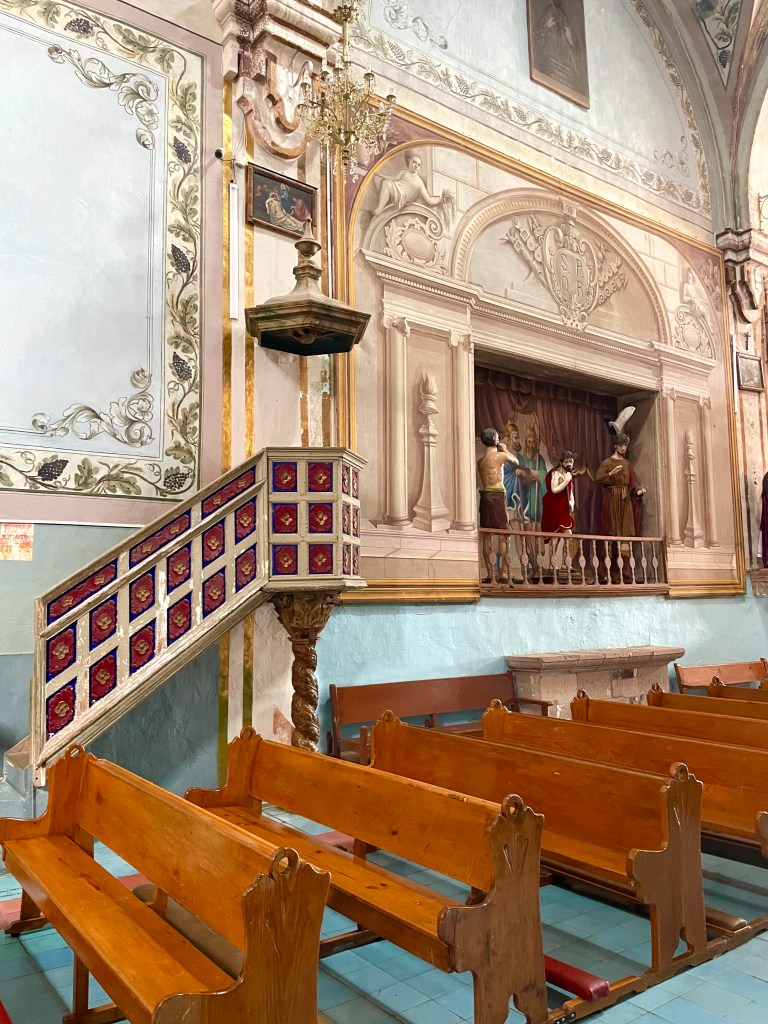
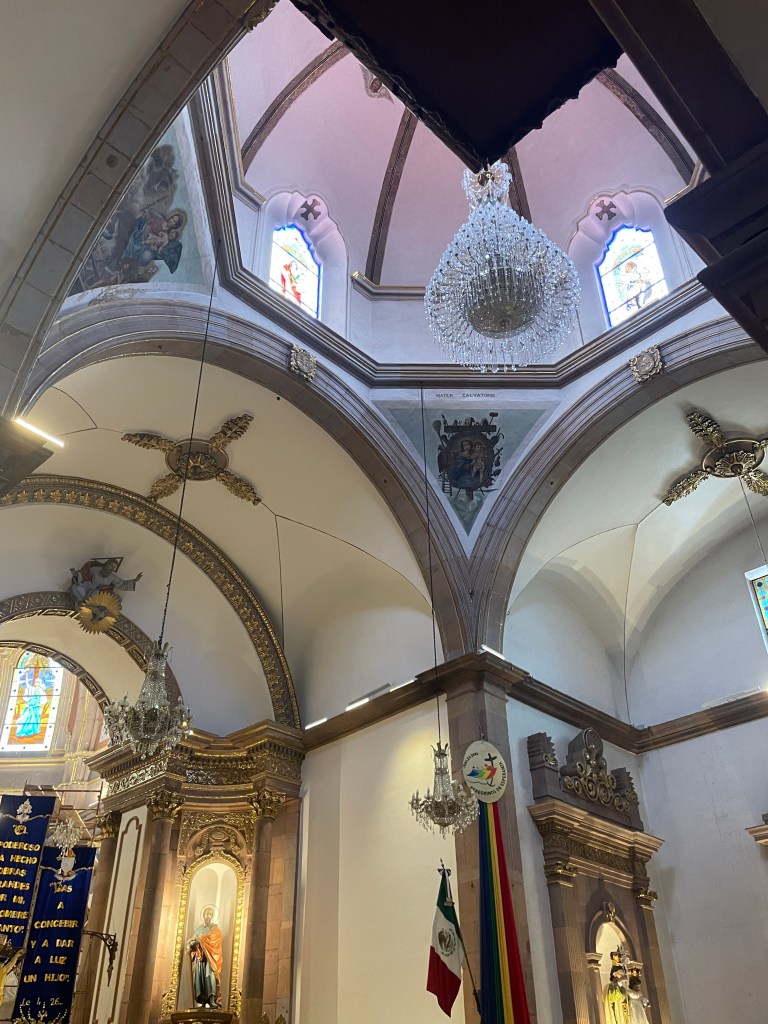
I have been to so many churches since I arrived here. I love the architecture that these old buildings possess. The artwork, murals, painted ceilings, and biblical depictions are all inspiring (okay, a few are frightening) and help us have an insight to those things that drew people to the Catholic Church in earlier times. The thick walls of the church also provide a respite from the heat and also from life’s troubles. Perhaps what I enjoy the most though is just walking in, sitting down, and listening to the music and the chants echo off the walls of the sanctuary. It gives me a sense of peace and serenity that I can carry with me the entire day.
Parroquia de San Miguel Arcangel- San Miguel Allende
With over 40 churches in San Miguel it is difficult to choose a favorite but Parroquia de San Miguel Arcángel is definitely the most well known and perhaps the most beloved of area residents. Towering over the city, the construction of the church began in the 1600’s under the auspices of the Franciscan Friars, after a smaller church from the 1500’s was demolished. The building is a surprising blend of different Neo-Gothic European influences and the resulting Spanish colonization that swept over these lands. This immense church was completed in stages at various points in history but it was when a local master stone mason, Zeferino Gutierrez, began construction of the current facade in 1880 that the Neo-Gothic architecture was put into place. Gutierrez had no drawings to guide him and he designed Parroquia de San Miguel Arcángel after seeing pictures of the great cathedrals in Europe. To think that one man had such vision as to be able to change the entire feel of a city just amazes me.
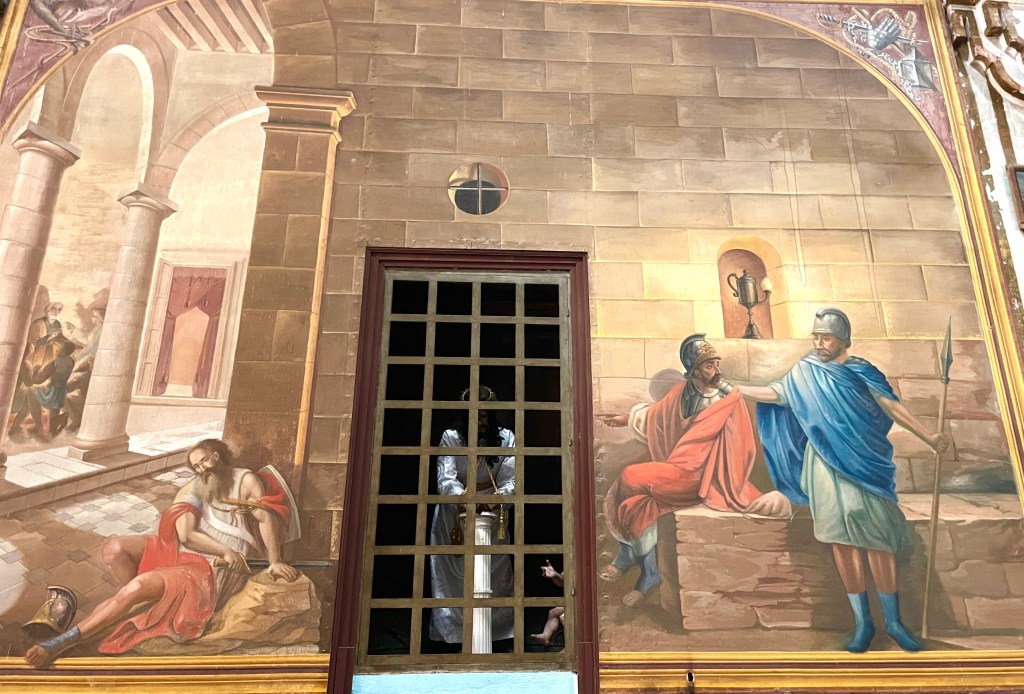
The interior of the main building is vast. Yet, there are several different less imposing chapels including the Chapel of the Third Order with frescoes throughout which depict the life of St. Francis of Assisi.
The Chapel of the Third Order
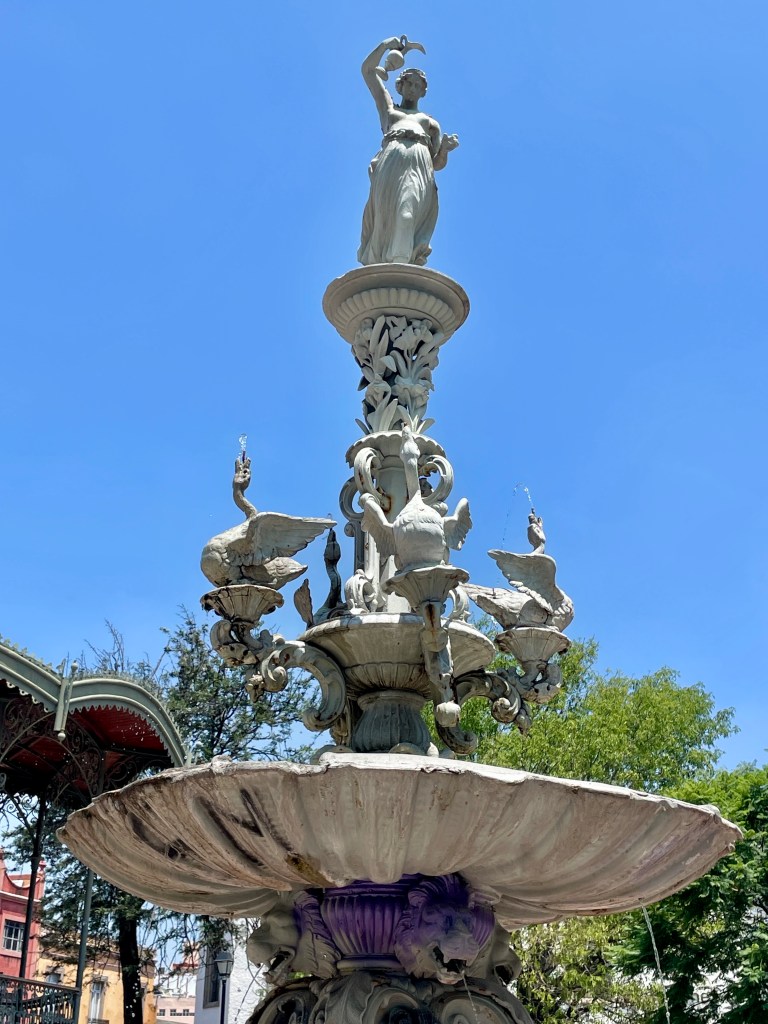
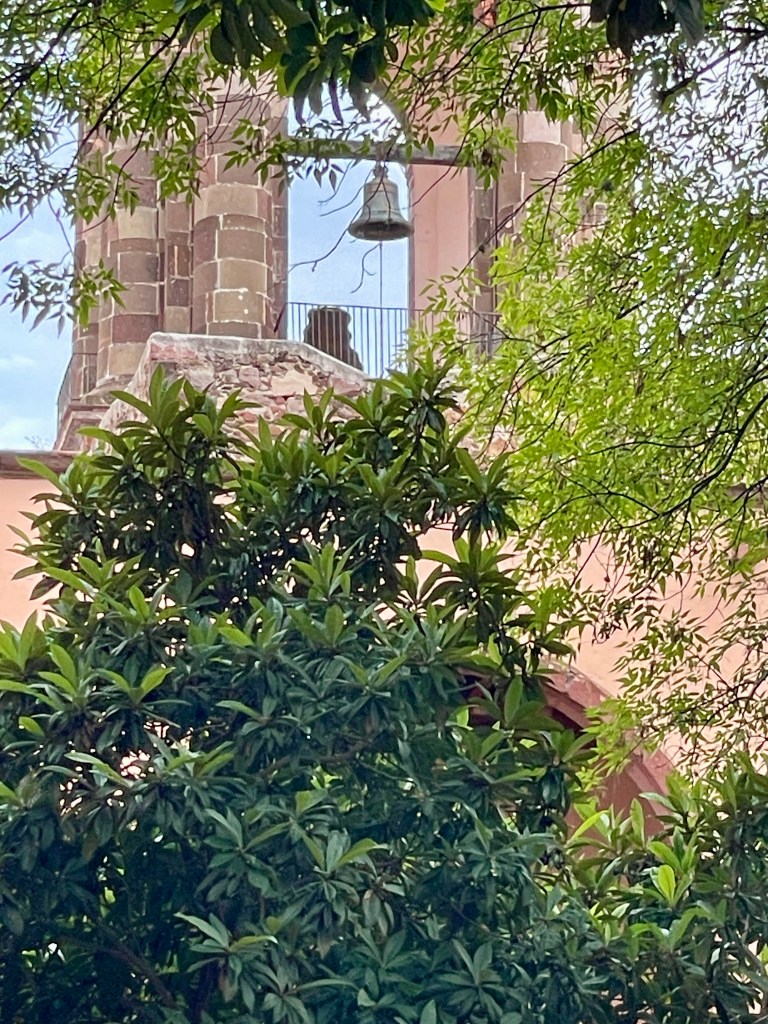
Across from Parroquia de San Miguel Arcángel is a city plaza with tall shade trees and park benches. It is here that you can truly feel the vibe of San Miguel and absorb the influence of the city and the locals who surround you. So take a load off…sit…listen to the church bells ring across the valley…and let yourself sink into a nation that still reveres its history and the people who still help to influence it today.
Basílica de Nuestra Señora del Pueblito
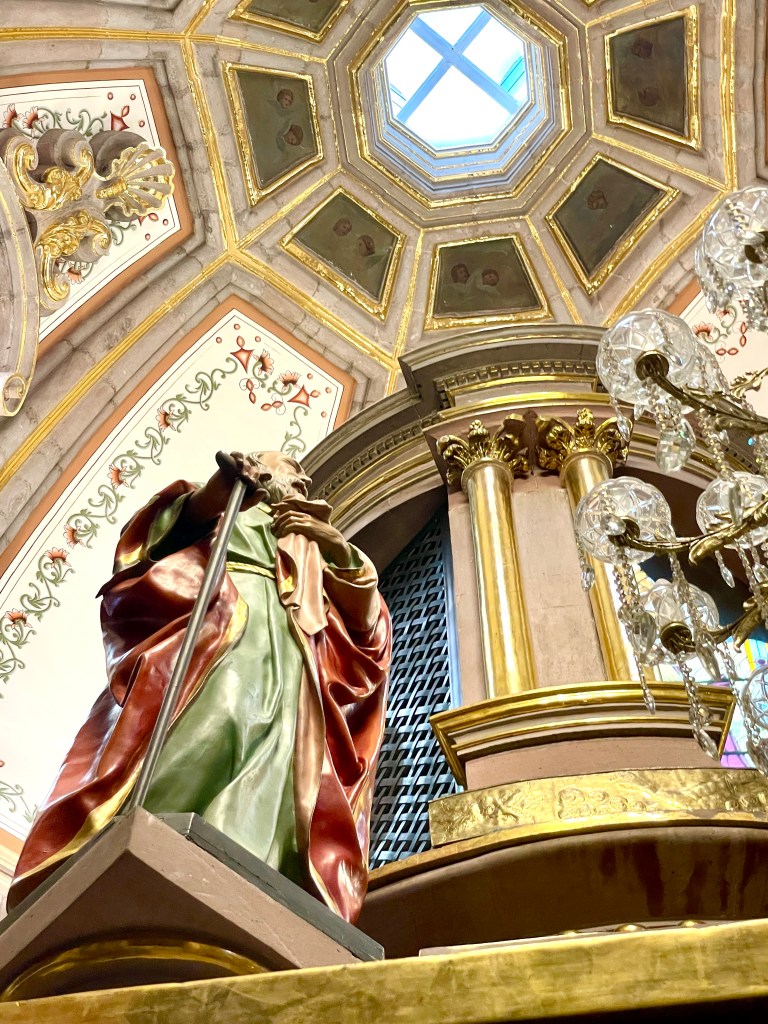
Another Church that I fell in love with was located in the town of Pueblito and is known as the Basílica de Nuestra Señora del Pueblito. It is the church that I mentioned in my post about El Cerrito, The Pyramid of Pueblito, and it is the one that you are suppose to be able to hear the sermon from the pulpit all the way up the hill.
This church is much smaller then the one mentioned in San Miguel and it has it’s own special kind of charm that is quaint yet powerful which is evidenced by the faithful who attend daily mass.
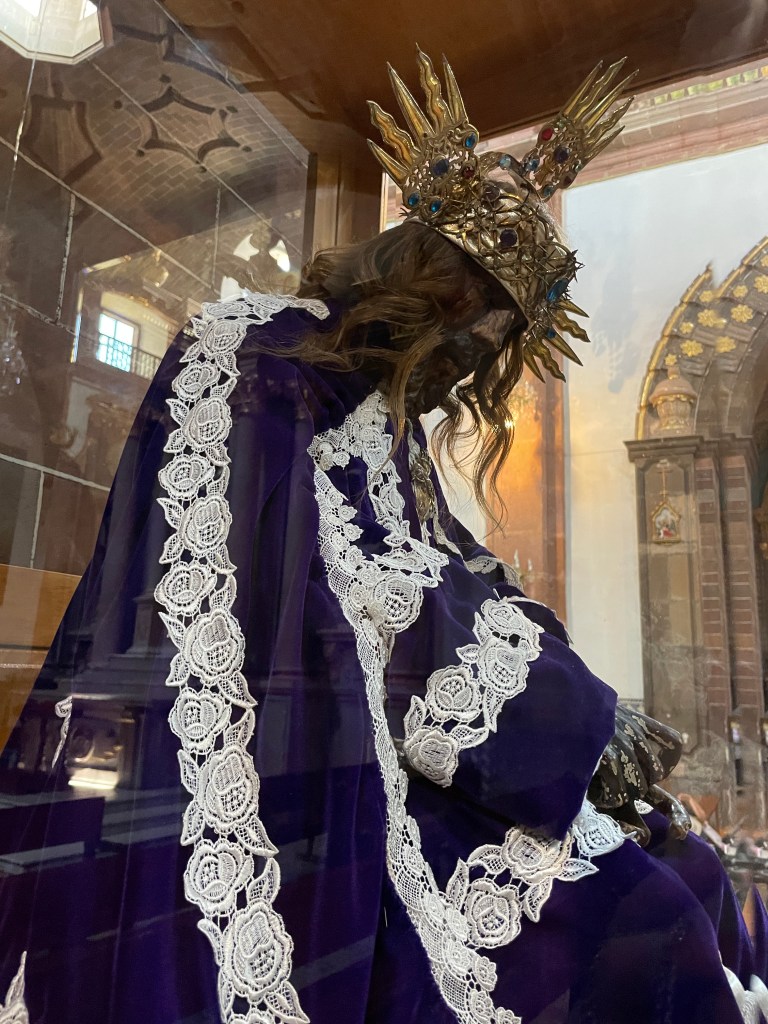
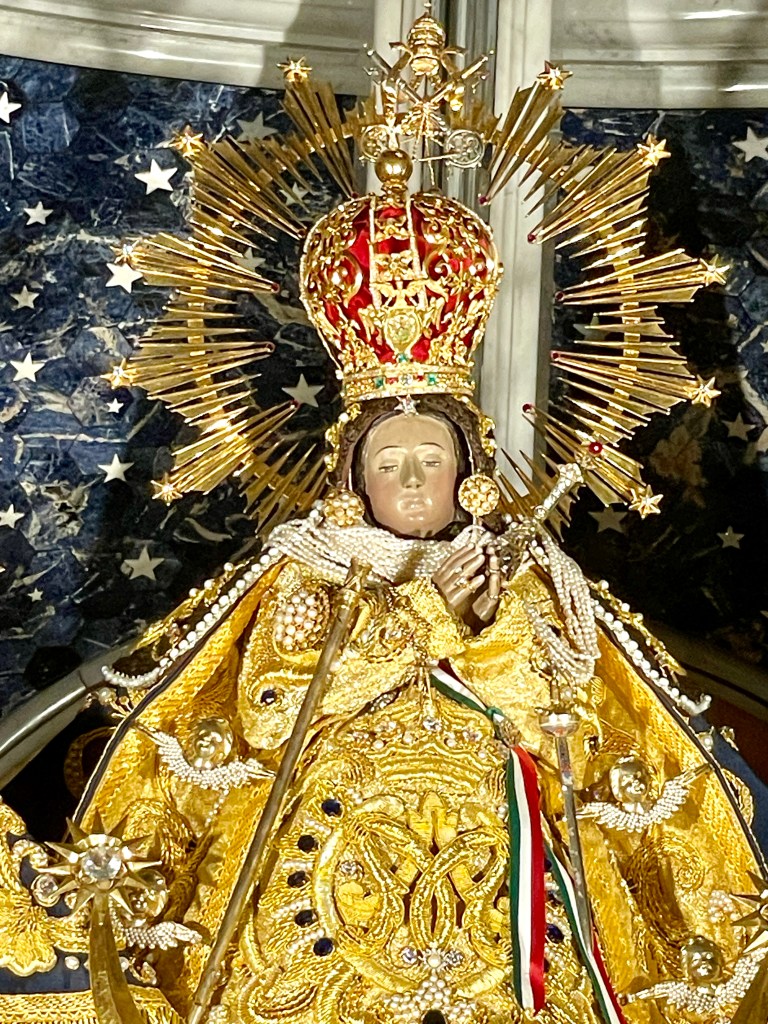
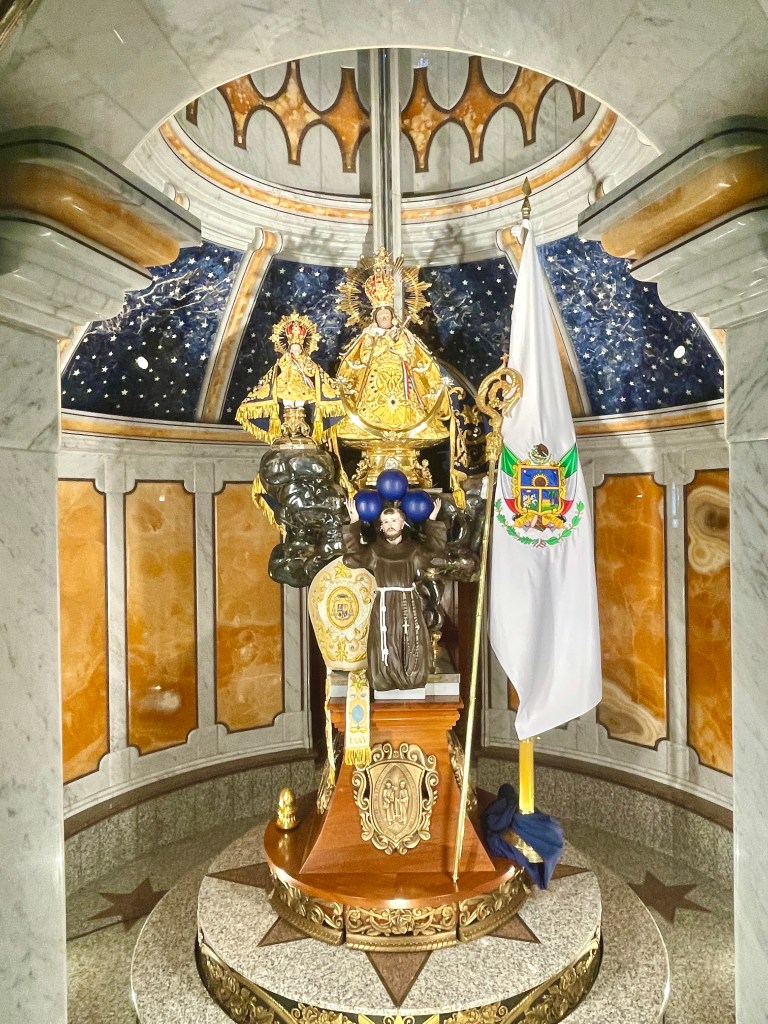
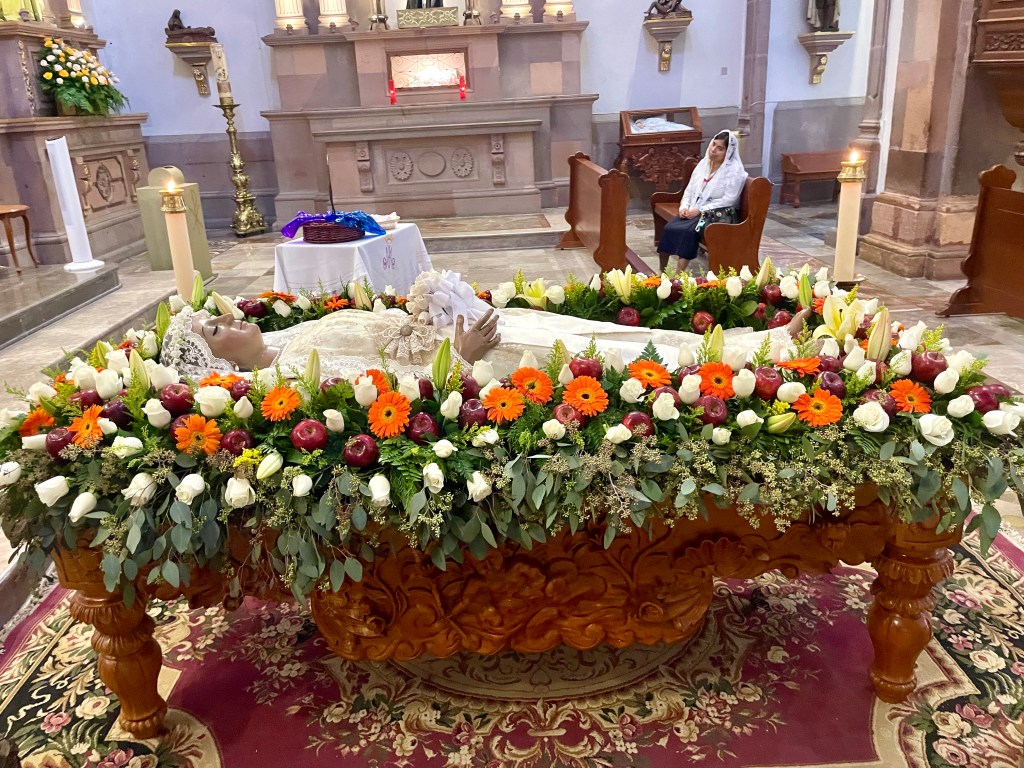
Basílica de Nuestra Señora del Pueblito had its beginnings in 1632 when Friar Nicolas Zamora placed the image of Immaculate Conception near the temple where he built the first adobe structure to house her. Approval for the present day building was granted in 1720 and construction was completed in 1750. Religious festivals for Mary are mainly celebrated in mid-February when the town comes alive. However, when we were there last week, the life-size body of the Virgin, was displayed below the altar where the faithful believed that the next day she would be lifted up to heaven.
While small this church has so much to see and admire its the people whose dedication impressed me. When we were there a painter was hanging off a ladder busy painting the nave while services for the Virgin were ongoing during this week of celebration and the church was being cleaned top to bottom.
I think one of the things that made me aware of the dichotomy of past times and the modern demands of today was this sign I spied within the inner courtyard of the church. I will admit I chuckled out loud. I hope you enjoy it and a smile graces your face too.
Historically, a hacienda is a huge estate brought to this area through the effort of Spanish Colonization. These vast tracks of land covered entire valleys and were responsible for agricultural enterprises and often the forced servitude of indigenous peoples. Today, many of buildings have been turned into upscale hotels and restaurants which are amazing to visit. I have been to a couple since I arrived and today I am going to share them with you.
Hacienda Laborcilla
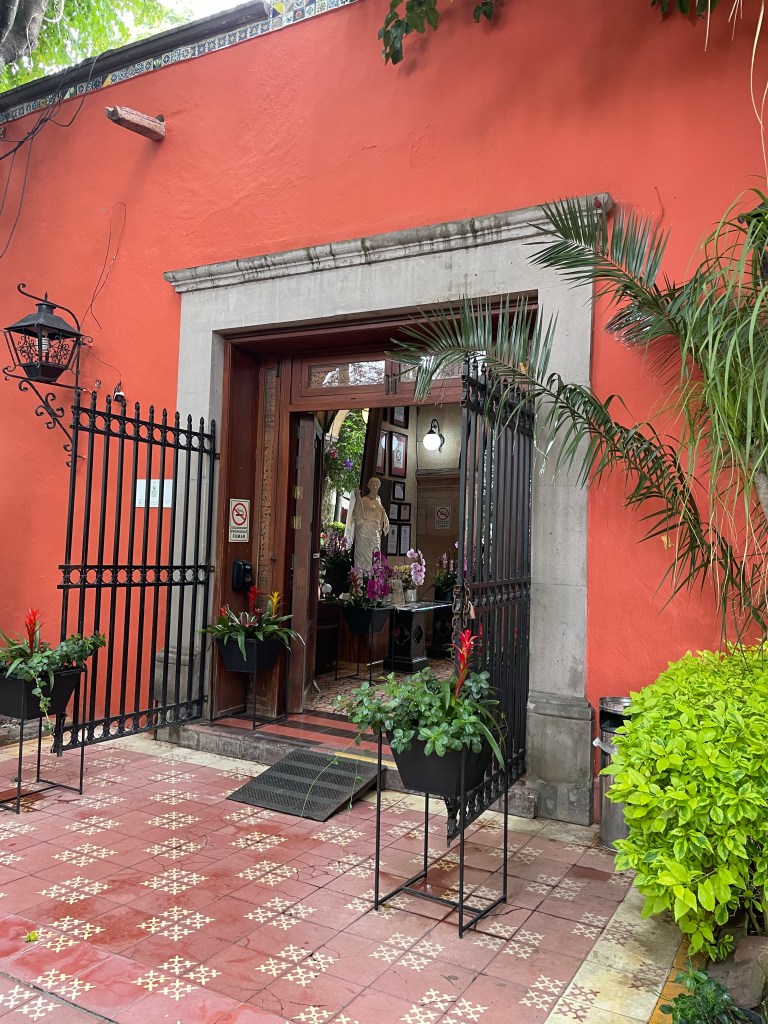
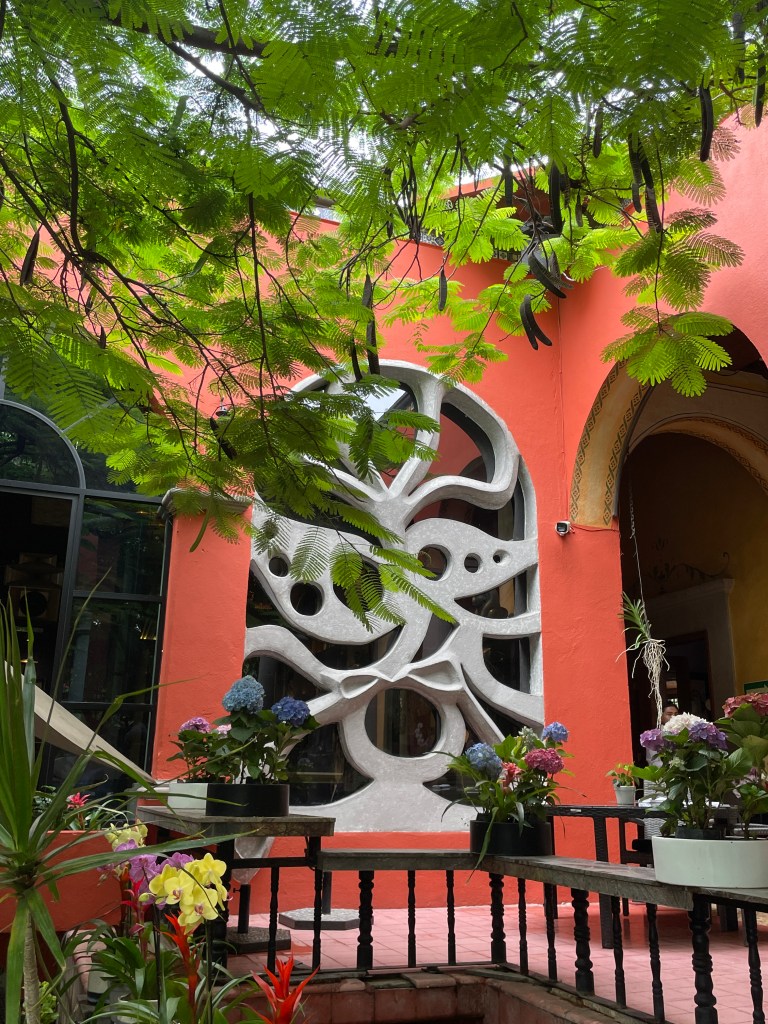
Nested in the heart of the city of Queretaro; Laborcilla literally took my breath away. Built in the 18th century the hacienda once served as a main house for the family, a school, and even an event hall over the years. Now open to the public as a grand restaurant, the food and the atmosphere are simply magnificent. The gardens are drop dead gorgeous and the menu is divine.
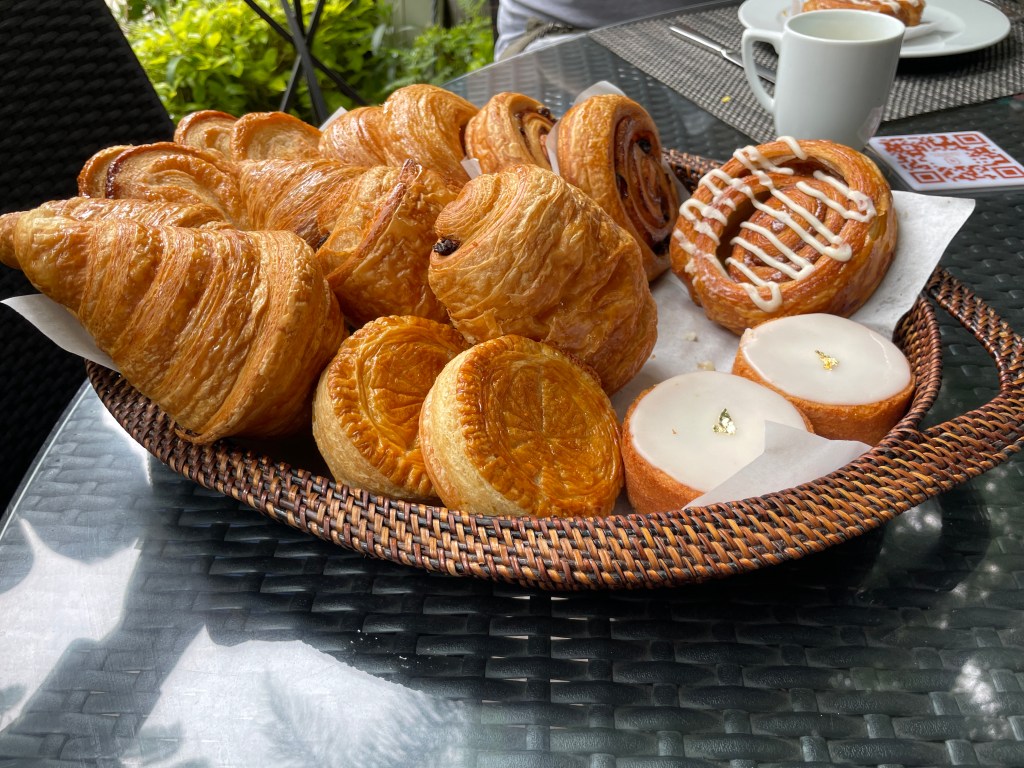
I have to tell you that coffee here in Mexico is truly remarkable and when you order juice is it always fresh squeezed. It is an amazing way to start your day… combined with the basket of fresh pastries that was brought our table almost immediately upon being seated.
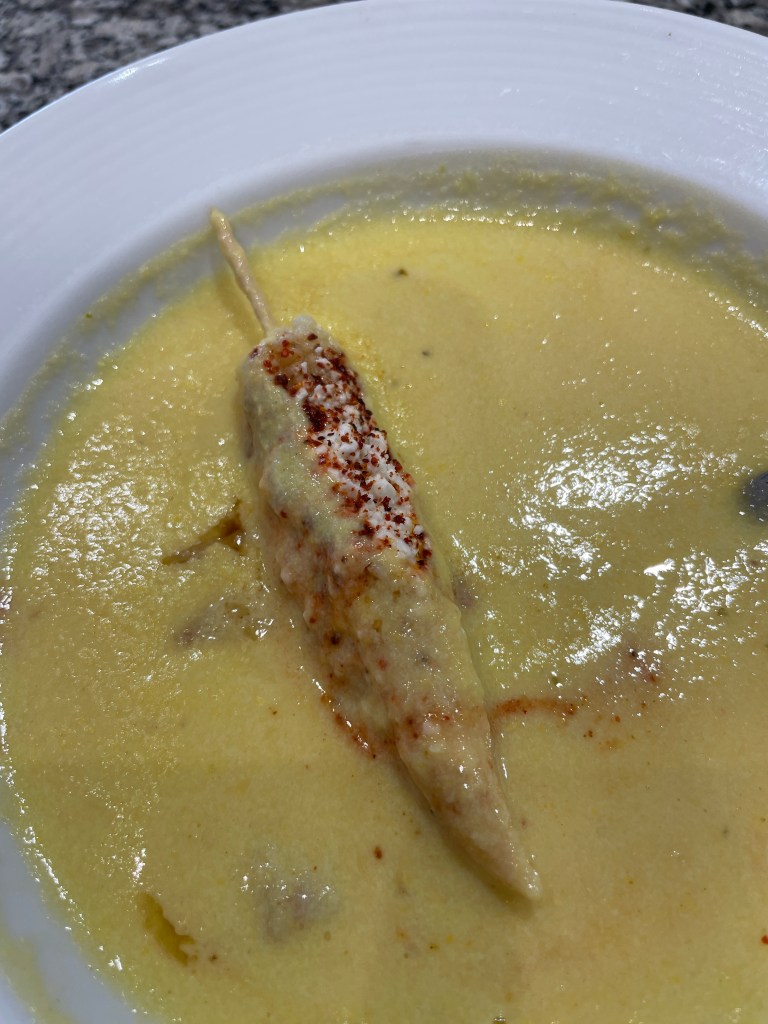
For breakfast I had enchiladas suiza which were filled with chicken breast and cheese topped with bacon. It was an amazing desayuno.
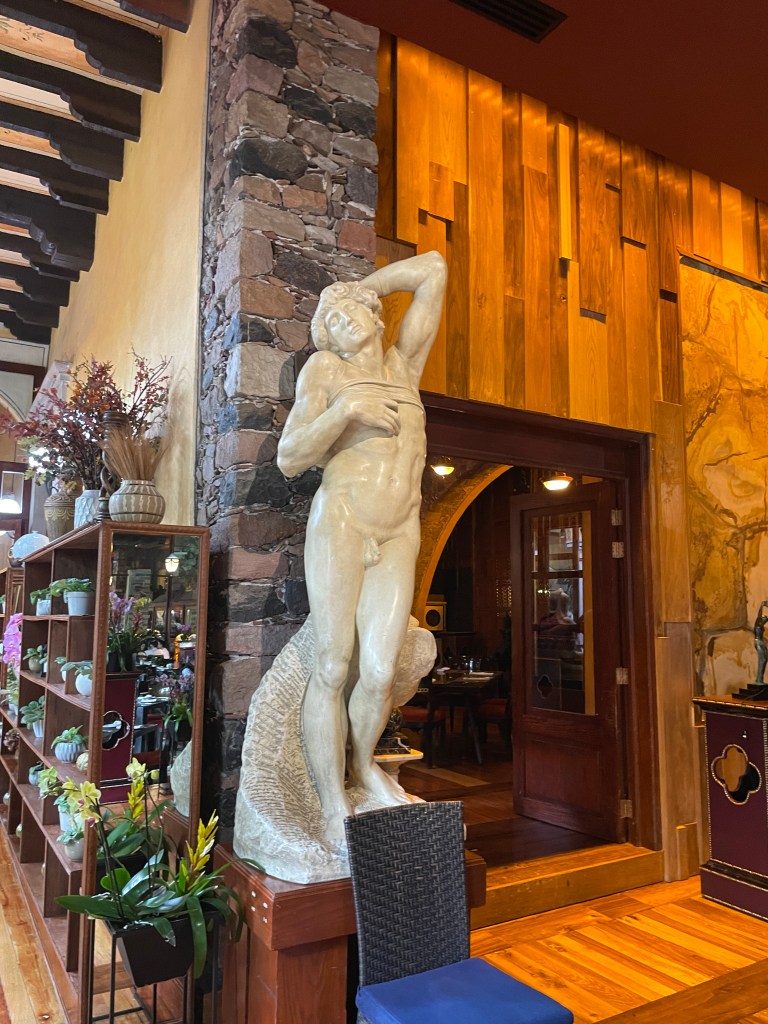
But while the food was excellent I will have to say that it is the atmosphere that people come here for. It is a place you will never forget and stunning doesn’t begin to describe it. There are orchids everywhere and butterflies float around your table as your eat. Here is the first impression upon entering.
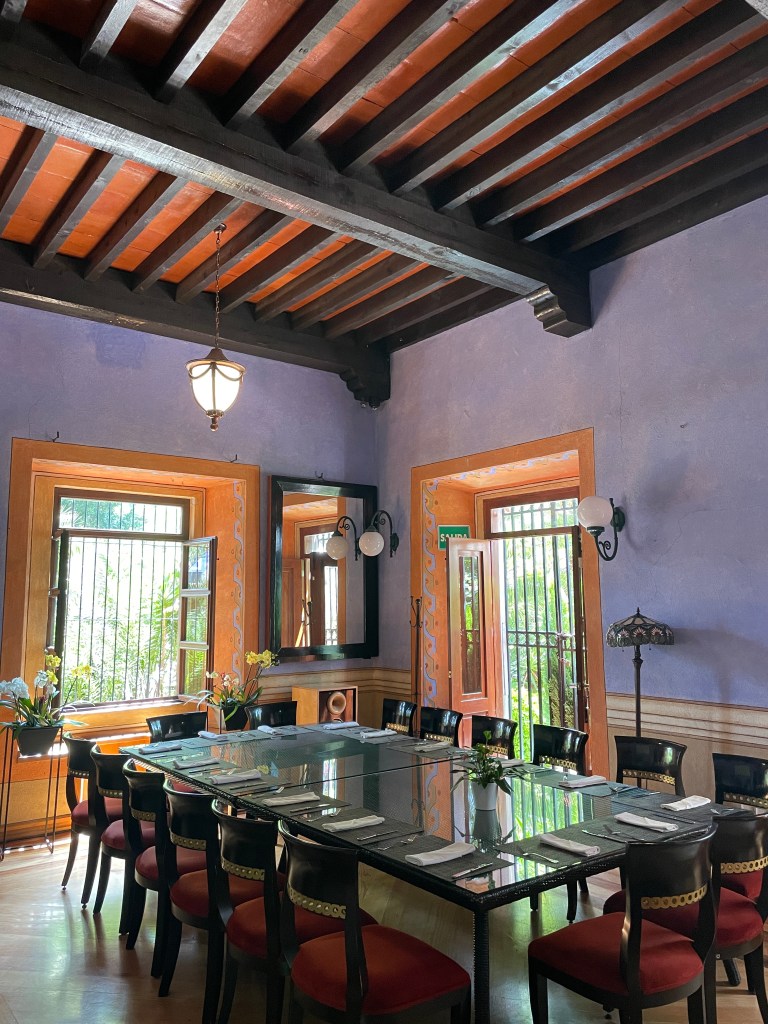
There were many themed dining rooms throughout Laborcilla and all were amazing to step into with gorgeous Asian, Egyptian and Greek Antiques, as well as reproductions, in every nook and cranny. Just so much to feast on with the eyes and not enough time.
Here is a short video of the Club Room
What I learned from this experience is always say !!!!YES!!!! when someone invites you to breakfast in Mexico because you never know what wonderful things await you.
THE HOTEL MISION GRAND JURIQUILLA
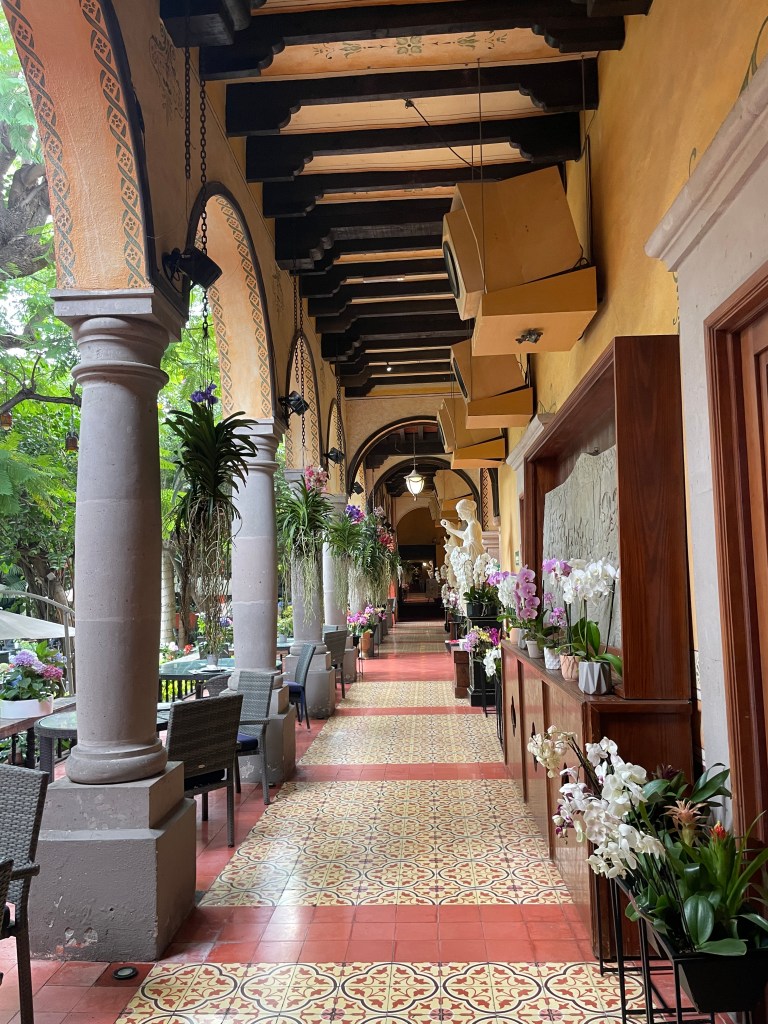
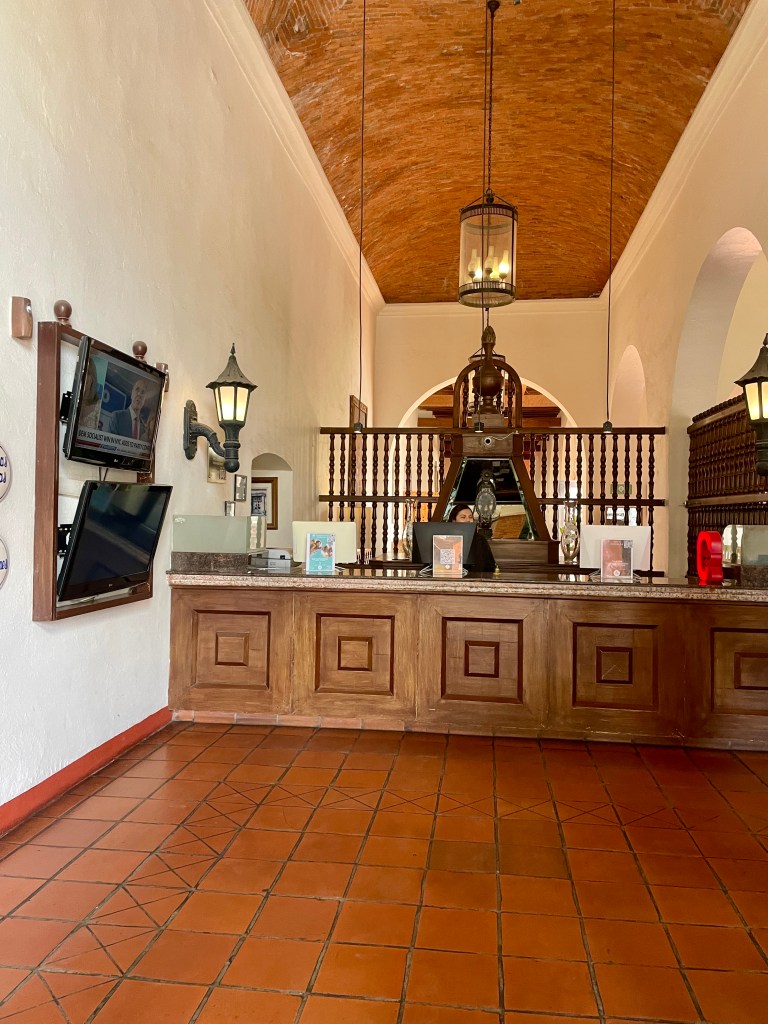
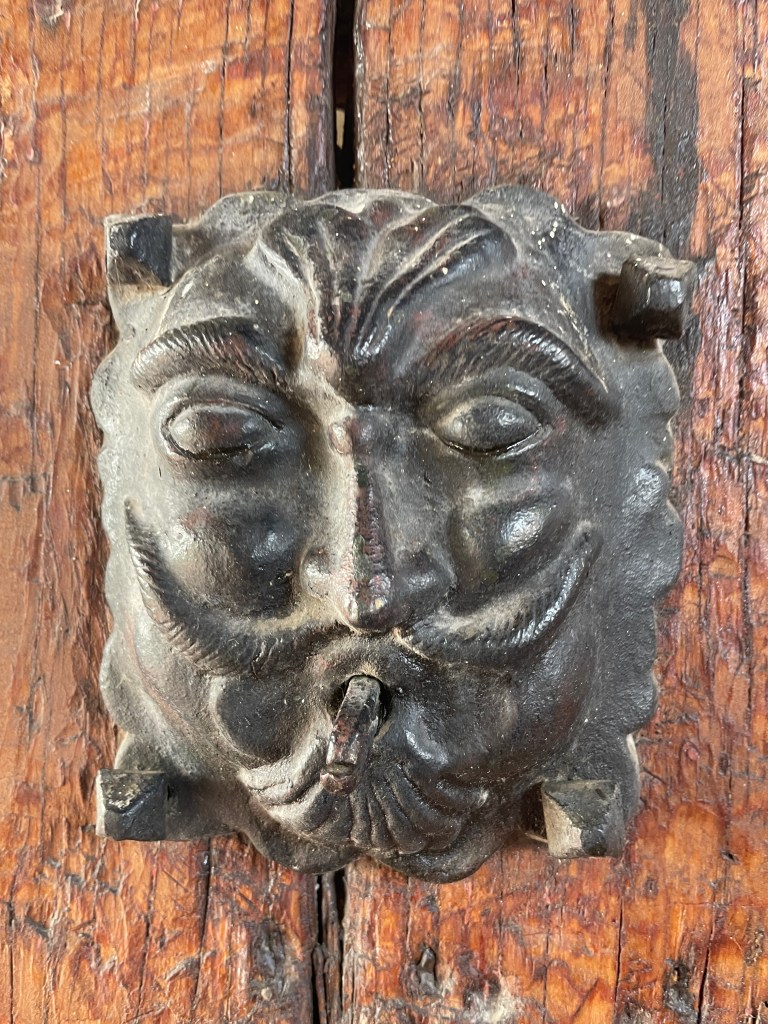
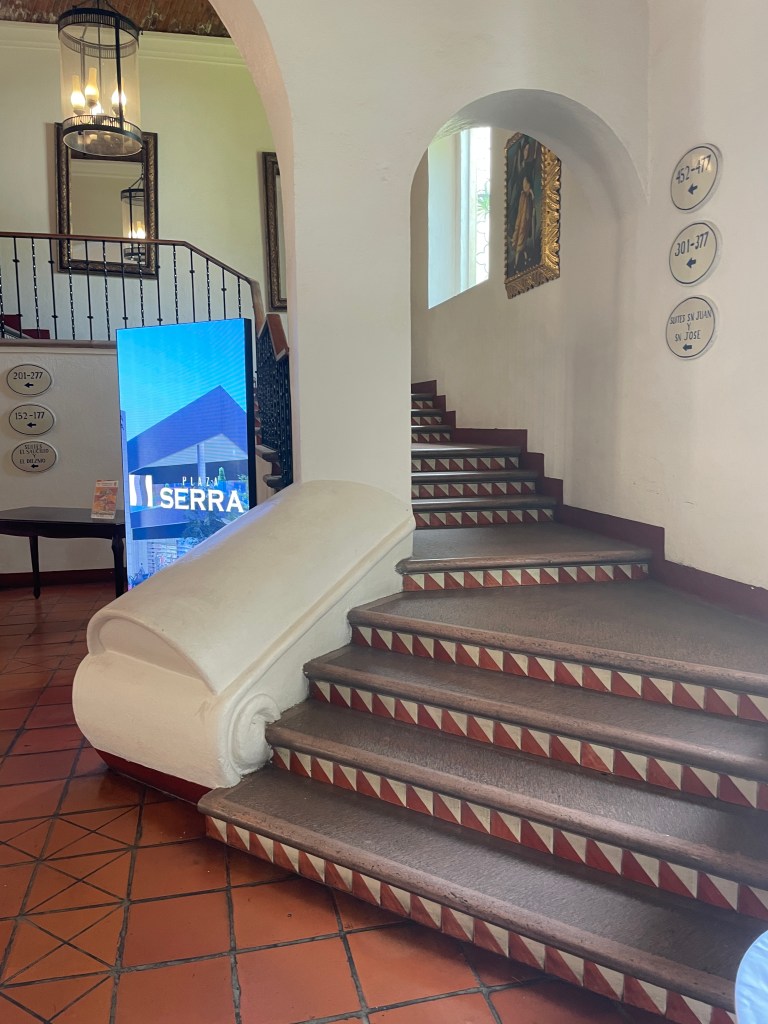
The first former hacienda I visited is now a grand hotel called the Hotel Mision Grand Juriquilla. It’s another 18th century hacienda which has been beautifully restored and now houses a hotel and restaurant. With a historic church on the grounds and landscaping that makes you want to hire their head gardener, Hotel Mision is a place that you can easily call home when traveling. Take a look for yourself.
I have been told that there are so many beautiful historical haciendas throughout the country that I am thinking that I might just make it a goal of mine to visit each and every one. With so much charm and the fact that these amazing buildings just ooze history; visiting a hacienda today is like a trip back in time combined with the elegance of today, which, makes visiting these historic sites land at the top of my bucket list while in Mexico.
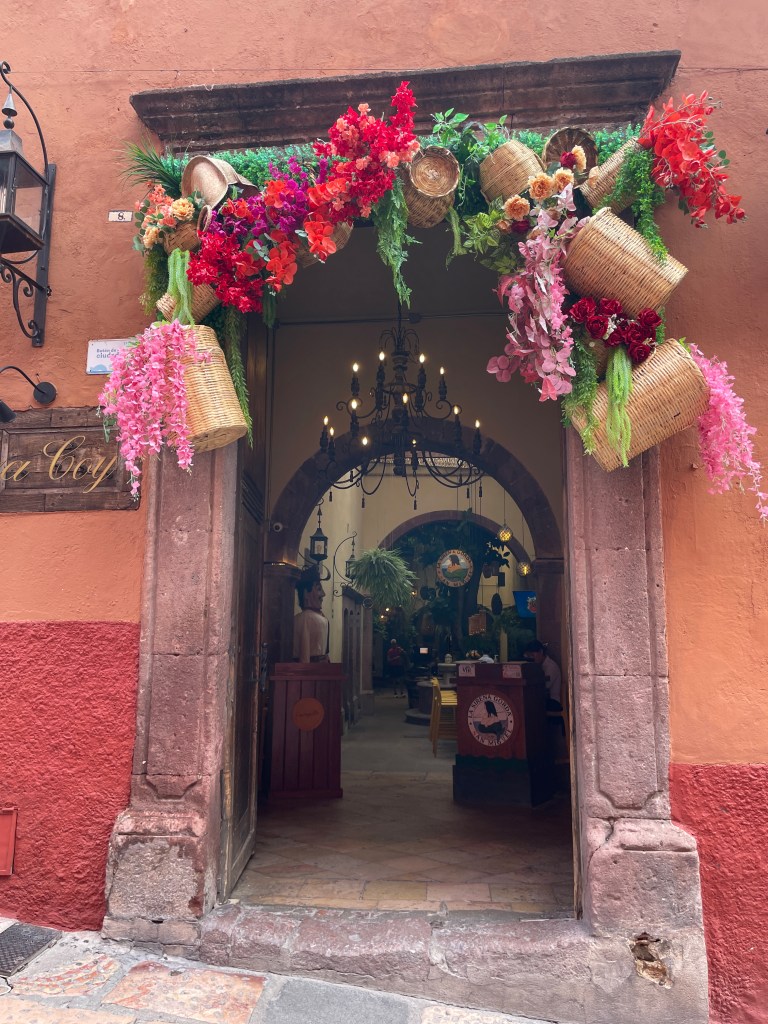
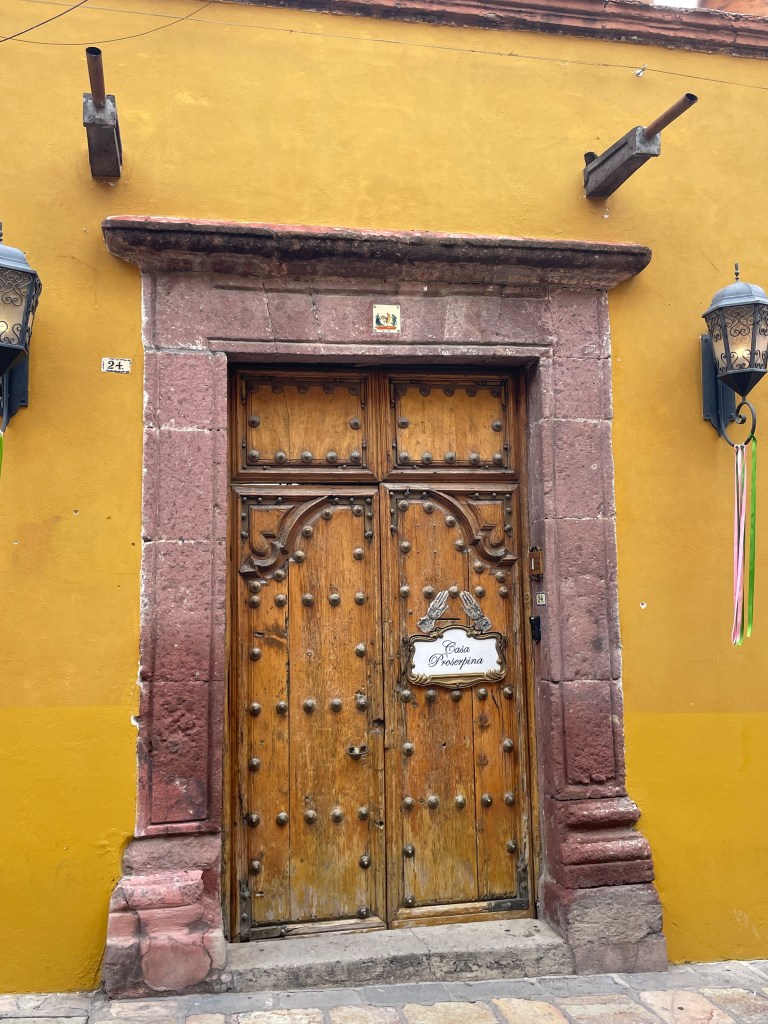
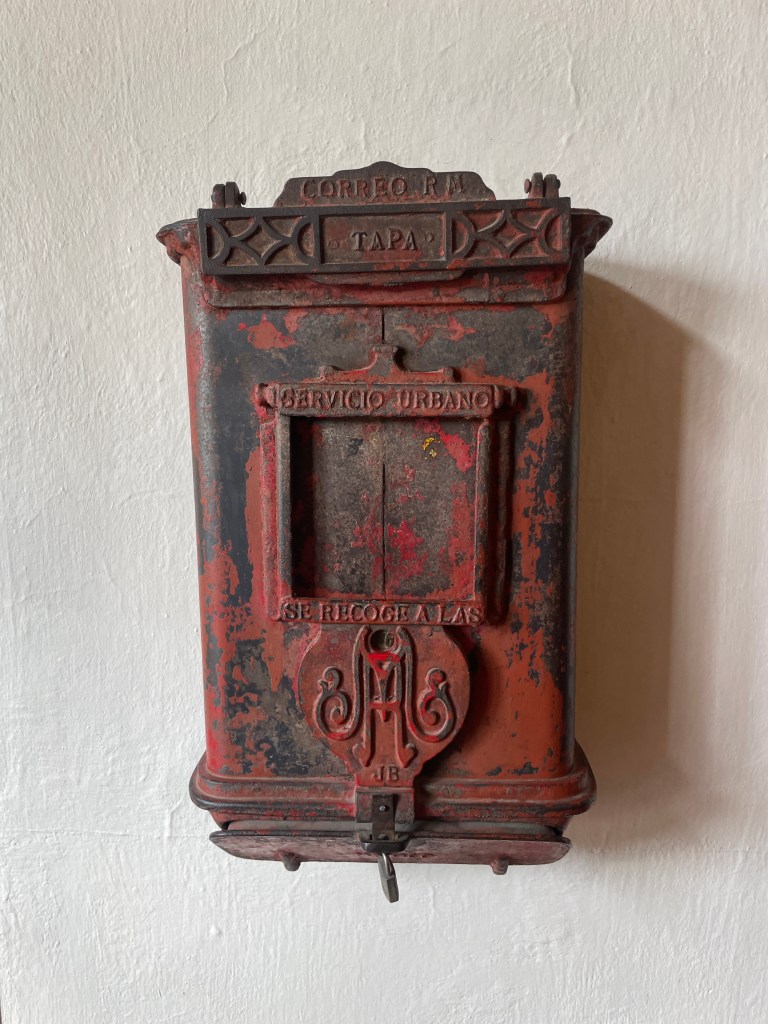
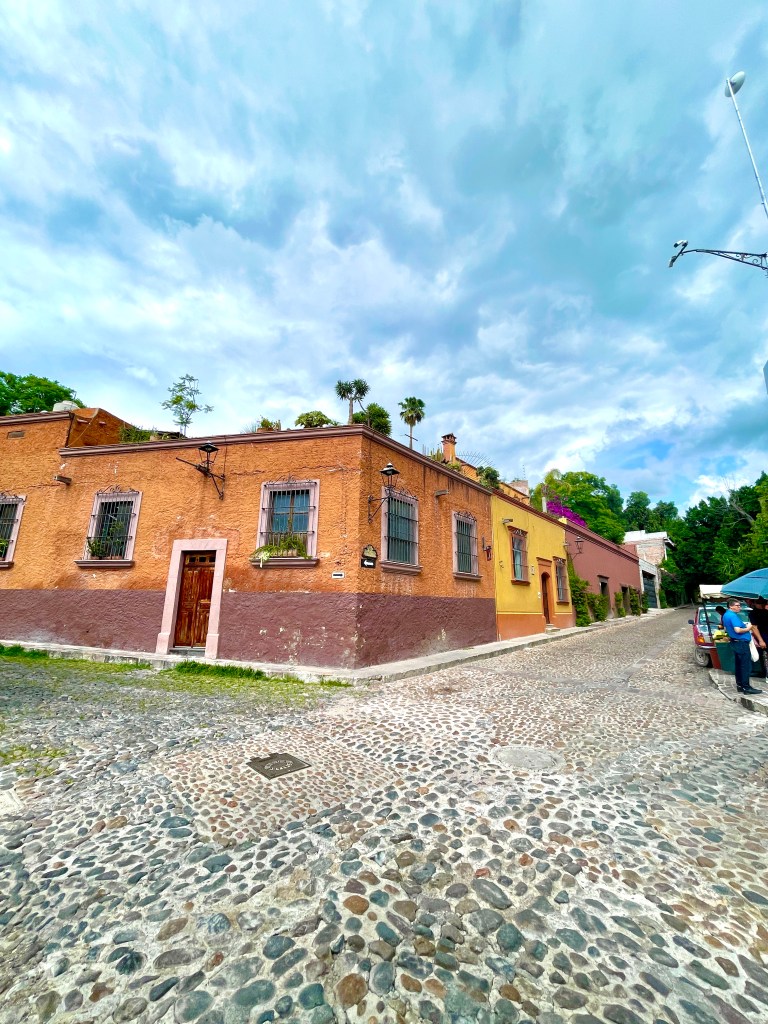
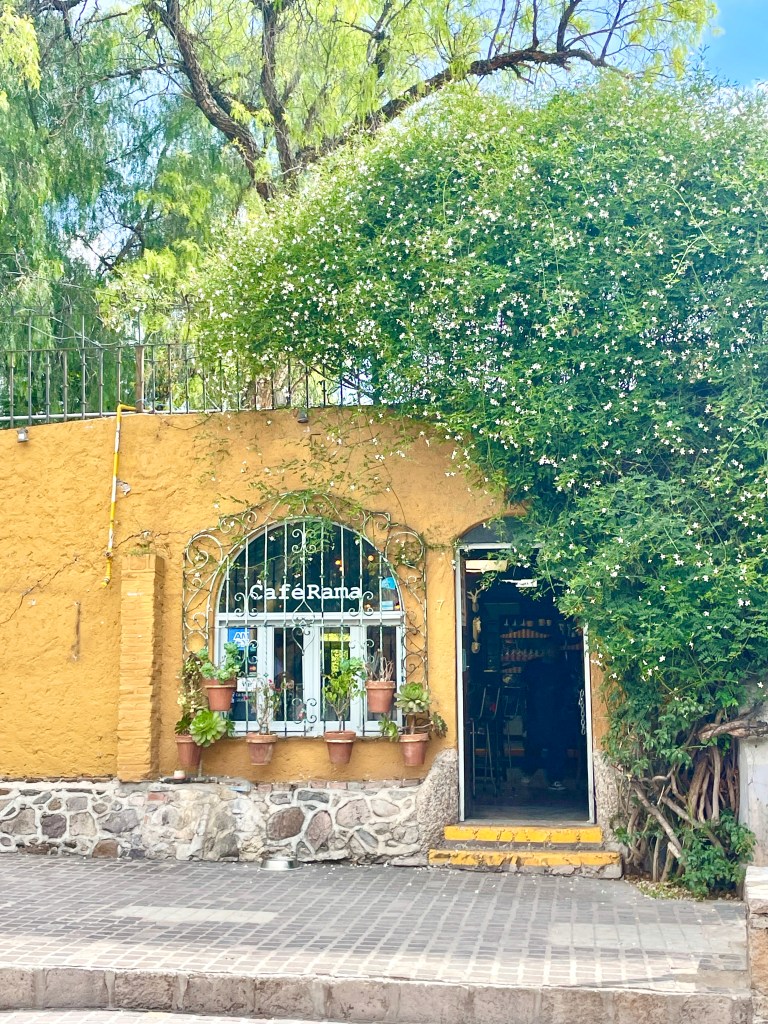
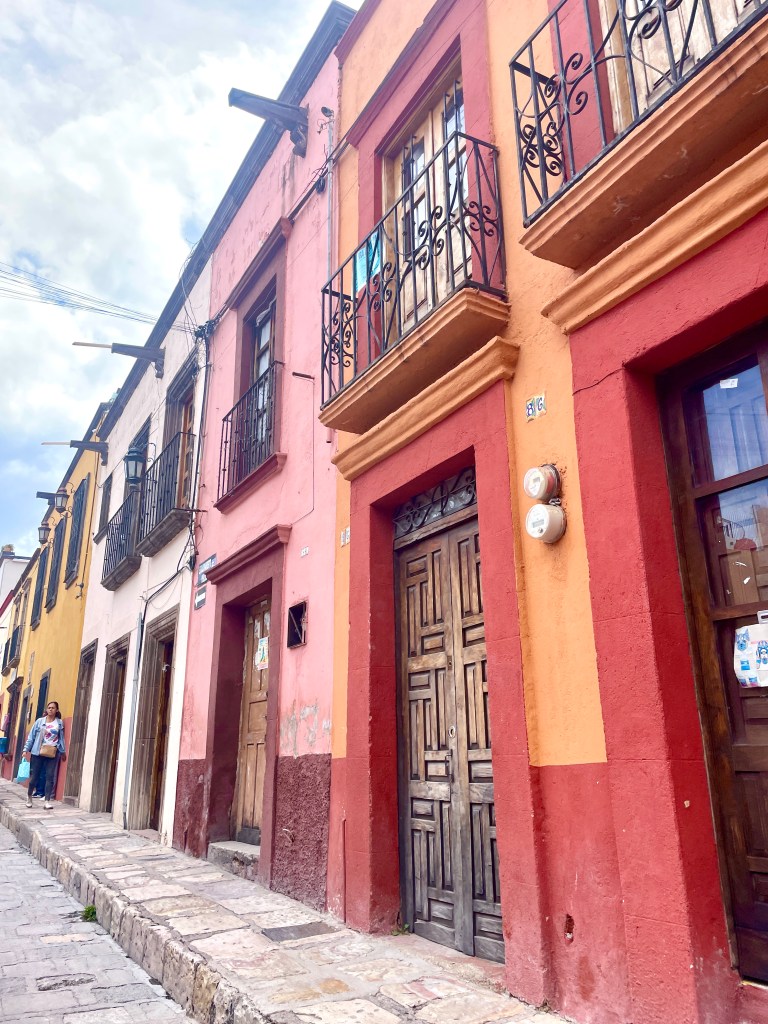
One of the things I love about Sam Miguel is the cobblestone streets and the brightly painted homes.They put a smile on your face and make your day feel like it will be nothing less than spicy and sunny. It is just fun to drive and look around town and see the various neighborhoods..
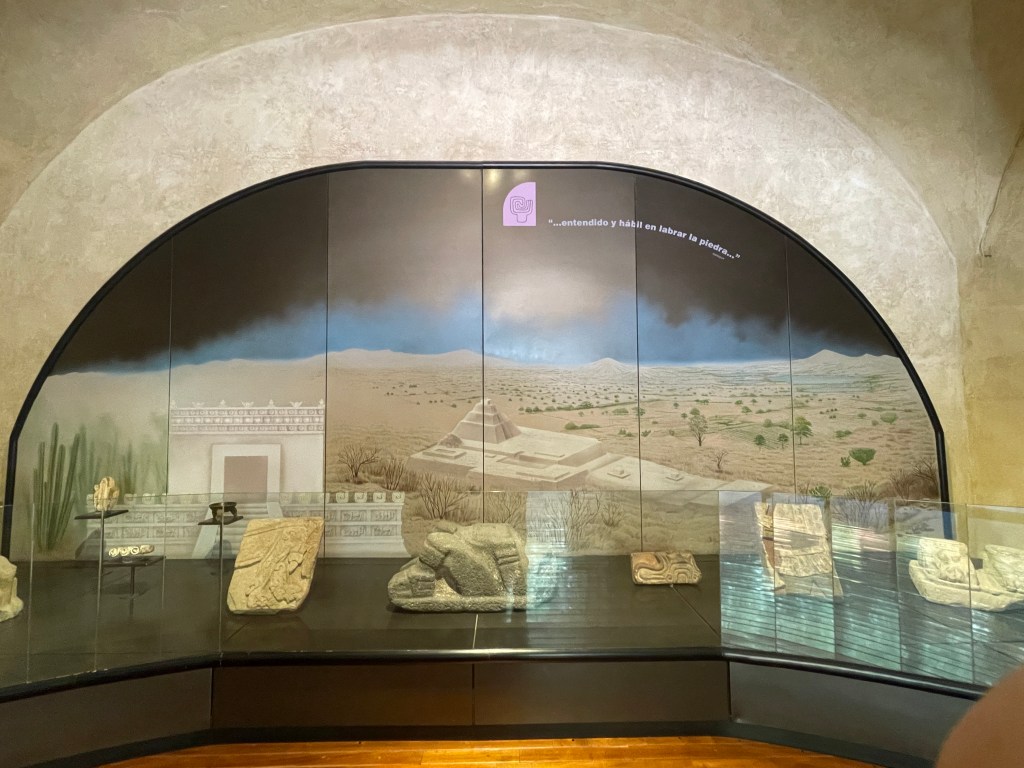
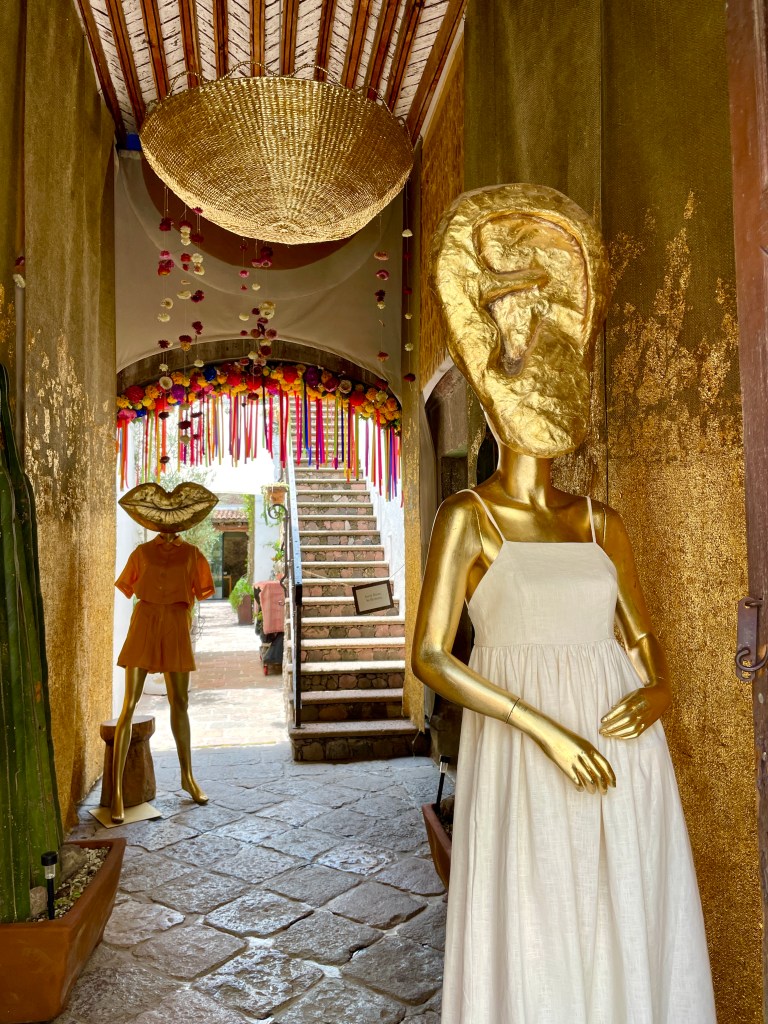
One of the places we ducked into was the Cultural Center and I have plans to re-visit it so I can get a full tour of all that lays within its stone walls. But for now just some lovely photos to give you an idea of the place.
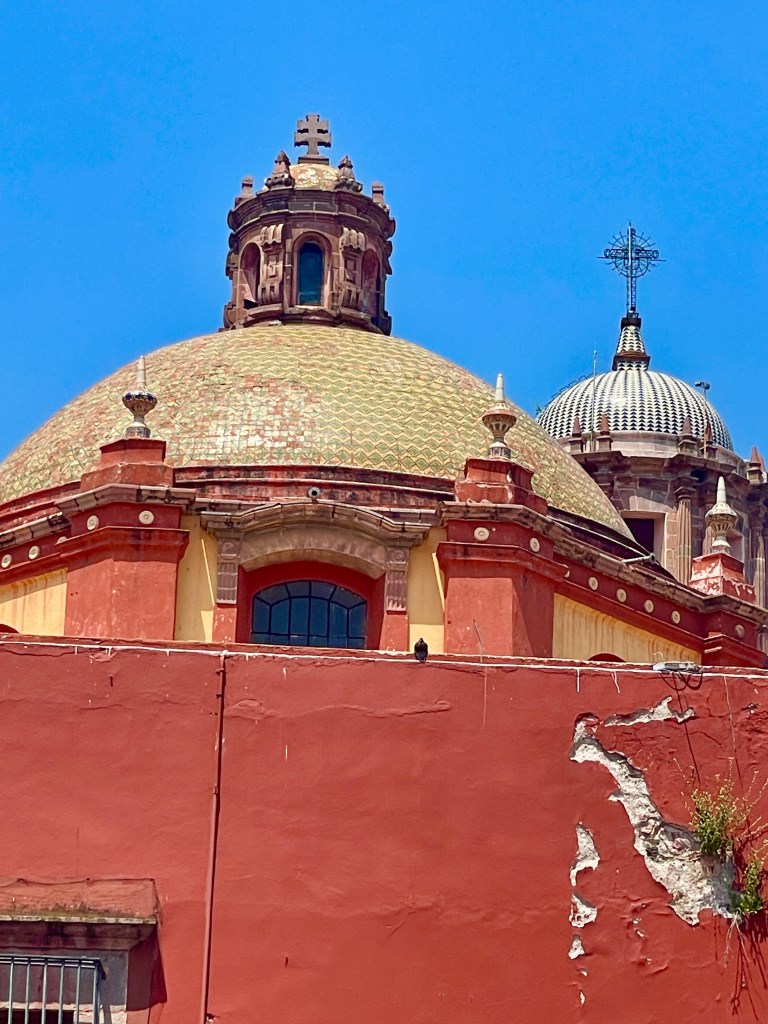
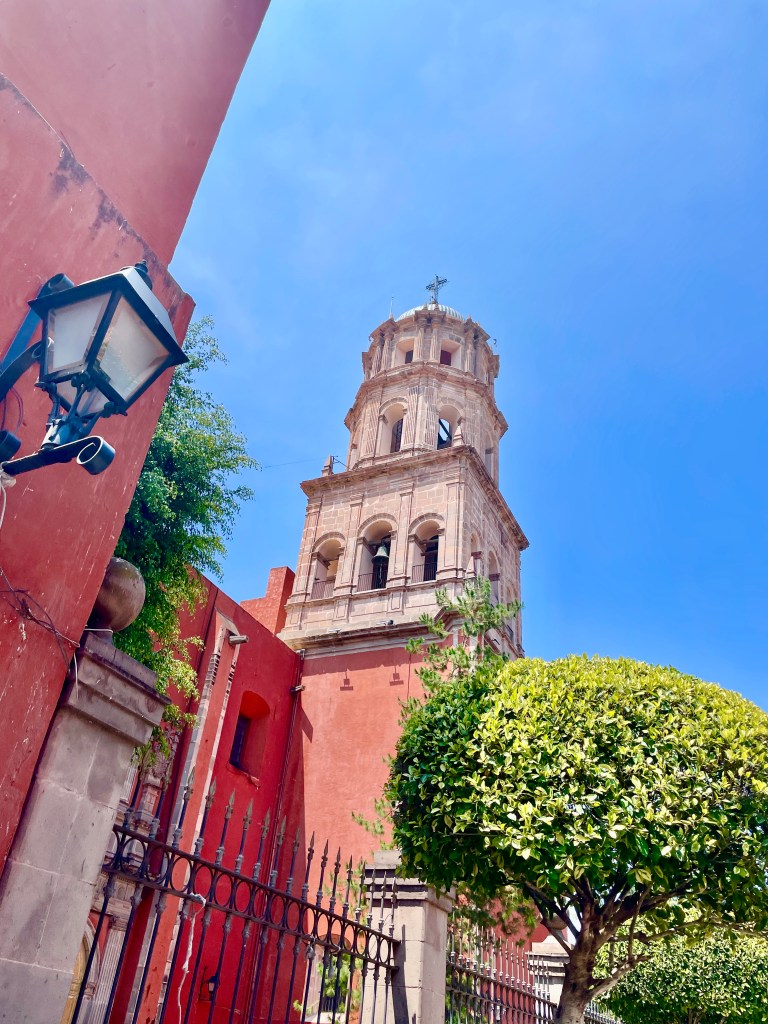
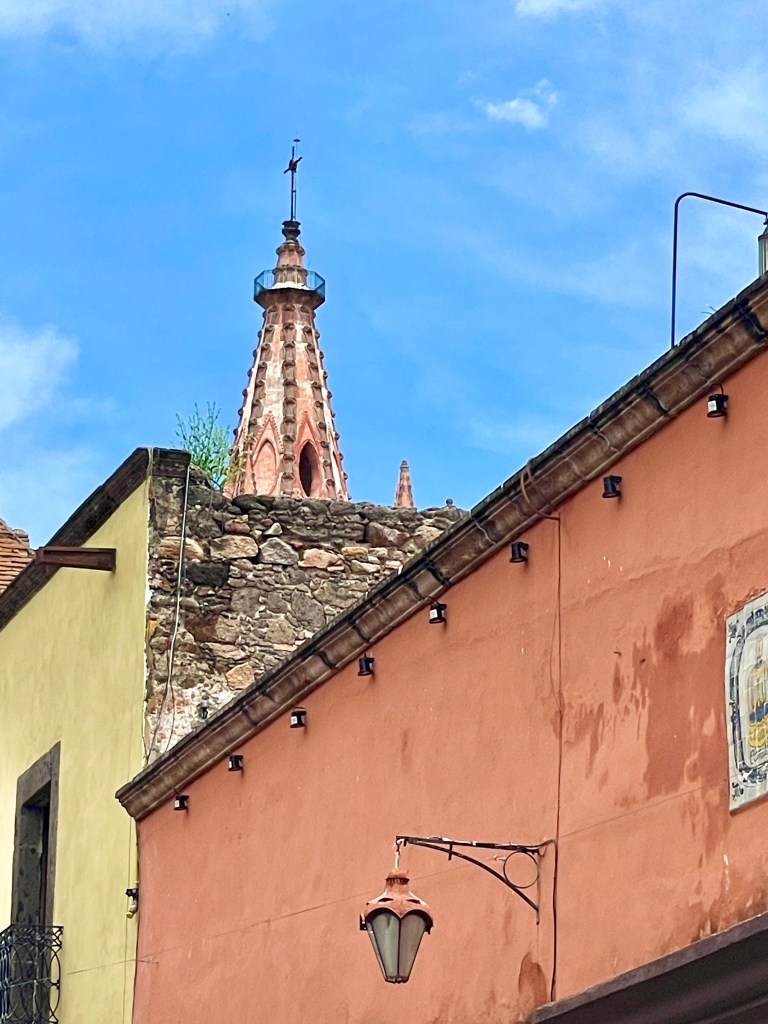
I love visiting the churches and seeing their rounded domes or tall spires no matter where I go. But here in San Miguel there is something about that type of architecture that just reaches in to connect with your very soul.
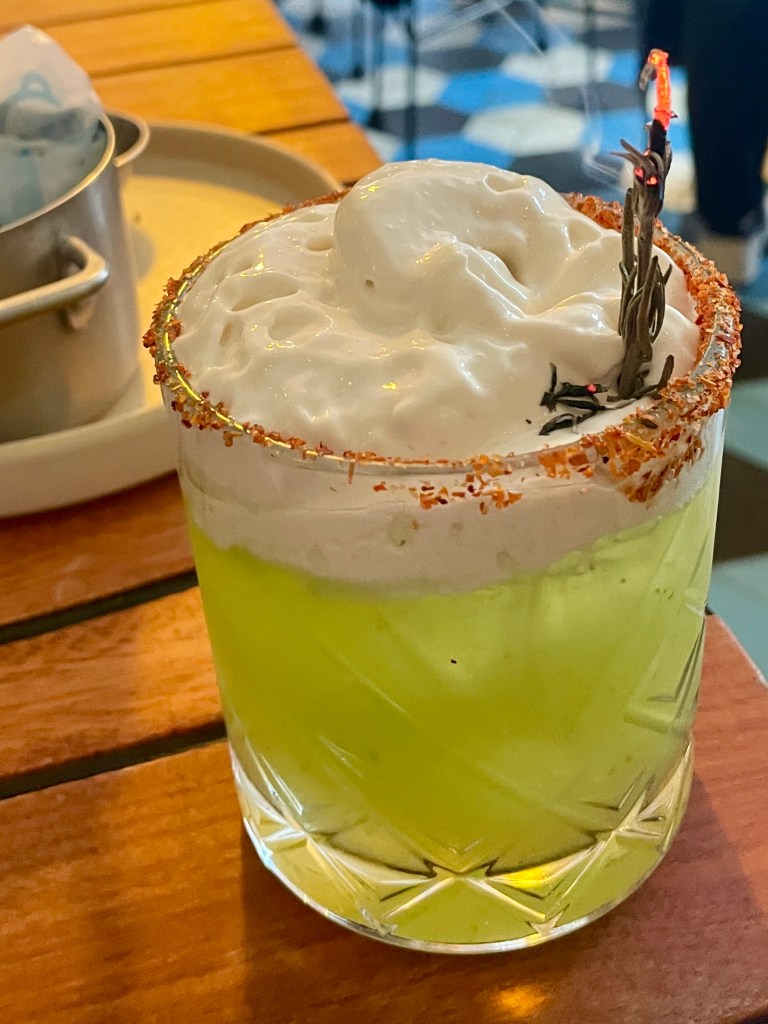
For lunch, Denise took me to this tiny hole-in-the-wall restaurant named Tostevere that served excellent food. The tostadas tasted different than any I have had before….smooth. How a tostada can be smooth with a hint of salt I have no idea…but it was. And the bananas foster dessert with homemade fresh fruit ice cream (maybe guava) topped with lime was amazing. But perhaps the most interesting thing that I had was the Smokey Mezcal which is brewed from the agave plant. The drink was concocted from several juices including cucumber, topped with fresh whipped cream, lime salted rim and then lit on fire with a pice of smokey sage. Sorry, Grandma…I had two!
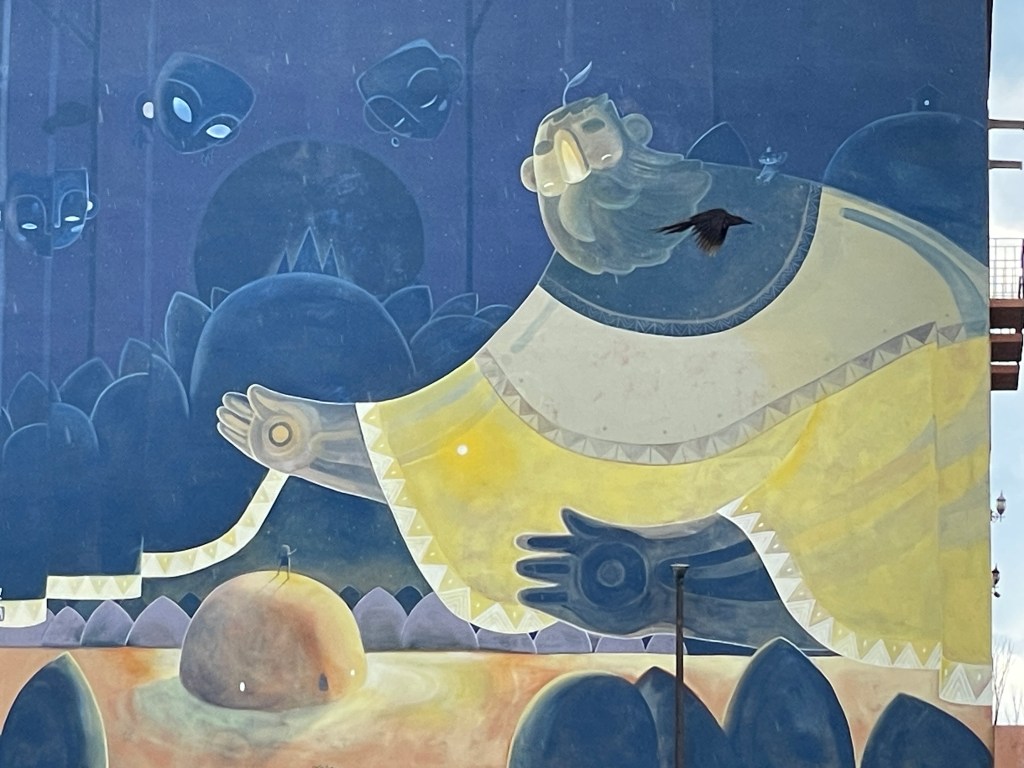
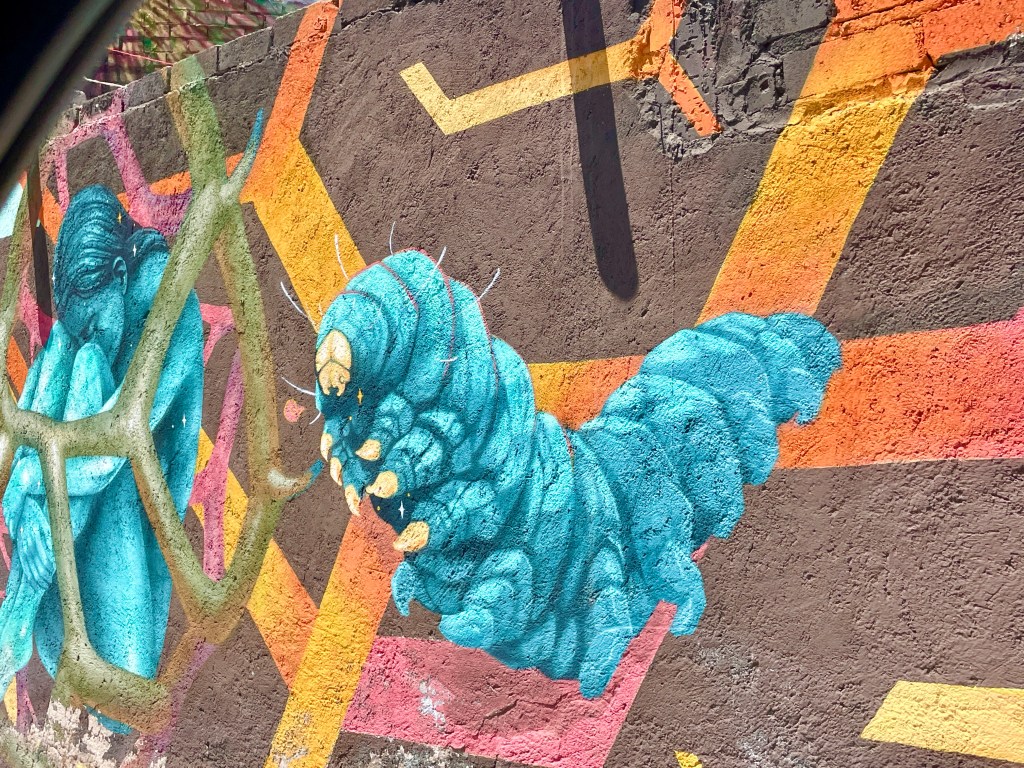
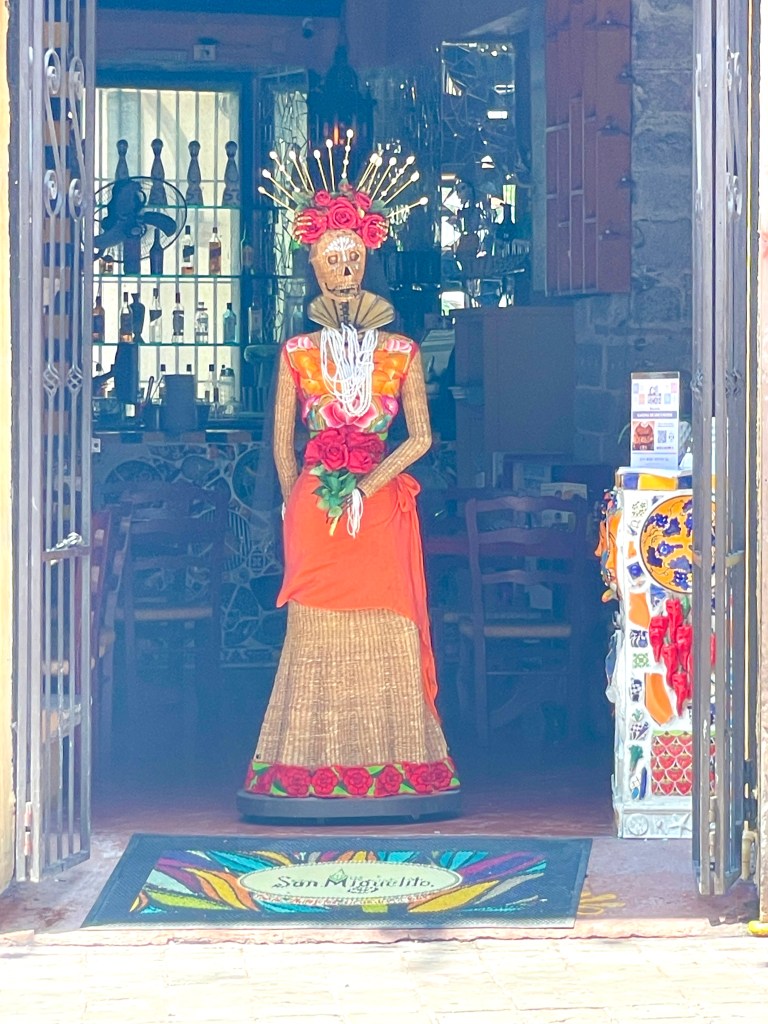
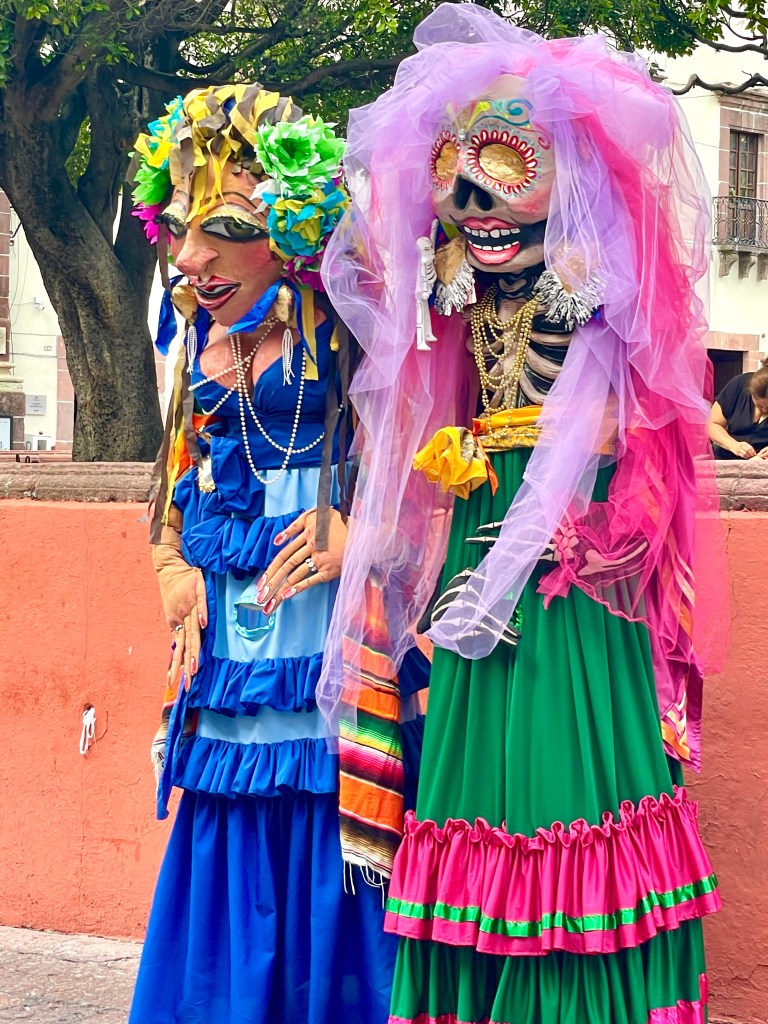
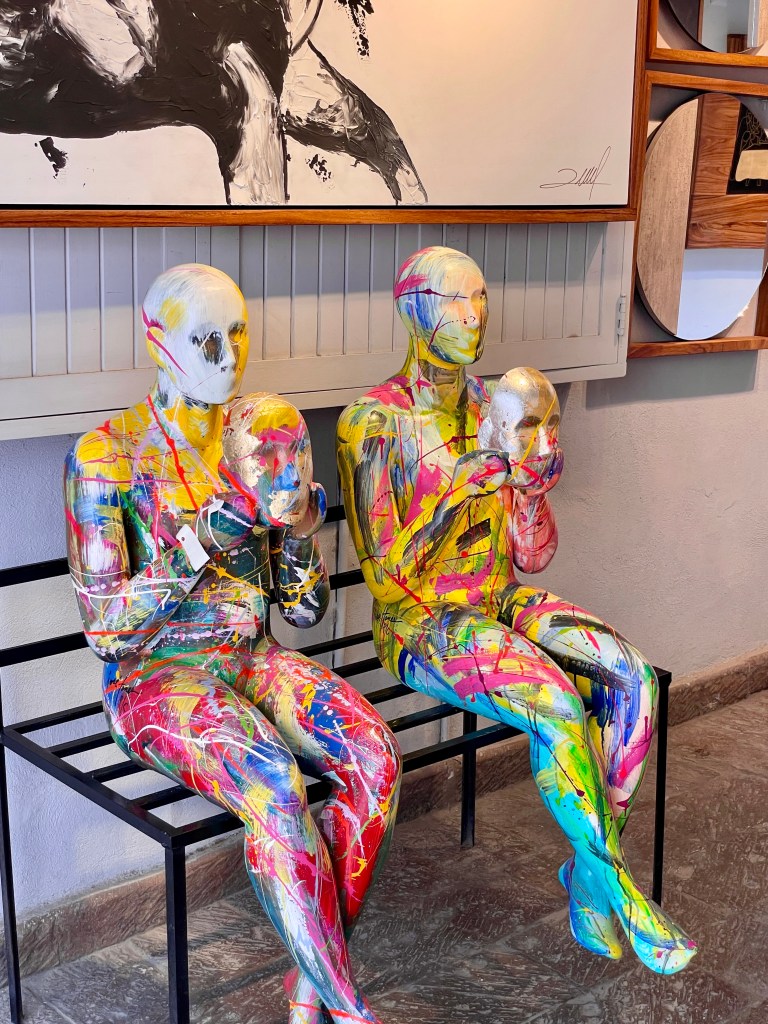
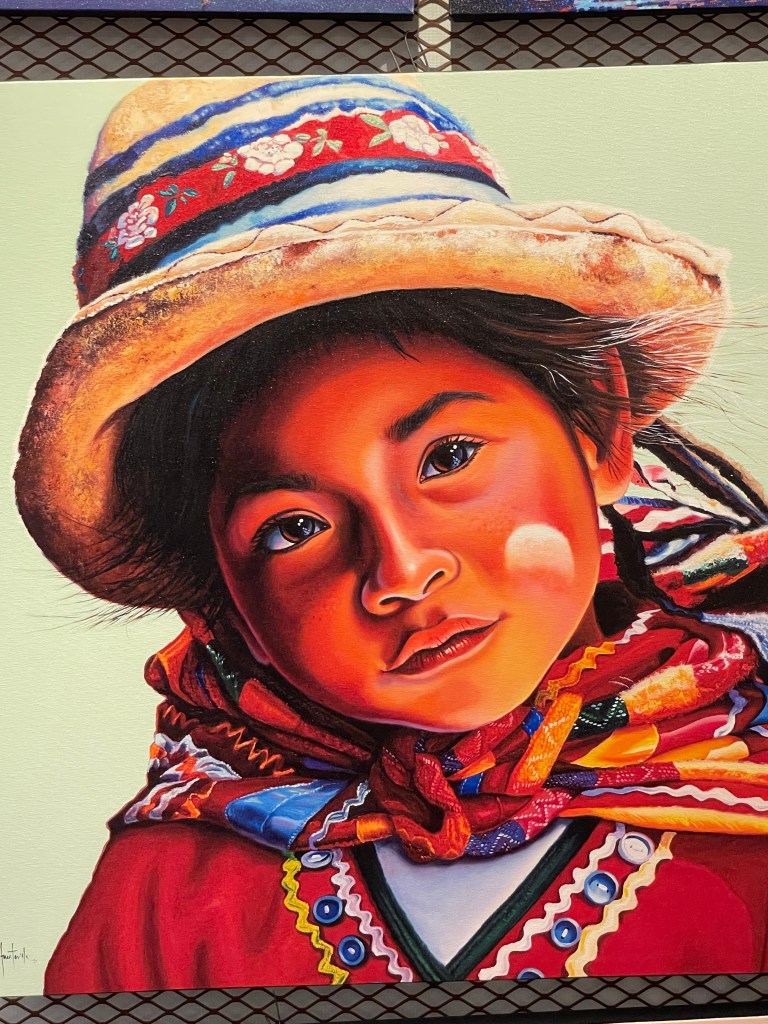
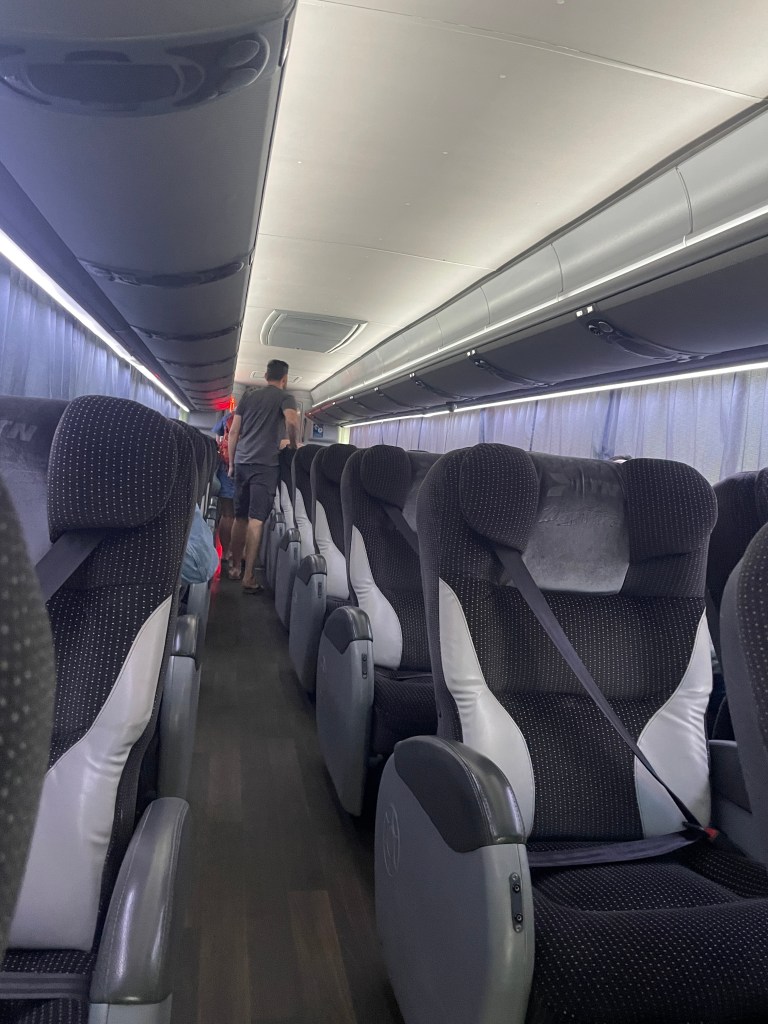
Walking through the town is an experience that you won’t forget. Undoubtedly, you will see Mojigangas, the street puppets, who stroll the town. A few pesos is all it takes to have your picture taken with them. Quaint shops, wonderful food, warm people, lovely outdoor spaces and music that makes you want to get up and dance…these are just a few things you will take away with you when you leave this amazing enclave. And speaking of leaving… I now leave you with some of my favorite pictures of the day including more art, the ring I bought from a jeweler in the park and my $15 ride home on the bus. Wish an airplane was as comfortable as that bus!
If I could afford it, this Roberto Fuentevilla painting would hang in my future living room
Here is the bus. It was a bit expensive because I chose an expensive part of the day to ride it. Television sets and fully reclining extra padded seats for $15. Wish our airplanes were like this!
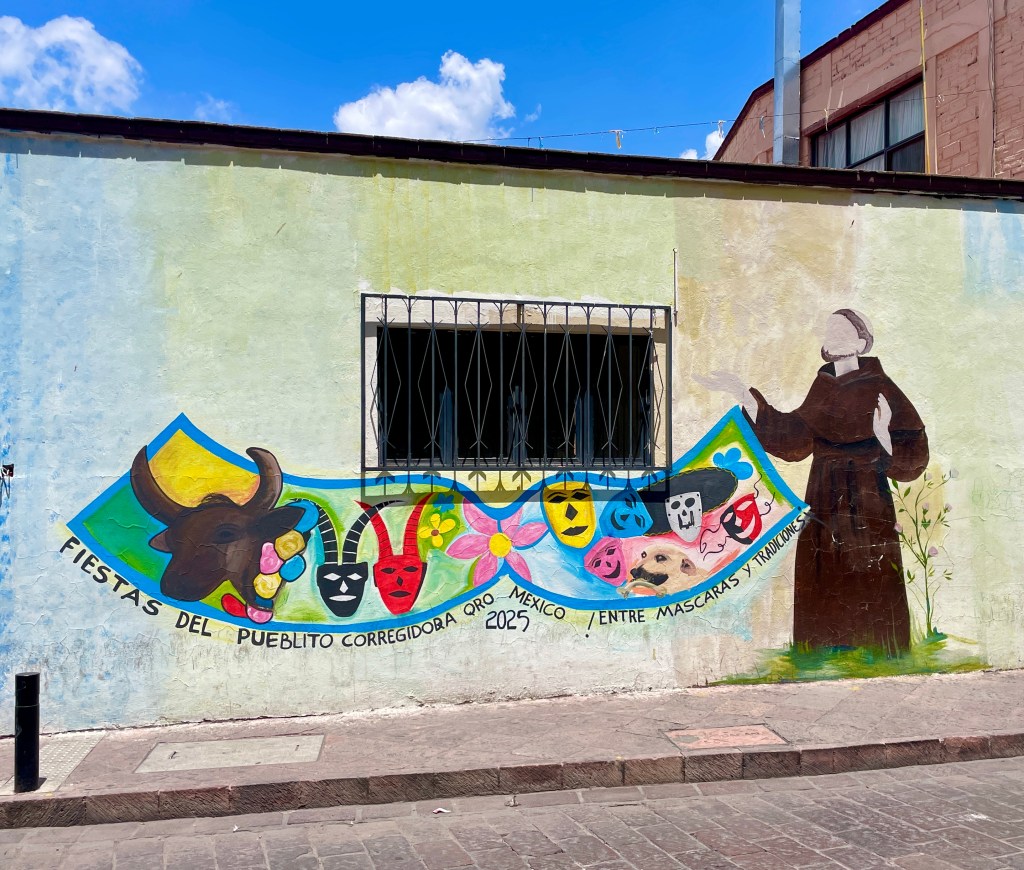
Oh and one more thing,,, this is what I saw riding home on the bus. I believe it needs a caption. Any Ideas?
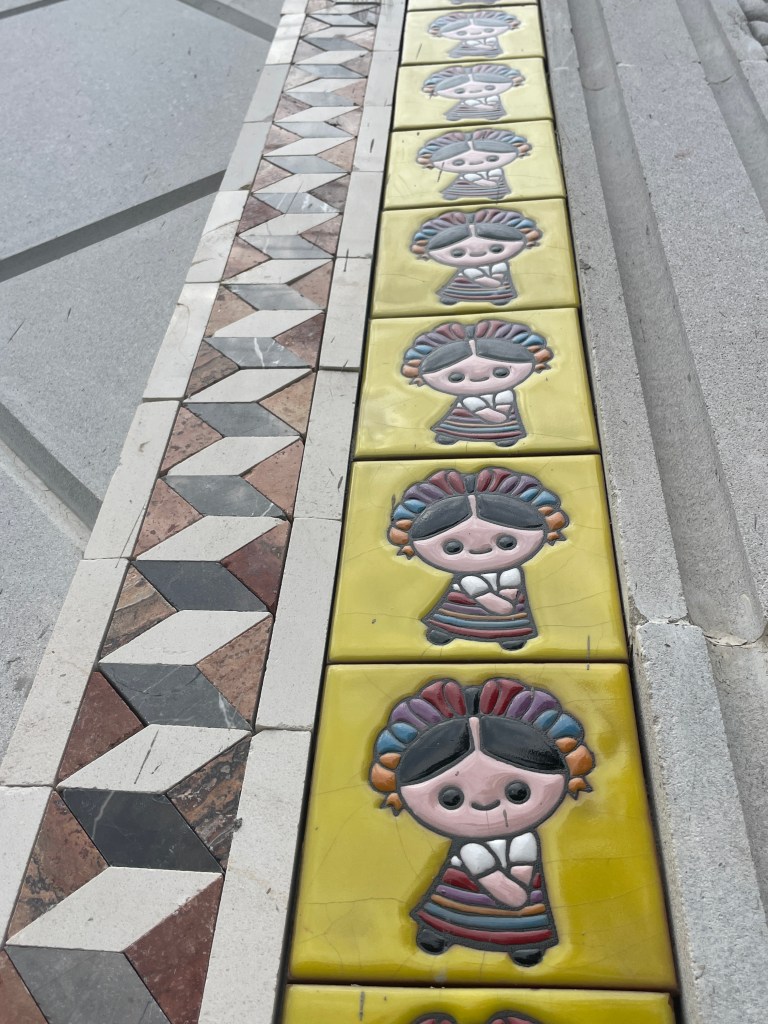
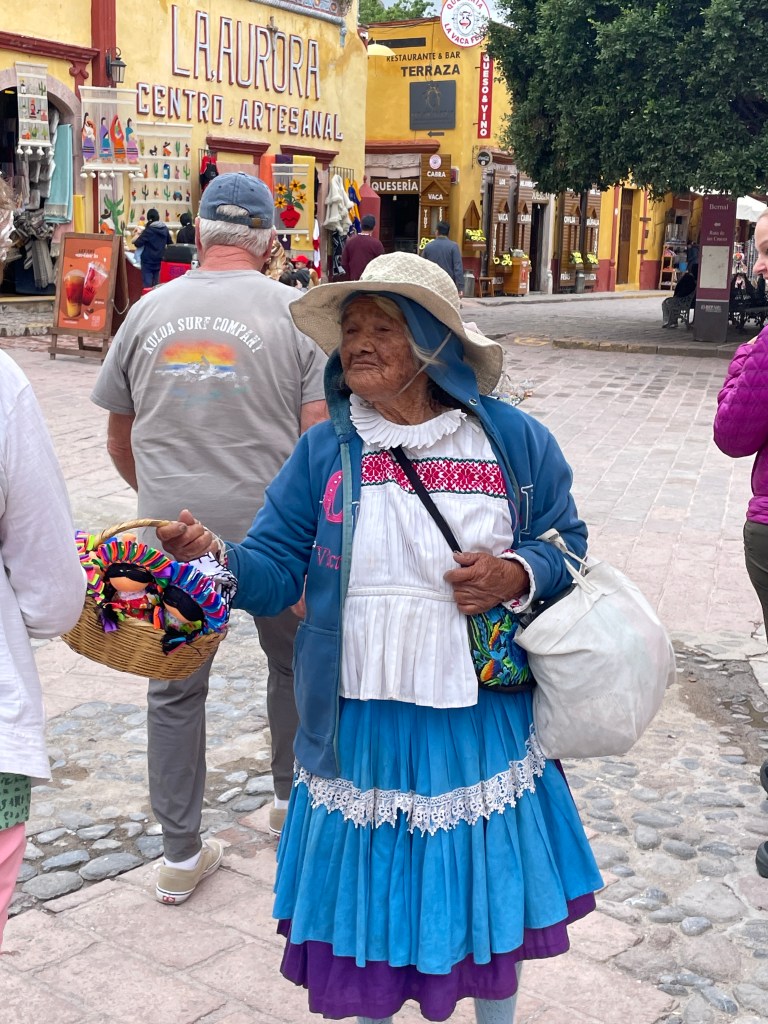
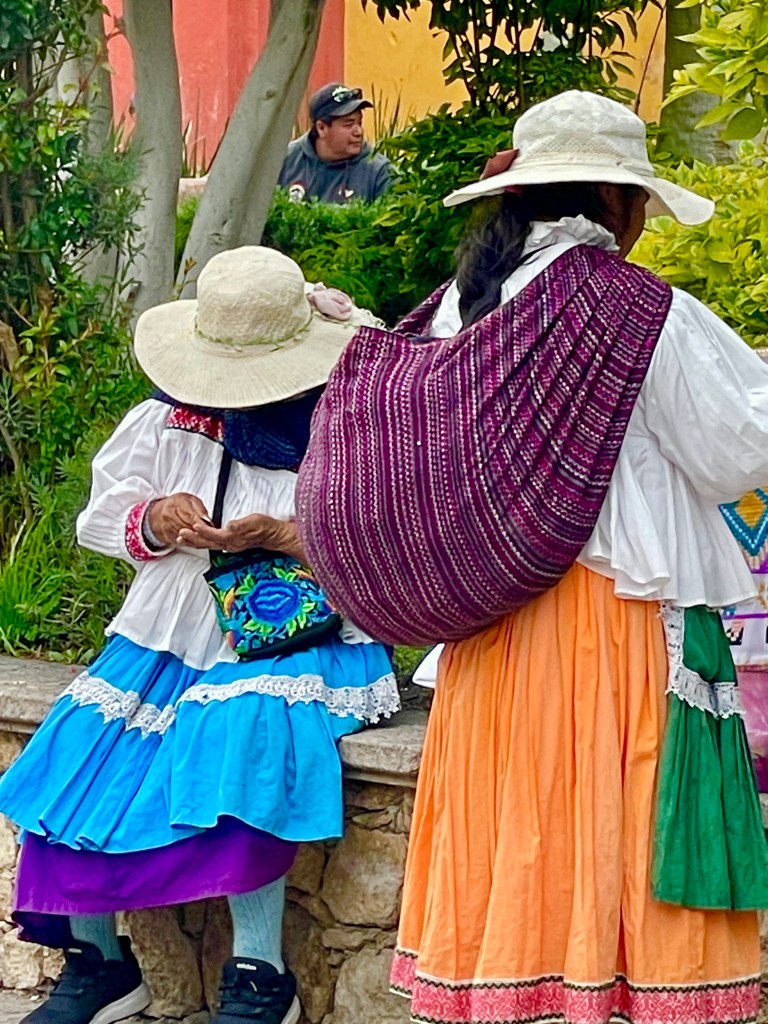
Here in this part of Mexico the “Maria Doll” or Mexican Rag Doll can easily be found. Sporting colorful dresses and ribbons braided into the doll’s hair, these festive moppets have a rich history that runs throughout the central region of the country. Dating back to the Colonial period in Mexico’s history; Marias were handmade by the Otomi and Mazahua communities which are located in and around Guanajuato, Michoacan and Queretaro . The modern dolls of today were soon crafted to celebrate the women street vendors who sold their wares back in the 1970’s.
Each doll is handmade and in the past clothing used by members of the household was stitched together to create each unique doll. With their winsome smiles the Marias were also thought to protect children from evil spirits.
Today Maria’s are big business and indigenous women in traditional dress can often be found in heavily touristed areas selling their dolls. And I can attest to the fact that nothing brings a smile to face of a vendor quicker then when she sells one of her dolls to a child who holds her Maria close and walks off with a big smile gracing her own face.
And look what I found in downtown Queretaro. Is this too cute or what?
One of the most beautiful towns we accidentally discovered in Tasmania was the town of Oatlands. Sitting about 50 miles north of Hobart it is a spectacular place to stop and explore.
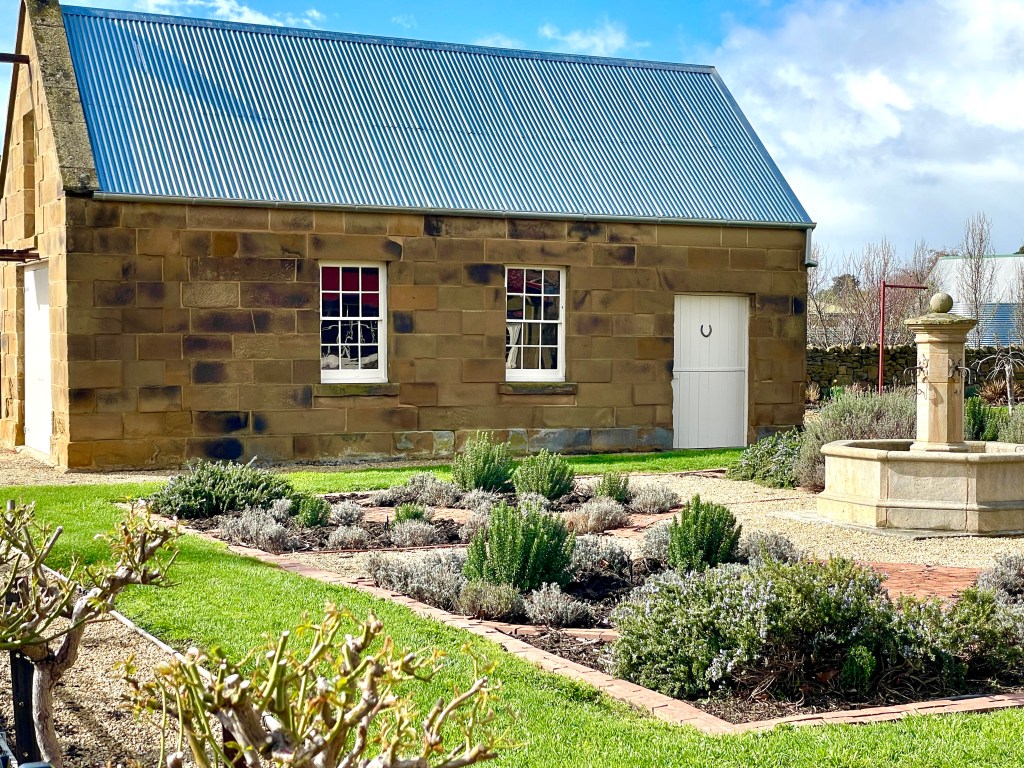
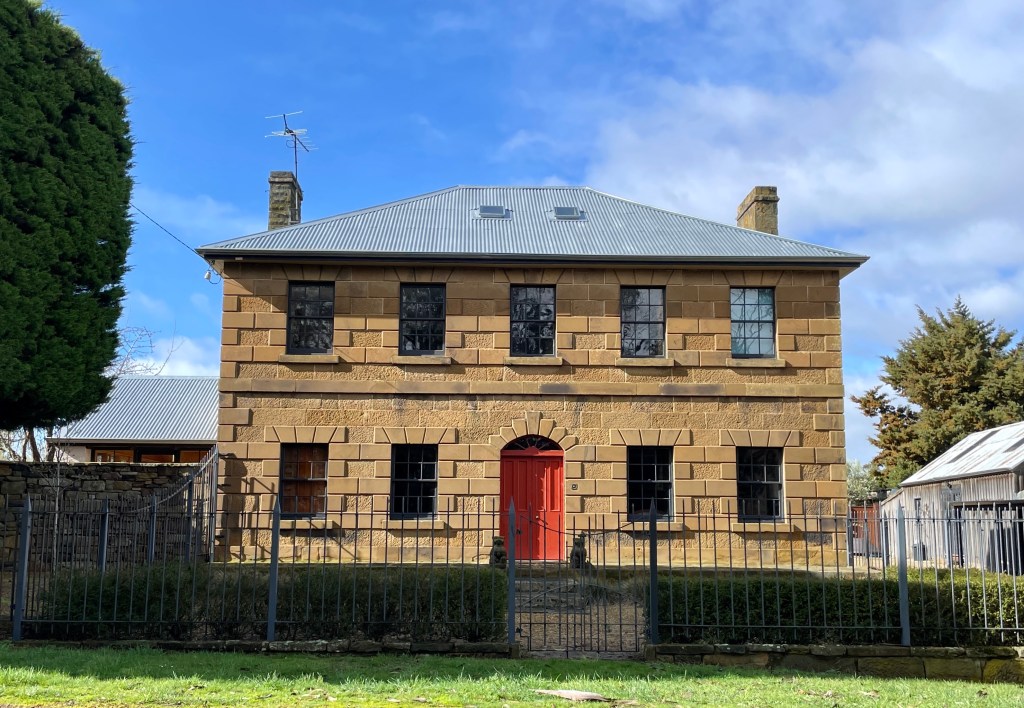
One of merits of his town is its vast collection of colonial sandstone buildings which number over one hundred fifty. Largely built by convict labor in the early 19th century; it was also considered a significant outpost during the Black War which was fought between the Indigenous First Nation People of the area and white settlers.
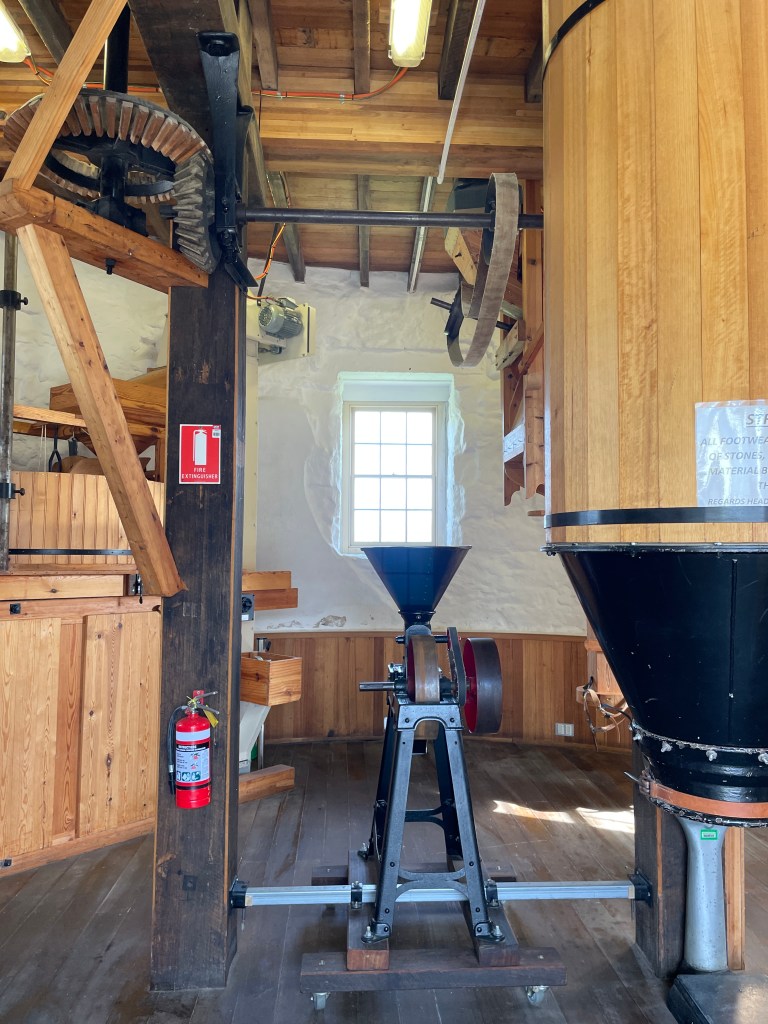
But if you have already heard of Oatlands it is probably due to Callington Mill, the only Lincolnshire style windmill in the whole of Australia. Built in 1837 this mill is a beaut and has been restored to its glory days.
Lake Dulverton, which borders Oatlands is well known for its many hiking paths which criss-cross in various directions. Fishing is another great pastime here and anglers can catch both rainbow and brown trout. The lake is also a bird watchers paradise where you can spot herons, ducks, and watch as black swans glide alongside the “cows” that inhabit the lake.
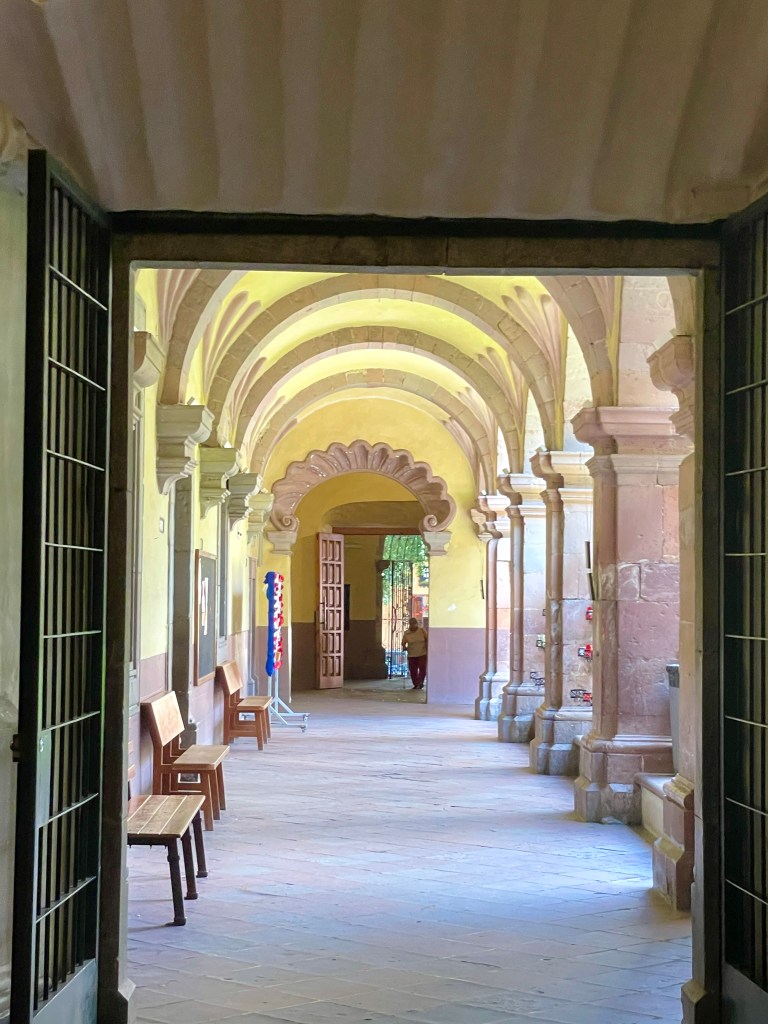
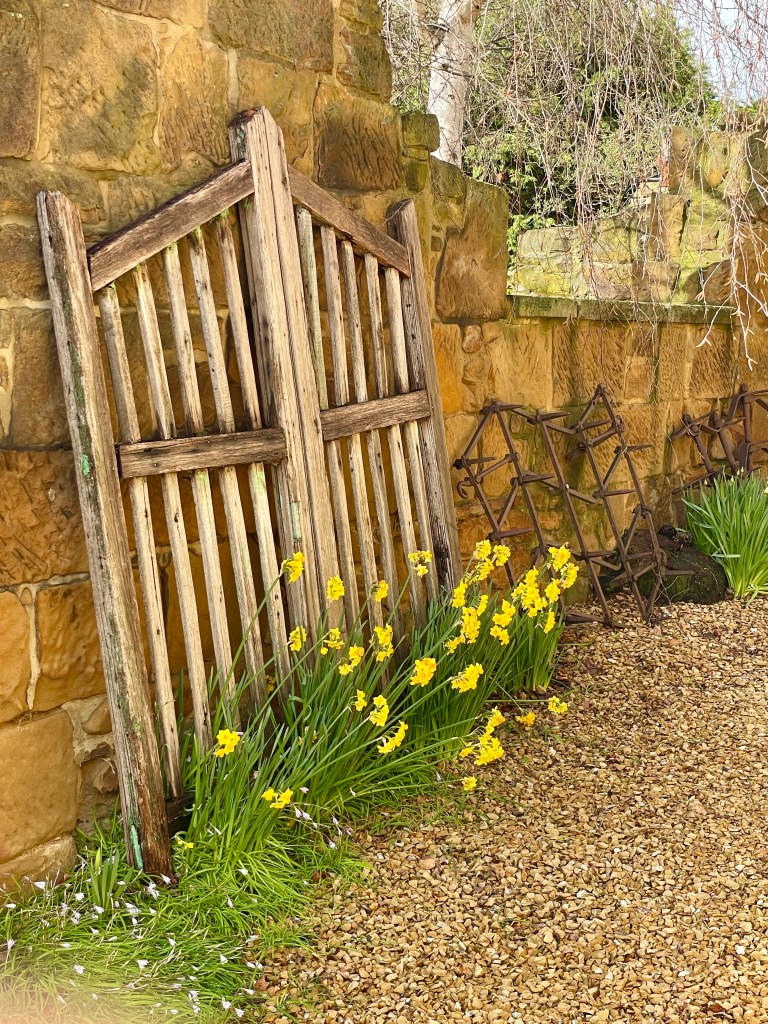
Oatlands also offers visitors a treasure trove of gardens and topiaries from one end of the town to the other. I was amazed at the different sizes and shapes of living sculptures that dotted the town.
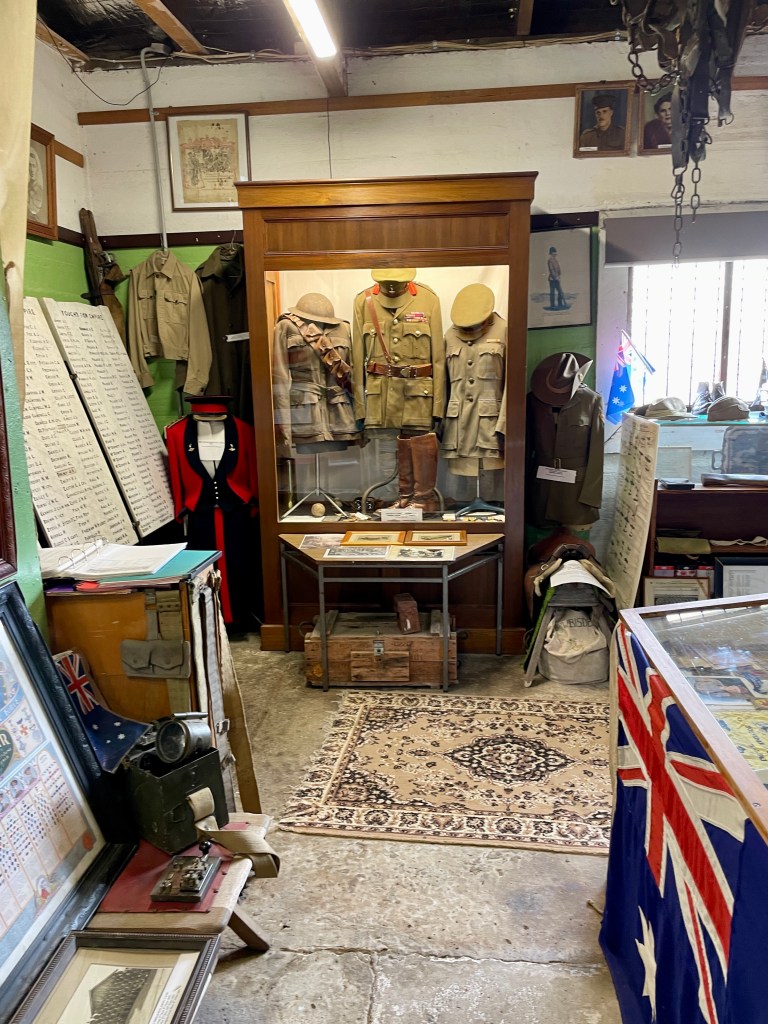
While there we also visited the Oatlands District Historical Museum featuring local memorabilia from the town’s early history to the present. There is also a rather substantial bird egg collection housed within its walls and the docents are eager to share their vast knowledge of the area.
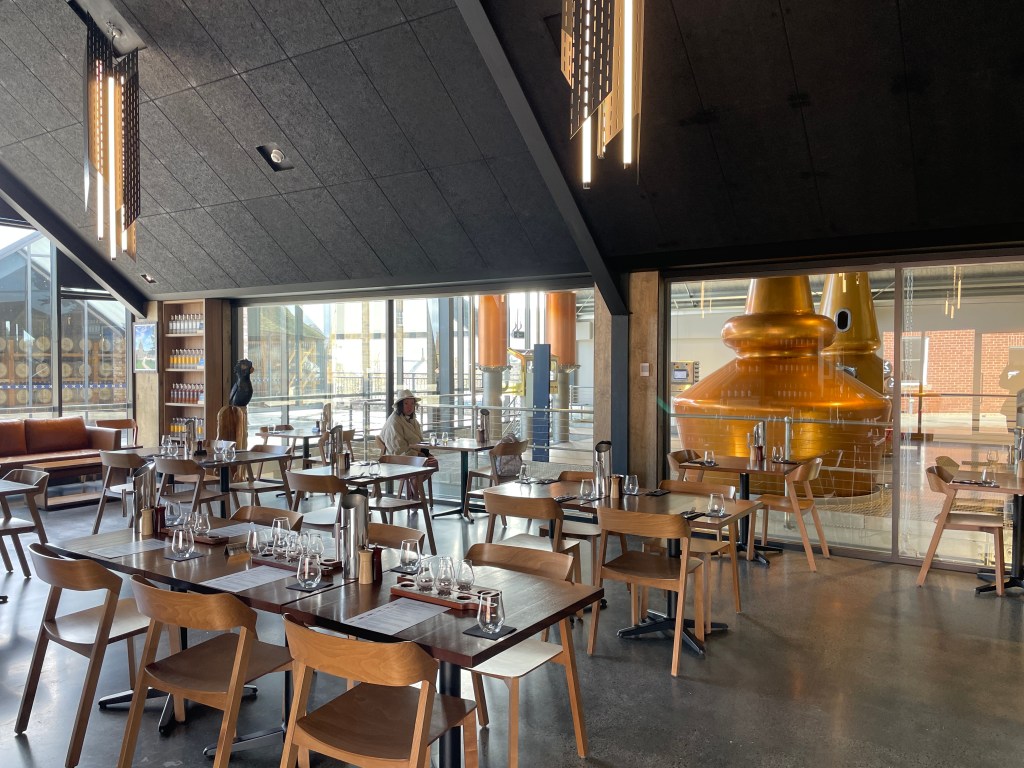
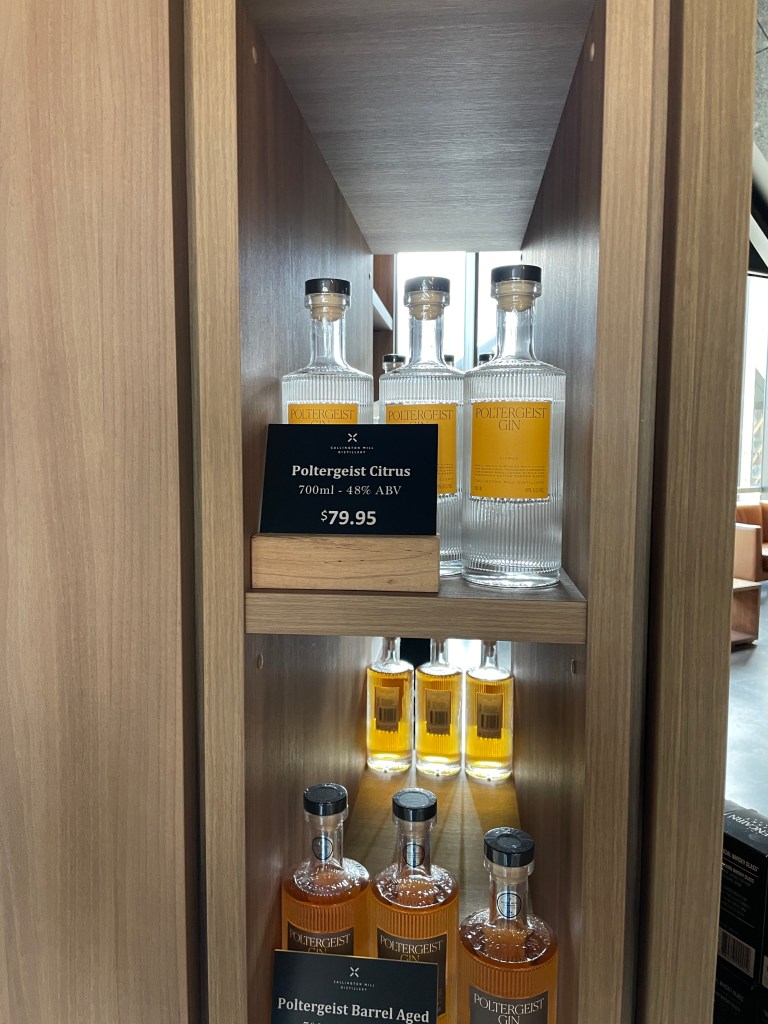
Finally, the Callington Mill Distillery offers an experience that few will forget. Producing both award winning gins and whiskeys; your senses will explode as you indulge in your first taste of Poltergeist Citrus known for its hints of candied fruit, orange, and key lime pie. Yummm. Better yet sit down and enjoy and lunch at their restaurant, The Cellar Door, which serves a variety of farm-to-table meats and produce. After lunch your next course of action is to order a flight of whiskey tastings followed by a self guided tour to learn more about what goes into making these bodacious spirits. Better yet, the facility also offers its own whiskey guides who help guests craft their own unique single malt whiskey complete with an original label.
Oatlands is the type of town that magically draws you in and keeps your enchanted. In short, it is one of the rare places that once you get there you don’t want to leave and its the kind of village where you suddenly find yourself searching for the nearest real estate office with sudden fantasies of finding a place of your own in this idyllic hideaway. Oatlands….is one of Tasmania’s gems… don’t miss it!
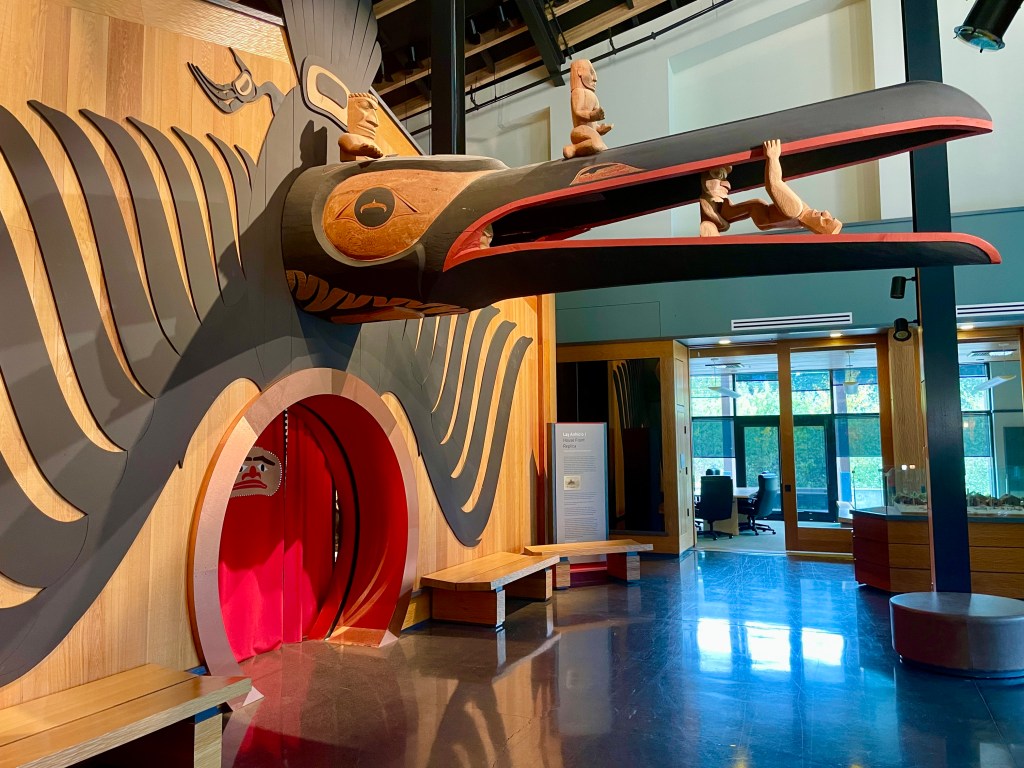
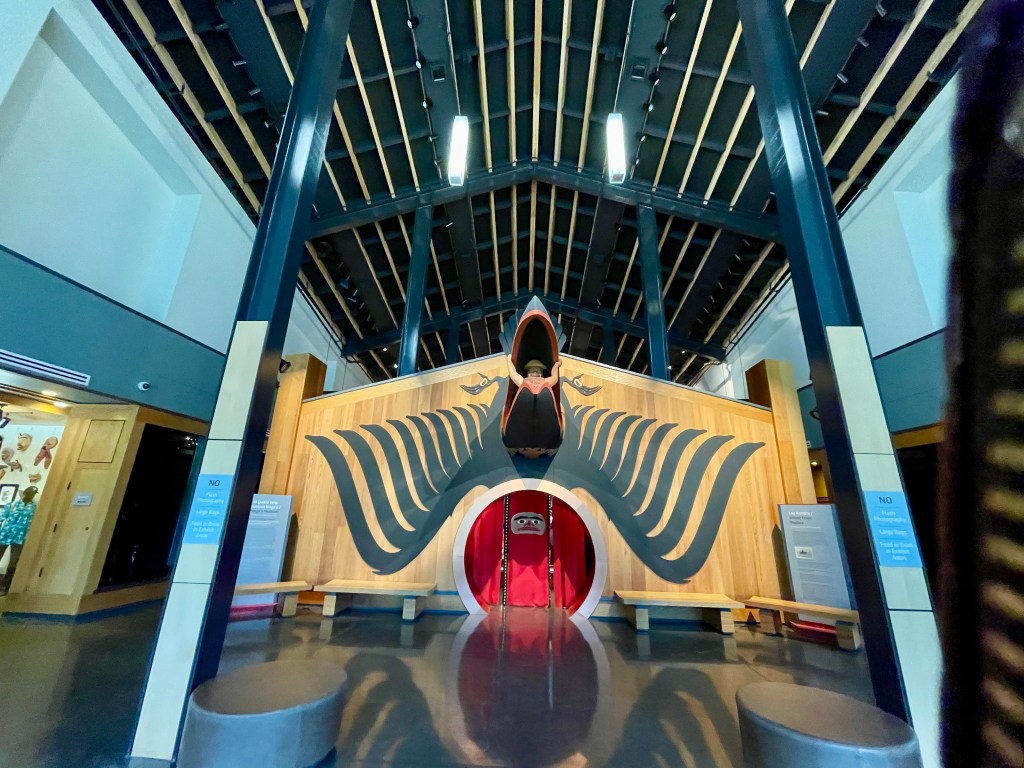
One of the best small museums I have ever visited is the Nisga’a in British Columbia. The architecture of the building which highlights the natural beauty of traditional tribal lands along with the highly curated and informative exhibits will surely take your breath away and give you a new sense of appreciation for traditional First Nation history and practices.
To get to the multiple galleries one enters through a replica of a longhouse. I suggest entering more than once to really get a feeling of what is being conveyed and to be able to experience the feast for your eyes that surrounds you.
The first gallery is known as the Transformation Gallery. Here you will find a huge collection of spirit masks (naxnok) and costumes that were used to the tell the stories of spirits and their role in society.
After exiting this colorful gallery you are directed to the Shaman’s Gallery (Halayt Gallery) which emphasizes the role of the Shaman in society and displays items used to call and direct the supernatural.
The Museum also contains several more galleries which discuss the history of the Nisga’a, the possessions of the people, laws and customs, as well as showcasing daily life of the tribe and individuals roles within it. Headdresses, bentwood boxes and rattles are just a few of the exquisite things that will be seen as you meander through. Be sure to take some time to explore as this is not an educational center to rush through.
One of the best things about this museum is the kindness of staff who will patiently answer or will find the answer to any question you might have. These are individuals who are immensely proud of their culture/heritage and want to be sure that everyone who leaves takes a bit of that appreciation with them.
Finally, be sure to check out the gift shop where local artists have their works on display and where you can also find further information about the indigenous people throughout the region.
There is a small entrance fee. Families pay $22, adults, $8 and children $5. The museum is open from Early May through the end of October on Wednesdays through Sundays from 10 am until 5 pm. It is located at: 810 Highway Drive, Lax̱g̱altsʼap, British Columbia, Canada. For further information call 1 (250) 633- 3050.
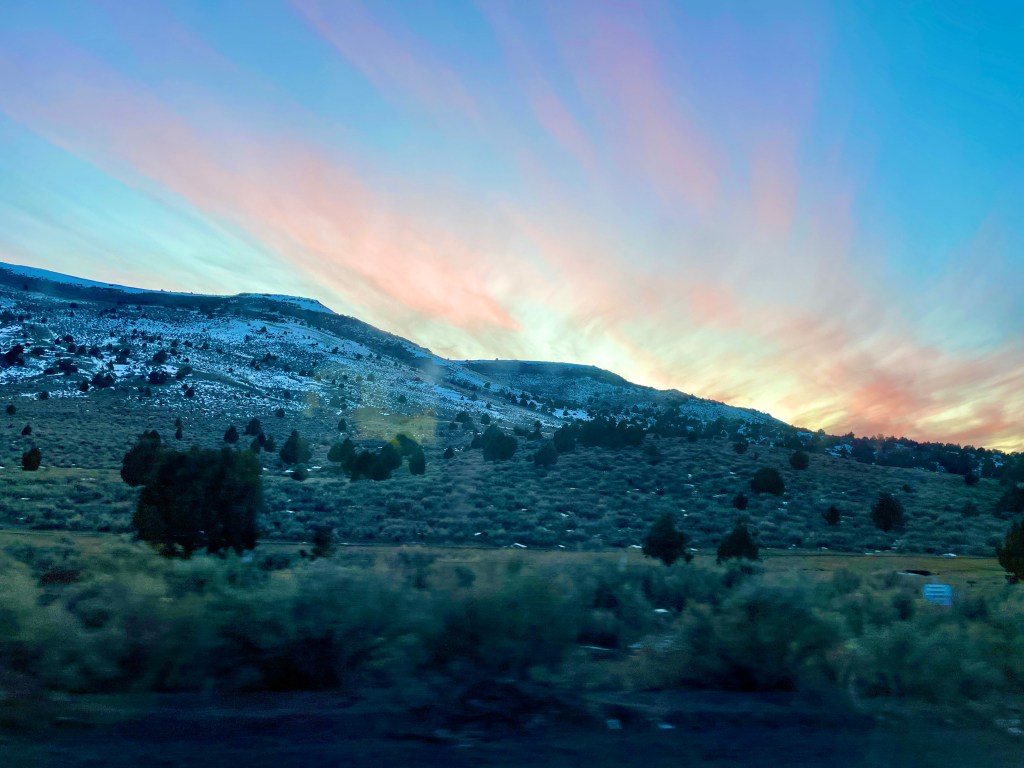
One of the most interesting places I have visited this year is the Massacre Rim Dark Sky Sanctuary located about 150 miles north of Reno but easily accessible from Cedarville, California. Part of Dark Sky International, an organization which advocates protecting the night skies from light pollution; it’s designation marks this part of Nevada as one of the darkest places in the USA and the world. This vast area is so remote that the night sky is not impacted by human produced light resulting in some of the clearest star gazing available in the world. In fact, the Milky Way is visible by just the naked eye and the planets are so bright that it feels as if you can reach up and touch them. The night sky vistas are so immense and the number of stars so numerous it will bring tears to the eyes of the most cantankerous of old men.
The nights we were camping there the sky was teaming with stars as the coyotes howled in delight. Shooting stars flew across the night sky by the dozens and the magnificent Man in the Moon brought himself so close that you could hear his whispers as he spoke from the heavens above. This was in January 2025 and it was cold during the night with temperatures below freezing resulting in fluctuations of over 40 degrees between night and day. Since temperatures can reach over 100 degrees in the summer to me the optimum time to visit this amazing place would probably be spring or fall.
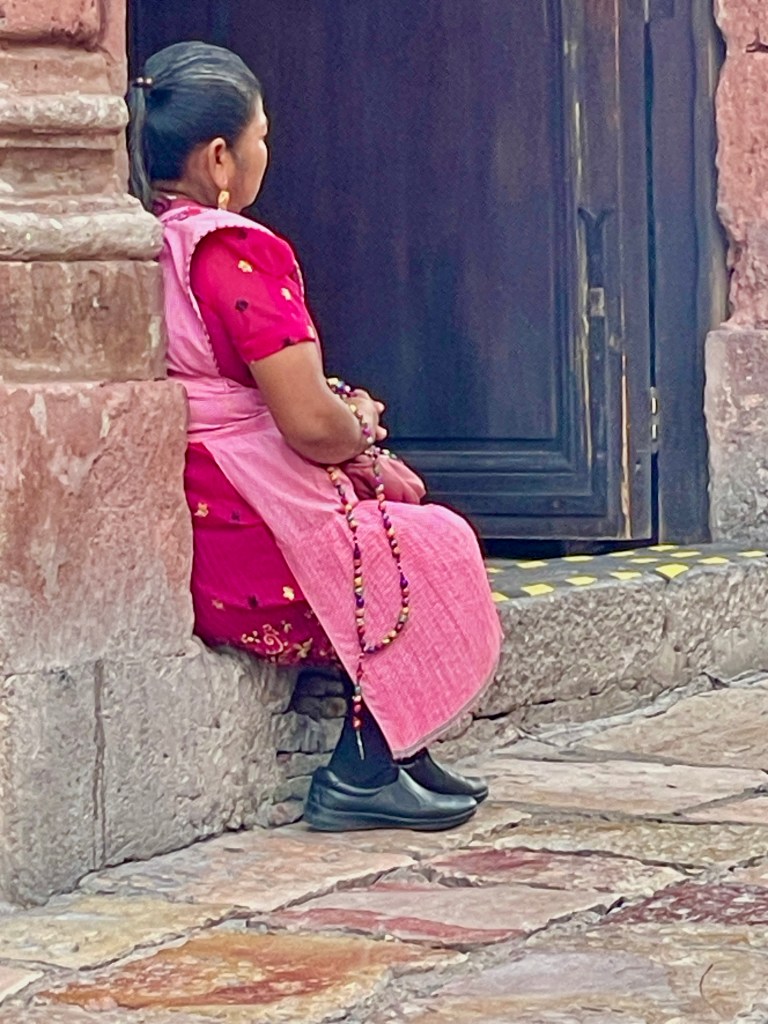
One benefit of no light pollution in an area is that it allows nocturnal animal habitats to thrive. Here you might find badgers, kangaroo rats, bats, mountain lions and a rattlesnake or two. Because of the isolation of this area it is important to bring what you might need to survive an emergency. Also, it is important to keep in mind that there is snowfall in the winter time so it is imperative to have enough supplies on hand to keep you warm and fed for several days. Further, you cannot count on cell service in this remote area so be sure to let loved ones know where you will be.
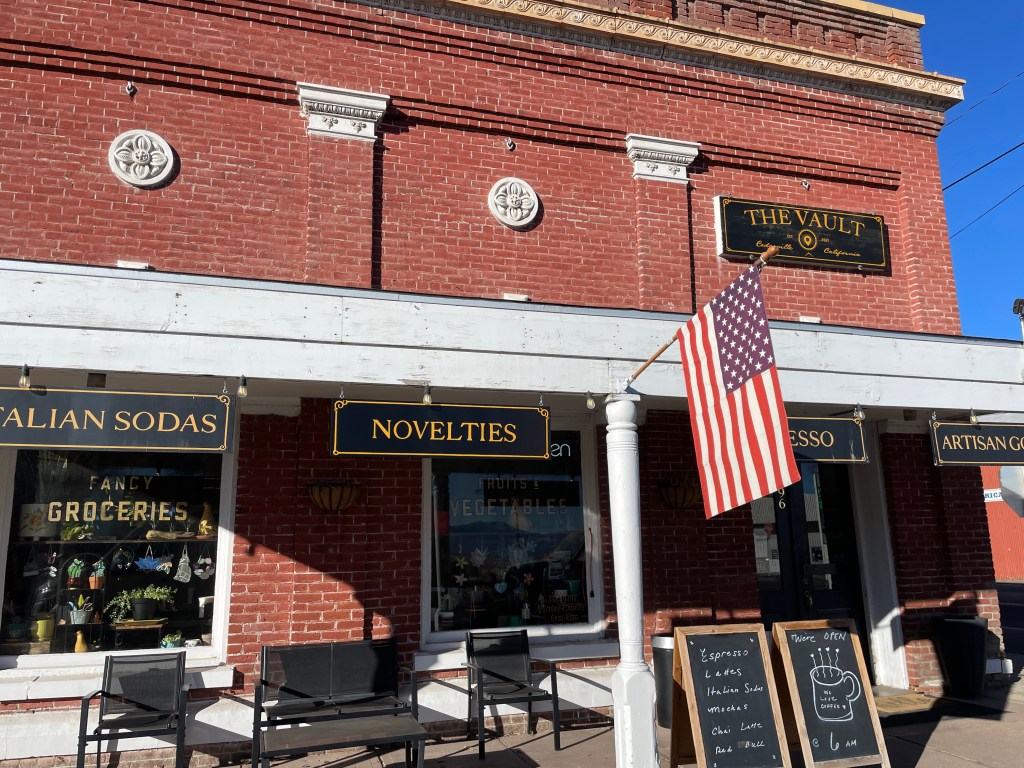
There are several markets in Cedarville (including Page’s) and at Alturas where you can pick up groceries and supplies. I can also recommend without reservation several eateries and cute little stores in Cedarville including The Vault (great coffee and knickknacks) and the Country Hearth Restaurant which serves fresh baked goods as well as amazingly large portion breakfasts.
There are numerous campgrounds in the area managed by the BLM which can be contacted for further information at:
Bureau of Land Management 602 Cressler St. Cedarville, CA 96104 530-279-6101
While Massacre Rim takes a bit of planning and time to visit, its breathtaking night skies are out of this world and definitely worth a trip. In fact, I was so impressed and awestruck by what I experienced that I am now planning on visiting as many Dark Sky Sanctuaries as I possibly can.
For more information on Dark Sky viewing visit: dark sky.org
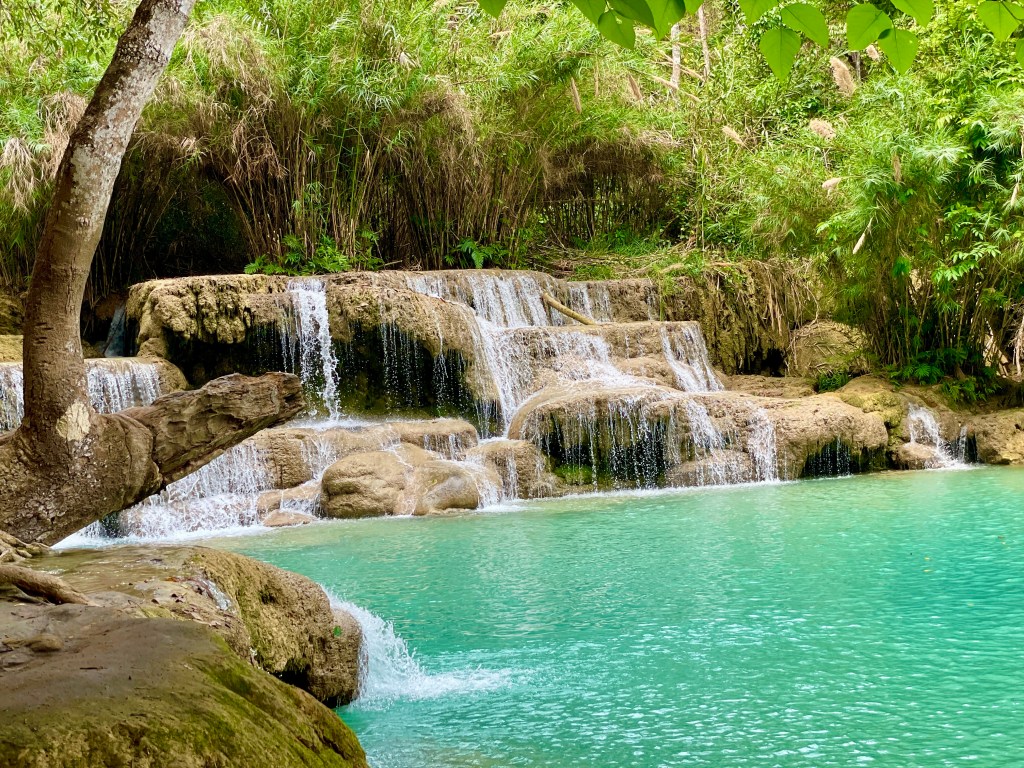
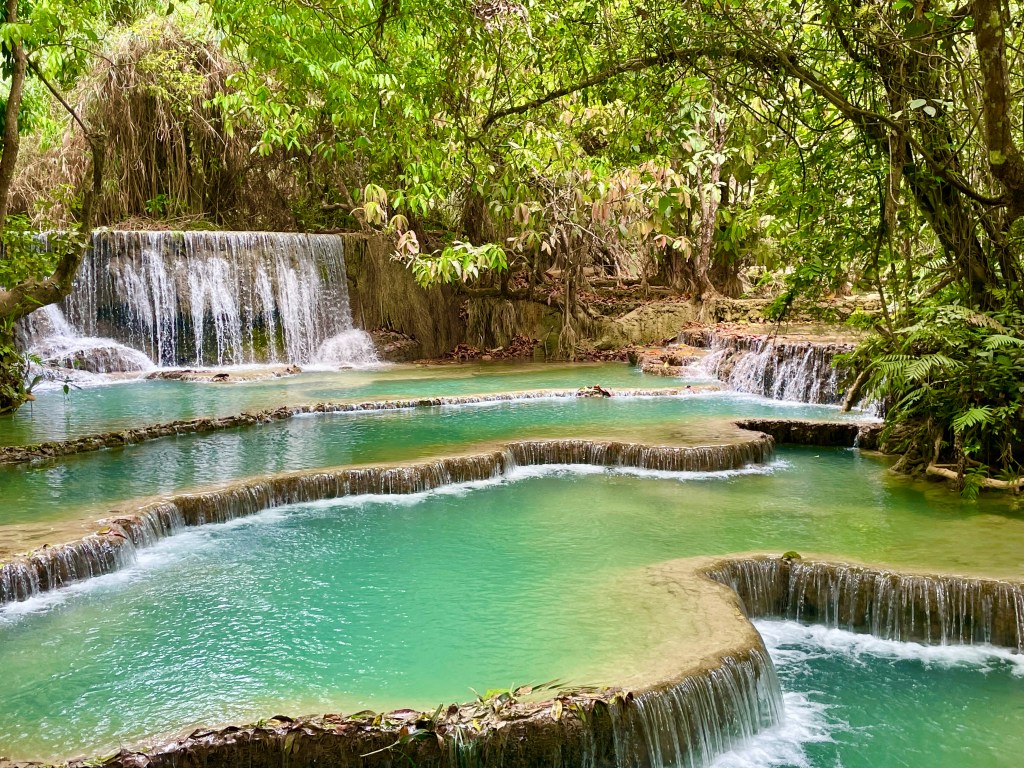
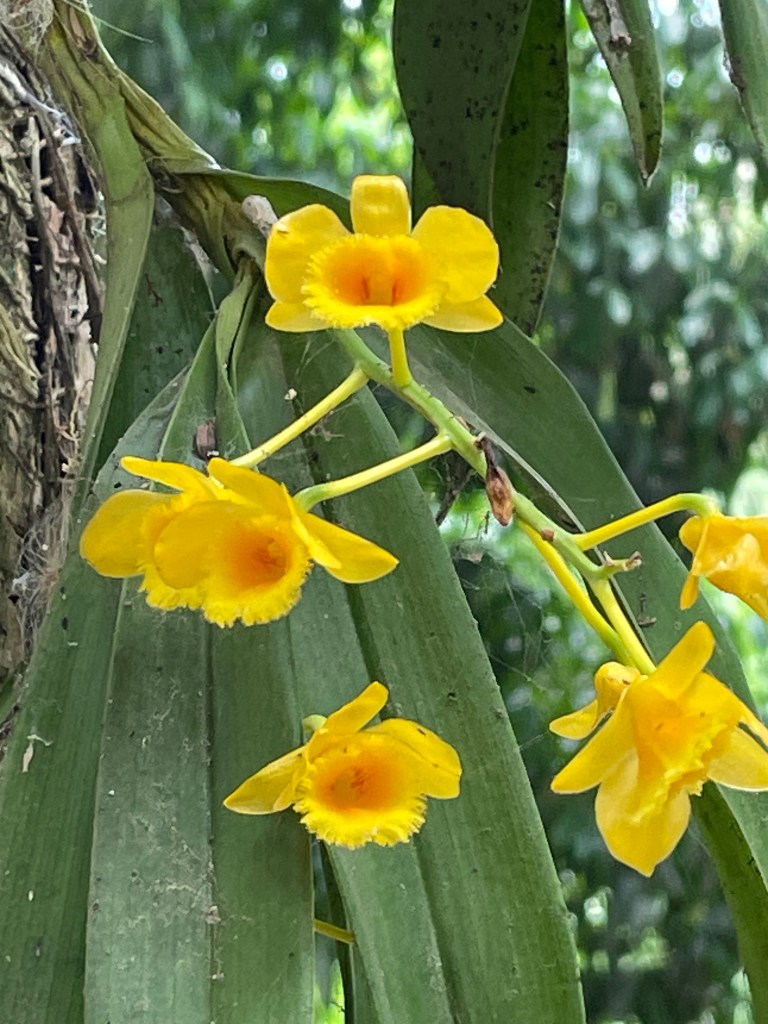
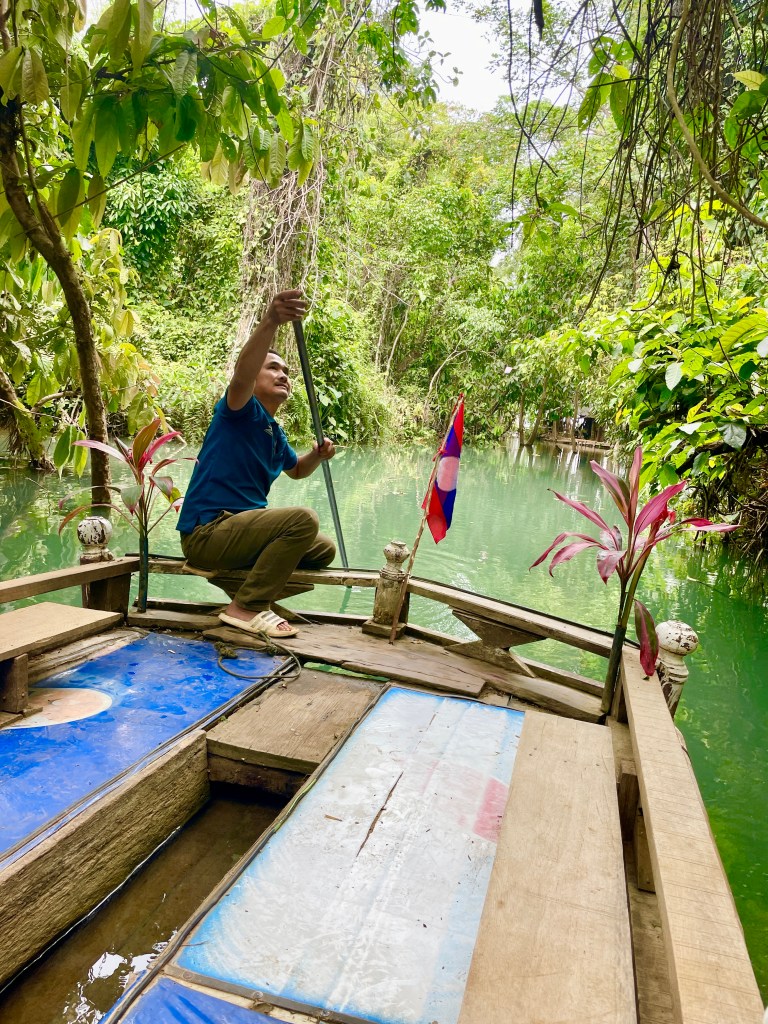
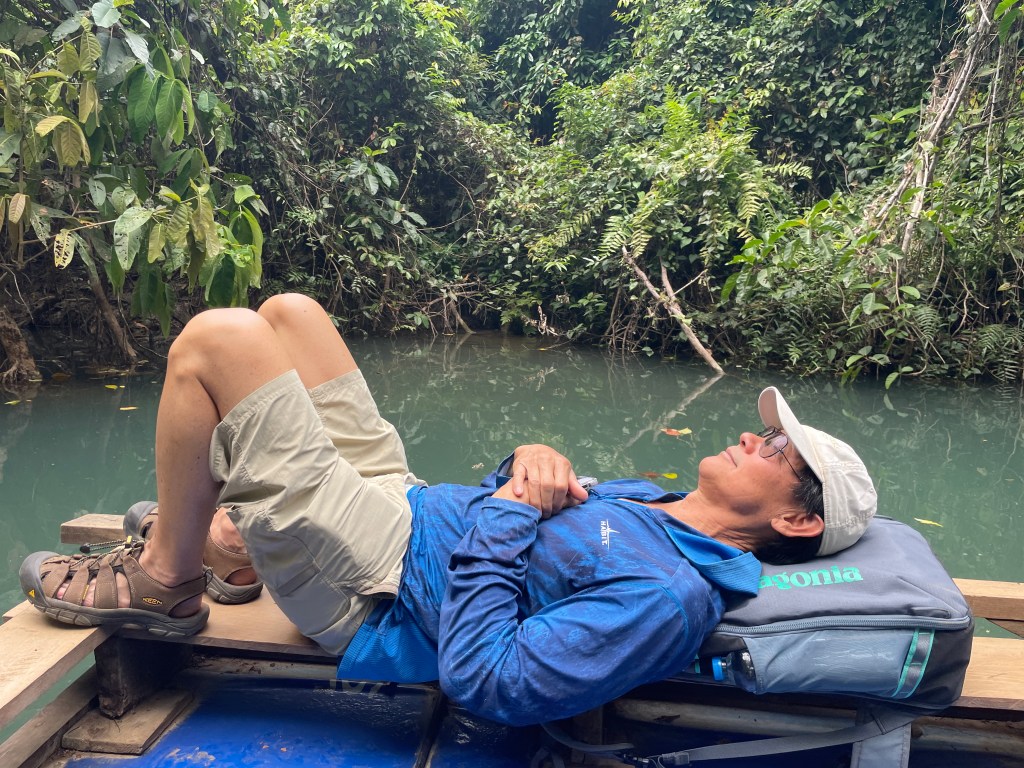
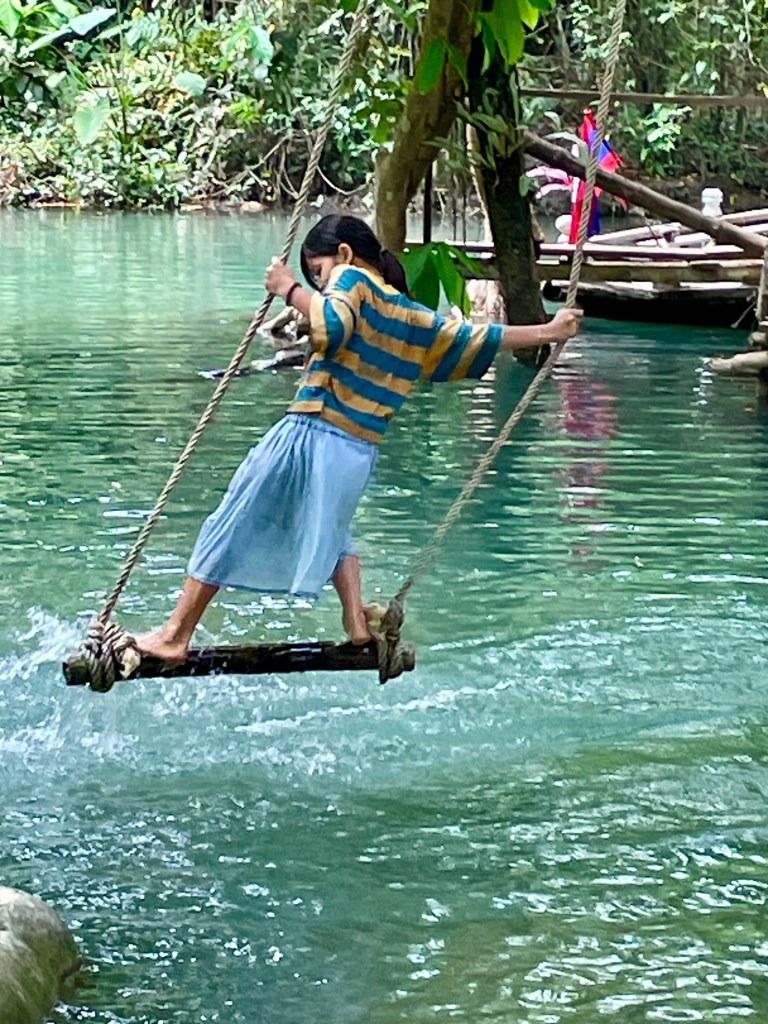
About 20 miles from Luang Prabang is one of the areas most beautiful treasures, Kuang Si Waterfalls. The water slips from high in the jungle tumbling over sculpted white limestone creating sets of turquoise pools which meander further down the mountain to a small village called Ban Tad. We arrived early in the morning in April and already it was starting to scorch. Sounds of birds filled the air while even the sun bears in the rescue park had trouble leaving their hammocks.
Walking small paths we rounded corners which captured our imaginations as the scenery began to spill out in front of us.
Until at last…the first of the pools magically appeared. And YES…it is that amazing color!
One of the great things about this waterfall is that you can actually swim in some of the pools. So swim we did. The bottom is a little slippery and small fish nibble at your toes but on a sizzling hot day it is a small price to pay for the privilege of floating in the cool, clear, soft water.
Climbing the trail you will see giant stands of bamboo, including my favorite…the yellow variety.
After a 15 minute walk you will arrive at the crest of the waterfall. It’s a bridal veil that falls vertically almost 200 feet and it is truly an enchanting view.
Along the way you will be rewarded with many different types of flora and fauna…this is the jungle after all!
From the crest you can head up the mountain to THE VIEW which is a tree house restaurant and the start of the zip line which propels you down through the jungle at lightening speeds. While most of the walk consists of climbing up sets of steel staircases, BEWARE, it is a hike for the semi-fit, which basically leads straight up to the top of mountain. But once there, you will be rewarded with spectacular views and the sounds of water spilling over the cliffs.
There are path and waterways up here to explore too. You can even take a short boat ride to the “start” of the falls.
One the way down we stopped at a little cafe which had the best tempura and beer where the butterflies decided to belly up to the bar.
Kuang Si Waterfalls is a great place to spend a day especially during the heat of the summer. Open from 8 am until 5 pm daily, there is a small admittance fee of 20,000 kip to visit the park which amounts to a little over $1 USD. This place can fill up with bus loads of tourists. My suggestion…rent a car…get there early and when the crowds start to arrive…drive off and explore the countryside. It’s money well spent and it will give you a sense of adventure that you will otherwise miss.
Last month I had the privilege of meeting Meta the Elephant. She lives at the Elephant Peace Project in Chiang Rai, Thailand along with two other elephants. This organization is run by DADA who is an indigenous Karen tribal member and who advocates for the humane treatment and care of elephants as traditionally practiced by her ancestors. DADA has lived with elephants all her life as have numerous generations of her family. Living with elephants is a tradition and way of life of the Karen.
The elephants are allowed to roam untethered throughout the property and they do not engage in work or hard labor for a living. They are lovingly cared for, bathed, and fed throughout the day. The amount of food that they eat per day is massive and they are destructive as they go about gathering their own food. As a result their diets have to be supplemented with food that is bought by the organization.
The feel of the trunk of an elephant as she removed food from my hand is nothing like anything I have ever felt before. The trunk is a powerful life force onto itself and the work that it can do by gripping and pulling is amazing. I was in complete awe. But perhaps the most surprising thing to me about the elephant was their skin. It felt leathery and rough from all the mud that they threw on themselves until we bathed them. Then, with all the dirt and mud removed, their skin felt as smooth as a newborn baby’s butt! Oh, and did you know, that elephant’s store water at the top of their trunk basically between their eyes!
Elephants are intelligent creatures and their command of the language used by the Mahout is astounding. Here are just a few of the words that an elephant knows as sounded out in English:
Word Meaning
How Stop
Pei Pei Come with me
Bun Bun Eat
Buuuun Drink
Chol Sigh Go to the left
Chol Qwa Go to the right
Chol Toy Backup
Hwe Hwe Walk Forward
Lupe Stand Up
We had a great day hiking with the elephants, being educated about them and feeding them different foods throughout the day. We urge you to support the Elephant Peace Project to help feed these gentle giant eating machines. Contributions can be made via the Elephant Peace Project website. Here is the link: