The Most Marvelous Day-Cusco, Peru

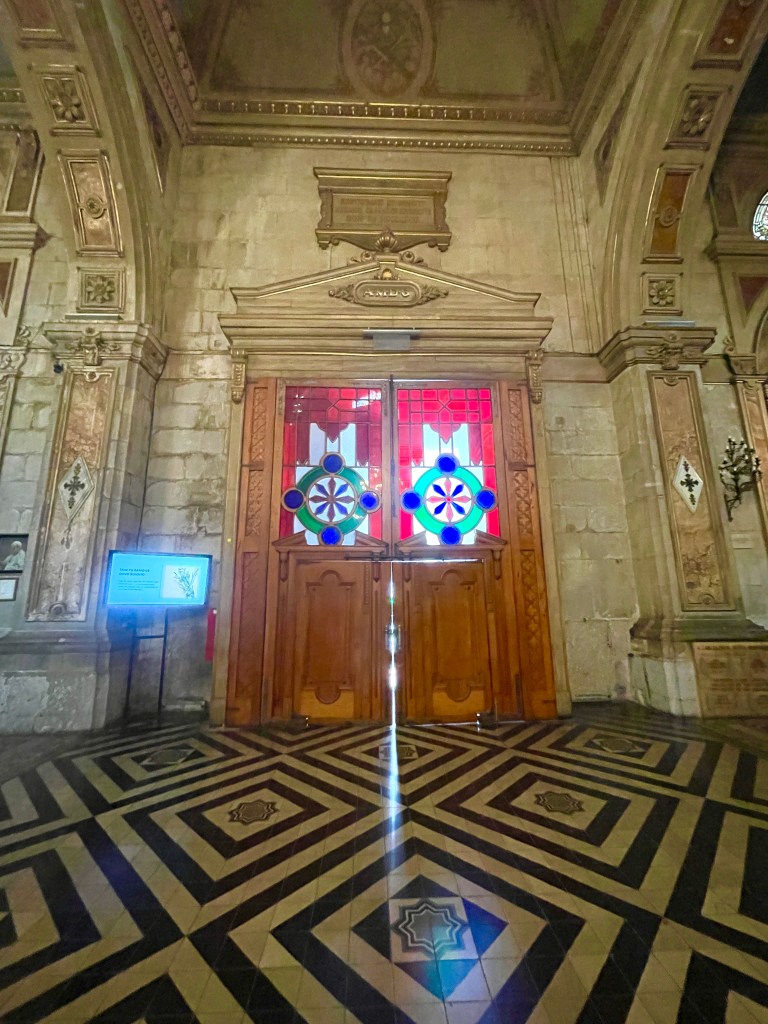
The morning started with a massive headache. But what do you expect when you are at 11,100 feet above sea level and altitude sickness is knocking on your door? A few Tylenol later and Michael and I were heading through an ancient wooden door and stepping out into the unknown.

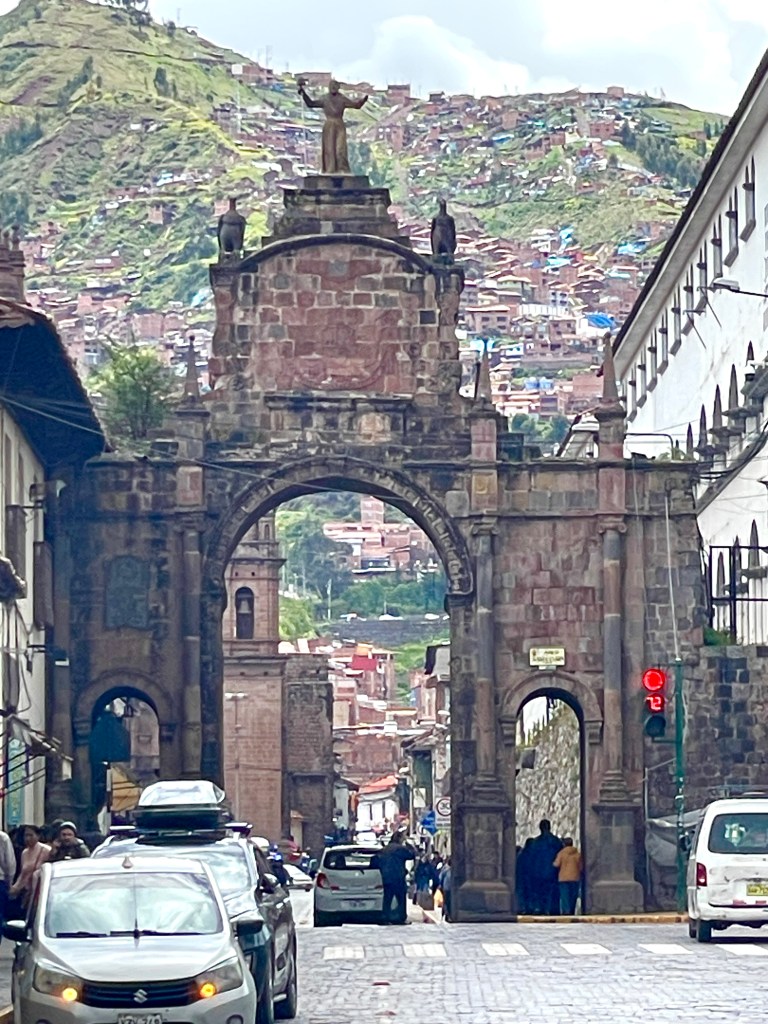
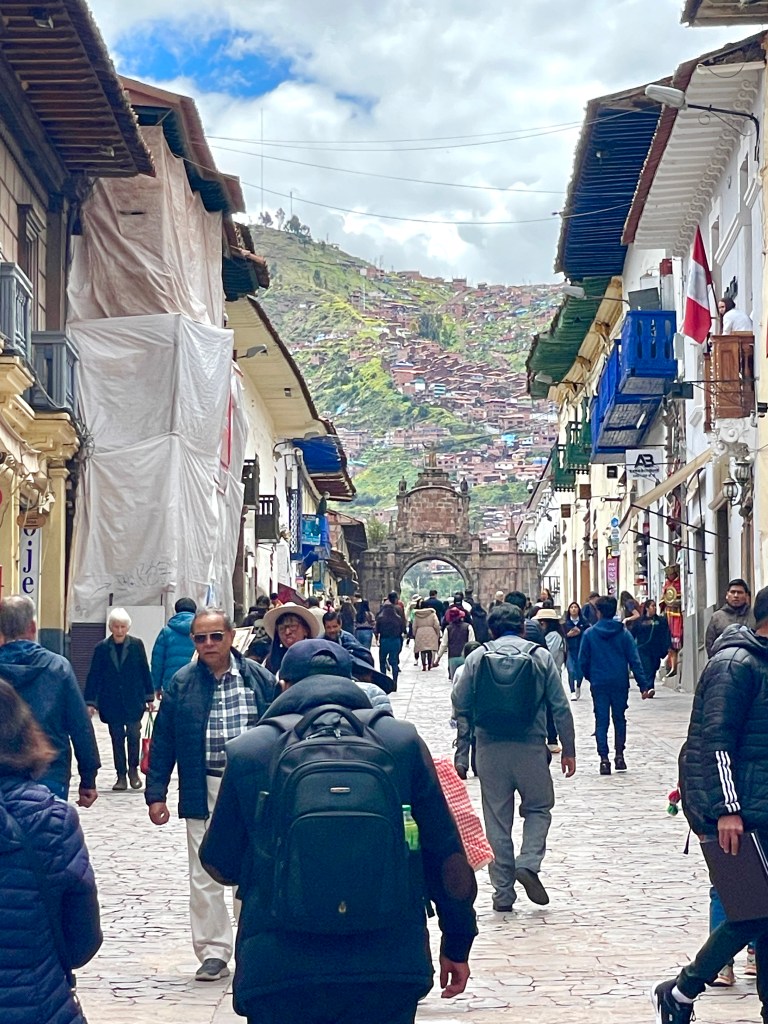
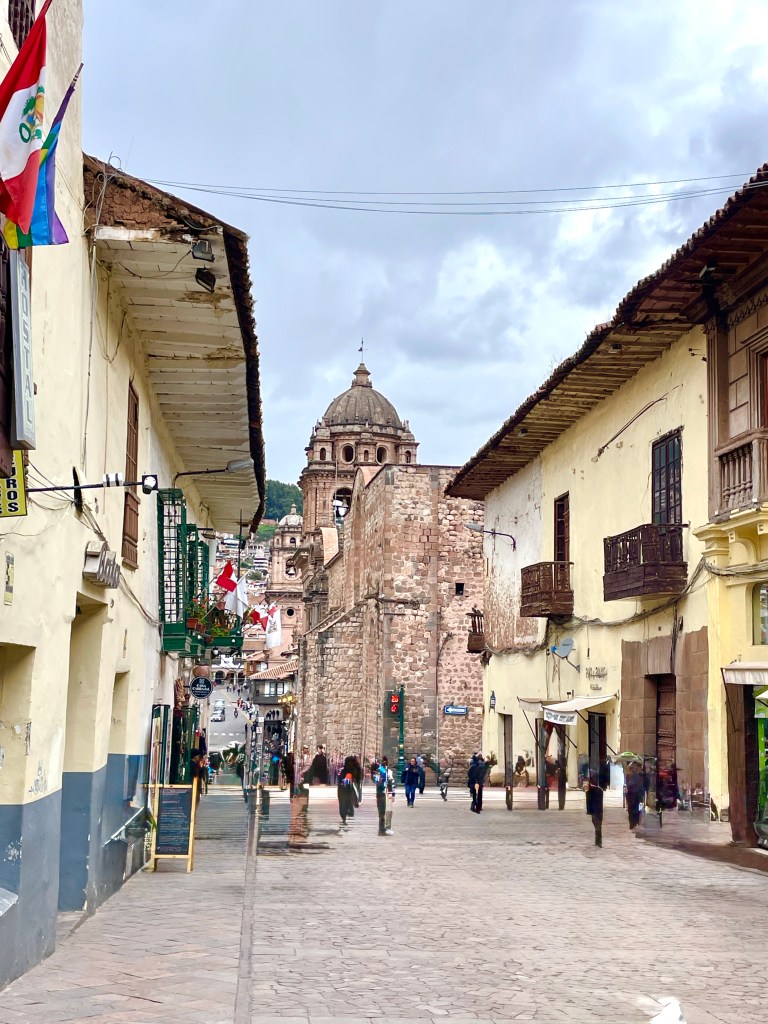
Cusco, Peru is one of the most scenic and authentic towns I have been to in South America. In only five minutes time while walking through the squares it was easy to determine that I absolutely love it here! History seeps from its pores and every corner turned is a new adventure. Yes, it is true that Cusco is a tourist town where all the foreigners hang out before heading to Machu Picchu but despite it all it’s historic center is amazing with small cafes, ancient churches, and coffee houses dotting the area. I only wished I had been around to see its untouched and unspoiled beauty fifty years ago.

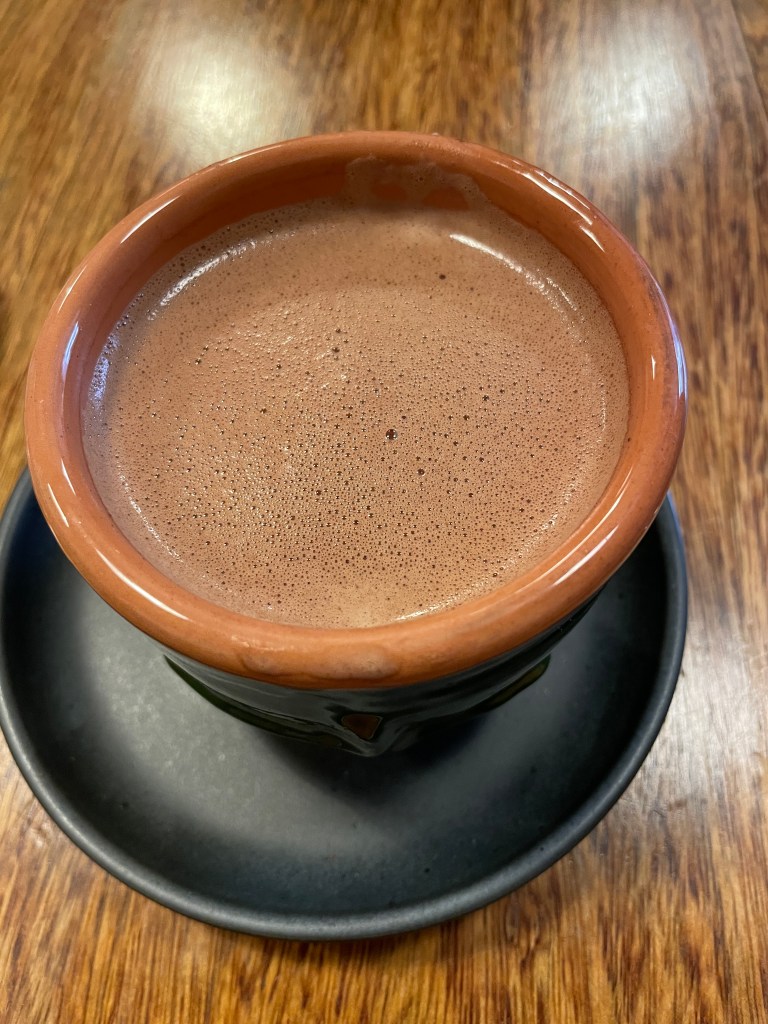
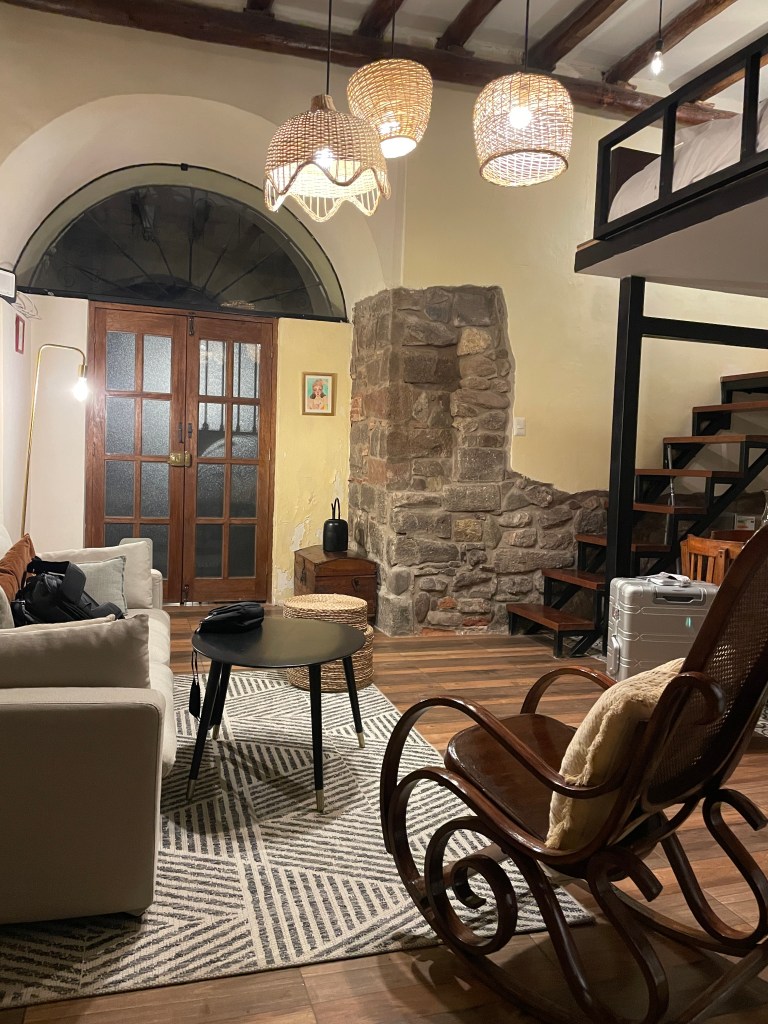
We are staying at an Air b&b called Secret Garden and except for being a bit chilly at night it is everything you could ask for. Set in an historic building it looks like a “typical” hacienda found in Mexico. We were told that for altitude sickness we should drink some coca leave tea which we conveniently located in a kitchen canister. The tea is slightly bitter and I cannot tell you if it helps or not but hey….sometimes you just have to follow the traditions of the area.
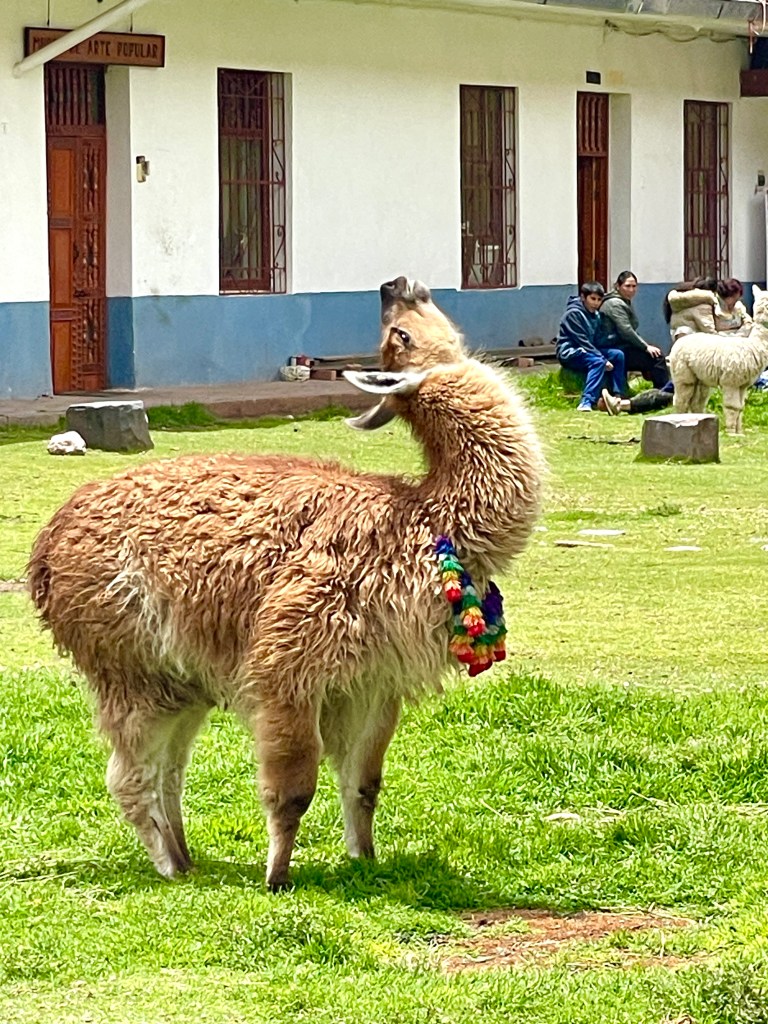
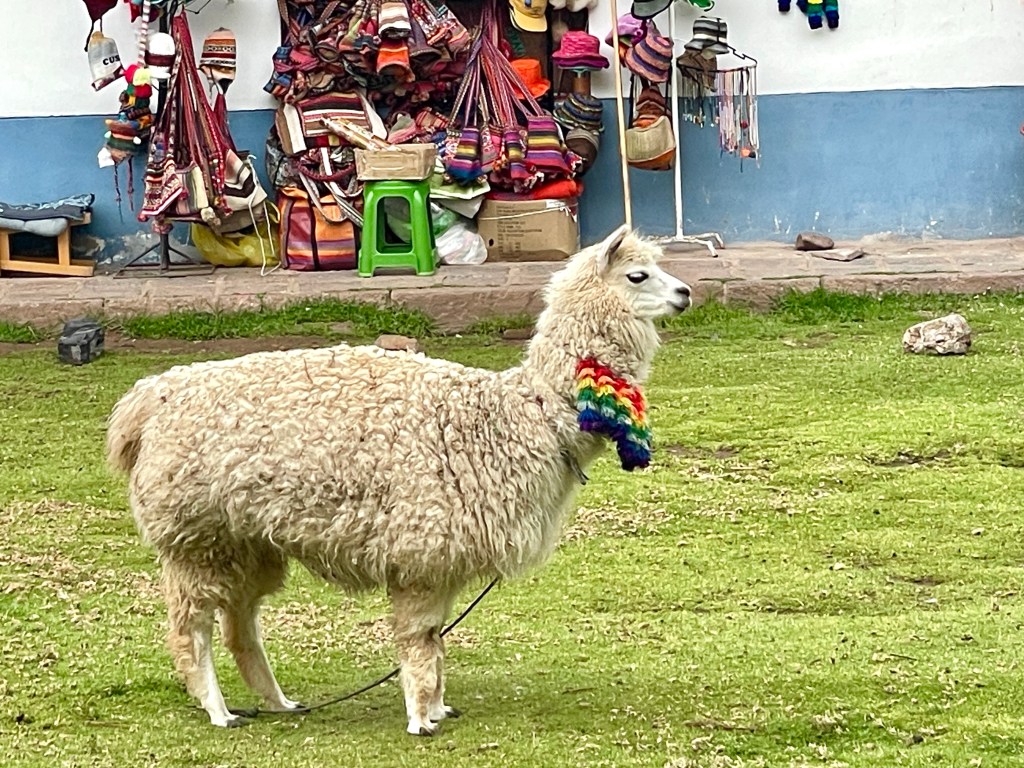
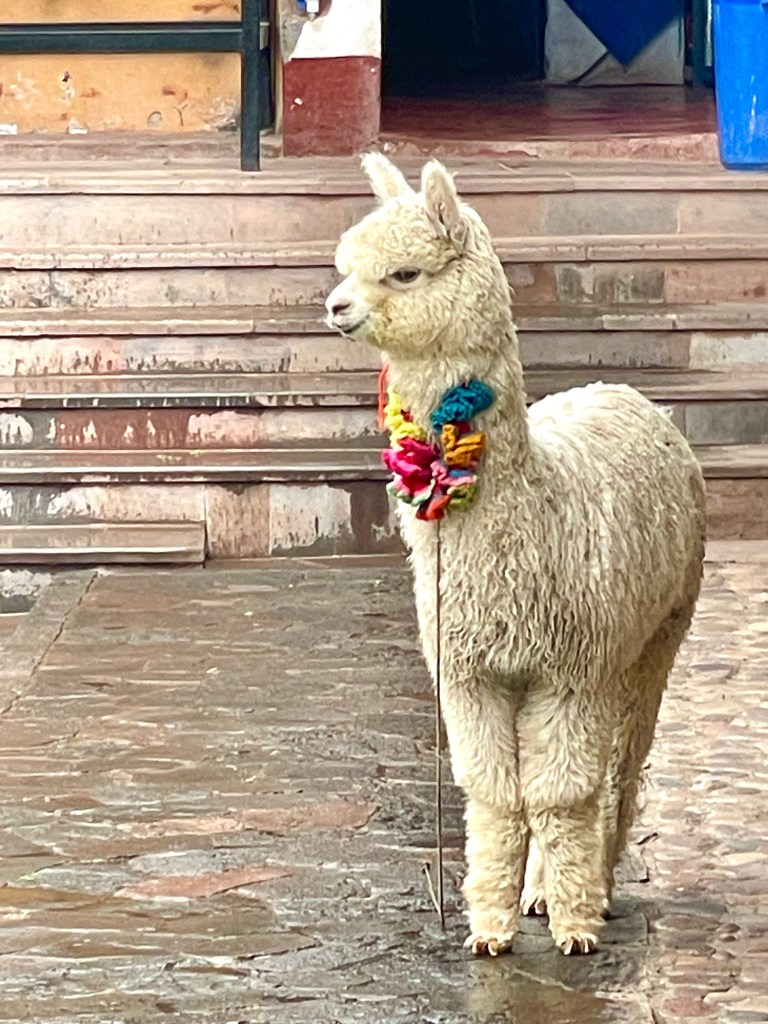
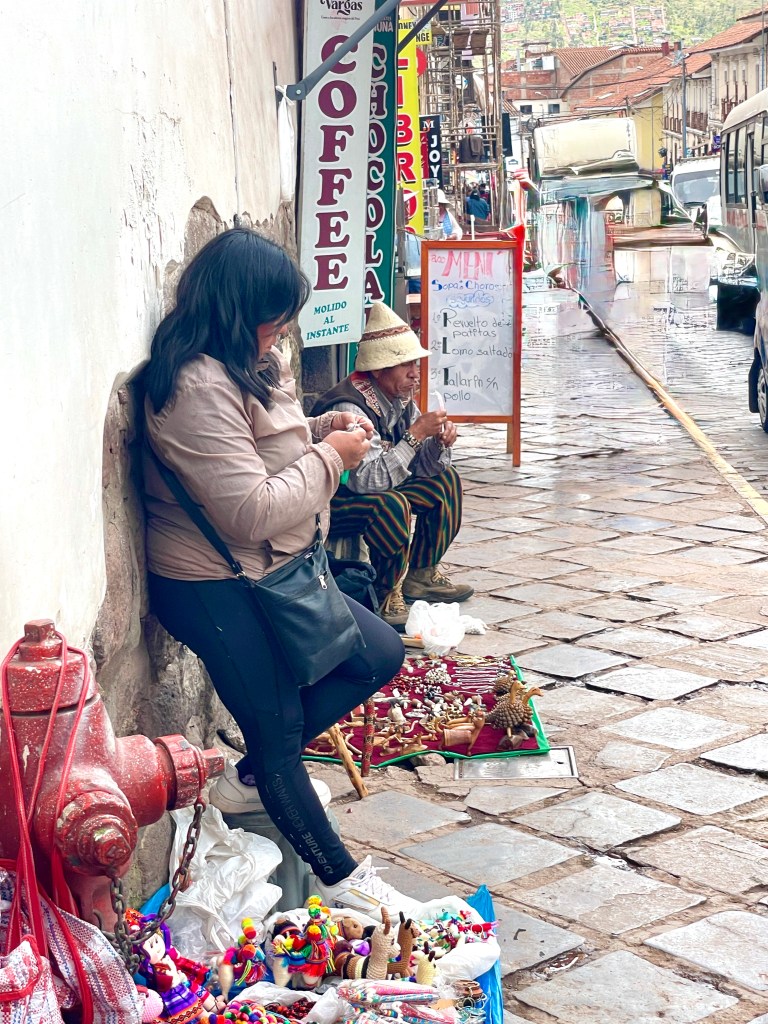
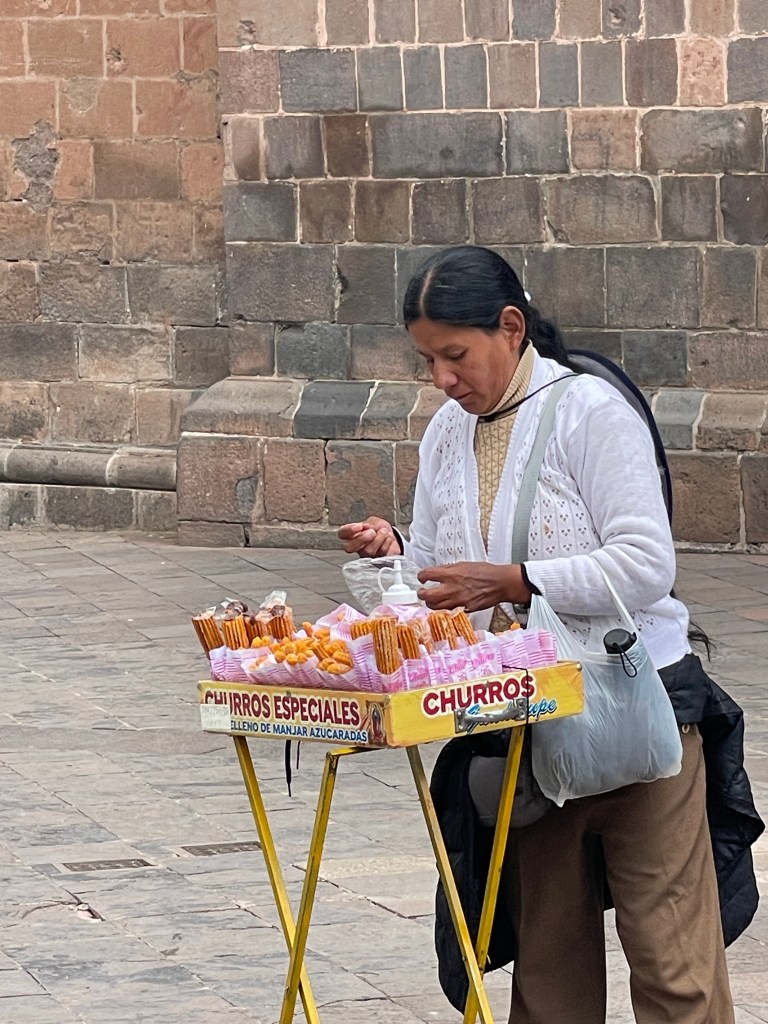
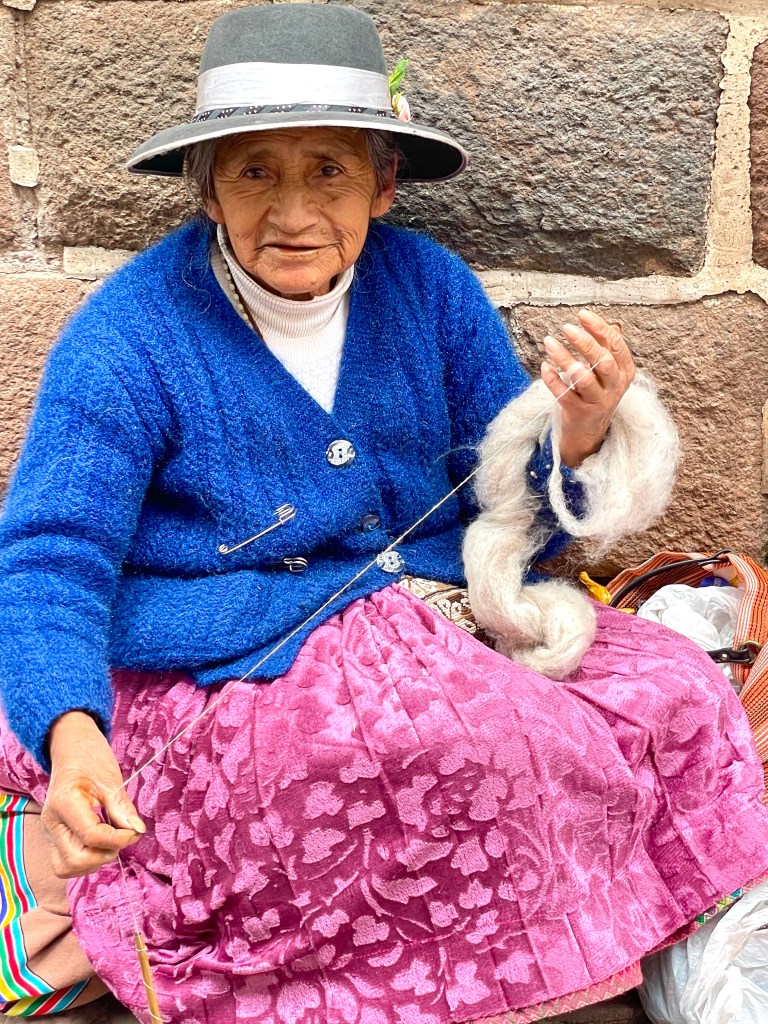
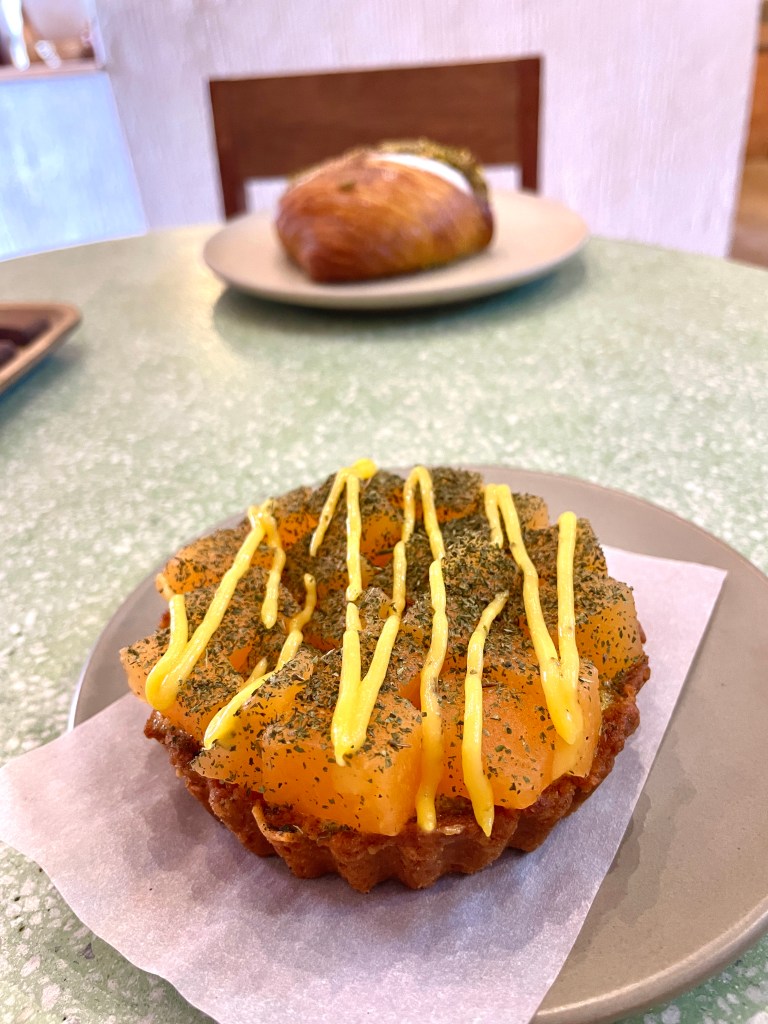
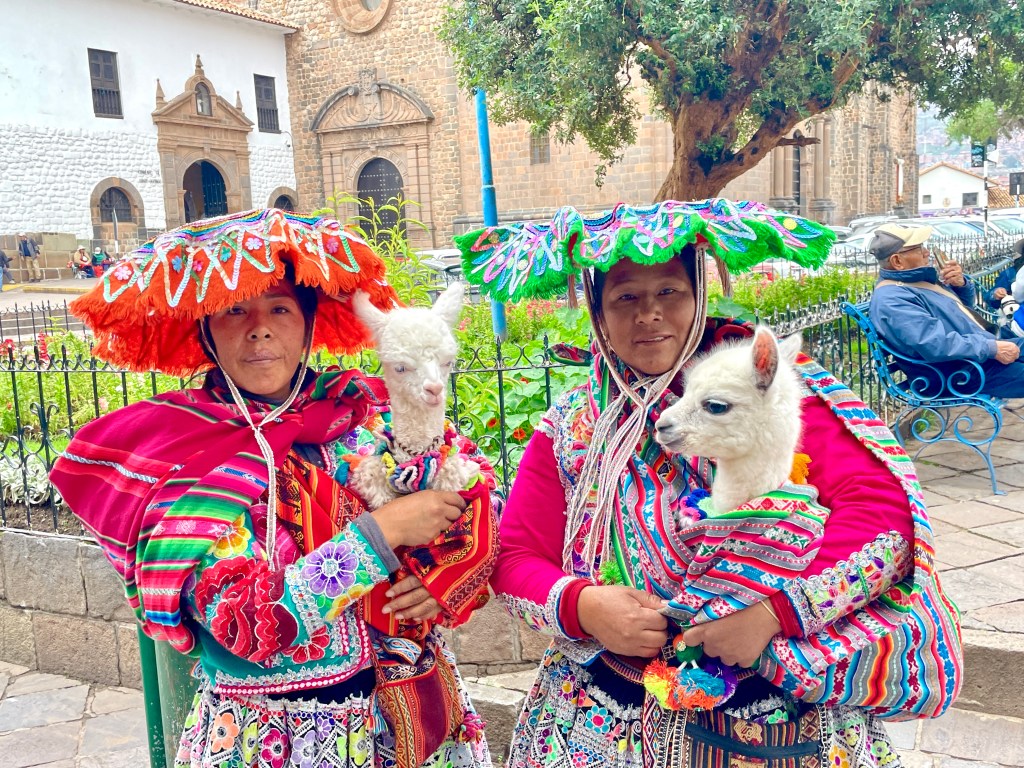
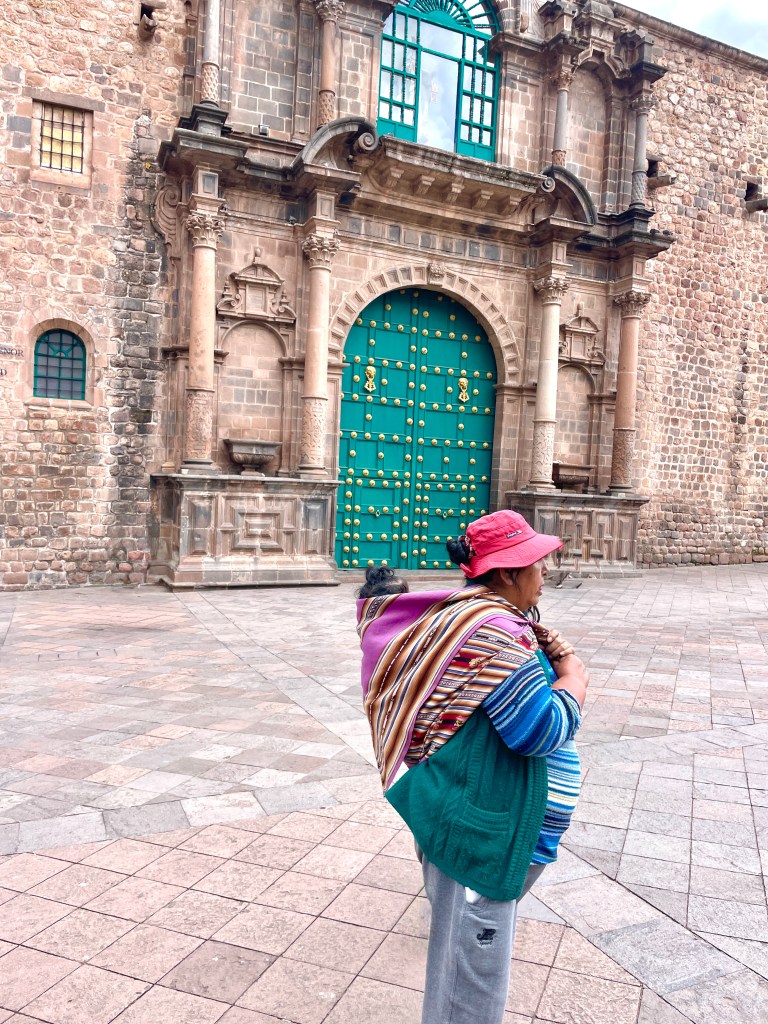
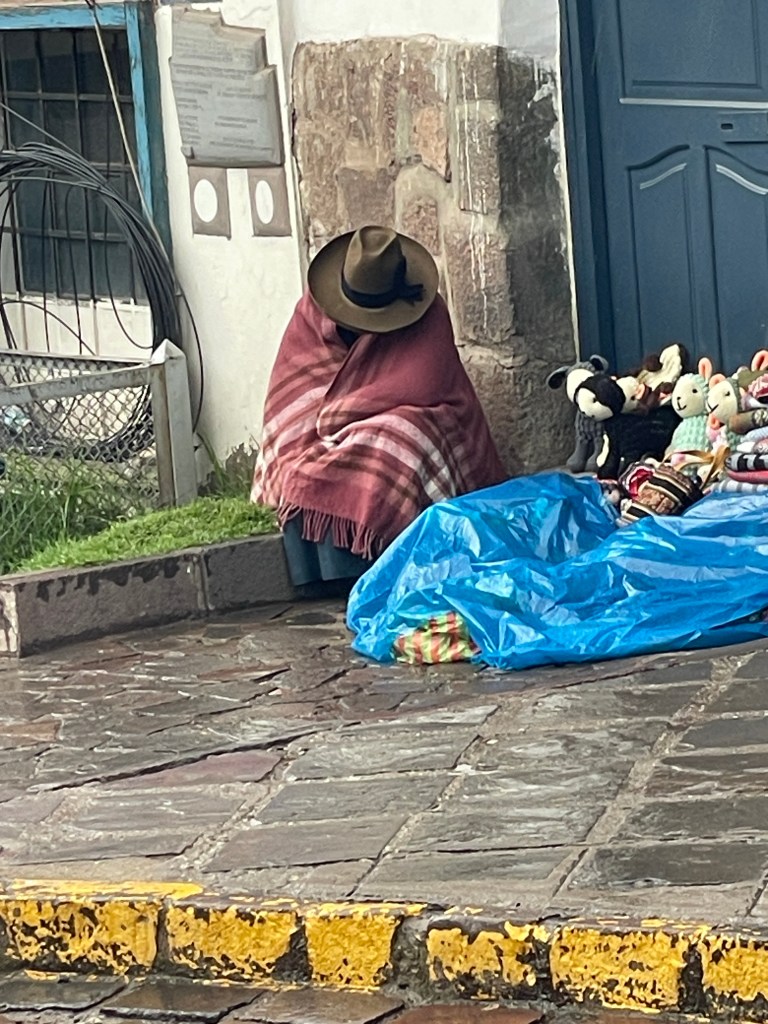
Upon exiting a hoary wooden door we were immediately thrust into the one of the city squares. People, busses and cars hugged the narrow streets as we walked to a small coffee house. I had an amazing gluten free tart made of tumbo fruit which is native to the area. Right outside of the door we saw these ladies and their baby alpacas.
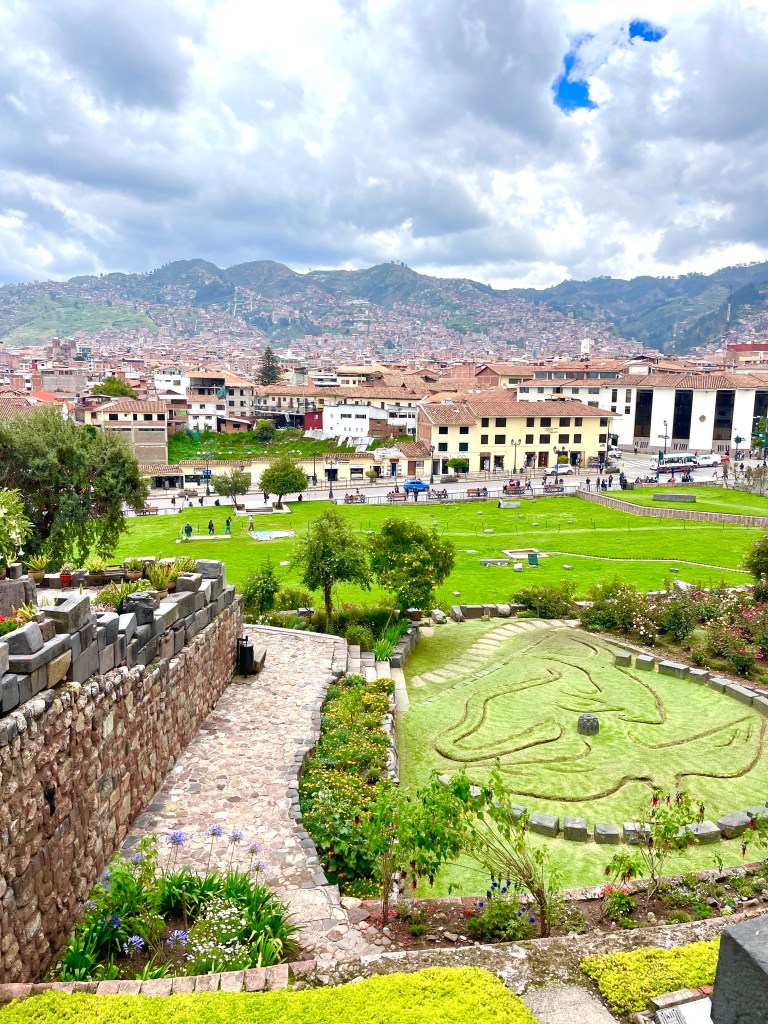
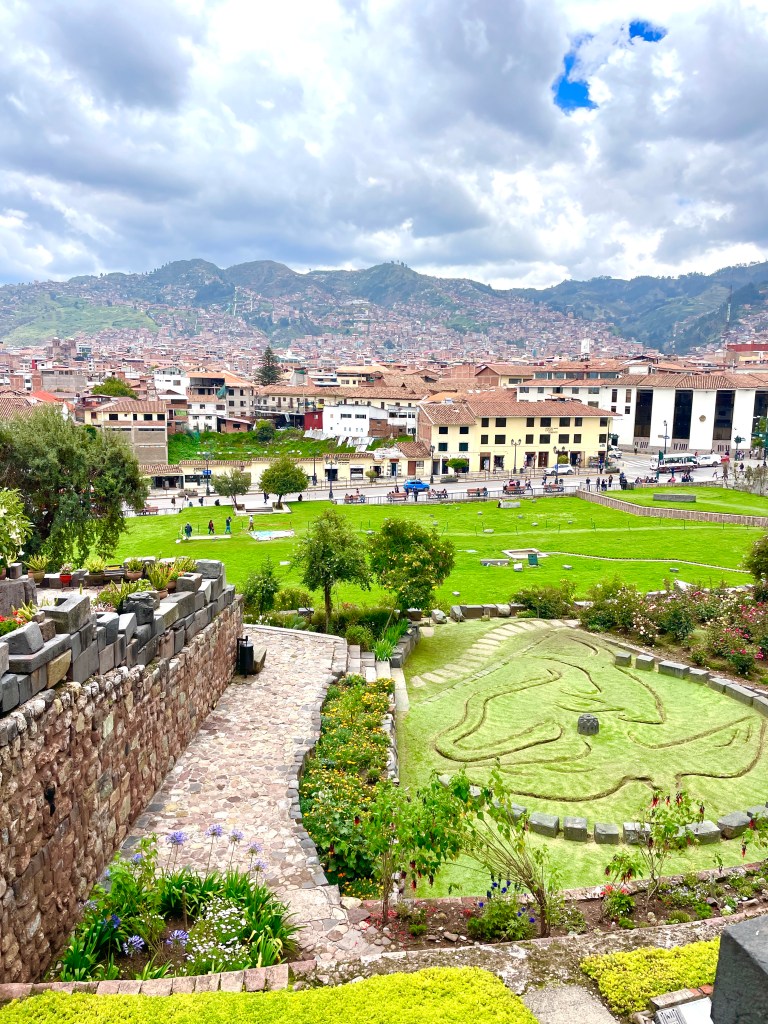
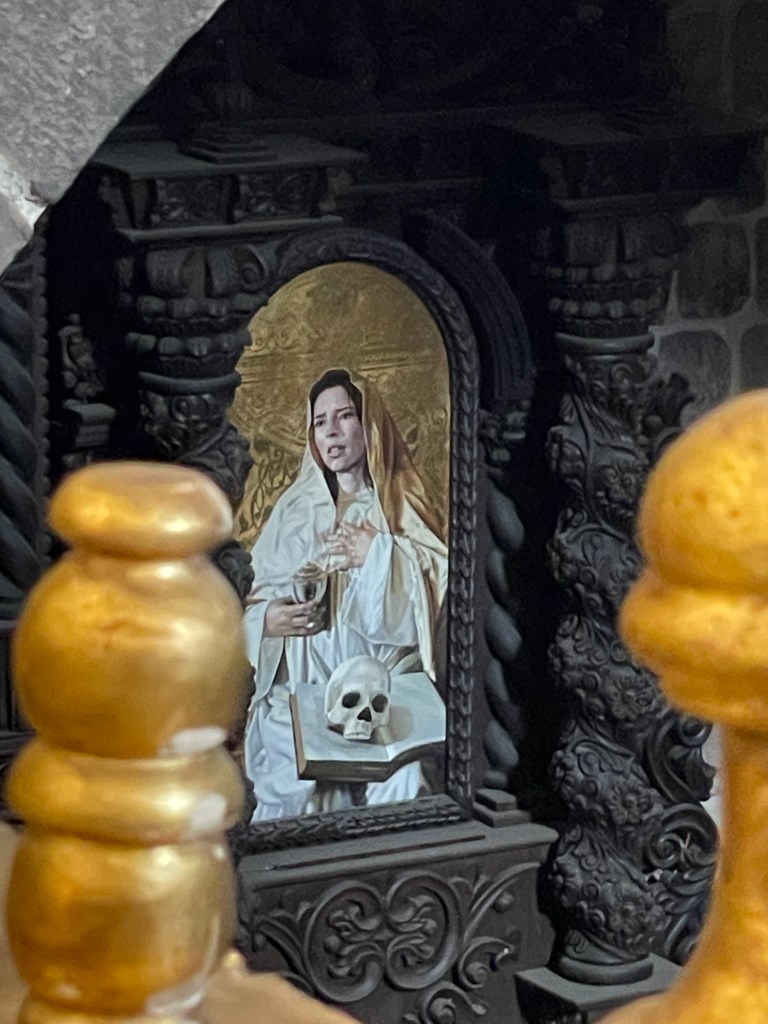
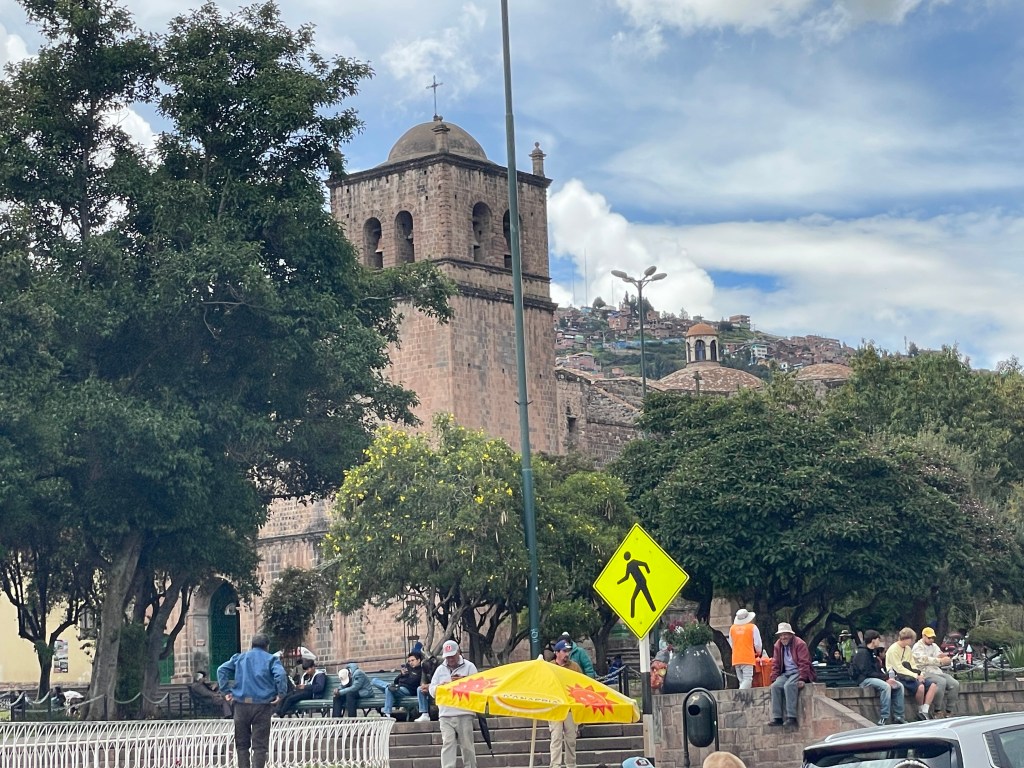
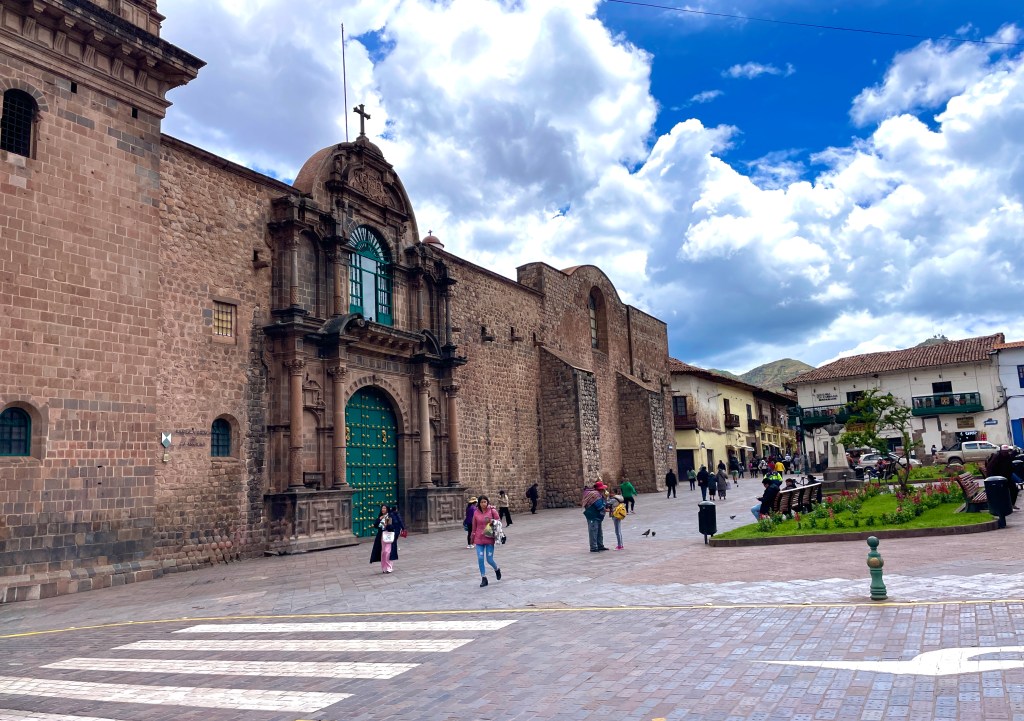
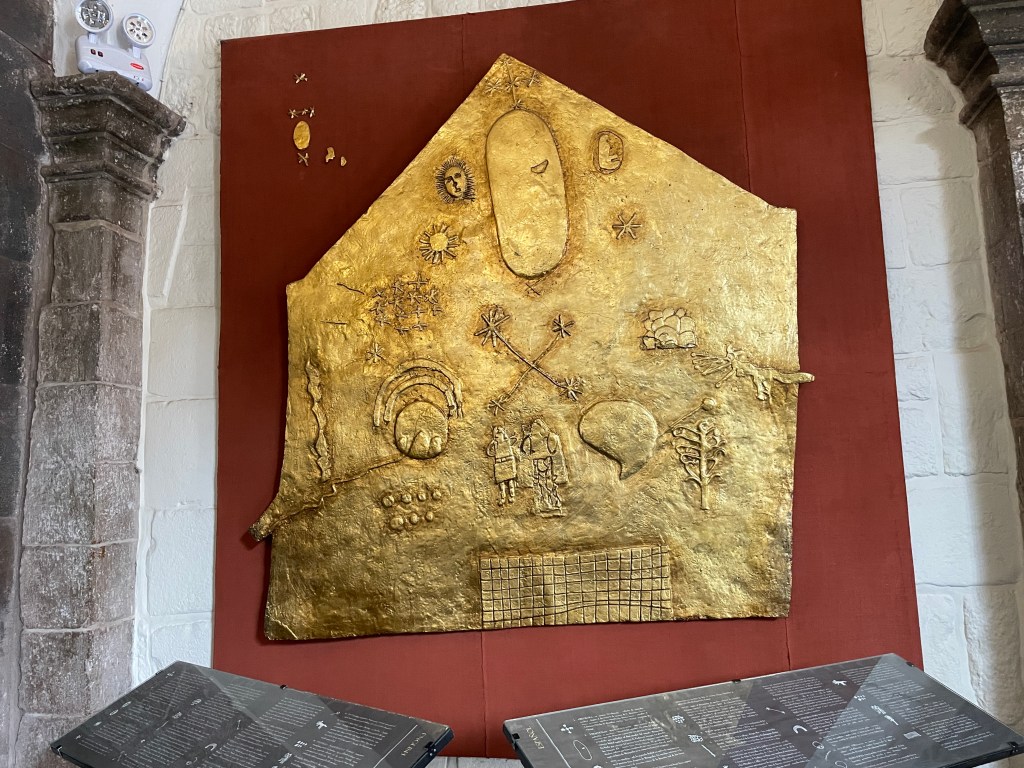
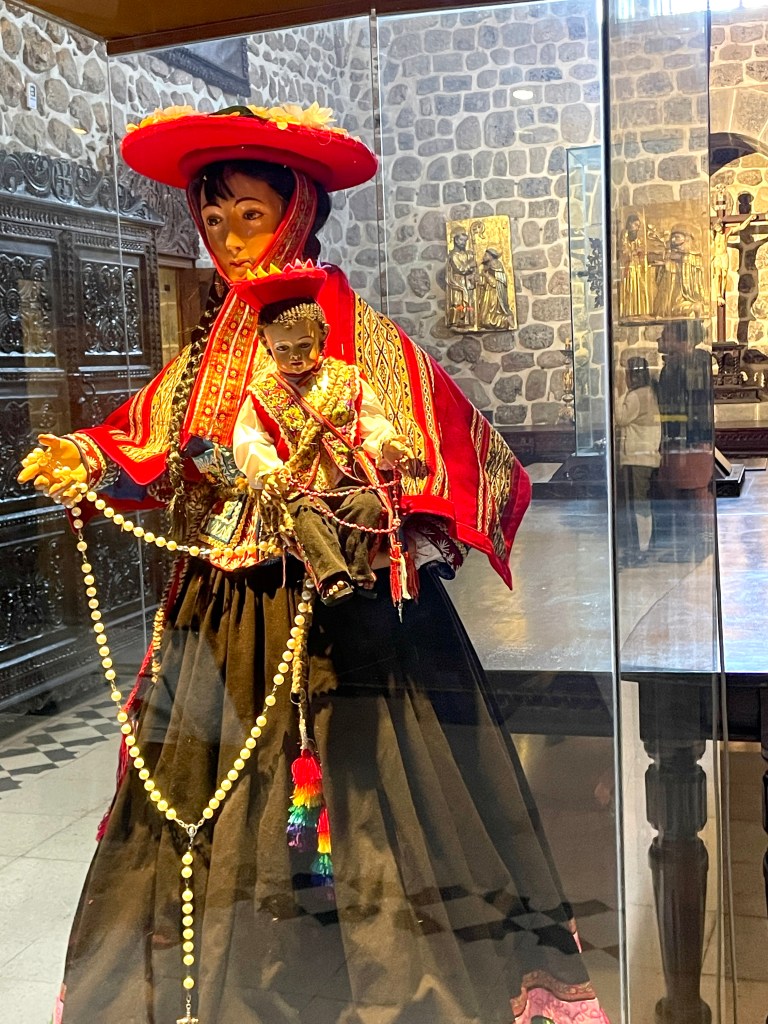
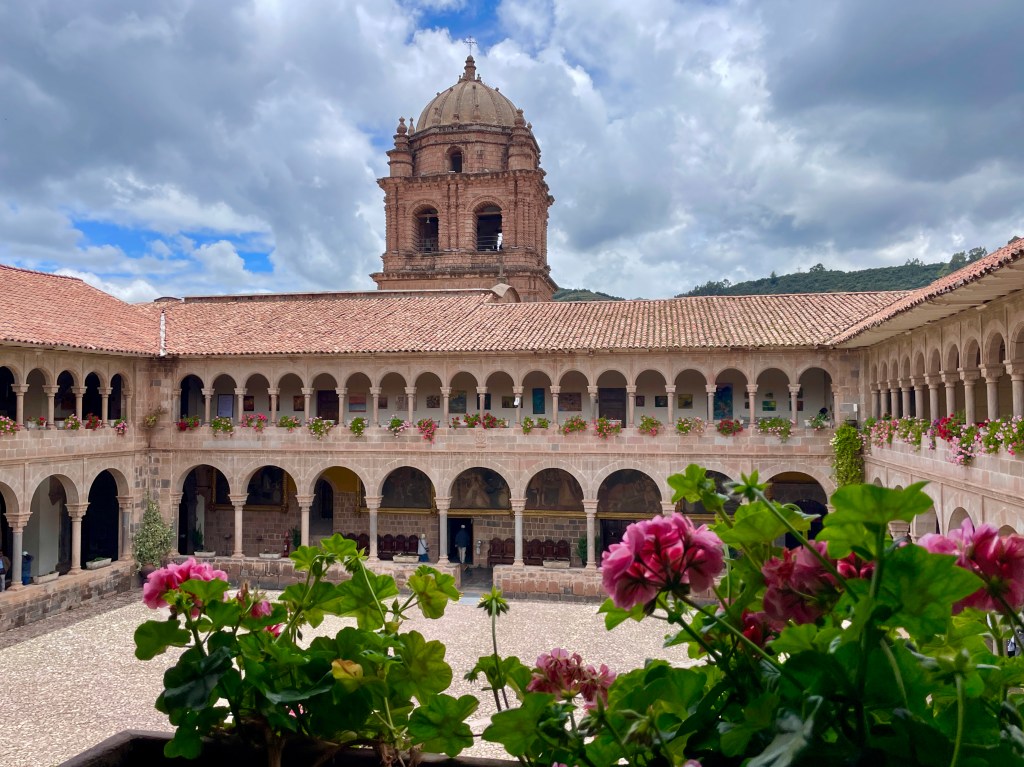
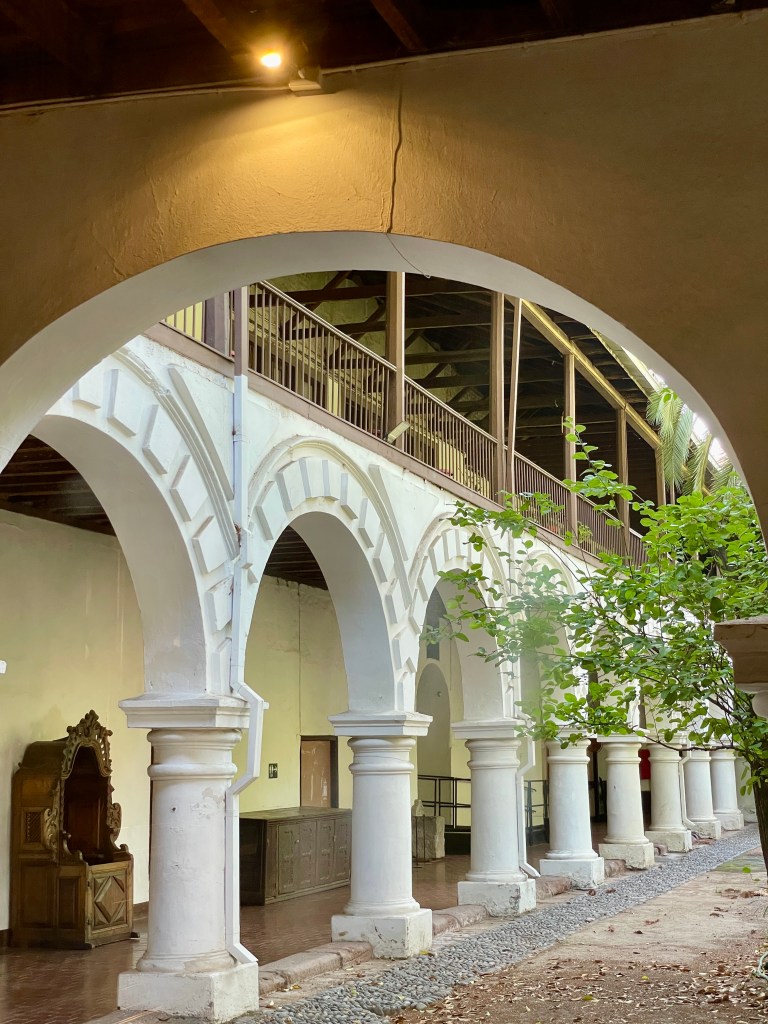
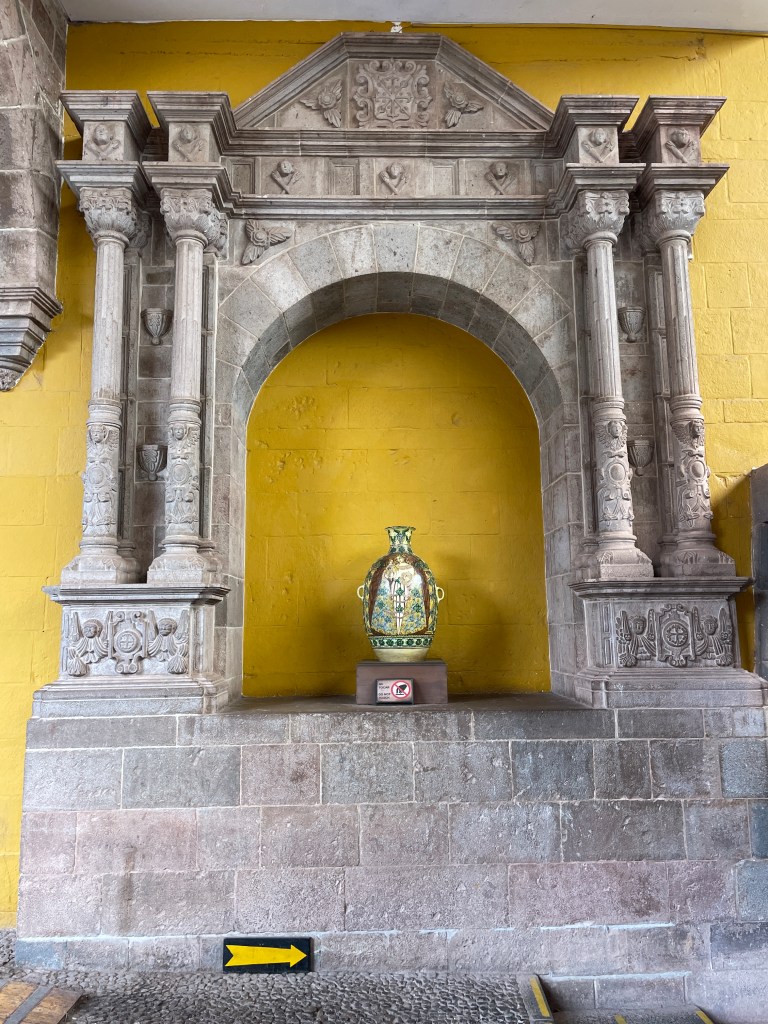
Across the street we paid $20 Sol to enter a museum known as the Qorikancha Archeological Site and Museum; which was once the main temple of the vast Inca Empire built around 1200 AD. The Inca Empire was largest territory in the New World before European conquests began. Qorikancha or the House of the Sun was constructed and according to the Spanish was filled with golden treasures. Eventually, Colonial buildings were added to the Inca land while most of the original buildings were destroyed. The land was given to the Dominican order and the Church and Covent of Santo Domingo. The property has undergone many transformations due to many large earthquakes that have occurred over the past four-hundred years.
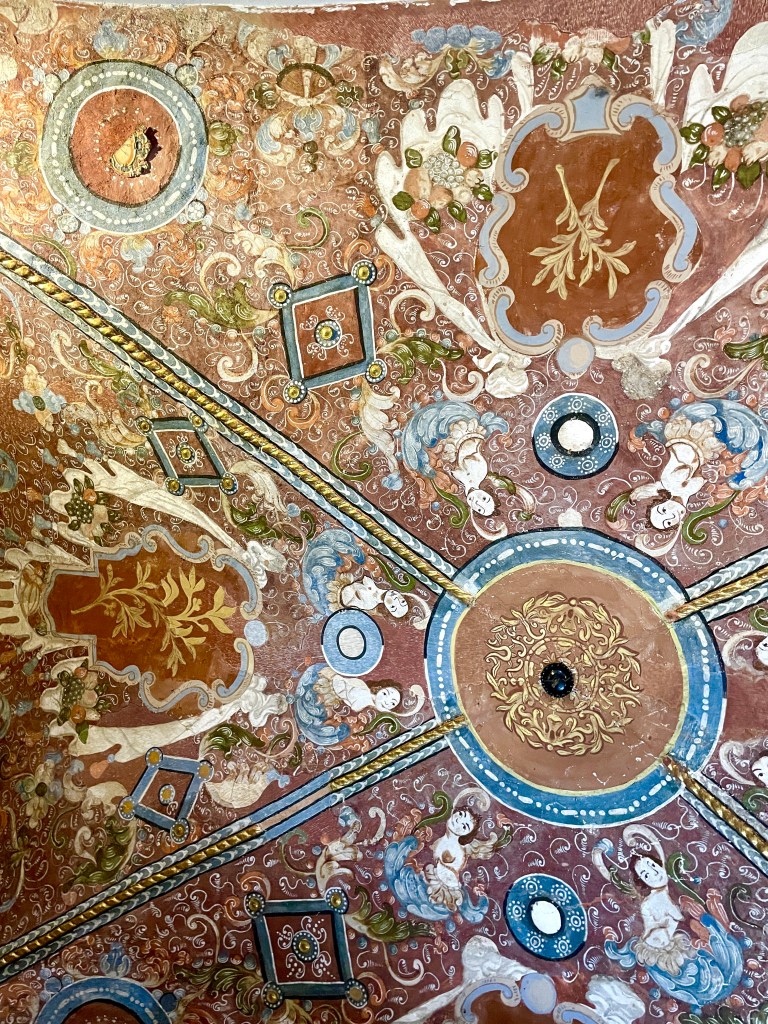
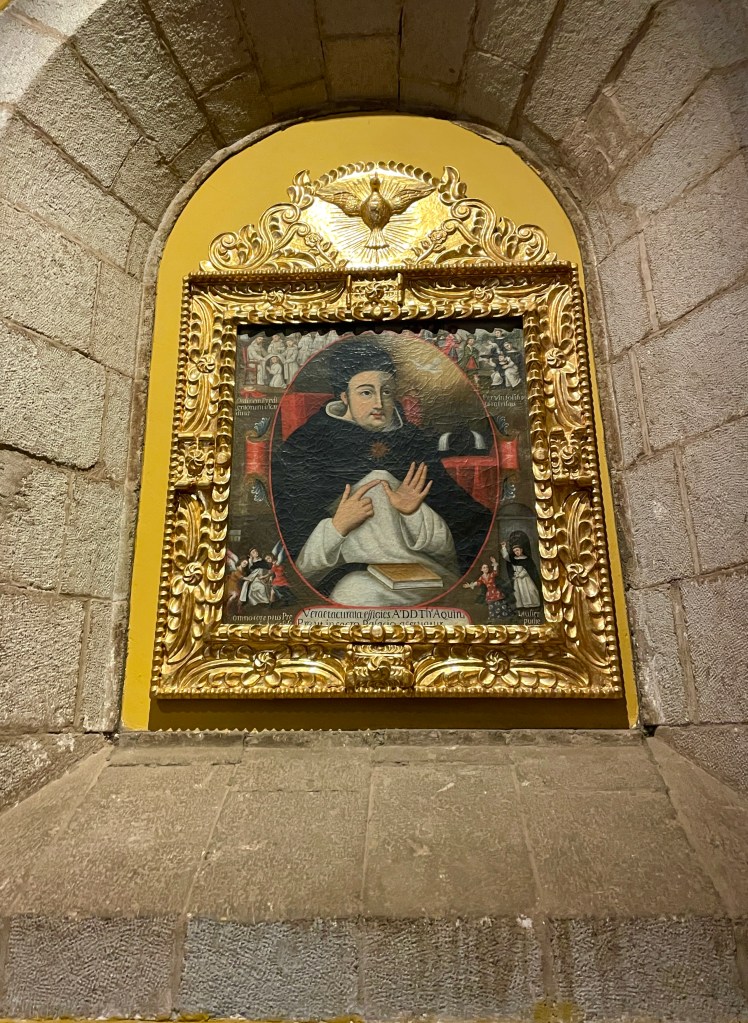
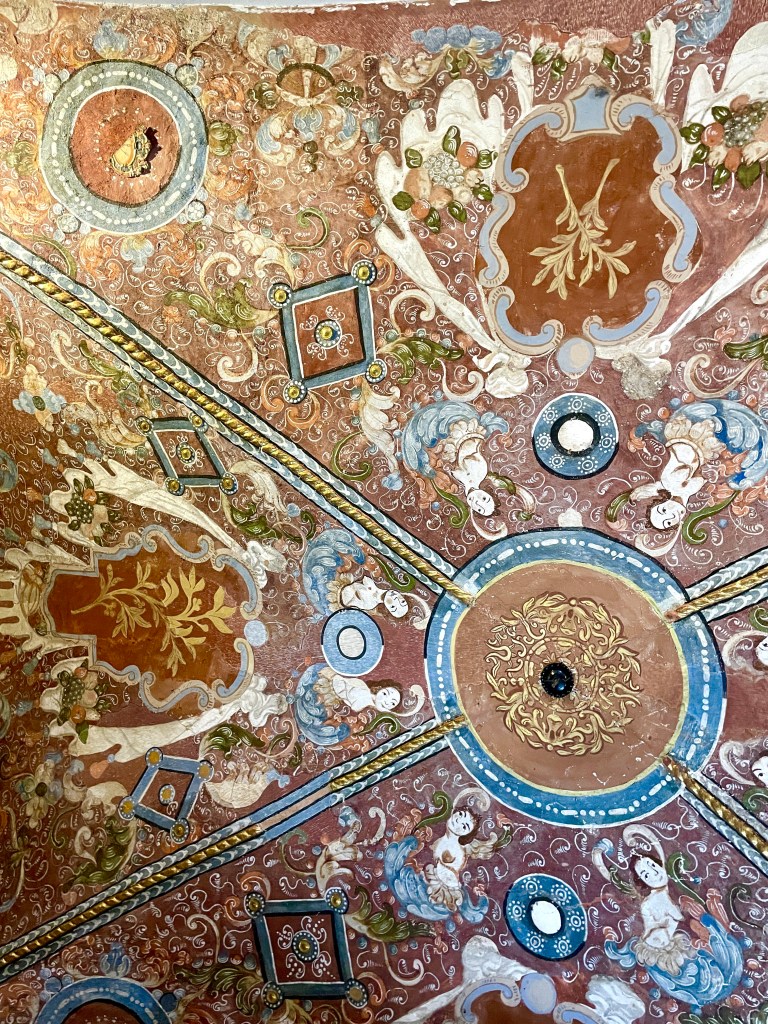
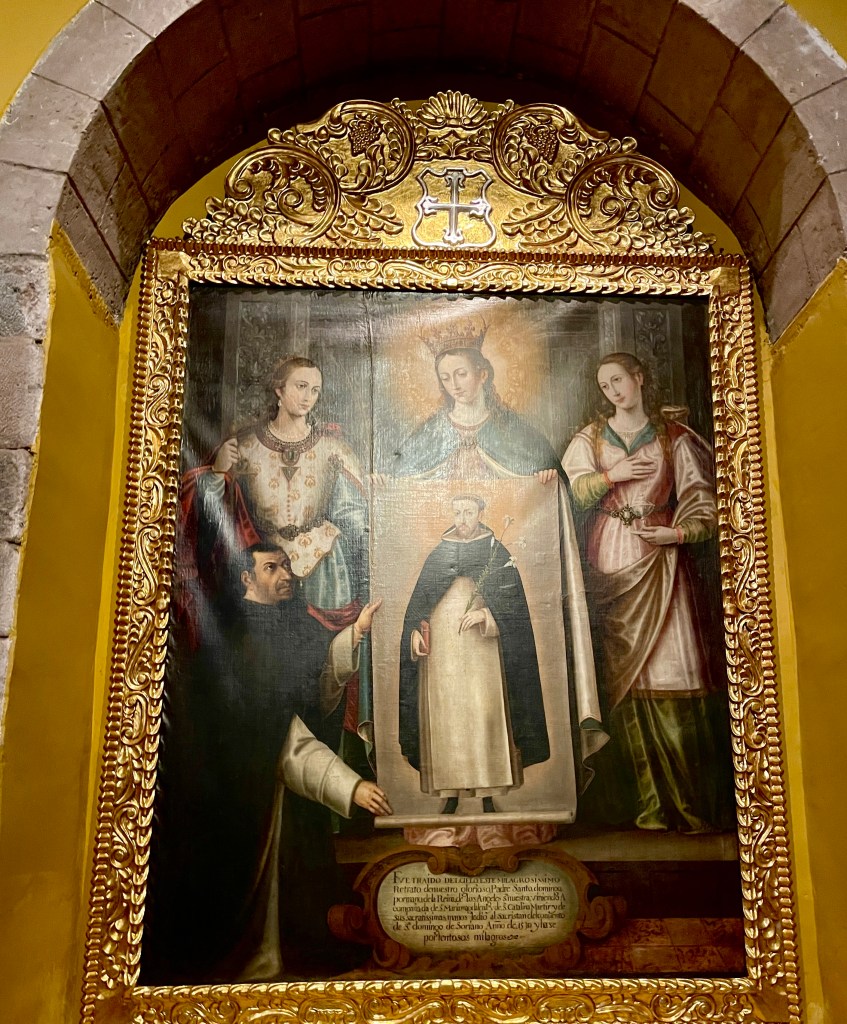
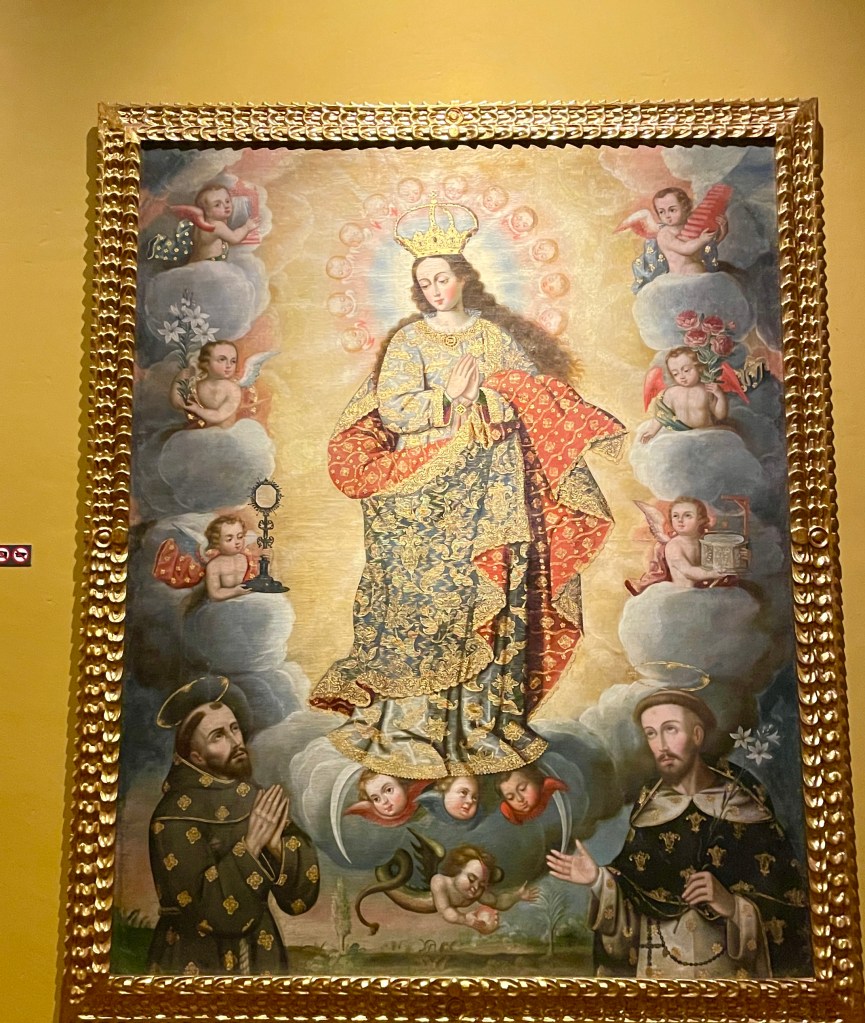
Paintings line the walls of the museum many of which were created by the Cusco School of Colonial Art which employed native traditions of art developed by mostly Indian or mixed race artisans.
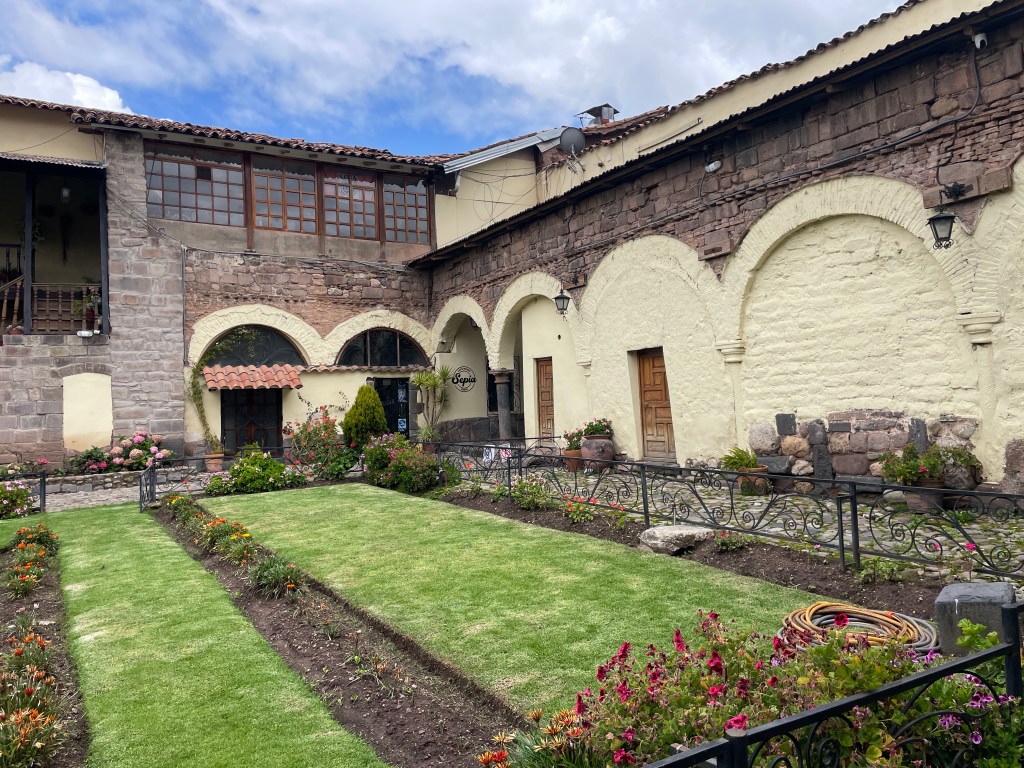
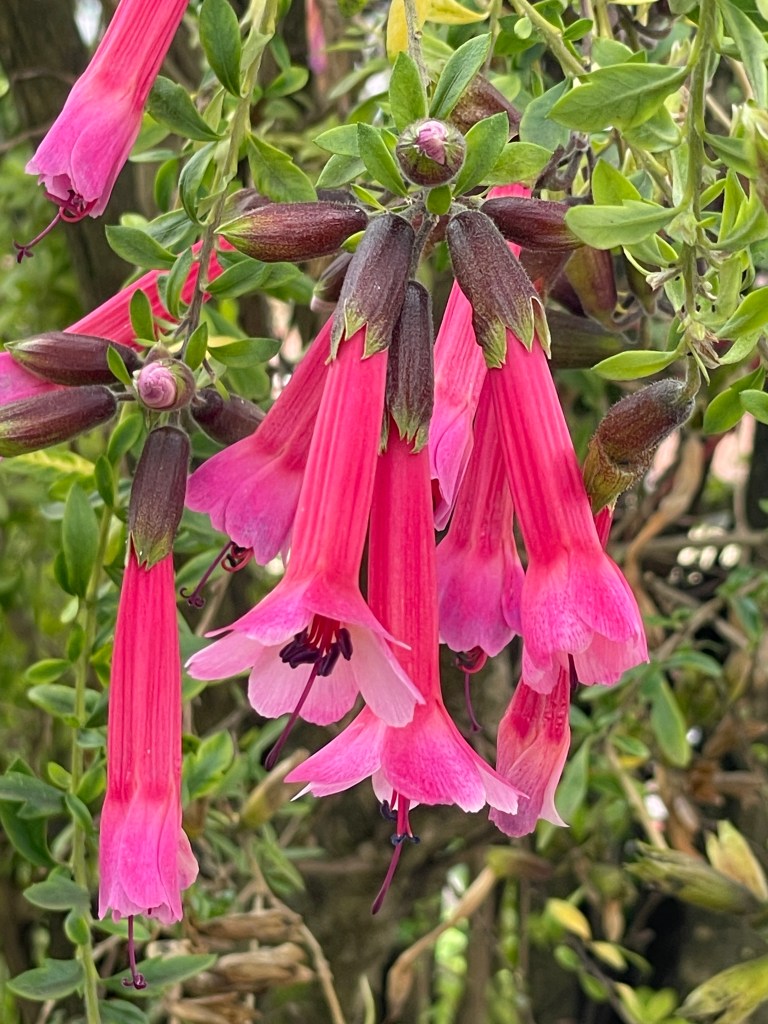
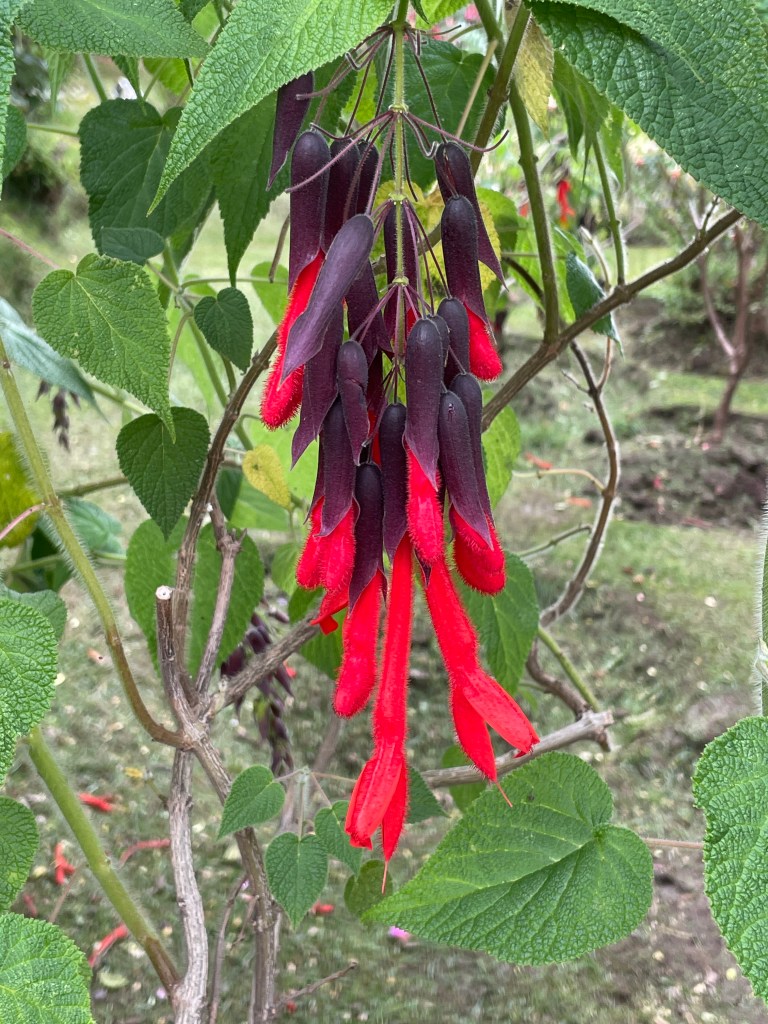
The gardens are spectacular featuring many types of fuschia, trumpet trees, and various native flowers.
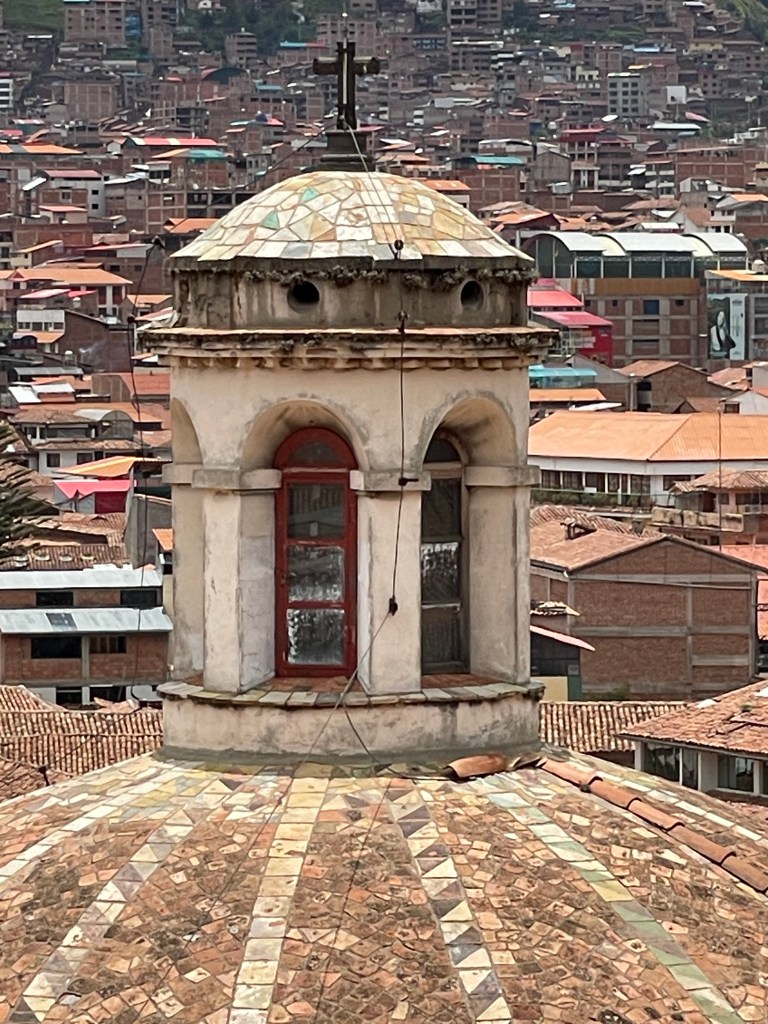
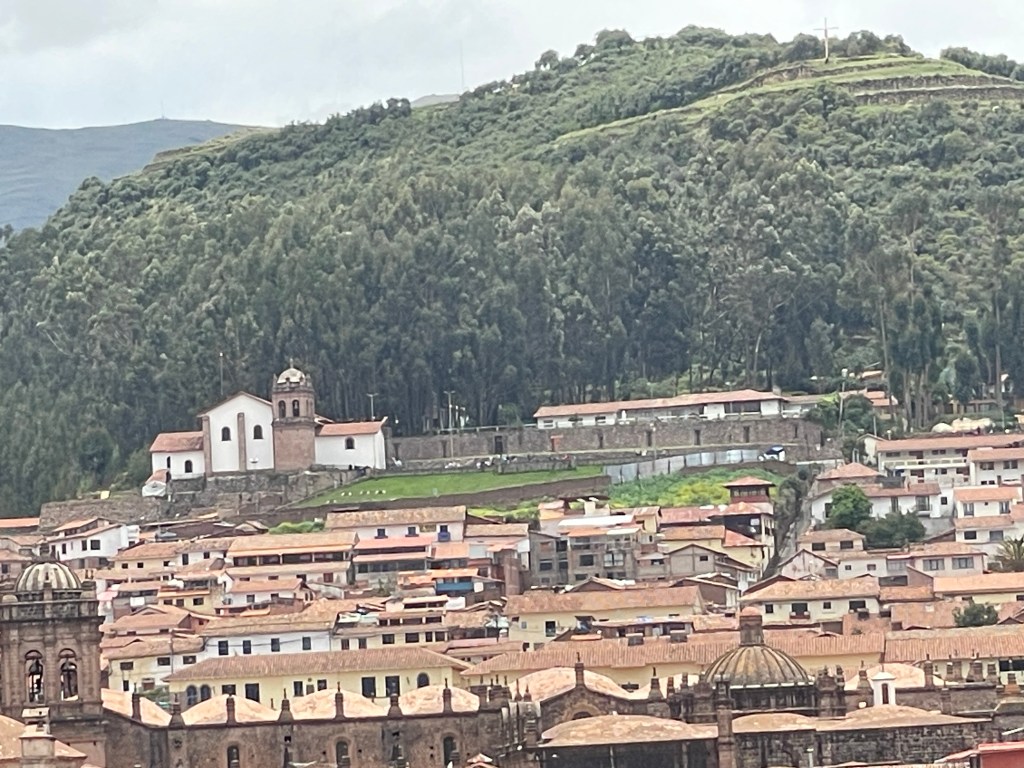
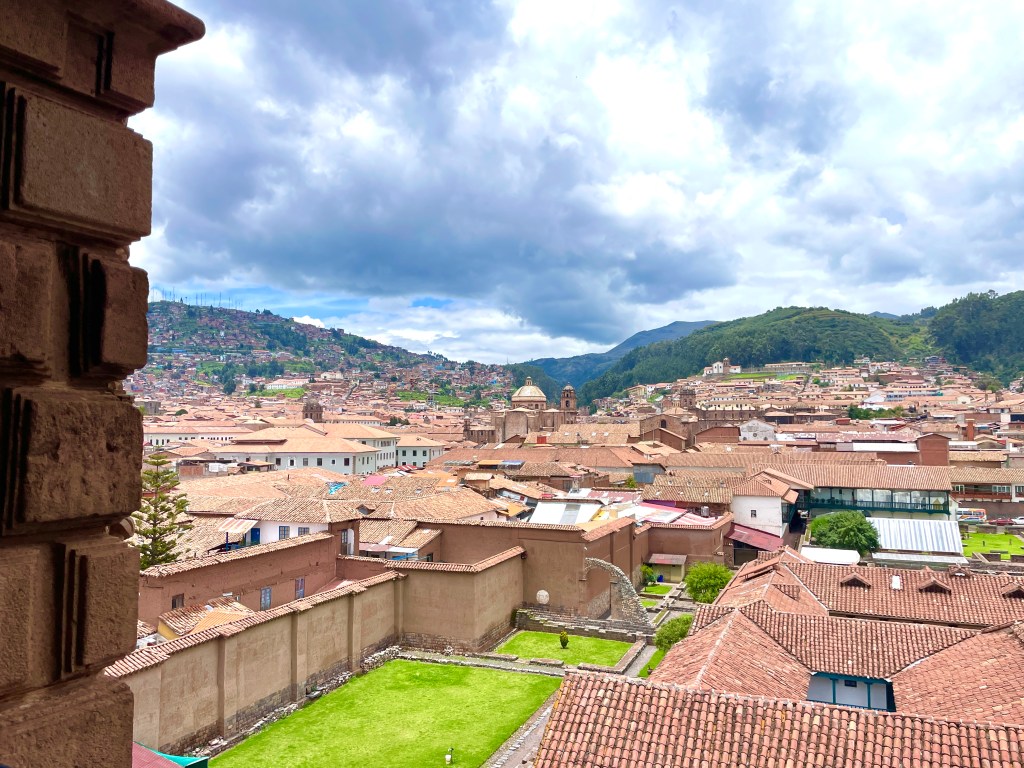
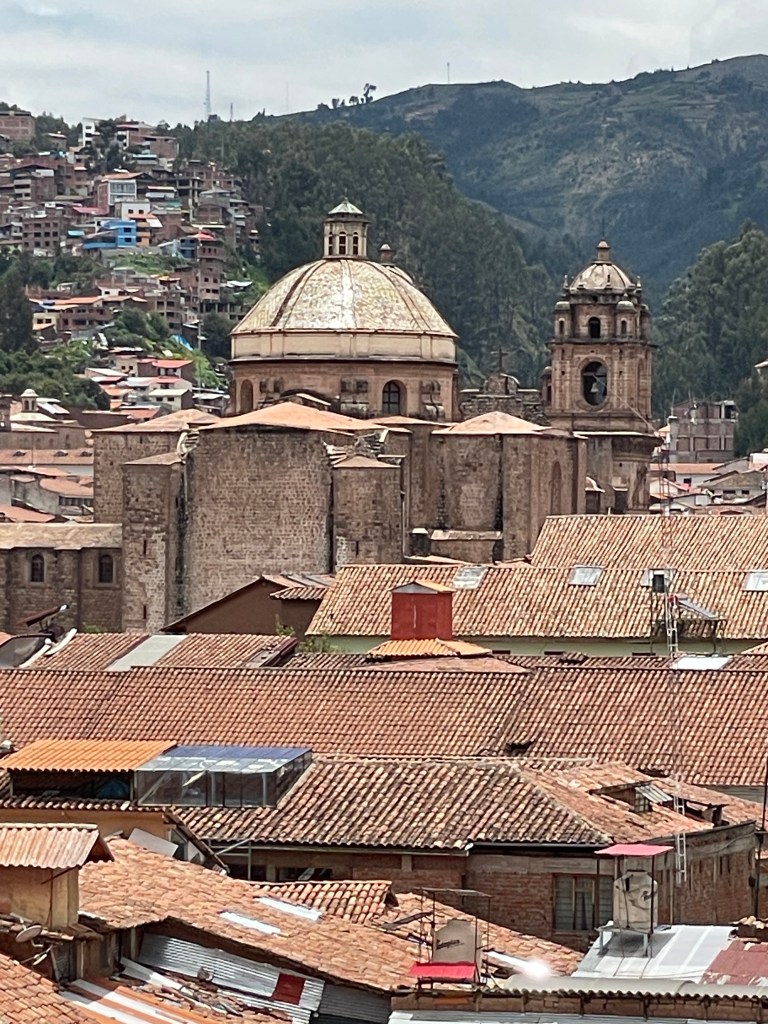
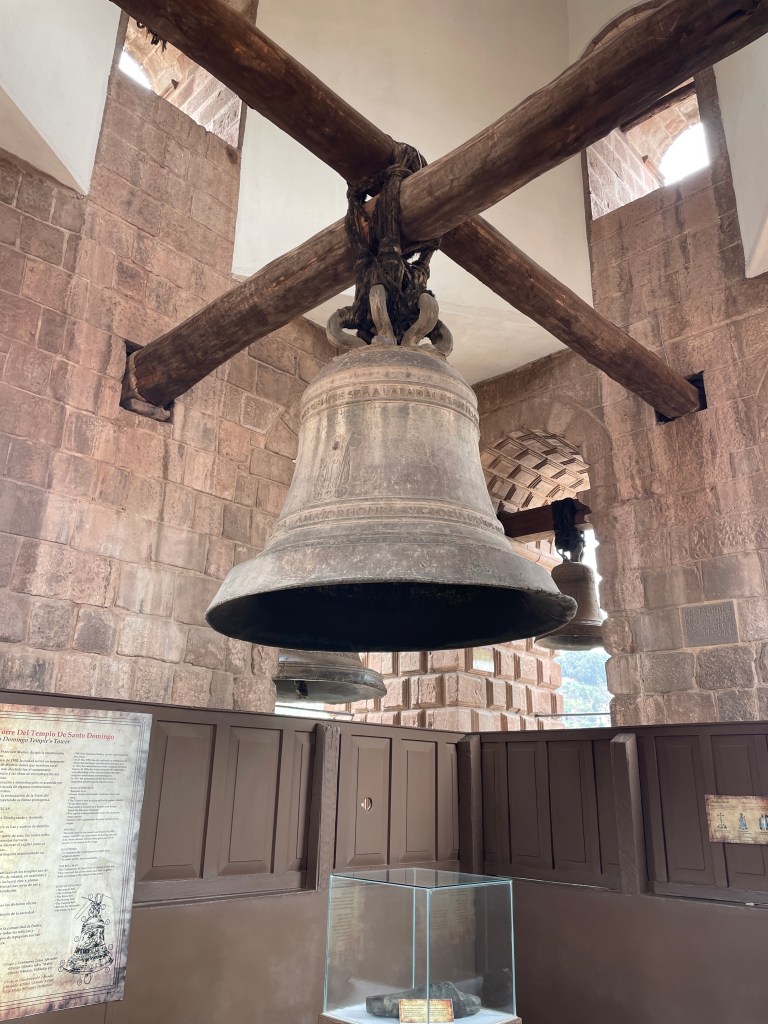
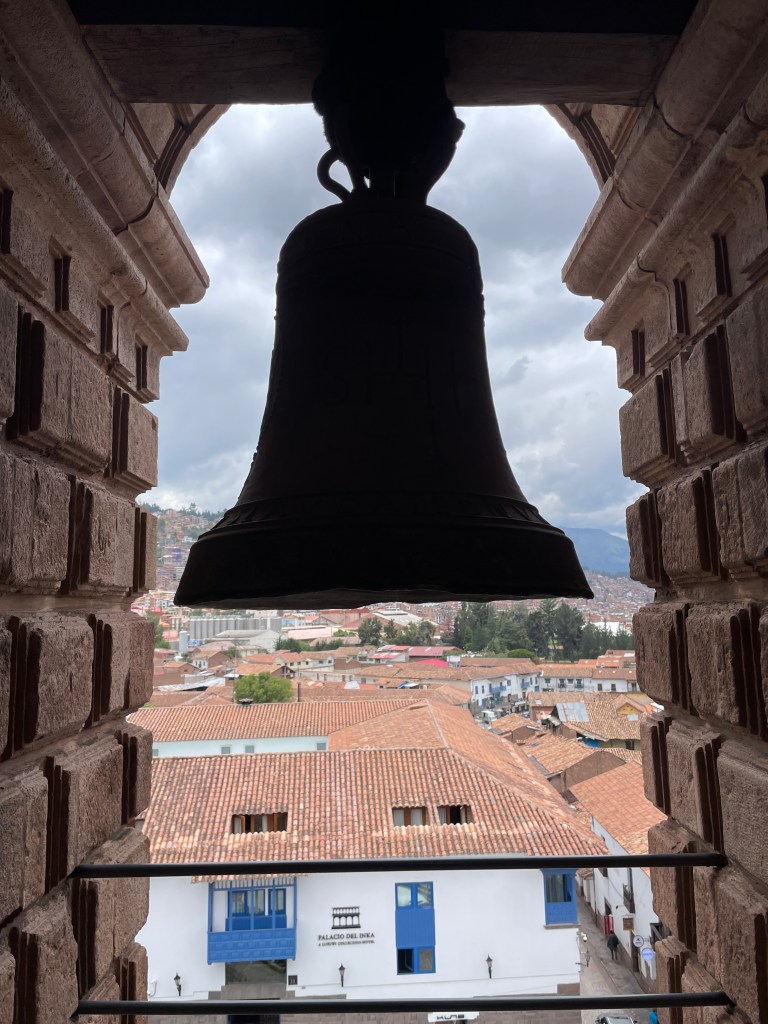
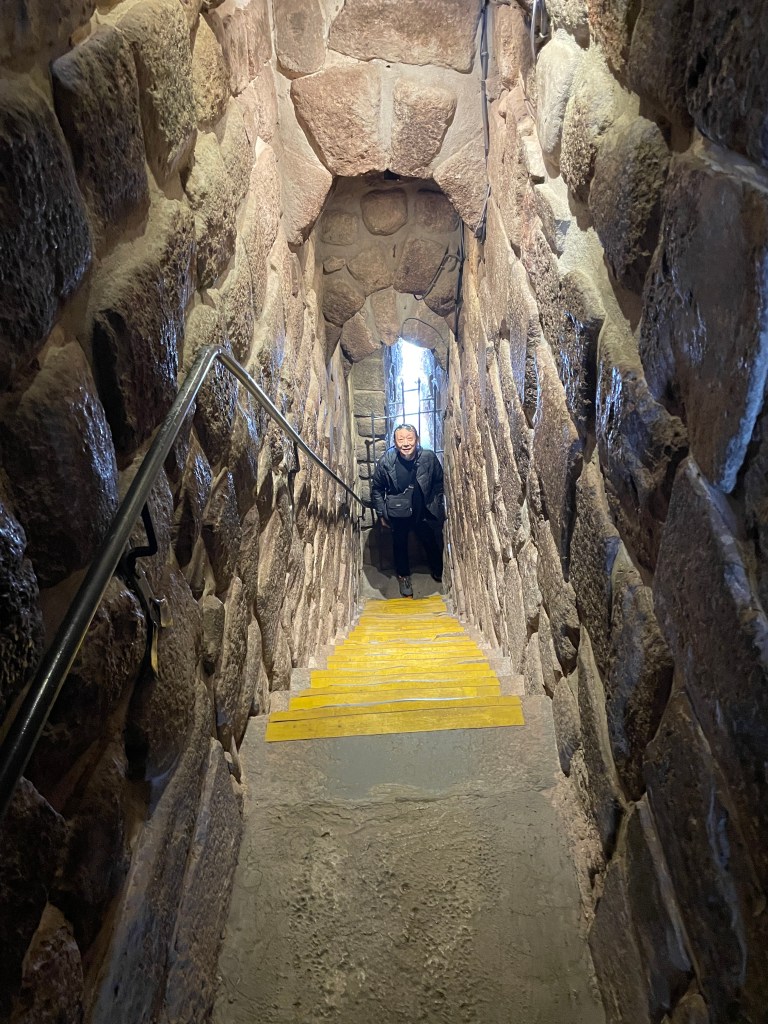
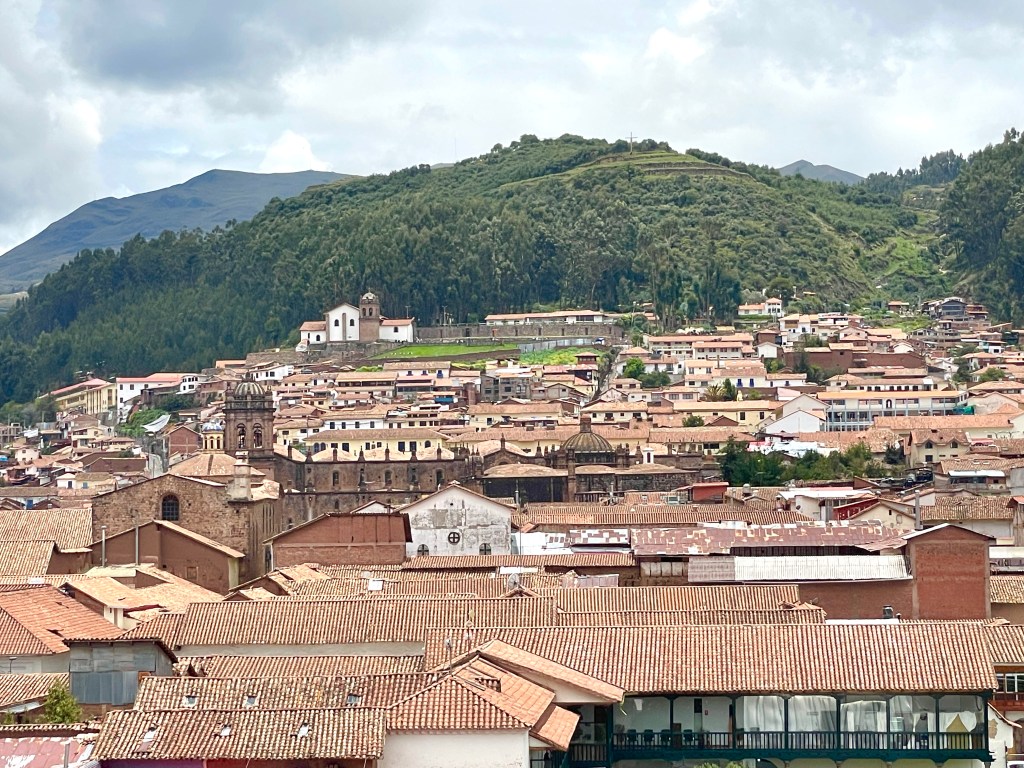
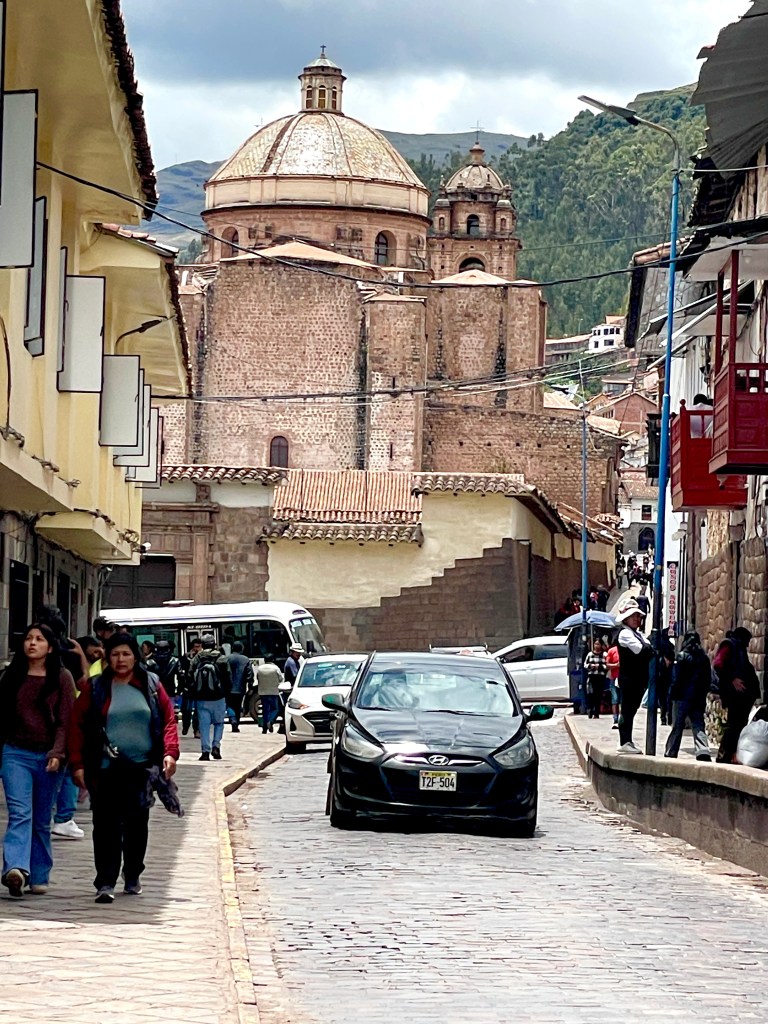
It will cost another $5 Sol (about $1.65 USD) to climb the bell tower but it is something you must do. The passageways are reminiscent of European castles with arrowslits. But the biggest reward is the view that encompasses the entire valley with its many churches and a magnificent convent sitting hillside.
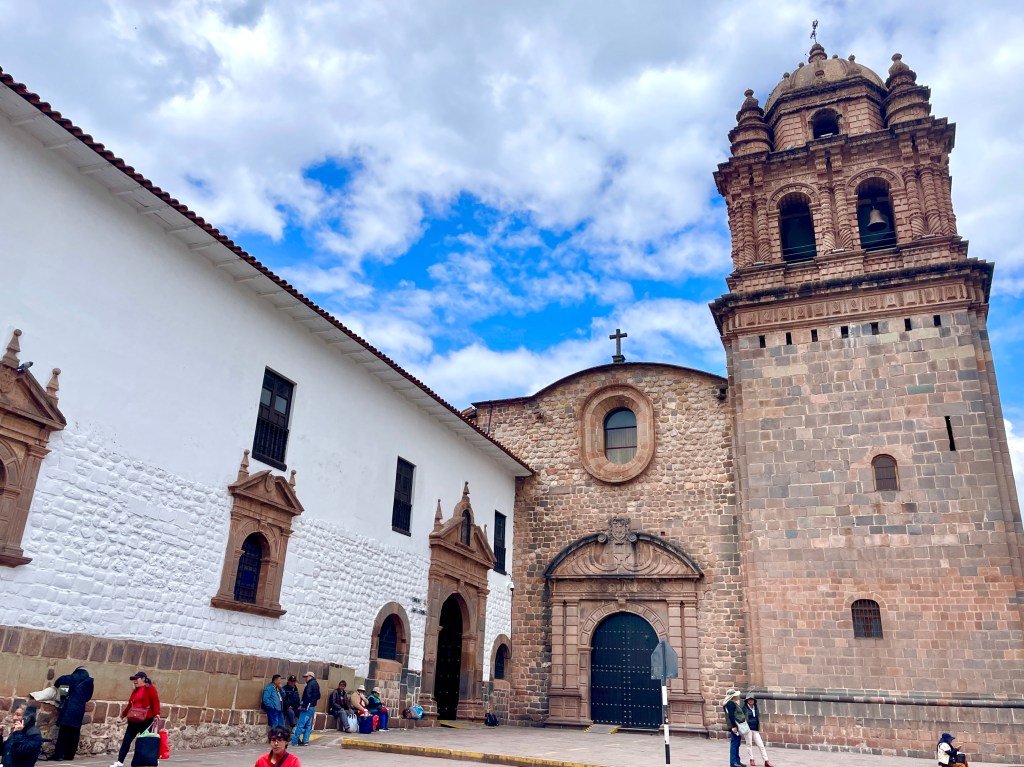
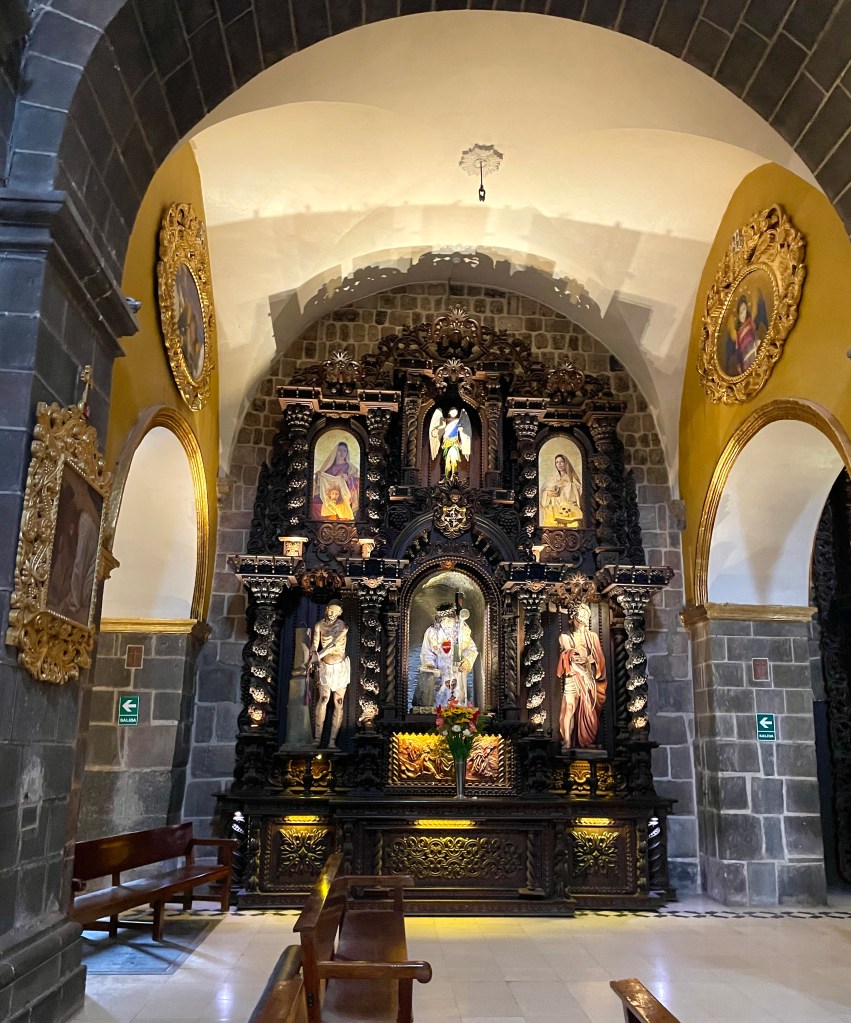
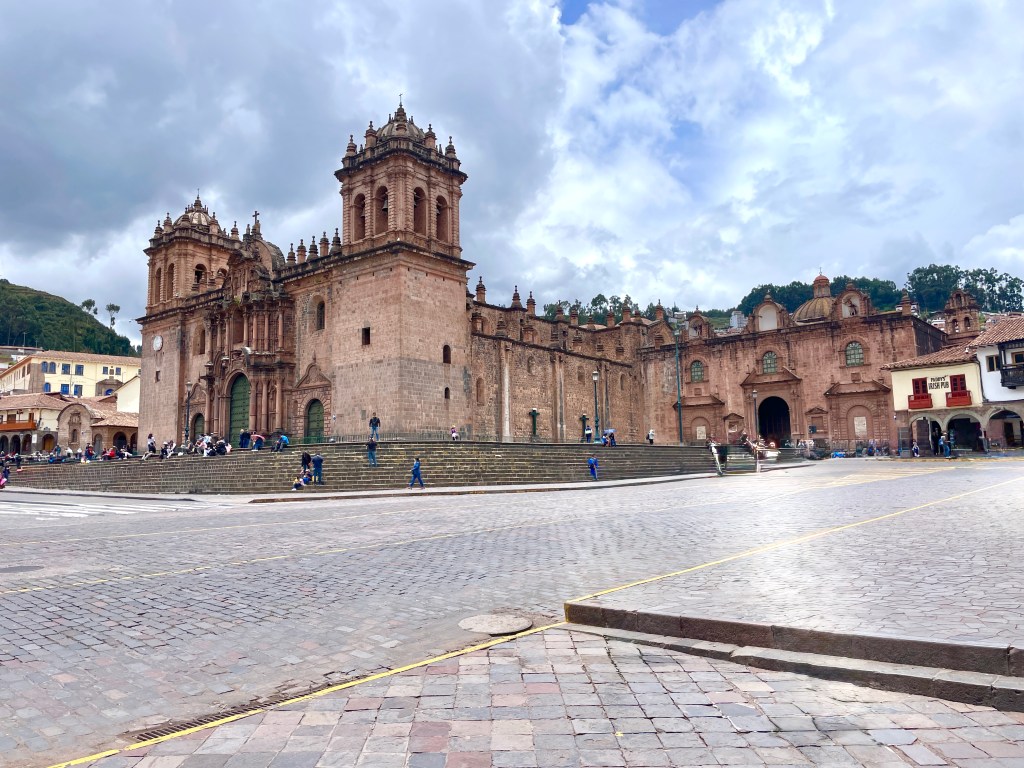
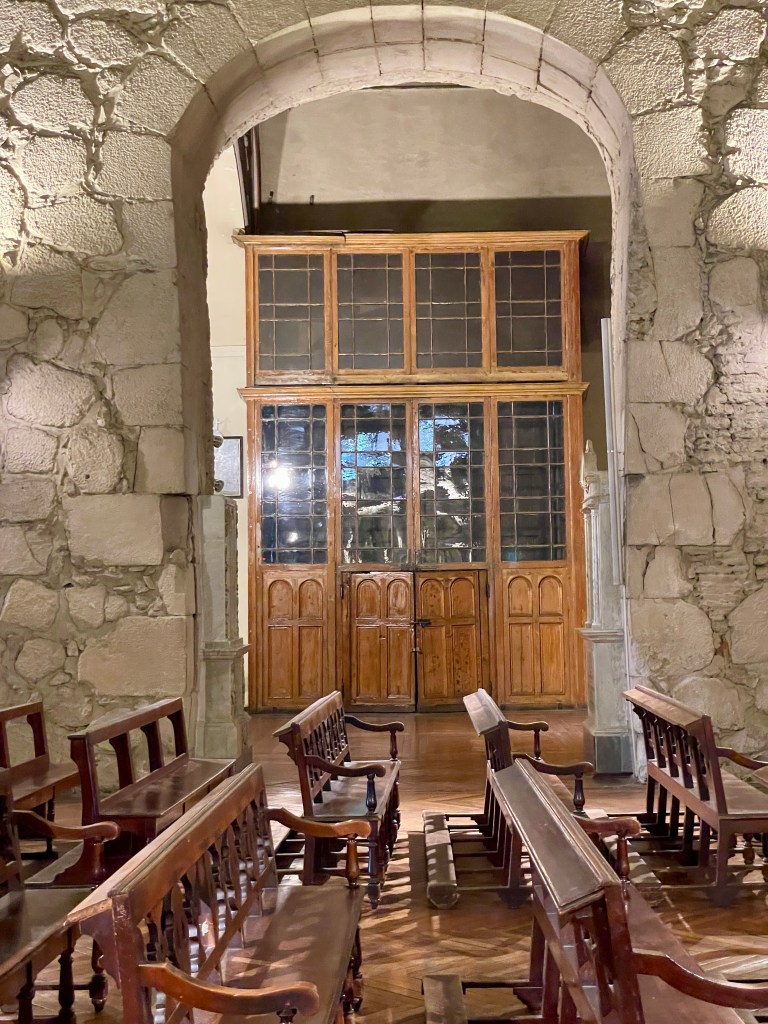
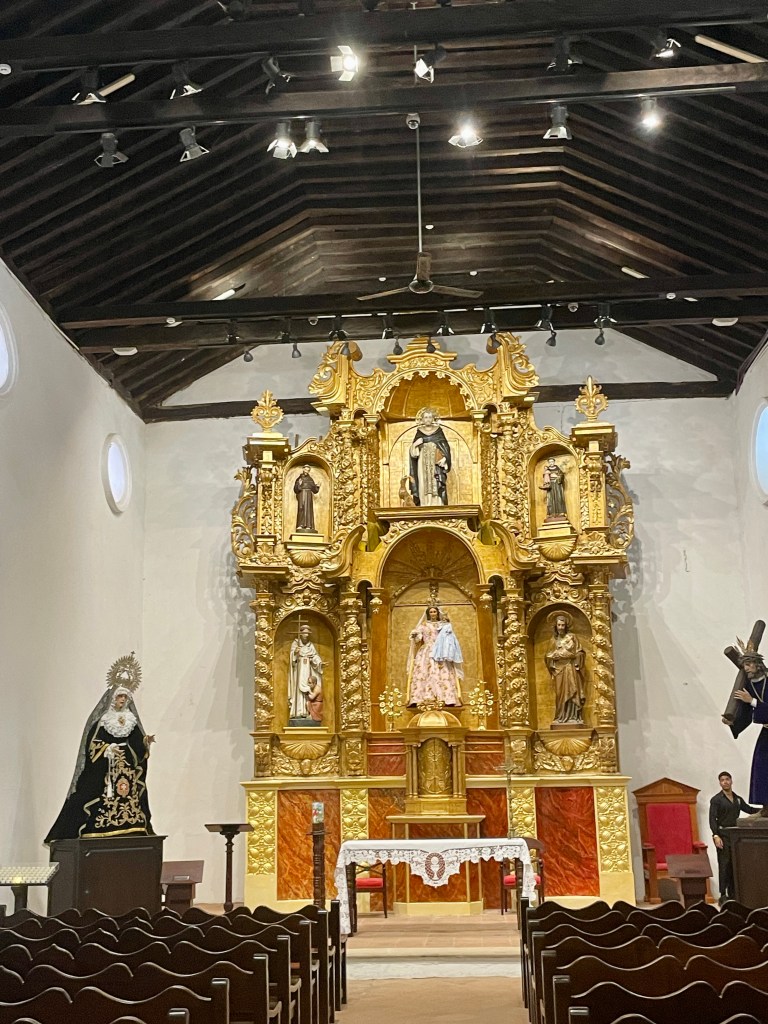
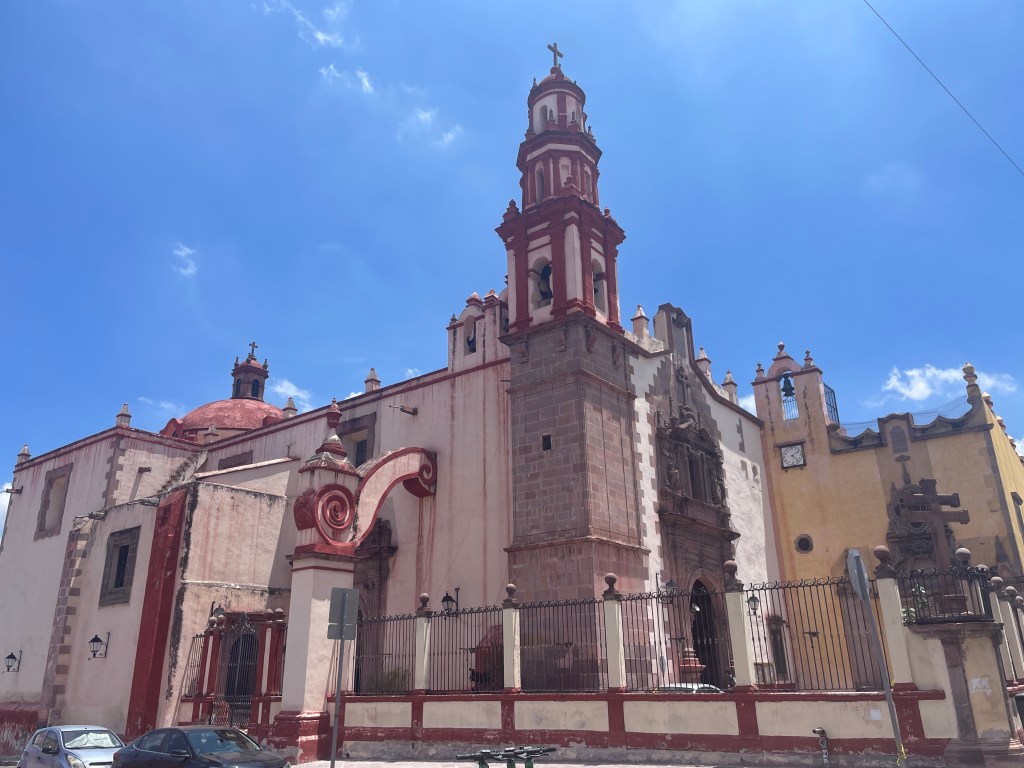
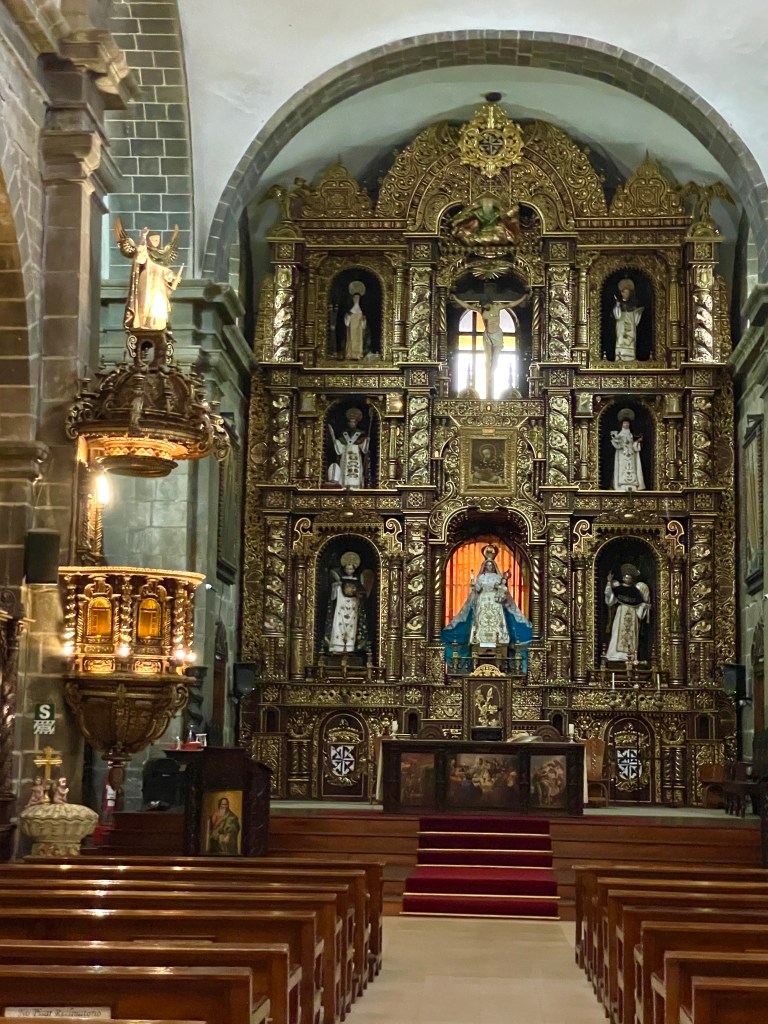
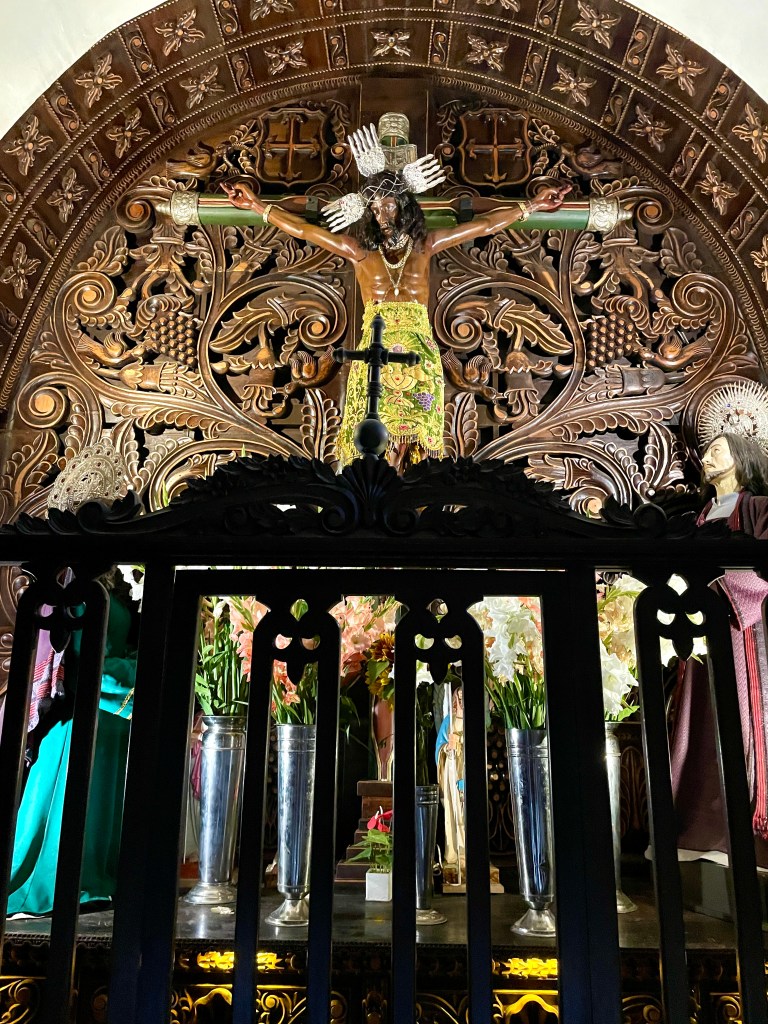
Finally, there is the Colonial Church of Santo Domingo. Built in the 17tht century, its a fusion of Inca masonry and Baroque architecture. It houses various paintings and treasures from the Dominicans.
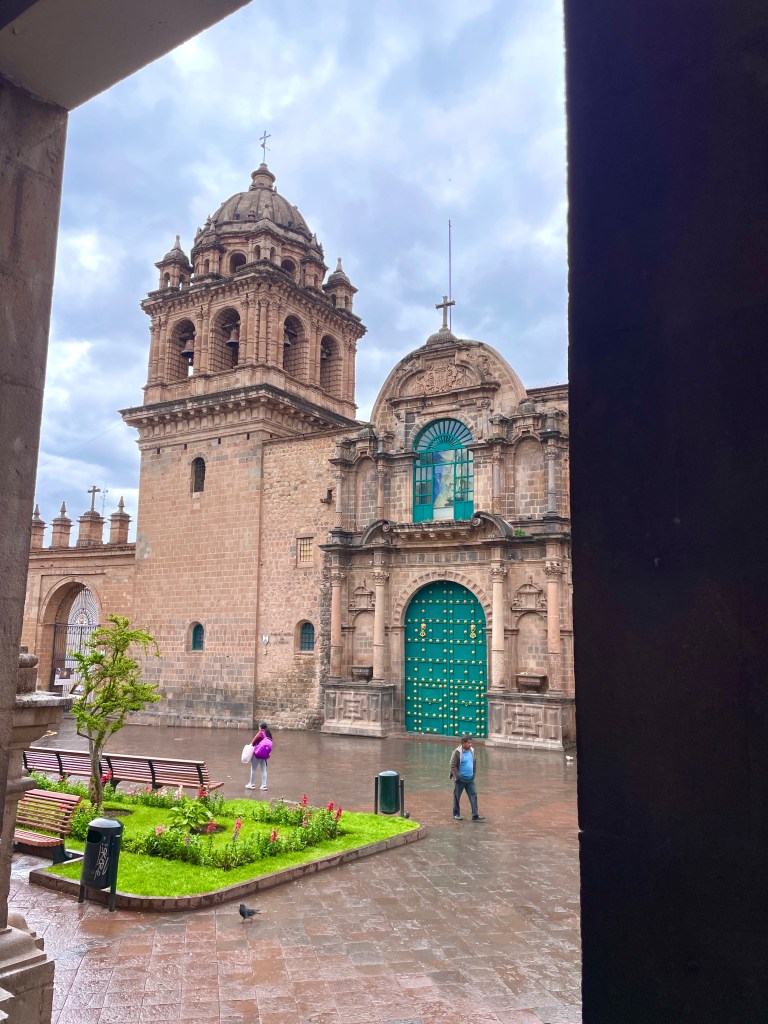
From here we walked the city just enjoying whatever it was we stumbled upon including the Church of the Society of Jesus, Church of La Merced and the Loreto Church. And behind the Church of the Society we encountered a whole different type of animal.
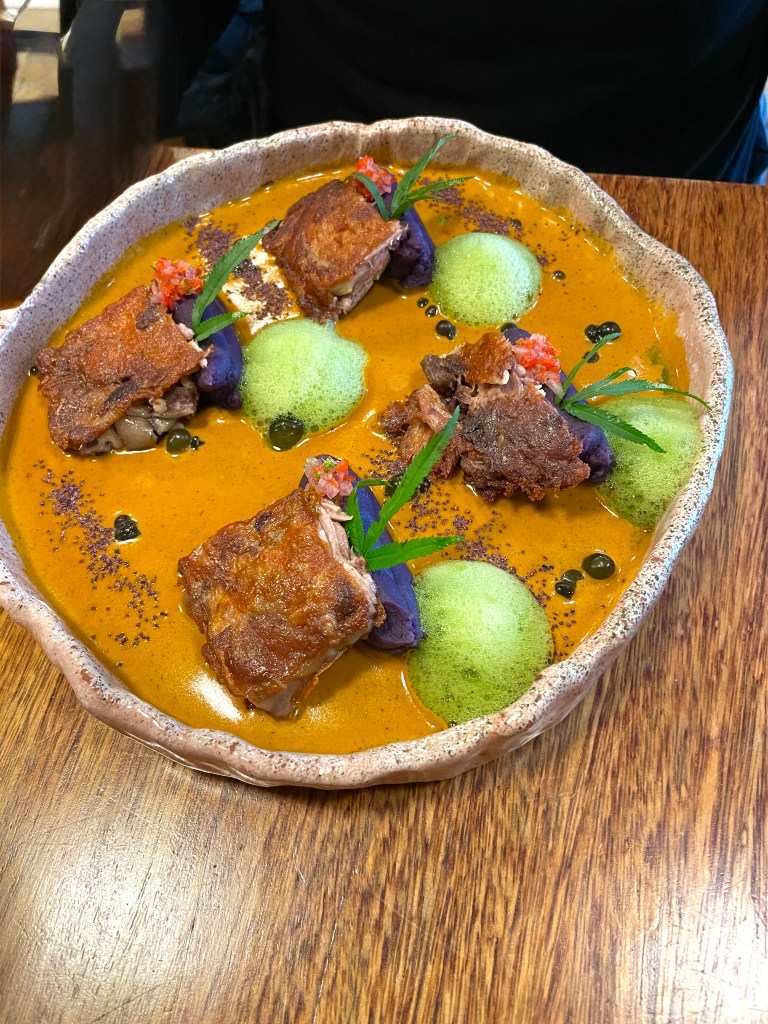
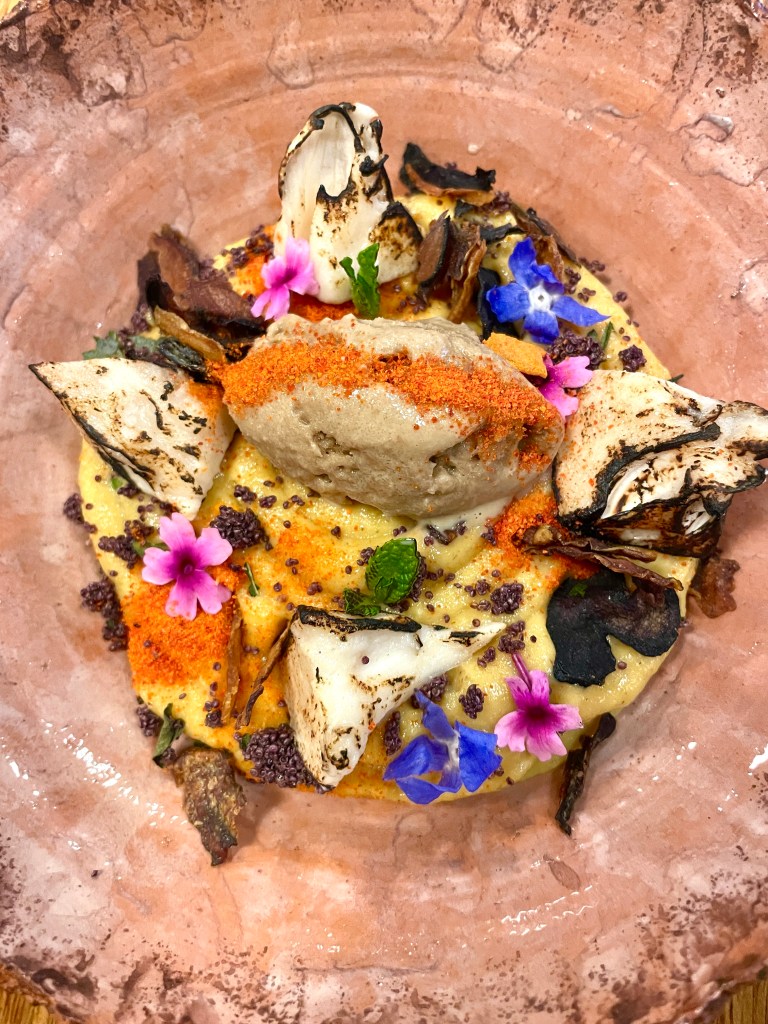
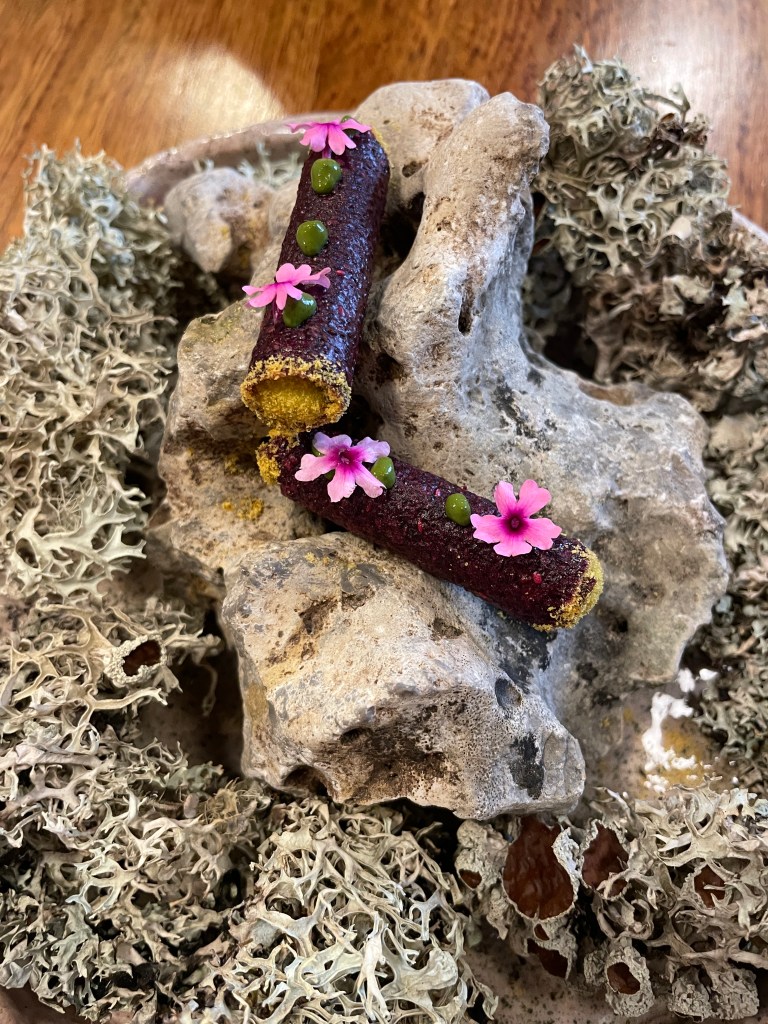
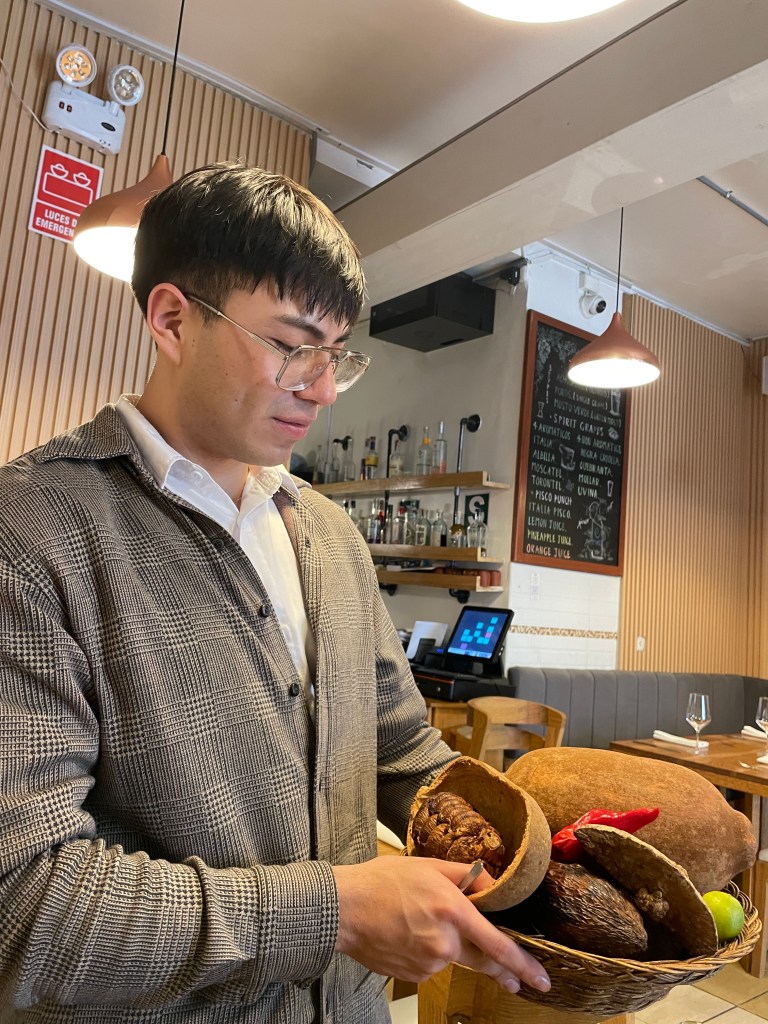
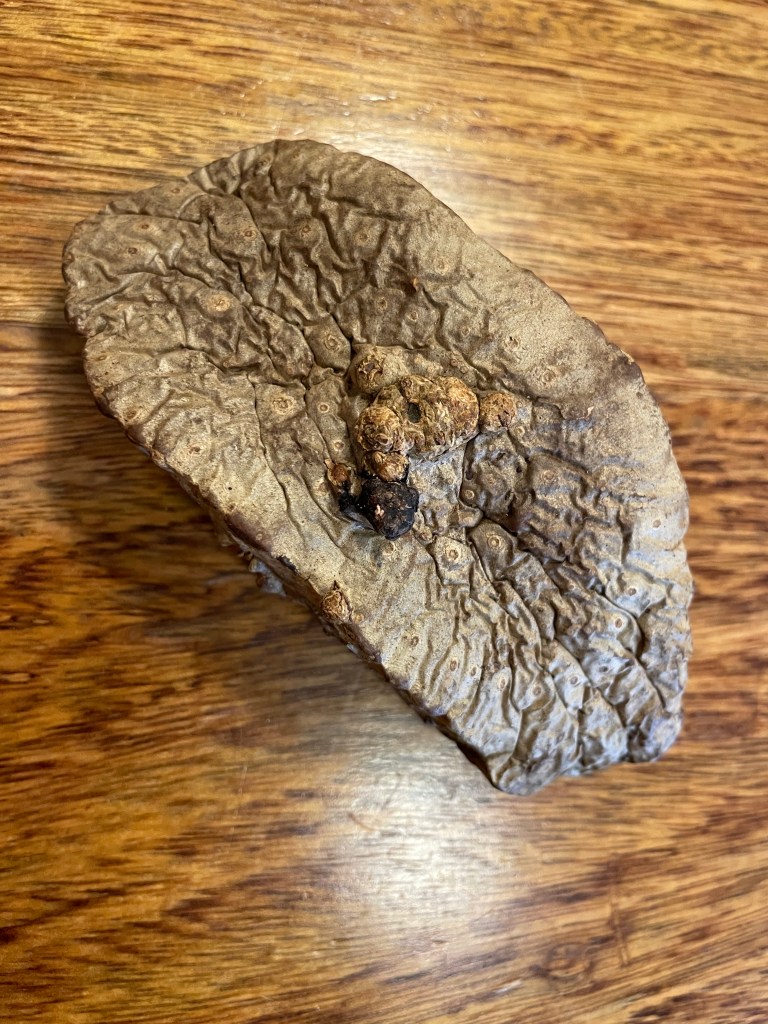
One thing that we didn’t know before arriving in South America is that Peru is one of the world’s best loved and appreciated gastronomy regions in the world. And it hasn’t disappointed. We went to an amazing restaurant called Mare. The waiter did several presentations of the different ingredients that were used in our meal. We dined on Guinea Pig (a very usual flavor but wonderful) and for desert we had almost a custard of Chimoya and passion fruit with chili oxicala chips capped off by homemade coffee ice cream. It was by far the most interesting and yummy desert that I have ever eaten.
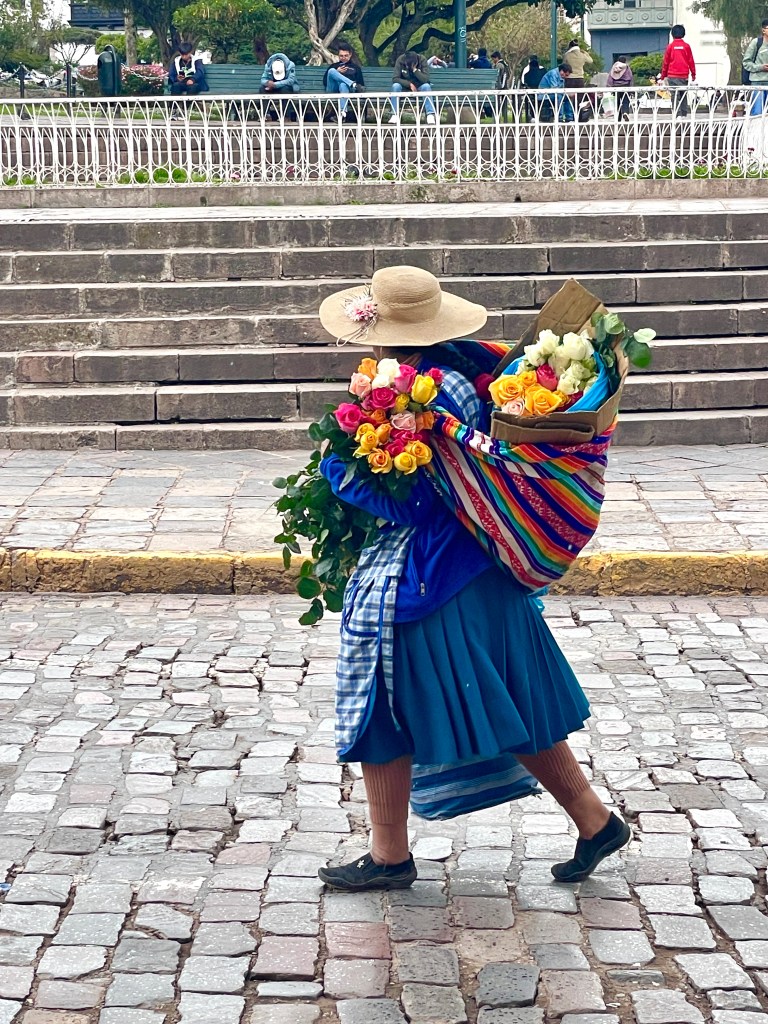
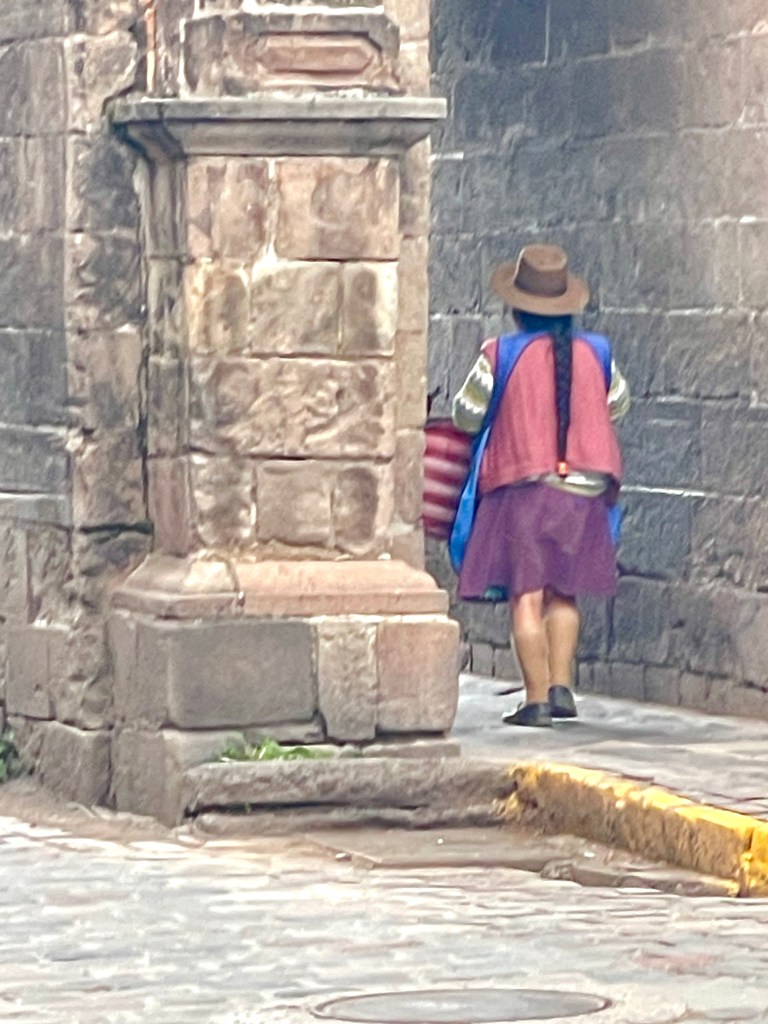
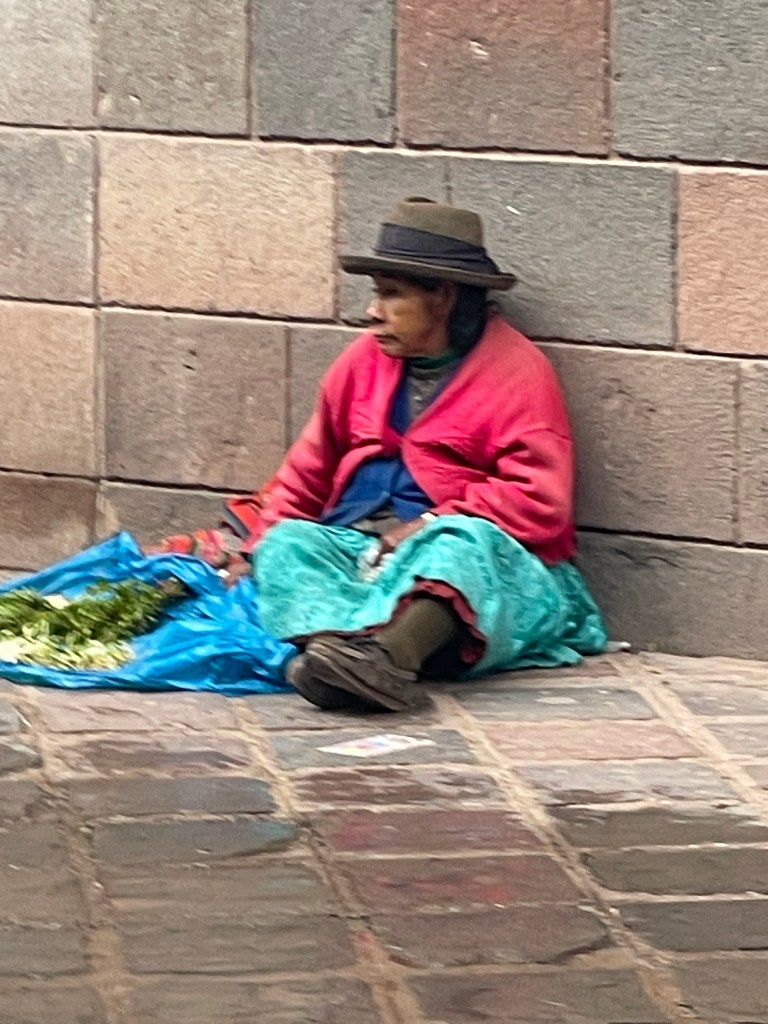
I love the vibrant colors and music of the city. Women in traditional Peruvian dress can still be found everywhere and fireworks shoot off at all times of the day and night in celebration of the saints that are beloved by the town.

Now I leave you with a multitude of pictures that I took throughout the day. Best of all, I can hardly wait for tomorrow so that I can discover all that awaits around each and every corner.
Historic Churches of Santiago Chile

It’s summer here in the Southern Equator but one of the coolest places in the county is Santiago’s historic churches. While not as old as those found in Europe, nevertheless, their history and designs often mimic those found from Latin America’s conquering nations.

IGLESIA DE SAN FRANCISCO

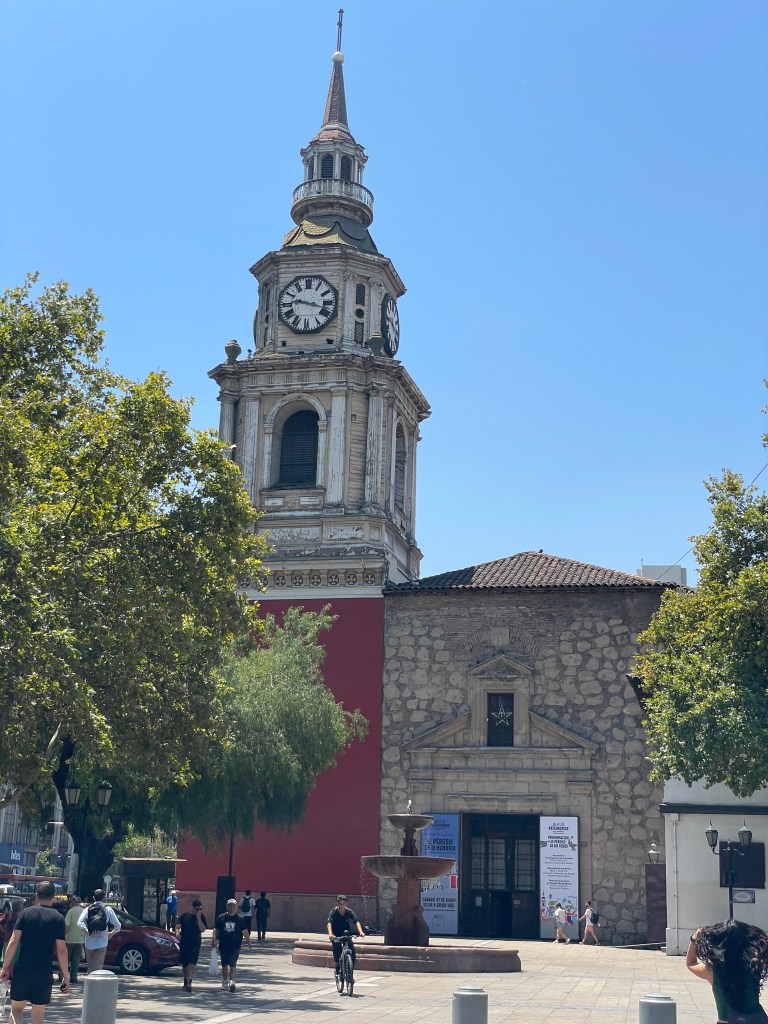
With its red exterior and unusual bell tower, Iglesia De San Francisco looks newer than other churches in the area, but don’t be fooled, as this one of the oldest buildings in the country. What is even more amazing is that it has withstood over 15 earthquakes with a shake value of over 7.0 each time the earth moved.

According to church history, five Franciscans arrived from Peru in 1553 but it was not until 1572 that construction began on the church. Consecrated in 1597 the building was completed in 1618. It lost its bell tower in 1647 and 1730 due to quakes. The current one was constructed in the middle of the 1800’s.

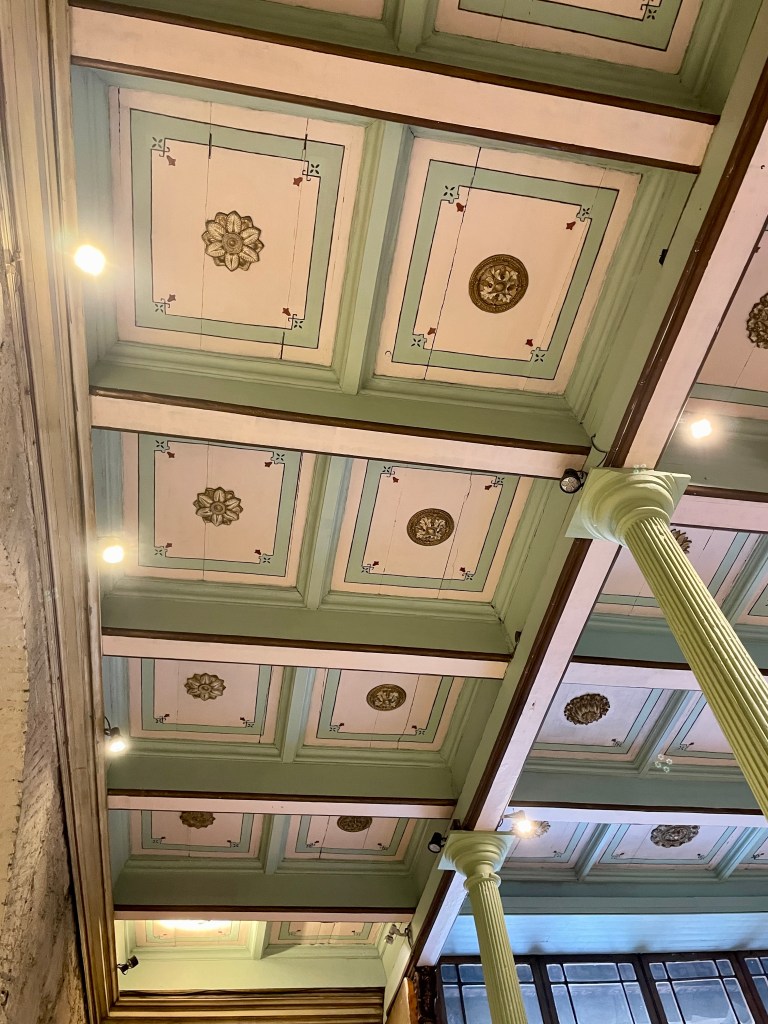
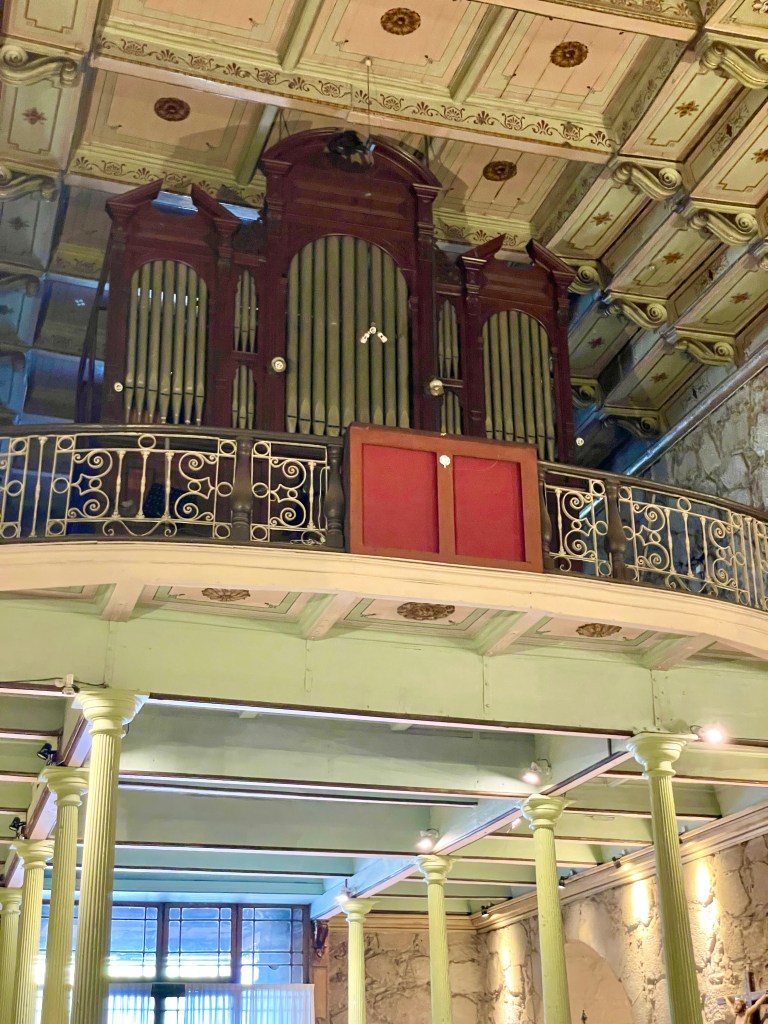
The ceiling of this magnificent building was constructed using a coffered Mudejar style beginning in 1615. You will definitely get a kink in your neck as you look upward.

Iglesia De la Vera Cruz

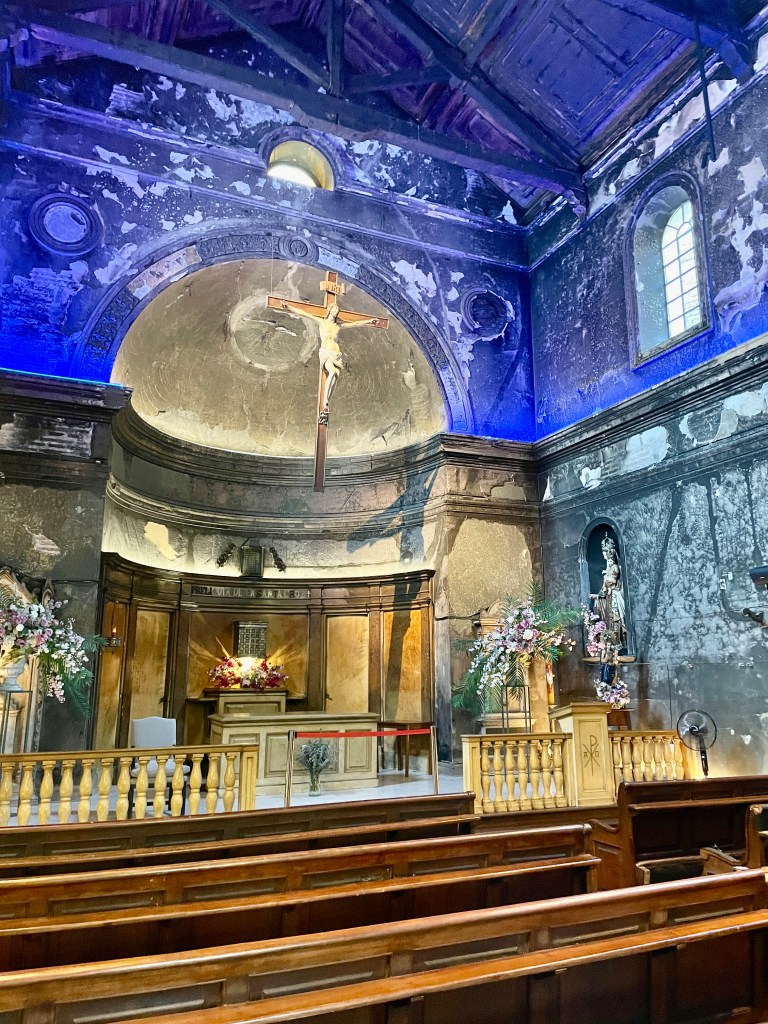
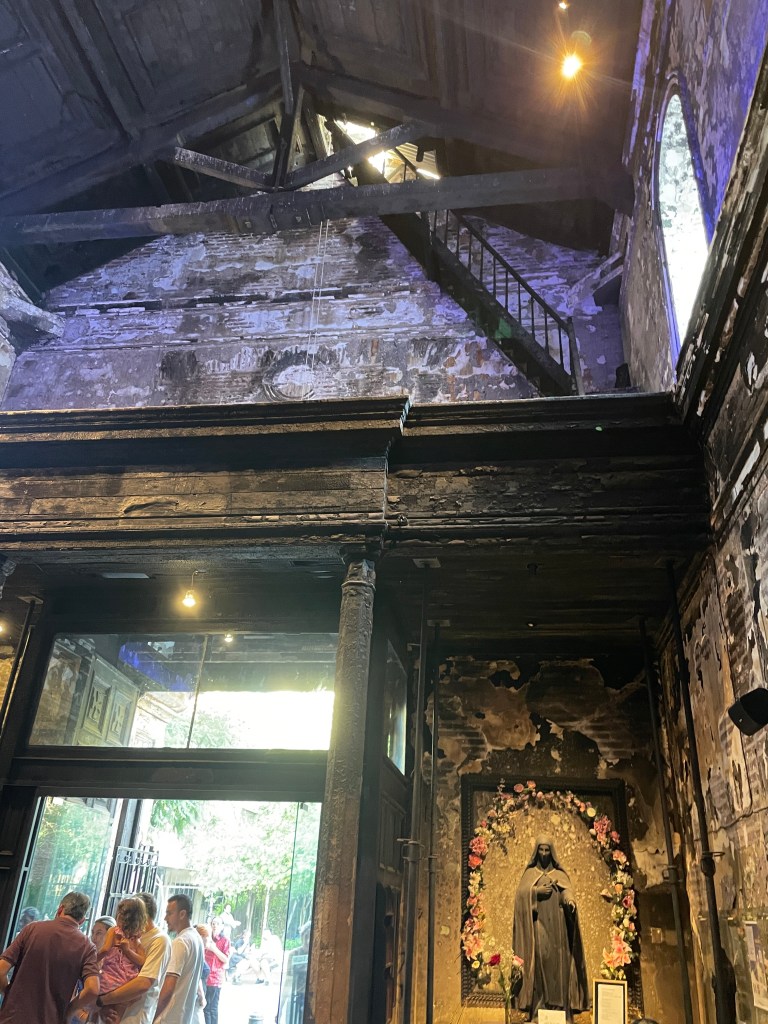
Located in Barrio Lastarria, work on this church began in 1852 and was completed in 1857. The church was suppose to have been built on the site where conquistador Pedro de Valdivia had lived in order to honor his memory but it appears that this location is most likely a myth. This building is a very weird, almost spooky place visit as the inside was burnt out in November 2019 during local riots.

Santiago Metropolitan Cathedral

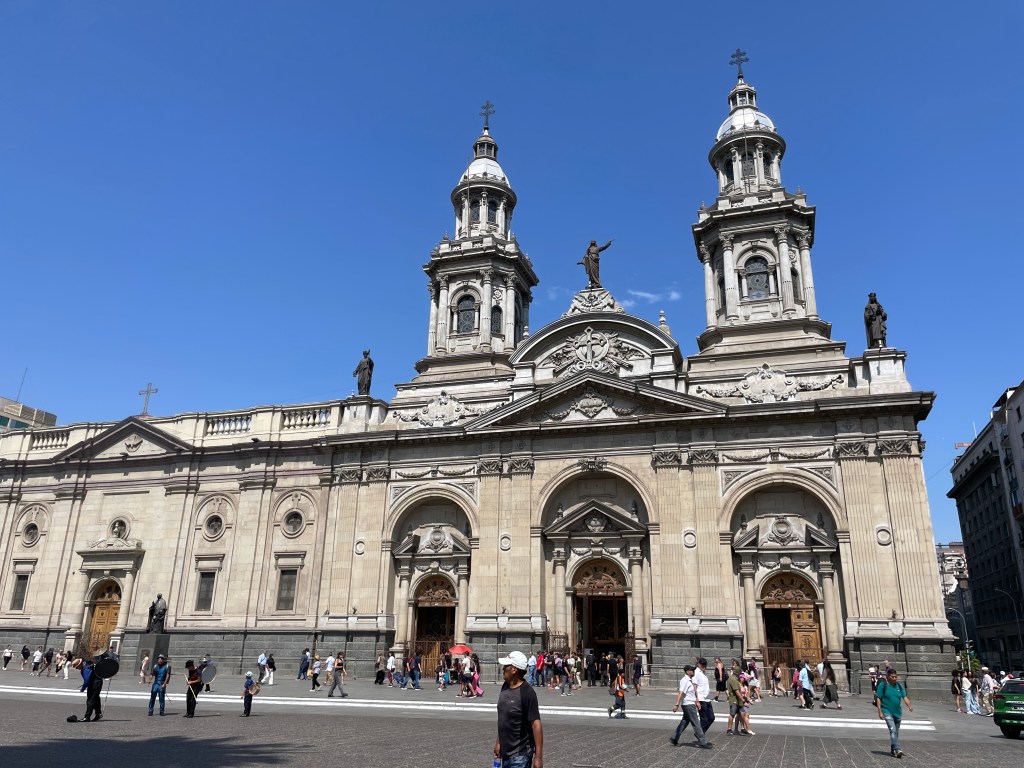
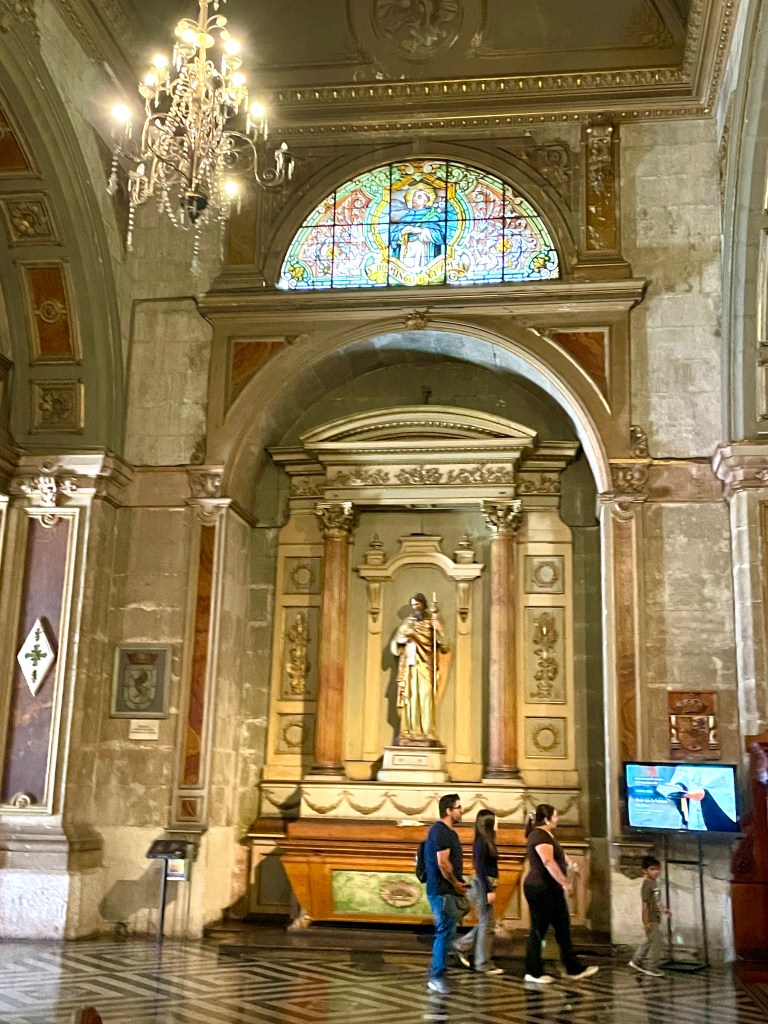
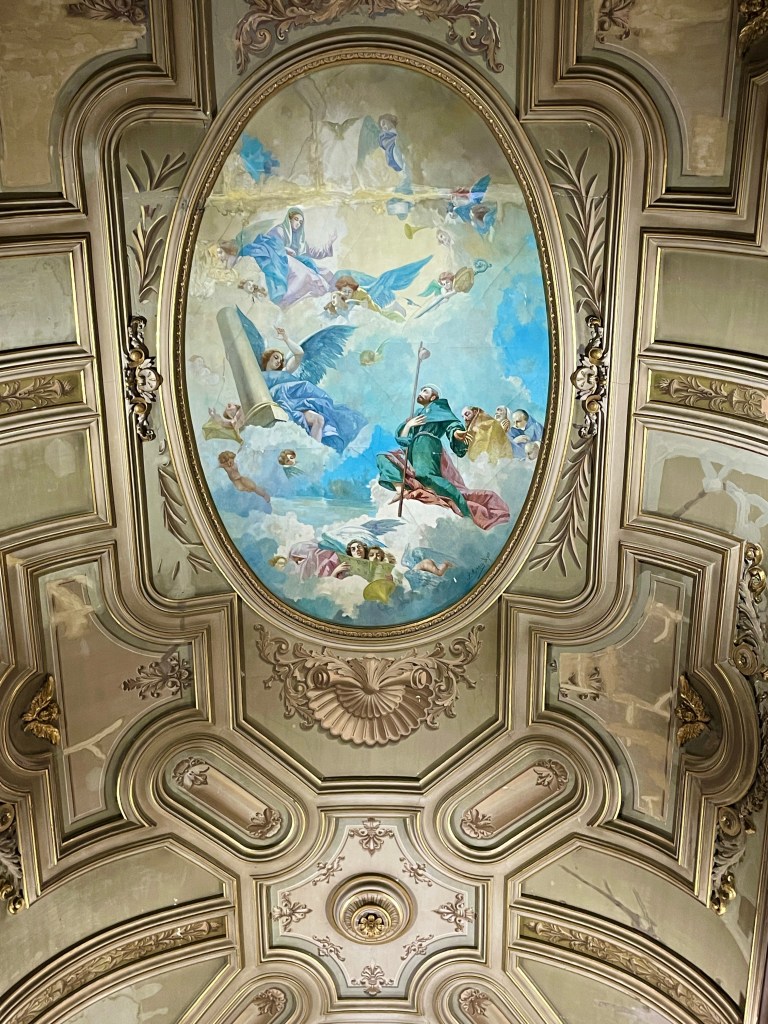
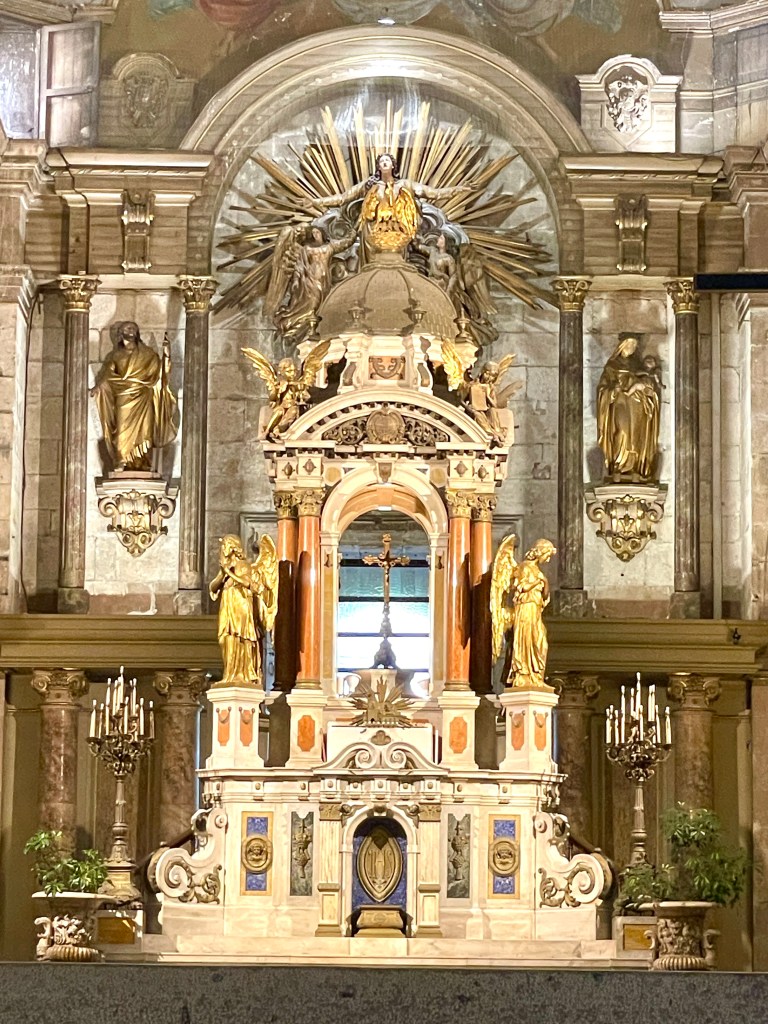
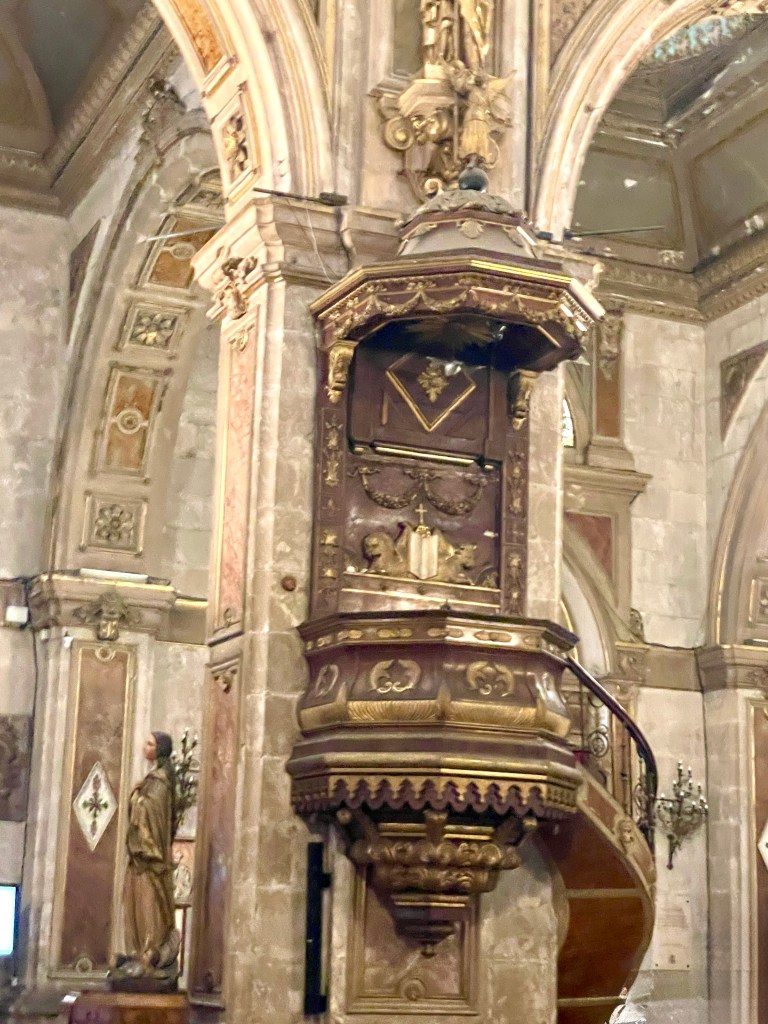
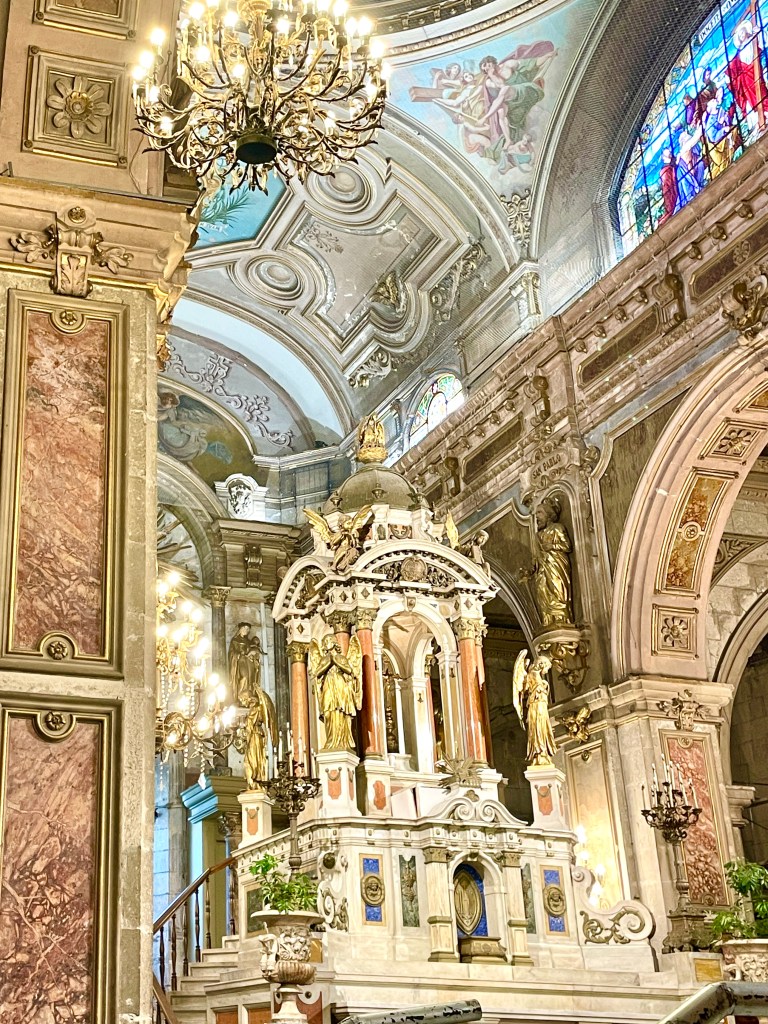
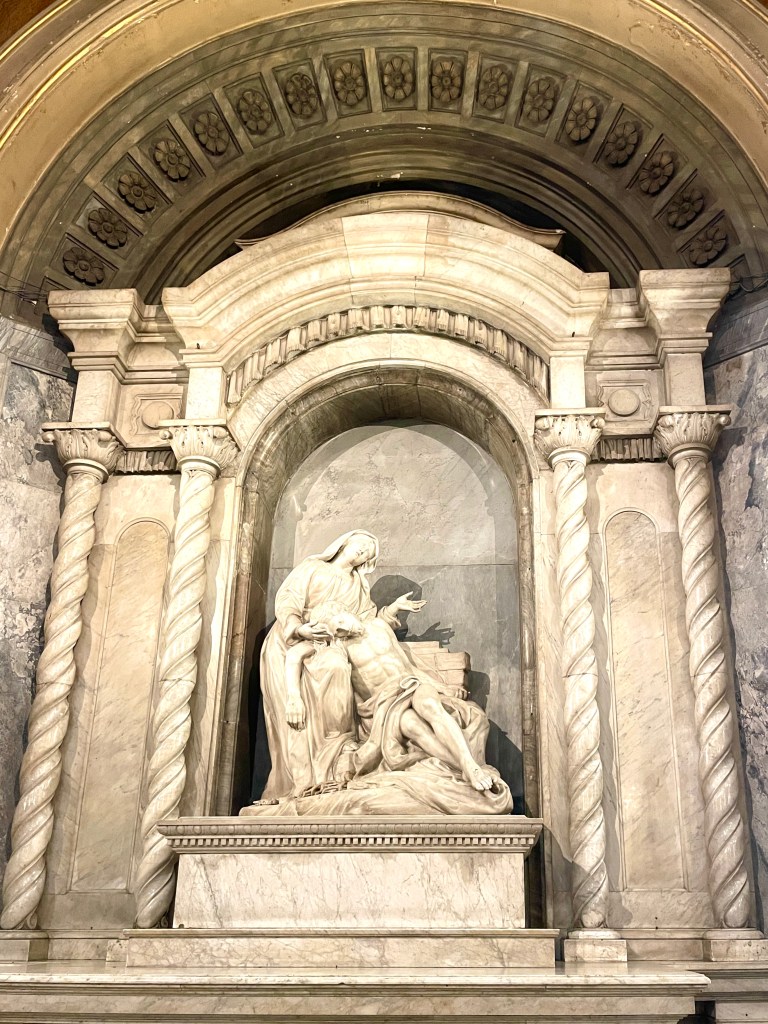
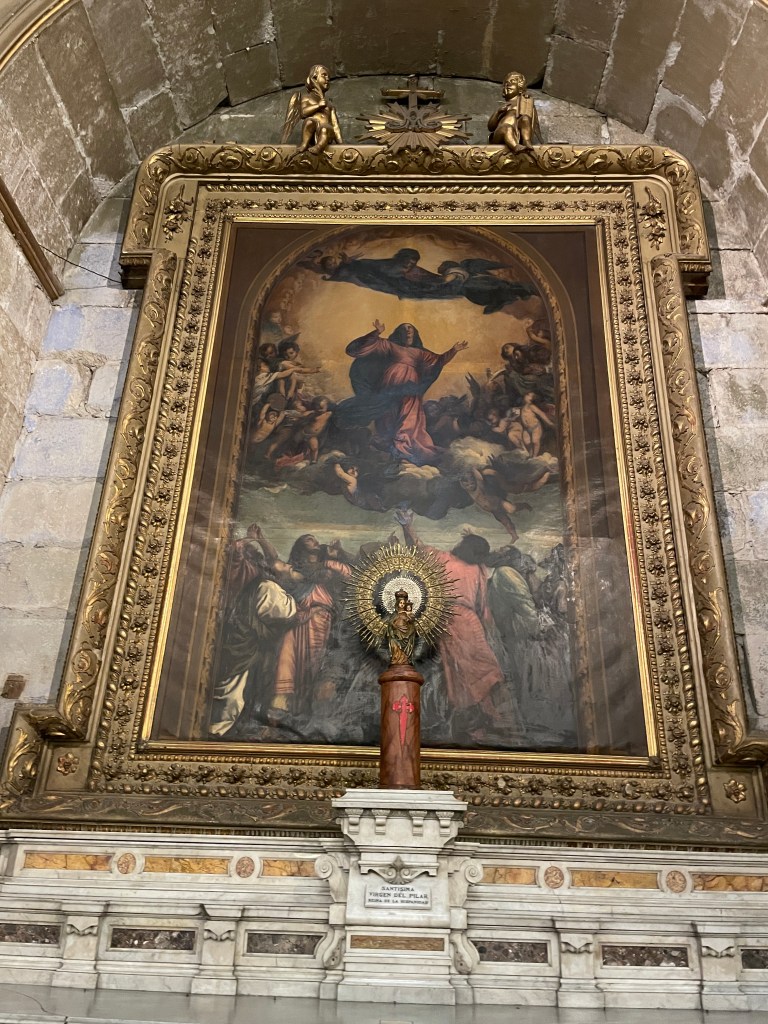
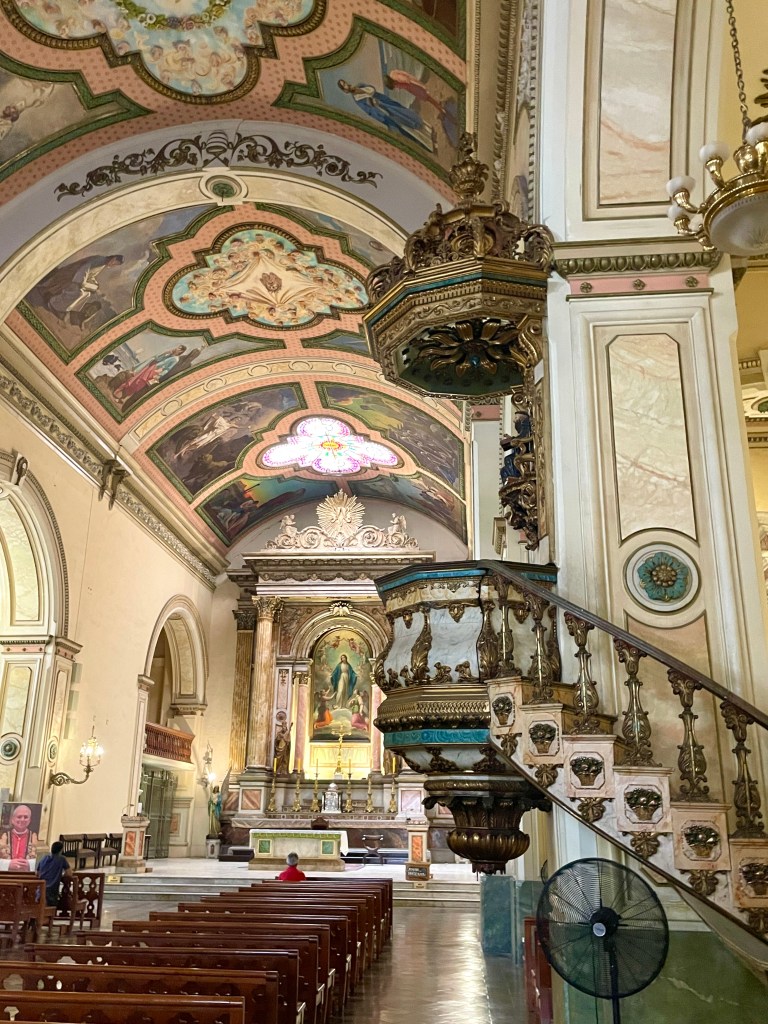
Located in the Plaza de Armas of Santiago the Cathedral is the home of the Archdiocese and the Archbishop of Santiago. This imposing building was built between 1748 – 1906; its present incarnation being the fifth church to have been built on the site… previous ones being lost to earthquakes and a fire. The Cathedral is dedicated to Assumption of the Virgin Mary and is the main church of the city.

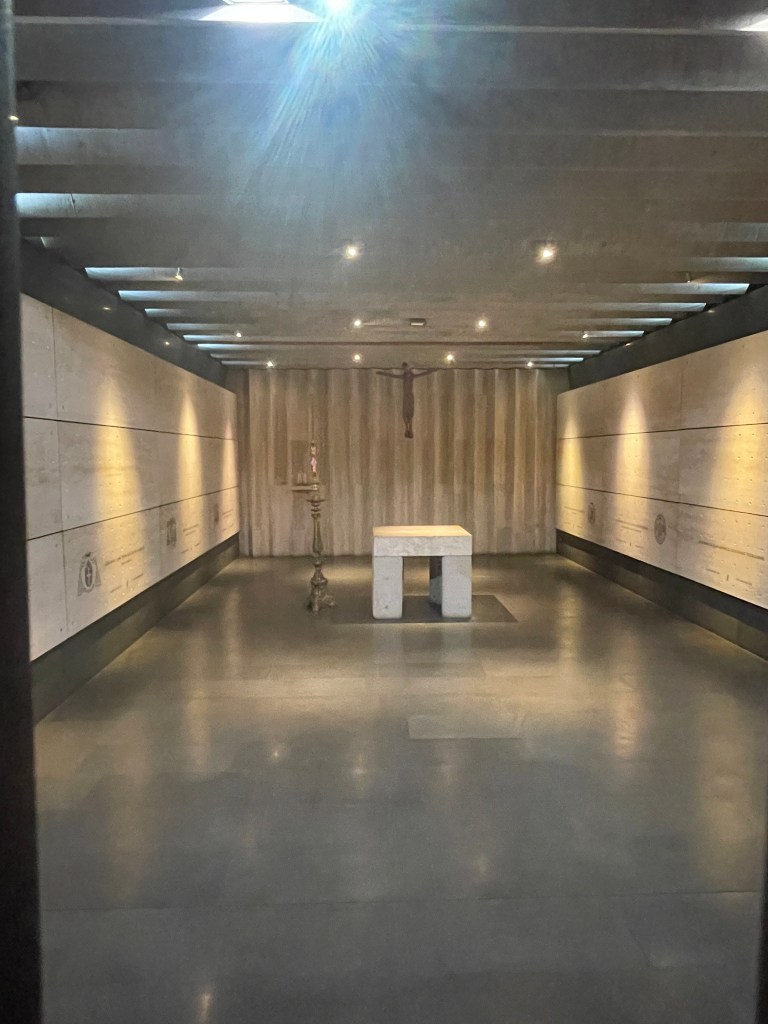
One interesting aspect to the Cathedral is Archiepiscopal crypt which was remodeled recently adding light and depth to the place where most of the Archbishops of Santiago are buried.

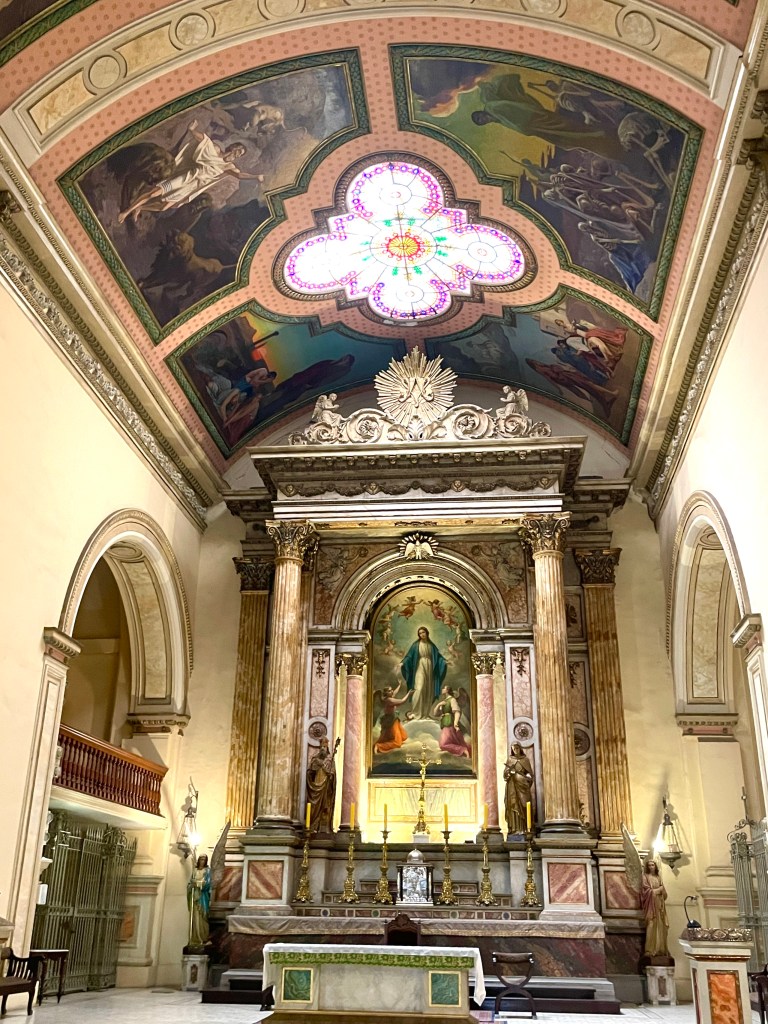
Templo De San AugstinOur Lady of Grace

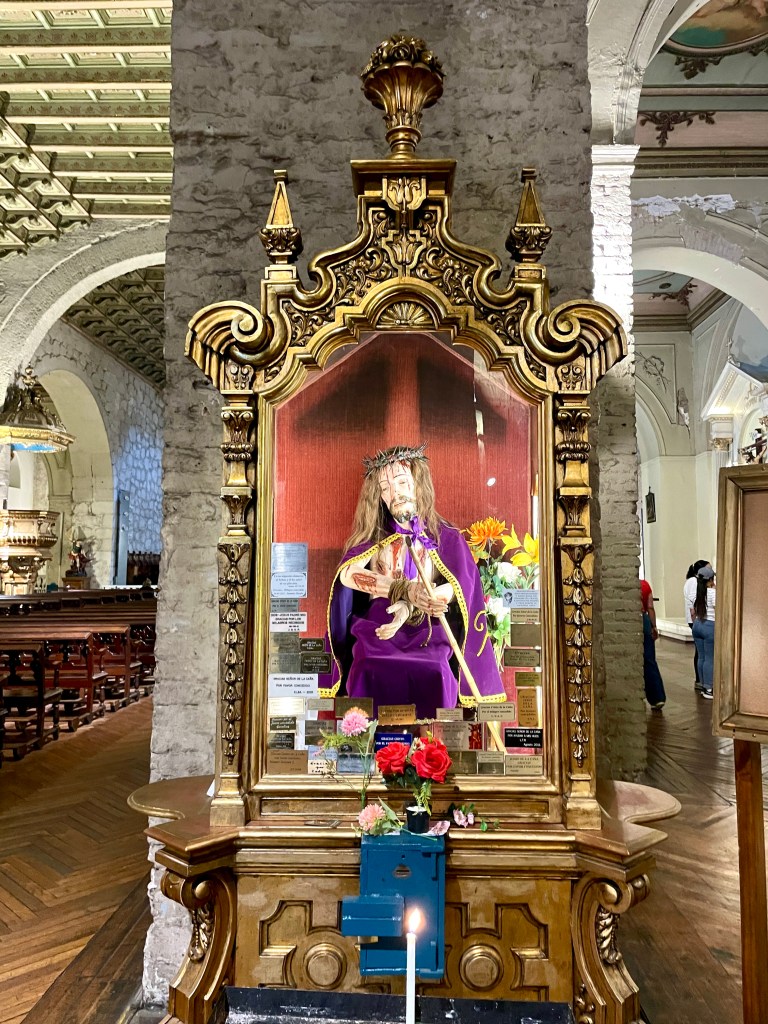
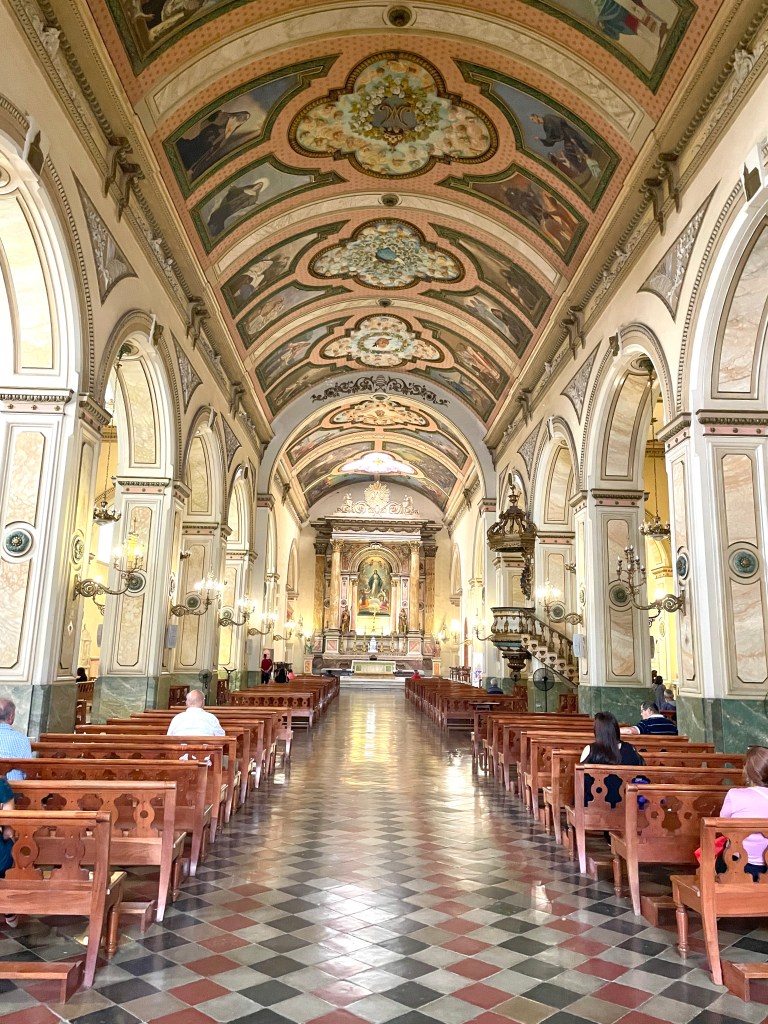
Built in 1625 this beautiful church was the favorite of those that I visited. There is a beautiful wooden carving of Jesus that holds special significance to the area. Until the earthquake of 1647 Jesus wore a crown of thorns upon his head. During the quake it is said that the crown of thorns fell from the head of Jesus and slipped around his neck. When someone tried to put the crown back upon his head it is said that the statue’s face began to bleed and the ground began shaking violently. For this reason the crown remains around the neck of the beloved.

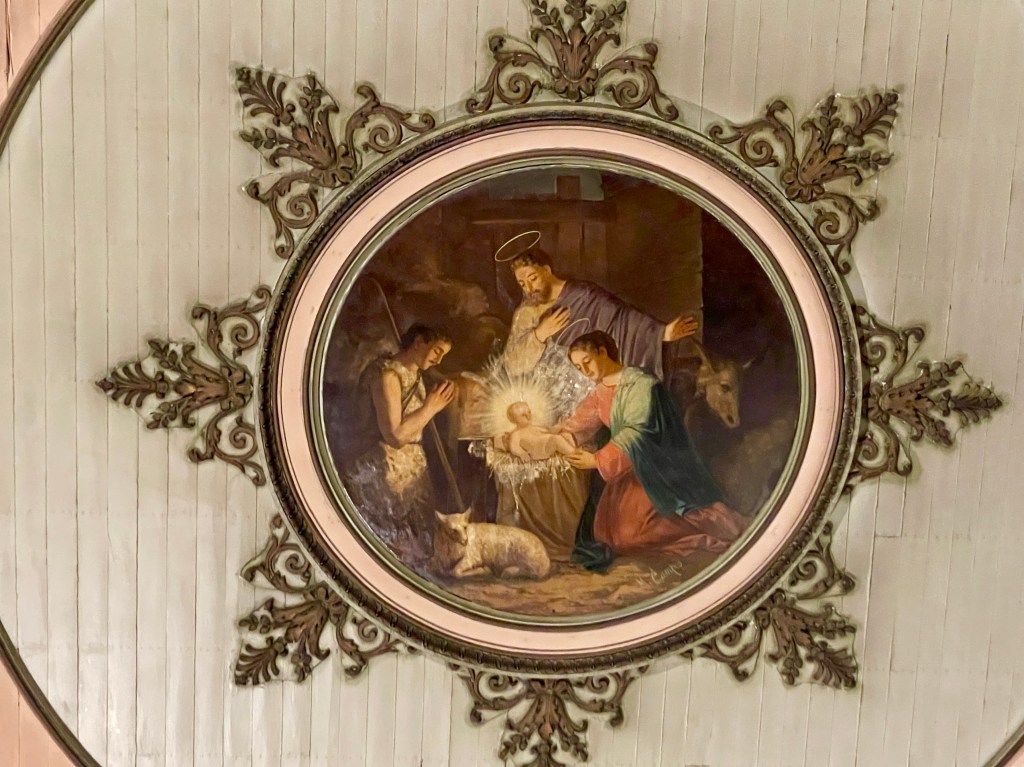
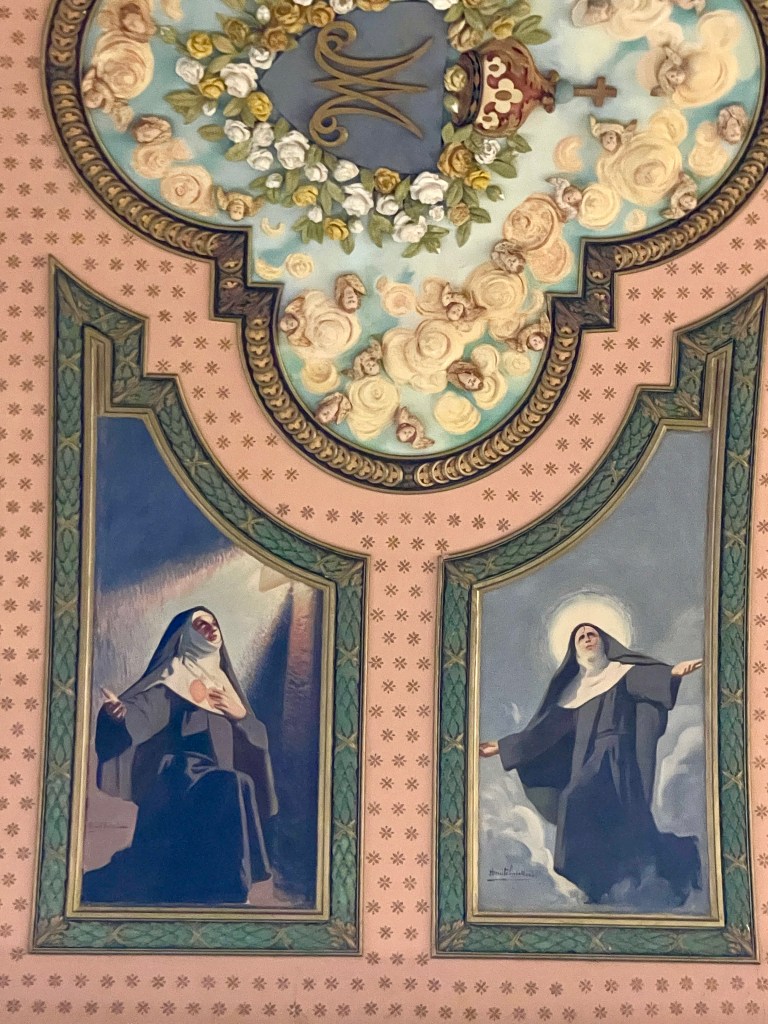
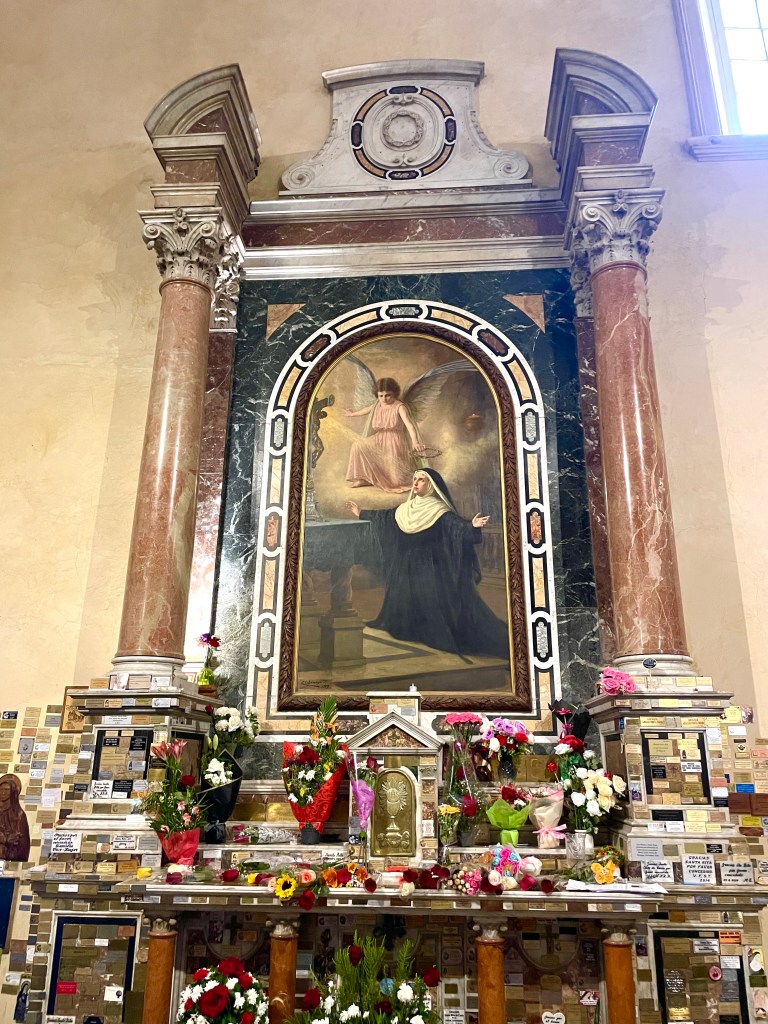
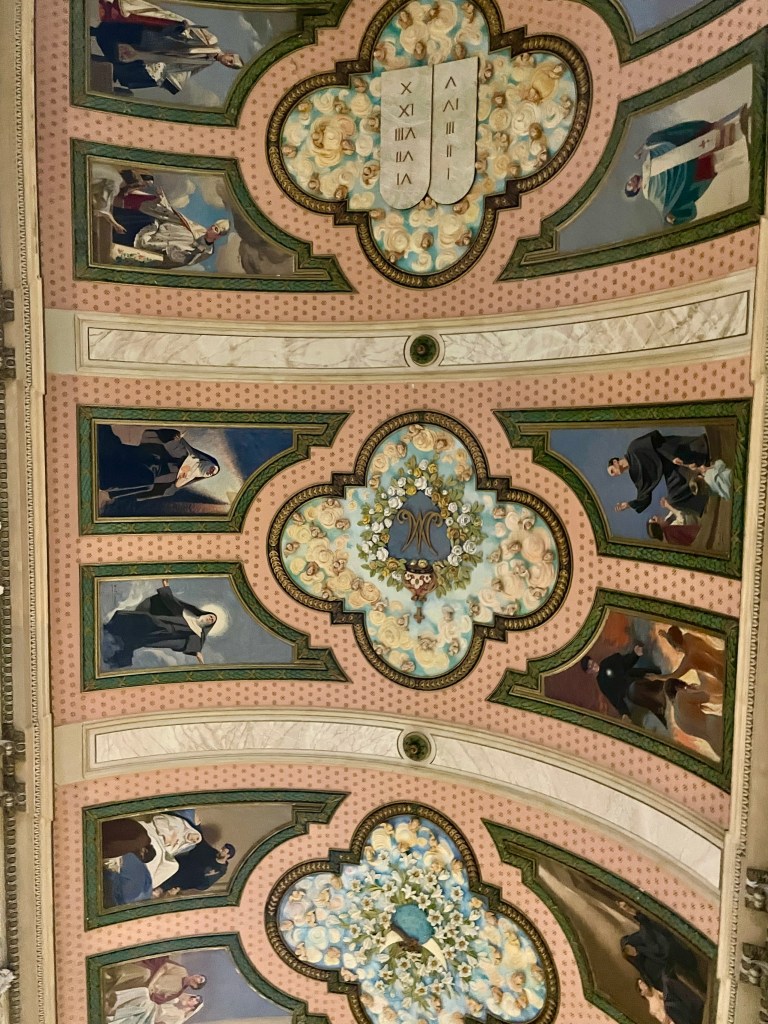
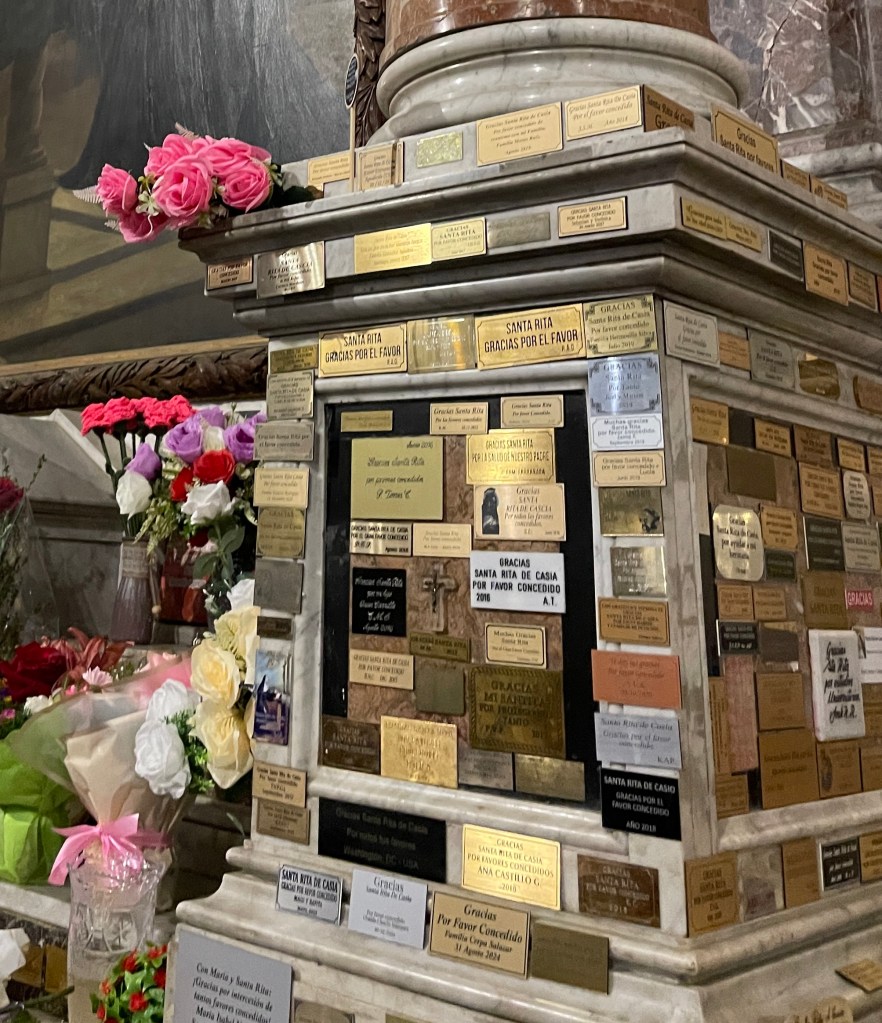
But the thing that I loved most about the church was its congregants devotion to Saint Rita of Cascia whose face graces parts of the ceiling and a wall of the church. Rita was born in the late 1300’s in Italy. She was married young to a man who was known to be a rich adulterer with a sharp tongue and quick temper. Rita endured his physical and mental abuse for the 18 years that they were married while with gentleness and humility taught her husband to be a better man. After her husband died (he was murdered as a result of a long-time feud) she joined a sisterhood of nuns who later became the Augustinains. She was known for her belief in and participation of mortification of the flesh.
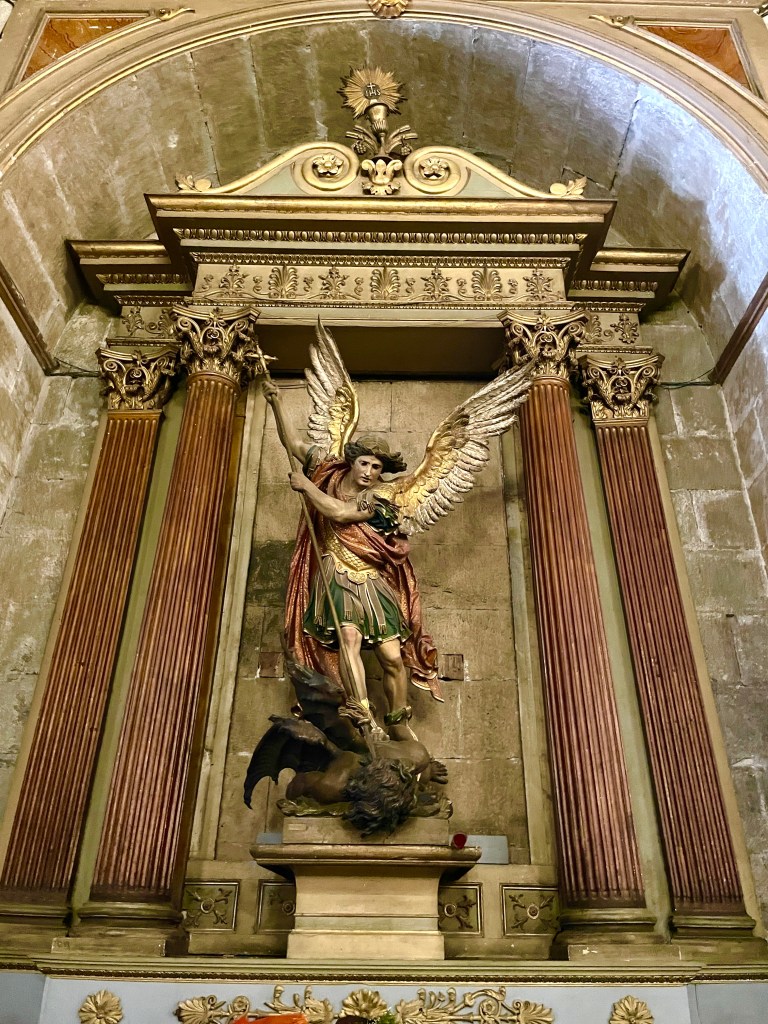
Rita is known as the saint of impossible causes. In addition, she is the patron saint of the sick, loneliness, sterility, abuse victims, couple and marriage difficulties, widows, parenthood, bodily ills, and wounds. It was wonderful to see a woman glorified in a religion that often saves glorification and adoration for men. Yeah Rita!

Panama City, Panama

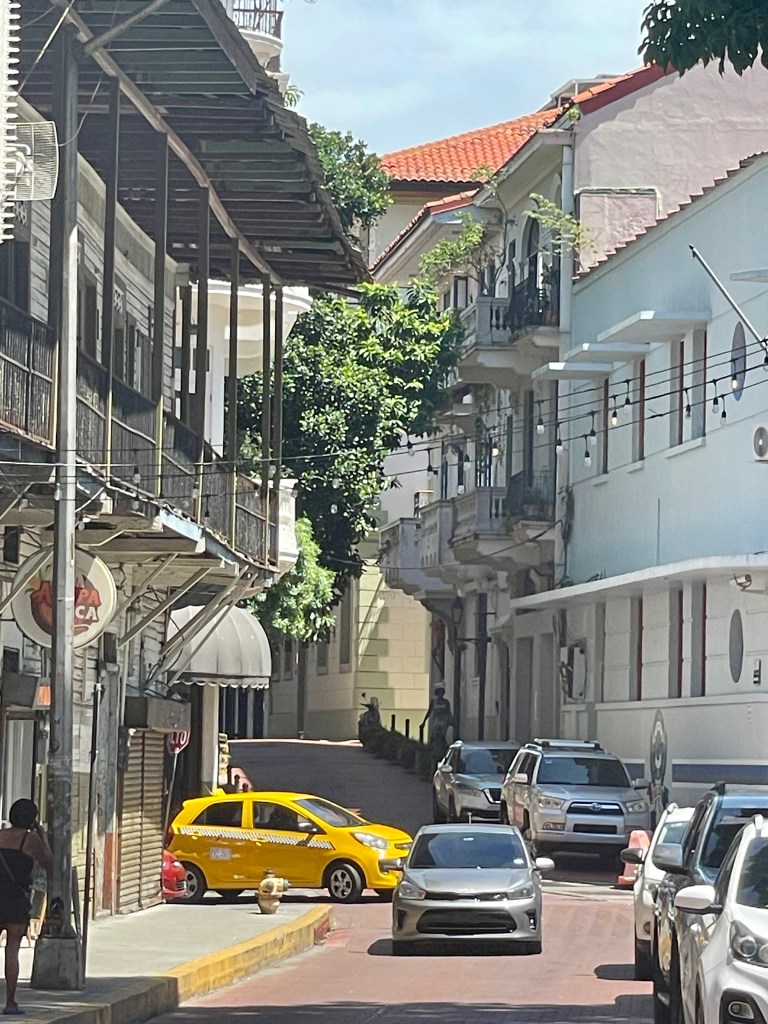
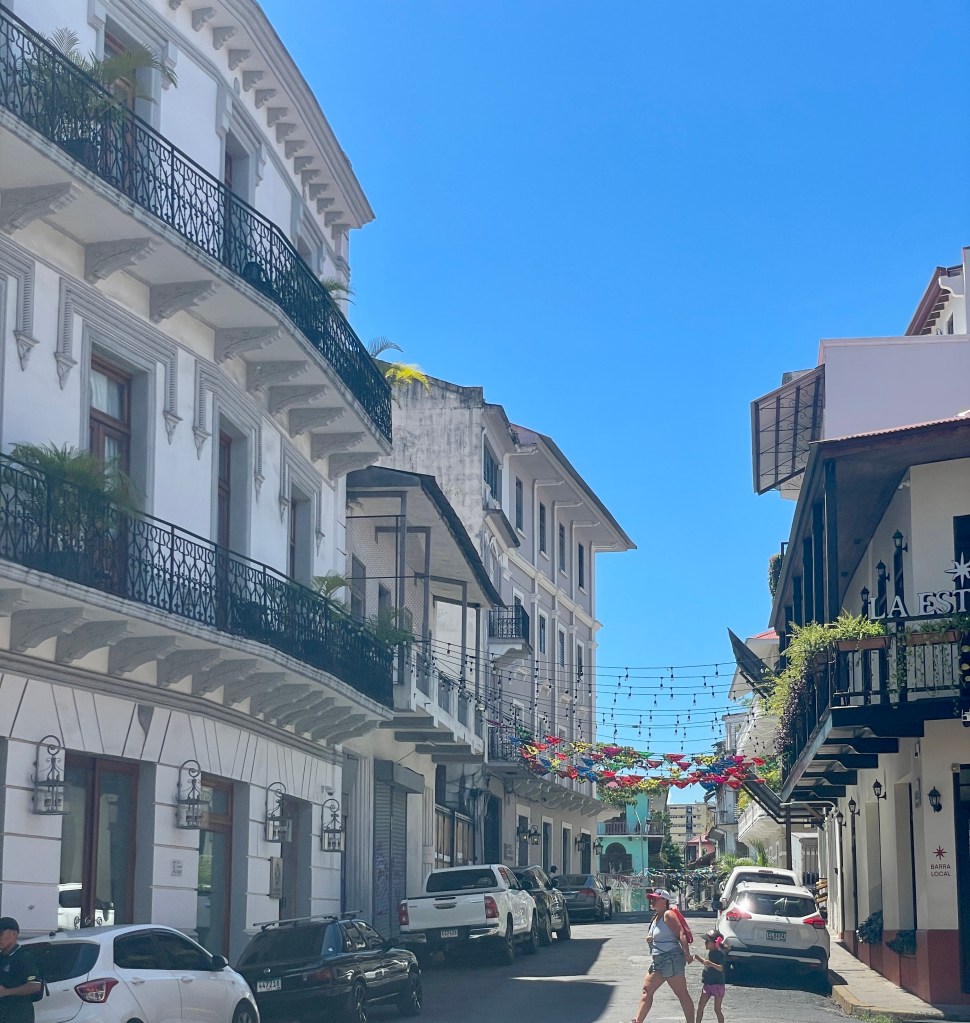
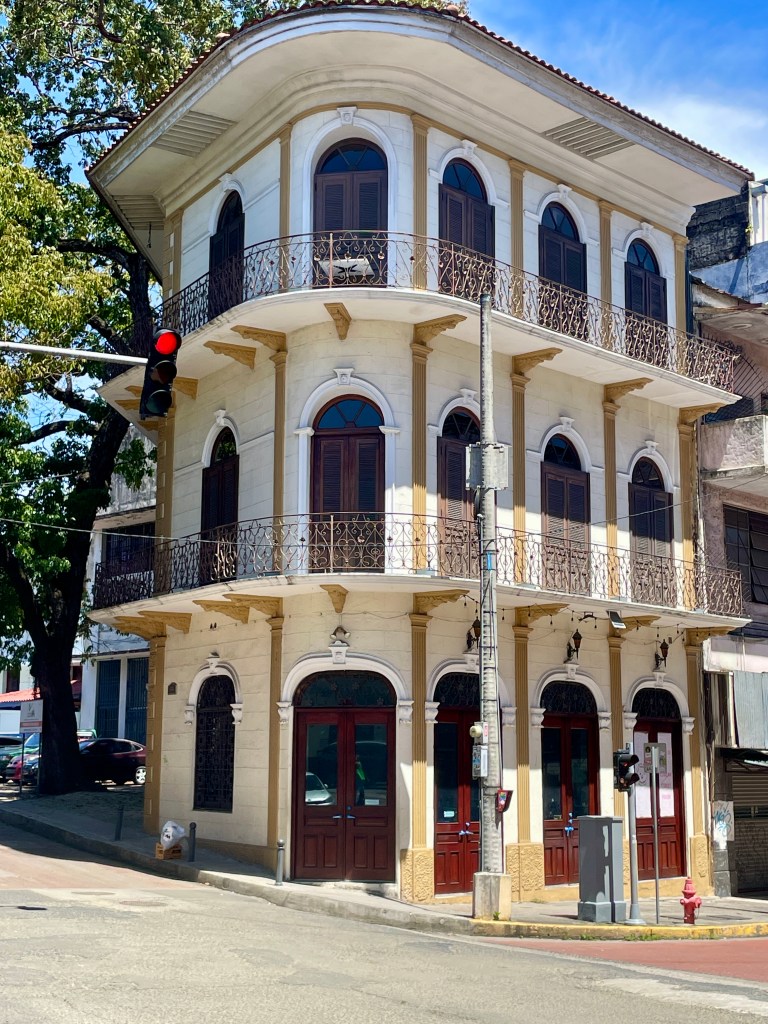
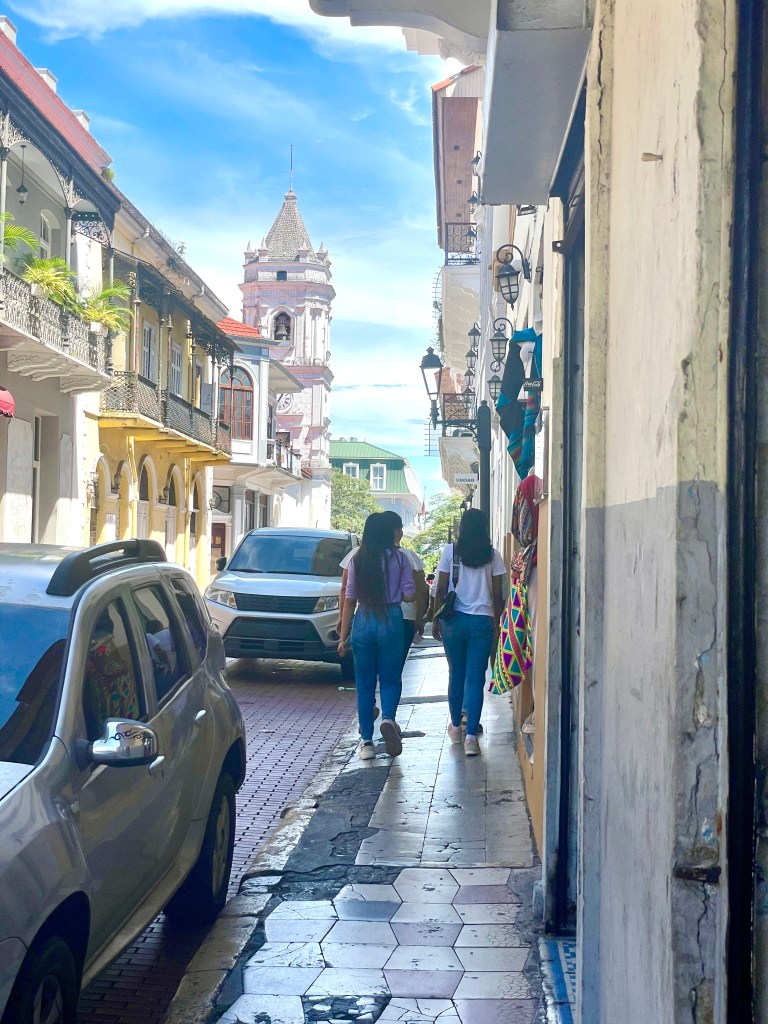
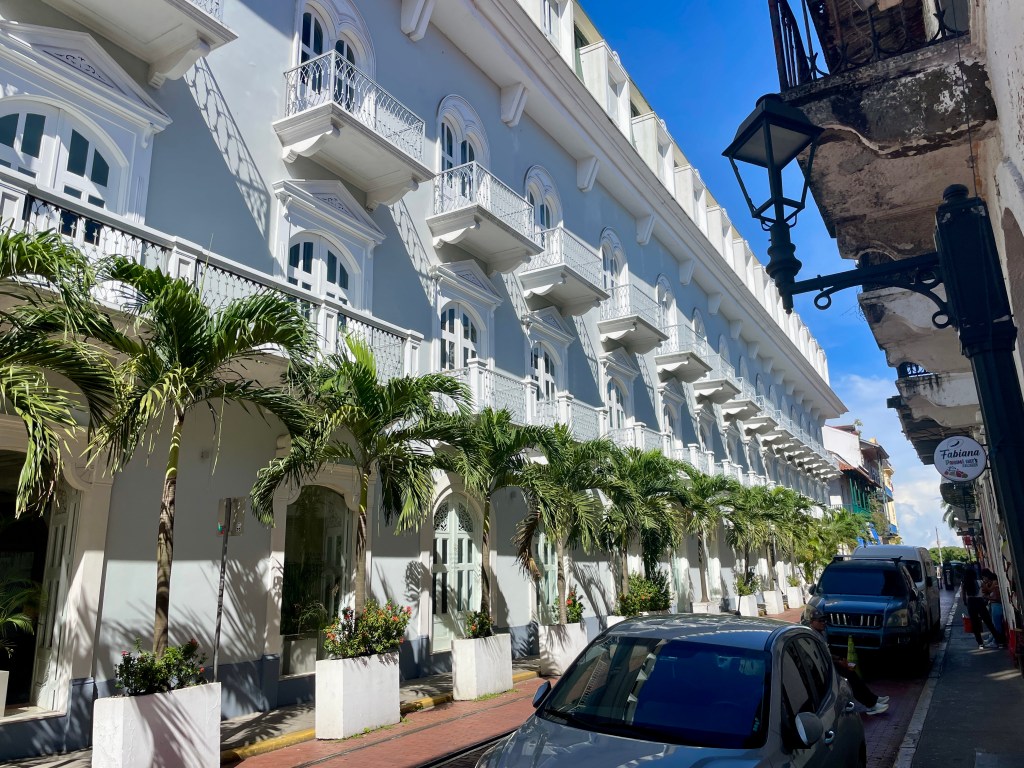
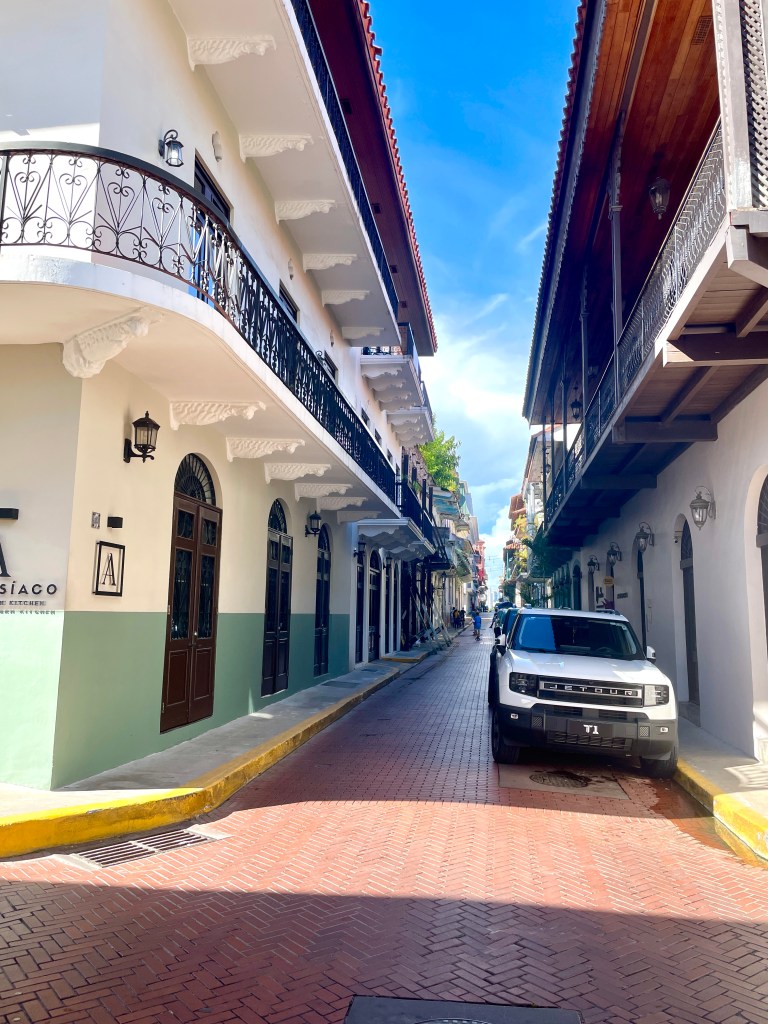
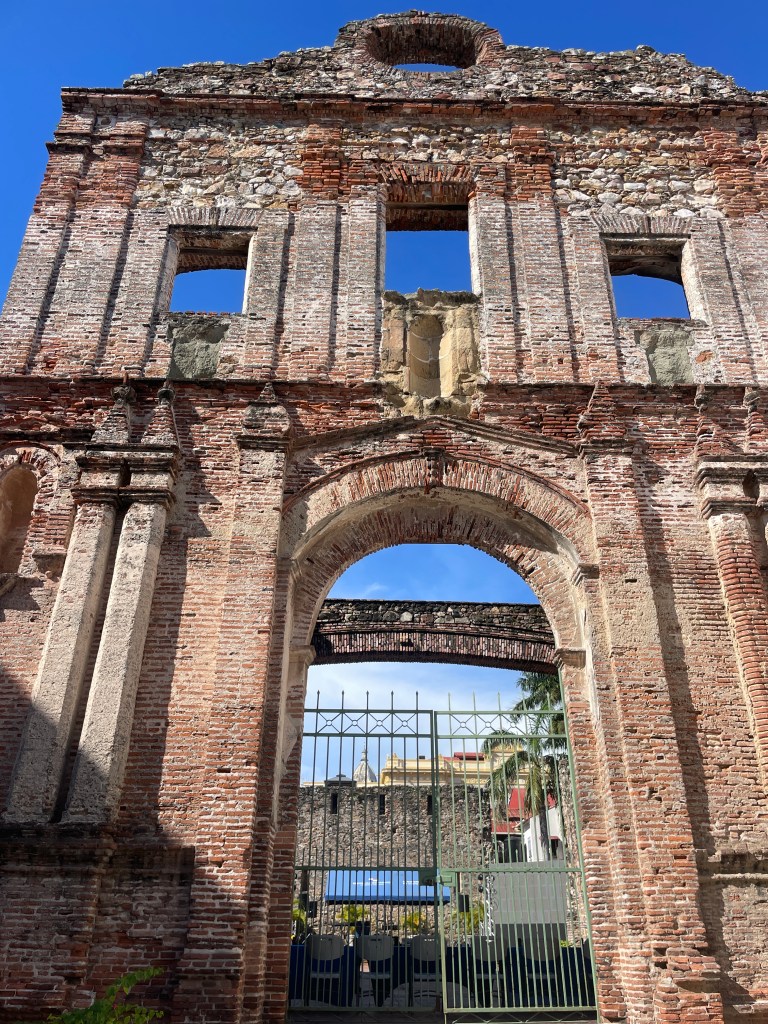
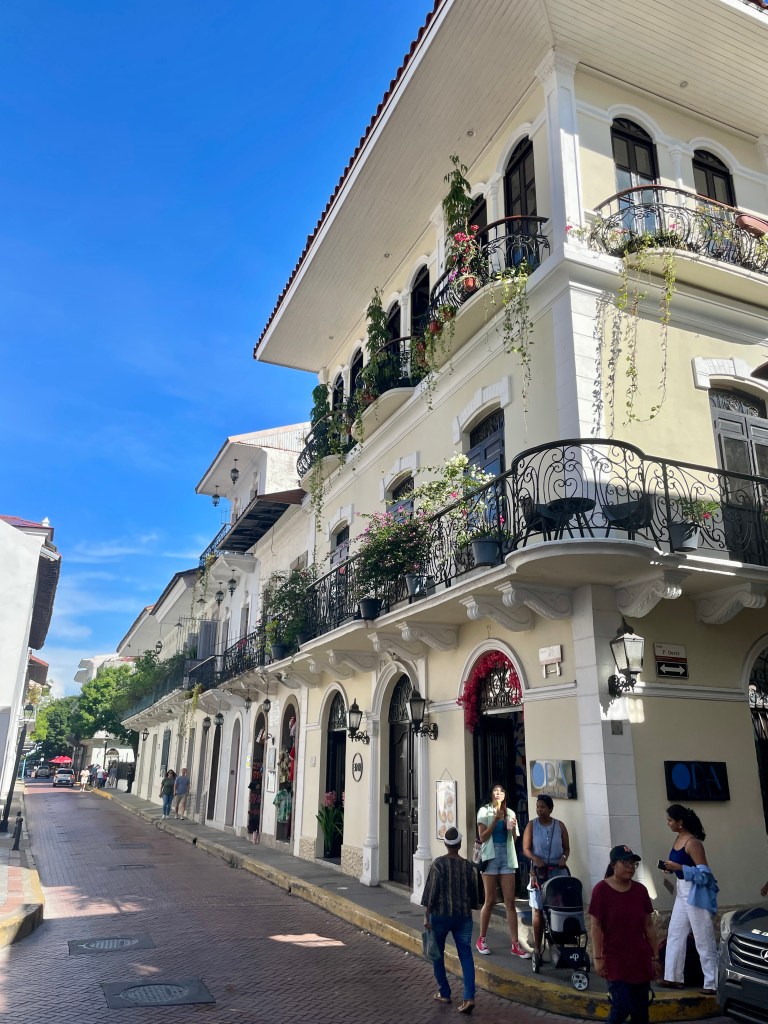
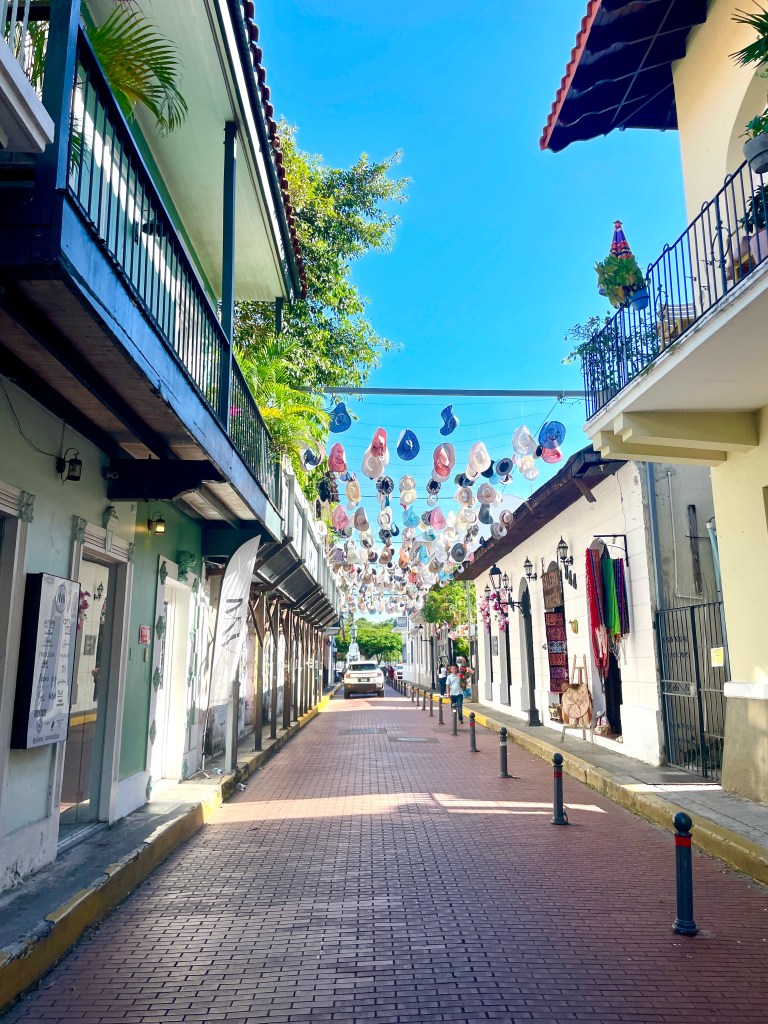
Casco Viejo (or Old Town) is an amazingly beautiful part of Panama City. French and Spanish Colonial architecture combine to create a section of the city that is living its best life. Once known as Panama Viejo, the waterside port was established in 1519 but was destroyed in 1671 by the pirate Henry Morgan. Today is area is being revitalized and features old churches, great restaurants, and small shops. Best of all the ocean water belts cool breezes which flow like a gentle mists throughout the ancient streets. Frankly, the town reminds me a little of New Orleans with a lot more punch.

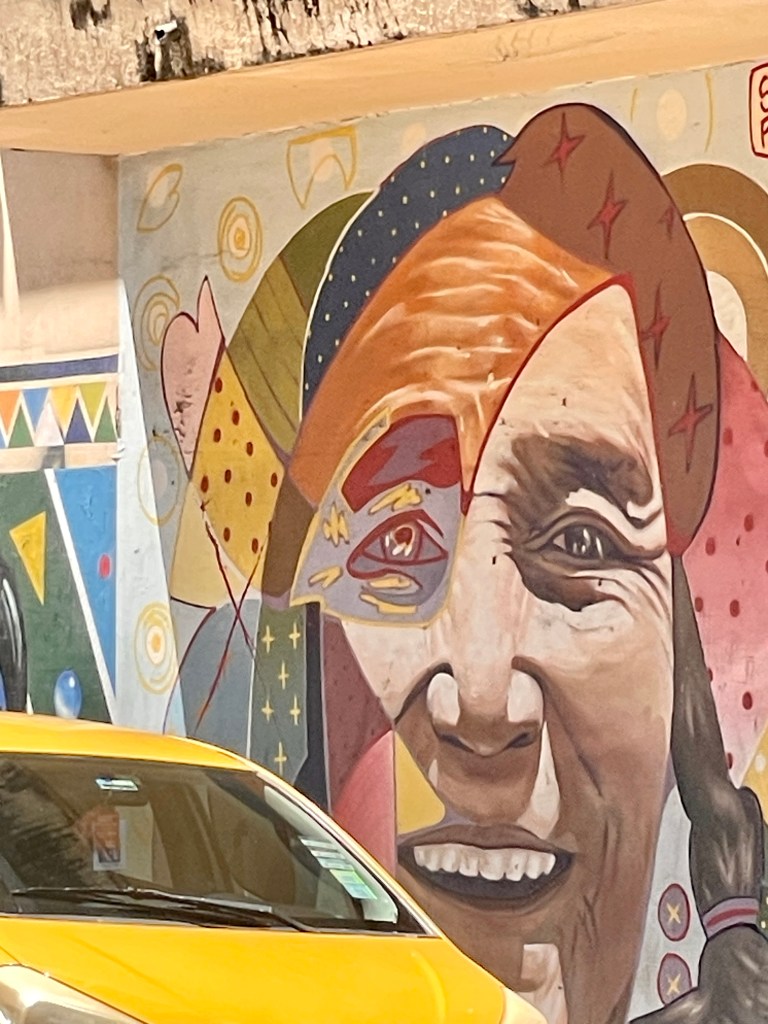
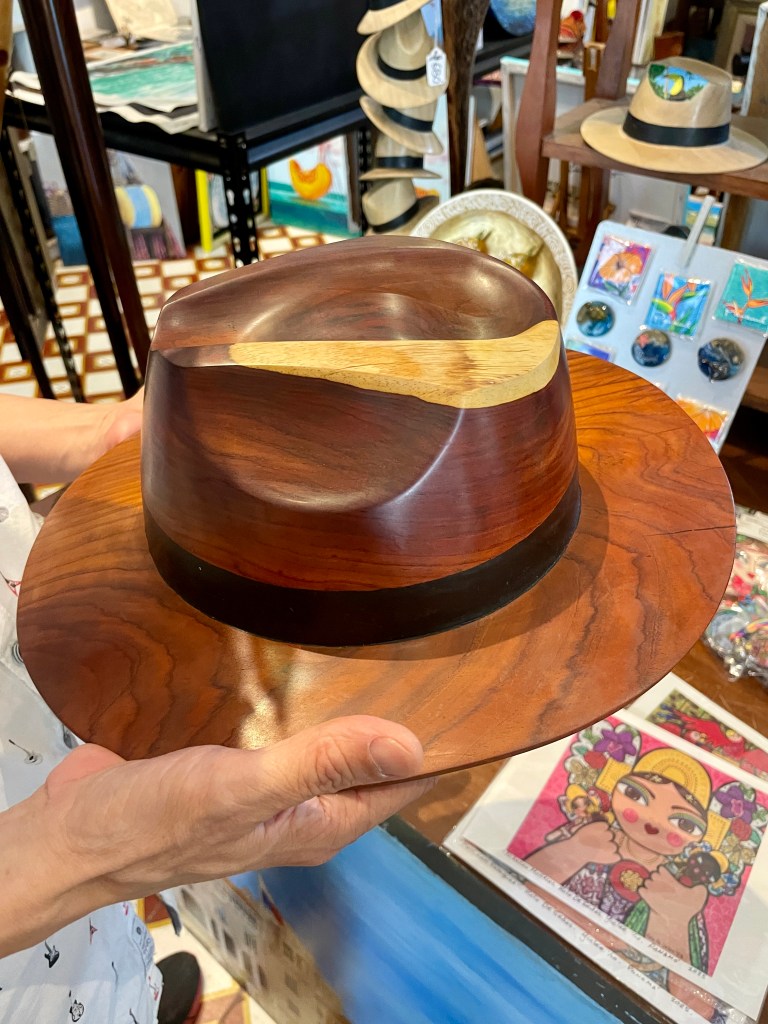
One of the things I loved about Old Town was the alleyways with hats, or flags, or copies of ancient embroidery hanging from upper window to upper window on both sides of the street. This part of Panama City always has something to be enchanted by and it makes your heart skip a beat when you turn a corner and find something unexpected and charming.

Since I am still having computer issues I am doing a computer dump of some of my pictures so you can get your own idea of the city. Enjoy!

Living In Very Rural Costa Rica

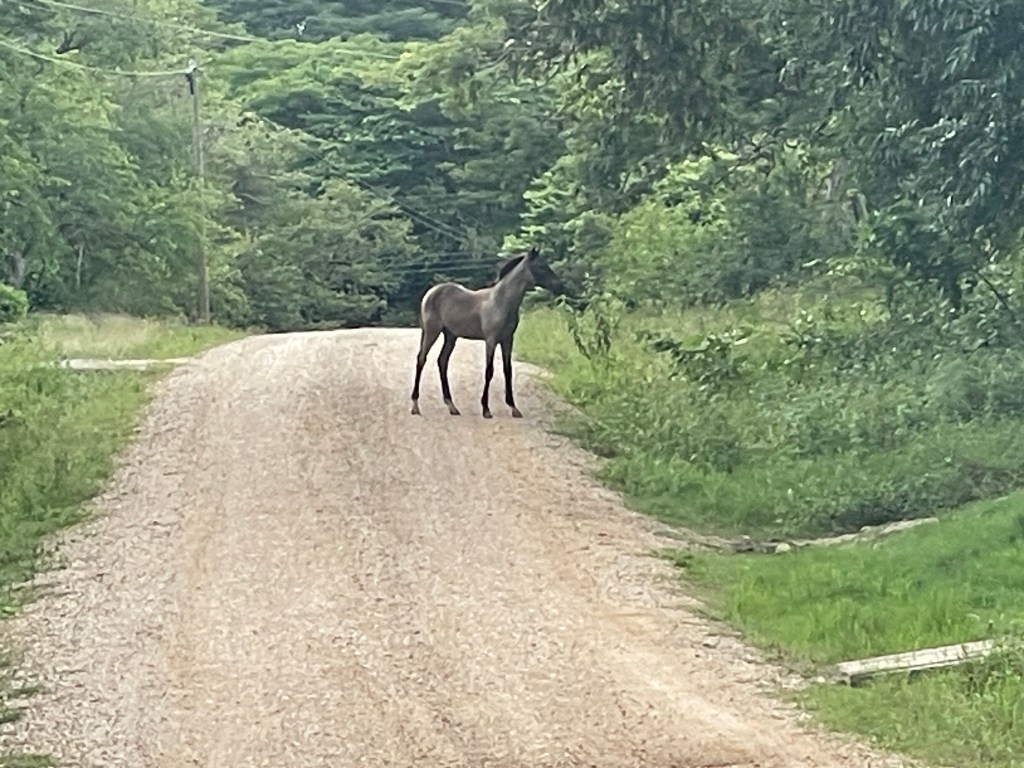
If you have ever dreamed about getting away from in all…come to Costa Rica. Yes, there are resorts and San Jose, but if you really want to get lost, come to rural Guanacaste where the Brahma cows out number humans, the monkey are louder than them, and the nearest town is about twenty-five minutes away by car and 2 days if you are walking.

Yesterday, I went to the very small school down the road to see if anyone there could help me with my Spanish by talking to me a couple of hours a week and I would pay them. No one knows English, which while expected, was disappointing because even with my translator no one understood what I was really wanting. No one had to speak English just be willing to to talk to me in Spanish. If nothing else I proved to be a sizable distraction for the kids who thought my attempts at communicating in Spanish were hilarious!

It is very impoverished here but I am not sure that anyone in the valley is truly aware of it. Everyone waves and smiles, and during my walk today several people waved and answered me back after I yelled out “buenos tardes!” Tonight I plan to go down to the bingo hall and play a game or two as a benefit for a sick child in the village.

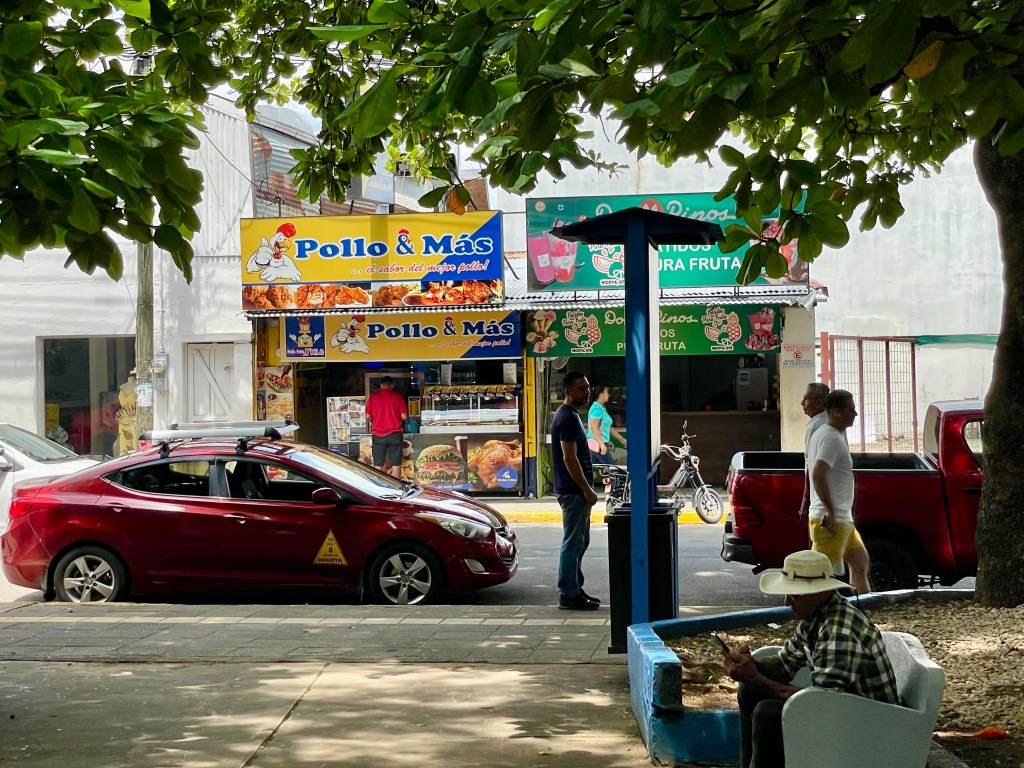
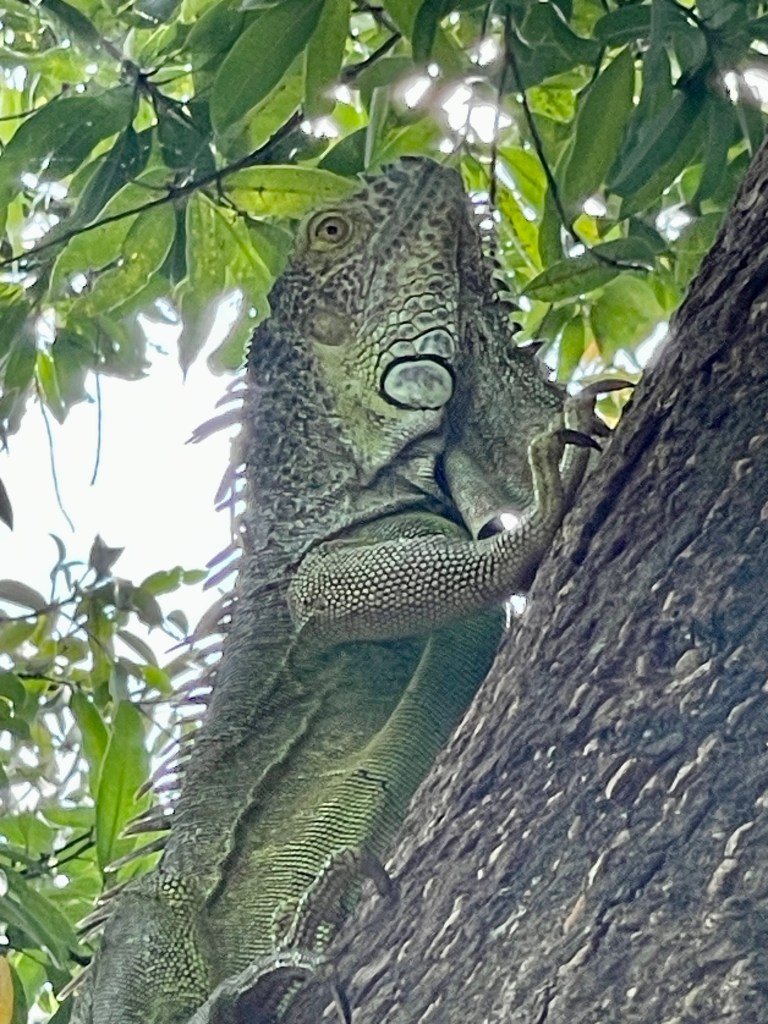
The day before they left my hosts took me into Nicoya which is the nearest “big” town. It has A McDonalds, KFC and Burger King. Sigh. There are three supermarkets and a lovely town plaza full of Iguanas of all colors. I love the orange ones. Food at the supermarkets is expensive and I don’t know how the locals afford to shop. For instance a small sized Wall-Mart shredded cheese is $4 here while at home about $2. I was shocked and my heart went out to all the less-fortunate folks for whom shopping must be a cruel joke.

On Wednesday I took I & E to the airport in San Jose so they could go home to France to visit their first grand baby. I drove their truck…a six speed stick shirt. I was terrified. Why? Because no one seems to follow traffic laws, I had not driven a stick in 25 years, and I was driving in a big city.

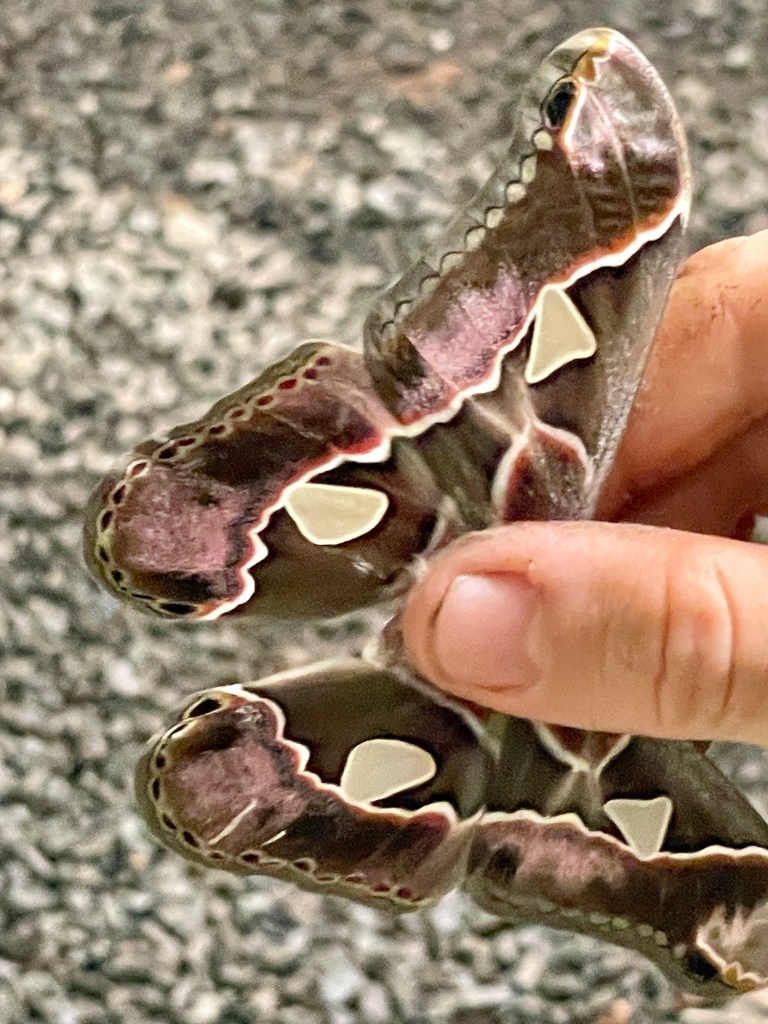
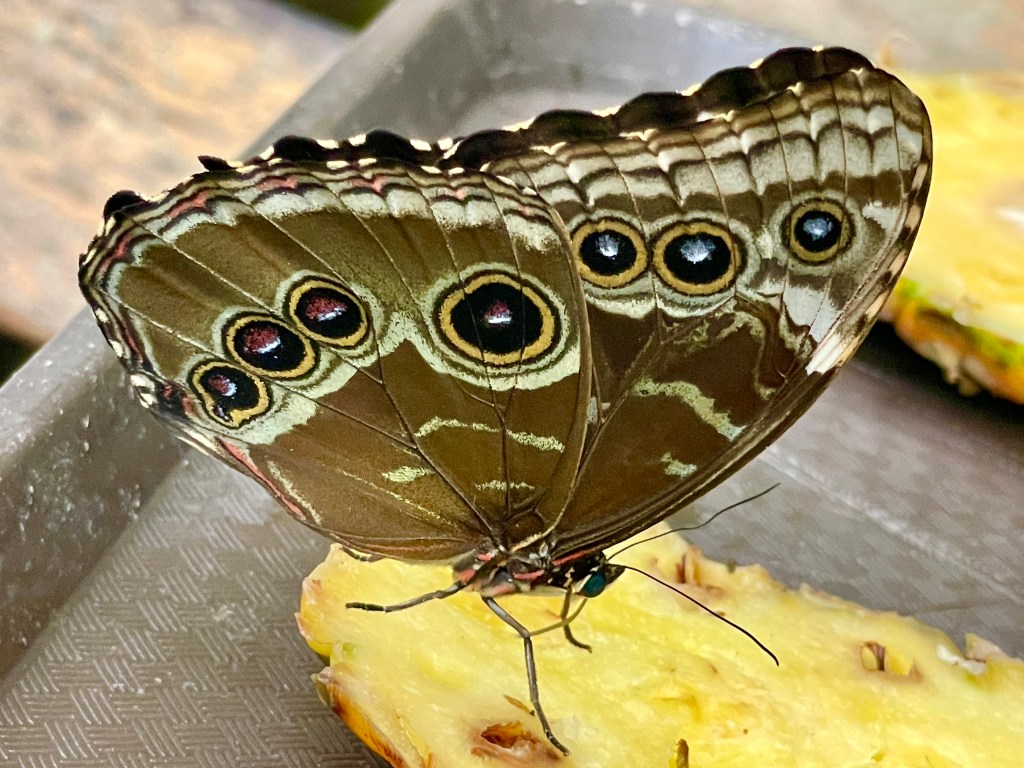
Driving here is arduous. It is about a five-six hour trek from here one way to the airport. I don’t think it is because of the roads per se even though the first thirty minutes is spent dodging potholes the size of small continents along rutted dirt roads. No, I think it takes so long because the trucks NEVER pull over even though there are fifty cars behind them and they are going 30 mph. Add to that road work and tree trimming along the highway and the time it takes to get from here to there increases dramatically. But the scenery if truly spectacular and it was nice passing the ocean and stopping off at the butterfly farm. Unfortunately, the farm had experienced a major crisis two days before I came when birds got into the butterfly pen. Let’s just say I was told that there were numerous casualties inflicted by the invaders.

All in all my stay thus far has been a 180 degree change from my time in Mexico. It is HOT here and so very HUMID. There is no air conditioner which means I am too hot to cook and as a result I have lost 5 pounds. I am also sleeping under mosquito netting thank goodness. Yet despite all of this I developed a massive headache (which I never usually have) and my stomach feels like I have been sailing. I am hoping that I am not coming down with anything and that the tick that bit me is not some disease carrying vampire. Yes, I know, I am sounding like a whiny American and as sick as I am feeling today (now Saturday) I have earned the title. But I know that soon I will be feeling better which will improve the attitude and the whining will cease.

Plaza De Armus in Queretaro

I love this plaza. Besides being surrounded by great restaurants, beautiful historical buildings, and cute little shops; it is the place where the locals come to sit a spell and to dance to the live music. And anytime you can dance on the street or at an open air plaza you know you are in for a memorable time. How I wished at that moment I had someone to dance with! I spent a good half-hour people watching and it was a great way to pass the time under the shade of the beautiful old trees which fill the plaza. I thought I would try something new and throw in a couple of videos.

From there I was lured by the bells ringing at the Parish of Santiago calling the faithful into its doors. I slipped into the church and spent some time reflecting before heading out into the town again.

Eventually I ended up at Plaza De Armus again and just soaked up the culture of the place. What a marvelous way to spend a Sunday!