Strausbourg Canals

DSC06510

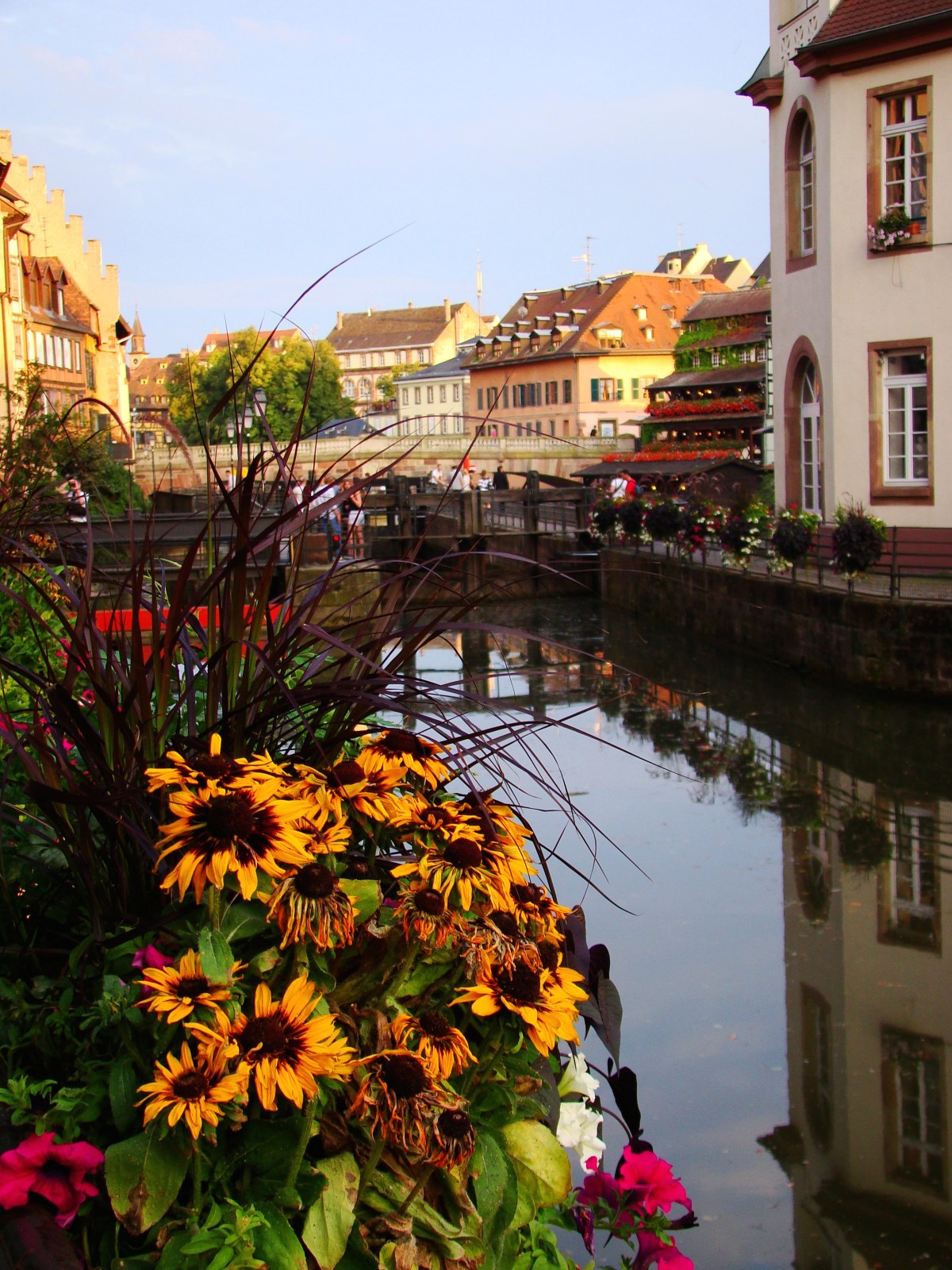
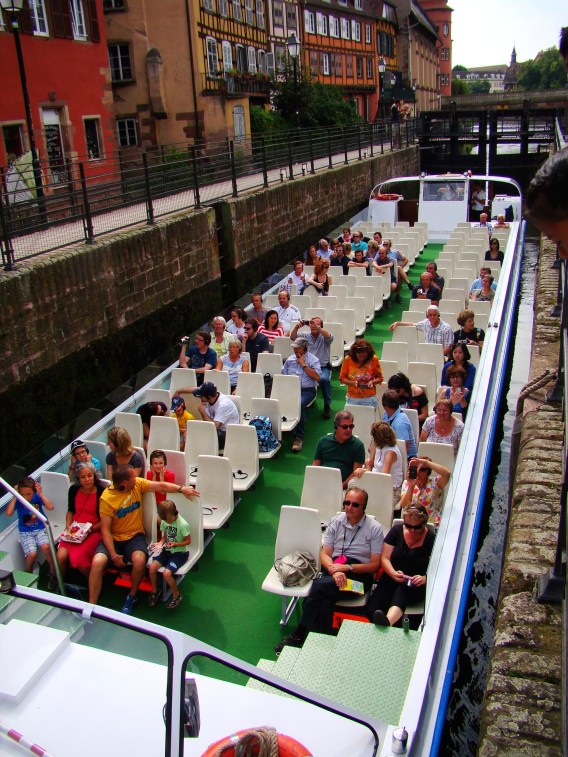
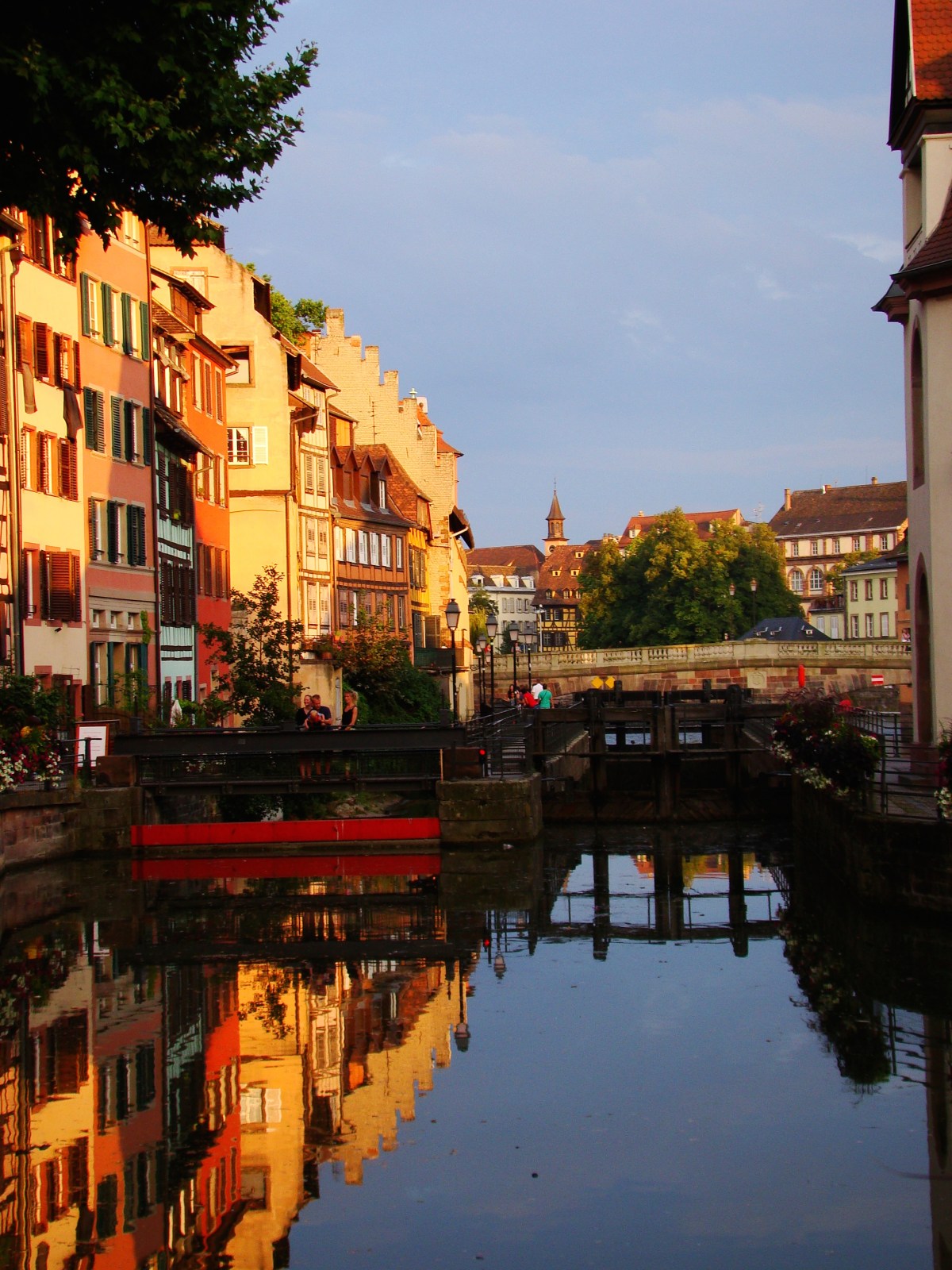
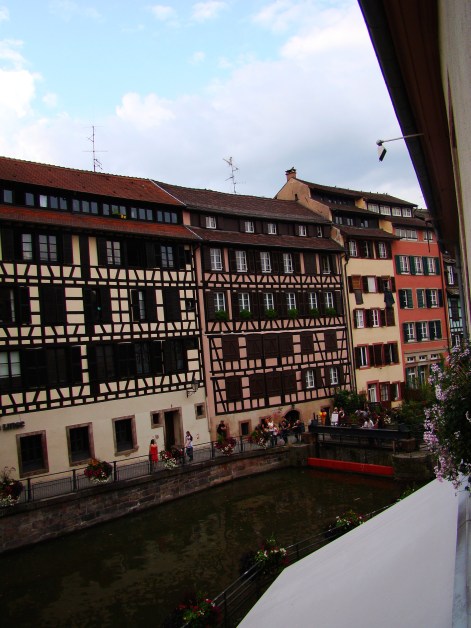
One of my absolutely favorite places for strolling along the canals is Strausbourg, France. These waterways are alive with small boats trolling their waters and swans gliding along. The occasional big-gun tourist boat also enters the locks,passing by the many outdoor patios that line the canals.

DSC06691

Of course history plays out everywhere you turn. In the heart of Strasbourg lies the Petit-France district where you will find the half-timbered houses that centuries ago were occupied by millers and tanners but are now home to fabulous restaurants and shops.

DSC06501

From old bridges that cross the city and  ancient houses that line the waterways there is always something of interest along the way.  And the flower boxes strategically placed here and there make the canals burst with riots of color. Of course, one cannot forget the magnificent Strausbourg Cathedral which sits just forward of the canal.


During the summer Barrage Vaubin (part of the city’s ancient ramparts) are transformed into giant works of art that change as music plays through loud speakers lining the venue. From trains and clocks, sea monsters and spectacular buildings this light show is just plain amazing.

The canals of Strausbourg should be on your “must-see” list. Unlike the canals of Venice, which are dirty and strewn with litter, these canals are pristine and even more picturesque. These waterways are the heart and soul of medieval France so be sure to take advantage and follow the canals to find the place of your dreams.

DSC06470

DSC06466

DSC06522

Most Beautiful Covered Bridge-Lucerne, Switzerland

Undoubtedly, the most beautiful covered bridge in the world is located in Lucerne, Switzerland. The Chapel Bridge, is also the oldest covered bridge in Europe as well as the oldest surviving truss bridge in the entire world. Named after nearby St. Peter’s Chapel, the bridge crosses the Reuss River in the heart of old Lucerne and its a landmark that cannot be missed.

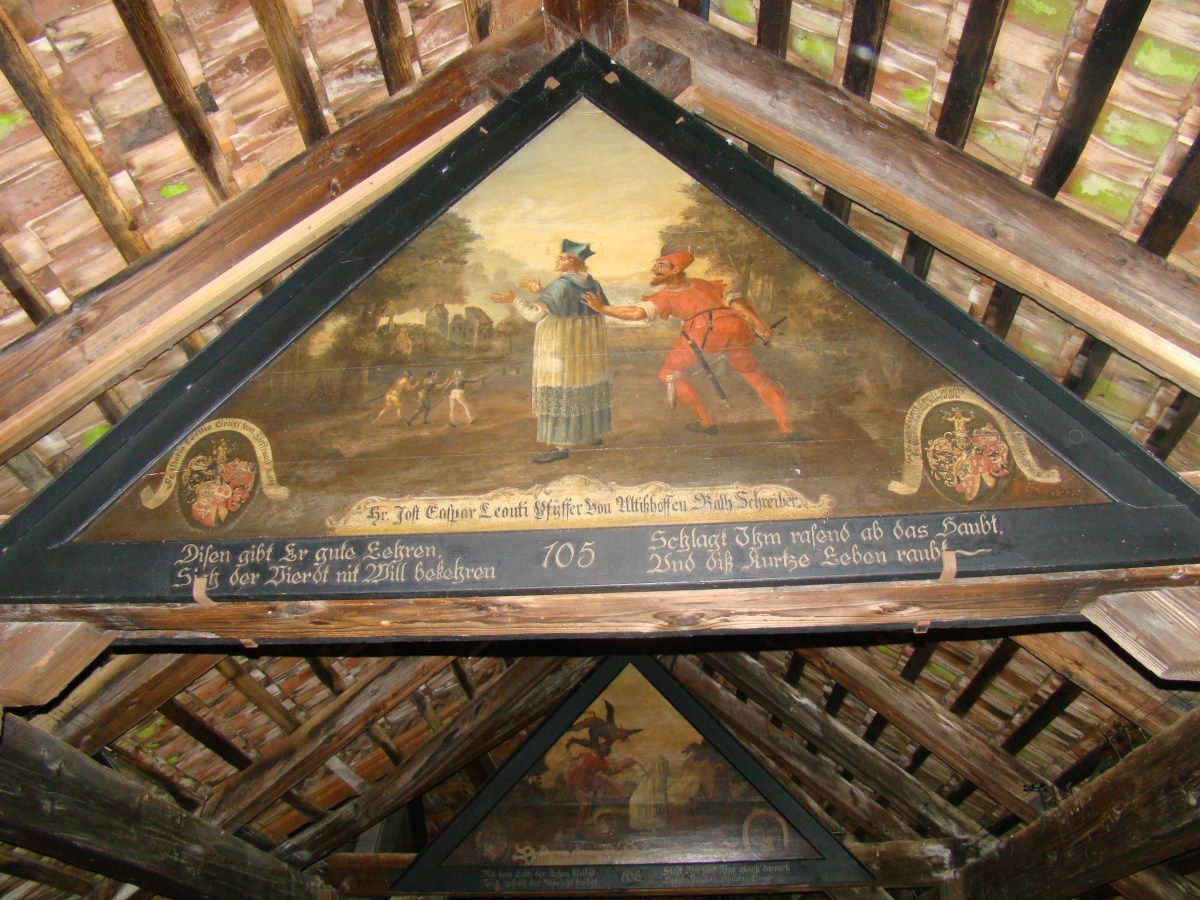
The bridge was first constructed in 1333 as a form of protection for the city against enemy attack. In the 17th century, Catholic painter Hans Wagmann, began painting scenes which depicted the city’s history and the Catholic Churches influence on it in the interior triangular frames of the bridge. These works of art have been revered by the inhabitants of the city for centuries, so, in 1993 when a major fire occurred on the bridge and many of these paintings were lost, the city was devastated. Lucerne spent millions of dollars reconstructing parts of the bridge but the missing paintings are obvious and seem to haunt the bridge like a ghost in the night.

DSC06938

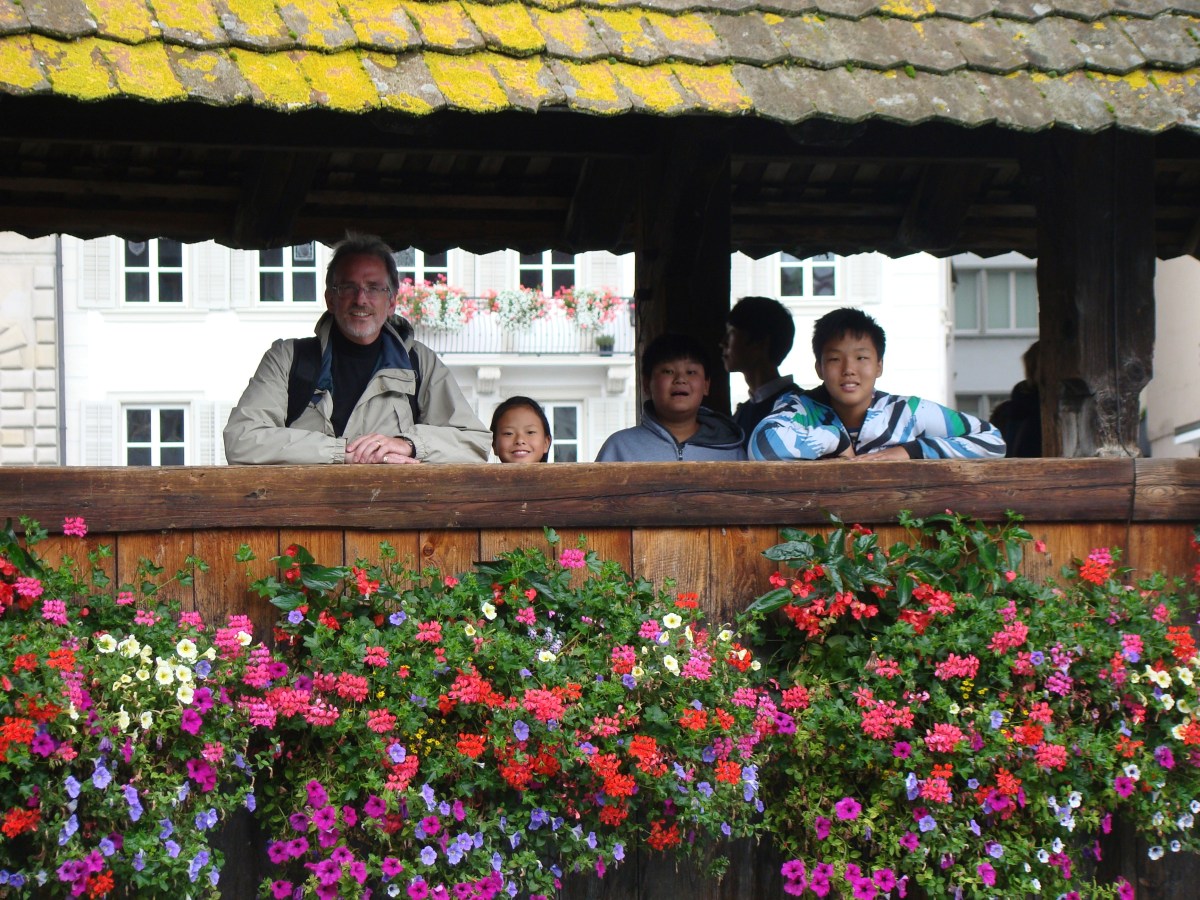
Ultimately, the Chapel Bridge is the most beloved symbol of this beautiful old city. Flower boxes line the entire bridge and bustling swans float nearby waiting for hand-outs by the thousands of people who cross it daily.  In addition, there are a few small shops located on the bridge itself selling primarily Swiss products like the world famous Swiss army knives.

When we were planning our trip to Europe, Chapel Bridge was one of our “must-sees” and it was definitely worth the trip. An ancient and beautiful city with a beautifully preserved covered bridge…it doesn’t get much better than this!

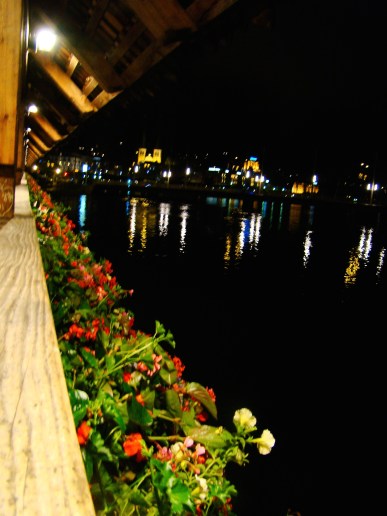
Hint: This is a free site. Be sure to take advantage of it by crossing both in daylight and during the night. A nighttime crossing gives Lucerne an entirely different look and vibe with the reflection of the lights off the water. 

DSC07026

DSC07420

The Port at Bodrum-Bodrum, Turkey

One sweltering hot day in the middle of the Grecian summer we decided we needed to get away. But where should be go? Being on an island did not offer many opportunities but as our friendly hotel manager pointed out there was one place we could go while visiting a new country to boot …so we booked passage to Bodrum Turkey on the ferry and took off the next morning.

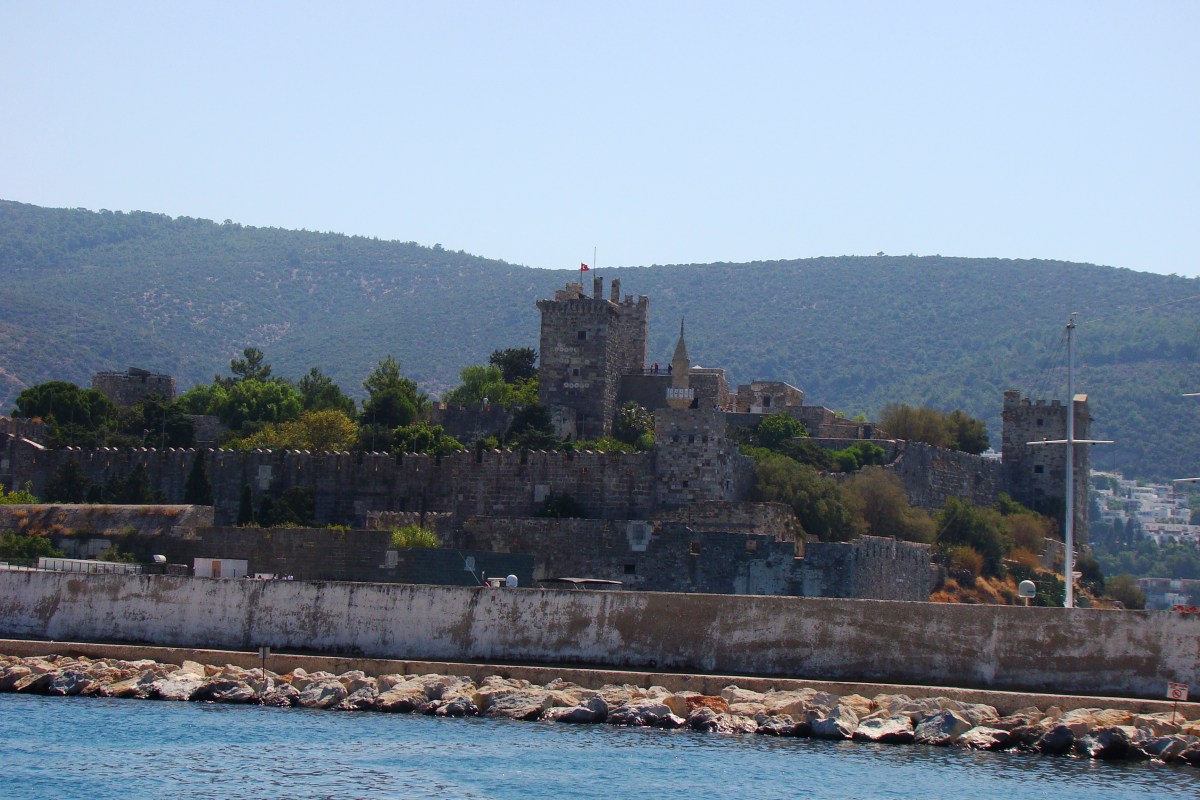
Now I live in a state known for its high temperatures and I am used to the heat. Yet, it was so hot the day we went that even the boat skipping over the cool water provided little relief. The cross breezes were so mild that blowing my own hot air cooled the air around me more than the breeze coming off the water. It was sweltering, so I took to dipping my shirt in the water to cool down; the effect not long lasting as it would be dry within 10 minutes. But the water was crystal inky blue and the birds dived along beside the boat making  for a memorable ride as the parched hills seemed to rise higher the closer we came to Turkey’s shore. But what I remember most was when St. Peter’s Castle a/k/a Bodrum Castle suddenly appear on the horizon….now that was a site! And then slowly the harbor around which it is perched came into view. Oh, the anticipation of seeing what was in this ancient port city stirred the fire in my belly.

DSC09691

After disembarking we stood in line, passports in hard, waiting to have them stamped. I guess we looked harmless enough because they let us in. Sometimes that still astounds me… that whole letting me in process. Really….me?!!!!!!

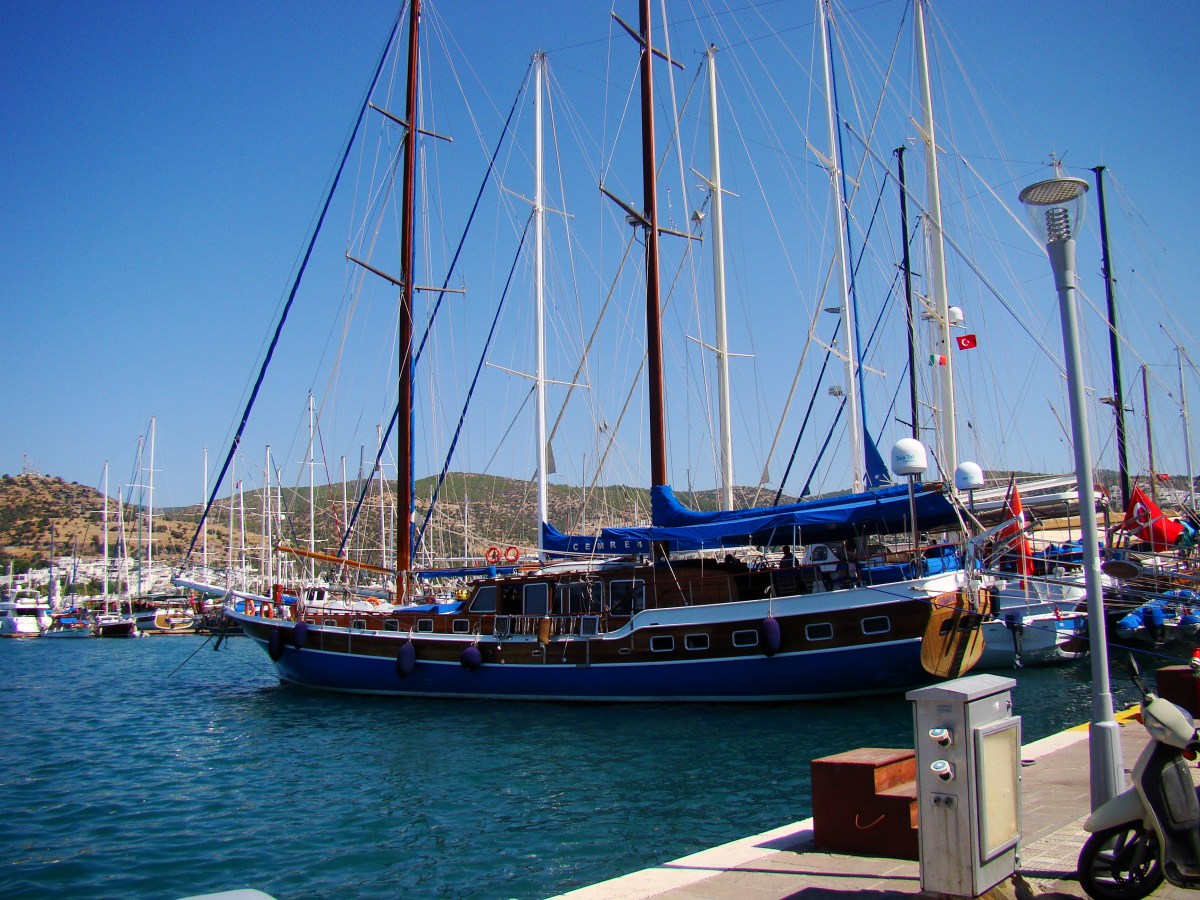
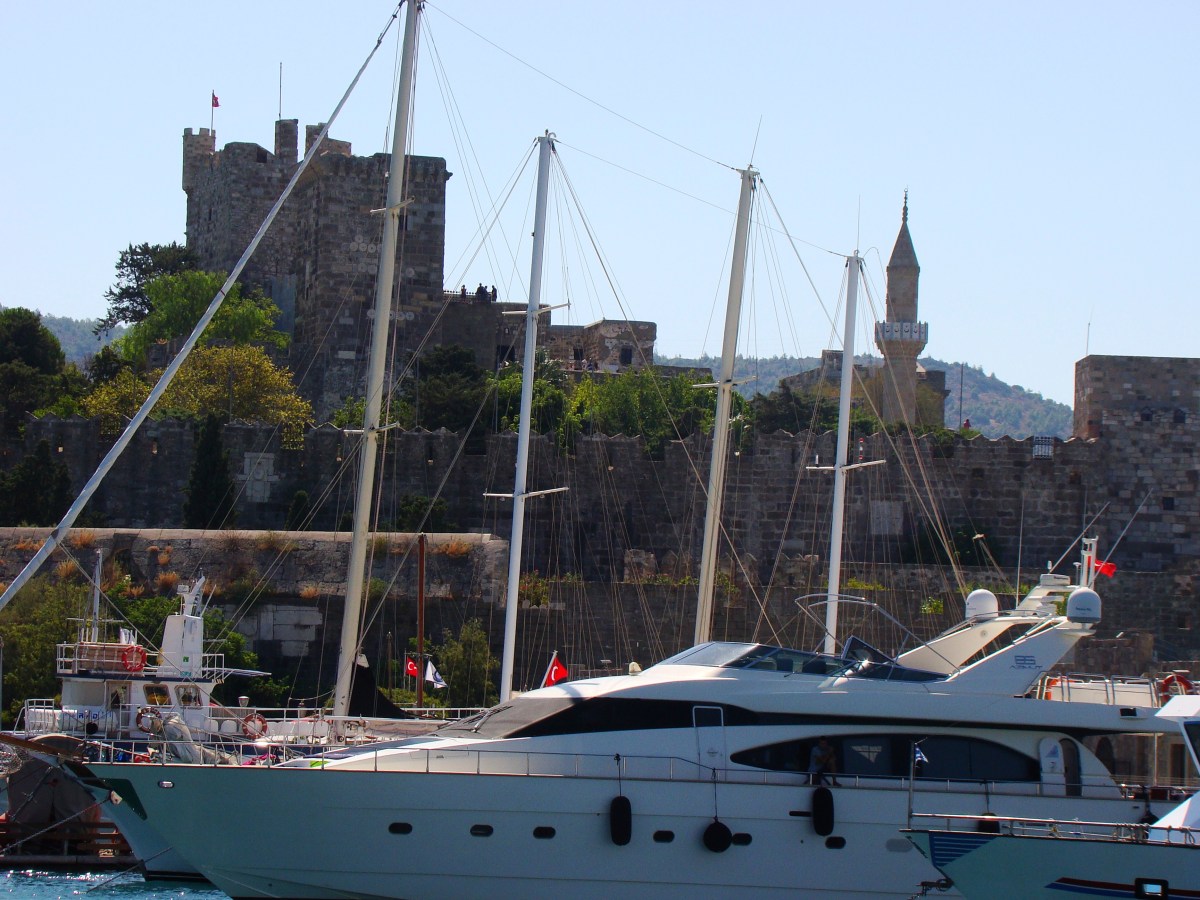
With landing completed we joined the throng of tourists also taking a day trip to this fascinating country. Boats with flags of all colors and countries lined the dock. Some were sleek, some dingy, but all were magnificent in their own way. We turned towards the castle.
DSC09698

Construction on Bodrum Castle began in 1402 by the Knights Of St. John. Each langue of the Order had its own tower and each had their own distinct style. The castle was built with plenty of twists and turns in order to keep enemy soldiers at bay. It served as a sanctuary for Christians throughout the area for over a century.

Then in 1962 the Turkish Government decided to turn the castle into a museum called the Bodrum Museum of Underwater Archaeology. It houses one of the biggest collections of ancient glassware in the world and contains relics from the 12th century BC. Ship excavations are detailed and the treasures that can be found through the many rooms of the castle are truly a site to see.

images-8

Back outside the port area bustles. Tourist shops line the street, small restaurants and craftsmen ply their trade.

DSC09710

                                                         I found this sign slightly humorous

Little side streets and alleyways beckon you to explore a little deeper into the heart of the city.


This is a photo of an artist whose pictures we admired and bought several from him which hang in our home today.  Such a sweet, friendly and talented man!

DSC09837

You will find just about anything you want here (except really good shade) so shop carefully because undoubtedly you’ll find the same item cheaper further on down the street.

While in Bodrum we took one of the tour buses. That is a story itself which I will save for another time. But if you are ever in the area I would recommend a stop at Bodrum. In fact, if I had to do it all again I would have spent several days in and around this area of Turkey only this time I would forego traveling there during the intense heat of the summer. And because is a land where ancient and modern meet,  you never know just what surprises await you but they are sure to be memorable.

DSC09846

DSC09851

DSC09709

HINTS: This is not a cheap excursion. It costs a little less than $40 USD round trip for the ferry.

HINTS: The Museums are closed on Mondays. The entrance fee to Bodrum Castle is approximately $9 USD.

My Absolute Favorite German Town-Gernsbach, Germany

Okay, I will admit that I am a little biased. I may even be more in love with this town than just about any I have ever been to but it has nothing to do with the fact that my 2nd great grandparents emigrated from here and that their parents and their parents parents lived here too. No, this town is a true historical gem and it deserves any accolades it receives. Each and every one of them.

The day we came we had visited a town 10 miles away that my SIL’s family had emigrated from. It was small, desolate and looked like much of it had been destroyed during WWII. New buildings stood on a main street lined with them. It was a real disappointment to her because there was no character in the town. None. Needless to say, I was afraid that I would be bitterly disappointed to have come all that way to see Gernsbach and have it just be a shell of a town. Thankfully it wasn’t.

Gernsbach is located 7 km from Baden-Baden in the Black Forest.  The town was established in the 12th century and paper is a huge part of its economy as it has been for centuries. My 2nd great grandfather worked as a Joiner while living here in the early 1800’s. His mother, Elizabeth Lippert, was born in this town in 1792.

DSC06425

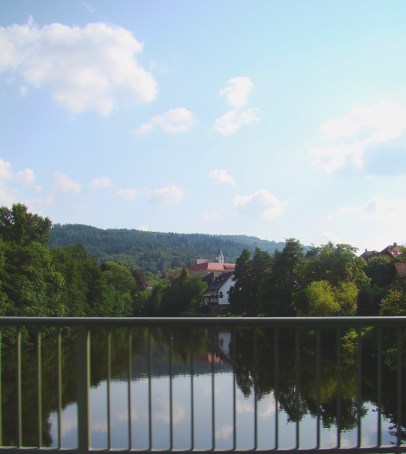
The first clue that this would be a grand place to explore was the huge stone bridge that stood as an entrance to the town and divides it in half. We made a quick right and began climbing up the hillside streets where we had views  that stretched for miles of the surrounding mountains. It was breathtaking. This has got to be one of the most romantic spots in all of Germany so take advantage of it.

DSC06226

Another era of the past were the cobblestone streets filled the town square and stretched out beyond meandering throughout the city.  But the most impressive thing were the row upon row of beautiful timbered houses that have stood for hundreds of years.

One has been around since the 1600’s and tours are given of this outstanding building which is in the process of being restored. We climbed throughout the building venturing here and there and when we reached the top the views of the church on the hill were unmatched. I have to confess I ran my hands along the buildings outer and inner walls just sure that my 5th Great Grandmother had once done the same and that somehow we were touching each other’s hands.

Besides the numerous timbered houses there are also charming fountains that dot the city. Filled with baskets of flowers surrounding the water they are some of the most beautiful that I have ever seen.

There are also two churches, the protestant St.-Jakobskirche with its beautifully tended cemetery. It is an interesting thing that in Germany that you will rarely find old tombstones. This is because a family will lease the burial plot for a period of thirty years and if the family does not pay to have the plot renewed, everything is removed including the headstone. That said, this churchyard does have a few old stones that are worth looking at.


The other church is the Catholic church which was re-built in the 1800’s. The town walls surrounds it along with the early history of the place. We happened upon the church when the organist was practicing and the music was as enchanting as the building was beautiful. Hearing the organ explode throughout the church is something I will never forget.

DSC06420

Part of me hates to write about Gernsbach. It is an undiscovered gem. I am afraid that the next time I go back it will be swarming with tourists because with all its history and  beauty this town is worthy of the biggest and  best bus tours. This place is an undiscovered treasure. Selfishly, I hope it remains one.

Altes Rathaus, or Old Town Hall, was once a palace built for a rich timber merchant in 1671-1618.


Best Neolithic Site-County Meath, Ireland

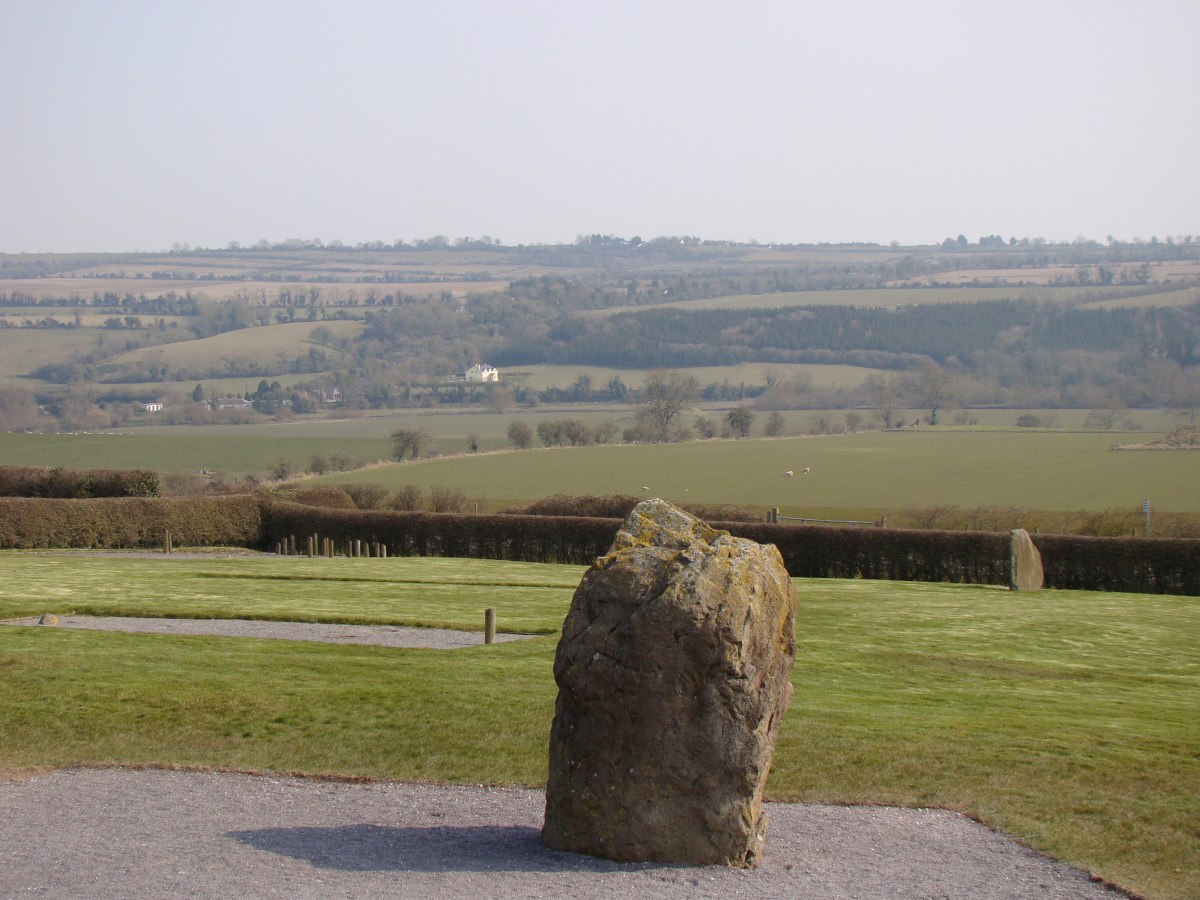
Sitting high on a hill in the Boyne Valley sits Newgrange; one of the ancient wonders of the world. It is an amazing place that sets your imagination on fire as it takes you back to a place so old that most people have never seen anything remotely like it before. Built before both the Egyptian Pyramids and Stonehenge; this burial mound is over 5,000 years old, but like a shy maiden you would never guess her age, for she has aged well.

We drove to the site which overlooks this valley carved out of hills with running streams throughout. This place is truly out in the middle of nowhere. Traveling down a steep road we could get glimpses of the massive site through the trees as we neared the Bru na Boinne Visitor Center. Here we bought the tickets necessary to board the bus that takes you to Newgrange itself. But while waiting we viewed depicting life as it was lived so long ago by the Neolithic people. Most exhibits here focus on how the tombs were built, why they were built, and how they were used. The architecture here is superb with glass walls allowing visitors to take in the picture perfect views of the Valley. In addition, there is a small tea room to sit, take a snack, and just enjoy all that surrounds you.

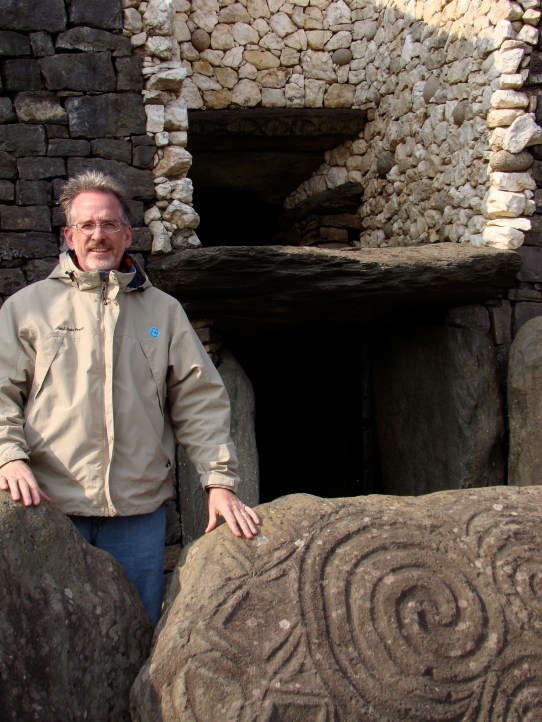
After about 20 minutes of coffee sipping, we boarded the shuttle bus and were taken to Newgrange. I was amazed at the size of the mound which encompasses about an acre. Spying out of the bus windows you see enormous retaining wall that is surrounded by artfully carved kerbstones. There are many standing stones ringing the mound that add a sense of mystery to the place but it seems that they are a newer addition having been placed there sometime in the Bronze Age.

DSC05390

DSC05385

From the bus we walked quite a way to the entrance where we were met by a guide who described all we could see and would be seeing inside the chamber, which incidentally, only takes up a small part of the over-all site. But by far the most interesting thing about Newgrange is the roof-box which sits directly over the entrance. The Neolithic people designed this narrow space to align with the sun so that on December 21st (Winter Solstice) the first of the sun’s rays pass through the box, extend down the passage and into the chamber. The chamber then lites up and glows for about 15 minutes before being consumed by the darkness once again.  Both burnt and unburnt bone have been discovered here leading researchers to believe that bodies some bodies had been cremated before being placed in the passage.

DSC05387

This is a place where the spirit and the intensions of the ancient live on. It is a site where hilly ground keeps treasures and secrets buried but still “seen.” It is a place where those who enjoy the mysterious should venture. Newgrange…remember the name!


A Day Trip To The Mayan City Of Lamanai- Belize

One of my favorite day trips EVER was the time we joined a small tour headed for the ancient city of Lamanai in Belize.

The first part of the trip was by jeep which covered miles upon miles of rutted roads . This is where we really were able to see and experience life in the back country of Belize. The poverty was immense and all encompassing. Children dressed in rags ran out of their small houses to wave at the strangers passing by with smiles taking up the majority of their sweet small faces. They were delighted to have something to see and break up their day.

100_6032


imgres-4

It was also during this ride that I saw my first ever cashew tree. Colorful cashew apples dressed in yellow and red  hung from narrow branches and swayed in the breeze. A single prized cashew nut protruded from the bottom of this apple which would soon be collected and roasted. The oil from the shell is caustic and can burn the skin so handling the nut is not advised unless you know what you are doing.

100_6054

100_6081

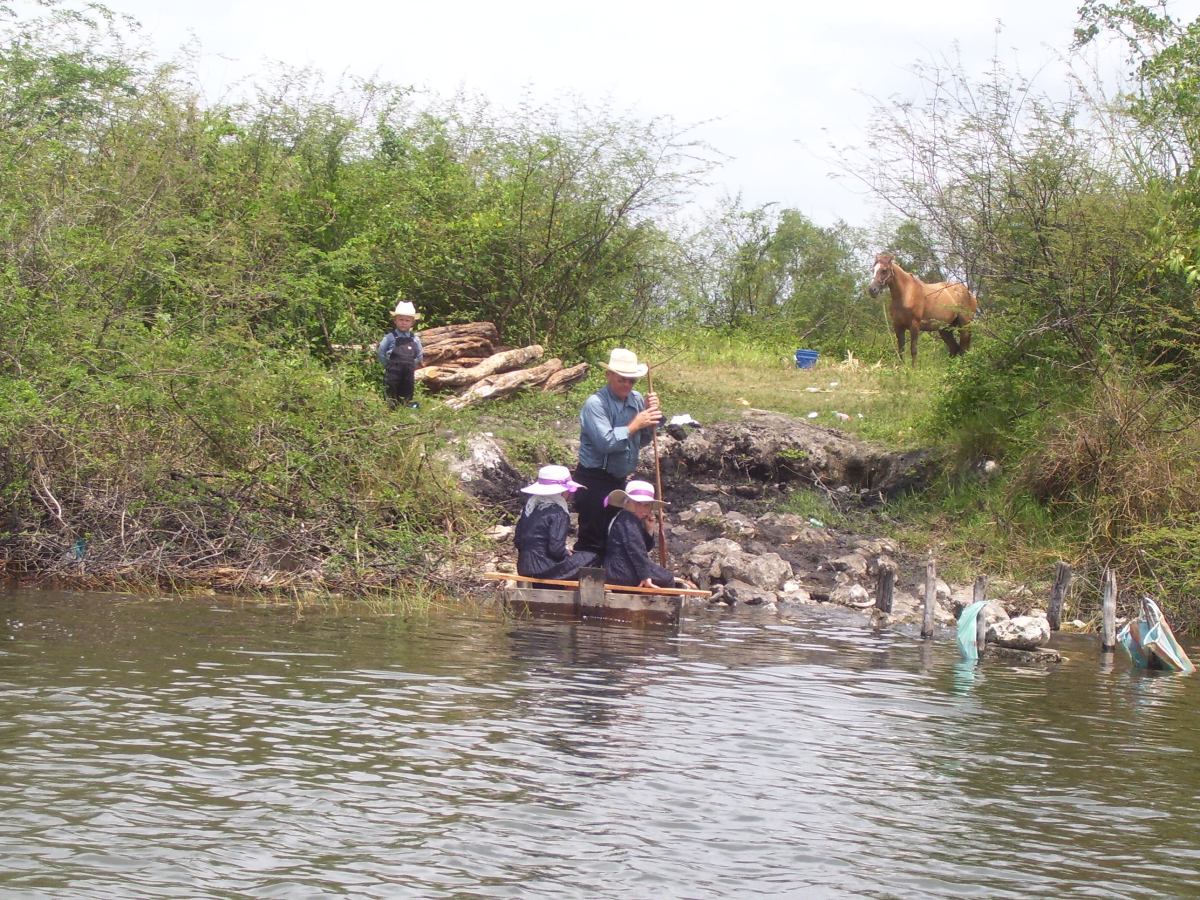
After a two hour ride we finally arrived at the New River where we took a small boat and headed for Lamanai. Along the way we saw crocodiles, jacanas, hawks and many different types of waterfowl. Little boys in dug out canoes were everywhere fishing and delighted to show off their catch from the safety of their boats. As the river meandered along we were surprised when we saw a family of Amish along the river. Seems that there is a colony of the sect living in the area. It was amazing to see people whom I had seen in Pennsylvania Dutch country all the way out in the wilds of Belize.

100_6086

imgres-3

Finally we arrived at Lamanai. Ancient Mayan temples surrounded us but it was the errie  never ceasing cries of the howler monkeys hidden in the trees that got our immediate attention. Never in my life had I heard such loud screams and haunting howls! We watched the monkeys scamper in the trees for a time before heading over to the High Temple.

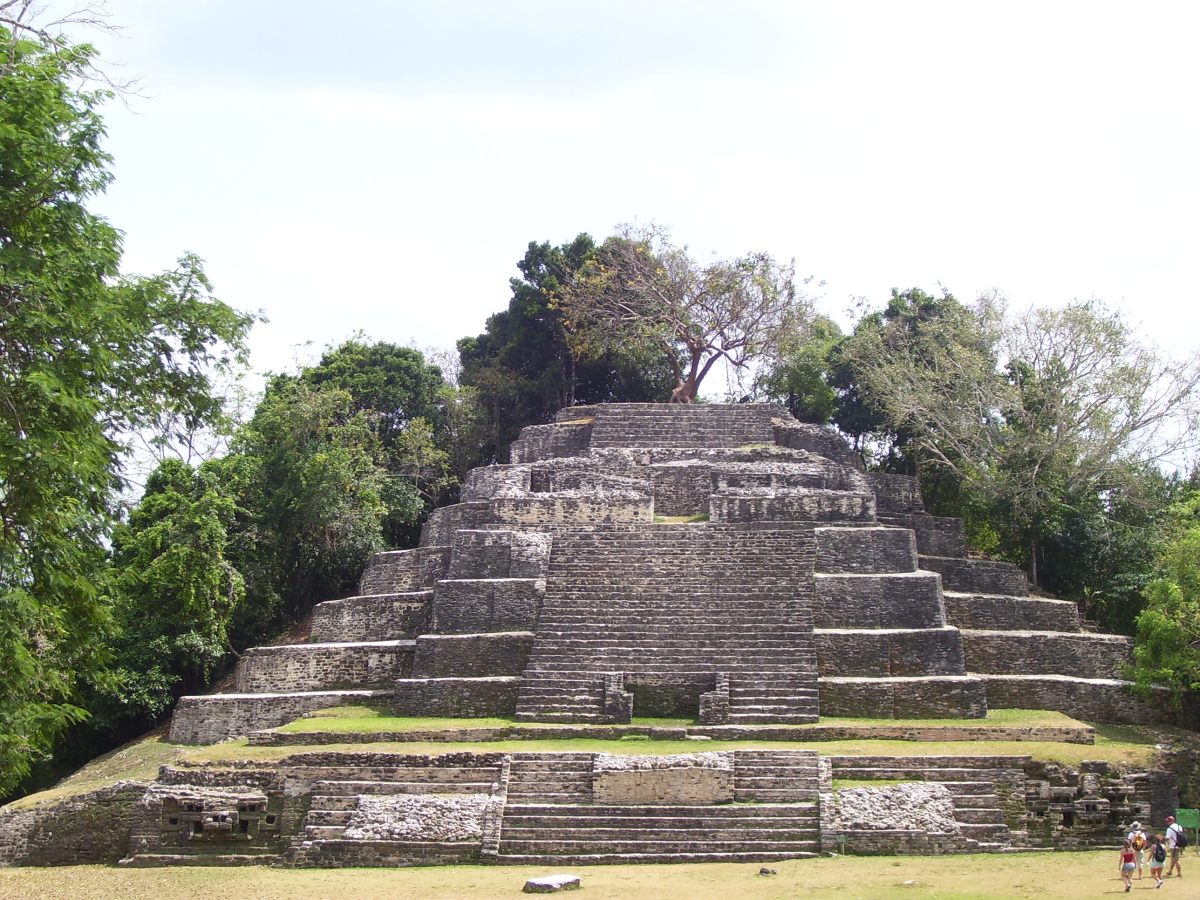
The High Temple (N10-43) climbs 108 ft from the jungle floor allowing for never-ending views along the river. It was the highest building at Mesoamerica at that time it was completed. Construction began in 100BC and the temple was built over an existing neighborhood that dates back to 300 BC. But it is the opulent Central Stairway that is really the star of this show. It is a tough climb to the top when you are encased in the sticky humidity of the jungle.100_6147 2

The Jaguar Temple (N10-9) was given its name due to the two jaguar masks that lie at its base. It is one of the newer temples and was constructed during the 8th century. One interesting fact is that the niches in the jaguars eyes, ears, nose and cheeks were where the native peoples left offerings to the Jaguar God.

100_6105

In all the site contains 8 Ceremonial Plazas along with five Temples and an ancient harbor. Other original buildings include Stella-9 and The Mask Temple(9N-56). The site also offers a small museum in which pottery and other ancient artifacts from the area are displayed. Even more amazing is that only 5% of Lamanai has been excavated. Oh, the hidden treasures that are waiting to be found. Makes me want to go back to college and study archeology!

This is one trip that I will never forget. While I cannot remember the cost I can say that every penny was worth it!


Montezuma Castle-Camp Verde, Arizona

anastazi

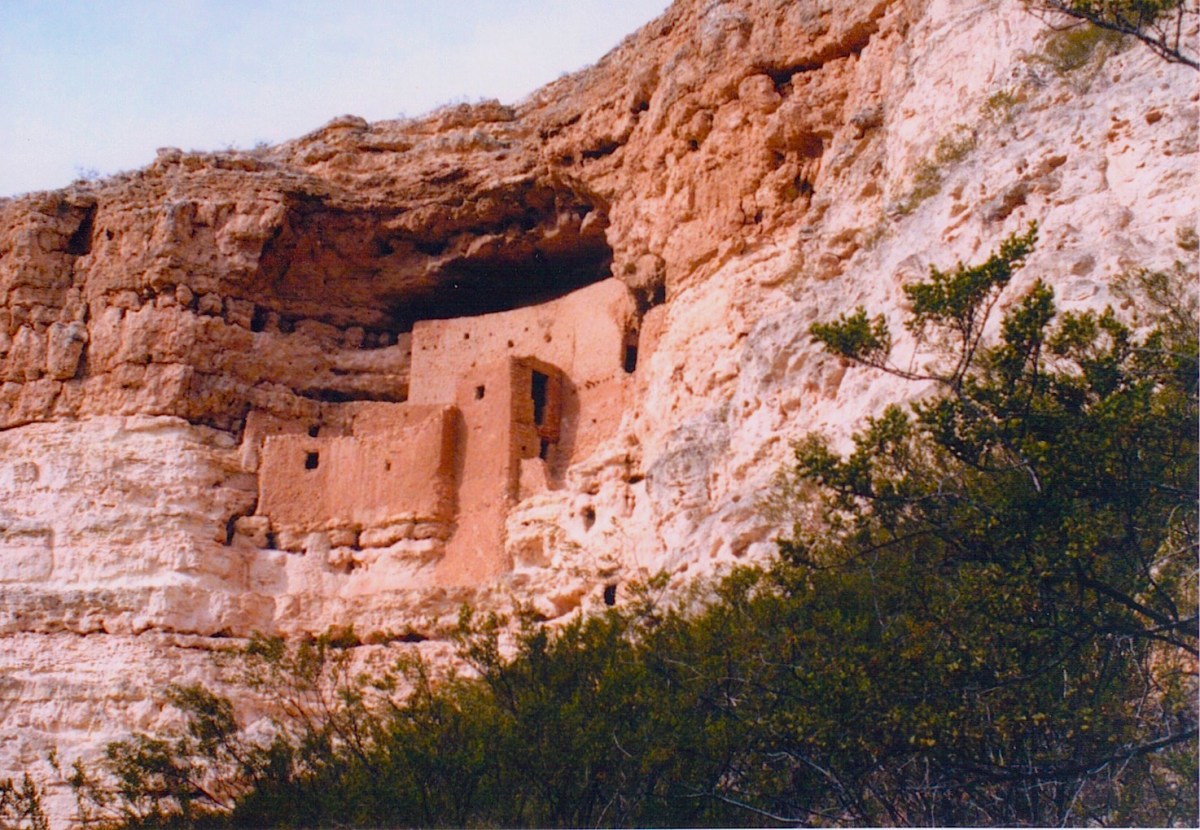
Let’s get one thing straight right from the get-go. Even though this is referred to as Montezuma Castle, the great Aztec chief himself never lived in this settlement nor contributed to its development; as this Pueblo was built over centuries and then abandoned at least 40 years prior to his birth.

It has been years since I have been to this sacred place that was once home to the Sinagua people but is now the home of  the National Monument that honors them. I still remember the raw feelings of the life force that still swirls throughout the canyon as well as a sense of awe that these native people, who lived so long ago, could design buildings and pottery that were so impressive and long lasting. Descendants of these ancient people live on in the Hopi and other native peoples of the Southwest.

The Castle sits about 90 ft up a sheer limestone cliff and was built over time and occupied from about 1100-1450 AD. though there is archaeological evidence that the Sinagua were in the area since 700 AD.  The main building contains about 20 rooms and is approximately five stories high. It was built within an alcove which allowed it to remain protected from the elements and was placed high enough to avoid the seasonal flooding that occurred on Beaver Creek which lay directly below this village. It is constructed from huge chunks of limestone and from clay obtained from the creek bed beneath the Pueblo. The ceilings were made of thatch that was procured from the Arizona sycamore.

One of the more interesting facts about Montezuma Castle was that it was abandoned for some time due to volcanic eruption of Sunset Crater but was later re-occupied and agricultural production was resumed after the effects of the eruption diminished.

The dwellings and the 860 acres that surround them were declared a United States National Monument in 1906 with the signing of the American Antiquities Act. Early visitors were allowed to climb ladders into the buildings but due to damage from these well meaning visitors the practiced was halted in 1951. Today you can only see Montezuma Castle from viewing platforms or along the 1/3 mile loop trail that winds below the pueblo. However,  it is easy to learn about Sinagua culture and see artifacts from the area at the Visitor Center.

This National Park is located near Camp Verde, Arizona off Interstate 17. It is open from 8 a.m. until 5 p.m. everyday except Christmas.

There is a $10 fee to enter Montezuma Castle and the Tuzigoot National Monument which is valid for 7 days. Children under 15 are free.

HINT: Buy a National Park Pass ($80) which allows access to all National Parks and Federal Recreation Lands for a year for the pass holder + 2 adults. And if you are 62 years of age or older A Senior Pass can be purchased for $10 which allows you and three adults into all the National Parks without incurring additional entrance fees.


Bloomingdale’s Medinah-Chicago, Illinois

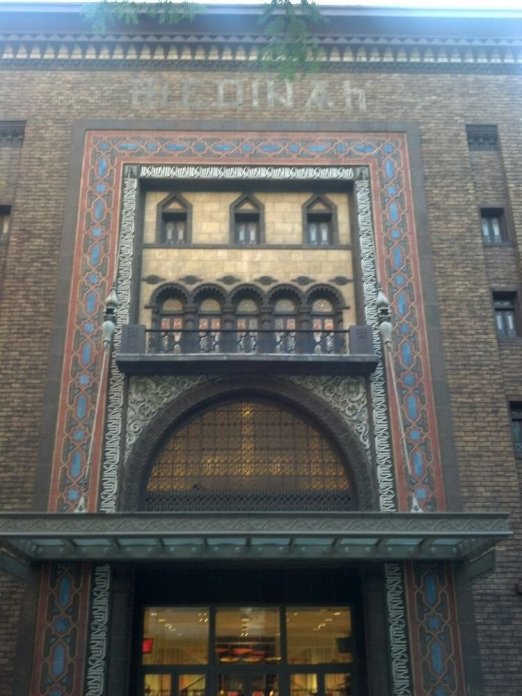
One of my favorite places in Chicago to browse (notice I said browse not shop) is at Bloomingdales Medinah store on Wabash Avenue.

I remember the first time I saw it. I was so stunned that my jaw slacked and my mouth dropped open in surprise as I stared in awe this totally unique and fascinating piece of architecture. It’s not often you run across Moorish Revival Architecture  with onion domes and horseshoe-shaped arches in the middle of an American city but here stood this jewel and I was lucky enough to be able to go in and take a look.  Needless to say, I was intrigued front entrance  where I saw the words “The is no God but Allah” written in Arabic.

o

According to information provided by the store the building was built in 1912 and its intended use was as an auditorium seating over 4,000 people on three levels as well as a meeting hall for the Shriners. The Shrine Circus took place here complete with elephants, tigers and clowns to thrill the crowd. Because the acoustics were so superb, the venue was used for recording by the Chicago Symphony. Concerts and plays were another favorite crowd pleaser.

Like most good things which must come to an end beginning in 2000 the building was gutted and turned into a home furnishing store by Bloomingdales.

100_7499

It is a real treat to “shop” here. Everywhere you look there is something interesting to see. From the domed ceiling to ornate stained glass there are clues to this wonderful buildings past that surround you. And ladies some of the best stained glass windows can be found in the restroom.

If you would like to view some historic photographs of the building visit:

http://westsuburbanshrineclub.org/History-Wabash.htm

World’s Tallest Thermometer-Baker, CA

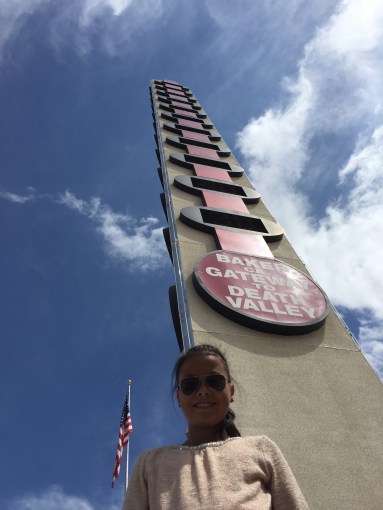
When traveling through the Mojave Desert in the way to Las Vegas you can’t help but notice the World’s Tallest Thermometer. Built in 1991 it commemorates the highest temperature ever recorded in nearby Death Valley of 134 degrees  which occurred on July 10, 1913.

IMG_6227

The thermometer stands, not coincidently, 134 feet high and can record temperatures up to 134 degrees. I remember going by the thermometer one summer day and seeing 122 degrees being displayed. I also remember a number of cars stopped along the highway, radiators steaming, as people tried to make it up the pass on that hot summers day.

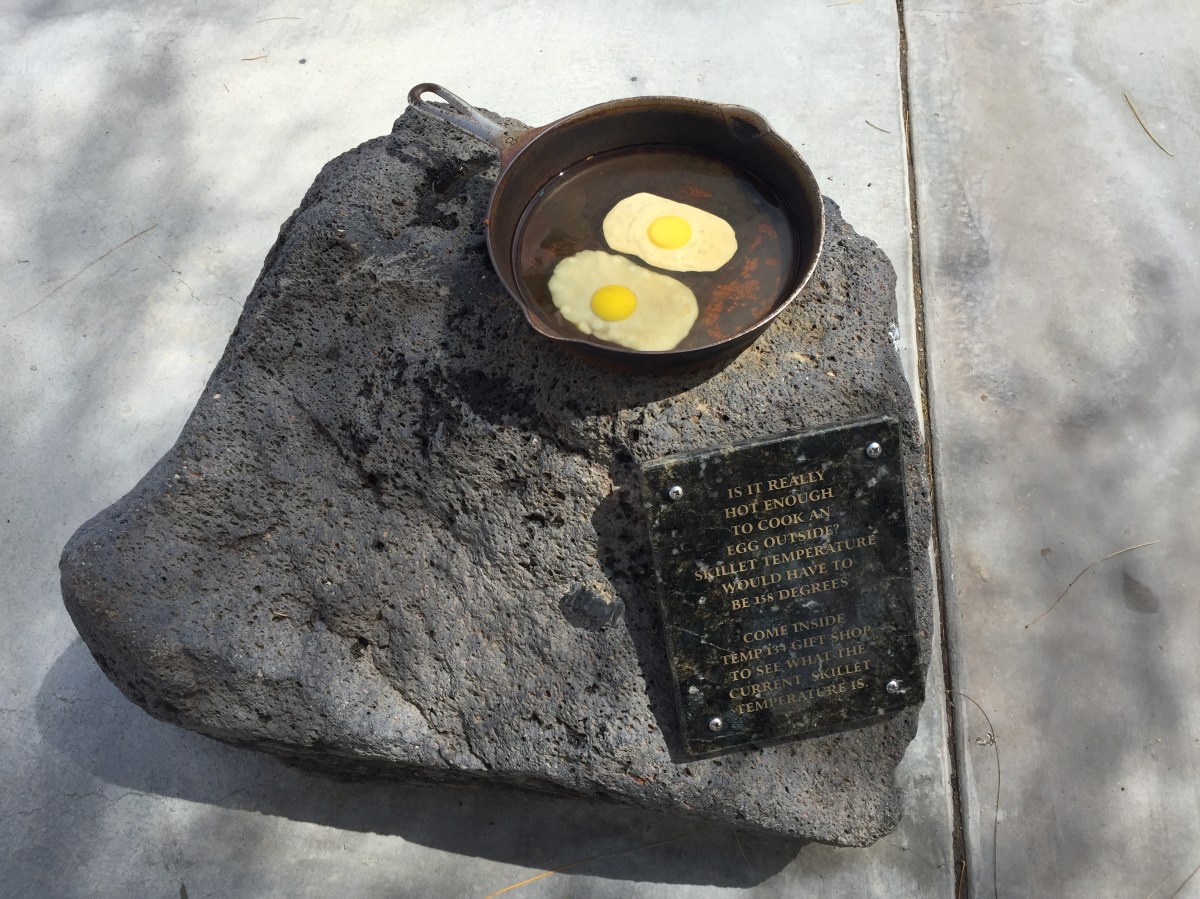
Another interesting artifact that can be found is a skillet with eggs that asks the question: Is it really hot enough to cook an egg outside? Well according to the factoid provided it is most definitely NOT as the skillet temperature has to be 158 degrees in order to do so.

IMG_6224

The World’s Tallest Thermometer is a 5 minutes stop off of Interstate 15. It’s a great place to stretch your legs, get some gas and grab a few snacks.

HINT: While making the drive between Baker and Las Vegas look for the sign for ZZYZX Road which is alphabetically the last place name in the world.imgres-2


Best Place For A Joust-Linlithgow Palace, Scotland

When we were in Scotland one of the things our kids loved the best was the jousting tournament that was held at Linlithgow Palace in West Lothian. While the Palace is a place to remember in of itself, it is the jousting event that captured our imagination.

DSC07153

The first thing that takes your breath away is the castle itself and the cobblestone walkway leading up to it.  Huge stone gates greet you and inside them you will find people dressed and acting as if they were locals of the area living in the 1400 and 1500’s. Once in the courtyard you will meet beggars and huntsmen, ladies in waiting and squires. Set against the backdrop of this magnificent 15th century palace in which Mary Queen of Scots was born; all the action that surrounds you makes you feel as though you have stepped back in time.

Exiting to the tournament grounds one of the first things you will notice is the enormous and sparkling Linlithgow Loch. Deeper into the venue you will see tents of the horsemen and find the living history camps. It was here on the grounds that we met this archer who shared with us his handmade arrows. Did you know that the feathers on an arrow must be from the same bird in order to fly properly? Neither did we.

Then it was time for the action to begin as magnificent and regal steeds flew across the valley their hoofs shaking the ground as they thundered across. The children were invited into the Children’s Army before the action began.Then men wearing armour and using weapons of the era battled it out on horseback and on foot using the chants of the crowd to spur them on.

DSC07268

All in all a great fun-filled and educational day.


This year’s tournament will be held July 2 and 3, 2016. Admission is£6.30 for kids up to£10 for adults.