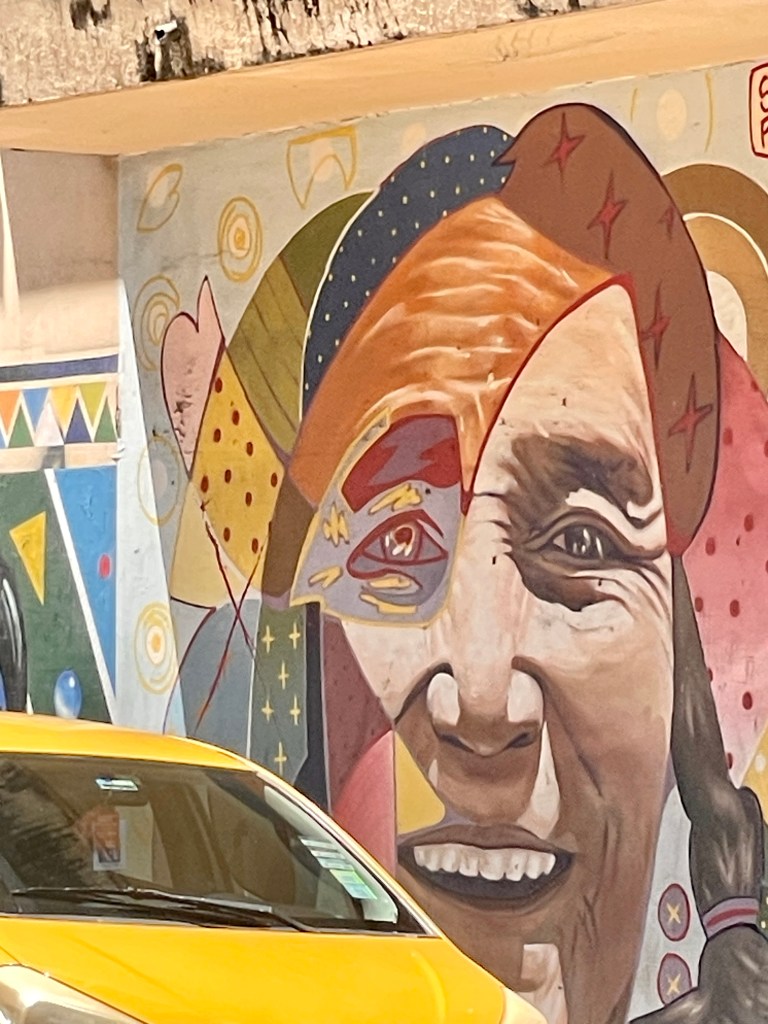
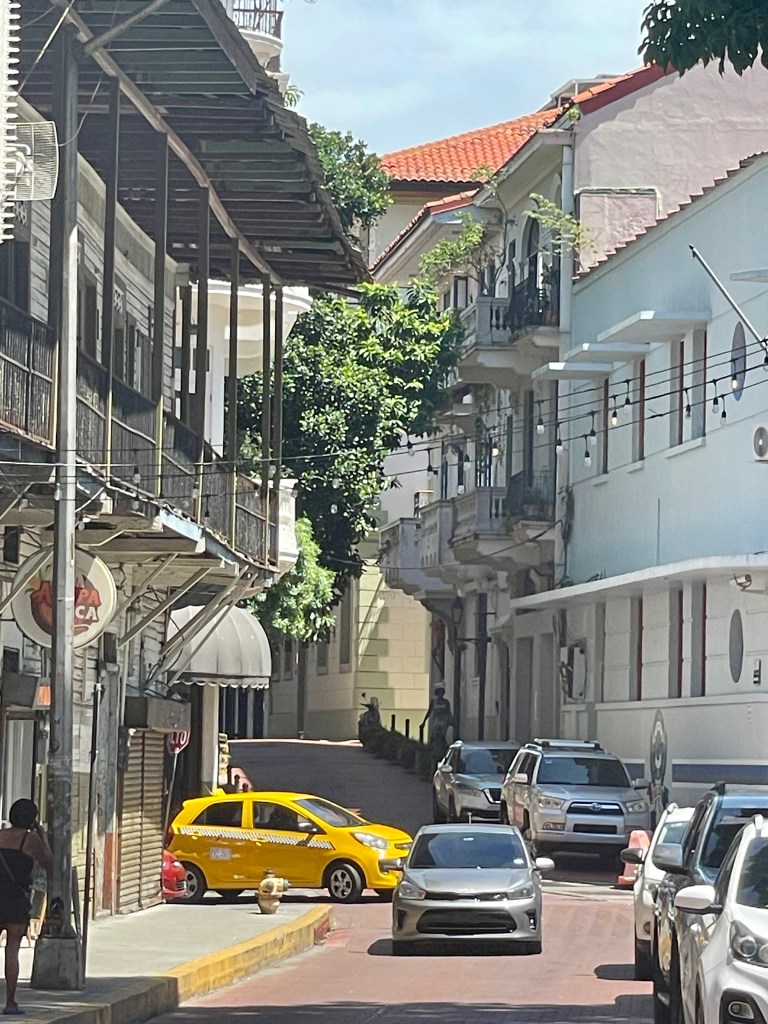
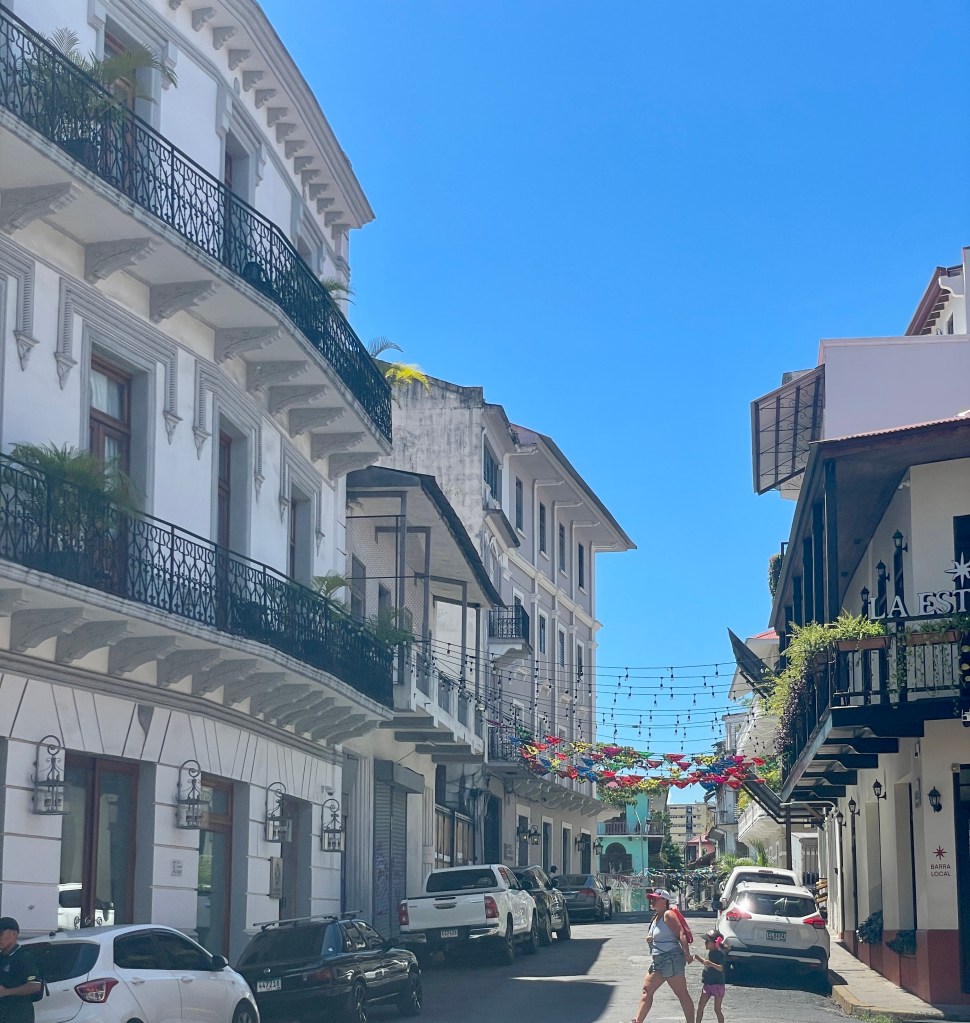
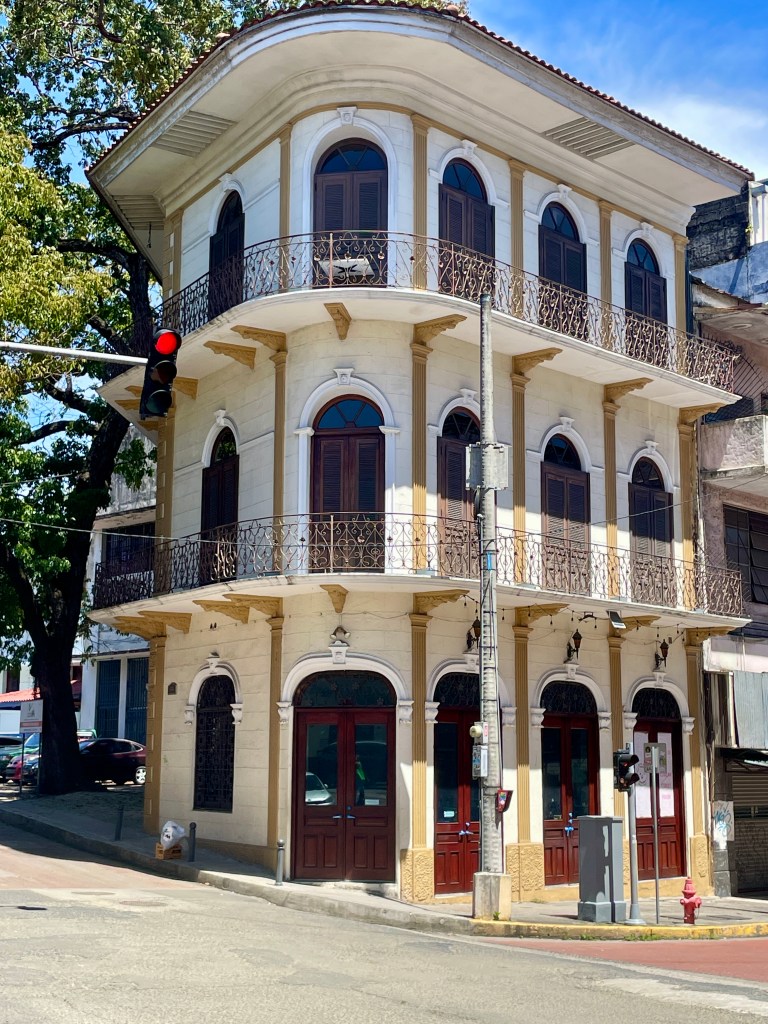
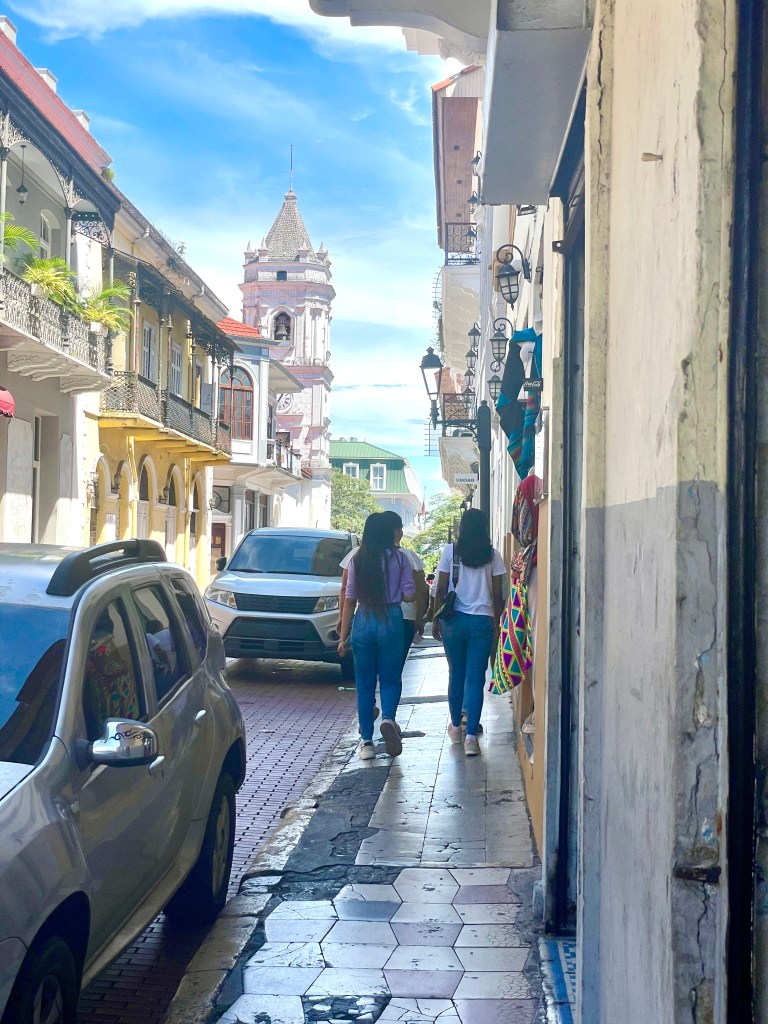
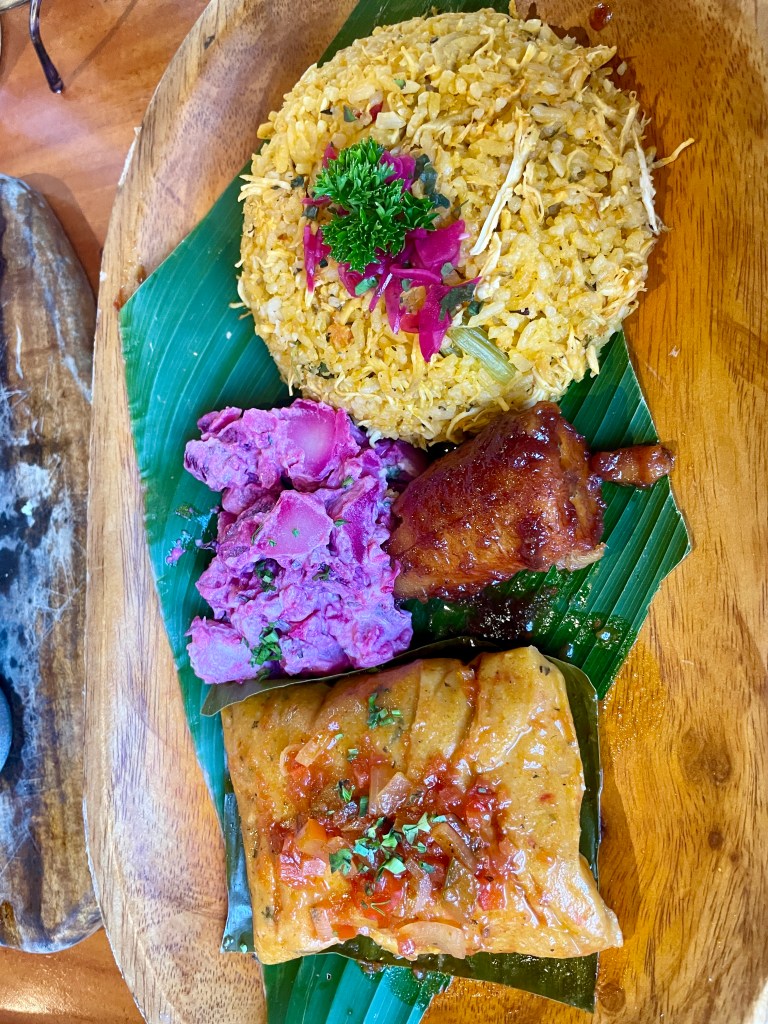
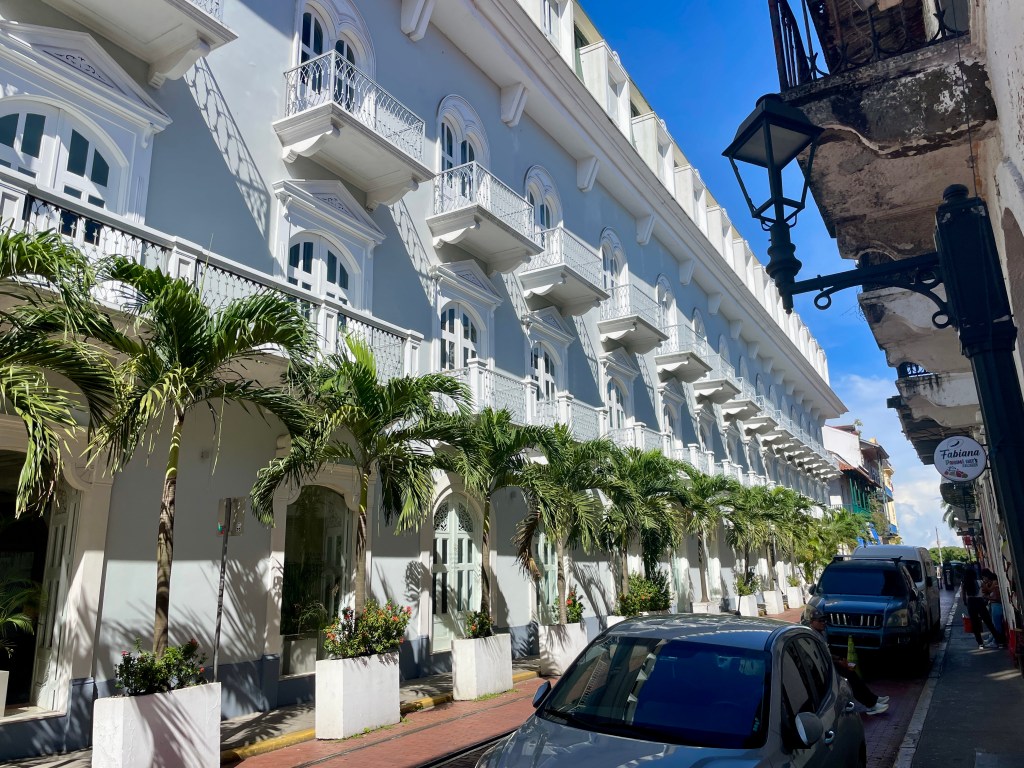
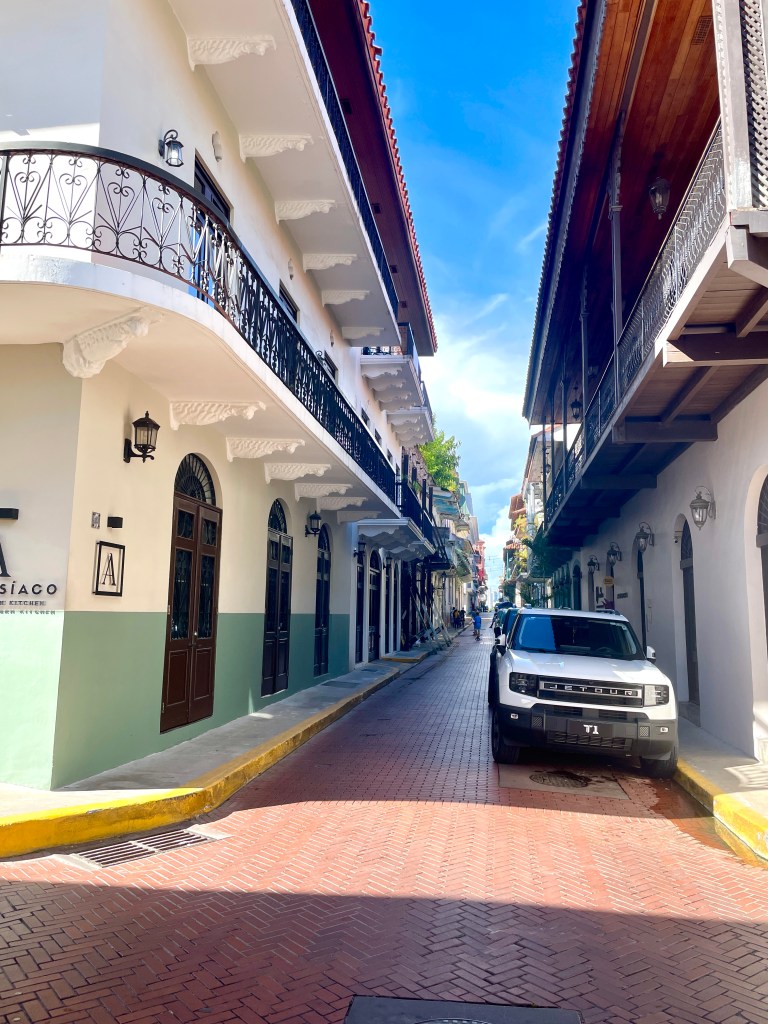
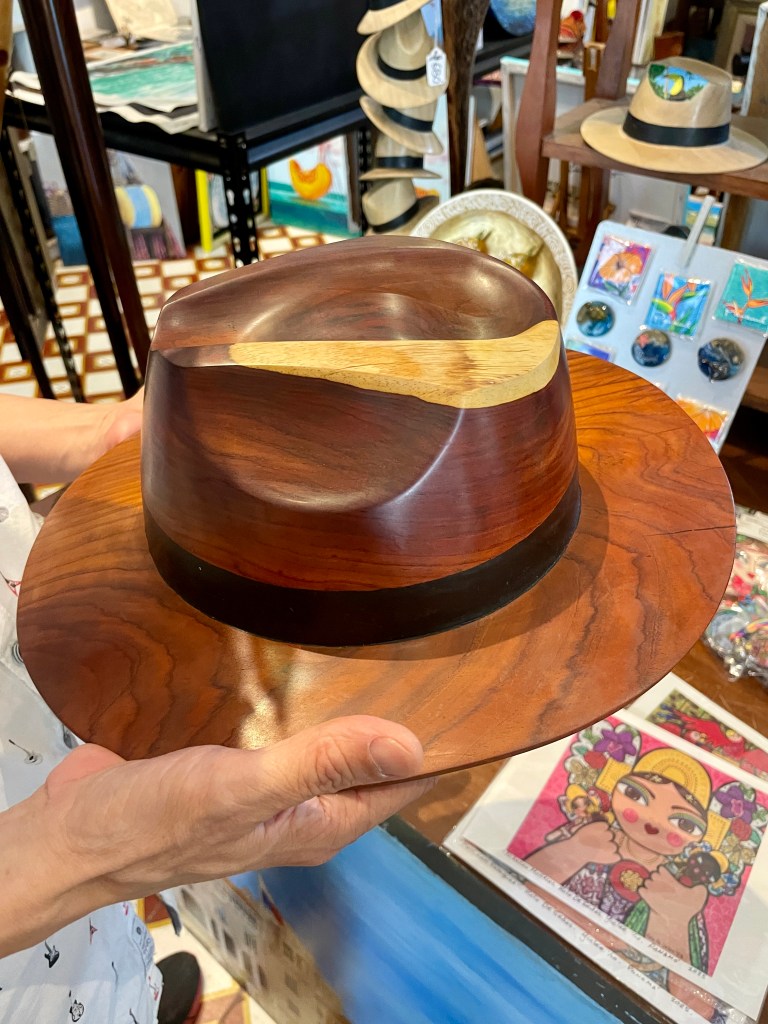
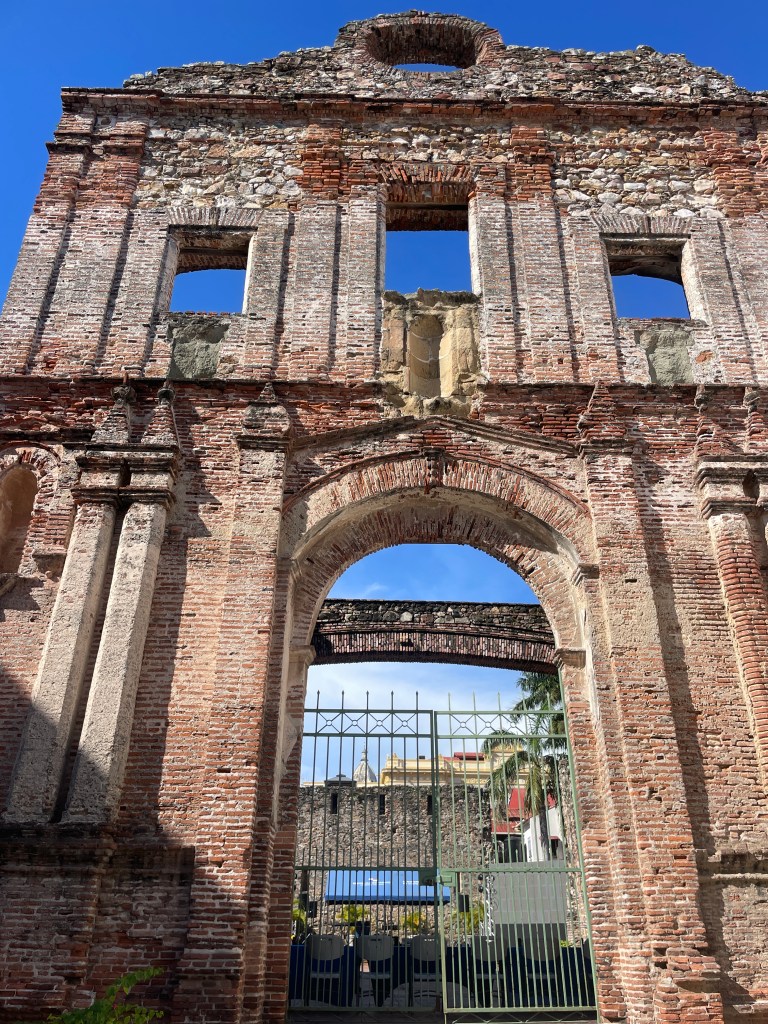
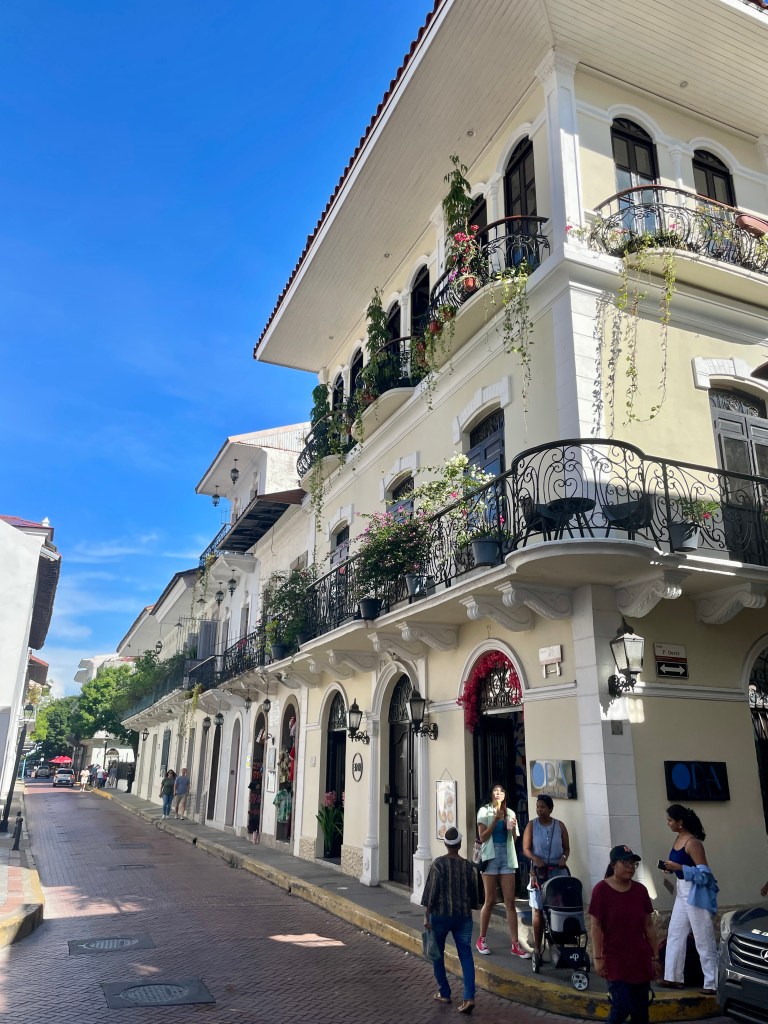
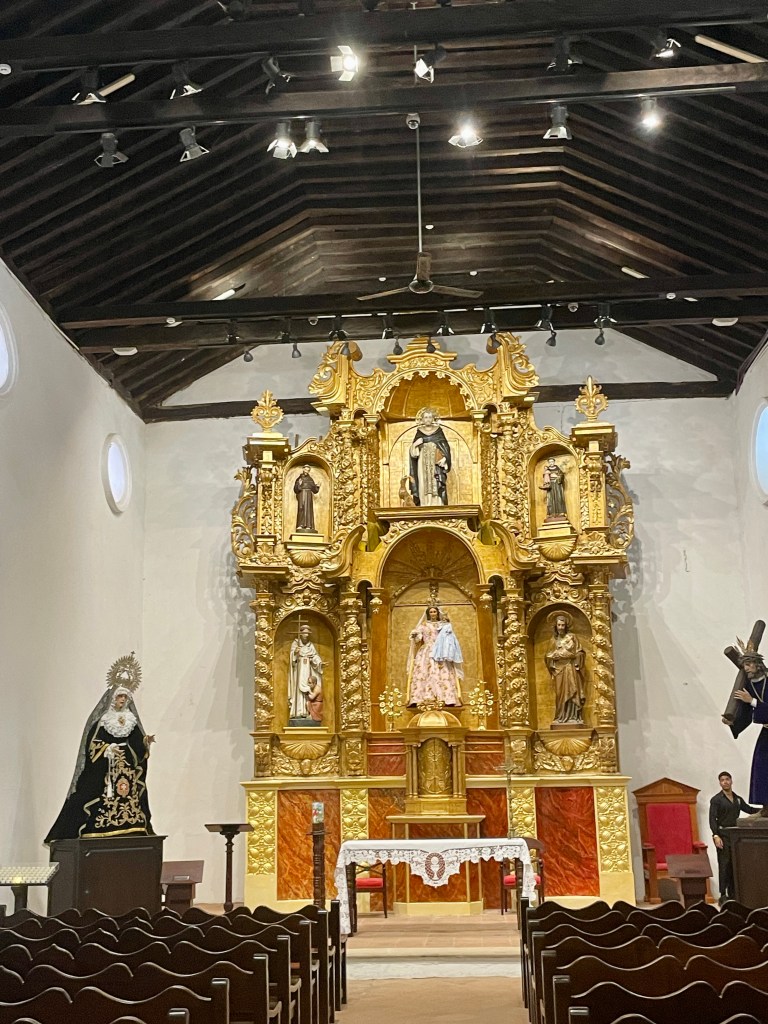
Casco Viejo (or Old Town) is an amazingly beautiful part of Panama City. French and Spanish Colonial architecture combine to create a section of the city that is living its best life. Once known as Panama Viejo, the waterside port was established in 1519 but was destroyed in 1671 by the pirate Henry Morgan. Today is area is being revitalized and features old churches, great restaurants, and small shops. Best of all the ocean water belts cool breezes which flow like a gentle mists throughout the ancient streets. Frankly, the town reminds me a little of New Orleans with a lot more punch.
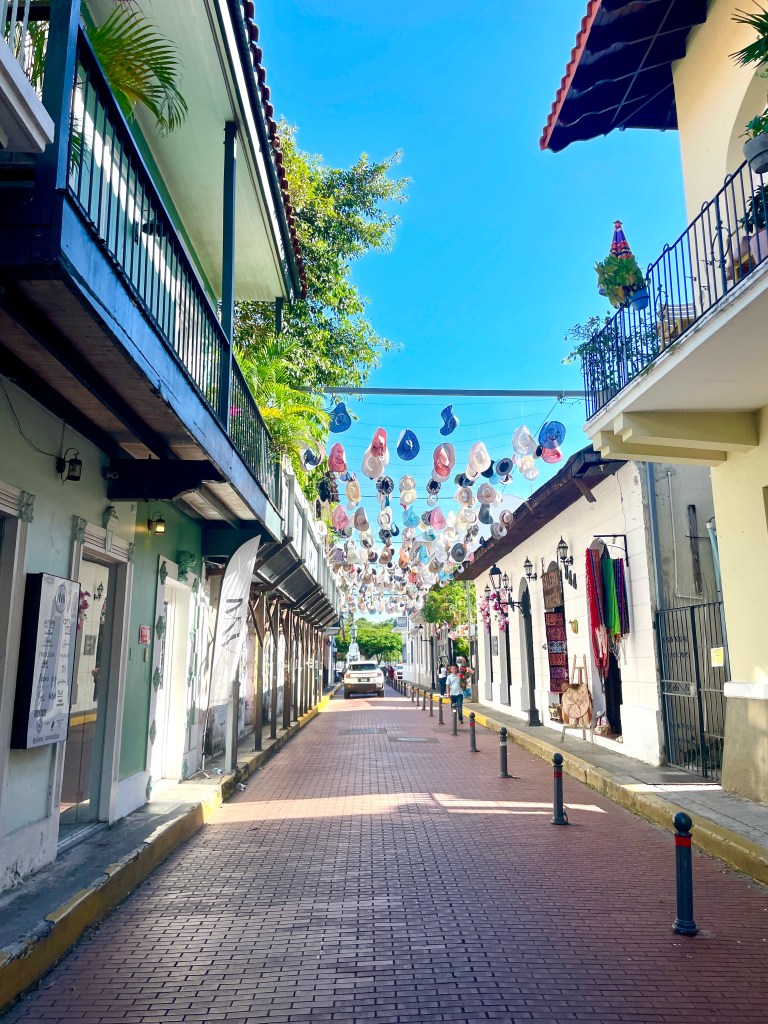
One of the things I loved about Old Town was the alleyways with hats, or flags, or copies of ancient embroidery hanging from upper window to upper window on both sides of the street. This part of Panama City always has something to be enchanted by and it makes your heart skip a beat when you turn a corner and find something unexpected and charming.
Since I am still having computer issues I am doing a computer dump of some of my pictures so you can get your own idea of the city. Enjoy!
Flags hanging cross the streetCatedral MetropolitanaCatedral MetropolitanaStreet of Native FlagsIndigenous Women Selling Their CraftsStreet of HatsOld Time Cigar Shop
As my time in Queretaro ends ( I’ll be heading to Costa Rica on Sunday) I decided to post about the things I have come to love about Mexico. I am fortunate. I have been able to spend 10 weeks here so I have been able to soak up some of the culture that I would have missed had I only been here for 10 days. I have met people and have been shown various forms of kindness that have touched my life and that I will always remember. I have talked to Mexicans who have been kidnapped by ICE and sent back to Mexico after being handcuffed and detained for long periods of time. And I have spent time in ancient churches and have been exposed to antiquities that have made me truly appreciate the history and the people of Central Mexico. I am happy to say that I feel that I received the cultural experience I was hoping for and I feel extremely blessed.
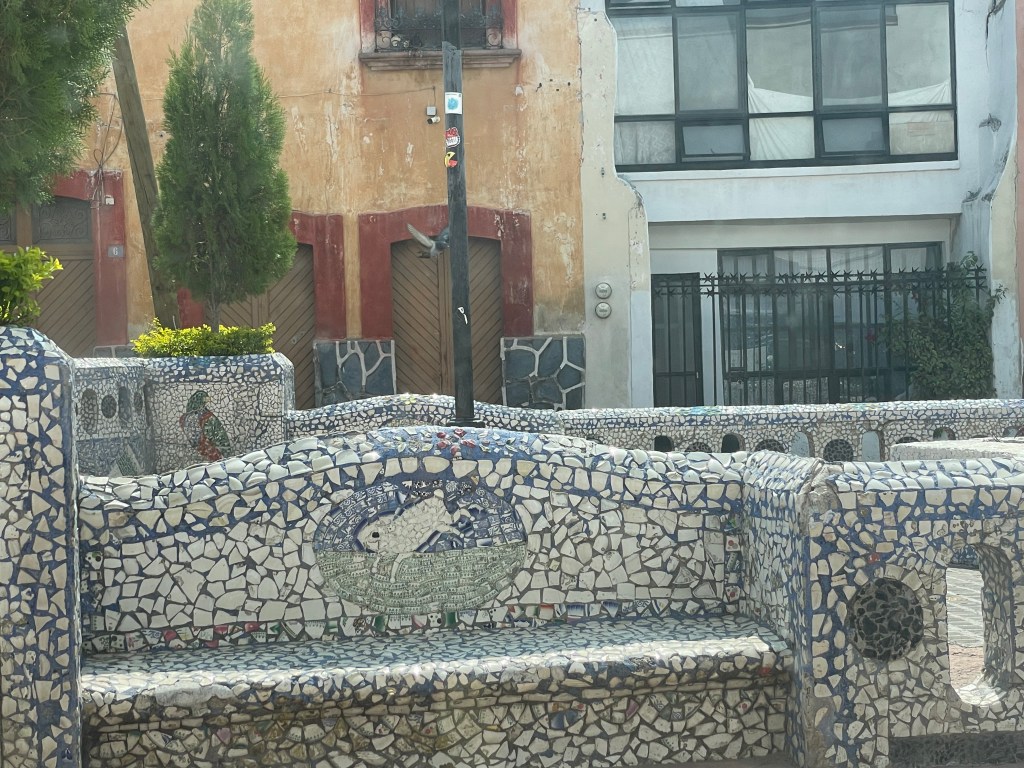
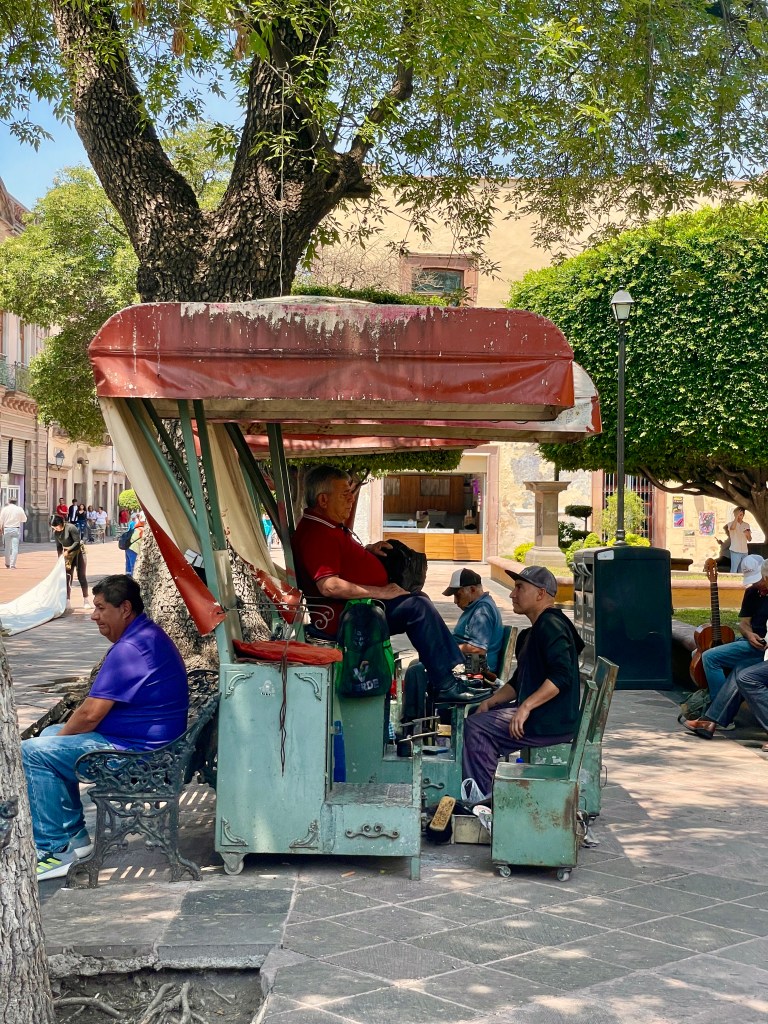
COURTYARDS– I love the courtyards and plazas that grace the cities providing a meeting place for all. The trees that line these places serve an important function by keeping the populace/city cooler. We should have many more of these gathering centers in the USA.
QueretaroQueretaroEl Pueblito
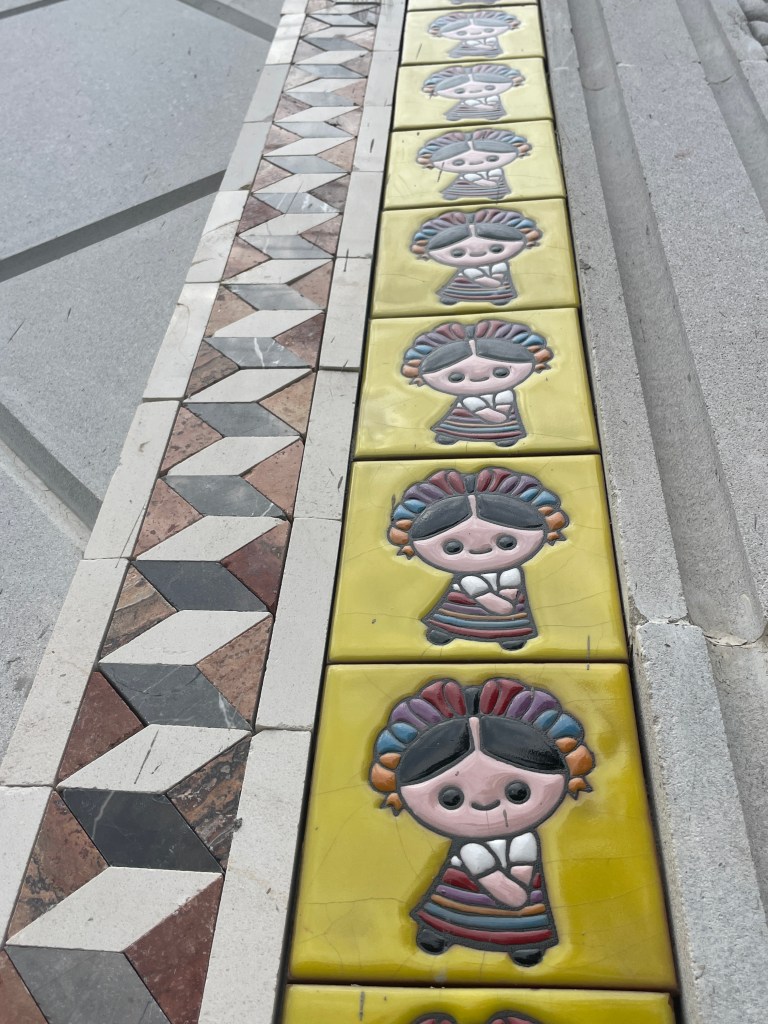
THE TILES– The tile work around here is amazing and you can find it just about everywhere. It beautifies the city while at the same time glorifies the artwork of local craftspersons.
QueretaroSan MiguelJuriquilla
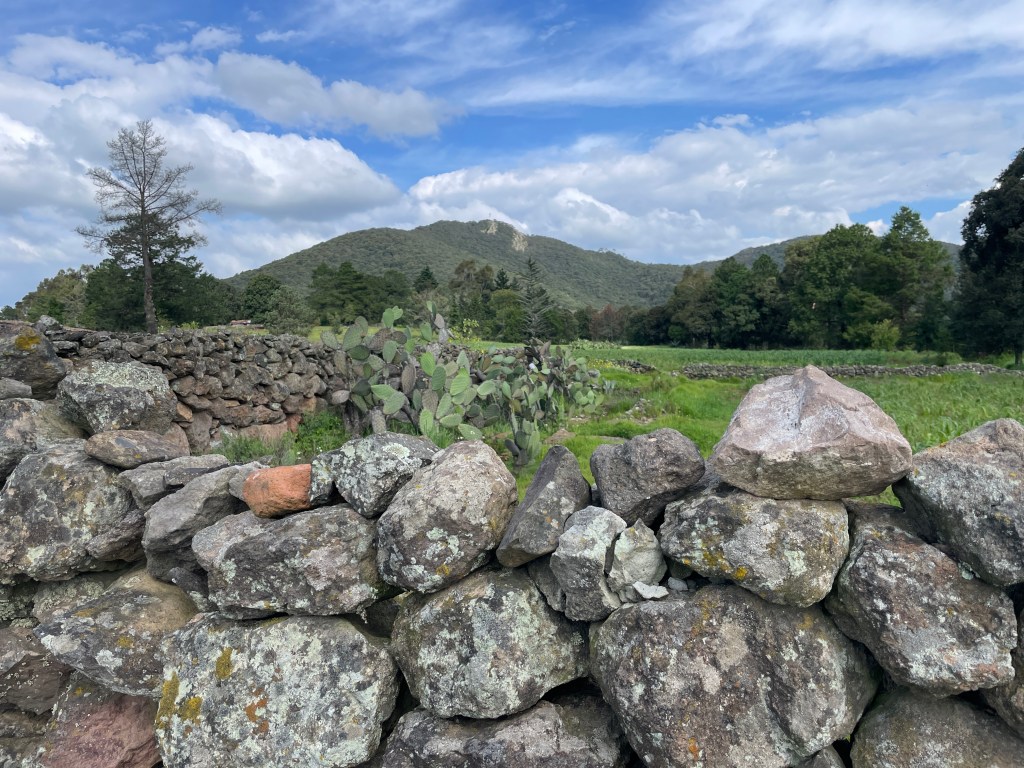
THE MOUNTAINS AND THE STONE WALLS– There are few things as beautiful as stone walls in which each stone has been lifted, chosen, and meticulously put in place by hands over the ages. The work that goes into these is back breaking and they are a testament to those trying to create a better life for themselves.
Amealco
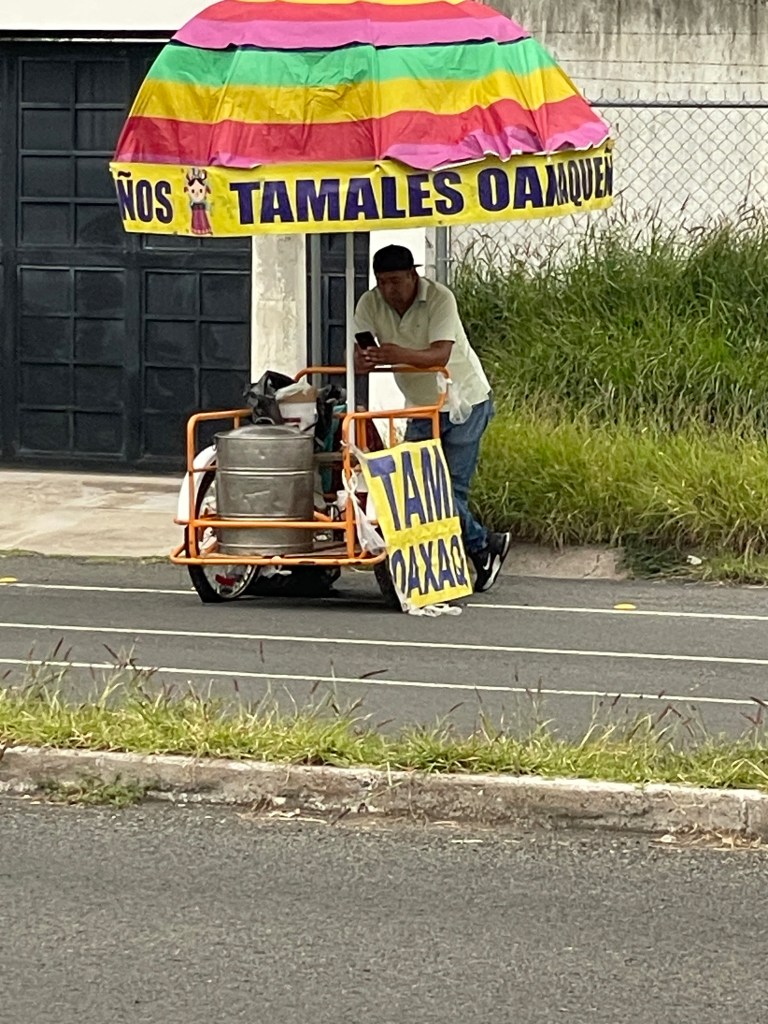
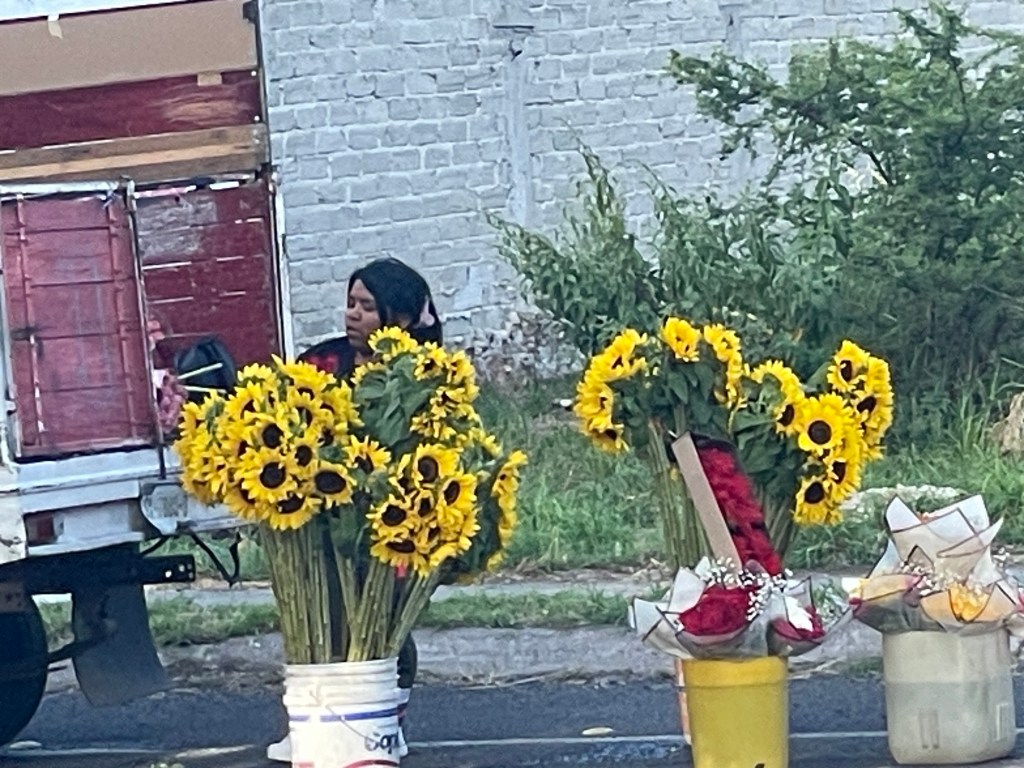
THE STREET VENDORS-Never have I seen such hard-working people. Day and night they are out peddling their wares. Here, I have never found them to be pushy… only kind as they do everything they can to provide for their families. I cannot imagine trying to earn a living this way but somehow they do and almost always with a smile on their faces.
JuriquillaJuriquillaQueretaro-Plaza de ArmusBernalQueretaroOn My Street
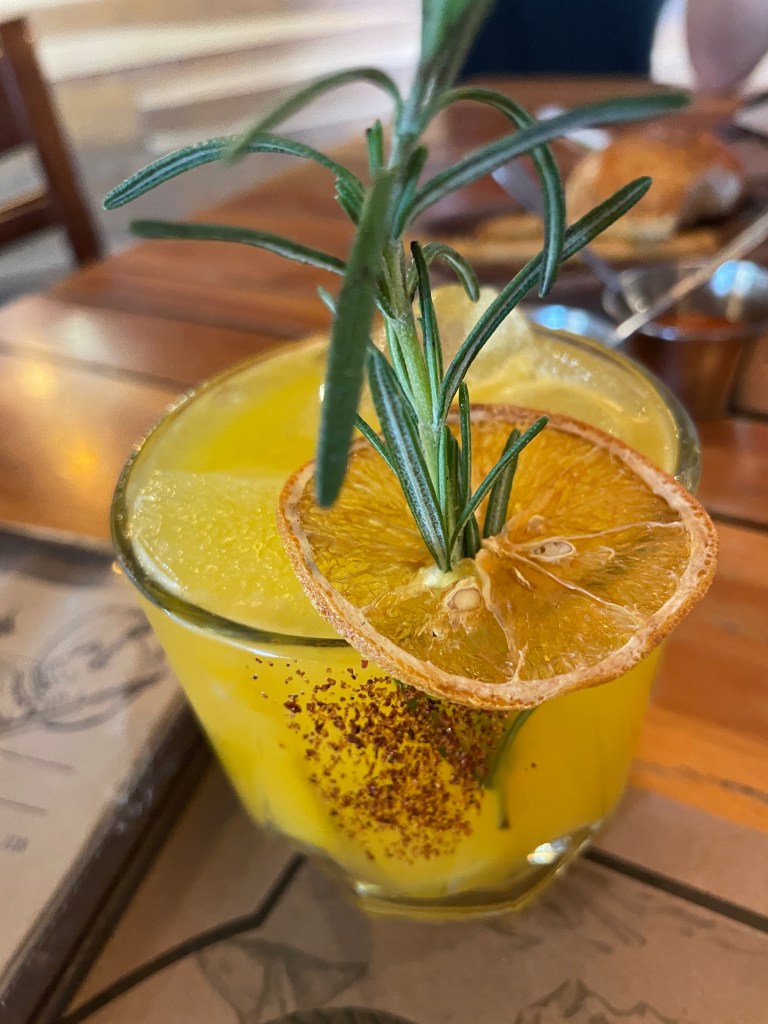
THE DRINKS– Okay a confession. I have discovered I like a good smokey mezcal and on a hot day. It beats a beer any day.
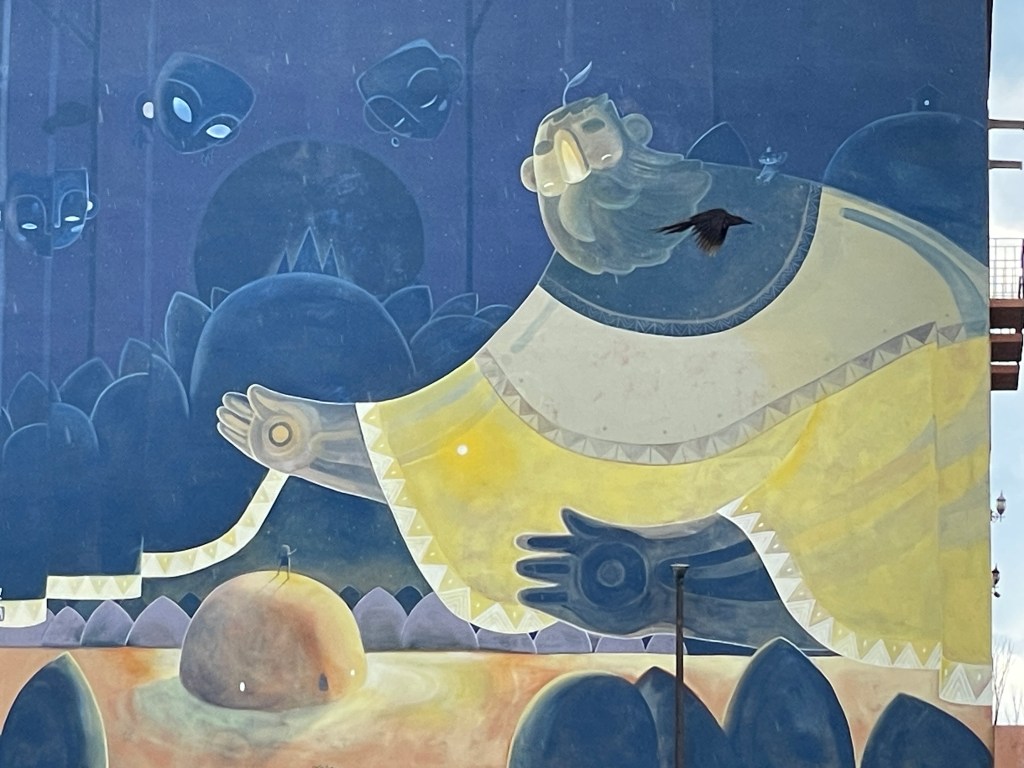
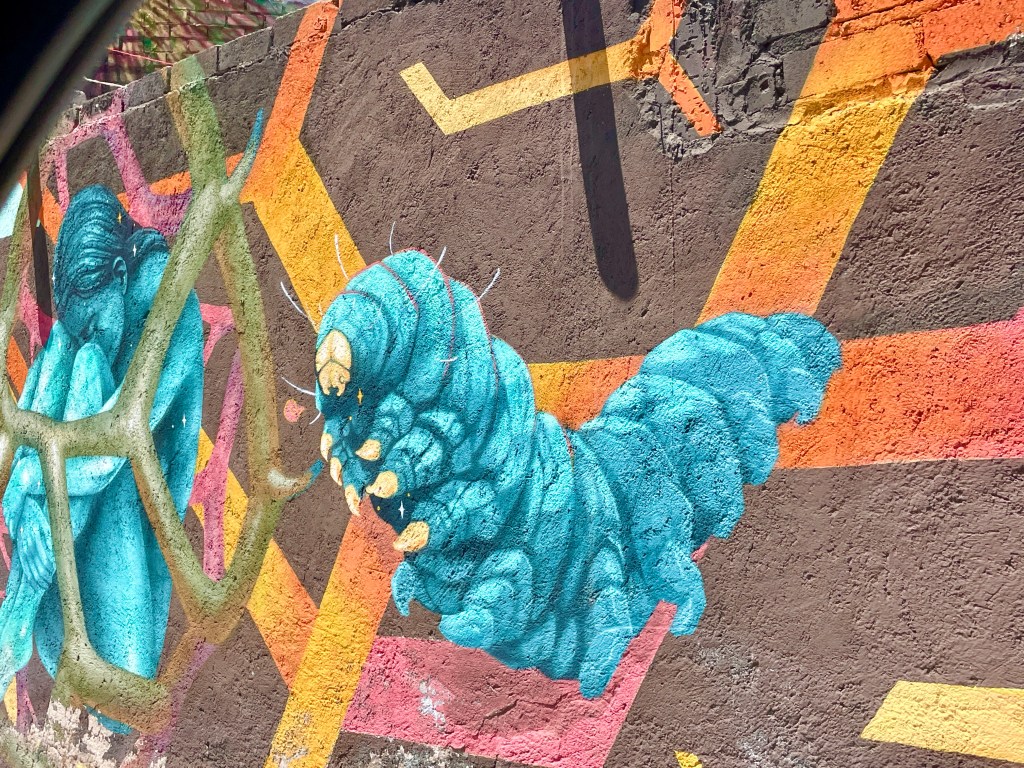
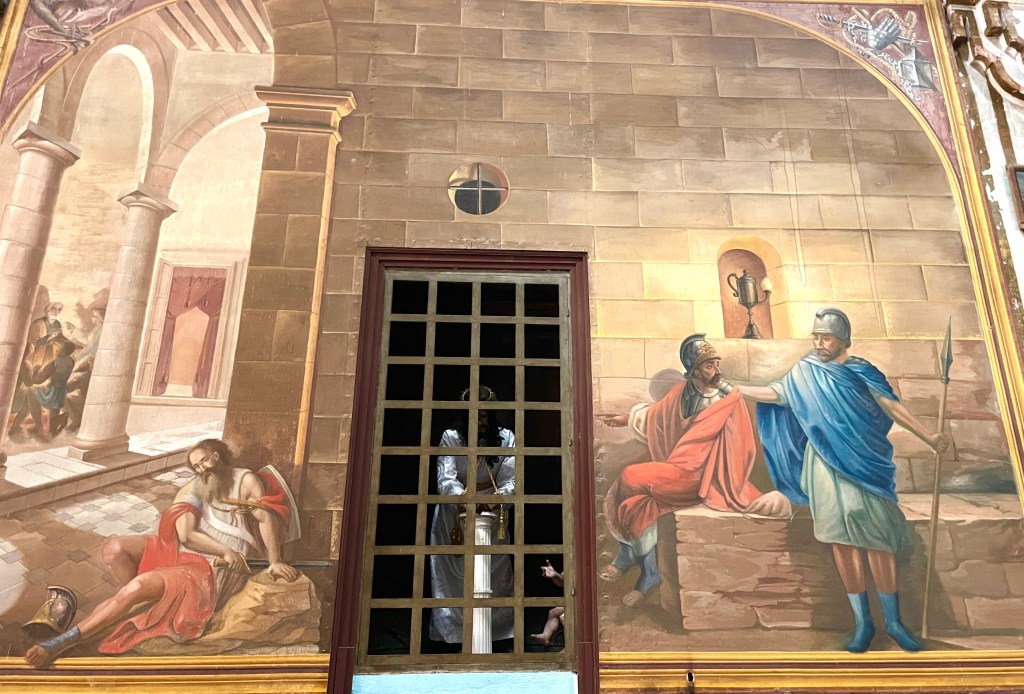
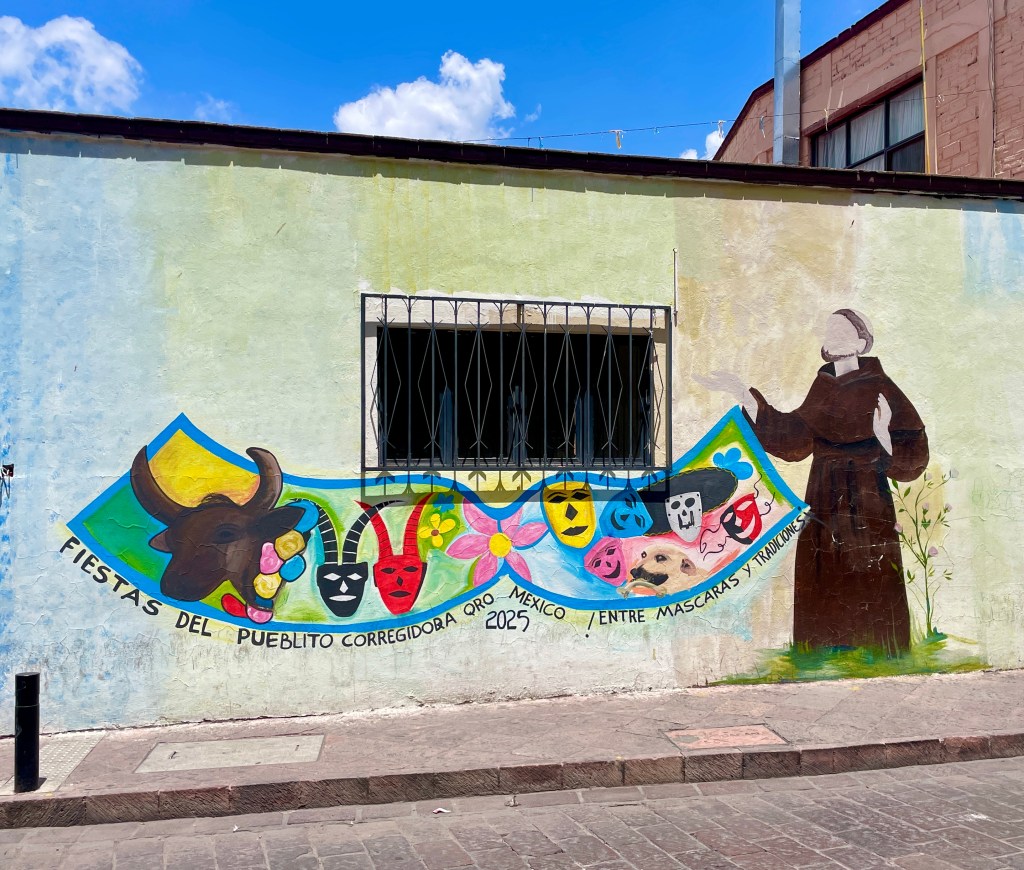
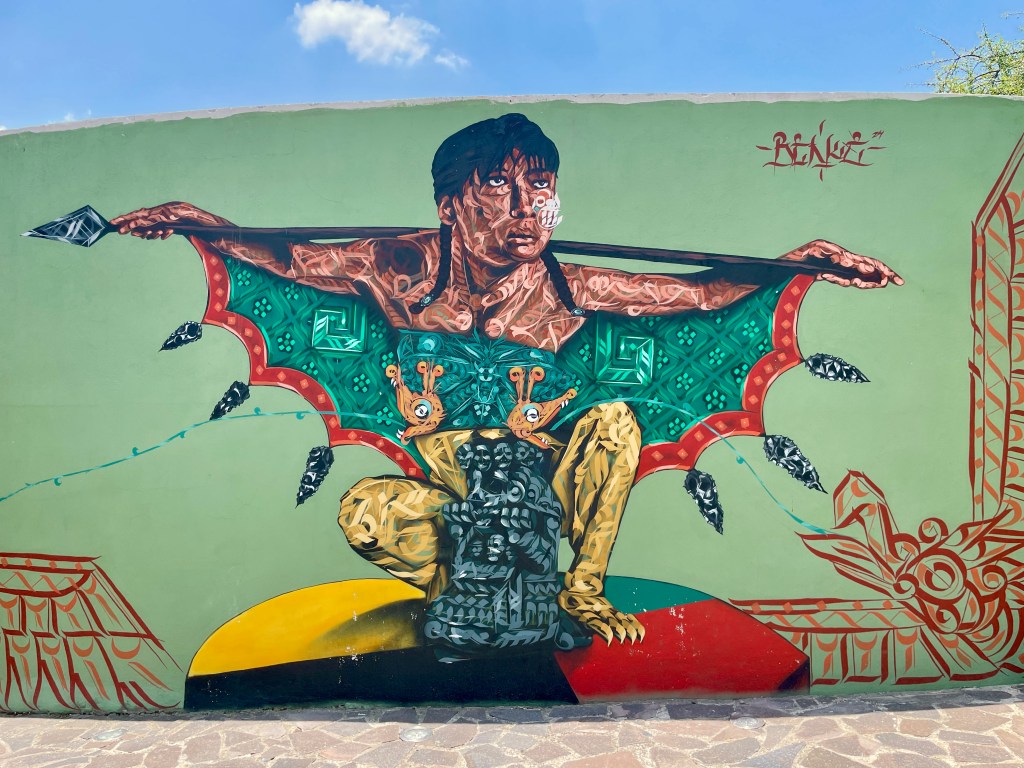
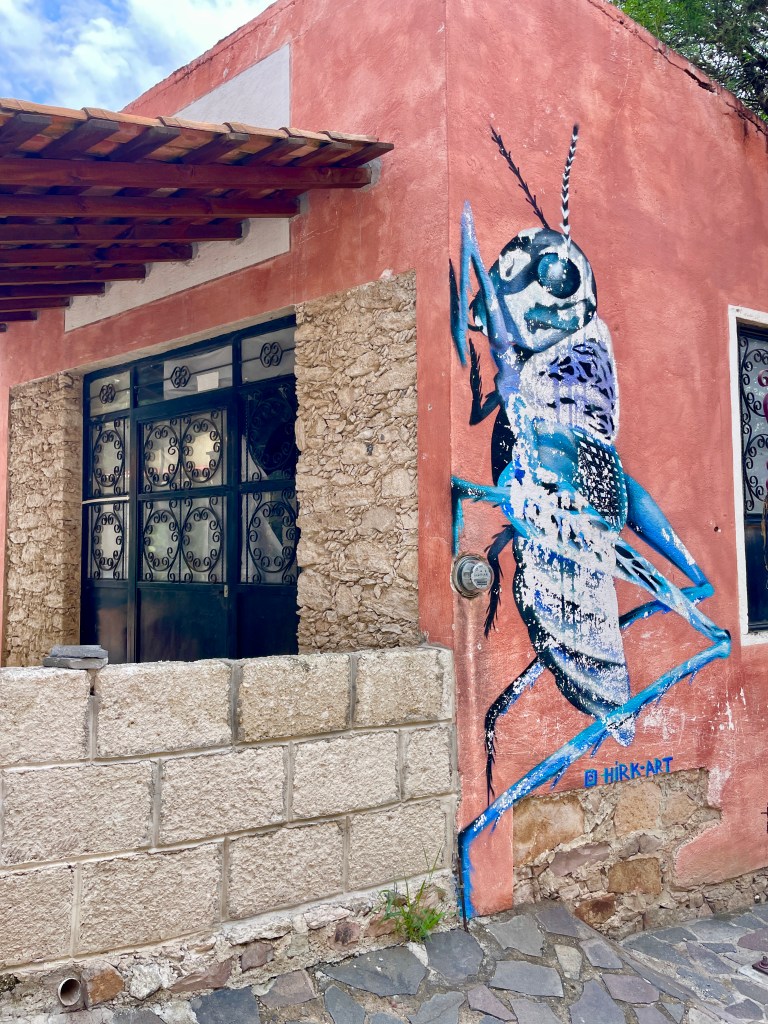
THE MURALS– I did a whole blog on the murals because they are vibrant, so imaginative and they are an excellent way to showcase the talents and beliefs of the local people. Here are a few more to enjoy.
San MiguelTown of El PueblitoTown Of El PueblitoTown of El Pueblito
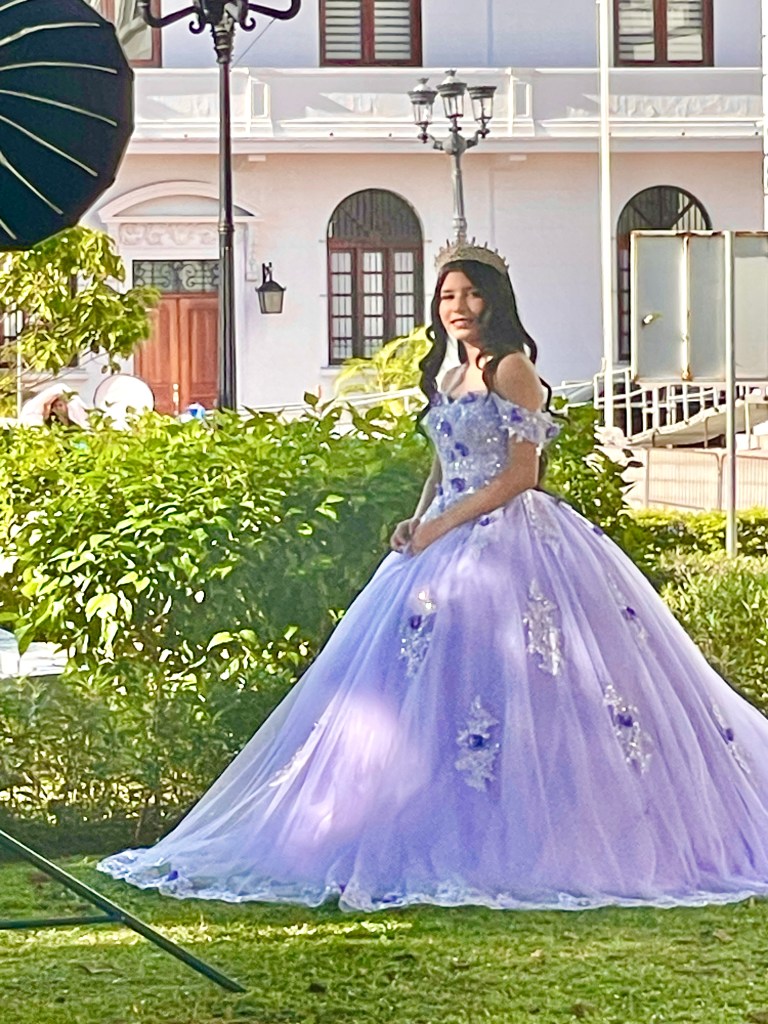
THE DRESSES– Here is Mexico the Quinceañera is a really big deal. It is held to mark a girl’s 15th birthday which signifies her entry into womanhood and the responsibilities that she inherits as a result. The dresses are fabulous. In addition, the major department stores rents these dresses or prom dresses which I thought was a wonderful way to allow those with less money to attend these events looking absolutely stunning.
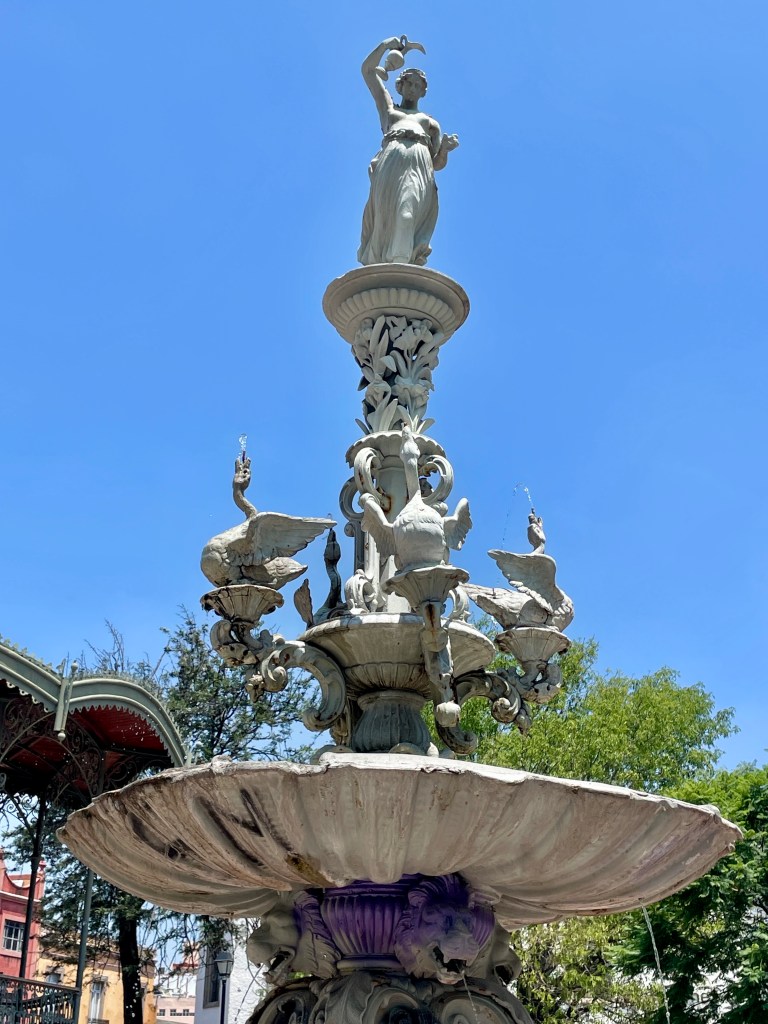
THE FOUNTAINS– They are everywhere and each is different with various meanings or honoring local history.
QueretaroQueretaro
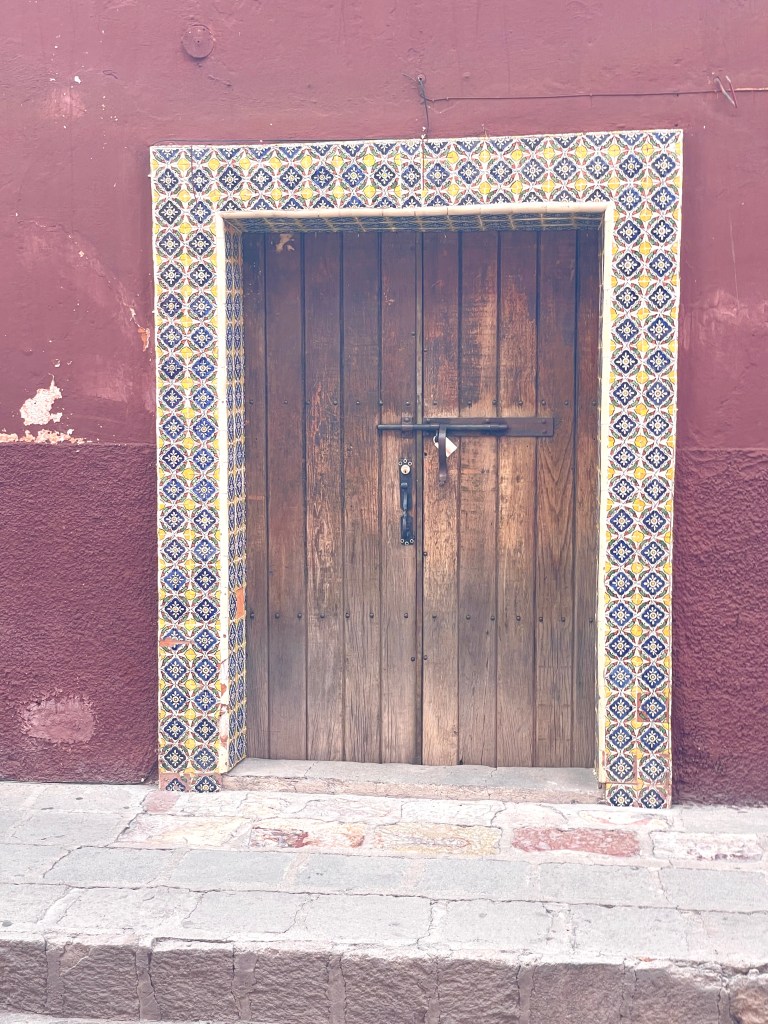
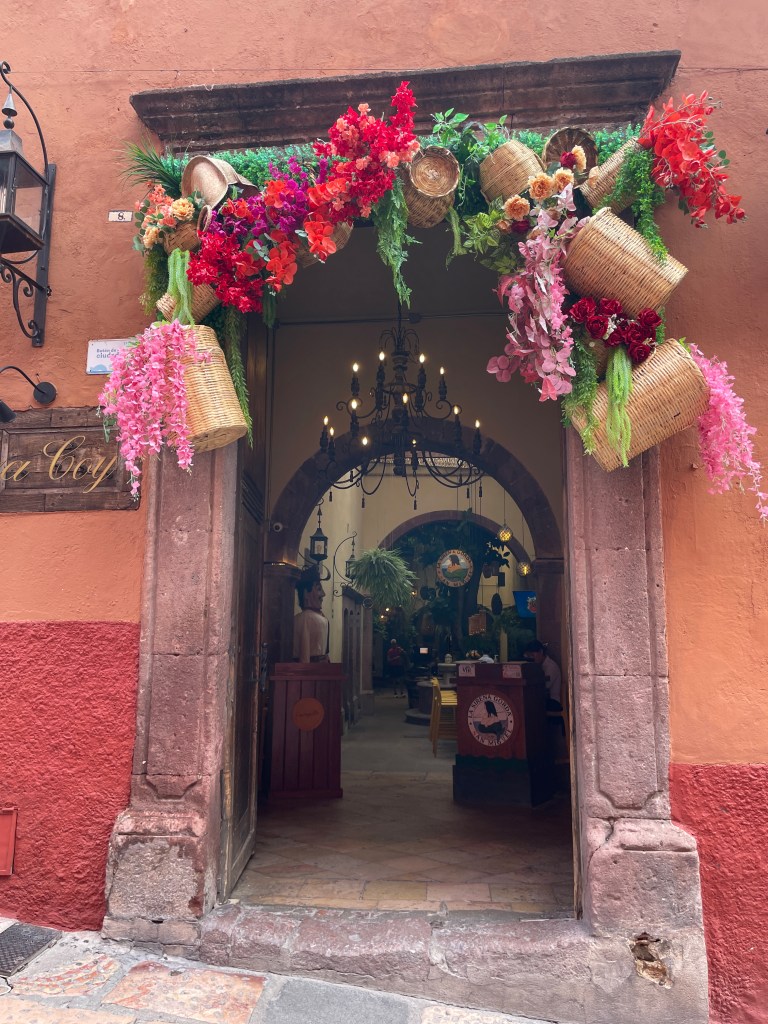
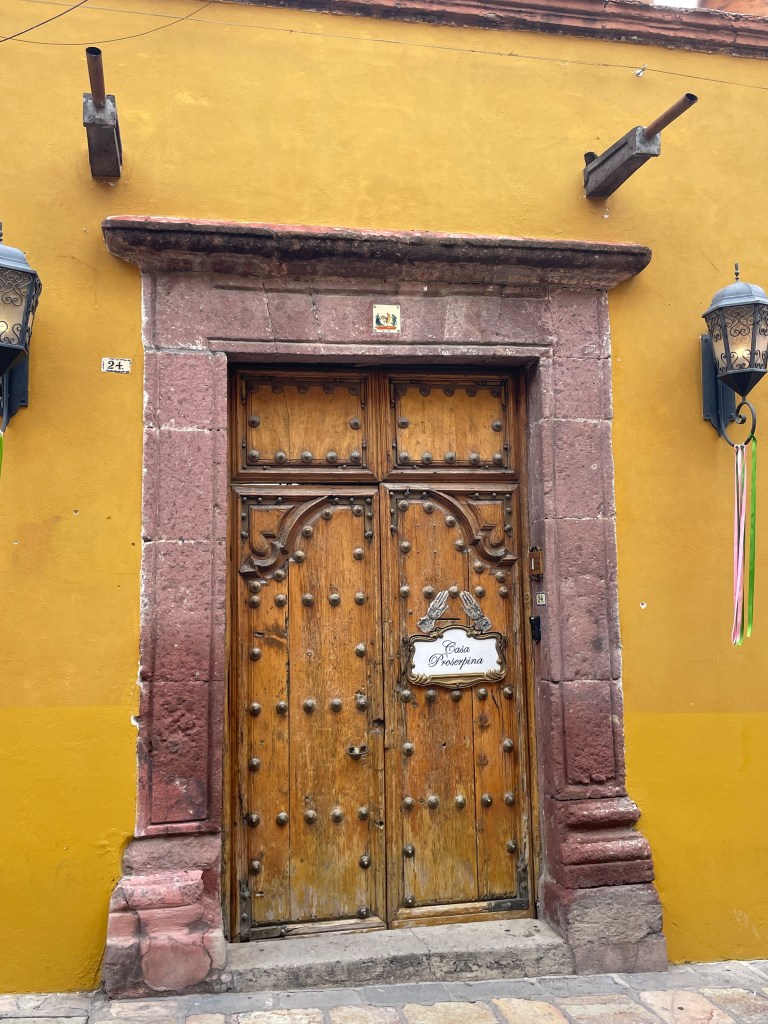
THE DOORS– Anyone who really knows me knows that I LOVE doors and have taken pictures of them during all of my travels. Mexico’s doors are by far some of the most beautiful I have ever seen and the decorated doors come in all kinds of designs. In San Miguel you are not allowed to replace a historic door without permission and I can understand why. Many of these doors are hundreds of years old and have come to represent the city’s fascinating past.
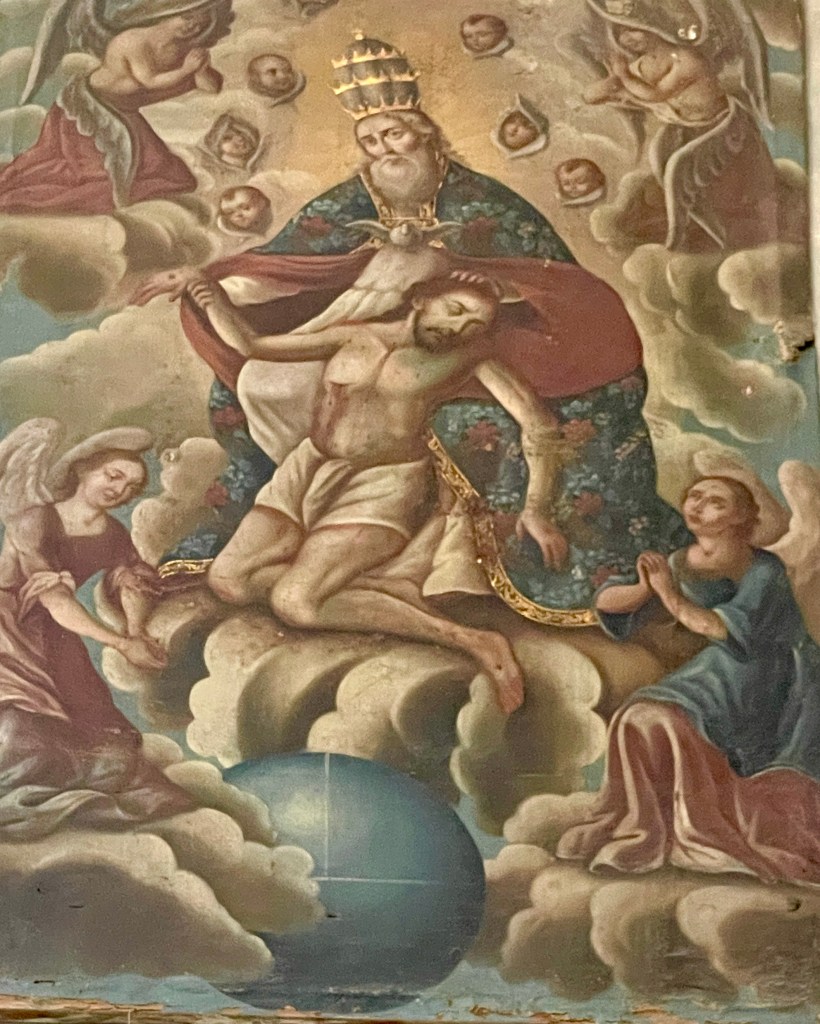
RELIGIOUS WORKS OF ART– I find religious artwork fascinating because besides the feelings that viewing them invoke; the paintings often depict the lives of everyday normal people.
PIANOS ON THE STREETS– I find this aspect of city life to be the most charming. So many people just plop down and play, usually just one song, and then get up and leave. From chopsticks to piano players who sound concert hall worthy; listening to someone who has the guts to perform in front of strangers is a delightful way to pass some time. I also love just listening to various street musicians doing what they do best.
QueretaroSan MiguelQueretaro
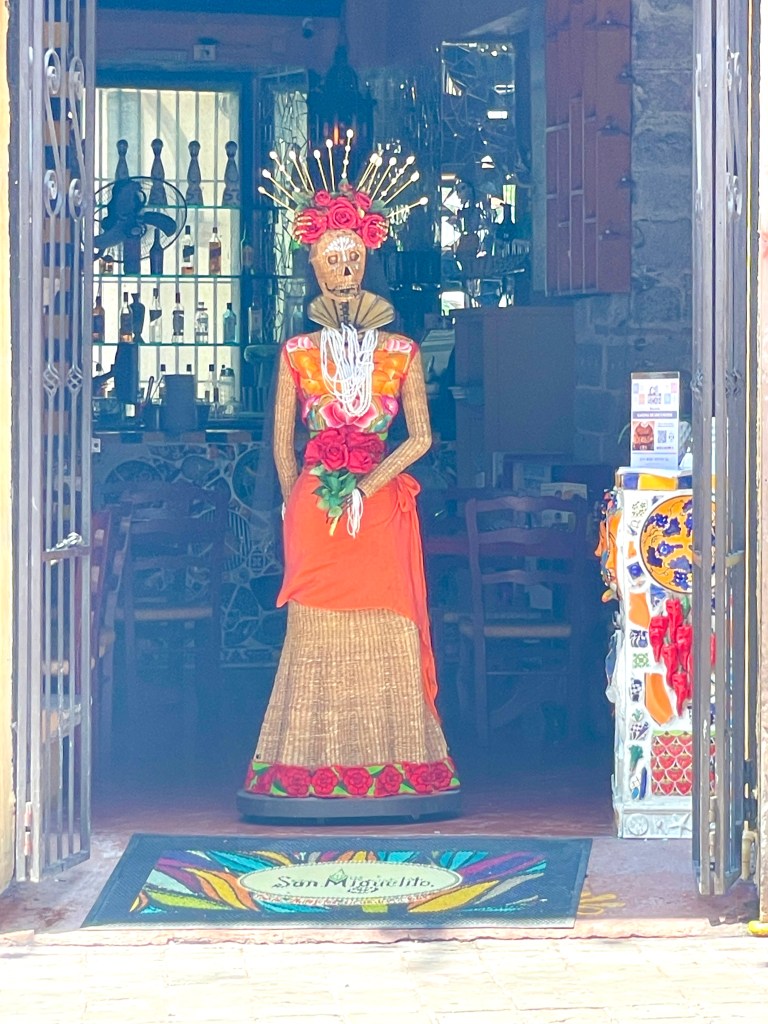
DAY OF THE DEAD– So everyone tells me I have to come back to witness for myself the Day of the Dead celebrations and I probably will. In the meantime there are all sorts of reminders of this beloved holiday of the Mexican people.
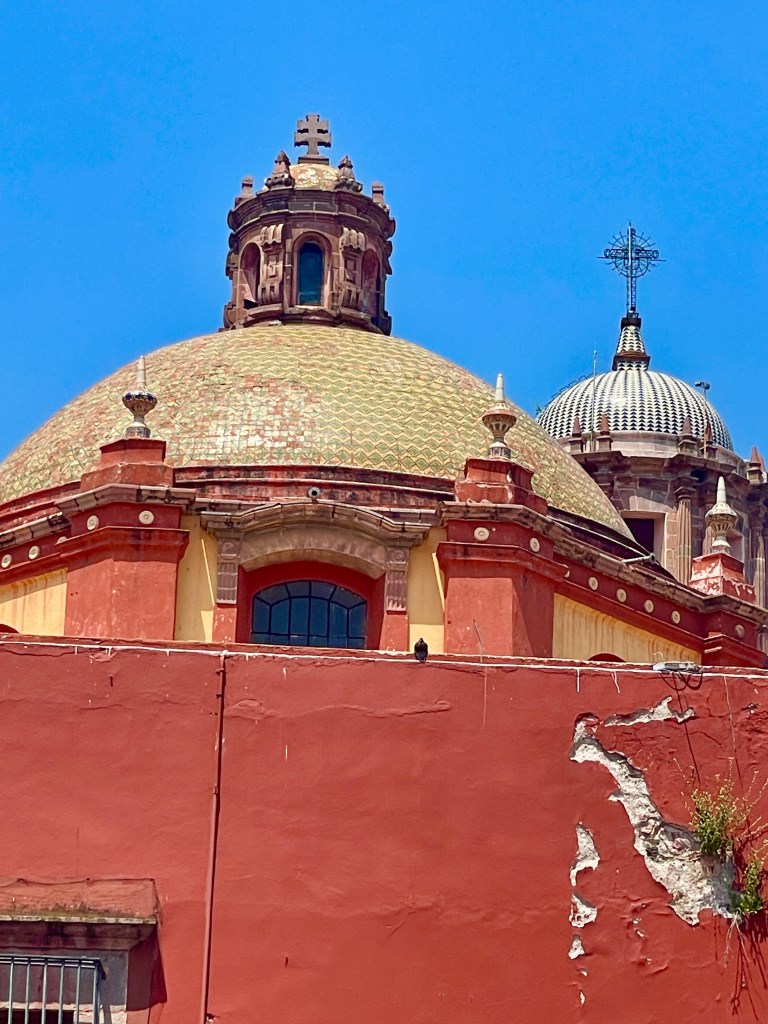
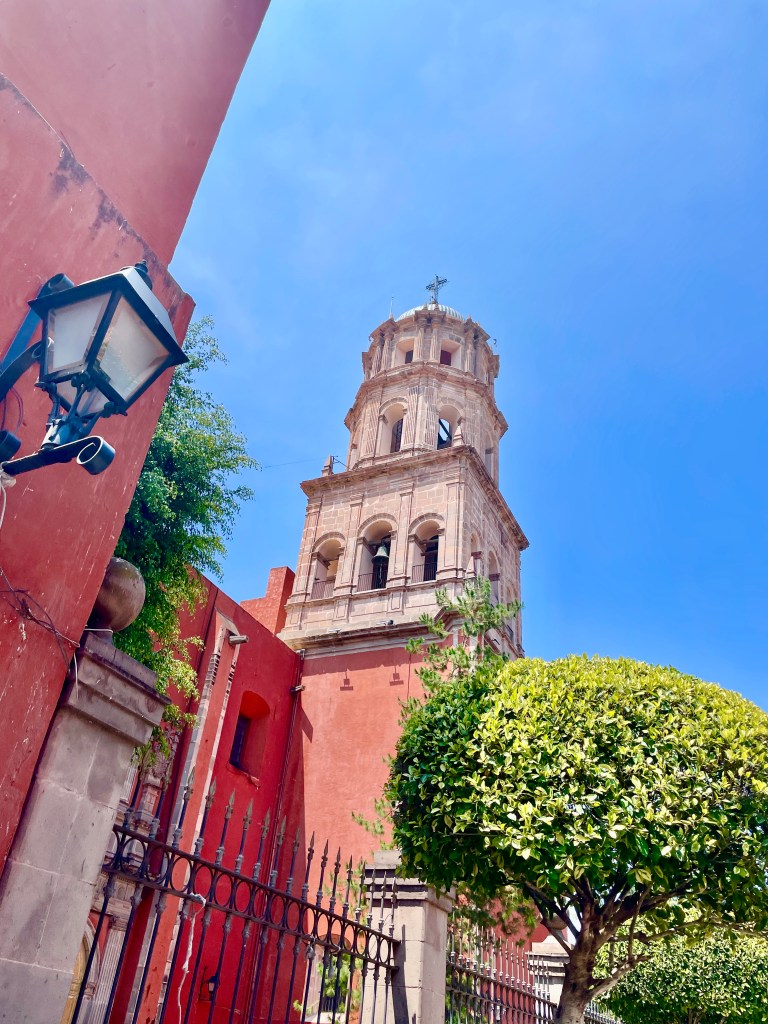
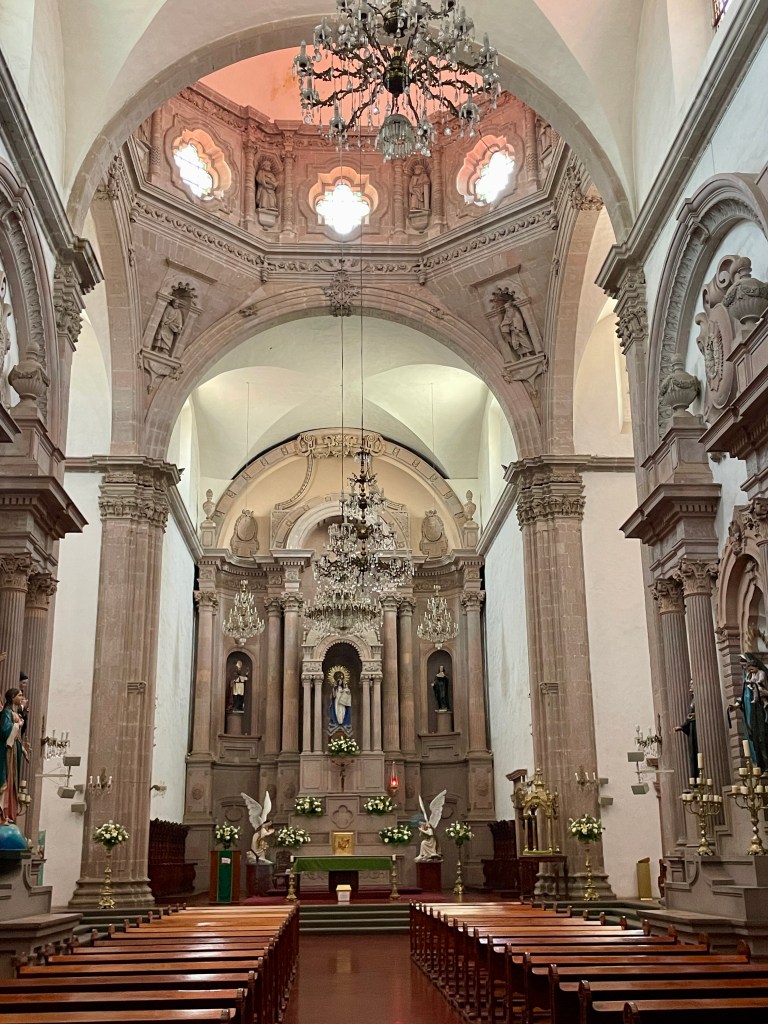
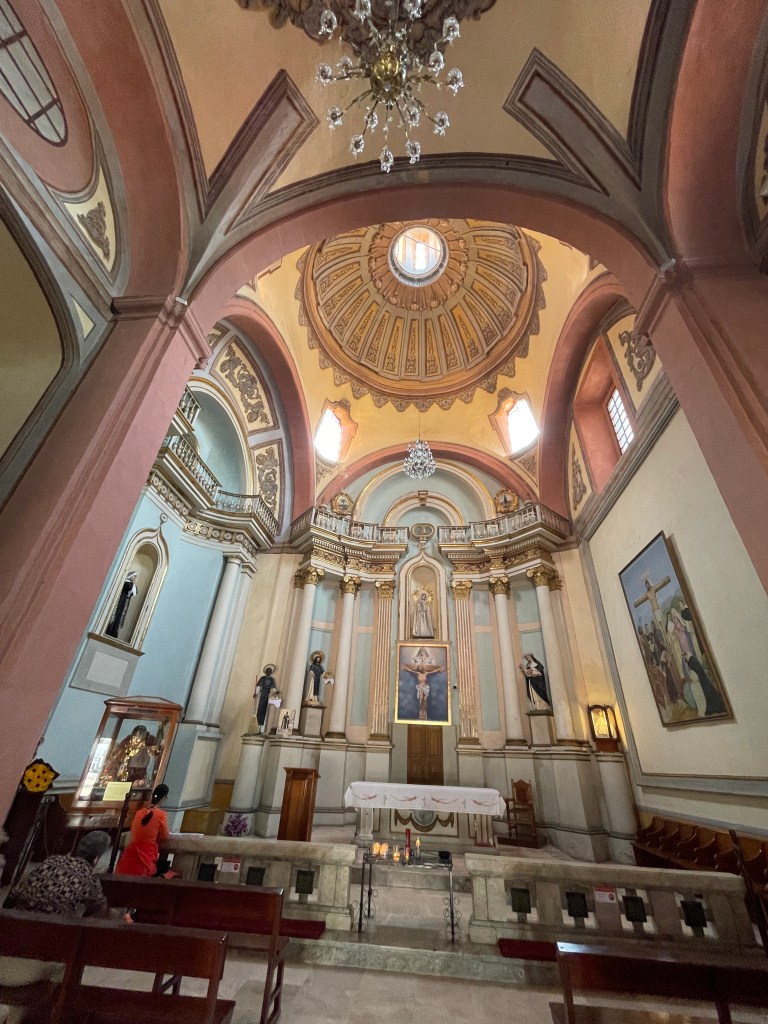
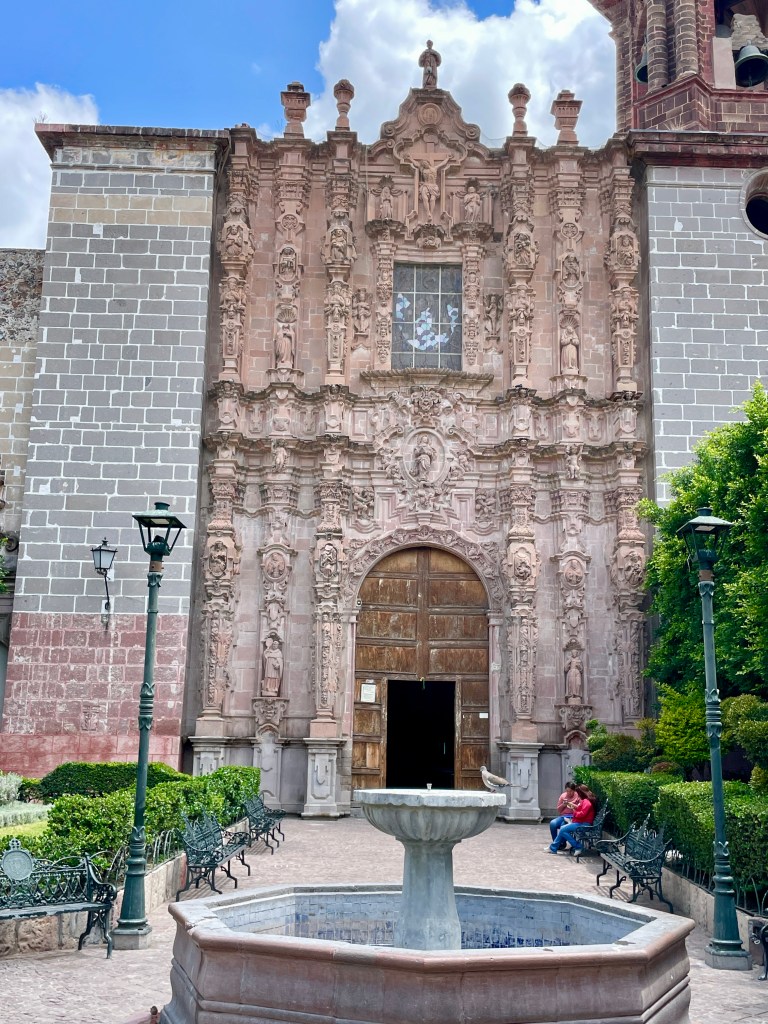
THE CHURCHES– While not a traditional religious person; I have spent my fair share of time sitting in the churches listening to the bells, choirs and priests. I feel at peace when in these churches taking in all the art and beautiful sounds of people as they come to pray. Something about the churches in Mexico are special. While I can’t quite put my finger on what makes them stand out all I know is that they do….you’ll just have to take my word on it.
Templo de Santo Domingo- 1697 Templo de Santo Domingo Santa Iglesia CathedralVILLAS DEL MESON
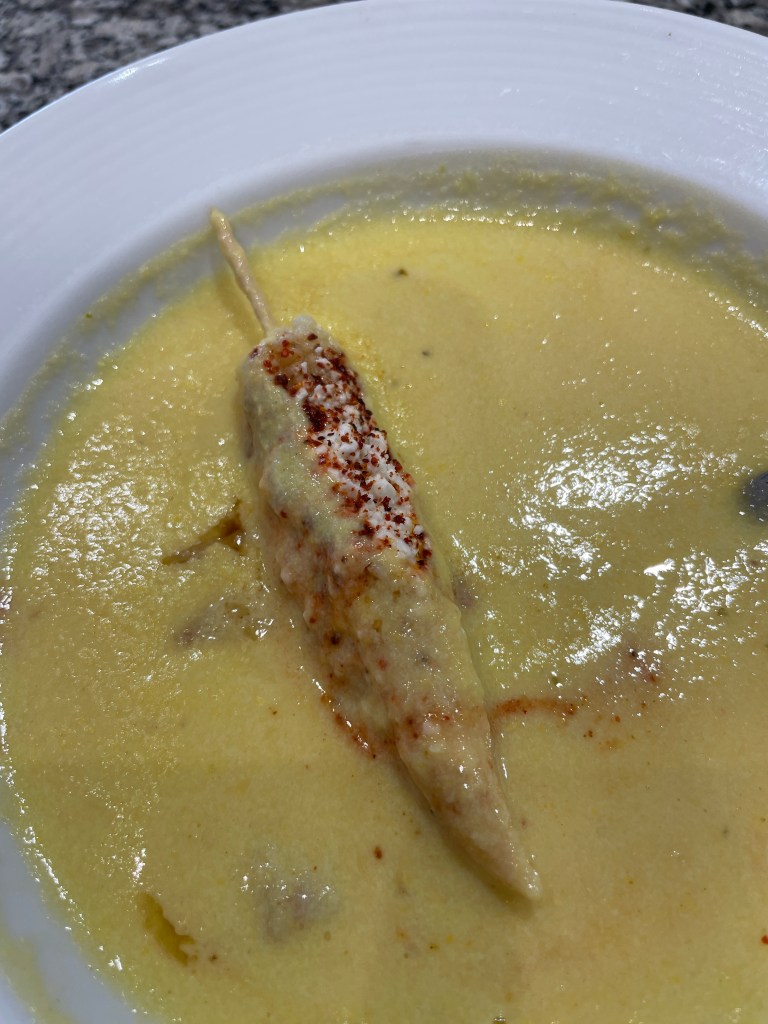
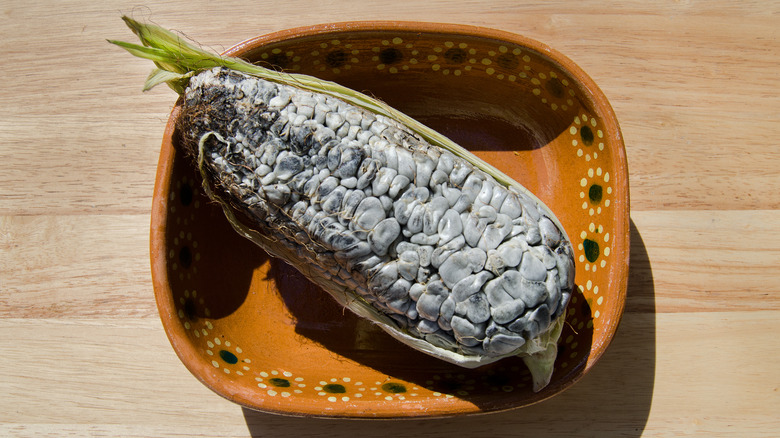
THE FOOD– The food here is great. Besides the “traditional” Mexican food that we know and love there are fantastic fusions and ancient food items like Huitlacoche which I talked about previously.
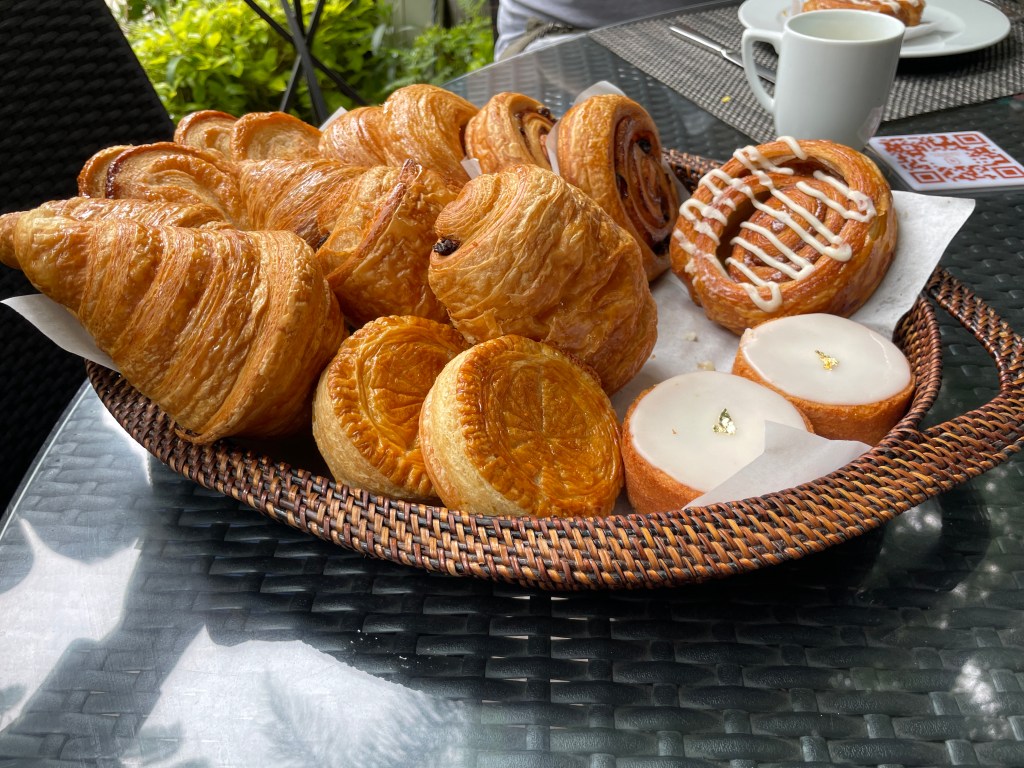
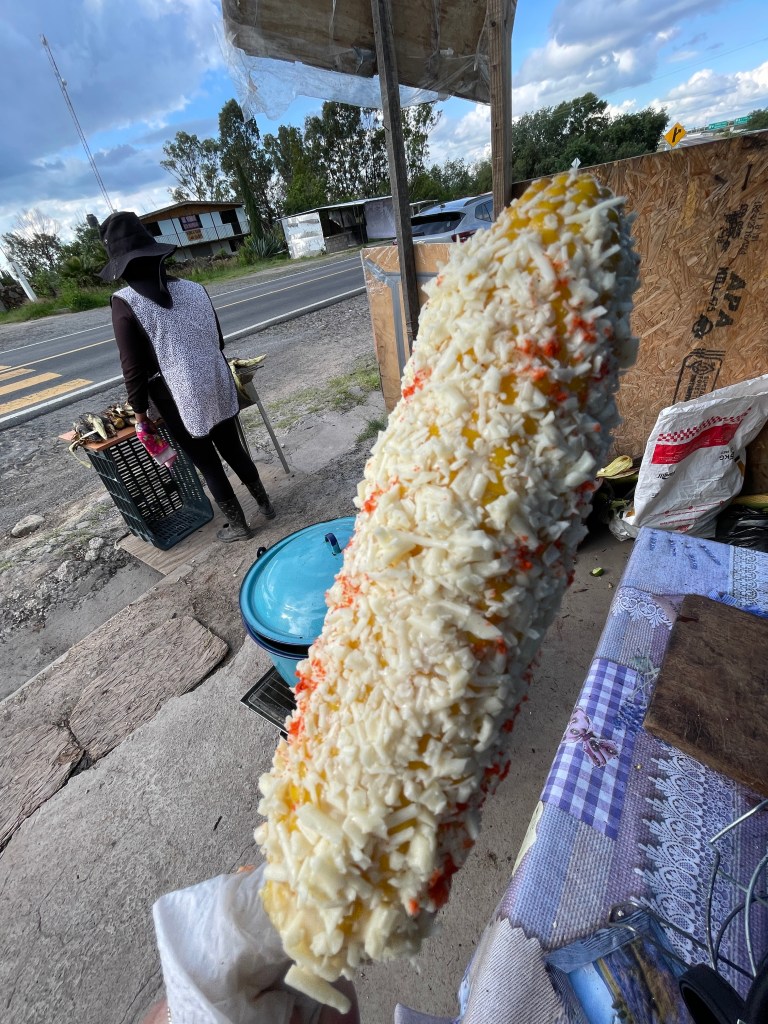
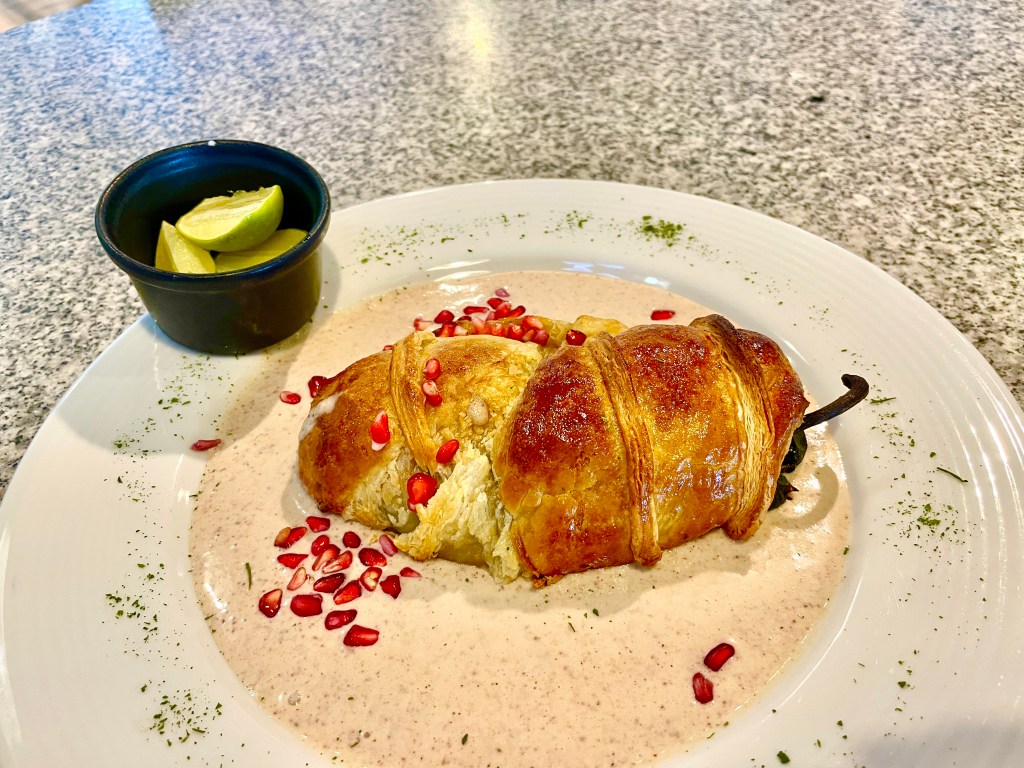
Roasted Corn SoupVarious Breakfast BreadsFried Bananas With Passion Fruit Ice CreamCorn dripping in lime, slathered in mayo and rolled in cheeseChili NagoyaHuitlacocheArroz Con LecheShrimp, Mango, Avocado, Coconut FusionTraditional Food
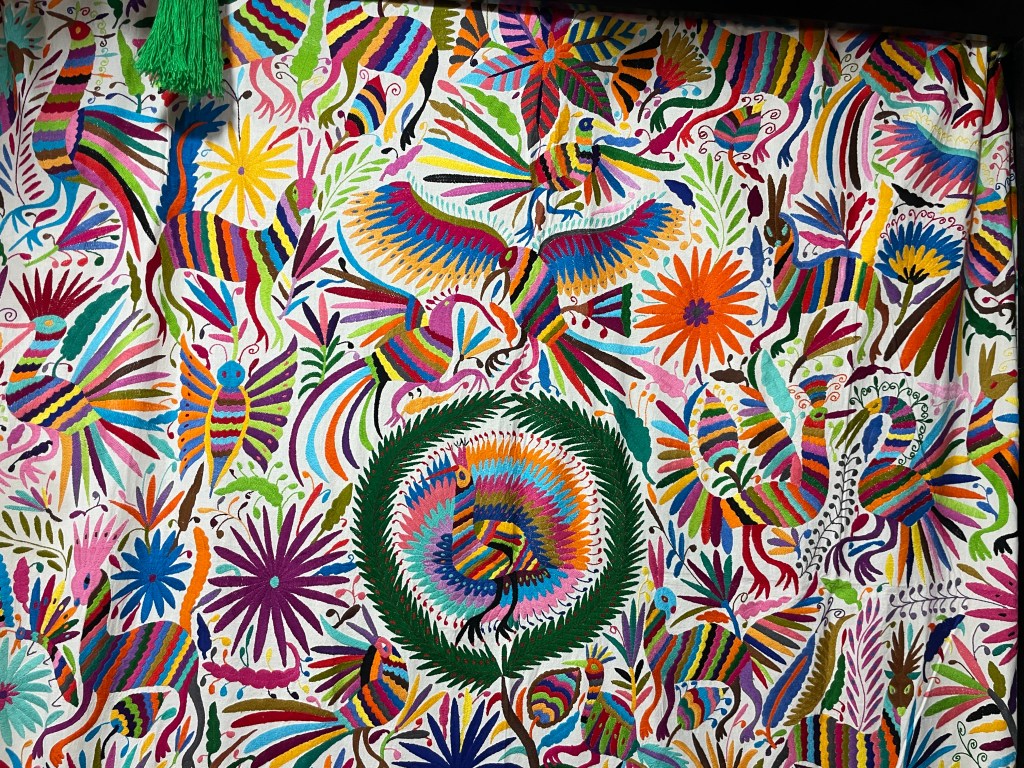
TRADITIONAL FOLK ART– Most folk art here is choke full of vibrant colors often depicting dreams or wishes of the artists. The embroidery is unbelievable and the rugs are reminiscent of ancient patterns used throughout the country. Browse the artisan markets or just buy off the street corner. Either way you will come home with treasures that will remind you of this colorful area,
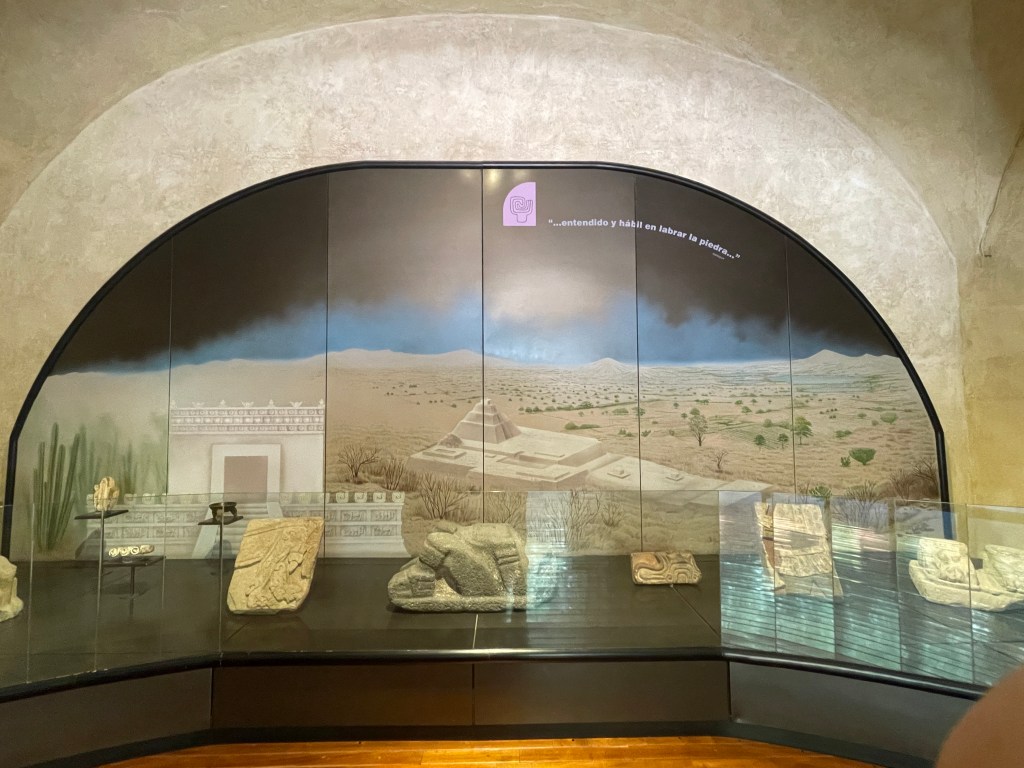
HISTORY– While I only made it to one temple, Queretaro, has the most of any state in Mexico. They are everywhere. Because of this, the archeological treasures are immense and museums throughout the country are filled with the treasures of this area.
Since living here I have come to believe that this area is the cultural Mecca of Mexico. And while I understand the desire to frolic on the beach; I now know that there is so much more to Mexico than sand, sea and surf. Central Mexico is a place that will spark your imagination and will instill a sense of appreciation for the past. It is definitely a part of the country that must be seen to be appreciated. Getting here is easy just hop a flight for Queretaro. I guarantee you will not regret it.
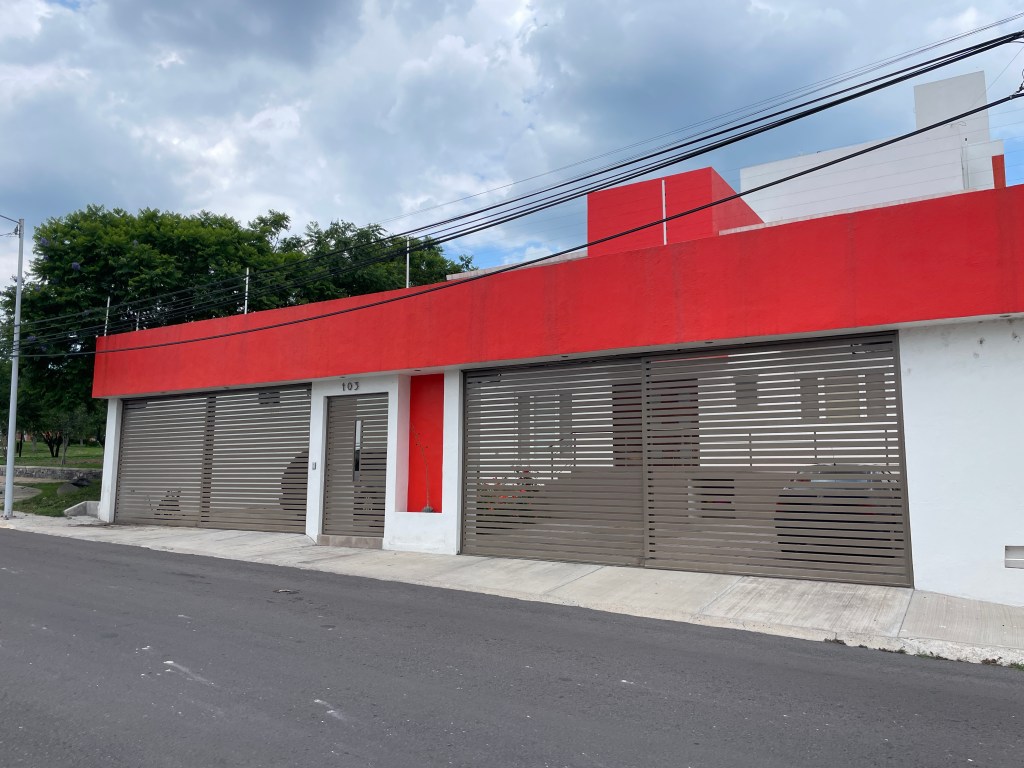
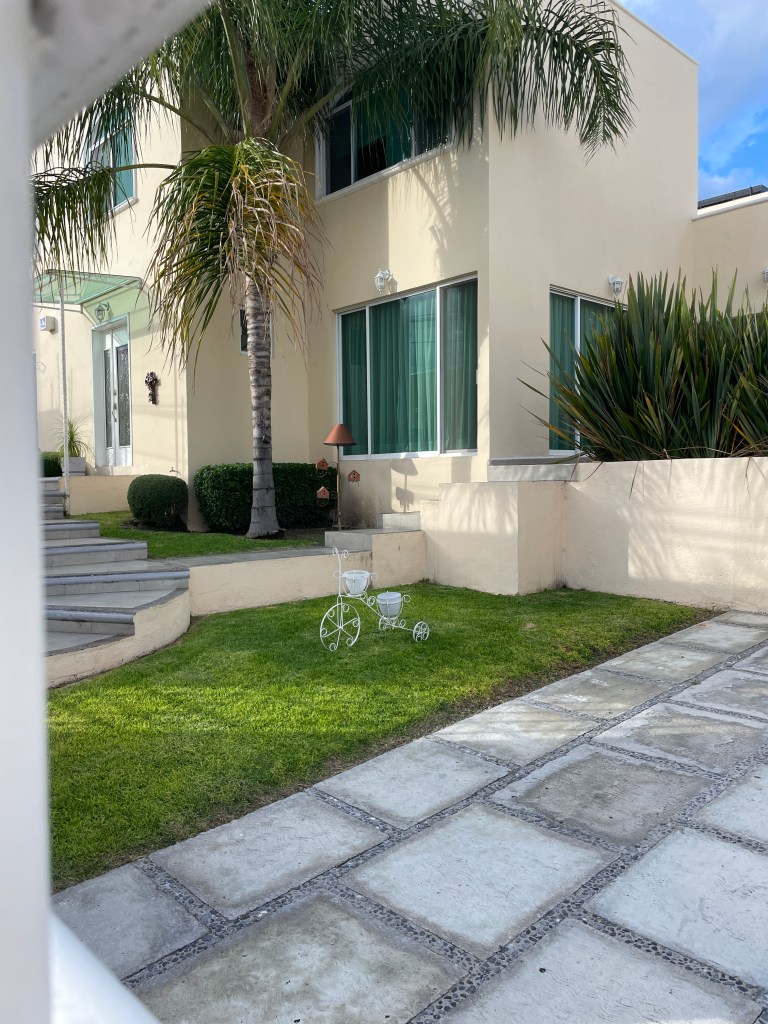
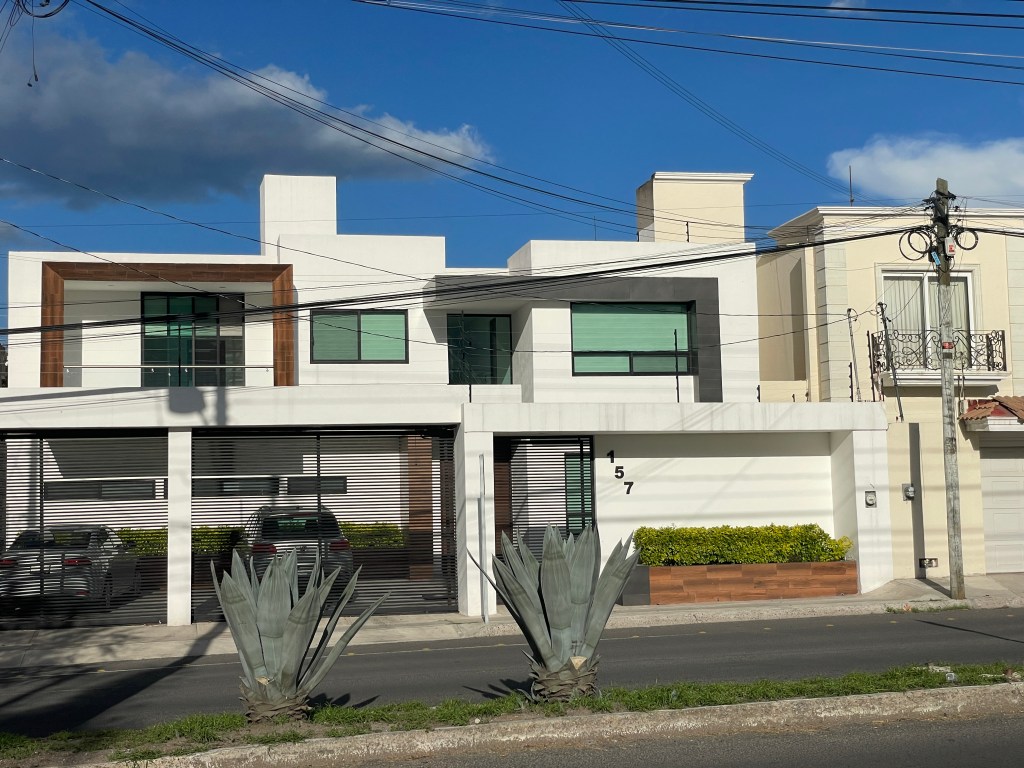
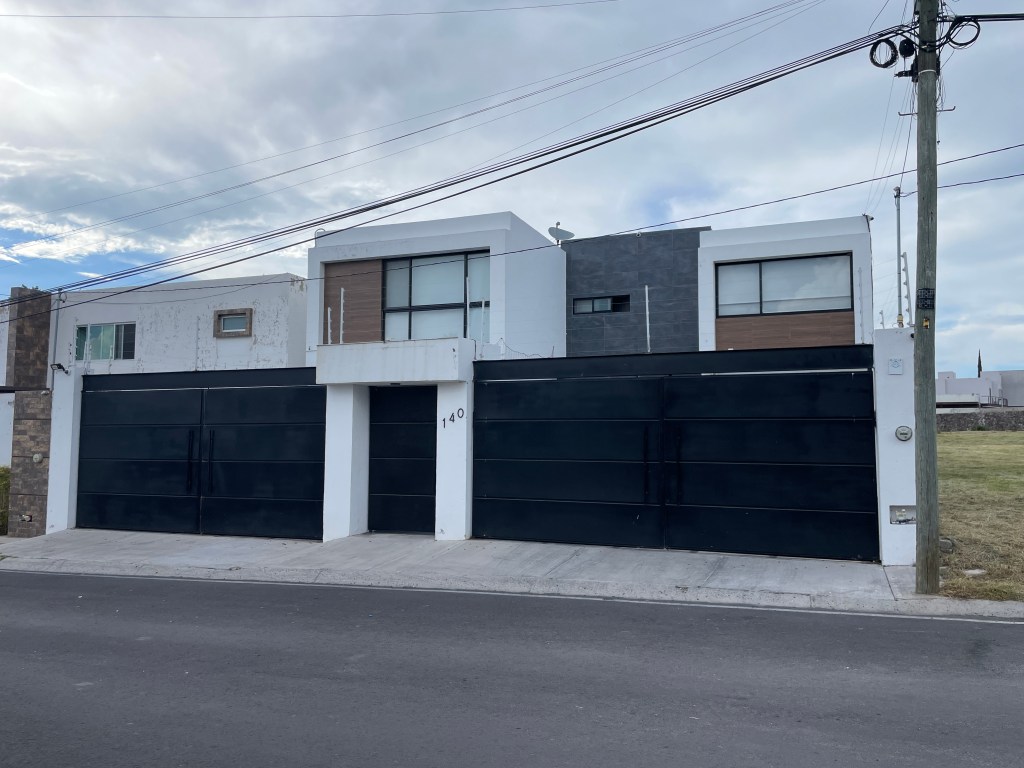
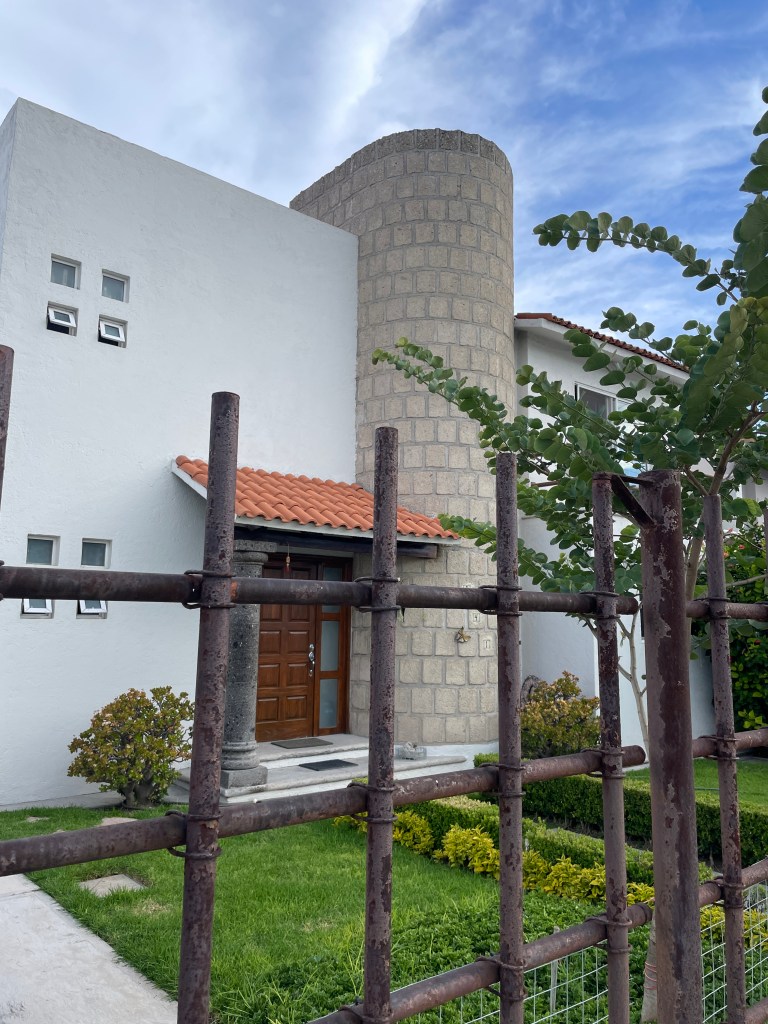
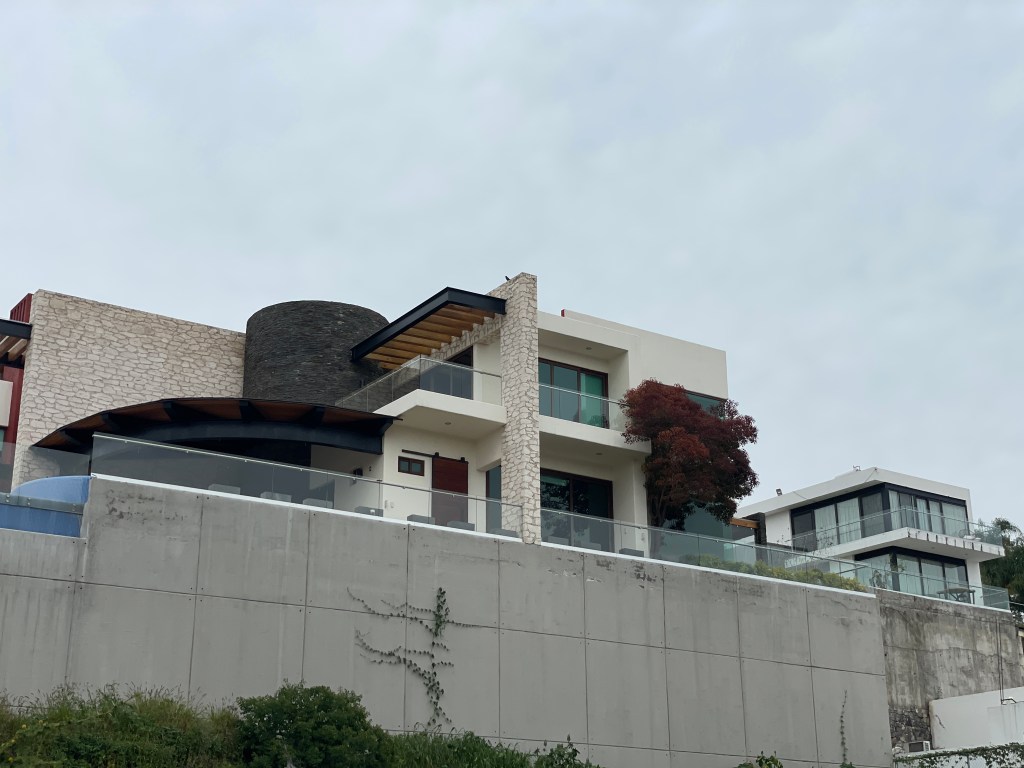
One of the things that surprised me when I moved here was the very modern architecture where I am living and the high standard of living. I had only visited Tijuana before where I visited neighborhoods with Barbarita which were composed of houses created by old garage doors so I wasn’t sure what to expect but I can guarantee you that this wasn’t it. Of course, Juriquilla is a suburb of Queretaro and most of it is shiny and new. Parks and plazas are everywhere. This doesn’t mean that there are not places in the city where housing is not in dire straits but since I believe many people think that Mexico only consists of sub-standard housing I wanted you to see the other side. So here are some pictures of the area and a few houses in different parts of the state too. I will miss this place. I will miss my neighborhood strolls. It is almost time to leave and I will leave a piece of my heart here. Enjoy!
Here are some other houses located in the State of Queretaro
And here is the local dog walker in the local park with his charges….
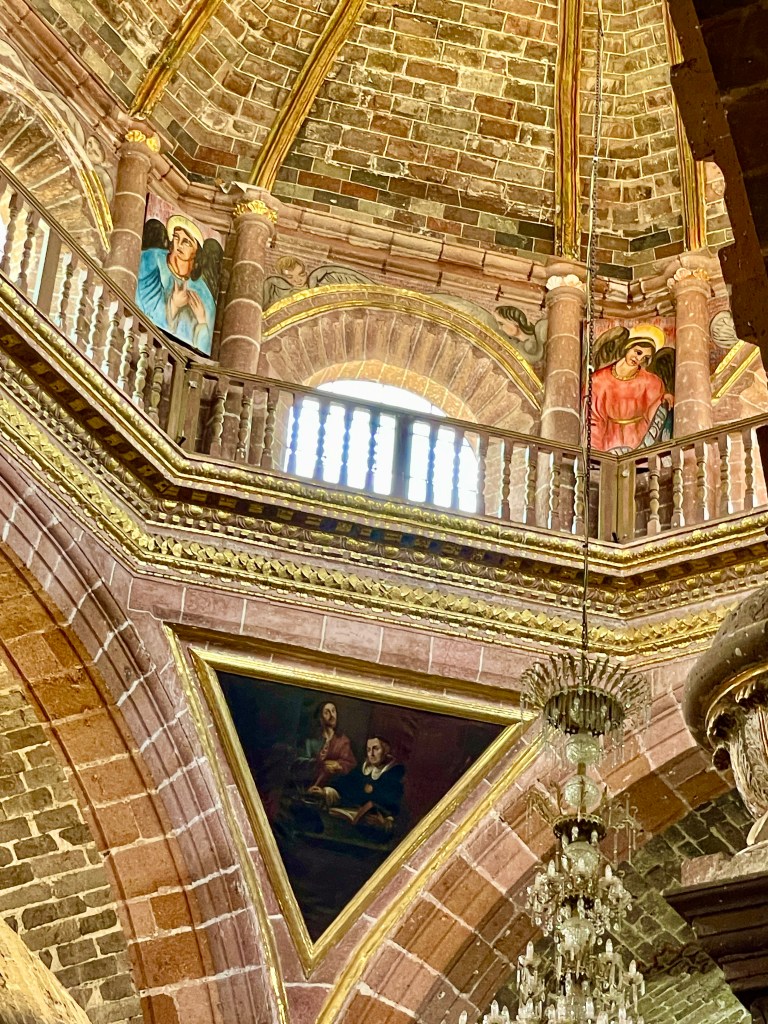
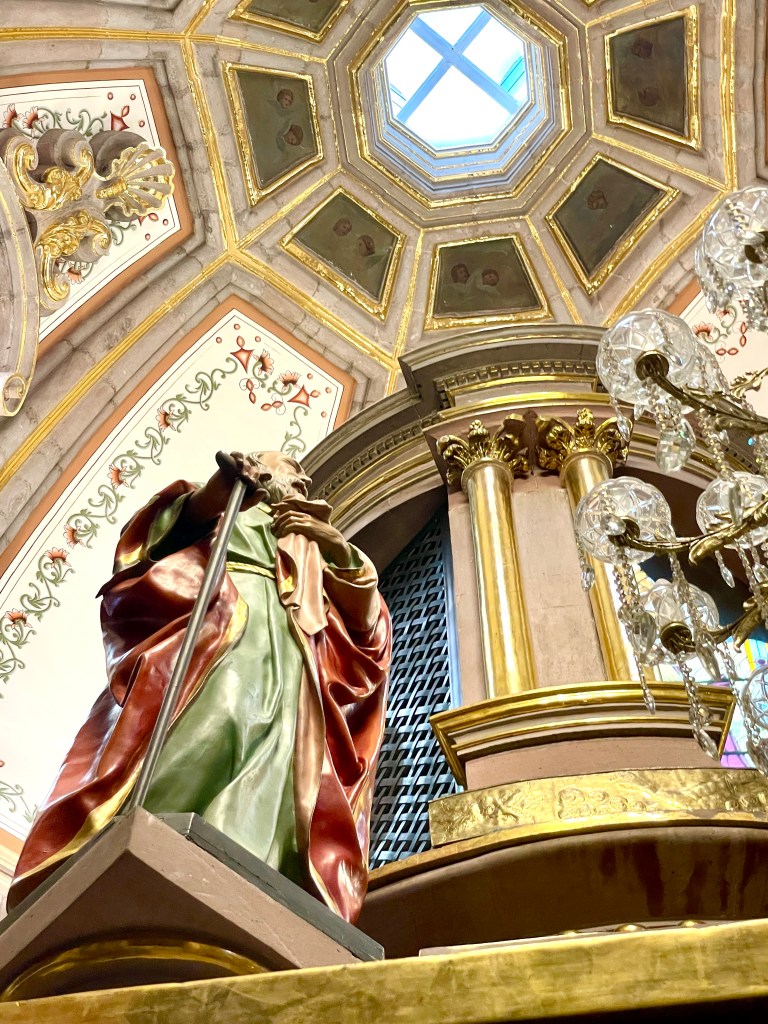
I have been to so many churches since I arrived here. I love the architecture that these old buildings possess. The artwork, murals, painted ceilings, and biblical depictions are all inspiring (okay, a few are frightening) and help us have an insight to those things that drew people to the Catholic Church in earlier times. The thick walls of the church also provide a respite from the heat and also from life’s troubles. Perhaps what I enjoy the most though is just walking in, sitting down, and listening to the music and the chants echo off the walls of the sanctuary. It gives me a sense of peace and serenity that I can carry with me the entire day.
Parroquia de San Miguel Arcangel- San Miguel Allende
With over 40 churches in San Miguel it is difficult to choose a favorite but Parroquia de San Miguel Arcángel is definitely the most well known and perhaps the most beloved of area residents. Towering over the city, the construction of the church began in the 1600’s under the auspices of the Franciscan Friars, after a smaller church from the 1500’s was demolished. The building is a surprising blend of different Neo-Gothic European influences and the resulting Spanish colonization that swept over these lands. This immense church was completed in stages at various points in history but it was when a local master stone mason, Zeferino Gutierrez, began construction of the current facade in 1880 that the Neo-Gothic architecture was put into place. Gutierrez had no drawings to guide him and he designed Parroquia de San Miguel Arcángel after seeing pictures of the great cathedrals in Europe. To think that one man had such vision as to be able to change the entire feel of a city just amazes me.
The interior of the main building is vast. Yet, there are several different less imposing chapels including the Chapel of the Third Order with frescoes throughout which depict the life of St. Francis of Assisi.
The Chapel of the Third Order
Across from Parroquia de San Miguel Arcángel is a city plaza with tall shade trees and park benches. It is here that you can truly feel the vibe of San Miguel and absorb the influence of the city and the locals who surround you. So take a load off…sit…listen to the church bells ring across the valley…and let yourself sink into a nation that still reveres its history and the people who still help to influence it today.
Basílica de Nuestra Señora del Pueblito
Another Church that I fell in love with was located in the town of Pueblito and is known as the Basílica de Nuestra Señora del Pueblito. It is the church that I mentioned in my post about El Cerrito, The Pyramid of Pueblito, and it is the one that you are suppose to be able to hear the sermon from the pulpit all the way up the hill.
This church is much smaller then the one mentioned in San Miguel and it has it’s own special kind of charm that is quaint yet powerful which is evidenced by the faithful who attend daily mass.
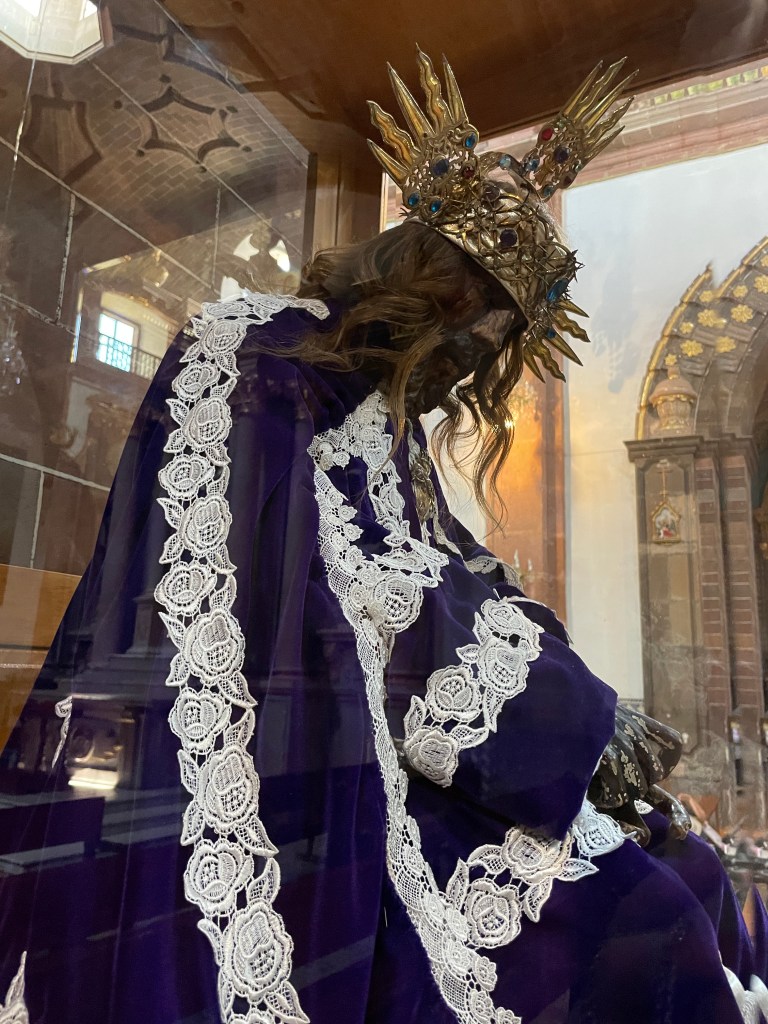
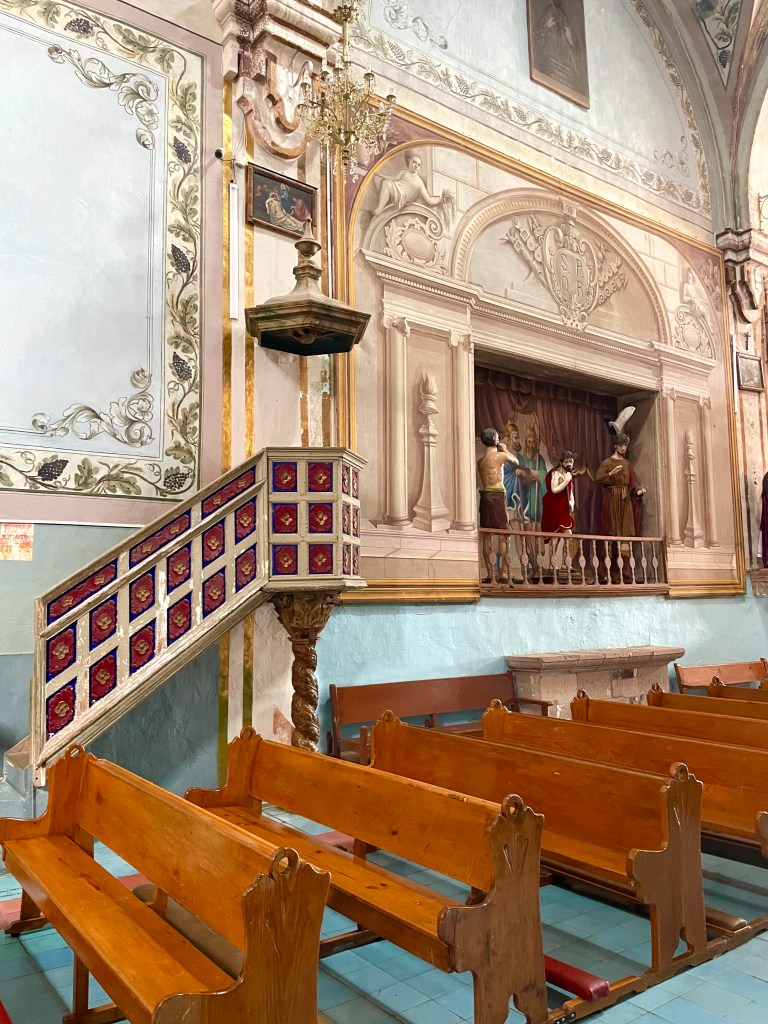
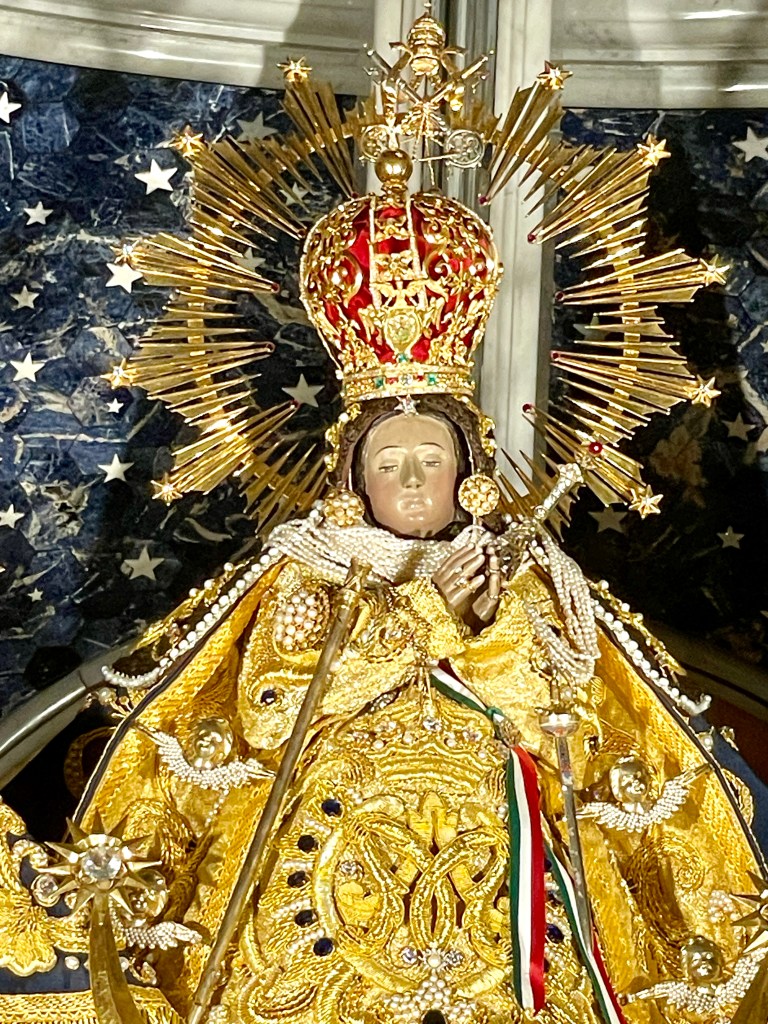
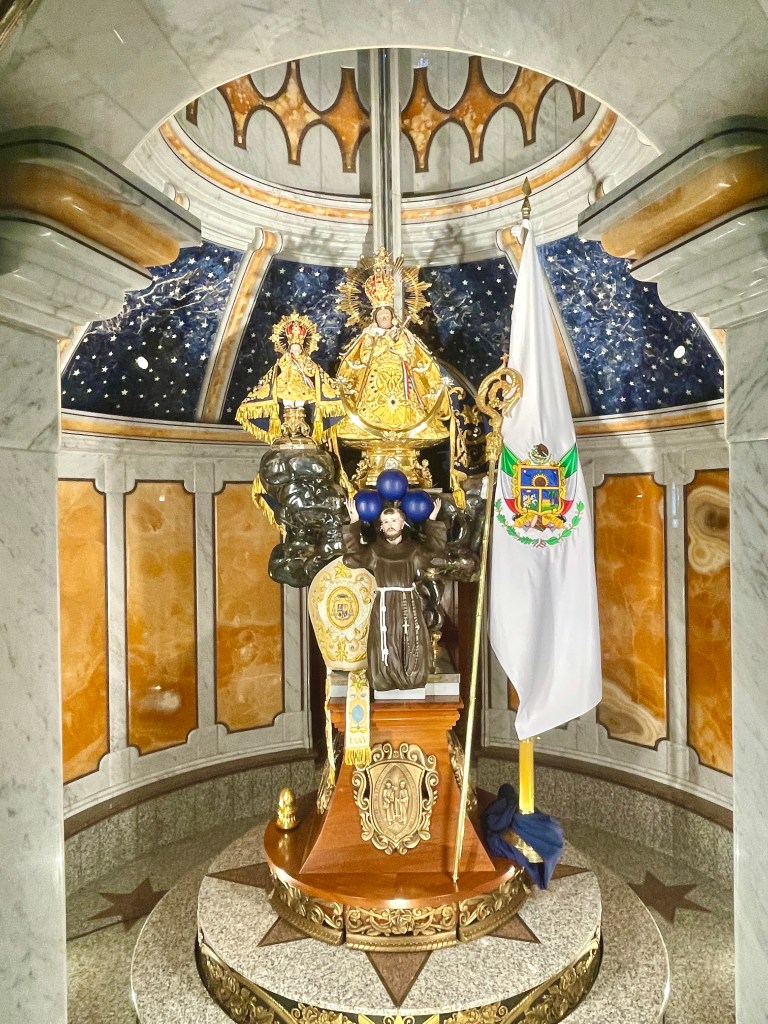
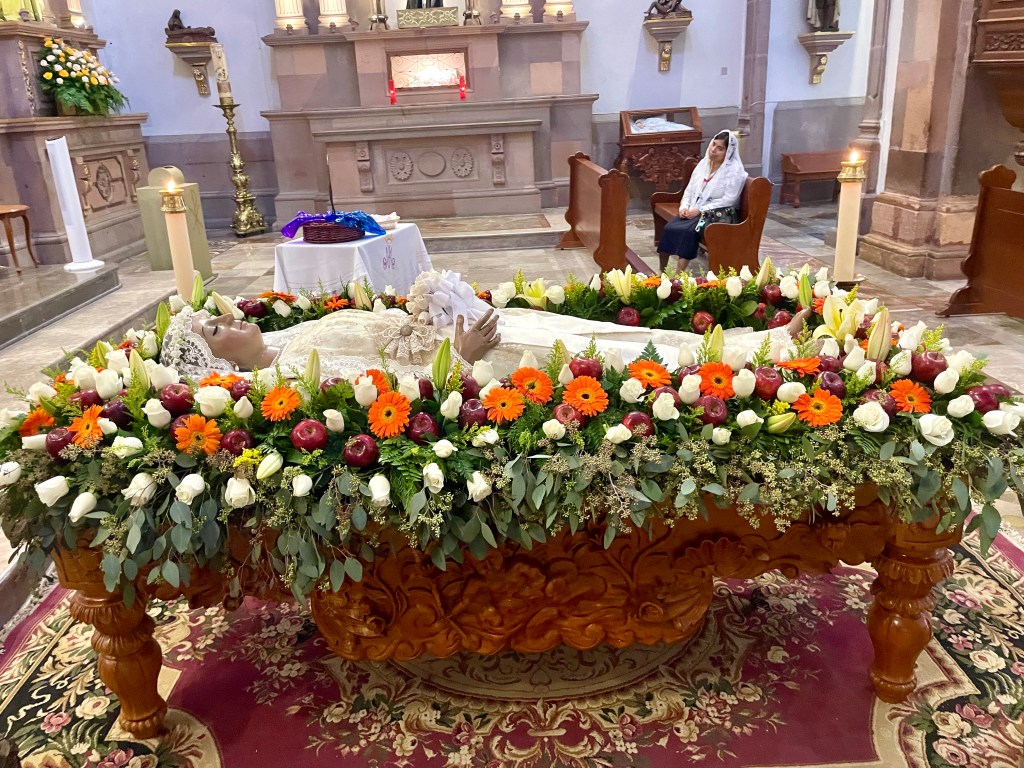
Basílica de Nuestra Señora del Pueblito had its beginnings in 1632 when Friar Nicolas Zamora placed the image of Immaculate Conception near the temple where he built the first adobe structure to house her. Approval for the present day building was granted in 1720 and construction was completed in 1750. Religious festivals for Mary are mainly celebrated in mid-February when the town comes alive. However, when we were there last week, the life-size body of the Virgin, was displayed below the altar where the faithful believed that the next day she would be lifted up to heaven.
While small this church has so much to see and admire its the people whose dedication impressed me. When we were there a painter was hanging off a ladder busy painting the nave while services for the Virgin were ongoing during this week of celebration and the church was being cleaned top to bottom.
I think one of the things that made me aware of the dichotomy of past times and the modern demands of today was this sign I spied within the inner courtyard of the church. I will admit I chuckled out loud. I hope you enjoy it and a smile graces your face too.
One of the few temples to survive within a major city is El Cerrito or the Pyramid of Pueblito. Built over 3,300 years ago it is a testament to the wisdom and knowledge of the ancient people of this area. I was lucky enough to visit it early this week.
El Cerrito has a long history as a religious site and complete with altars and various ceremonial buildings. It is believed that a female deity was worshipped here. One of the plazas on the site, known as the Sculptures Plaza, had two alters one on the west and one on the east sides. Human skulls were found here along with pottery from ancient sites located throughout Mexico. Believe it or not, this was once a very colorful place decorated with highly pigmented colors of red (roja), yellow (amarillo), and blue (azul).
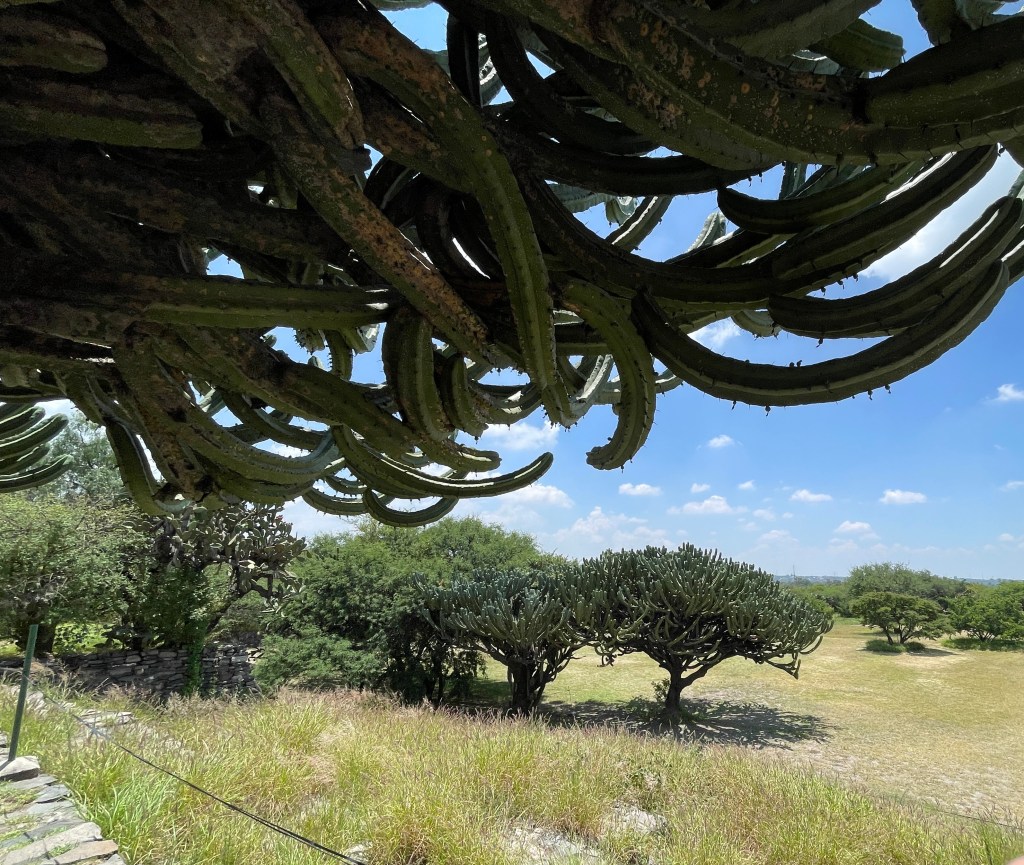
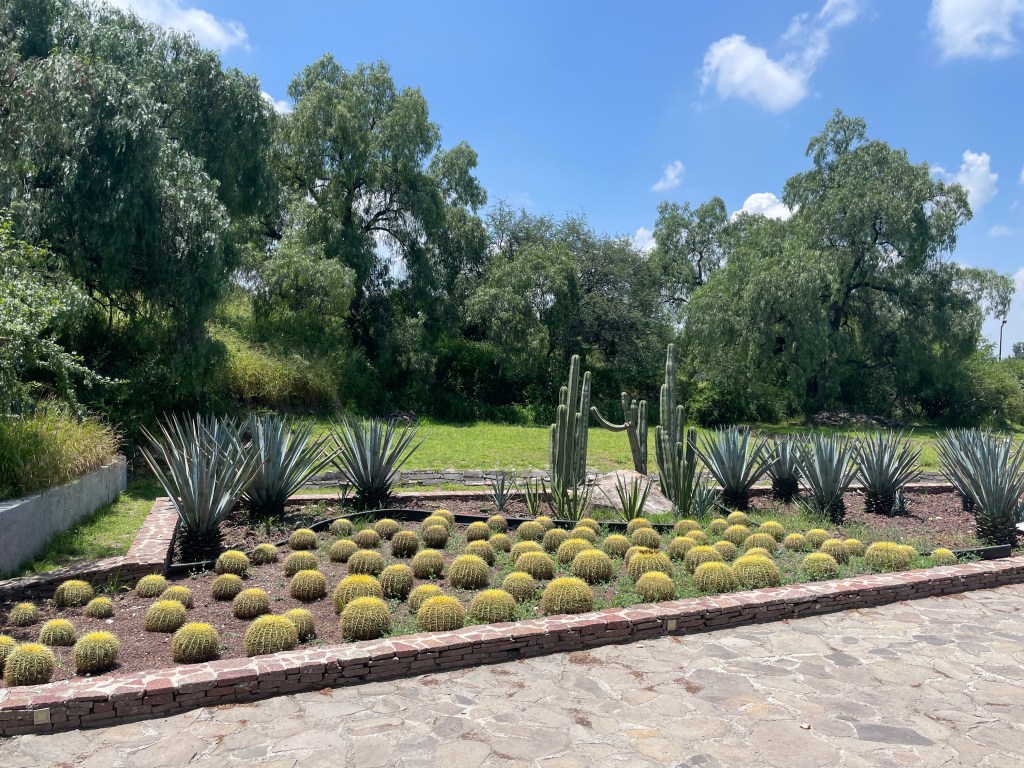
El Cerrito itself was constructed as a step pyramid and was built to resemble a mountain. Unfortunately, it will never be known how tall the temple originally was because in 1887 the Fernandez family built a house at the top of a “hill” shaving at least 2 meters off of the temple. The house was named El Fortin and it remains abandoned at the top of the structure to this day. One cannot blame the Fernandez family for building on top of this important archeological site; for El Cerrito was buried under tons of dirt and covered by trees for centuries until 1941 when the main walls were discovered and work began to preserve the pyramid and try to understand it’s historical importance. And with the very old immense cactus trees that can be found all over the property it is understandable why the temple was hidden for so many years.
For me one of the most amazing things is how the temple is strategically located in order to take advantage of solar alignments and the acoustics of the valley. For instance, as the sun moves across the horizon a beam of sunlight reaching the basement creates a visible sundial on the wall while an analemma pattern is created on the floor which dictates the sun’s seasonal and everyday paths. In spring the equinox creates a time and place where the sun’s beam goes past the vertical sundial and reaches a boundary that lies between the blue and orange tiles on the wall announcing the arrival of the equinox. Further, sound travels directly from and to the temple from the small hamlet of El Pueblito and it is said that you can hear the Catholic priests recite mass.
The Mexican and local government have worked hard to preserve this ancient treasure and there are beautiful walkways and an amazing visitor center on the grounds. The entrance fee is minimal and there is inexpensive parking nearby. This is definitely a great day trip and I would recommend hiring one of the guides whose knowledge of El Cerrito is vast as well as entertaining. Here he is demonstrating to us the echoes of our clapping as they disperse into town.
Historically, a hacienda is a huge estate brought to this area through the effort of Spanish Colonization. These vast tracks of land covered entire valleys and were responsible for agricultural enterprises and often the forced servitude of indigenous peoples. Today, many of buildings have been turned into upscale hotels and restaurants which are amazing to visit. I have been to a couple since I arrived and today I am going to share them with you.
Hacienda Laborcilla
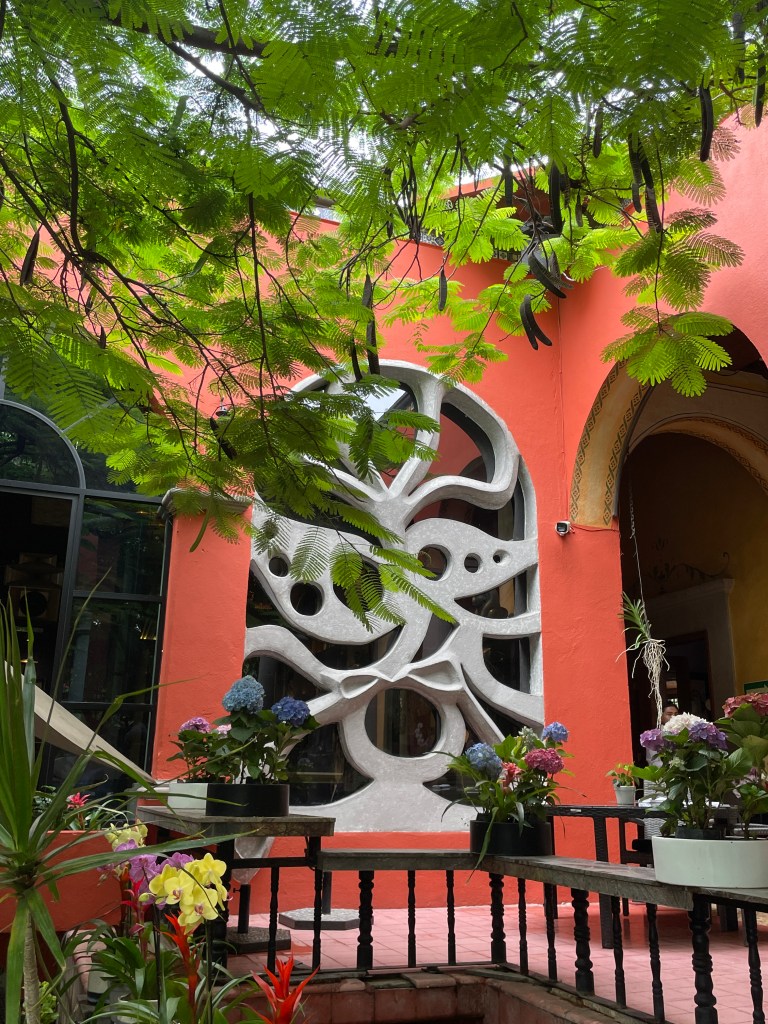
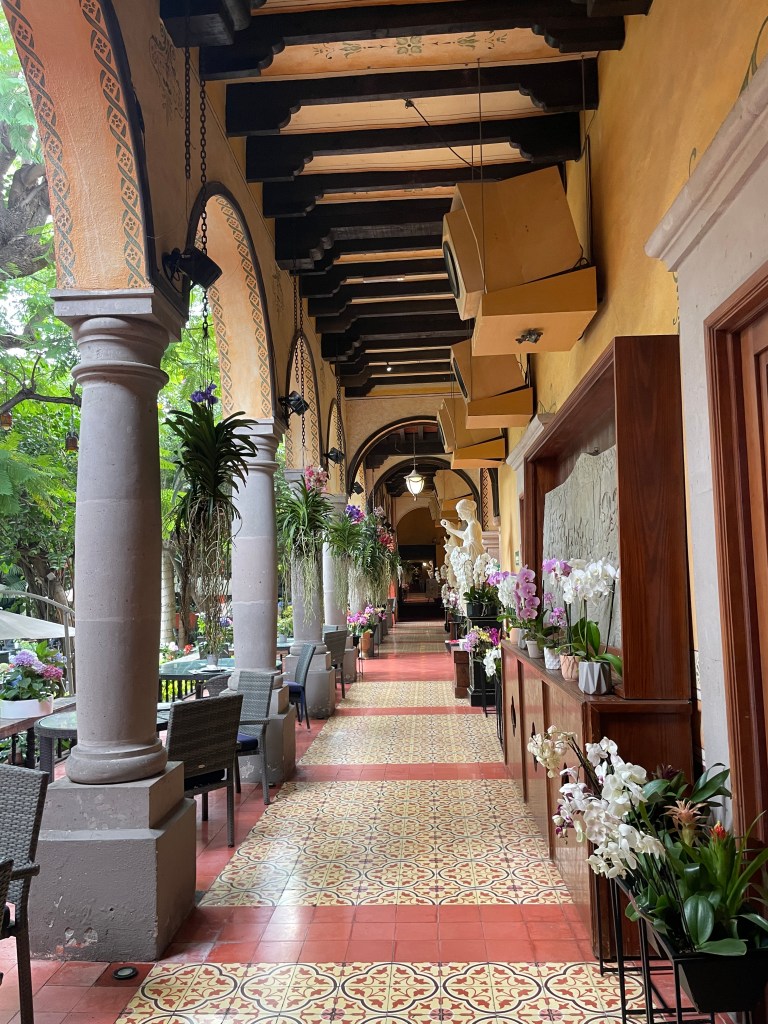
Nested in the heart of the city of Queretaro; Laborcilla literally took my breath away. Built in the 18th century the hacienda once served as a main house for the family, a school, and even an event hall over the years. Now open to the public as a grand restaurant, the food and the atmosphere are simply magnificent. The gardens are drop dead gorgeous and the menu is divine.
I have to tell you that coffee here in Mexico is truly remarkable and when you order juice is it always fresh squeezed. It is an amazing way to start your day… combined with the basket of fresh pastries that was brought our table almost immediately upon being seated.
For breakfast I had enchiladas suiza which were filled with chicken breast and cheese topped with bacon. It was an amazing desayuno.
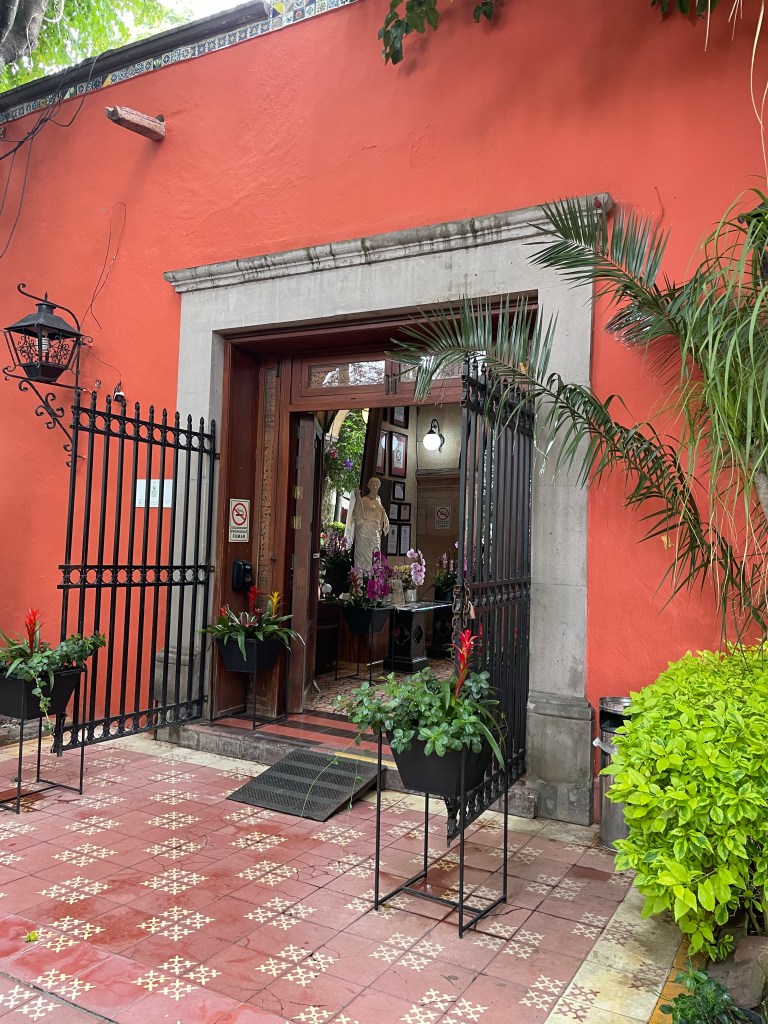
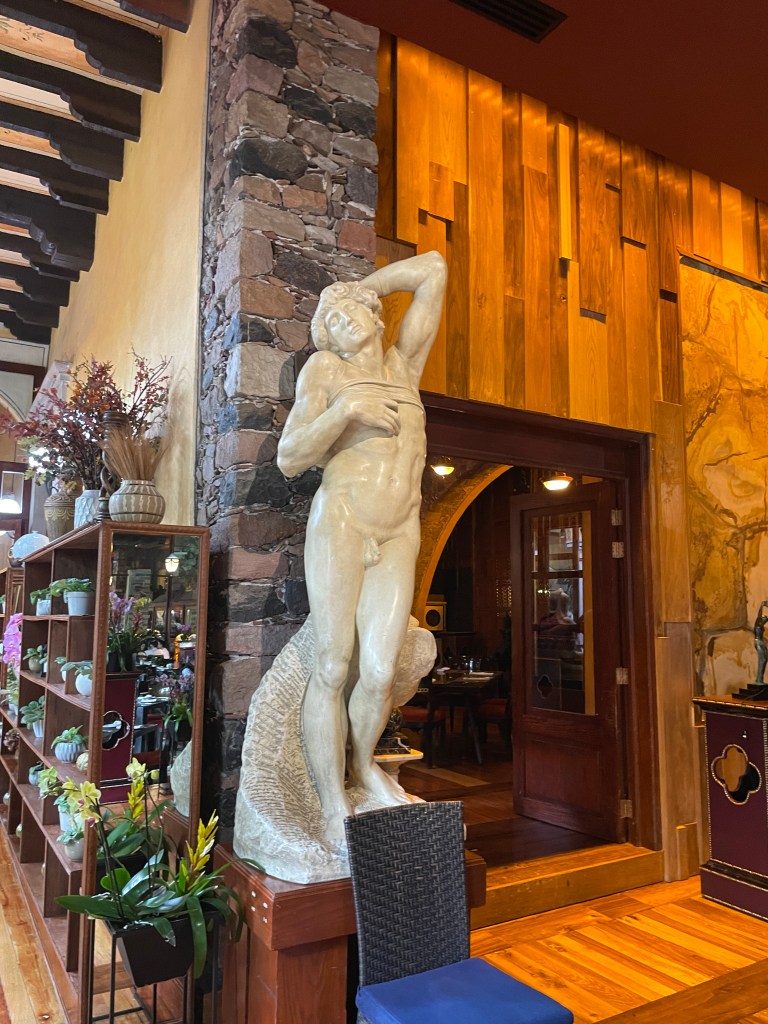
But while the food was excellent I will have to say that it is the atmosphere that people come here for. It is a place you will never forget and stunning doesn’t begin to describe it. There are orchids everywhere and butterflies float around your table as your eat. Here is the first impression upon entering.
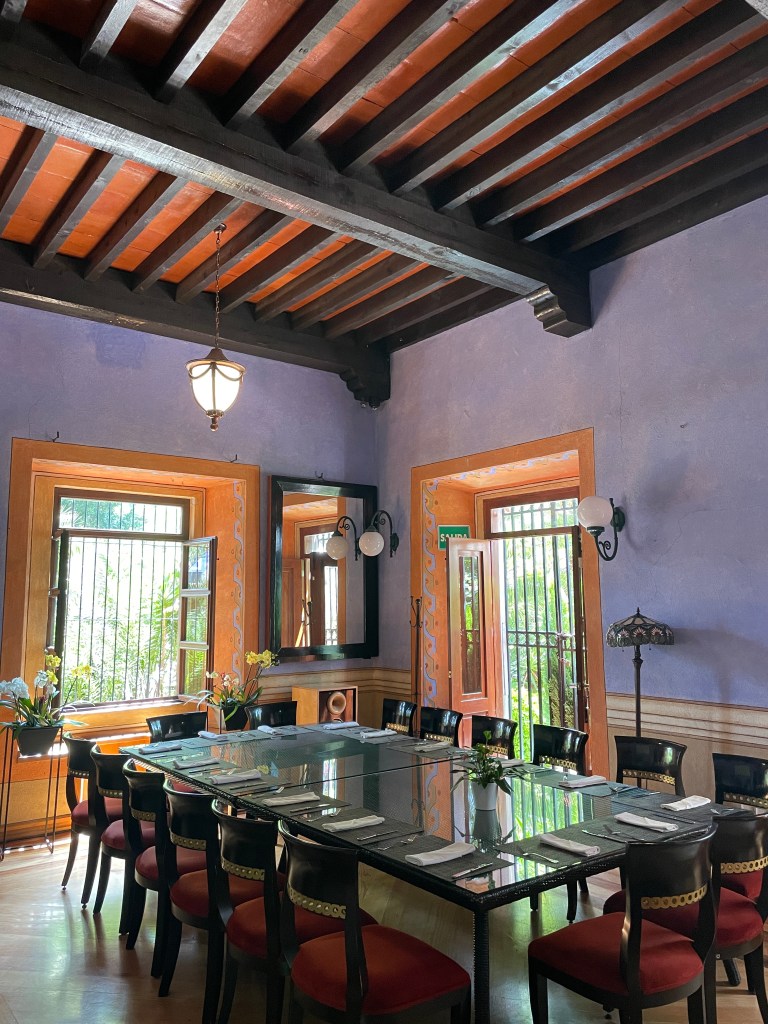
There were many themed dining rooms throughout Laborcilla and all were amazing to step into with gorgeous Asian, Egyptian and Greek Antiques, as well as reproductions, in every nook and cranny. Just so much to feast on with the eyes and not enough time.
Here is a short video of the Club Room
What I learned from this experience is always say !!!!YES!!!! when someone invites you to breakfast in Mexico because you never know what wonderful things await you.
THE HOTEL MISION GRAND JURIQUILLA
The first former hacienda I visited is now a grand hotel called the Hotel Mision Grand Juriquilla. It’s another 18th century hacienda which has been beautifully restored and now houses a hotel and restaurant. With a historic church on the grounds and landscaping that makes you want to hire their head gardener, Hotel Mision is a place that you can easily call home when traveling. Take a look for yourself.
I have been told that there are so many beautiful historical haciendas throughout the country that I am thinking that I might just make it a goal of mine to visit each and every one. With so much charm and the fact that these amazing buildings just ooze history; visiting a hacienda today is like a trip back in time combined with the elegance of today, which, makes visiting these historic sites land at the top of my bucket list while in Mexico.
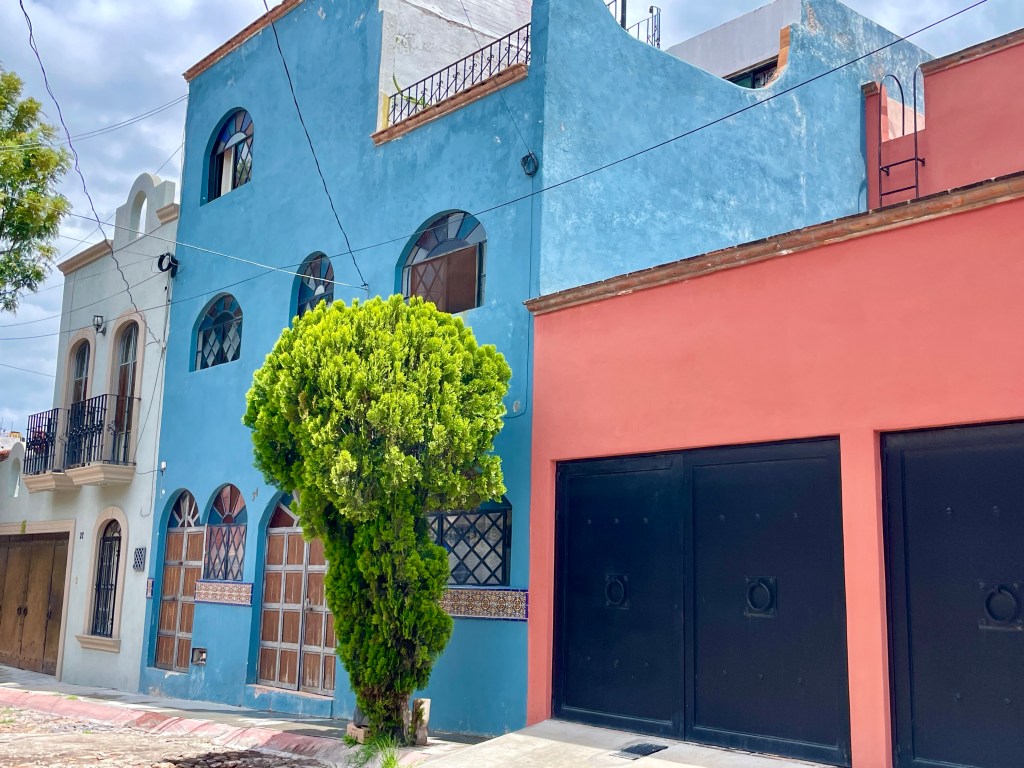
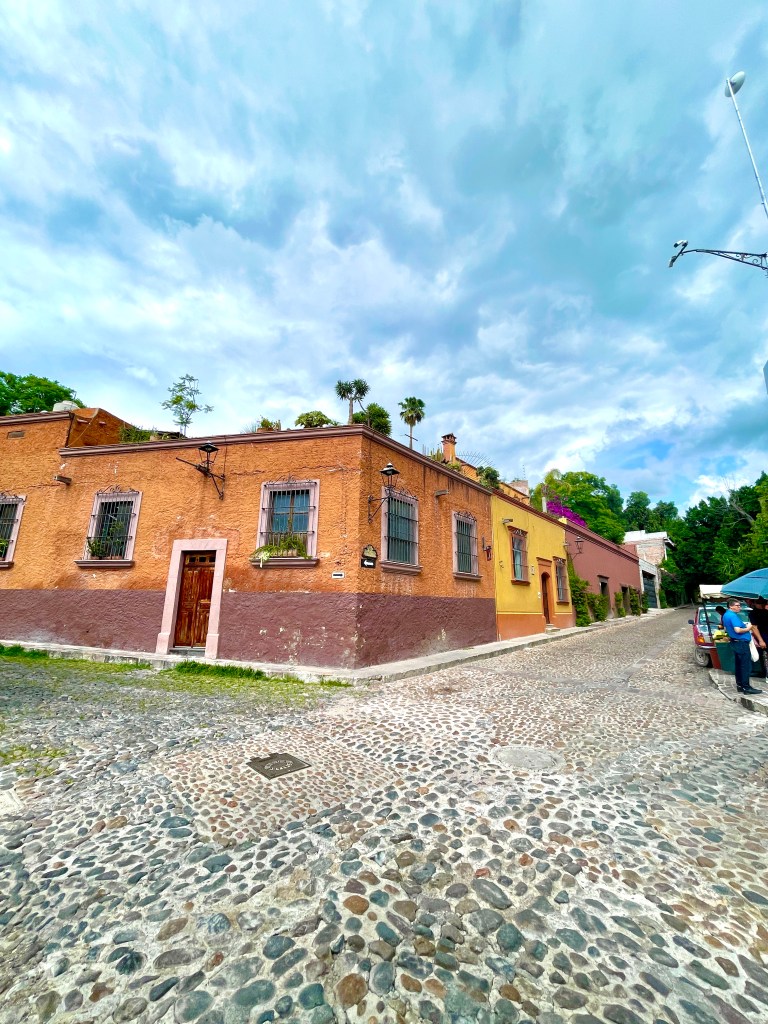
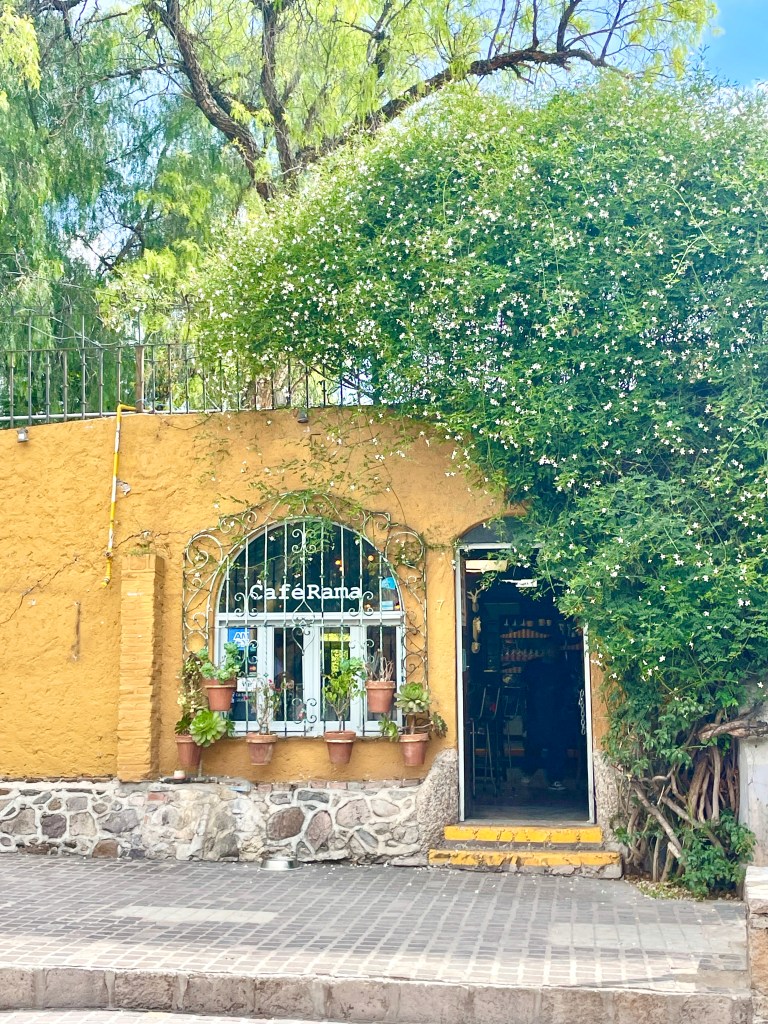
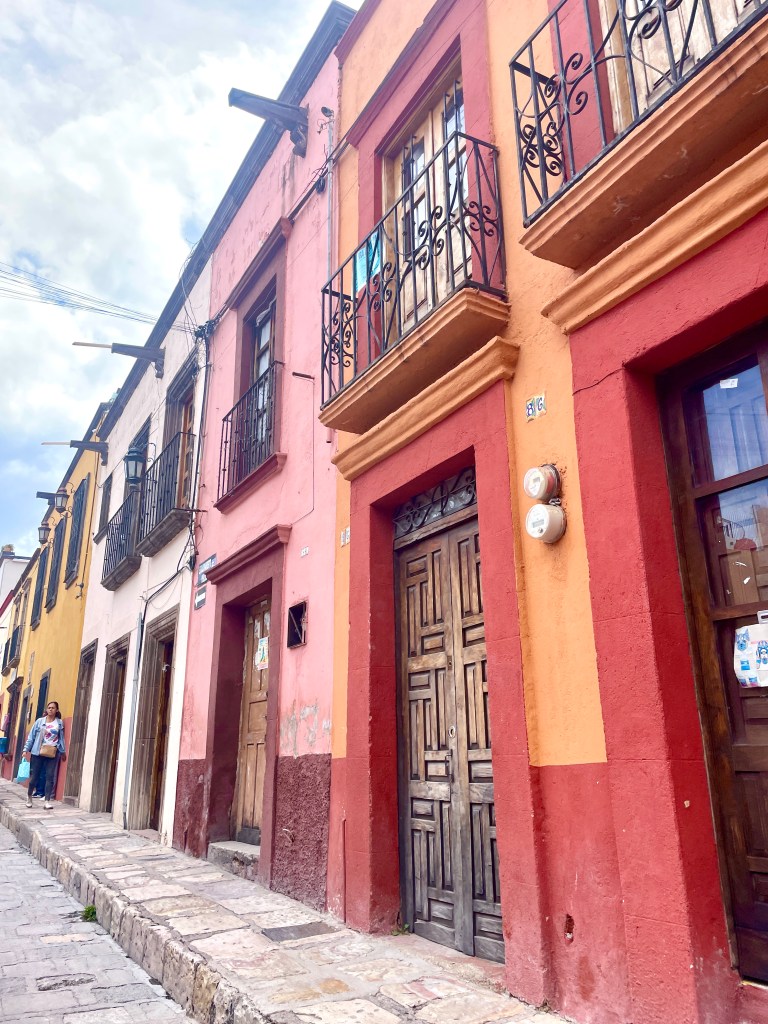
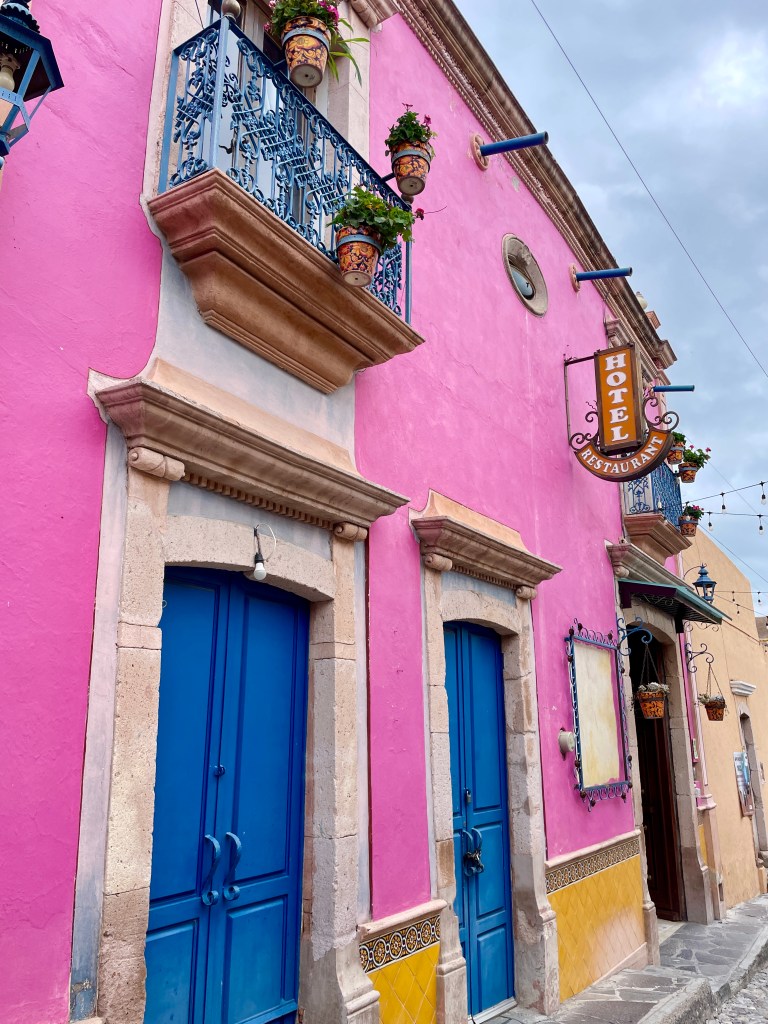
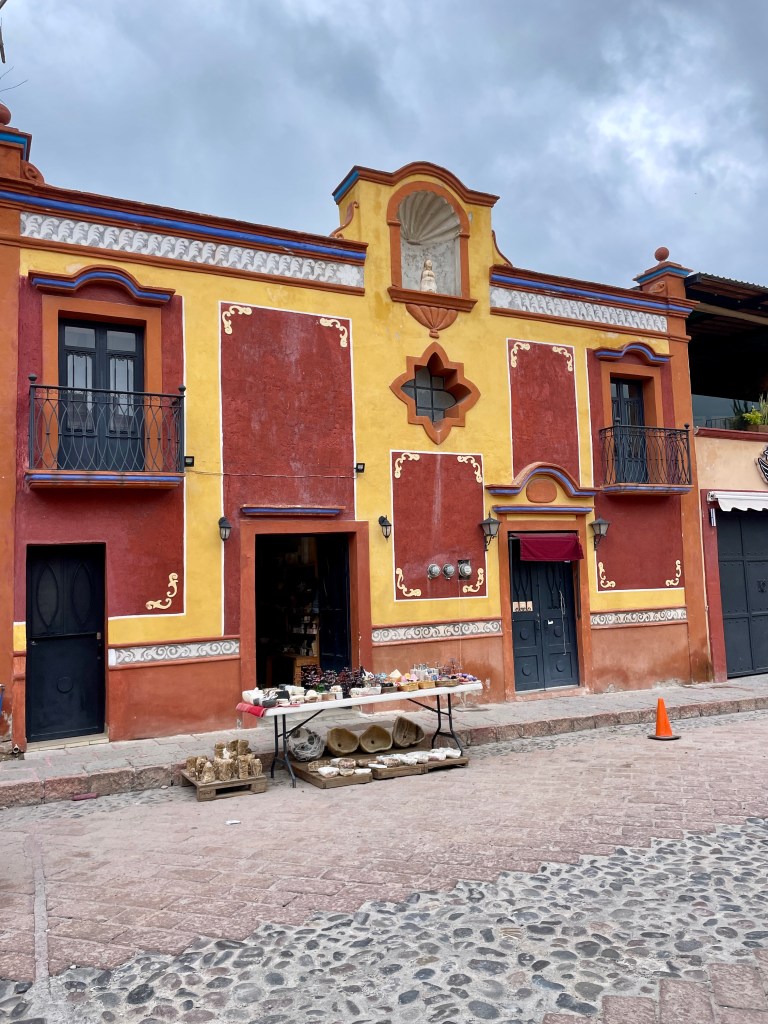
One of the things I love about Sam Miguel is the cobblestone streets and the brightly painted homes.They put a smile on your face and make your day feel like it will be nothing less than spicy and sunny. It is just fun to drive and look around town and see the various neighborhoods..
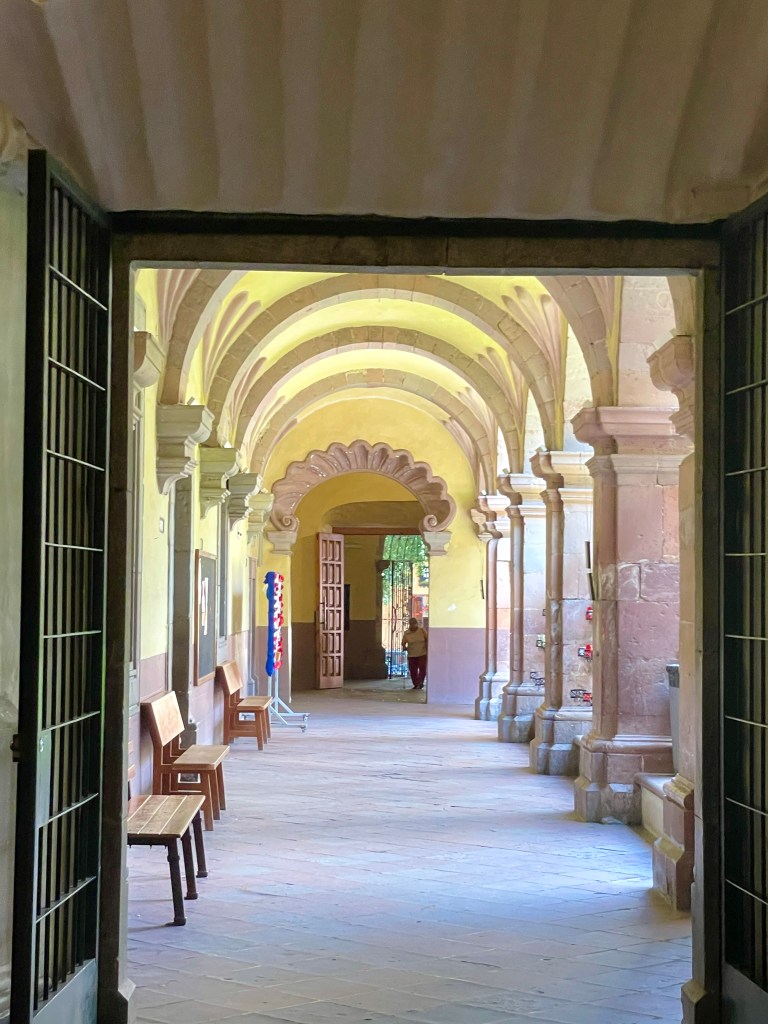
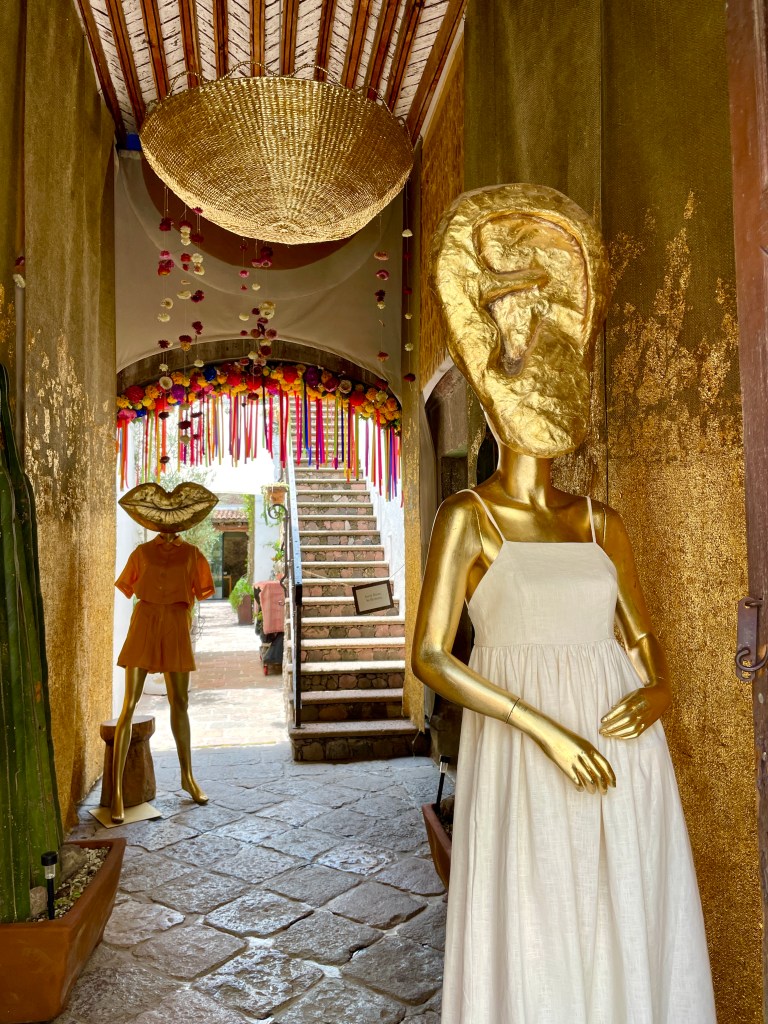
One of the places we ducked into was the Cultural Center and I have plans to re-visit it so I can get a full tour of all that lays within its stone walls. But for now just some lovely photos to give you an idea of the place.
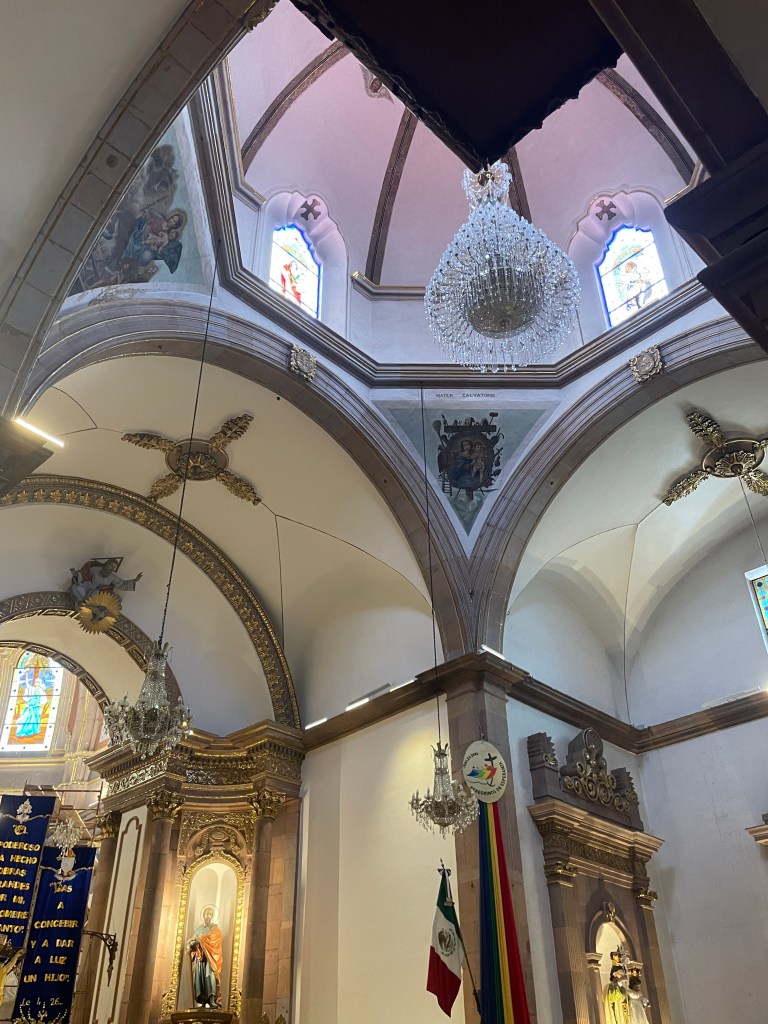
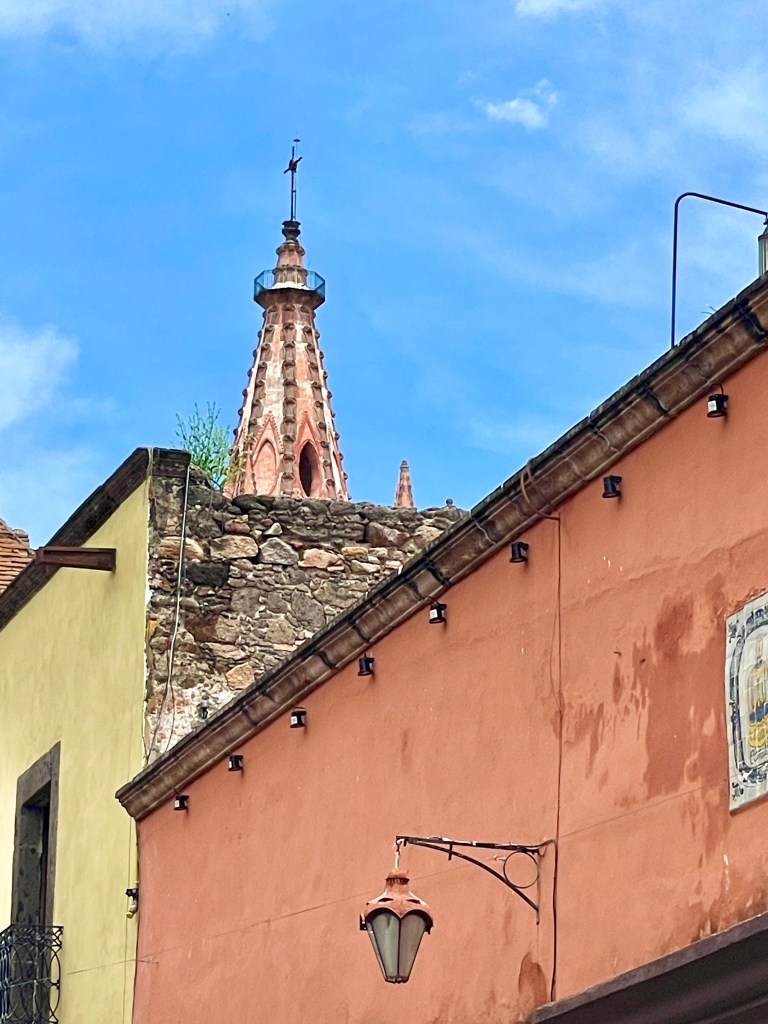
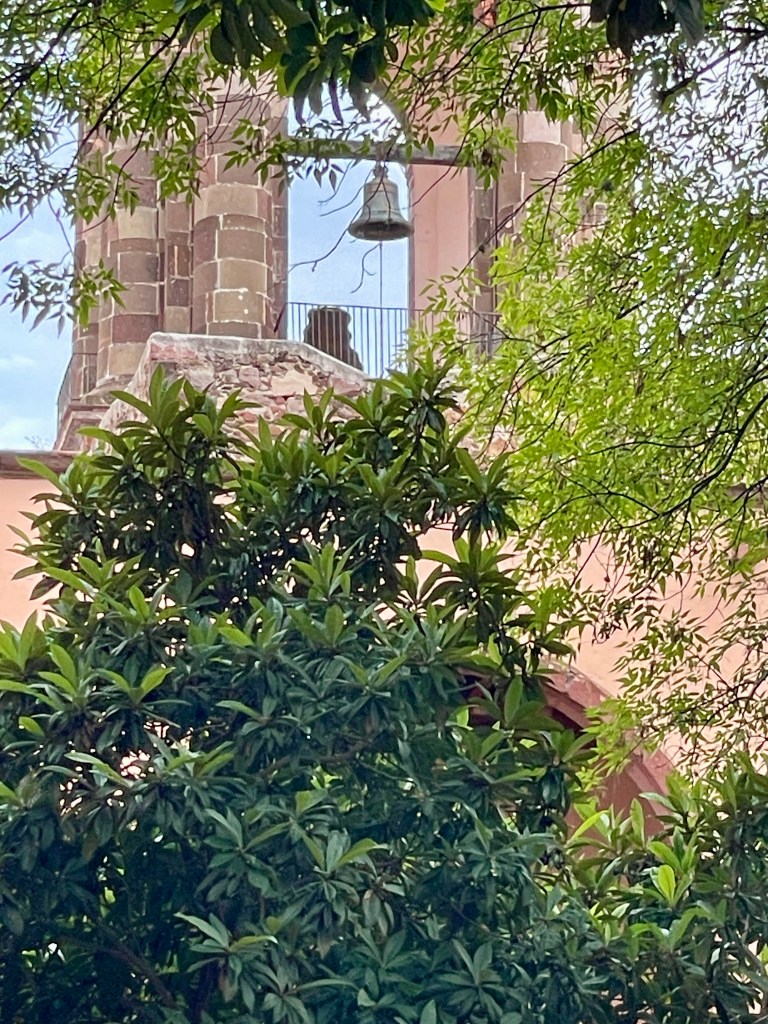
I love visiting the churches and seeing their rounded domes or tall spires no matter where I go. But here in San Miguel there is something about that type of architecture that just reaches in to connect with your very soul.
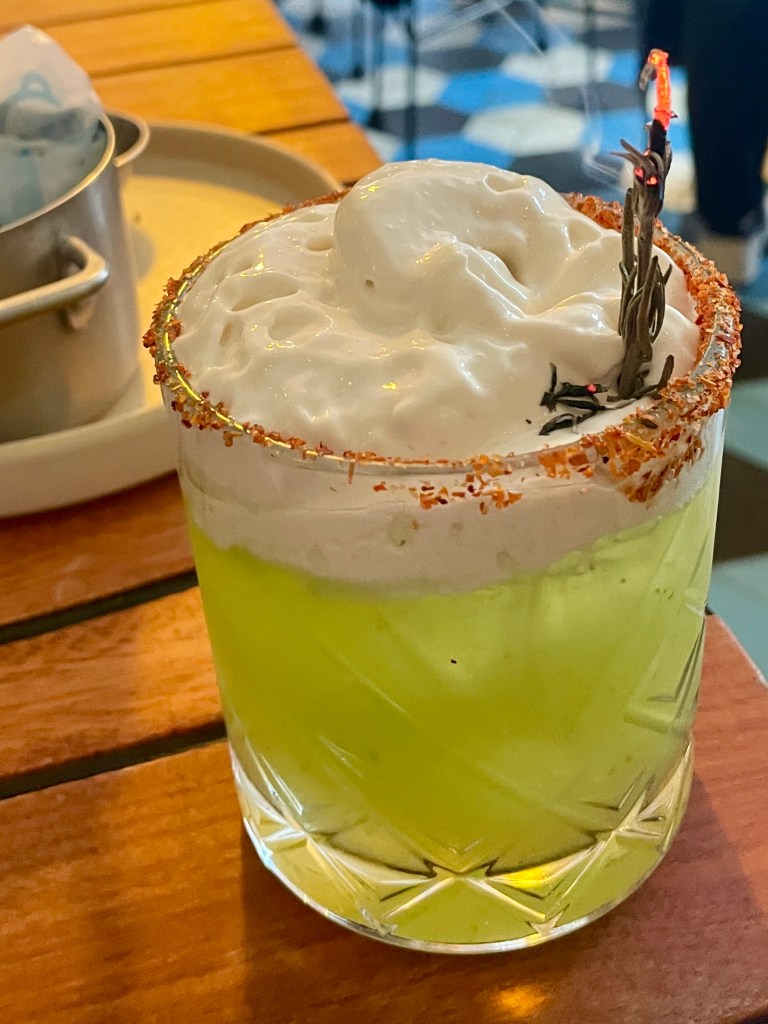
For lunch, Denise took me to this tiny hole-in-the-wall restaurant named Tostevere that served excellent food. The tostadas tasted different than any I have had before….smooth. How a tostada can be smooth with a hint of salt I have no idea…but it was. And the bananas foster dessert with homemade fresh fruit ice cream (maybe guava) topped with lime was amazing. But perhaps the most interesting thing that I had was the Smokey Mezcal which is brewed from the agave plant. The drink was concocted from several juices including cucumber, topped with fresh whipped cream, lime salted rim and then lit on fire with a pice of smokey sage. Sorry, Grandma…I had two!
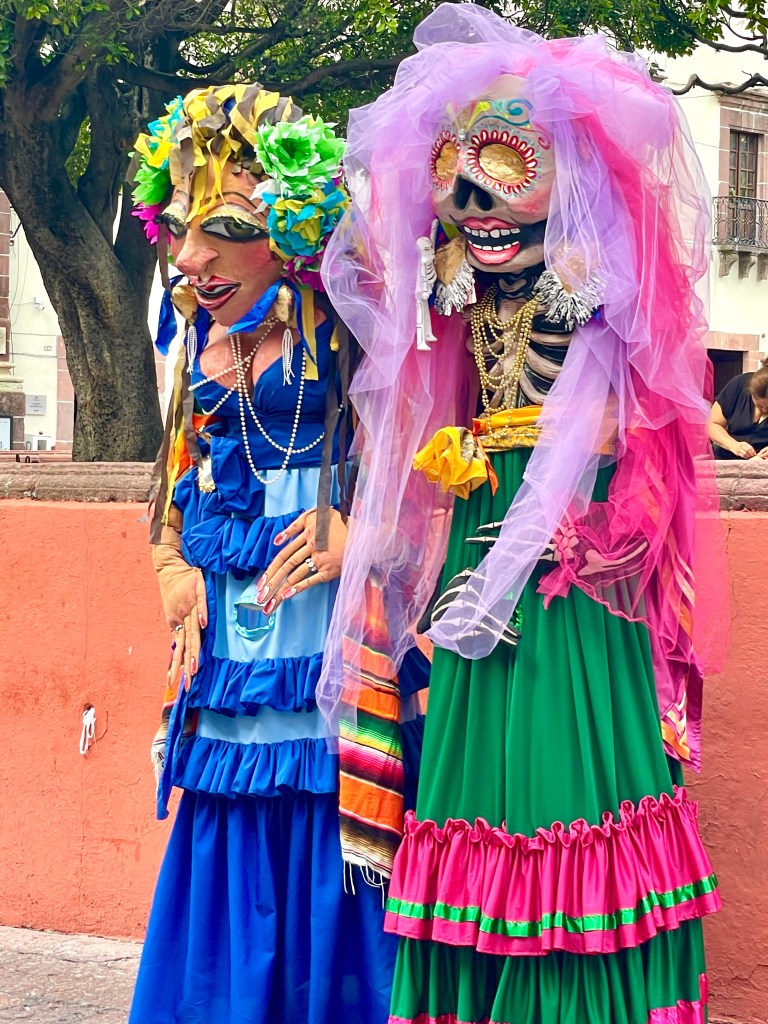
Walking through the town is an experience that you won’t forget. Undoubtedly, you will see Mojigangas, the street puppets, who stroll the town. A few pesos is all it takes to have your picture taken with them. Quaint shops, wonderful food, warm people, lovely outdoor spaces and music that makes you want to get up and dance…these are just a few things you will take away with you when you leave this amazing enclave. And speaking of leaving… I now leave you with some of my favorite pictures of the day including more art, the ring I bought from a jeweler in the park and my $15 ride home on the bus. Wish an airplane was as comfortable as that bus!
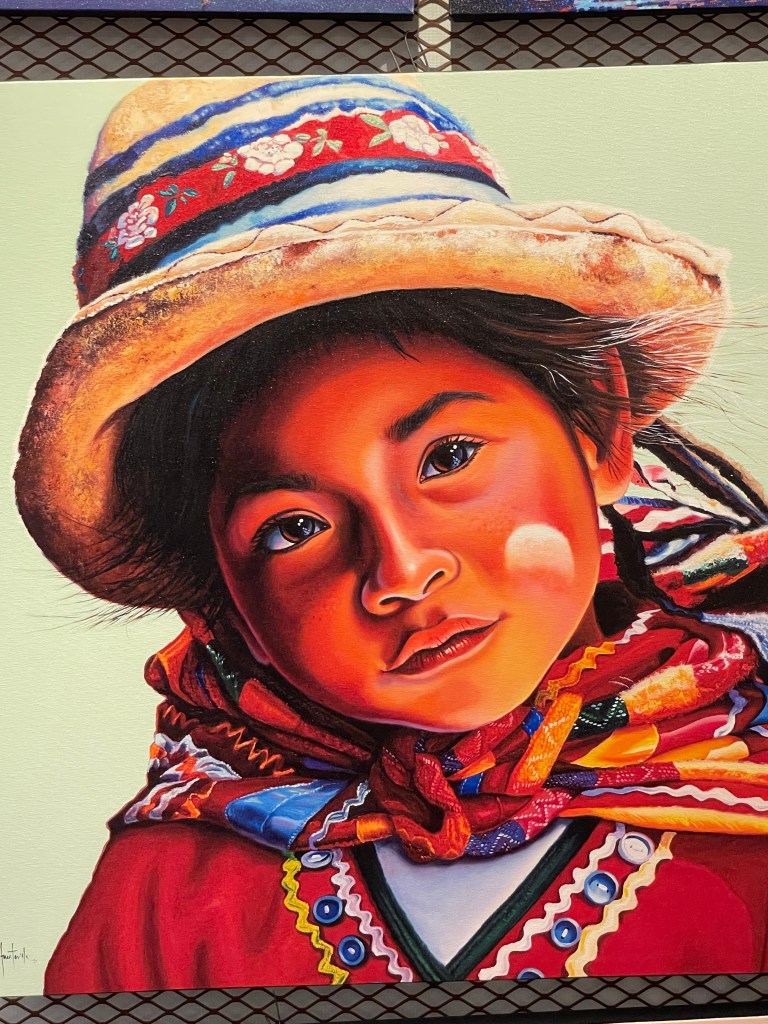
If I could afford it, this Roberto Fuentevilla painting would hang in my future living room
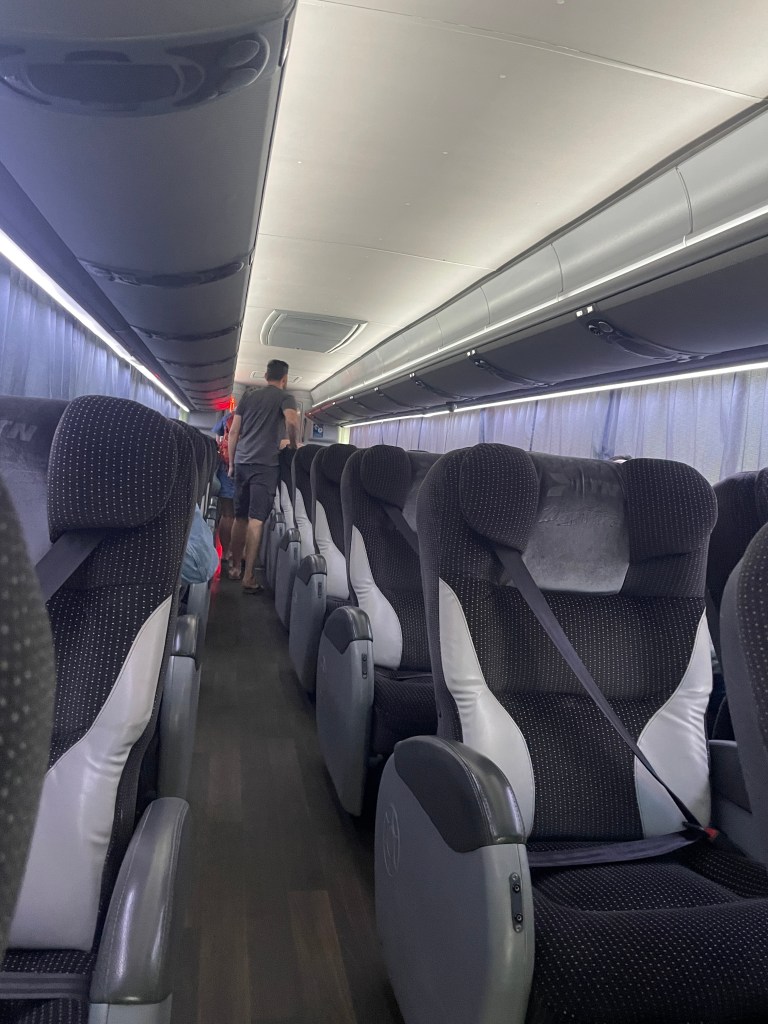
Here is the bus. It was a bit expensive because I chose an expensive part of the day to ride it. Television sets and fully reclining extra padded seats for $15. Wish our airplanes were like this!
Oh and one more thing,,, this is what I saw riding home on the bus. I believe it needs a caption. Any Ideas?
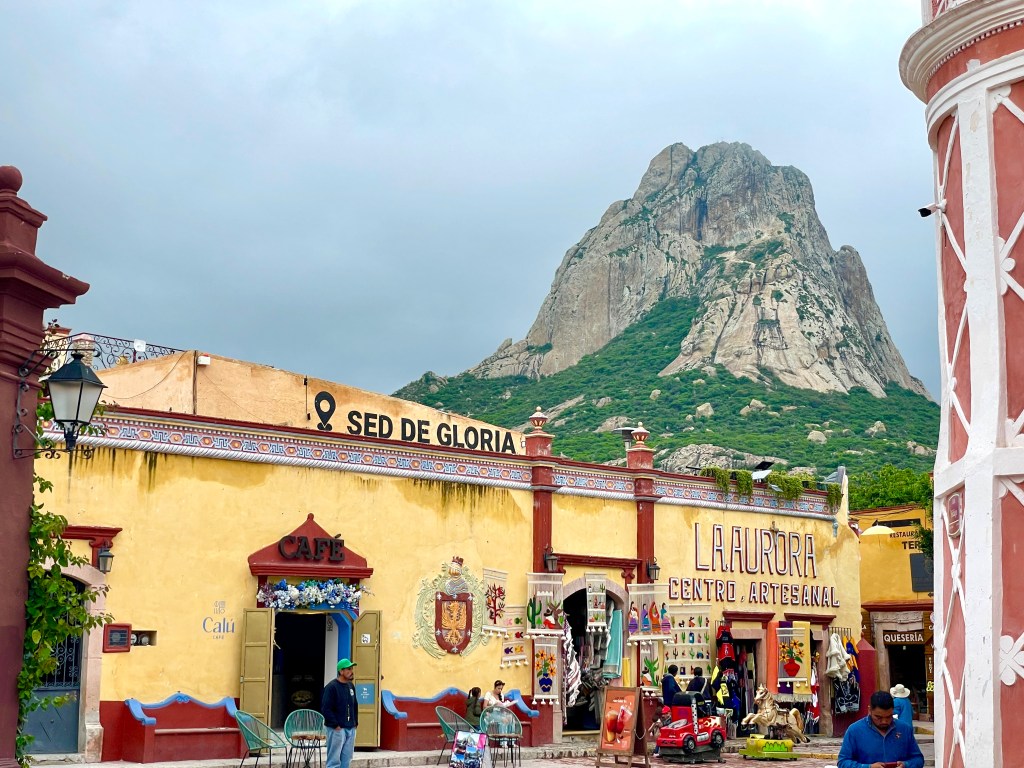
This week I had the good luck to travel to Bernal, Mexico, a small and quaint colonial town about an hour outside of Queretaro. Officially known as San Sebastián Bernal it was founded in 1642 by a Spanish soldier. It is well-known for its monolithic rock which is the third tallest in the entire world and twice yearly during the equinox; pilgrimages are made by the faithful dressed entirely in white to climb the rock which they believe provides healing and luck.
In 2005 the town was also declared a Pueblo Magico due to the magical symbolic stories and history of the town and its famous mountain. Because it is a lone mountain on a fairly flat plain many believe that it is the remnants of a huge meteor that plunged into the earth. One can only get to the top of the mountain with a special permit in hand along with special climbing equipment but for the rest of us the hike goes about half-way to the top. It is a strenuous hike so be prepared.
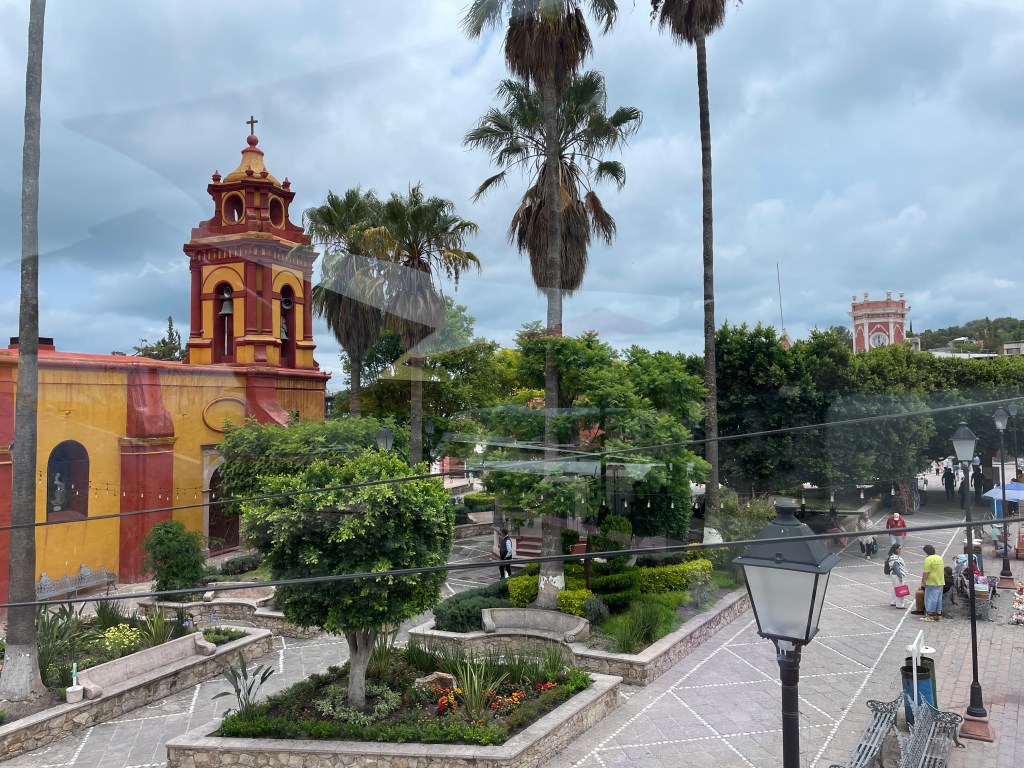
Another site to visit is the Temple of Saint Sebastian the Martyr which is located in the main square. It was built around 1700. The colors are intense and the garden is serene and magical with beautiful flowers and plants popping up near the stone gazebo.
Around the main square you will find many small shops and single vendors dressed in traditional garb that sell various Mexican crafts. I picked up some beautiful scarves for $5 each and you can also find beaded and unique clothing as well. One of the most interesting stores is to visit is the Lucero Ramos Estilo Entice. The woman who owns this amazing place designs and crafts all her own clothing. Her colors are rich and inviting and the styles will compliment any shopper.
There are several good places to eat serving yummy authentic Mexican dishes. One of them has great rooftop views which affords a sky high view of the entire area.
Here are a few more pictures of this gorgeous little town. I can definitely recommend a visit to this quieter region of Mexico which is surrounded by beautiful green hills and plenty of history which I find completely enchanting.
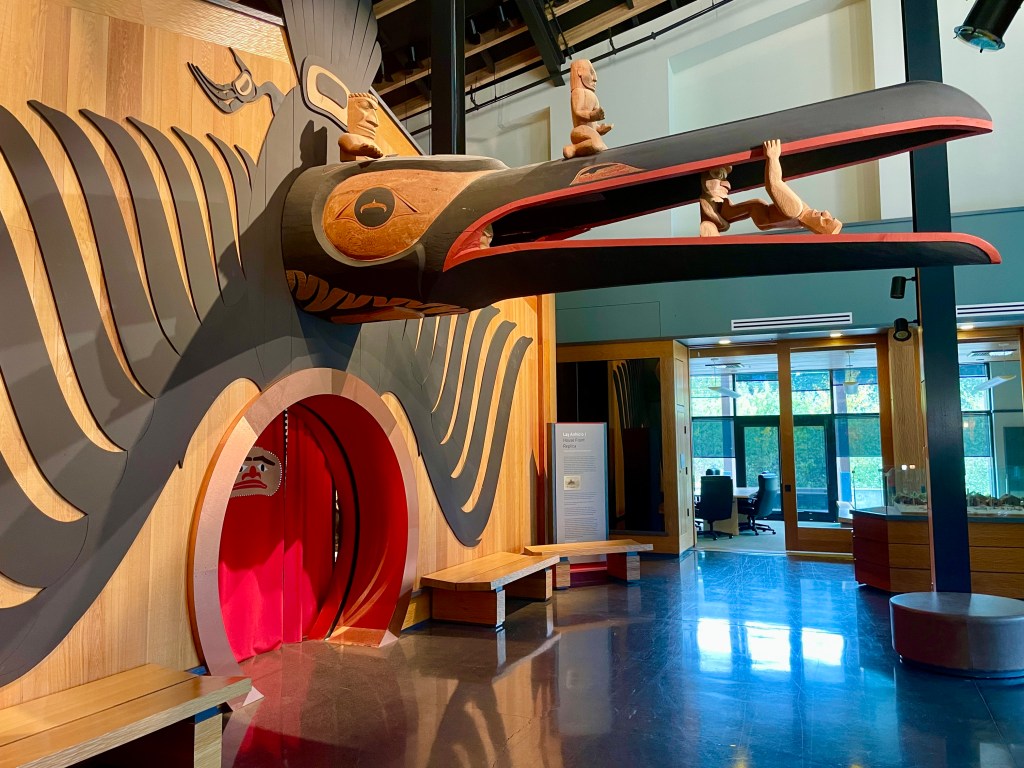
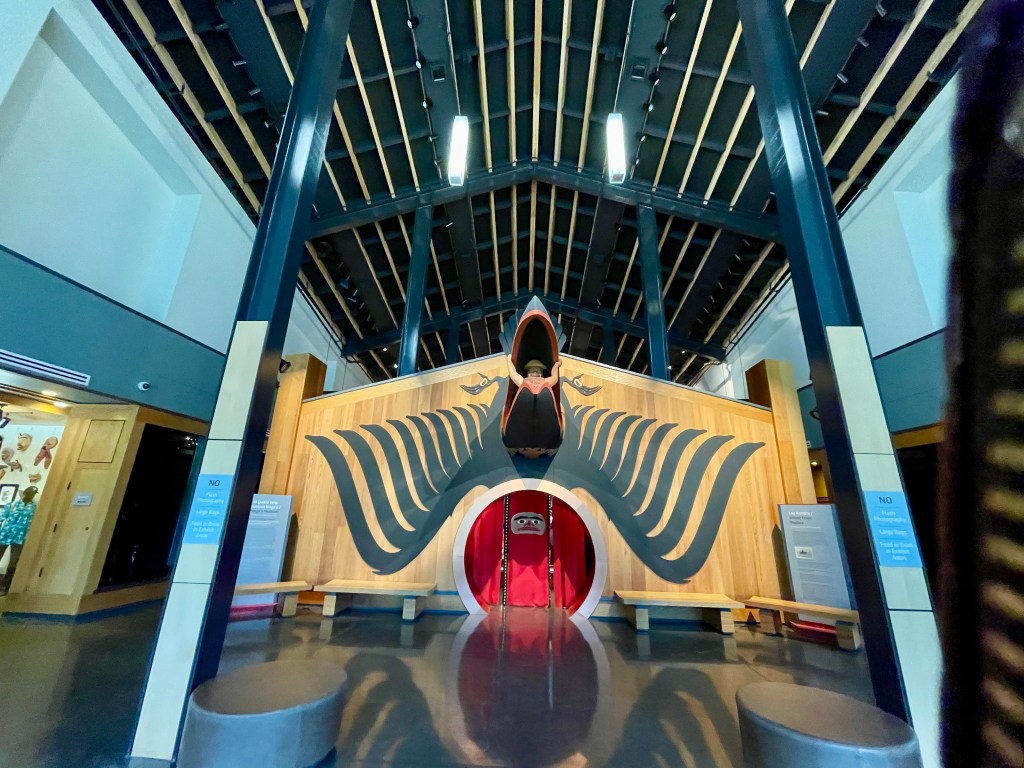
One of the best small museums I have ever visited is the Nisga’a in British Columbia. The architecture of the building which highlights the natural beauty of traditional tribal lands along with the highly curated and informative exhibits will surely take your breath away and give you a new sense of appreciation for traditional First Nation history and practices.
To get to the multiple galleries one enters through a replica of a longhouse. I suggest entering more than once to really get a feeling of what is being conveyed and to be able to experience the feast for your eyes that surrounds you.
The first gallery is known as the Transformation Gallery. Here you will find a huge collection of spirit masks (naxnok) and costumes that were used to the tell the stories of spirits and their role in society.
After exiting this colorful gallery you are directed to the Shaman’s Gallery (Halayt Gallery) which emphasizes the role of the Shaman in society and displays items used to call and direct the supernatural.
The Museum also contains several more galleries which discuss the history of the Nisga’a, the possessions of the people, laws and customs, as well as showcasing daily life of the tribe and individuals roles within it. Headdresses, bentwood boxes and rattles are just a few of the exquisite things that will be seen as you meander through. Be sure to take some time to explore as this is not an educational center to rush through.
One of the best things about this museum is the kindness of staff who will patiently answer or will find the answer to any question you might have. These are individuals who are immensely proud of their culture/heritage and want to be sure that everyone who leaves takes a bit of that appreciation with them.
Finally, be sure to check out the gift shop where local artists have their works on display and where you can also find further information about the indigenous people throughout the region.
There is a small entrance fee. Families pay $22, adults, $8 and children $5. The museum is open from Early May through the end of October on Wednesdays through Sundays from 10 am until 5 pm. It is located at: 810 Highway Drive, Lax̱g̱altsʼap, British Columbia, Canada. For further information call 1 (250) 633- 3050.
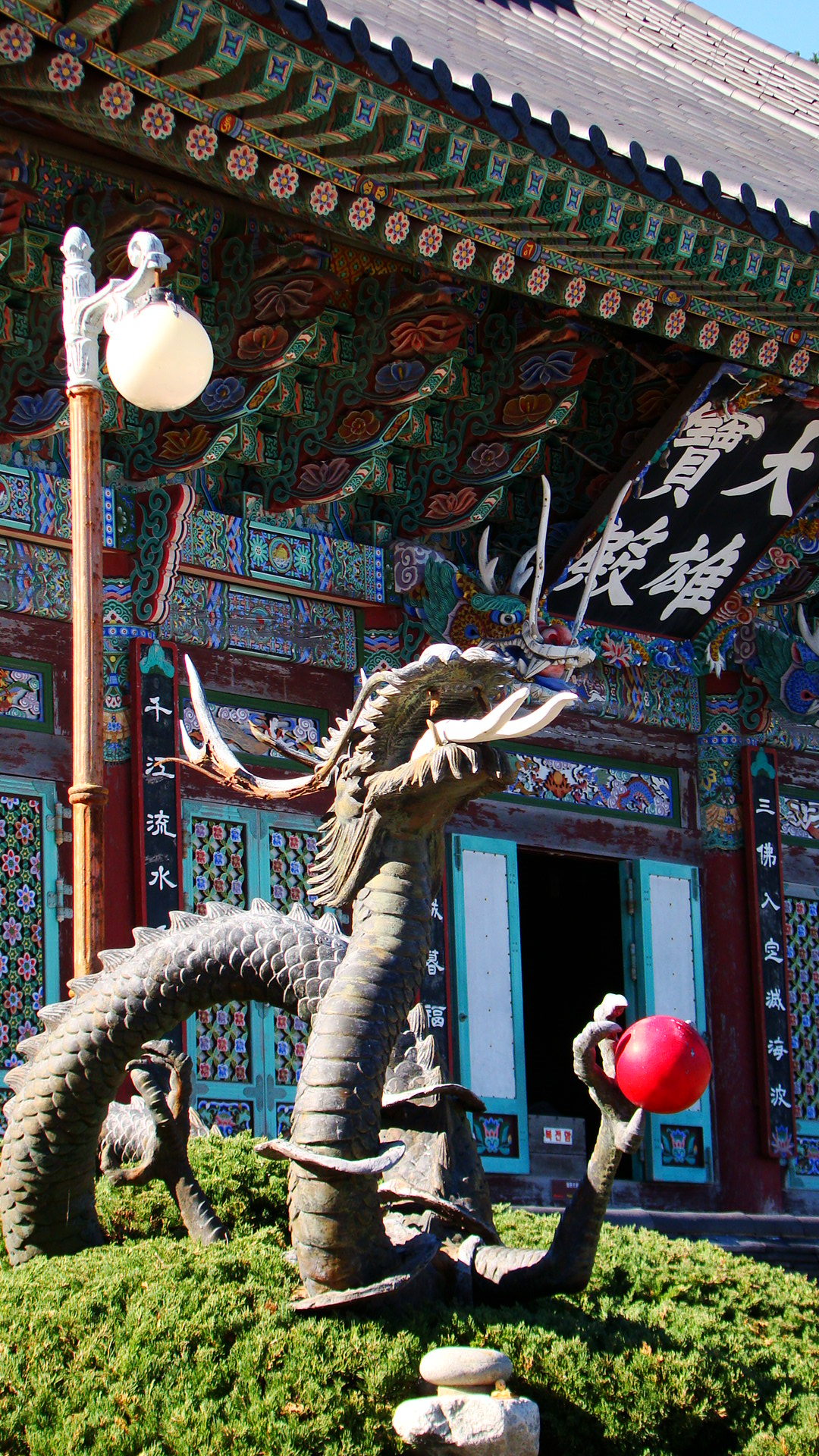
Serenity is elusive. We search for it but often come up empty-handed. Some climb mountains. Some listen to the birds. And some search the word over never understanding that they hold it in the palm of their own hand. BUT…let’s face it there are some places that just make it easier to feel that overall peace that we are so desperately looking for. One of those places where it is within reach is Hae Dong Yong Gung Temple in Busan which is also known as the Dragon Temple. After traveling with three children overseas for a week… peace… was what I was seeking.
This temple first came into existence in the mid 1300’s. You can read a little about it. It was destroyed during the Japanese occupation but was rebuilt in 1970. Yes, fairly new but still spectacular.
Our trip started when we took the #9 bus from the subway station. We were dropped off about a 10 minute walk from the temple. This Hae Dong Yong Gong is known as the Zodiac temple and upon entering you see huge marble carvings of each of the astrological signs behind which stands a huge pagoda.
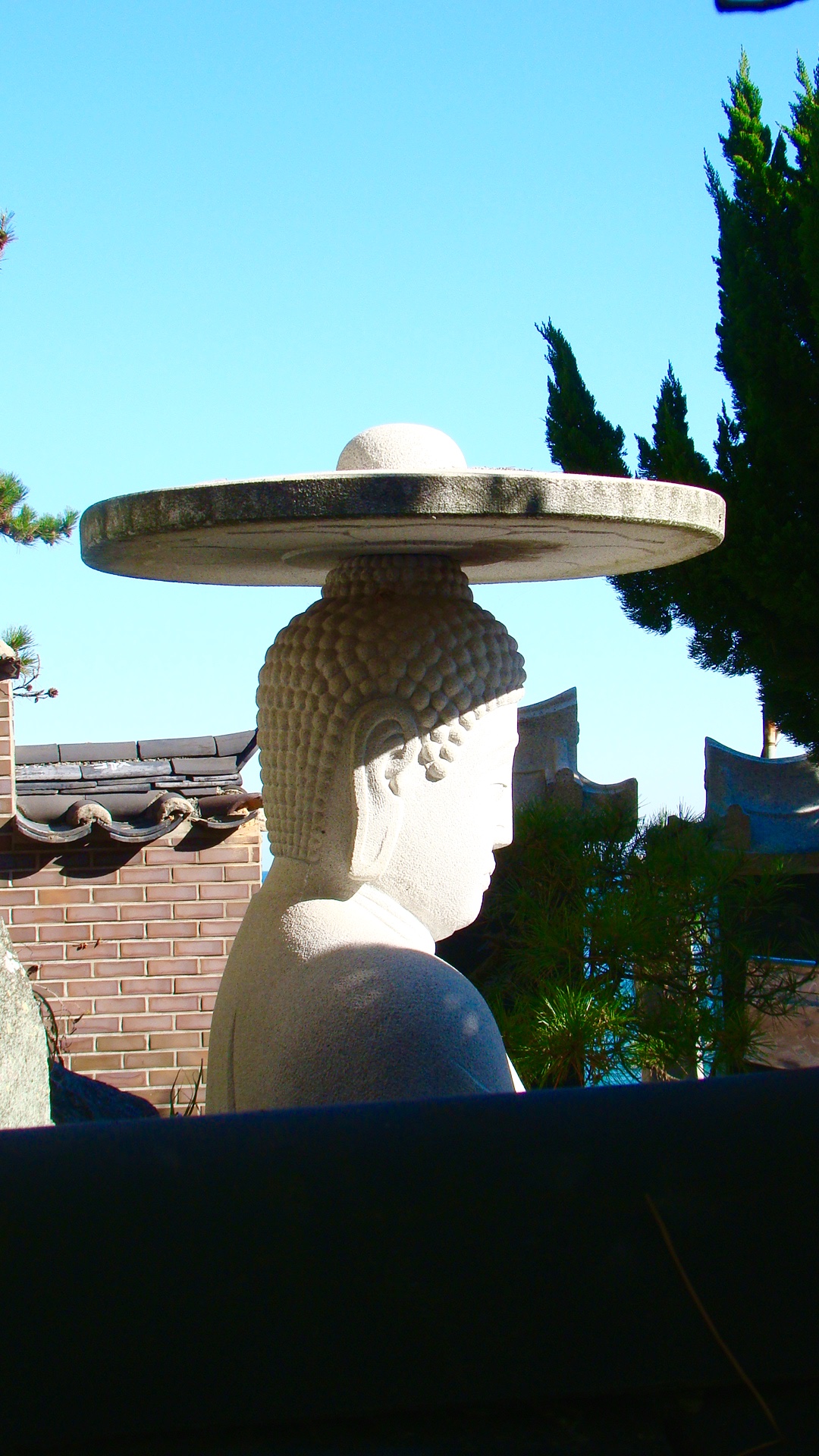
Then comes the interesting trek down smoldering granite stairs where you pass several buddhas. The belief of those who trek here is that “at least one of your wishes will be answered here through your heartfelt prayers.”
We crossed over the bridge where the sea rode waves to just below the cliff. It was amazing. But frankly I don’t have time to write anymore as I head to Mokpo tomorrow. So instead I will leave you with pictures.