La Brea Tar Pits – Los Angeles, CA

If you have a dinosaur fanatic living with you in your home then you know how intense this fascination with all things ancient can be. While there are no actual dinosaurs here there are the remains of huge sloths, mammoths, and camels left over from the Ice Age. So while you will not see a T-Rex these other massive creatures are sure to suffice for your dino crazy kid.

DSC00278

The tar pits have been around since the Ice Age. If you are a historian you will discover that the Tongva and Chumash Native people lived in this area. They were unique boatbuilders as they used the tar naturally found in the area to seal the large cracks in their canoes.

The first written account of the tar pits come from the Portola Expedition from Father Crespi describing them as “tar volcanoes” and giving them the name Los Volcanes de Brea.

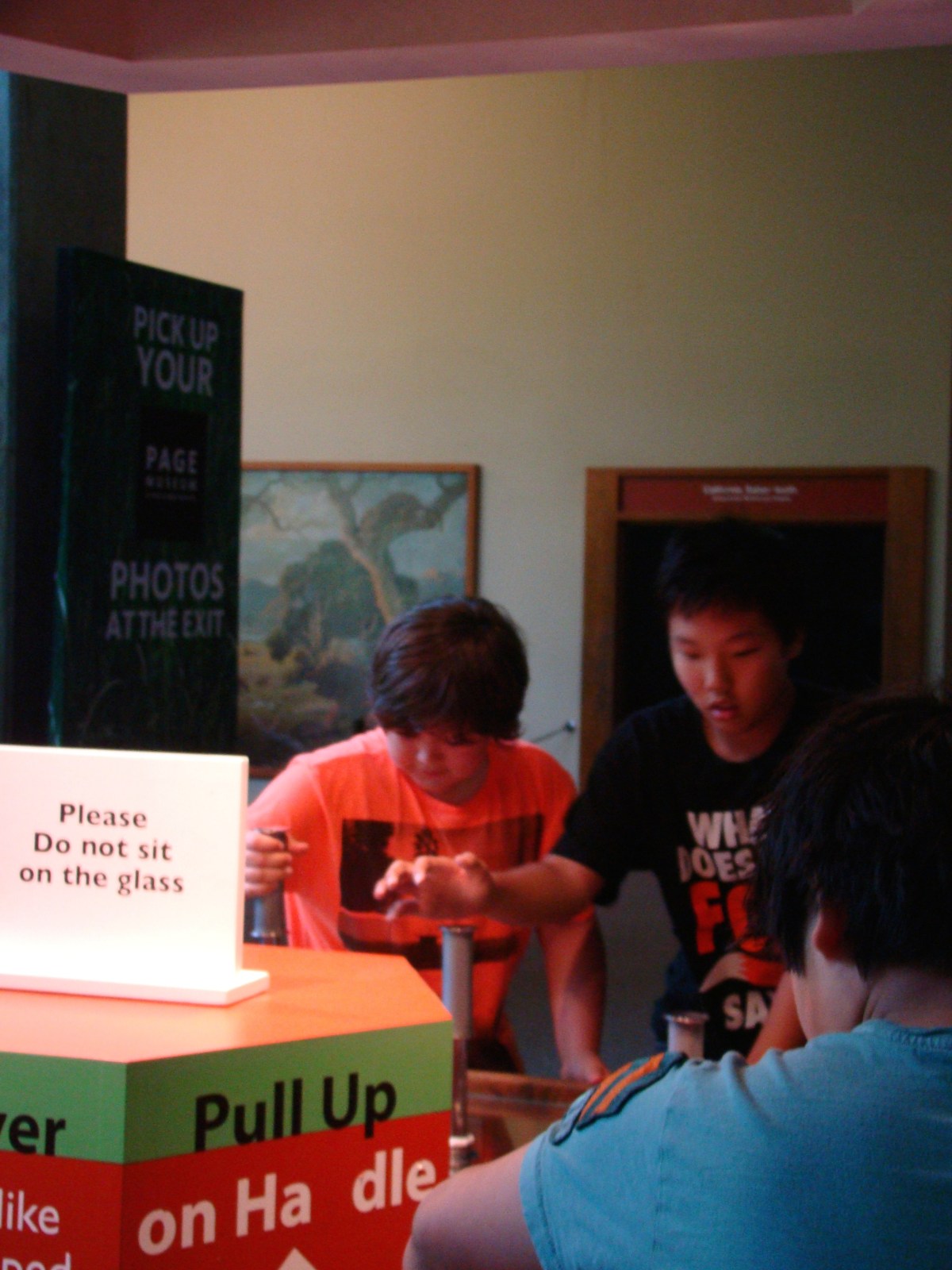
La Brea is a unique on-site museum and lab in which fossils are consistently being excavated.  You may even be lucky enough to see one being pulled from the muck. After retrieval  you can watch the bones being identified, cleaned and then displayed in the museum’s working glass-encased laboratory. With hands-on exhibits, 3-d films and lectures this is a place for people of all ages. The museum really does an amazing job of presenting fossils in creative ways to educate and keep their visitors entertained.

DSC00280

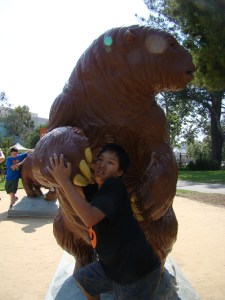
Yet, one of the most interesting things to do is to just stroll around the grounds. There you will see the tar bubbling up from the ground. The kids spent an inordinate amount of time just watching the slow rise/fall and listening to the POP of the shiny balls/bubbles of tar. Life-sized models of the long-forgotten creatures that once roamed this area can also be spied on the park-like grounds. So pack your lunch and make a day of it. Your family will be glad you did!

DSC00292


DSC00324

La Brea Tar Pits are located at 5801 Wilshire Blvd. in Los Angeles. They are open 7 days a week from 9:30 a.m. until 5 p.m. There is an entrance fee.


Kharola Glacier- Tibet

I just arrived home from Tibet last month and I am still trying to process the whole global warming “thing” in light of what I saw in this beautiful country. While I once thought of Tibet as the snow-bound land of the Yeti, Miche or Migoi (depending on who you ask); I now think it looks like the road between Cedar City, Utan and Las Vegas, Nevada. It is desolate, rocky, and barren. Even Mt. Everest, which we visited, looks bare in places.

The Kharola Glacier is found along the scenic road between Lhasa and Shigatse. With splendid views of Mt. Kalurong and Mt. Nojin Kangsang it is a great place to stop and stretch a bit. The glacier sits at the 17,060 ft level in a place that used to be covered in snow pretty much year round. It isn’t anymore. In fact, the glacier has receded 30-50% depending on who you ask in the past 10 years.

DSC01660

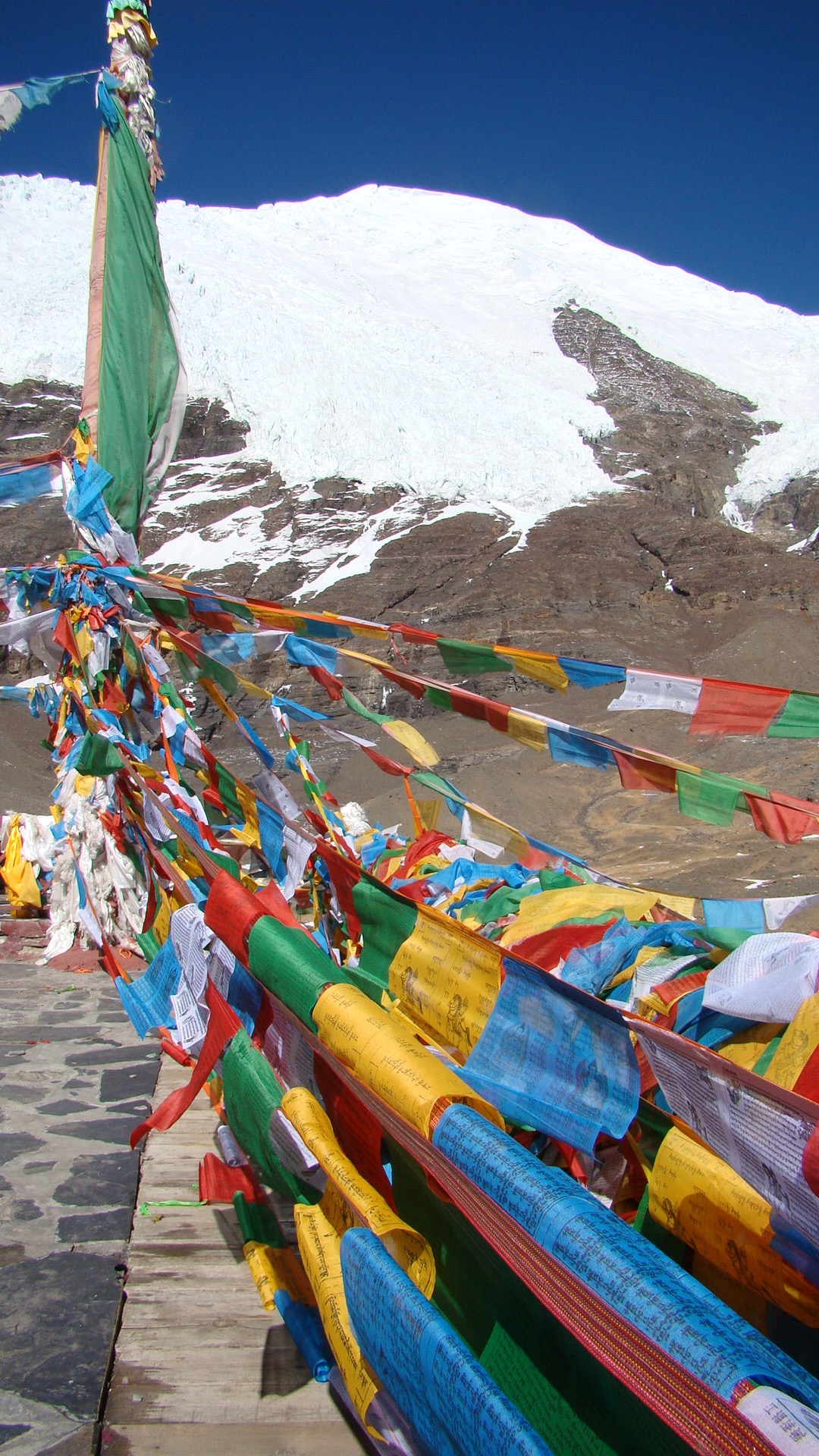
The day of our visit was beautiful. The sun reflecting off the glacier threw multiple shades of white and gray blue along its ridges. The air felt crisp and clean. Prayer flags whispered and shouted into the air depending upon where you stood.

One of the things I learned while at Kharola was that the Tibetan Buddhists believe that the flapping of the flags are in fact a chant or prayer that will be blown by the wind spreading compassion and good will. Traditional prayer flags are arranged left to right in a precise order: blue, white, red, green and yellow. These five colors represent the five elements of our world. Blue symbolizes the sky, white the wind and air, red represents fire, green is associated with water and yellow symbolizes the earth. The Tibetans believe that when these five elements are in balance that health and harmony are the result. Obviously, balance has not been achieved.

DSC01663

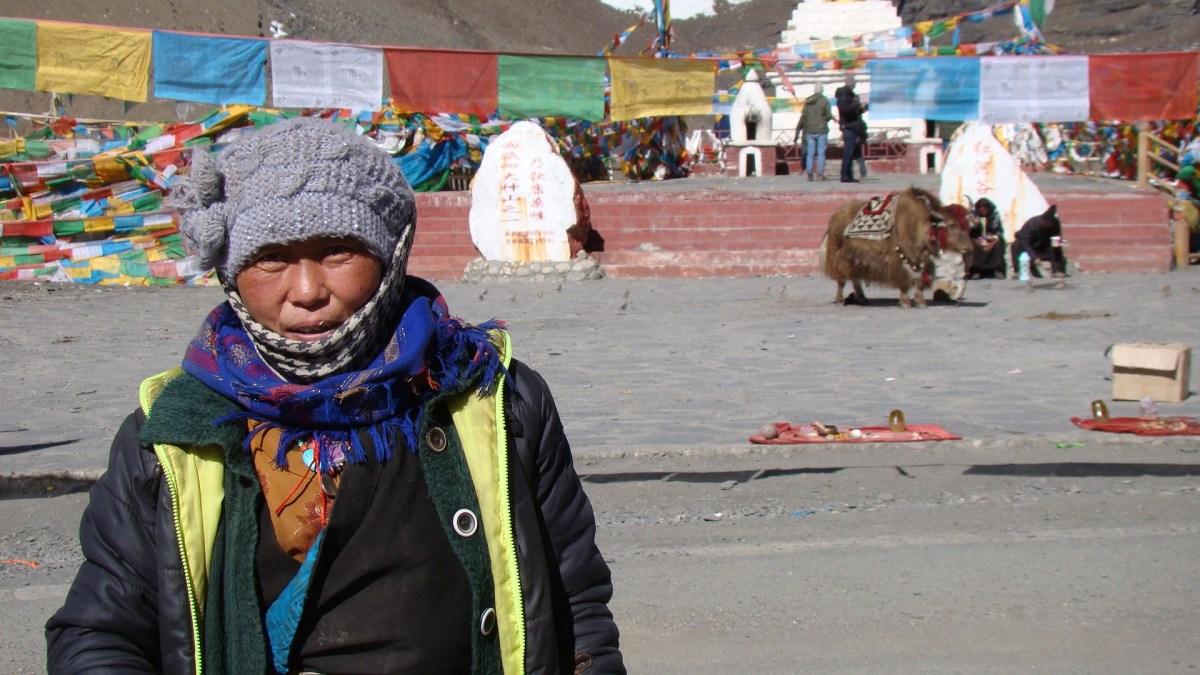
The sad part of it all is that we can see global warming with our two eyes just by looking at the Tibetan landscape and it now mimics the arid high desert of the Southwest in the United States. Yet, with all the changes that are glaringly obvious we do little to try and stop them. I guess people forget that in this area of the world that without snow there is less water in the rivers. Less water for irrigation equals less food that is available which means more chemicals are used to try to boost production. Less water for the people results in mass migration. It is a concern for all of us…except the yak. I expect when the glacier soon disappears he will still be standing there…the only thing that is left of interest on the pass.

DSC01657

IMG_3639


St. Mary’s Octagon Church…Mt. Entoto, Ethiopia

It is our last day in Ethiopia. The city has grown tired and tiring after many days of work. We hop a bus headed outside of city. The bus starts climbing the steep mountains that ring the city, spewing black smoke as we make our way for Mt. Entoto the highest peak which overlooks the city of Addis Ababa.

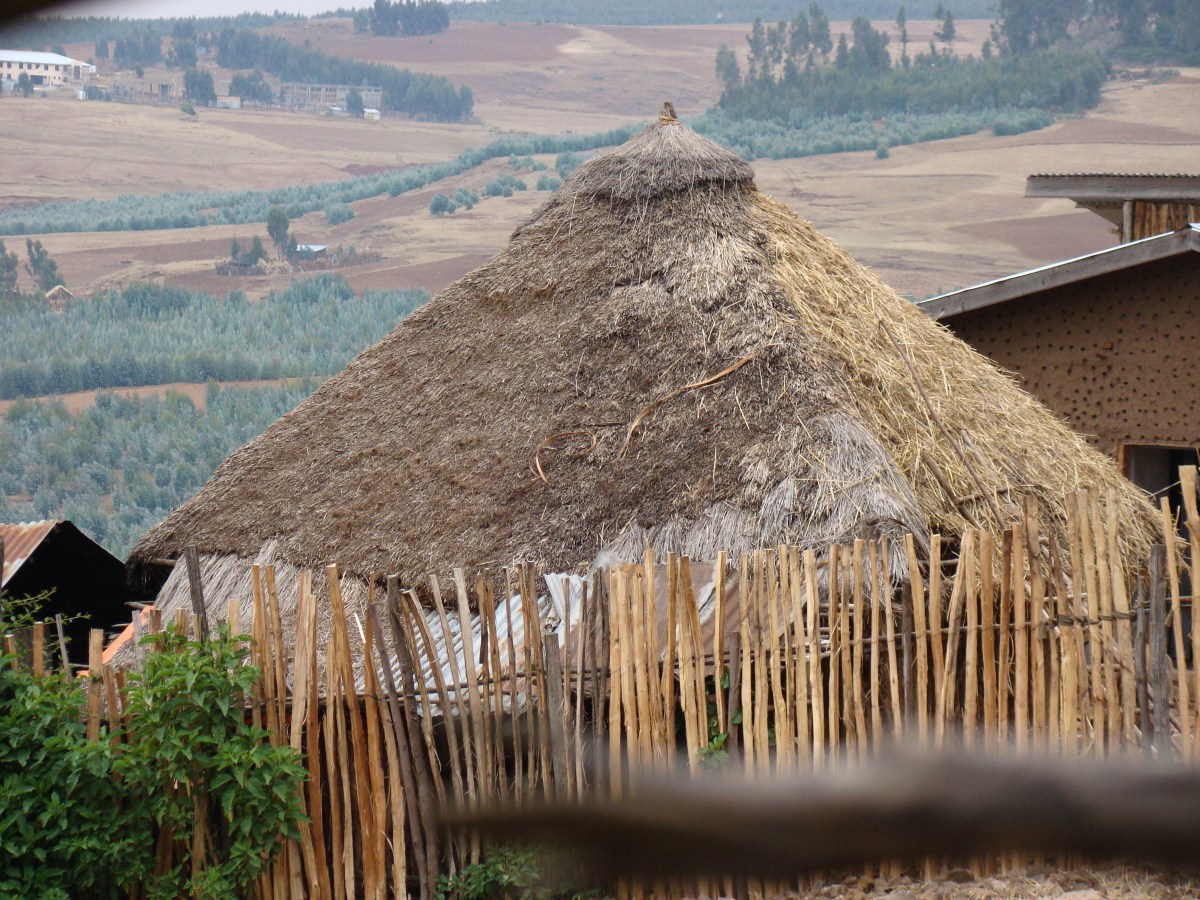
We pass small villages composed of tin shacks, rusted and old. At times one can imagine that the rain seeps into the cracks and the old souls who reside within them. Occasionally we pass by traditional round houses made of sticks or plastered mud. Thatched roofs of cut grass look as if they have been thrown there by the wind.

DSC01619

As we climb further the landscape begins to disappear before our eyes. Where once great forests of eucalyptus trees once stood, only wooden stumps remain. Men hang in the remaining trees cutting the tops and working down. The deforestation is intense, scary and troublesome but understandable. The poor cannot afford gas stoves.

We share the road with small, scruffy donkeys who trot up the steep incline but perhaps the most amazing thing is the donkeys go down with nothing on their backs while old women carry HUGE bundles of sticks on their backs bent-over from the immense weight of their load. It is ironic: donkeys unused and the women used up.

DSC01589

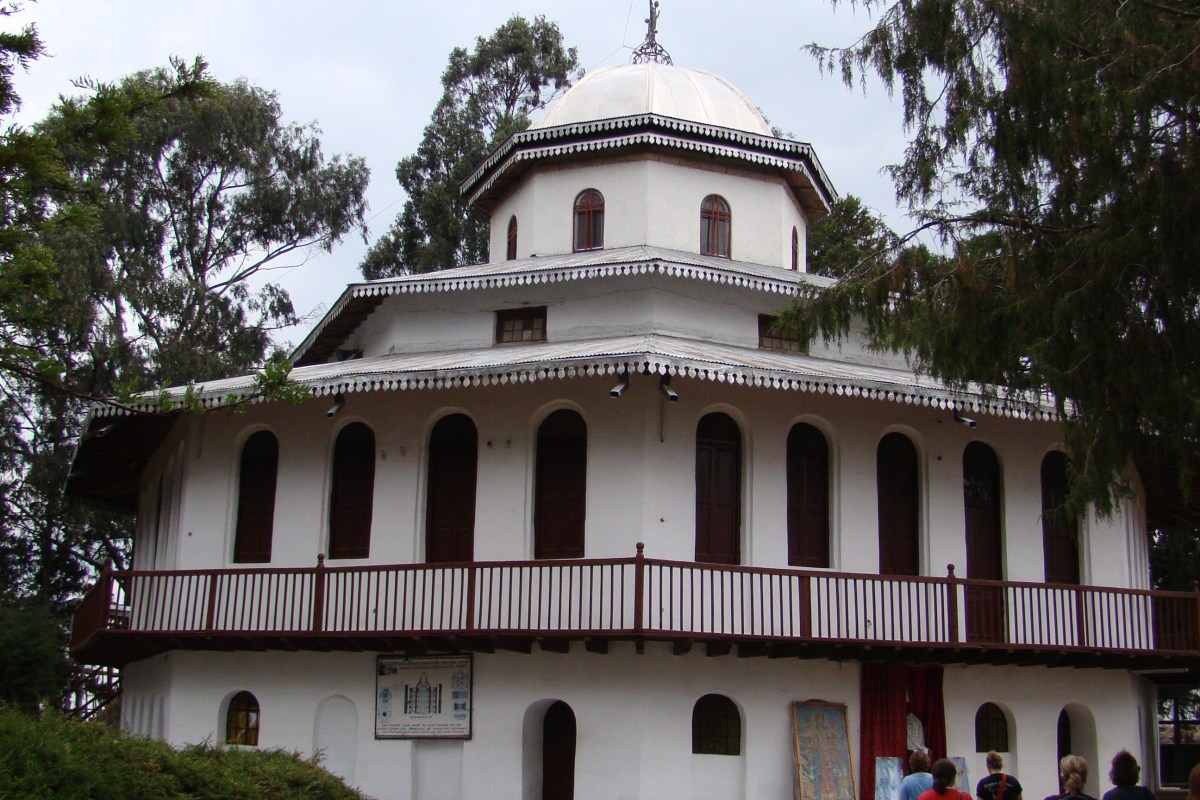
Finally we arrive at our destination on Mount Entoto.  The whitewashed façade of Saint Mary’s octagonal church captures the sunlight  and beams it through the nearby trees.  We pay a local for a tour.

DSC01625

First we view what we are told is the oldest church in Ethiopia which is said to be over 1000 years in age. Built into a hill it is primitive and mysterious.

DSC01645

Then we head over to Saint Mary’s, which was constructed in 1882 by Emperor Menelik for his wife Empress Taitu.  Their coronation was held here in 1889.  As impressive as the church is in its simplicity it’s the inside that captivates us. Bright bold biblical murals line the center of the building. We find paintings depicting the birth of Jesus as well as Jesus healing the blind that are just amazing. Nearby is a museum and the holy spring to which those afflicted with AIDS flock.

This is a spiritual place. A quiet place after all the hustle and bustle of Addis. It is a place where one comes to nourish the soul and replenish the heart. And I am glad we came, because I was not aware how depleted I was after seeing/helping street orphans and families with autism who are ostracized to the point where they are skin and bones unable to secure the help they need. Where autistic people are still chained in place so they cannot run and where they and their families are thrown off buses because they are thought to be “possessed.” And as I sat in the harsh sun I wished that they could be sitting next to me so they could drop their load of misery and worries for just a few minutes and find peace. A peace that is so elusive in a place where the “unloved” and the disabled serve as carpets to be walked upon by the rest of society.

DSC01637

Video

Wyoming Territorial Prison…Laramie

IMG_0550

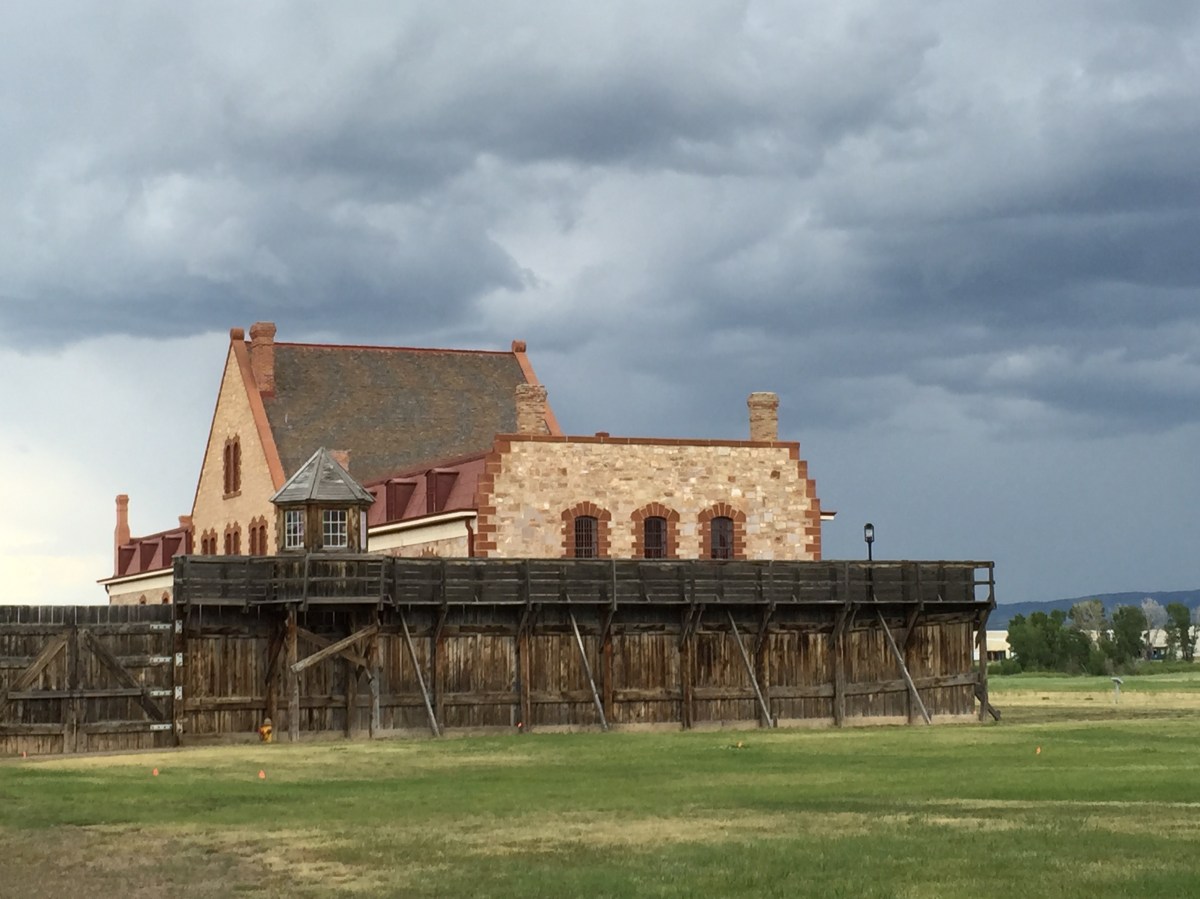
One of the more interesting and kid friendly places we visited this summer was the Wyoming Territorial Prison outside Laramie, Wyoming. Totally restored and sitting on 197 acres, it was built in 1872 as a federal prison and operated as such until 1890 when it became a Wyoming State Prison (1890-1903). It is one of the three territorial penitentiaries that still exist in the West and the only one that has survived intact. The most infamous convict to grace it’s interior was Butch Cassidy who served a sentence here for two years.

After arriving at the Visitors Center where friendly Wyoming Folk answer all your questions with smiles upon their faces you exit out a side door onto the immense grounds. After a short walk you arrive at the Warden’s House which was built by the convicts in 1875. Restored to that era there is a lot of the past for the kids to see and experience. including the clothes worn during that time period and how houses were set up.

The prison itself is amazing. Clean, fresh and fully restored; visitors can enter the cells, see the kitchen, and visit a very informative museum. My children learned a lot about the Old West and how people were treated while incarcerated back in the “Good Old Days” and each child was given a convict to look for and learn about. Murderers, horse rustlers, forgers, and con artists (both men and women) were all housed within the prison’s massive stone walls. The clanging shut of the old iron doors is one sound I won’t soon forget.

IMG_0542

IMG_0540

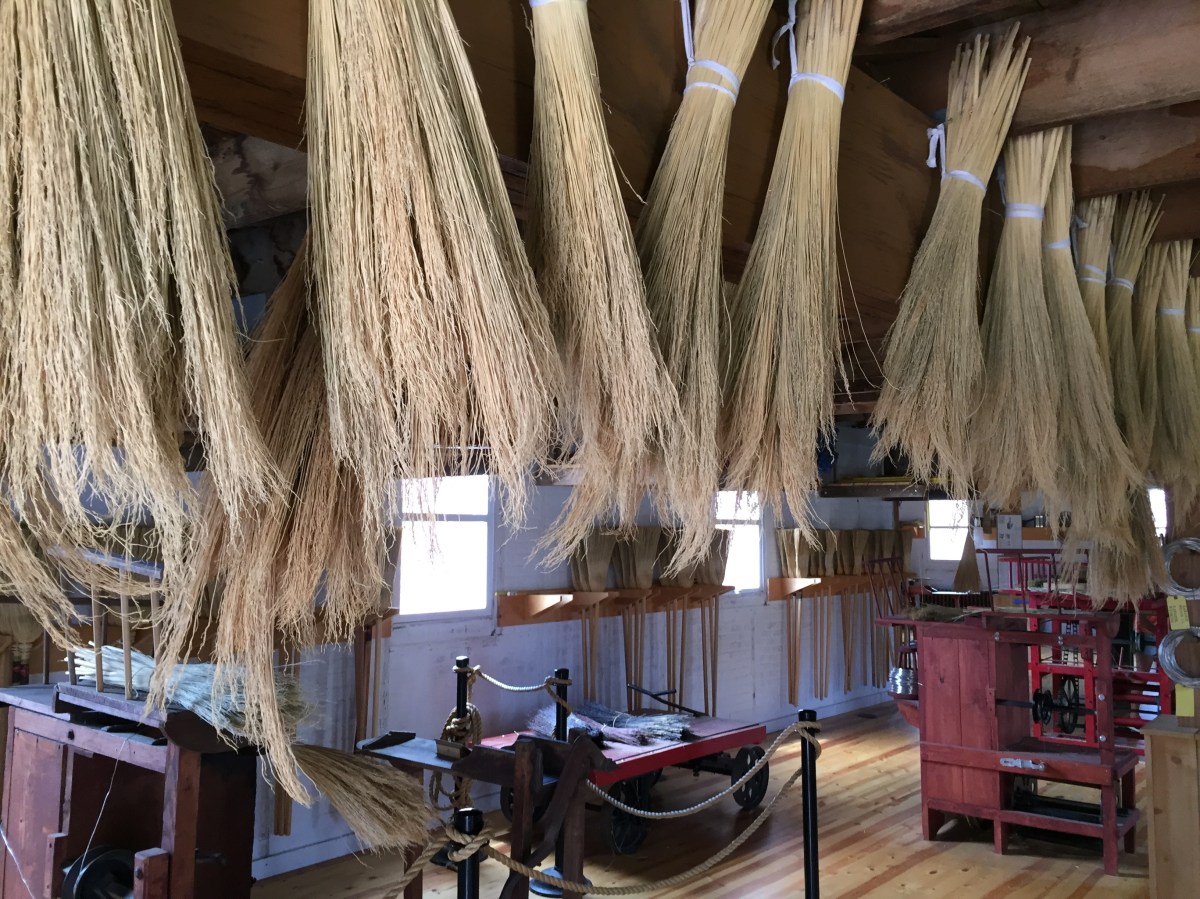
My kids loved the Broom Factory which served as an industry for prison labor. Began in 1872 it supplied broom throughout the United States and had an amazing output of some 720 brooms per day. The machinery inside is interesting and you can even doing some making of your own.

IMG_0553

Throughout the grounds there are coaches and prison paddy wagons for kids to climb over and on. For youngsters who have been cooped up in a car it is the perfect way to burn up some energy. There is also an 1880s Ranch Building display with lovingly interprets ranching during that time in the Wyoming Territories. A huge nature preserve with walking trail can also be found on the grounds.

IMG_0533

IMG_0565

This is one place you and your family will love. It’s worth the ride!

Open daily May 1 – October 31 from 7am-8pm

Rhonda Spain…Bullfighting and Caves

patrimonio

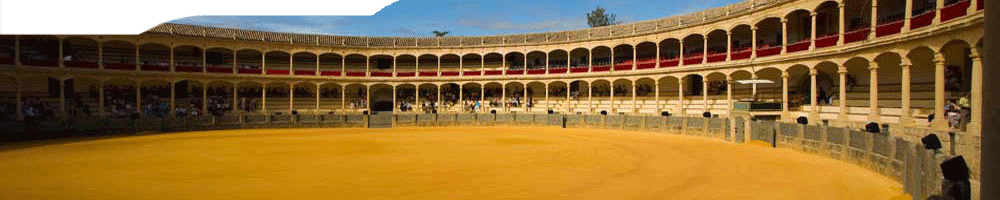
Sometimes in life you walk into a place and can still feel the excitement and pulse from a crowd long departed. The air just sizzles with an electric and anticipatory sort of energy. Rhonda’s Plaza de Toros is just such a place. Completed in 1785 it stands on the western edge of the city and has served as an important entertainment vista for its citizens ever since.

One of my most precious memories is my daughter using her coat to flag her father the “bull.” She whirled and twirled as if in a ballet, sliding this way and that in order to avoid the “horns” of the great beast. She was winning until the bull grabbed her up and tickled her and that was the end of her bullfighting career.

Rhonda Spain 4

Alongside the ring is the Bullfighting Museum which celebrates the sport with elaborate costumes worn by the great fighters, paintings and books. Wall art shows the fighting from differing perspectives, gilded saddles abound and you can read many writings of famous authors who have been enamored with the men who own the ring once they step inside. The famous bullfighting matadors of the Romero family also get their curtain call here.

Another nearby museum is the Bandolero’s Museum which celebrates the Spain’s romanticized bandits. With four galleries of paintings, historical documents and dioramas it is a great small place to get out of the heat on a hot summers day.

The Interpretation Centre of Wine is a treasure for the city of Rhonda. Occupying one of the grand old houses it showcases ancient winemaking to the present day. Included is cork making, information regarding grape varietals, and the school of wine tasting. If you want to learn more about wine and what to look for in a good one this is the place to visit. Best part…a store in which you can buy your favorite to take on a picnic in the nearby hills.

imgres

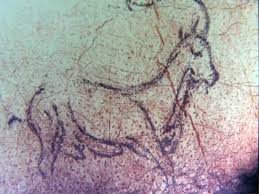
One of our best “finds” in Spain was the nearby Pileta Caves. While it is somewhat  of a hike to reach them the treasures inside are worth it. We bought tickets at the entrance and were handed a lantern as there is no electricity in the dark and somewhat spooky cave. Walking into the caves is like taking a step back into time.Stalactites and stalagmites abound and are a dazzling but it is the numerous old cave paintings dating from 32,000 BC that are the true treasure.  As you journey through the silent caves, the occasional splash of water breaking the silence, you will see drawings of fish, goats, horses and signs the meaning of which have yet to be determined. This is one place that should not be missed!

Rhonda Spain is one of my favorite stops in the entire country. Romantic, historic and full of culture, museums and great food; it is a place you will never forget and  a city to which you will long to return.

More pictures of Rhonda:

Rhonda Spain 2

Rhonda Spain 1


Rhonda Spain

When I think of Spain the first city that comes to mind is Rhonda. I love this mountaintop place and its vistas. The food, the weather, the town itself and the scrappy hills beyond. Everything about it is amazing and it holds fond yet distinct memories.

Julius Caesar kindly designated Rhonda a city  in late 4 A.D. The village of about 35,000 sits atop a gorge so high that when you cross the Puente Nuevo bridge you hold your breath for fear that the weight of that one breath could send it tumbling down into the ravine. The bridge, begun in 1793, is one of the most dramatic byways I have ever seen with a 352 foot drop. Stunning and spectacular it is something that must be seen to believed if not tiptoed across.

images-8
Parador de Rhonda Cliffside on left

We stayed at the historic Parador de Rhonda a clifftop hotel which overlooks the town. Housed in the old former town hall our two-level room was magnificent with parents upstairs and children sleeping below. Both the views and the building took my breath away. The pool was pretty great too.

While it has been a while since I have been to the Parador, I remember being pampered, my wish list honored, the warm sun on my face and great food. Food that took hours to consume with whispers of “other” languages filling the air as people took the time to chat, sip and let the hours slip by. That is one of the things I love about Europe…how people take the time with their food …to savor and really enjoy it. To make eating an art instead of a necessary chore and by doing so honor those who so lovingly take the time to prepare it perfectly.

I remember tapas cooked to perfection…not soggy…but with the perfect bit of moistness that hit your tongue before the steamy, rich food itself. Morcilla sausage with texture and body and a smooth taste (yes, sausage!) Sangria that sucked the parch straight out of you with its first breath upon yours. Food that was regional, good for you and left you wanting to try everything on the local menus so you would’t feel like you had missed out on a thing.

And unlike many European cities the square was beautiful and so clean you could almost lick that spilled Rojas off the ground.

Scan

Next Time: The Bullfighting Ring and Pileta Caves