
I have been to so many churches since I arrived here. I love the architecture that these old buildings possess. The artwork, murals, painted ceilings, and biblical depictions are all inspiring (okay, a few are frightening) and help us have an insight to those things that drew people to the Catholic Church in earlier times. The thick walls of the church also provide a respite from the heat and also from life’s troubles. Perhaps what I enjoy the most though is just walking in, sitting down, and listening to the music and the chants echo off the walls of the sanctuary. It gives me a sense of peace and serenity that I can carry with me the entire day.
Parroquia de San Miguel Arcangel- San Miguel Allende
With over 40 churches in San Miguel it is difficult to choose a favorite but Parroquia de San Miguel Arcángel is definitely the most well known and perhaps the most beloved of area residents. Towering over the city, the construction of the church began in the 1600’s under the auspices of the Franciscan Friars, after a smaller church from the 1500’s was demolished. The building is a surprising blend of different Neo-Gothic European influences and the resulting Spanish colonization that swept over these lands. This immense church was completed in stages at various points in history but it was when a local master stone mason, Zeferino Gutierrez, began construction of the current facade in 1880 that the Neo-Gothic architecture was put into place. Gutierrez had no drawings to guide him and he designed Parroquia de San Miguel Arcángel after seeing pictures of the great cathedrals in Europe. To think that one man had such vision as to be able to change the entire feel of a city just amazes me.


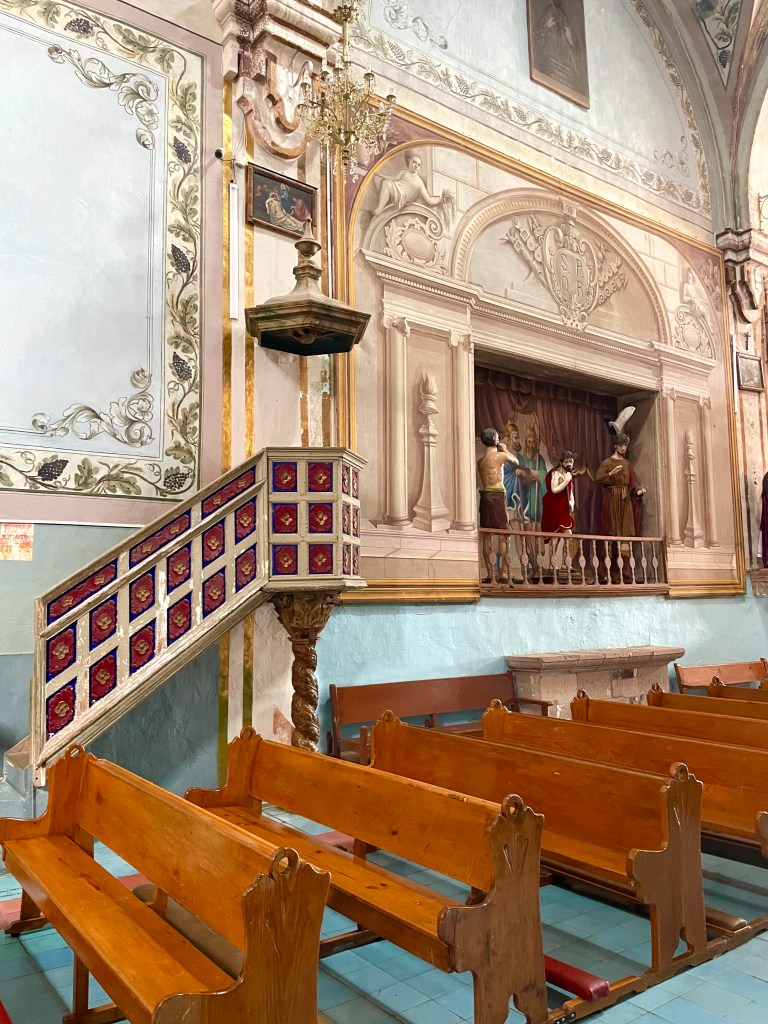
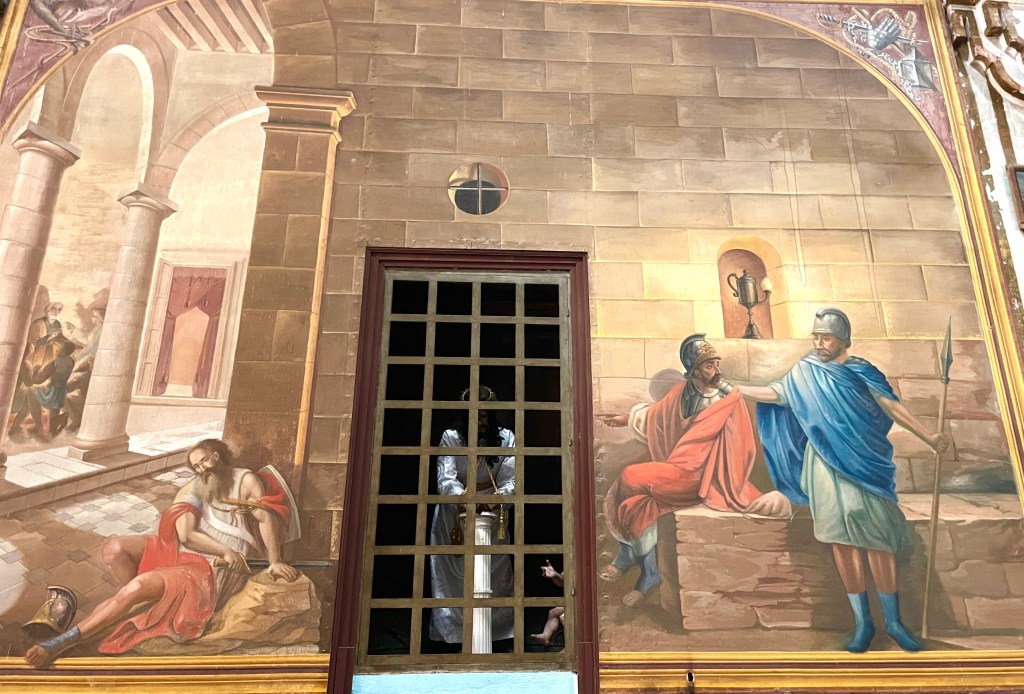
The interior of the main building is vast. Yet, there are several different less imposing chapels including the Chapel of the Third Order with frescoes throughout which depict the life of St. Francis of Assisi.


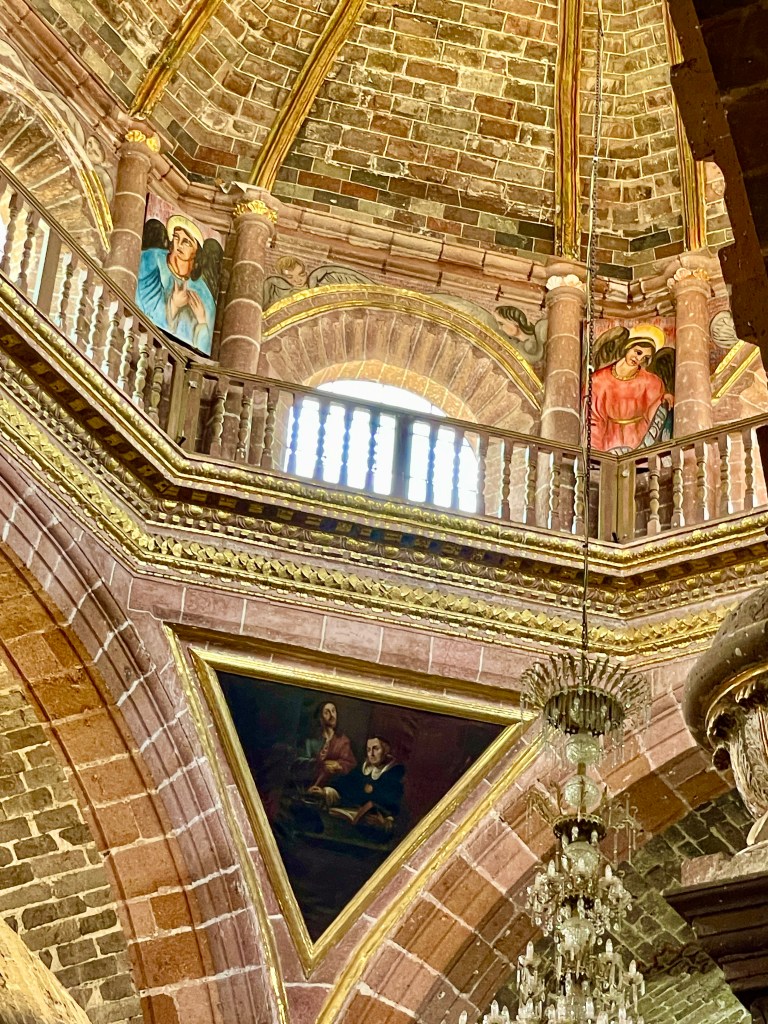



The Chapel of the Third Order



Across from Parroquia de San Miguel Arcángel is a city plaza with tall shade trees and park benches. It is here that you can truly feel the vibe of San Miguel and absorb the influence of the city and the locals who surround you. So take a load off…sit…listen to the church bells ring across the valley…and let yourself sink into a nation that still reveres its history and the people who still help to influence it today.
Basílica de Nuestra Señora del Pueblito
Another Church that I fell in love with was located in the town of Pueblito and is known as the Basílica de Nuestra Señora del Pueblito. It is the church that I mentioned in my post about El Cerrito, The Pyramid of Pueblito, and it is the one that you are suppose to be able to hear the sermon from the pulpit all the way up the hill.
This church is much smaller then the one mentioned in San Miguel and it has it’s own special kind of charm that is quaint yet powerful which is evidenced by the faithful who attend daily mass.
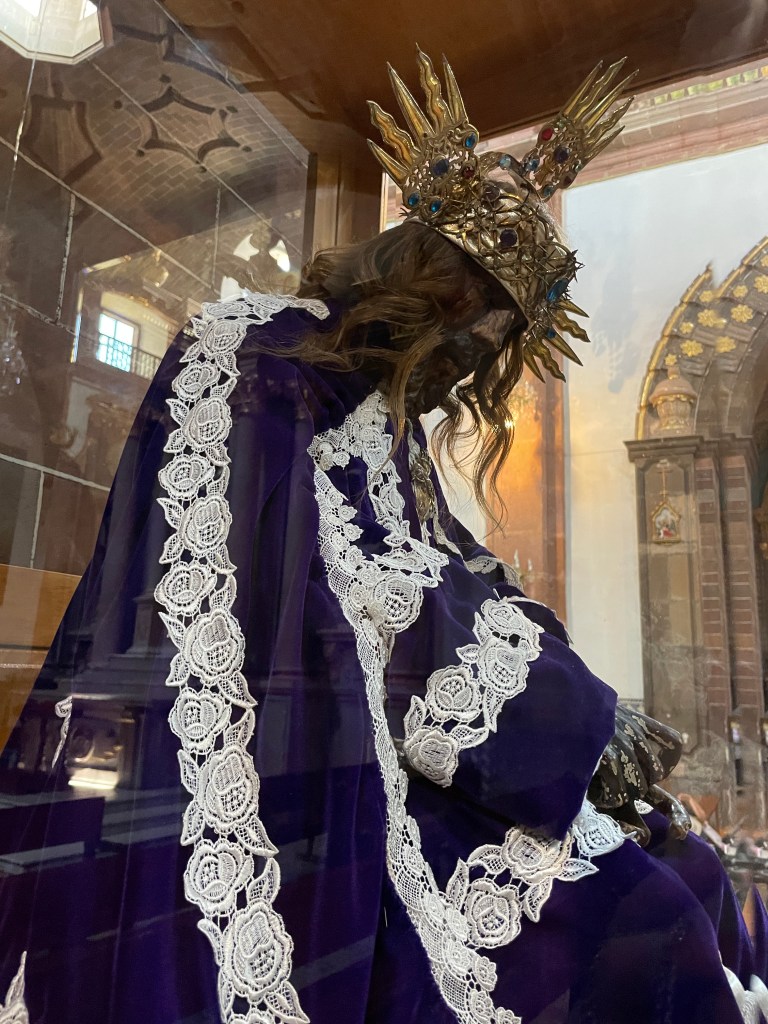
Basílica de Nuestra Señora del Pueblito had its beginnings in 1632 when Friar Nicolas Zamora placed the image of Immaculate Conception near the temple where he built the first adobe structure to house her. Approval for the present day building was granted in 1720 and construction was completed in 1750. Religious festivals for Mary are mainly celebrated in mid-February when the town comes alive. However, when we were there last week, the life-size body of the Virgin, was displayed below the altar where the faithful believed that the next day she would be lifted up to heaven.
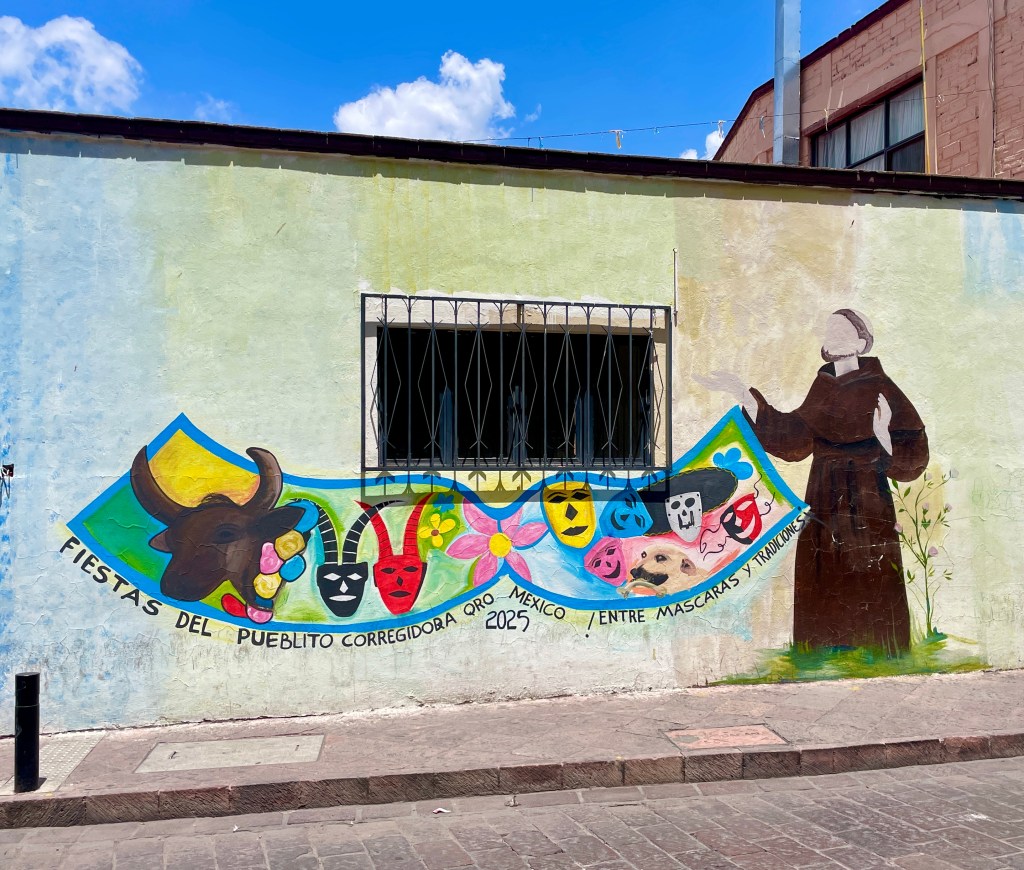


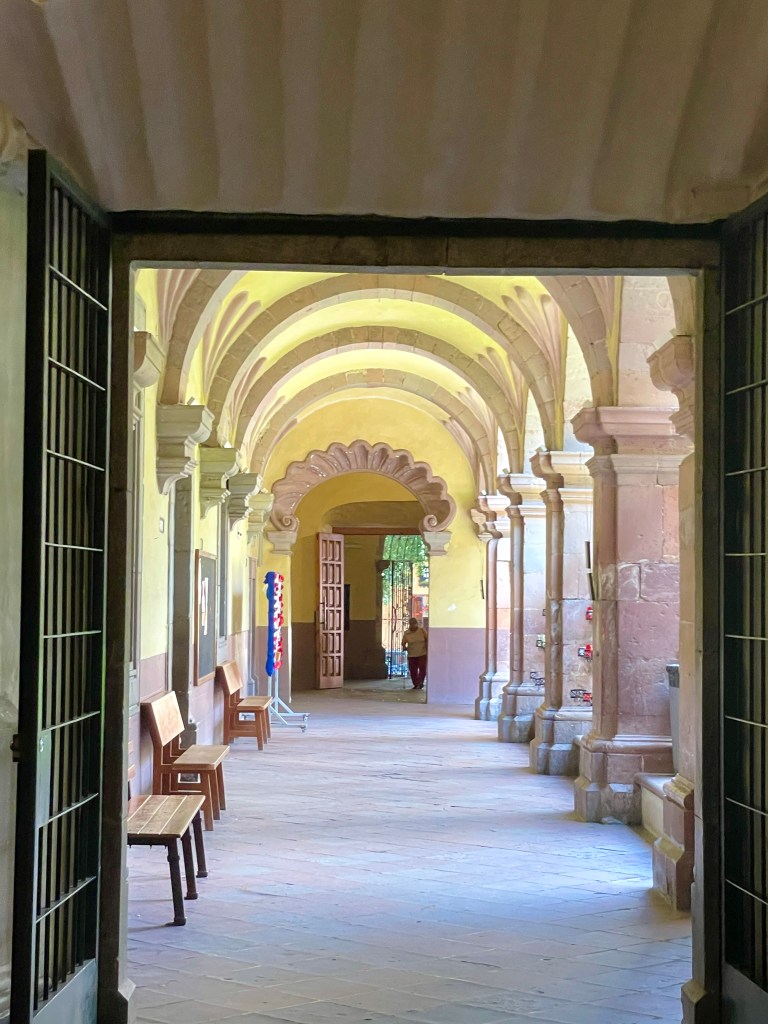


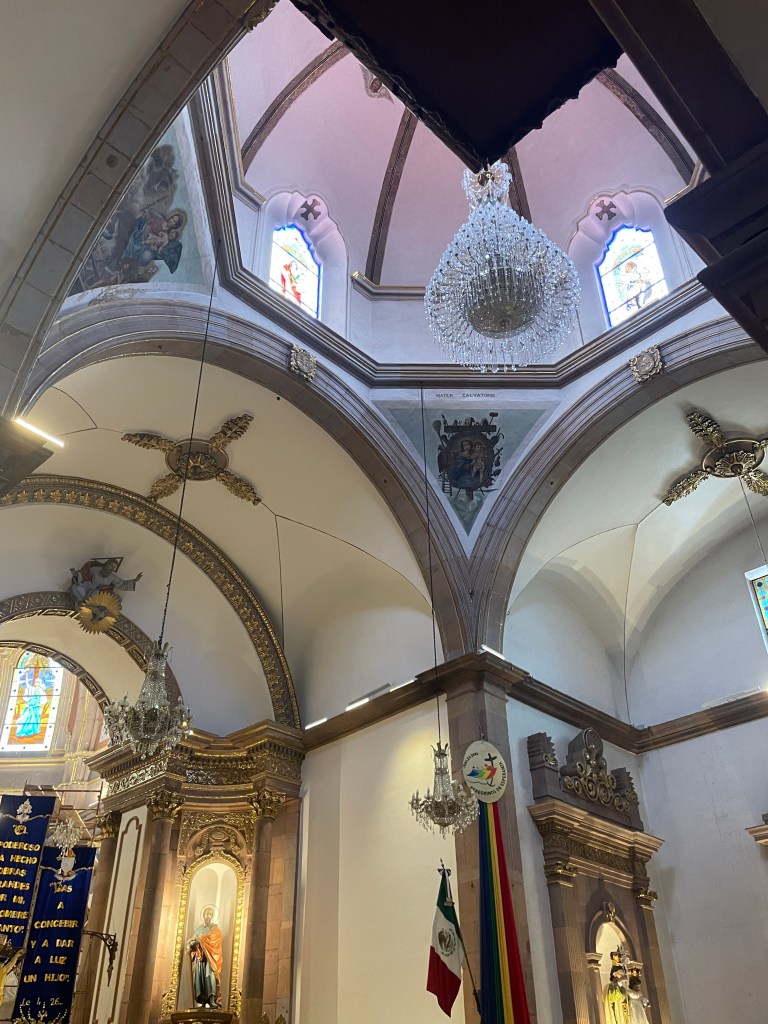
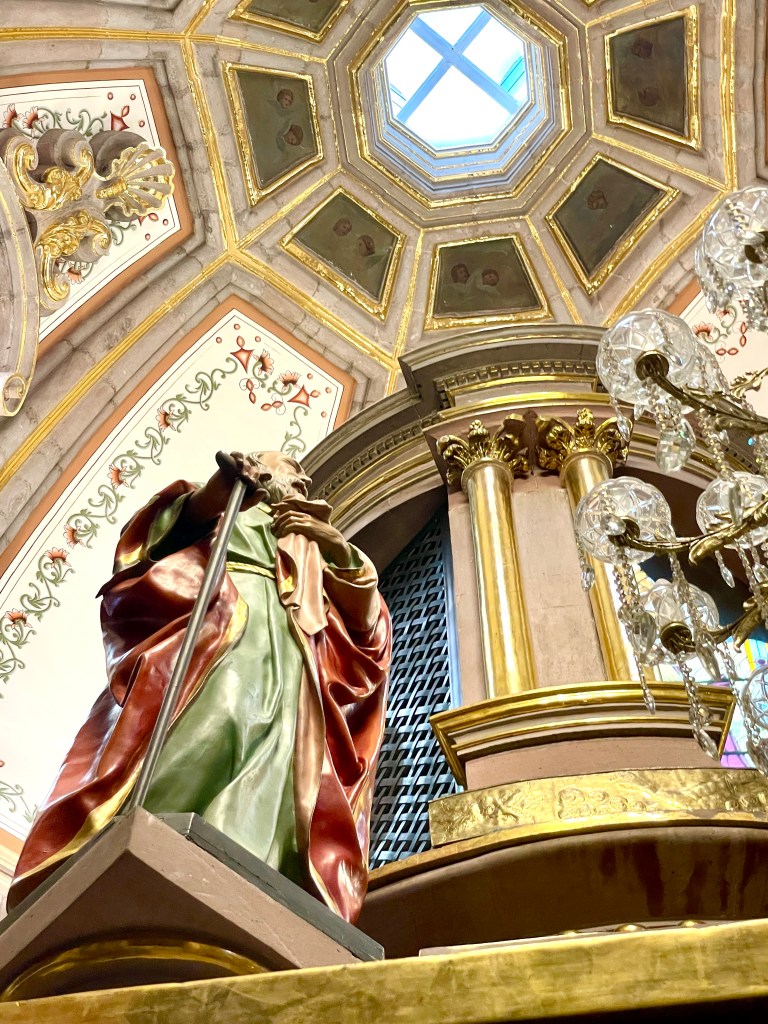


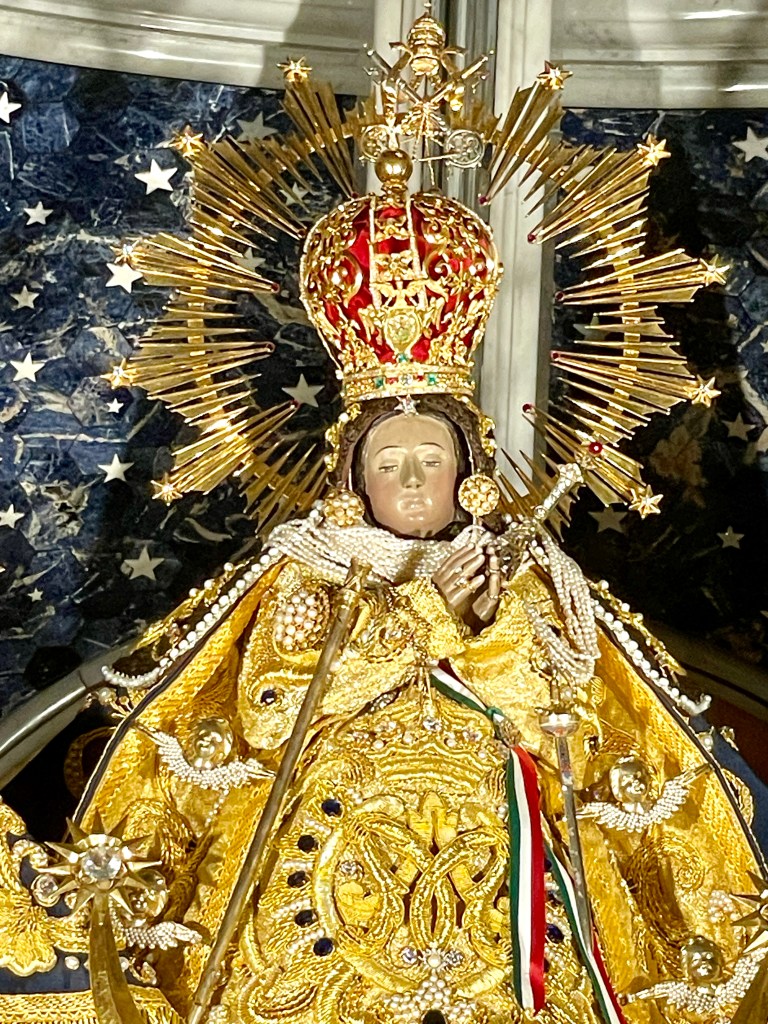
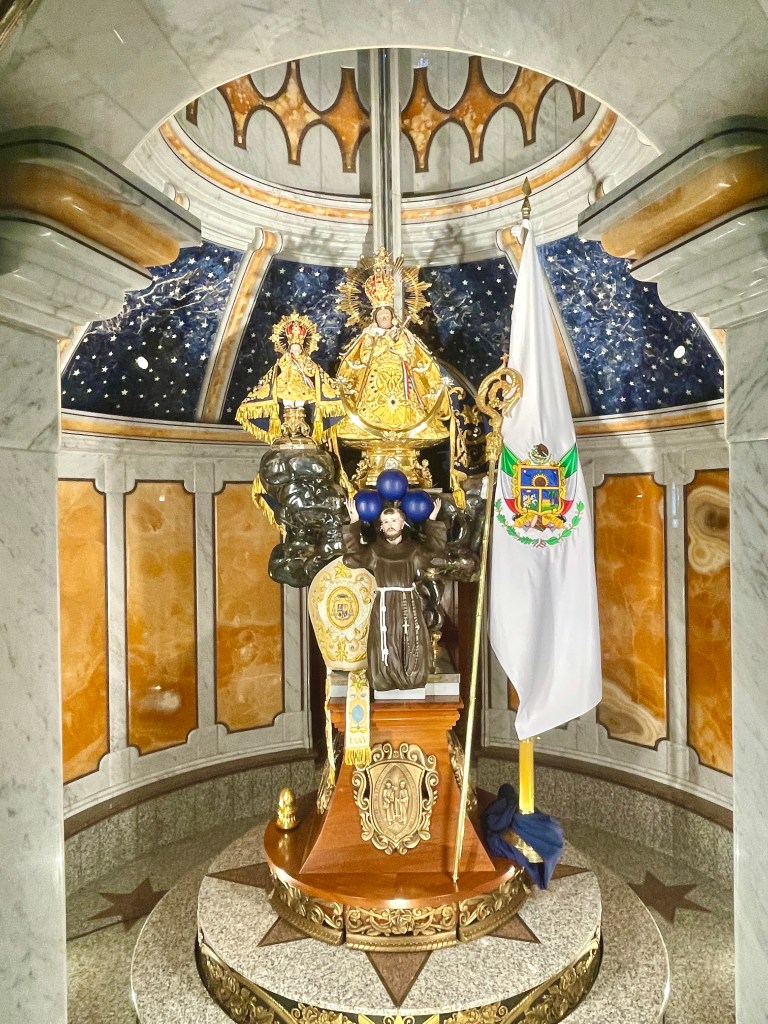
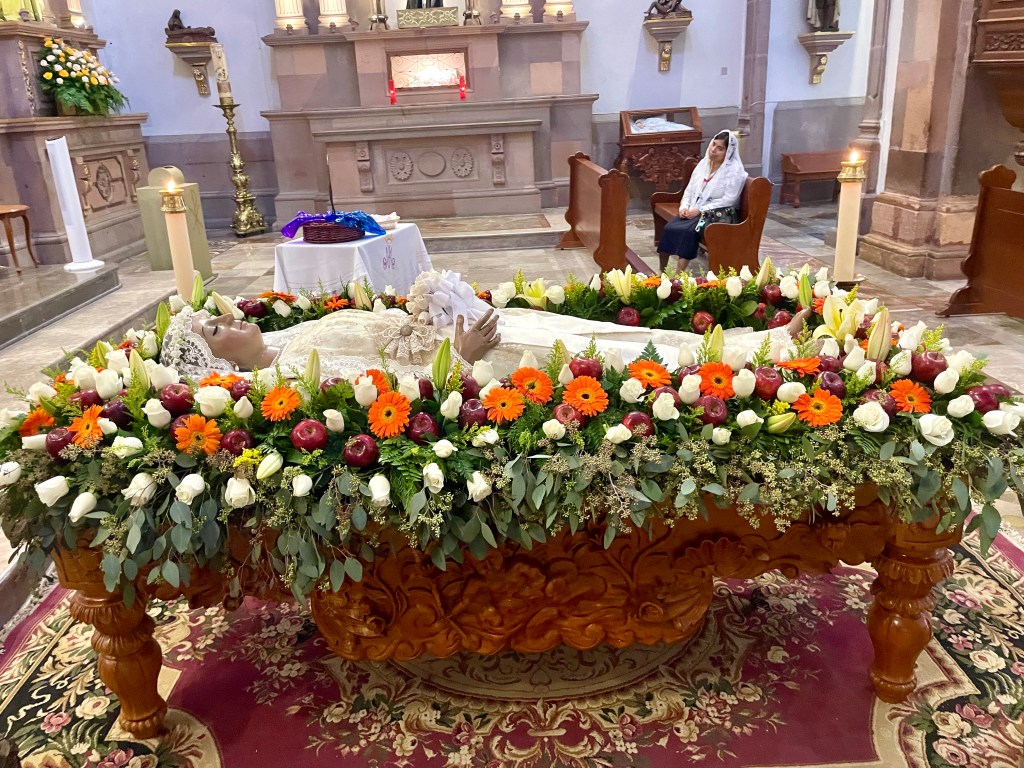
While small this church has so much to see and admire its the people whose dedication impressed me. When we were there a painter was hanging off a ladder busy painting the nave while services for the Virgin were ongoing during this week of celebration and the church was being cleaned top to bottom.
I think one of the things that made me aware of the dichotomy of past times and the modern demands of today was this sign I spied within the inner courtyard of the church. I will admit I chuckled out loud. I hope you enjoy it and a smile graces your face too.



 You Should Be A Traveling Fool2.com