Oybin Castle and Monastery

By Cheryl L. Hosman Dieter

I have been extremely fortunate to have had many ethereal experiences during my lifetime. The “best” ones arrive as a complete and utter surprise, a supreme blessing if you will. This is exactly what happened when Mark and I visited Oybin Castle and Monastery this past August. This stunning complex is located in the state of Saxony in Germany just a short distance from the boarder of the Czech Republic.

Mark straddling the border

The town of Oybin is charming and one of its claims to fame is that Napoleon stopped in the town.

The castle itself sits atop a huge sandstone cliff and was thought to have been established in the 13th century as a way station. It grew under the auspices of George of Lipe’ during the 14th century. Sometime in the middle of that century, Charles IV, King of Bohemia, expanded the castle and established the Celestine Monastery. The castle was struck by lightening in 1577 and fell into disarray until 1990 when the entire complex underwent extensive rennovation.

To get to the romantic ruin you can either take a high steep trail or a small pull along train that can be caught in the parking lots below the castle. It costs a few bucks for both the parking and the train. There is also a small entrance fee at when you reach the castle gate of 5-8 euros.

Views of the castle

The Gothic monastery is a few steps from the castle. It is a masterpiece with soaring “windows” which frame the “far-as-the-eye-can-see” vistas surrounding it. It is thought that a small number of very forward thinking monks lived in monastery at a time who installed under floor heating during the construction of their home.
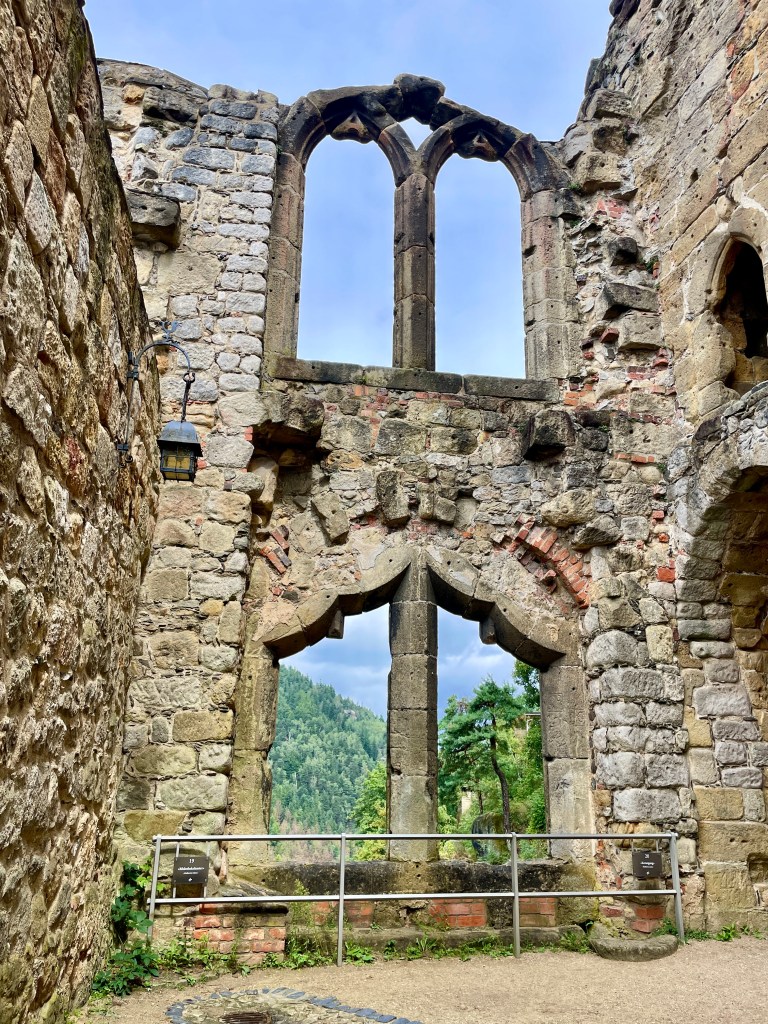
View of the Monastery
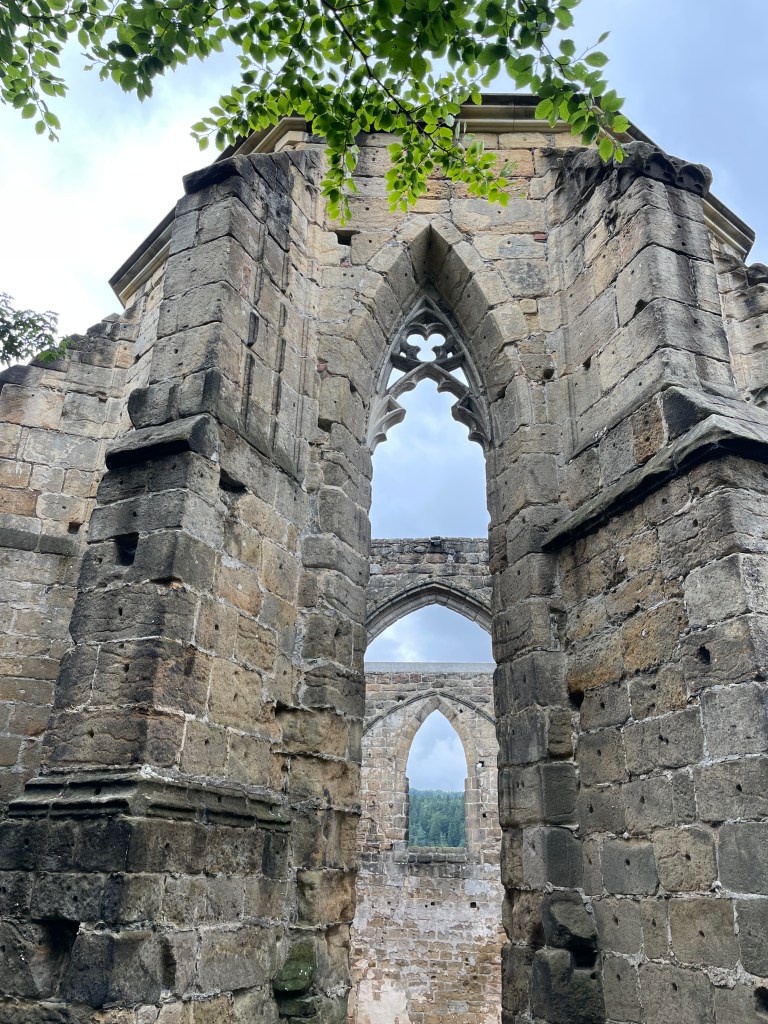
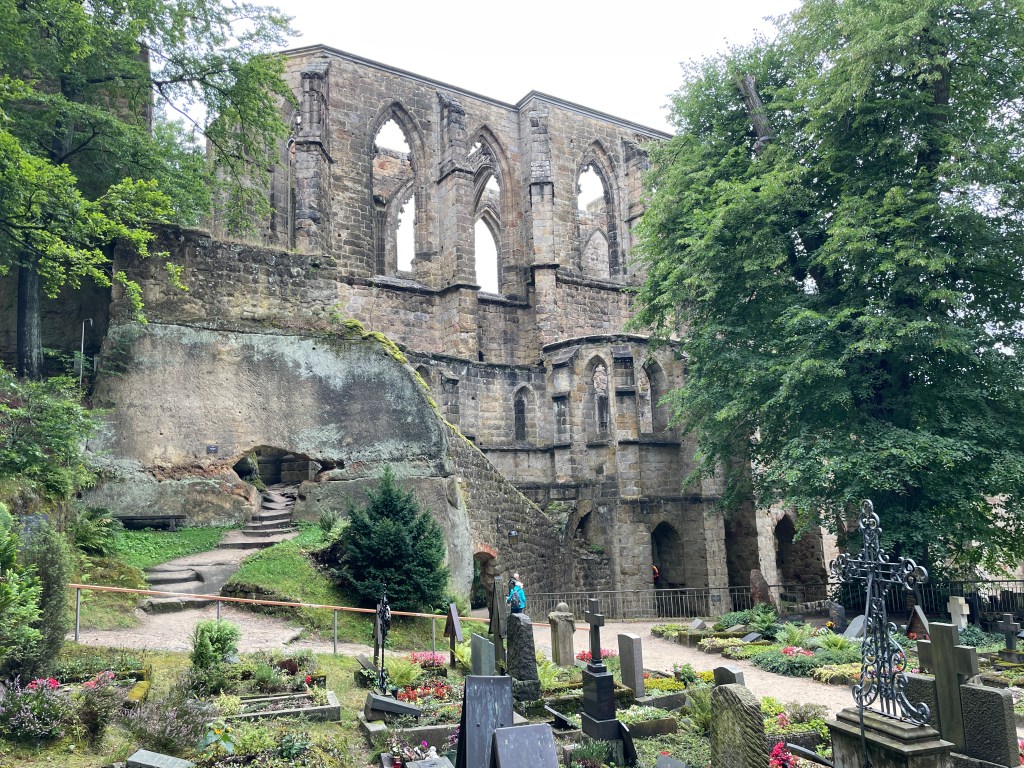
While we were strolling through the back of the Monastery (as pictured above) we began to hear the soft and lovely strains of a violin. Upon climbing the stairs we were drawn deeper into the ruins and the beautiful acoustics that can only be heard in a building such as this. And so I leave you will a video of the magnificent surprise that greeted us that day and which we hold as a sacred memory in our hearts.

Video by Mark Boys

My Absolute Favorite German Town-Gernsbach, Germany

Okay, I will admit that I am a little biased. I may even be more in love with this town than just about any I have ever been to but it has nothing to do with the fact that my 2nd great grandparents emigrated from here and that their parents and their parents parents lived here too. No, this town is a true historical gem and it deserves any accolades it receives. Each and every one of them.

The day we came we had visited a town 10 miles away that my SIL’s family had emigrated from. It was small, desolate and looked like much of it had been destroyed during WWII. New buildings stood on a main street lined with them. It was a real disappointment to her because there was no character in the town. None. Needless to say, I was afraid that I would be bitterly disappointed to have come all that way to see Gernsbach and have it just be a shell of a town. Thankfully it wasn’t.

Gernsbach is located 7 km from Baden-Baden in the Black Forest.  The town was established in the 12th century and paper is a huge part of its economy as it has been for centuries. My 2nd great grandfather worked as a Joiner while living here in the early 1800’s. His mother, Elizabeth Lippert, was born in this town in 1792.

DSC06425

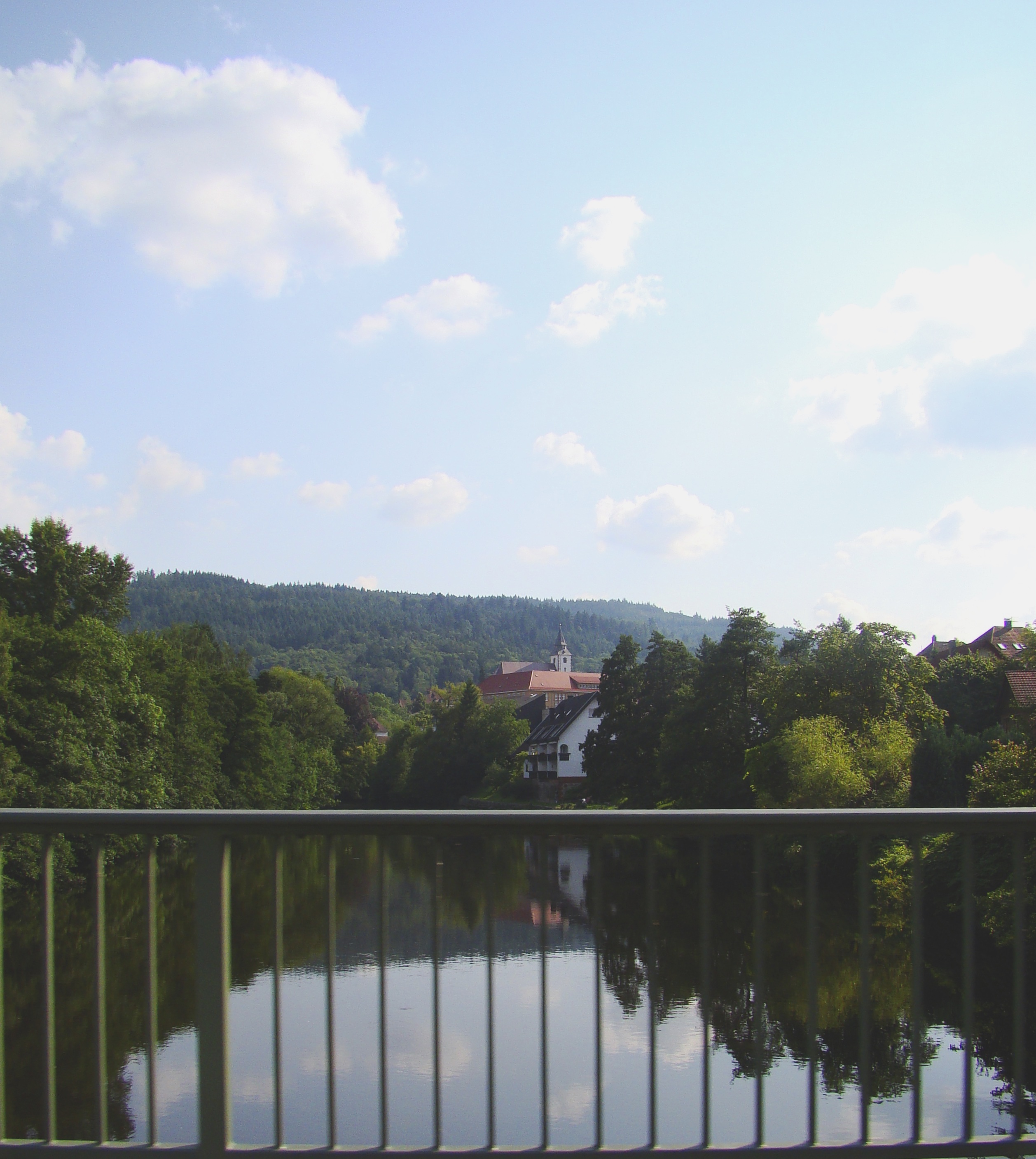
The first clue that this would be a grand place to explore was the huge stone bridge that stood as an entrance to the town and divides it in half. We made a quick right and began climbing up the hillside streets where we had views  that stretched for miles of the surrounding mountains. It was breathtaking. This has got to be one of the most romantic spots in all of Germany so take advantage of it.

DSC06226

Another era of the past were the cobblestone streets filled the town square and stretched out beyond meandering throughout the city.  But the most impressive thing were the row upon row of beautiful timbered houses that have stood for hundreds of years.

One has been around since the 1600’s and tours are given of this outstanding building which is in the process of being restored. We climbed throughout the building venturing here and there and when we reached the top the views of the church on the hill were unmatched. I have to confess I ran my hands along the buildings outer and inner walls just sure that my 5th Great Grandmother had once done the same and that somehow we were touching each other’s hands.

Besides the numerous timbered houses there are also charming fountains that dot the city. Filled with baskets of flowers surrounding the water they are some of the most beautiful that I have ever seen.

There are also two churches, the protestant St.-Jakobskirche with its beautifully tended cemetery. It is an interesting thing that in Germany that you will rarely find old tombstones. This is because a family will lease the burial plot for a period of thirty years and if the family does not pay to have the plot renewed, everything is removed including the headstone. That said, this churchyard does have a few old stones that are worth looking at.


The other church is the Catholic church which was re-built in the 1800’s. The town walls surrounds it along with the early history of the place. We happened upon the church when the organist was practicing and the music was as enchanting as the building was beautiful. Hearing the organ explode throughout the church is something I will never forget.

DSC06420

Part of me hates to write about Gernsbach. It is an undiscovered gem. I am afraid that the next time I go back it will be swarming with tourists because with all its history and  beauty this town is worthy of the biggest and  best bus tours. This place is an undiscovered treasure. Selfishly, I hope it remains one.

Altes Rathaus, or Old Town Hall, was once a palace built for a rich timber merchant in 1671-1618.