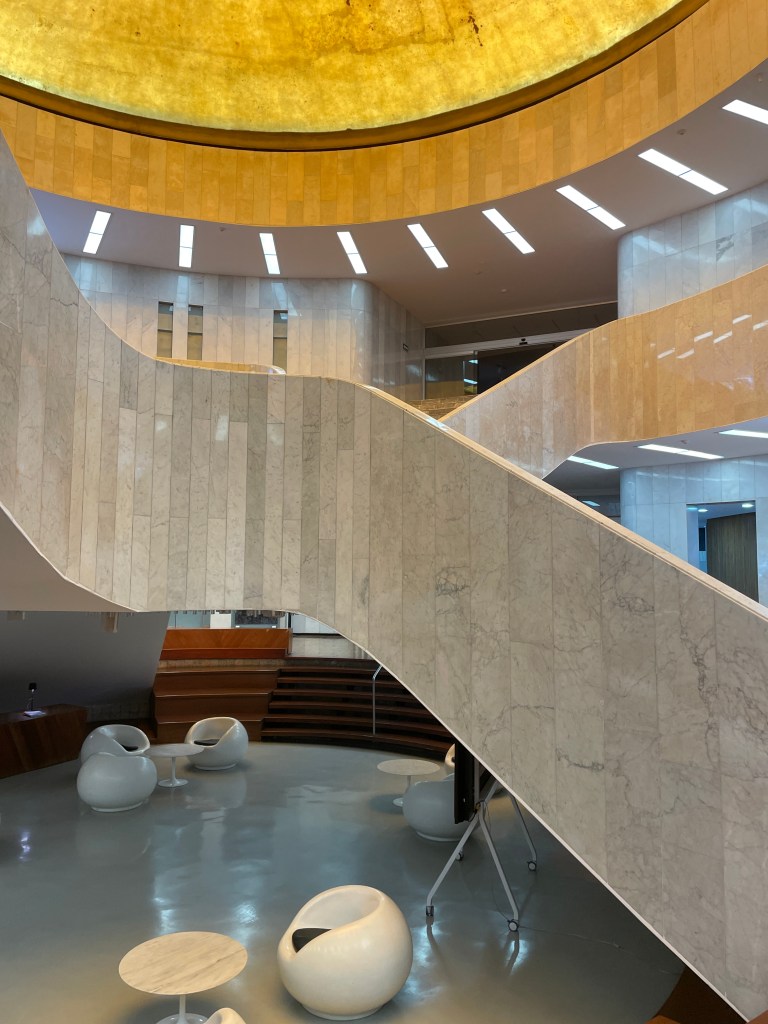
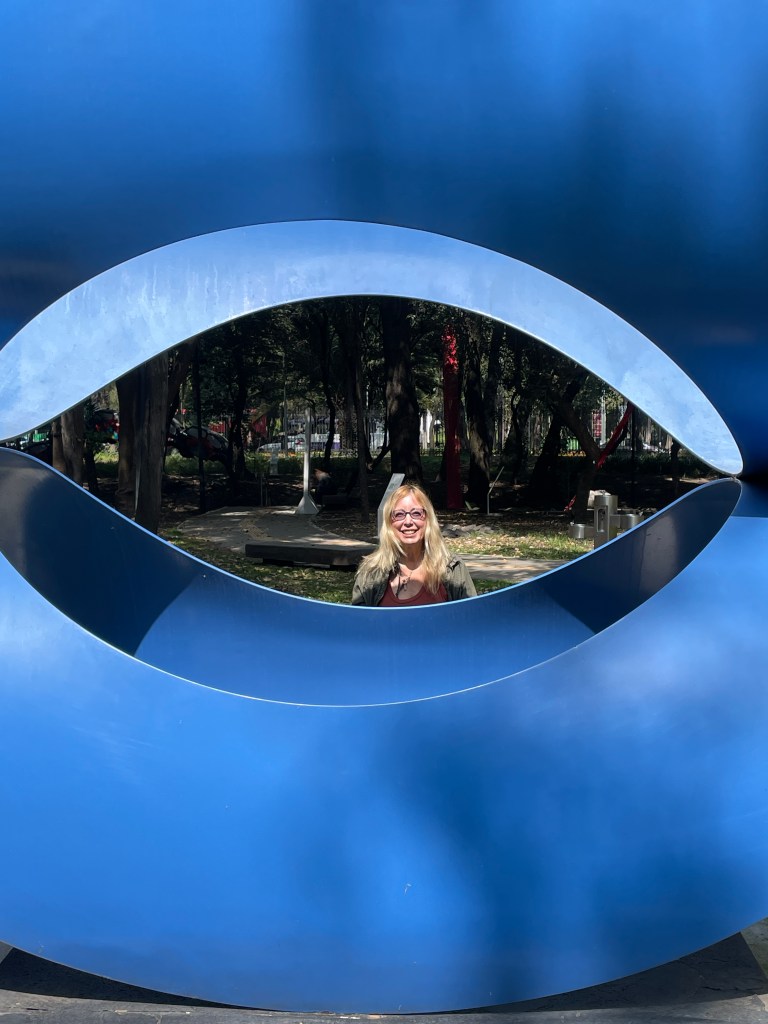
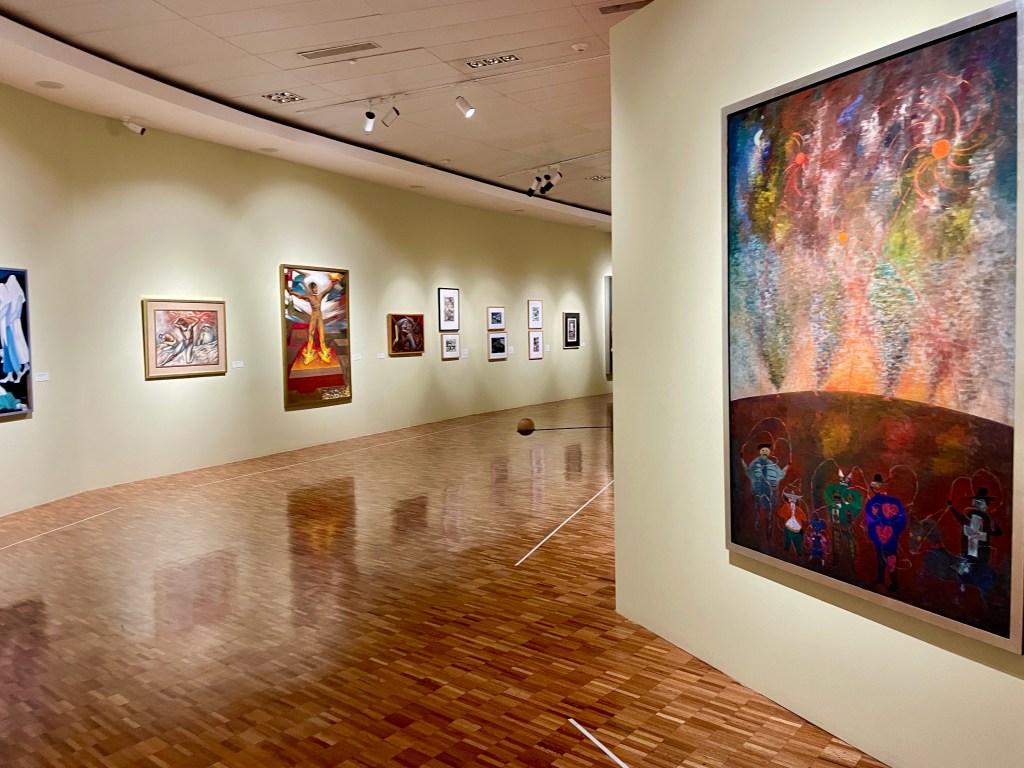
Mexico City has some of the best collection of museums in the world and the Museo de Arte Moderno certainly didn’t dissappoint. It was established in 1964 designed by architests Vazquez, Alcerreca and Salcido. With a focus on Mexican art ,permanent exhibition artists include Kahlo, Jair, Montenegro, Rivera, Loza; just to name a few and features works from 1930 until the present day. With basically four wings and an incredibly beautiful outdoor sculpture garden you will want to give yourself plenty of time to experience the flow between outdoor and in that the building encourages.
The day we got there they were installing a new sculpture and it was amazing to watch the process
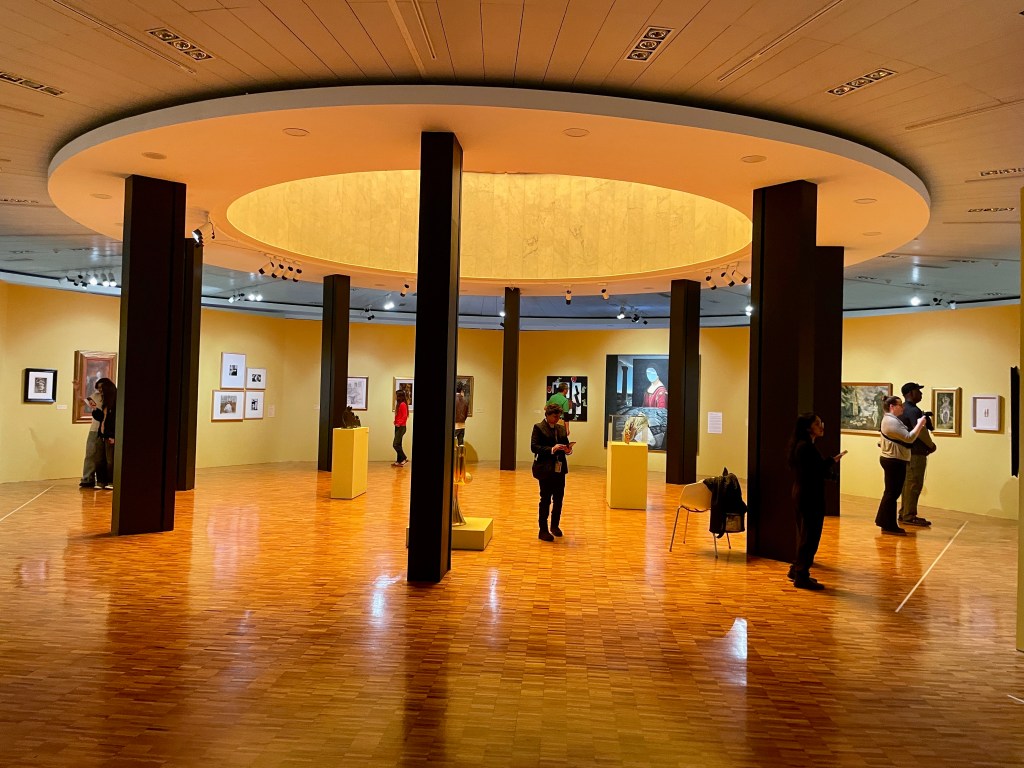
As you enter the Museum you are met with gathering areas on both the first and second floors. They are beautifully designed and meant to allow to to view glimpses of all areas of the interior and grounds.
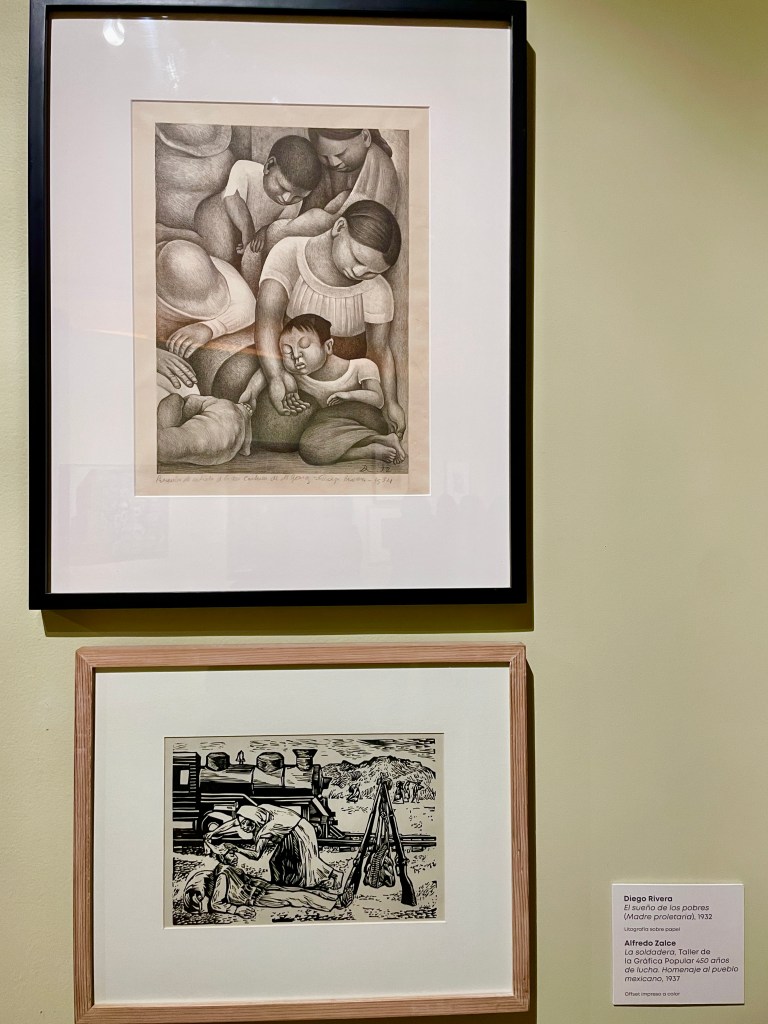
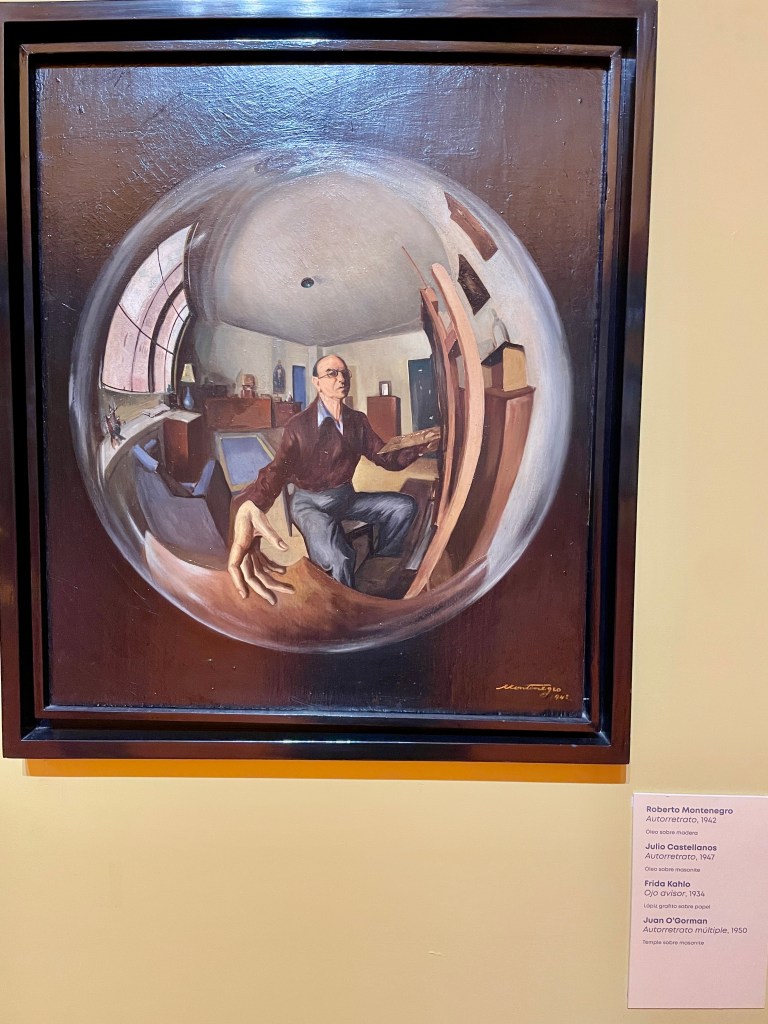
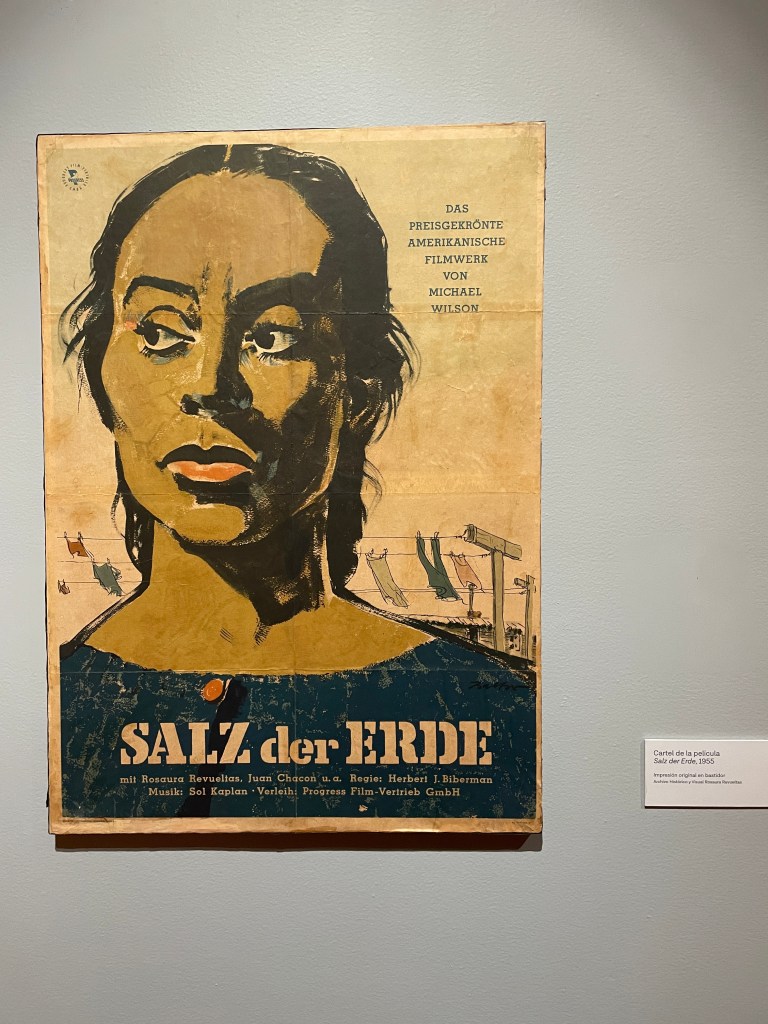
Here are a few of the more famous paintings on display and/or some of my favorites.
Olga CostaDiego Rivera, Alfredo Zalce Frida KahleRoberto MontenegroFermin Revueltas
The gardens and sulptures just can’t be missed and there is a small outdoor cafe at which you can sip your coffee and view the magnificence all around you.
Just a few more pics but I guarantee you that there is so much more to see. As a person who has never been much impressed with “modern art” I can say that I have changed my perception of the genre. It has elements that I can readily identify with as a woman born in the 1960’s and allows for a glance at past history that will hopefully influence the future.
Open Tuesday-Sunday from 10a.-6pm. The cost about 70 pecos with no fees for the disabled and young children. Afterwards, walk throughout the large city park to which many of the museums are connected.
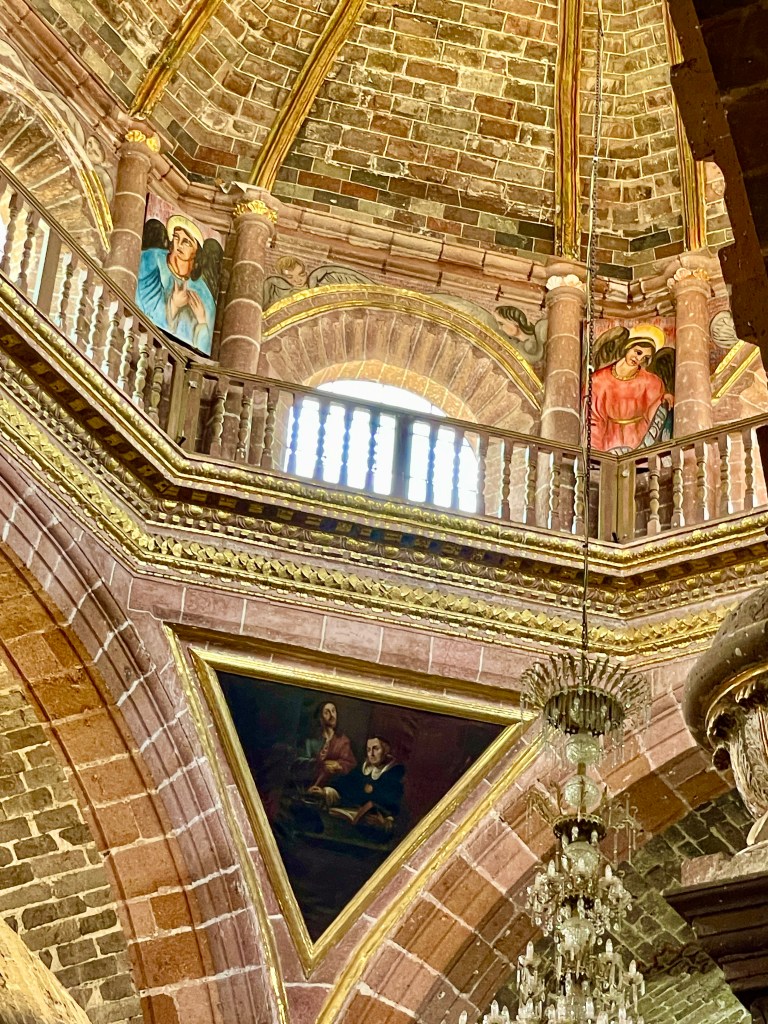
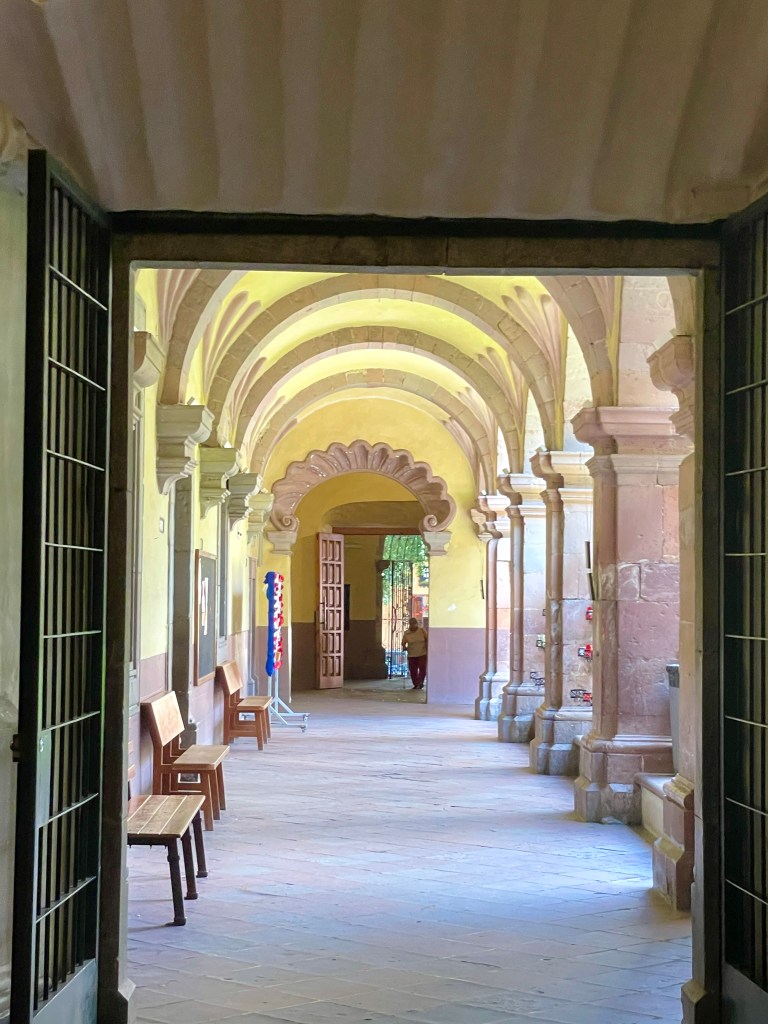
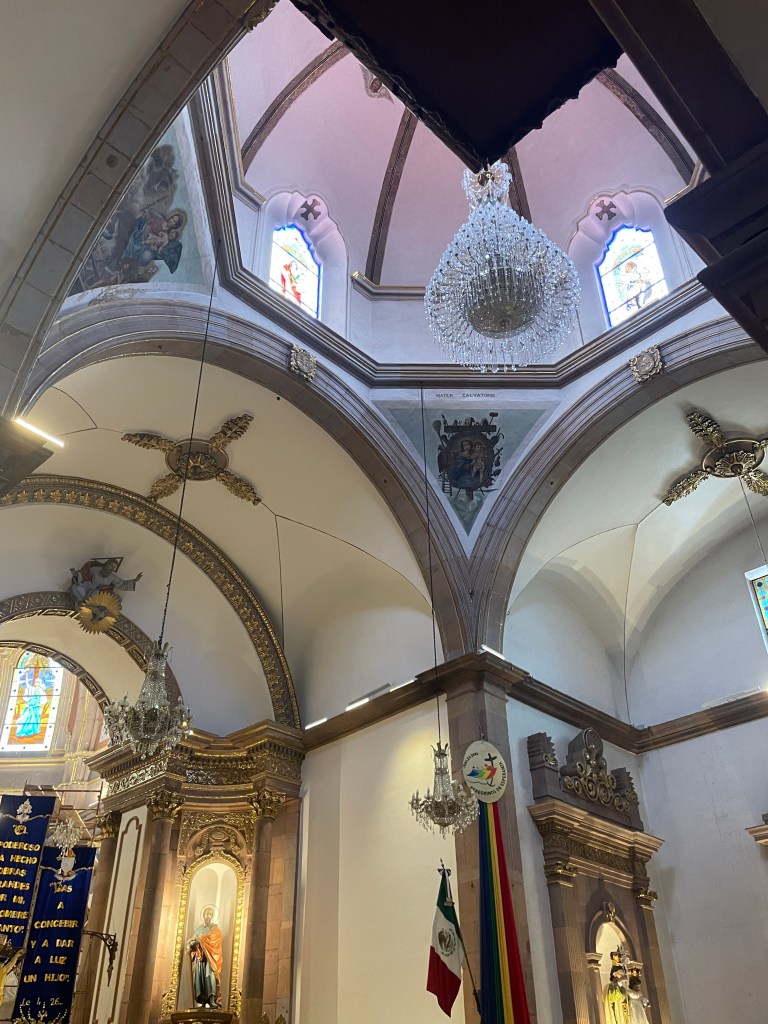
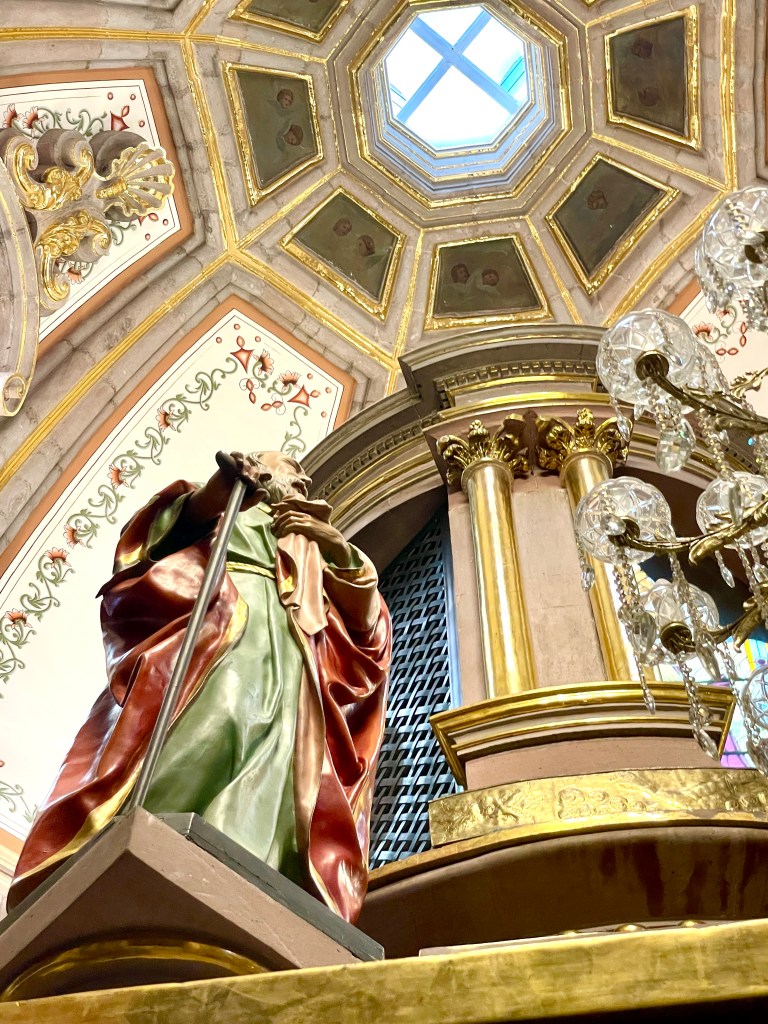
I have been to so many churches since I arrived here. I love the architecture that these old buildings possess. The artwork, murals, painted ceilings, and biblical depictions are all inspiring (okay, a few are frightening) and help us have an insight to those things that drew people to the Catholic Church in earlier times. The thick walls of the church also provide a respite from the heat and also from life’s troubles. Perhaps what I enjoy the most though is just walking in, sitting down, and listening to the music and the chants echo off the walls of the sanctuary. It gives me a sense of peace and serenity that I can carry with me the entire day.
Parroquia de San Miguel Arcangel- San Miguel Allende
With over 40 churches in San Miguel it is difficult to choose a favorite but Parroquia de San Miguel Arcángel is definitely the most well known and perhaps the most beloved of area residents. Towering over the city, the construction of the church began in the 1600’s under the auspices of the Franciscan Friars, after a smaller church from the 1500’s was demolished. The building is a surprising blend of different Neo-Gothic European influences and the resulting Spanish colonization that swept over these lands. This immense church was completed in stages at various points in history but it was when a local master stone mason, Zeferino Gutierrez, began construction of the current facade in 1880 that the Neo-Gothic architecture was put into place. Gutierrez had no drawings to guide him and he designed Parroquia de San Miguel Arcángel after seeing pictures of the great cathedrals in Europe. To think that one man had such vision as to be able to change the entire feel of a city just amazes me.
The interior of the main building is vast. Yet, there are several different less imposing chapels including the Chapel of the Third Order with frescoes throughout which depict the life of St. Francis of Assisi.
The Chapel of the Third Order
Across from Parroquia de San Miguel Arcángel is a city plaza with tall shade trees and park benches. It is here that you can truly feel the vibe of San Miguel and absorb the influence of the city and the locals who surround you. So take a load off…sit…listen to the church bells ring across the valley…and let yourself sink into a nation that still reveres its history and the people who still help to influence it today.
Basílica de Nuestra Señora del Pueblito
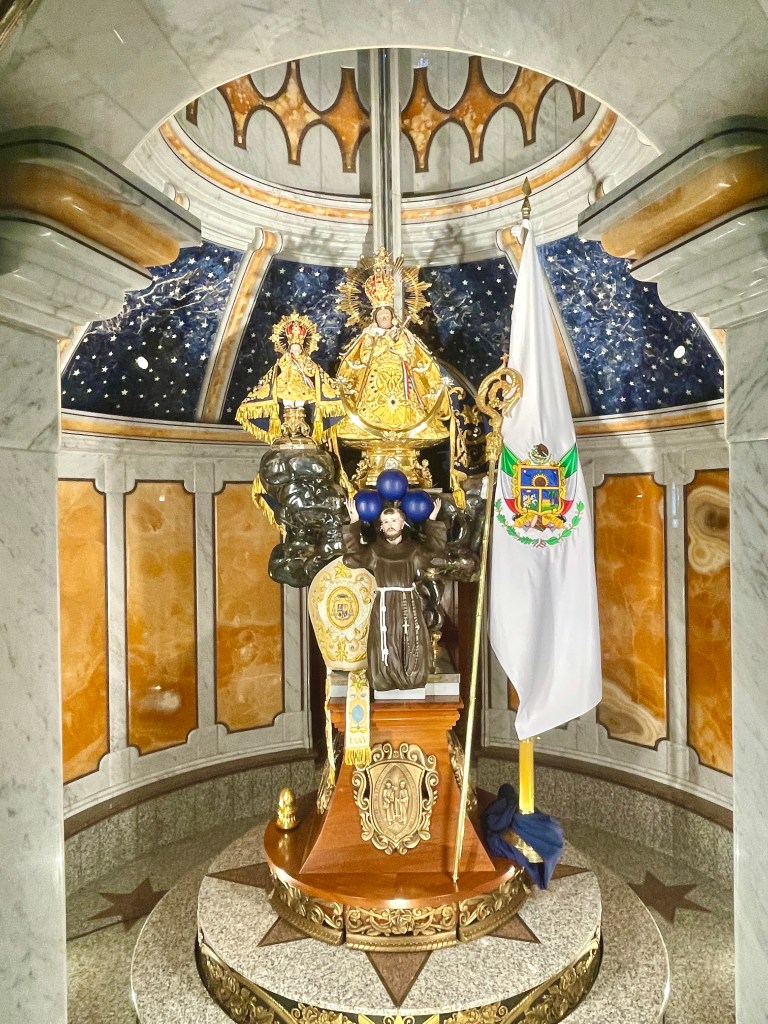
Another Church that I fell in love with was located in the town of Pueblito and is known as the Basílica de Nuestra Señora del Pueblito. It is the church that I mentioned in my post about El Cerrito, The Pyramid of Pueblito, and it is the one that you are suppose to be able to hear the sermon from the pulpit all the way up the hill.
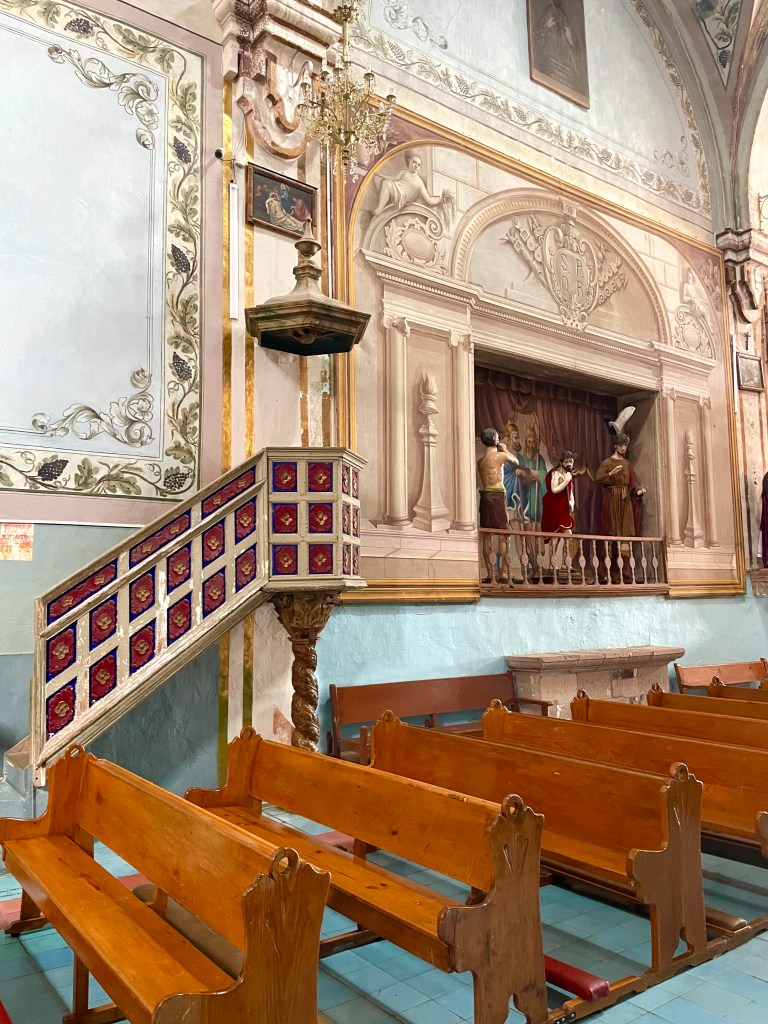
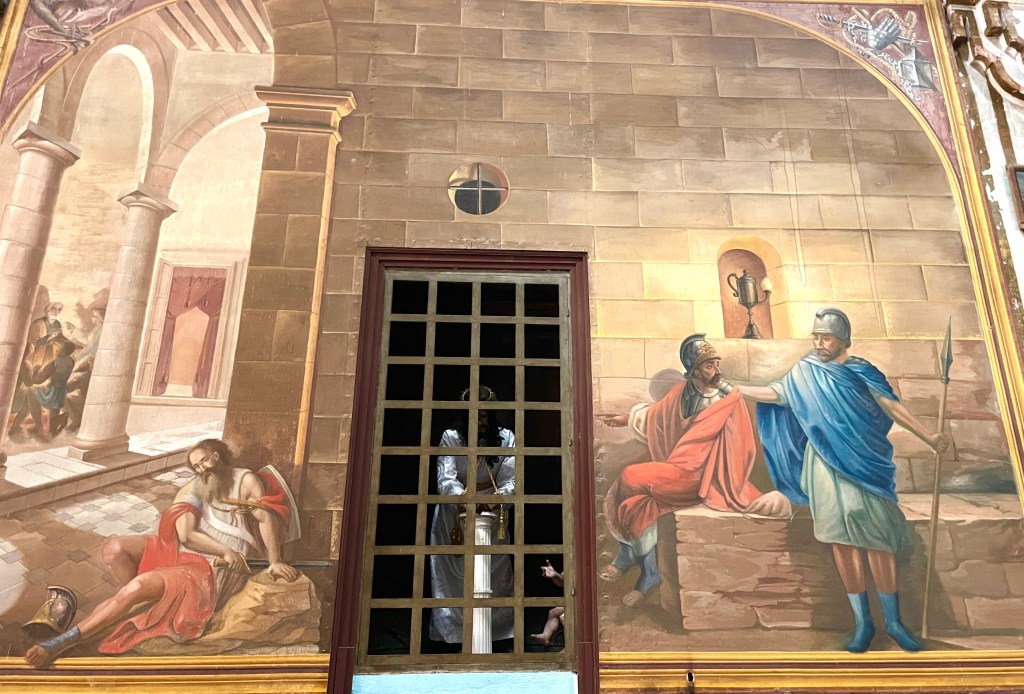
This church is much smaller then the one mentioned in San Miguel and it has it’s own special kind of charm that is quaint yet powerful which is evidenced by the faithful who attend daily mass.
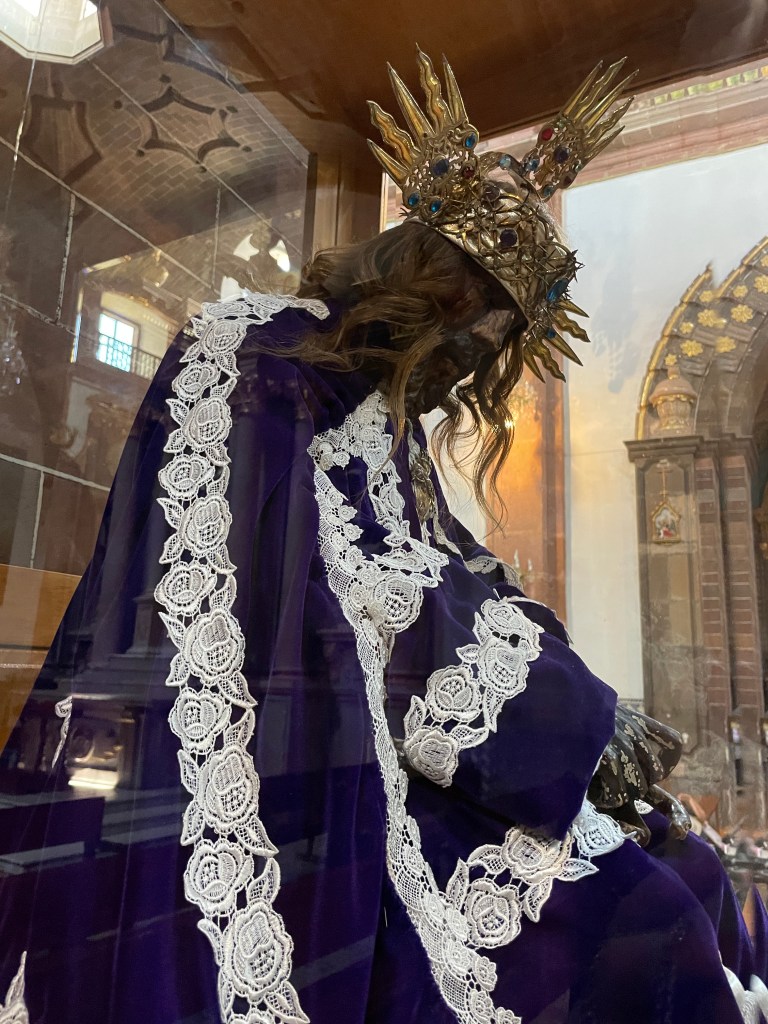
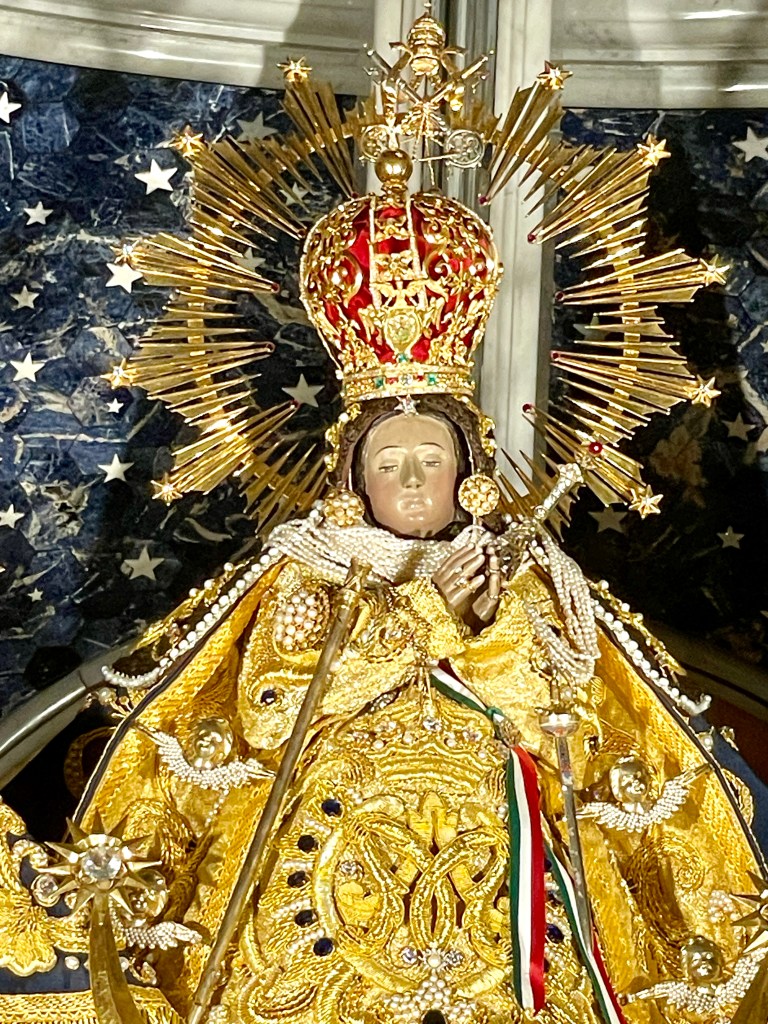
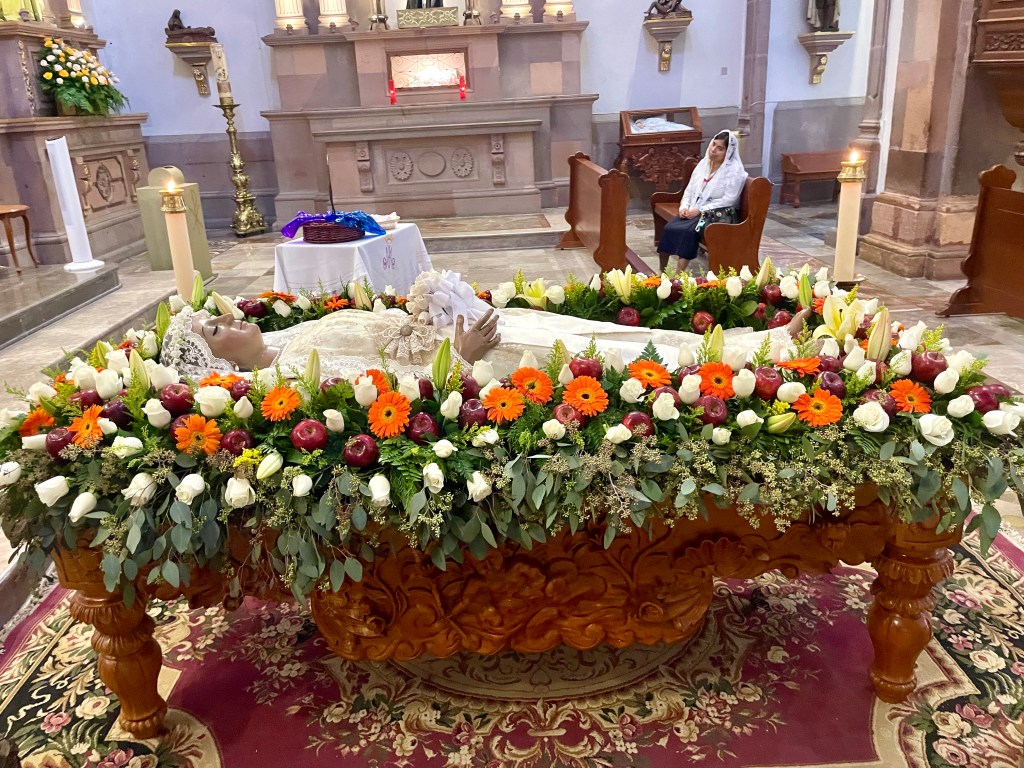
Basílica de Nuestra Señora del Pueblito had its beginnings in 1632 when Friar Nicolas Zamora placed the image of Immaculate Conception near the temple where he built the first adobe structure to house her. Approval for the present day building was granted in 1720 and construction was completed in 1750. Religious festivals for Mary are mainly celebrated in mid-February when the town comes alive. However, when we were there last week, the life-size body of the Virgin, was displayed below the altar where the faithful believed that the next day she would be lifted up to heaven.
While small this church has so much to see and admire its the people whose dedication impressed me. When we were there a painter was hanging off a ladder busy painting the nave while services for the Virgin were ongoing during this week of celebration and the church was being cleaned top to bottom.
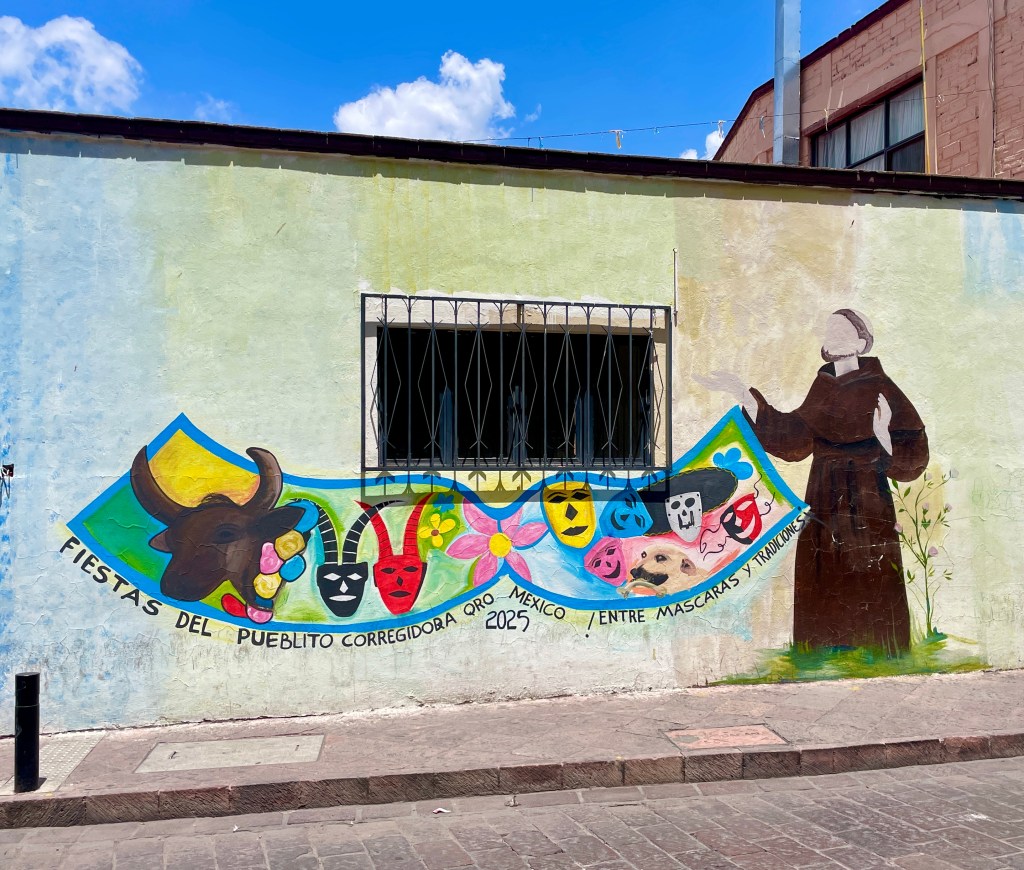
I think one of the things that made me aware of the dichotomy of past times and the modern demands of today was this sign I spied within the inner courtyard of the church. I will admit I chuckled out loud. I hope you enjoy it and a smile graces your face too.
I have been extremely fortunate to have had many ethereal experiences during my lifetime. The “best” ones arrive as a complete and utter surprise, a supreme blessing if you will. This is exactly what happened when Mark and I visited Oybin Castle and Monastery this past August. This stunning complex is located in the state of Saxony in Germany just a short distance from the boarder of the Czech Republic.
Mark straddling the border
The town of Oybin is charming and one of its claims to fame is that Napoleon stopped in the town.
The castle itself sits atop a huge sandstone cliff and was thought to have been established in the 13th century as a way station. It grew under the auspices of George of Lipe’ during the 14th century. Sometime in the middle of that century, Charles IV, King of Bohemia, expanded the castle and established the Celestine Monastery. The castle was struck by lightening in 1577 and fell into disarray until 1990 when the entire complex underwent extensive rennovation.
To get to the romantic ruin you can either take a high steep trail or a small pull along train that can be caught in the parking lots below the castle. It costs a few bucks for both the parking and the train. There is also a small entrance fee at when you reach the castle gate of 5-8 euros.
Views of the castle
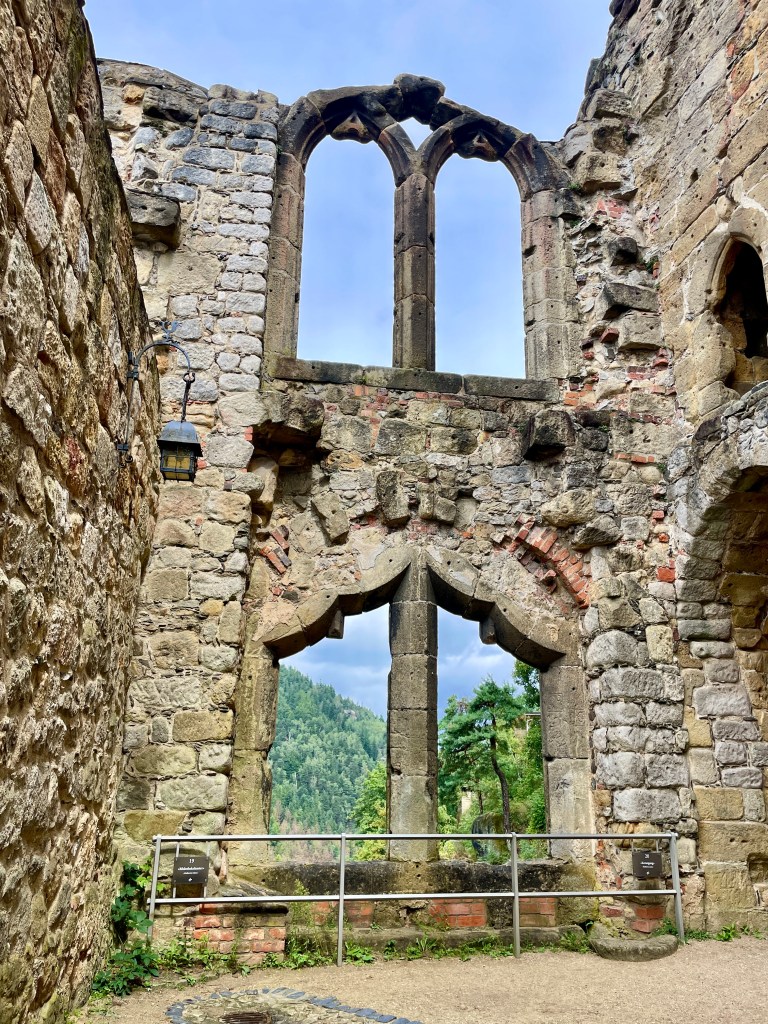
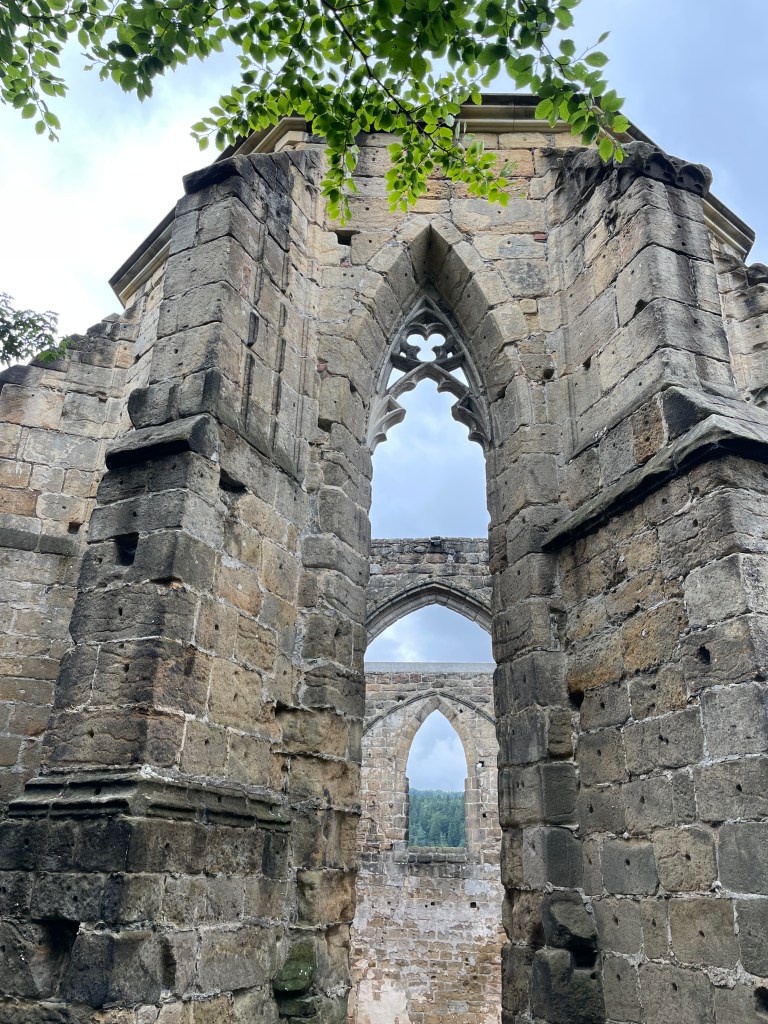
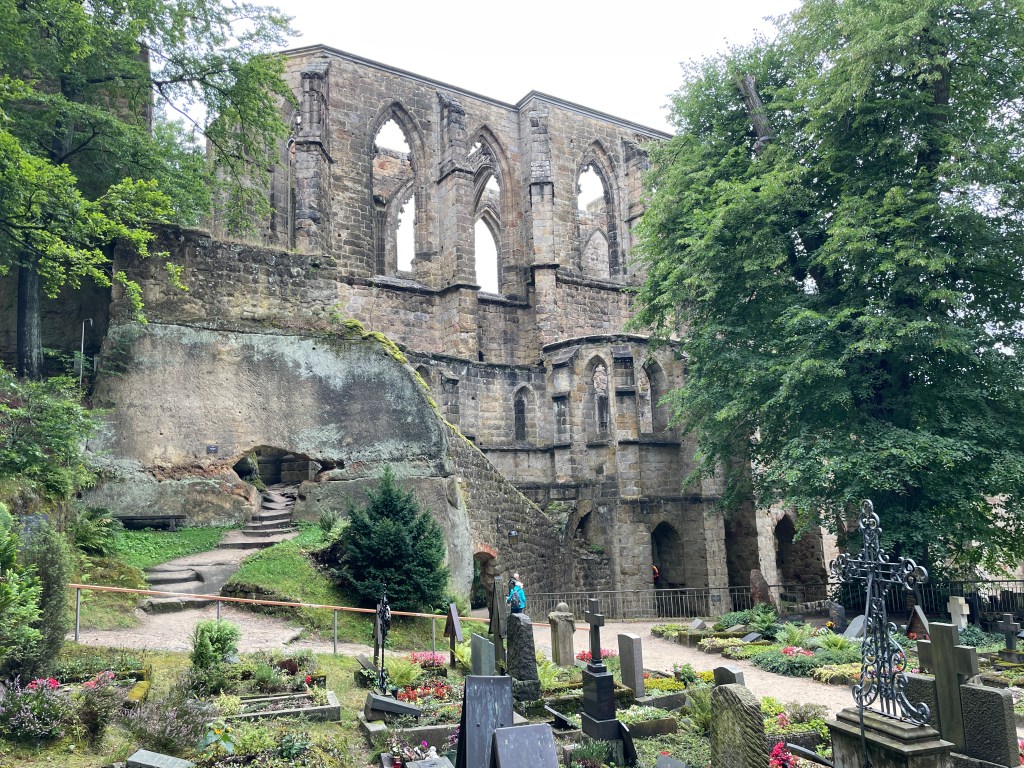
The Gothic monastery is a few steps from the castle. It is a masterpiece with soaring “windows” which frame the “far-as-the-eye-can-see” vistas surrounding it. It is thought that a small number of very forward thinking monks lived in monastery at a time who installed under floor heating during the construction of their home.
View of the Monastery
While we were strolling through the back of the Monastery (as pictured above) we began to hear the soft and lovely strains of a violin. Upon climbing the stairs we were drawn deeper into the ruins and the beautiful acoustics that can only be heard in a building such as this. And so I leave you will a video of the magnificent surprise that greeted us that day and which we hold as a sacred memory in our hearts.
























 You Should Be A Traveling Fool2.com