Cuernavaca, Mexico

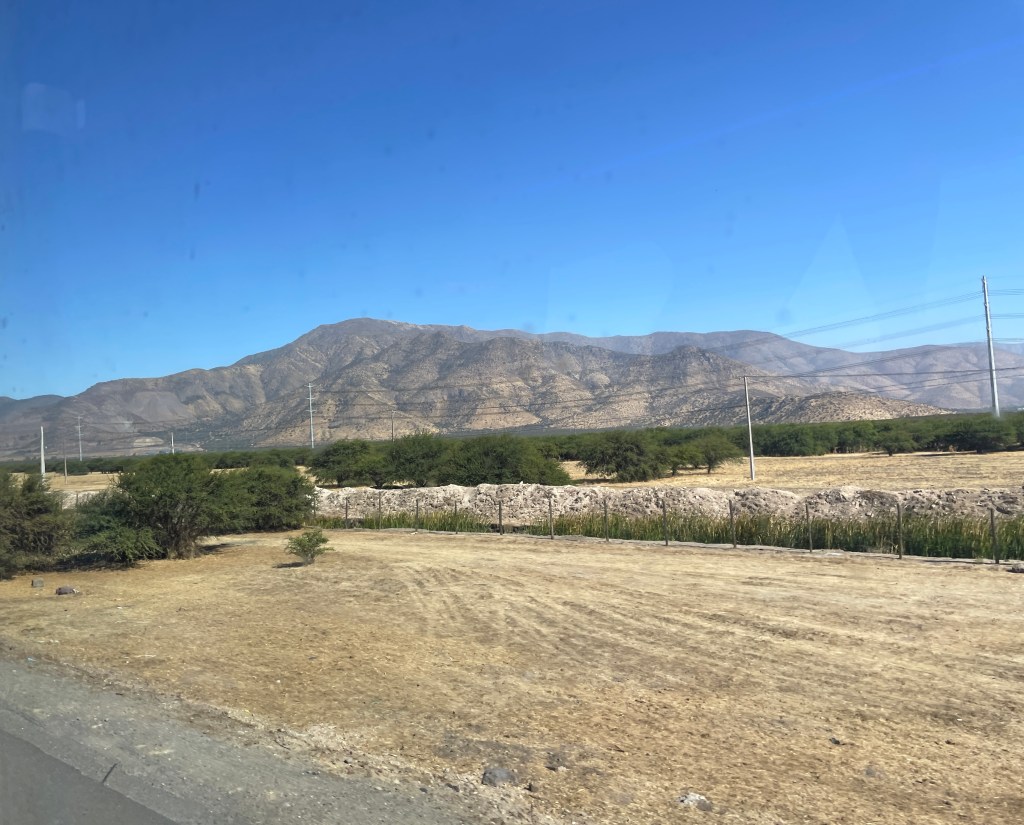
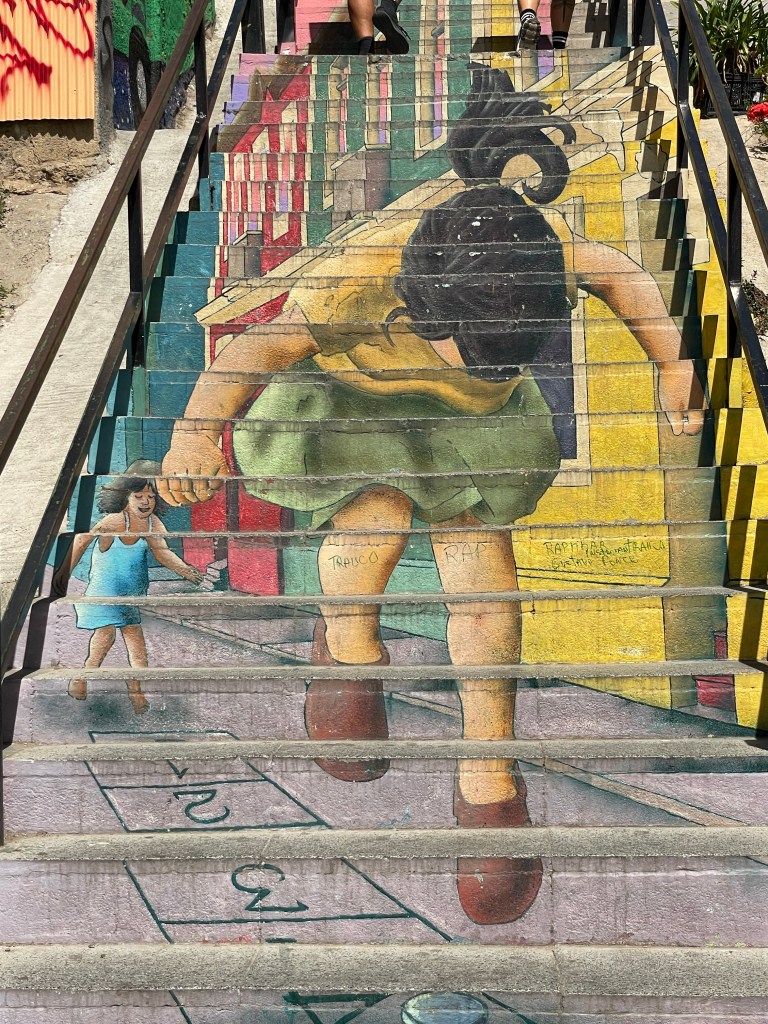
One of my favorite adventures in Mexico was our visit to Cuernavaca. While I loved the one-hour drive through the mountains from Mexico City, parts of which reminded me of Colorado or Flagstaff; I did not enjoy my first experience driving in Mexico City. On the one hand, you have to be Mario Andretti and push the peddle to the metal to squeeze into spaces the size of a dime in front of the one hundred cars whose drivers have the same idea as you, but on the other hand, you have to have the patience of a saint to know when to be cautious as you fight twenty-three million city dwellers for your right to be on the road when no one follows what should be common sense traffic rules. Seriously, it’s like being in intense labor ready to deliver while driving…everything is just coming at you at once! But enough of that…let’s head to Cuernavaca.

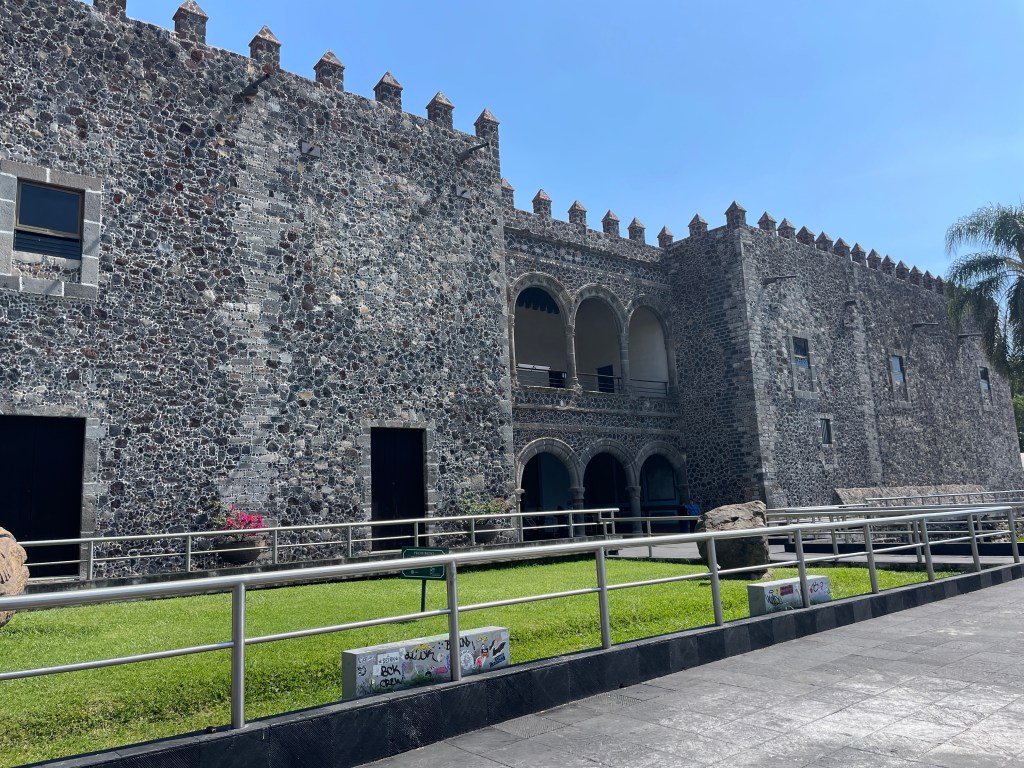
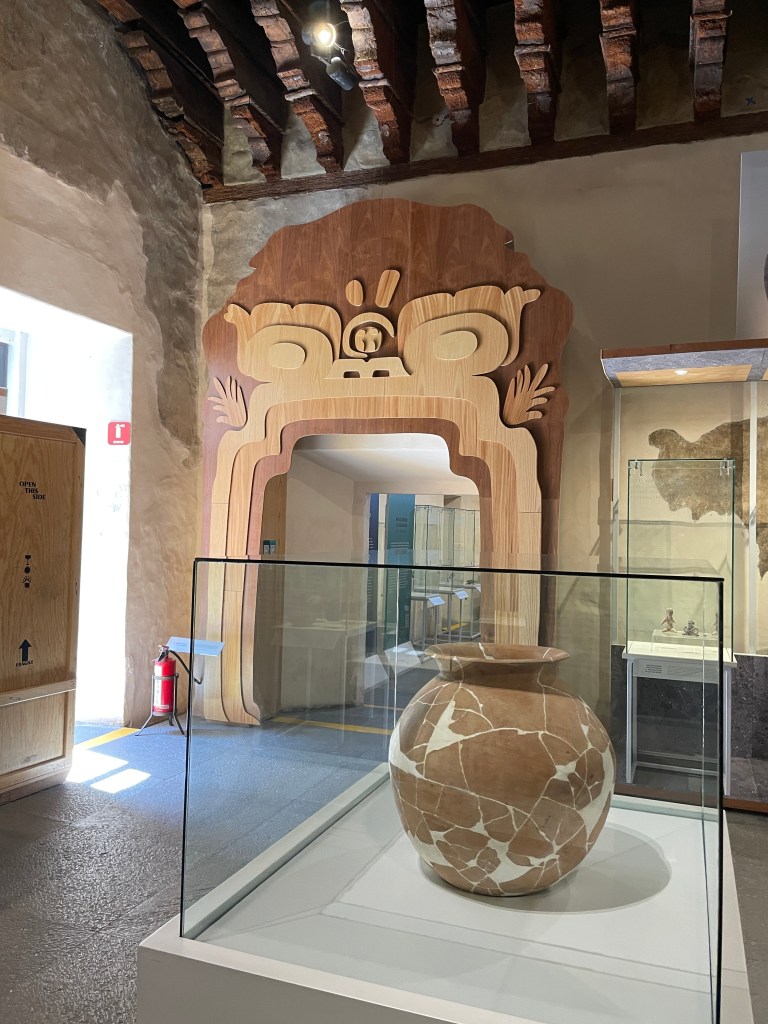
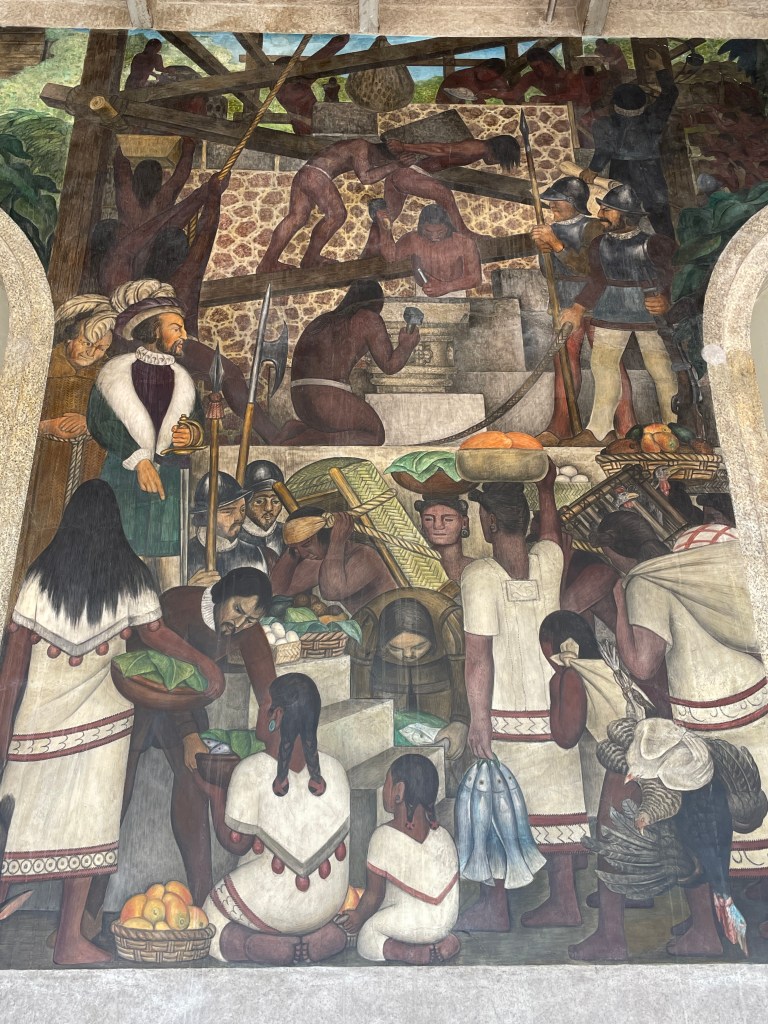
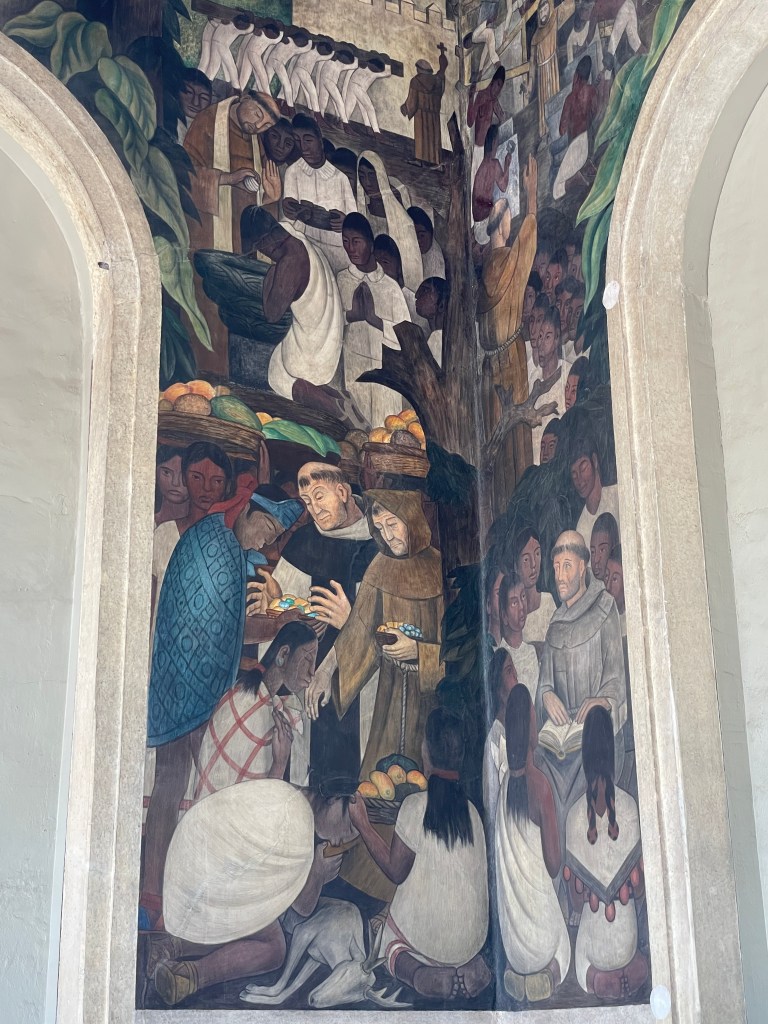
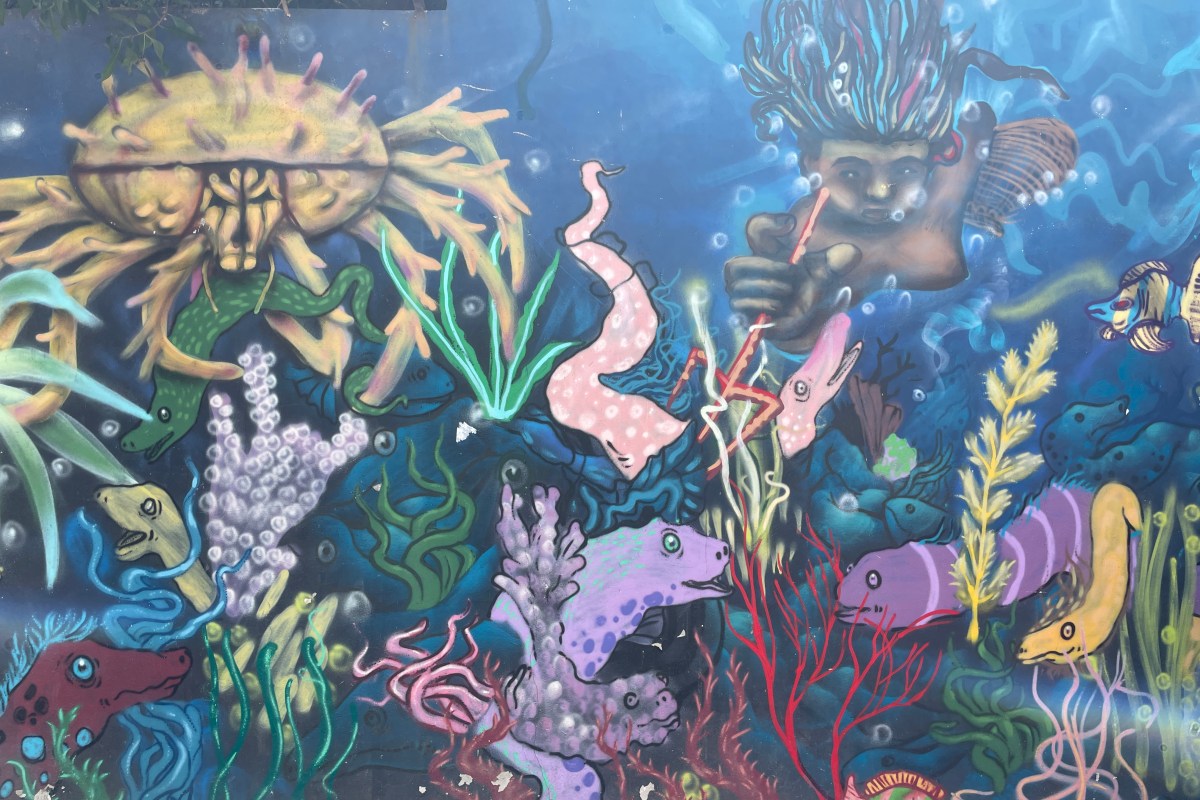
Cuernavaca is the capital of the state of Morelos. What brought us to this place was the Palace of Cortez but what we found was so much more than we ever imagined. Built somewhere between 1523-1528 by the conqueror Hernan Cortez, the palace is the oldest conserved colonial era civil complex within the Americas. And while all that information is interesting what really brought Michael and I here were the Diego Rivera murals that decorate the upstairs floors. Little did we know there was a museum connected to the property which housed more than just the magnificent wall art.

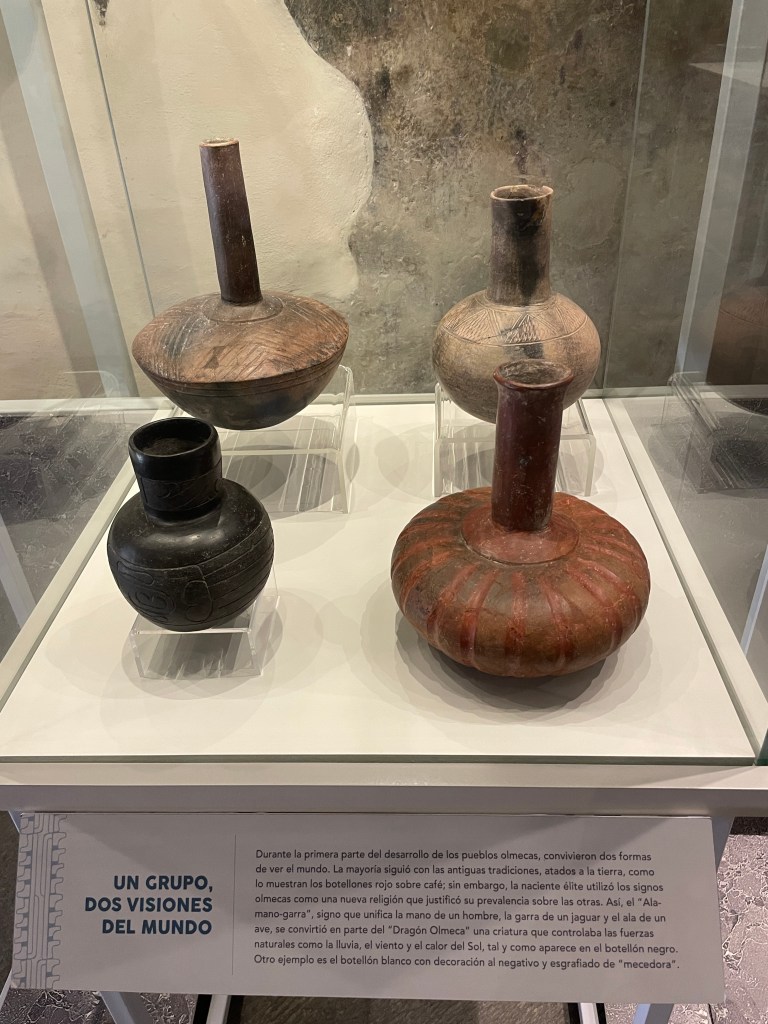
With an entrance fee of about $5 USD it is certainly a bargain in this day of $10-20 fees in the USA. The first floor contains artifacts from the ancient civilizations that flourished in this land. It’s a nice collection for a museum of this size.

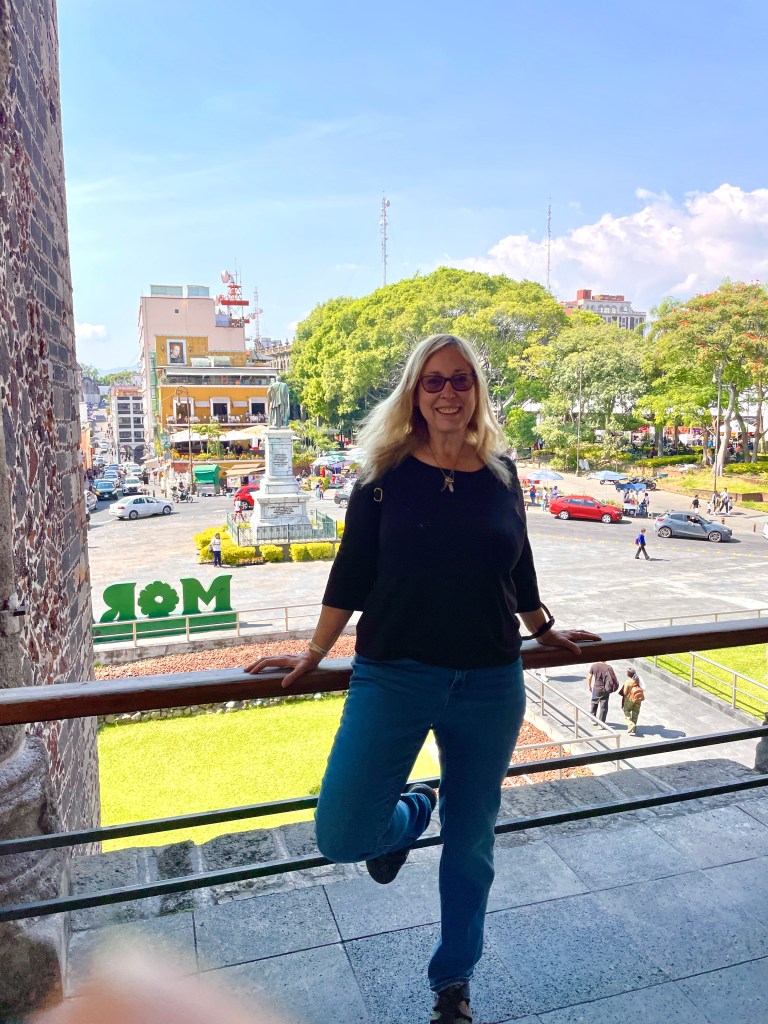
But what we had really come to see involved climbing quite a few steps to the balcony level which includes a magnificent view of the city and the countryside which surrounds it. That alone was almost worth the climb.

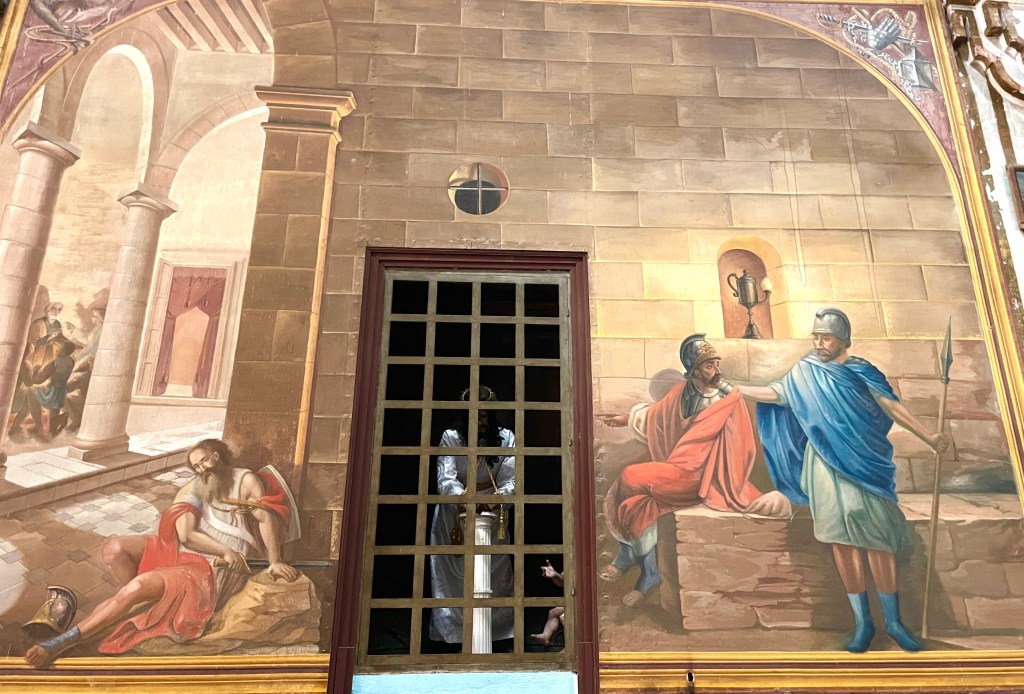
But the piece de resistance were the murals and when we turned the corner our breaths were literally taken away and not just from the stair climb! Commissioned by the US Ambassador to Mexico, Dwight Murrow, Rivera himself chose the subject. of the murals…the history of the invasion of Mexico by the Spanish…and he holds nothing back. They are truly spectacular!
If you are a Diego Rivera fan this is one place you need to check out!

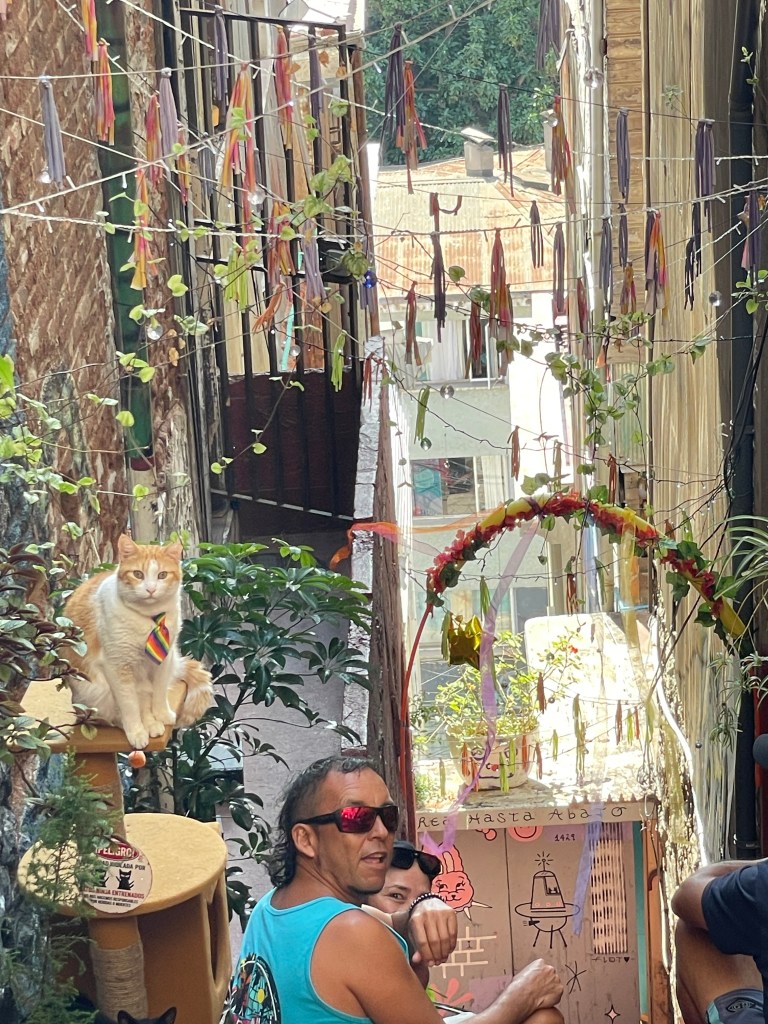
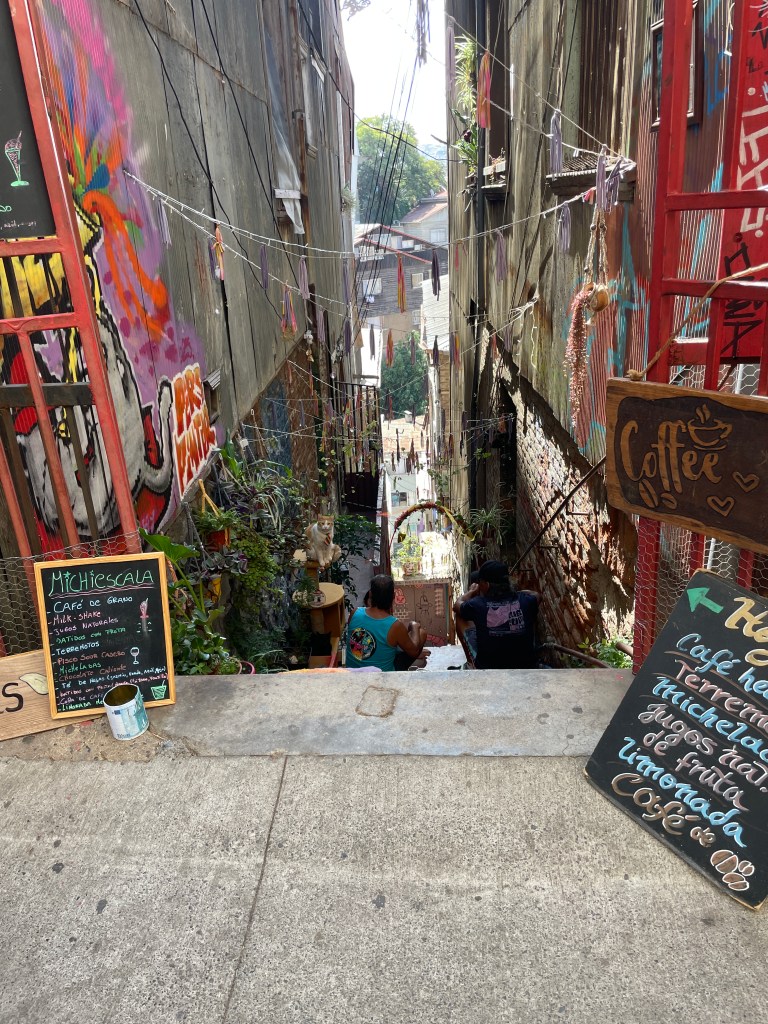
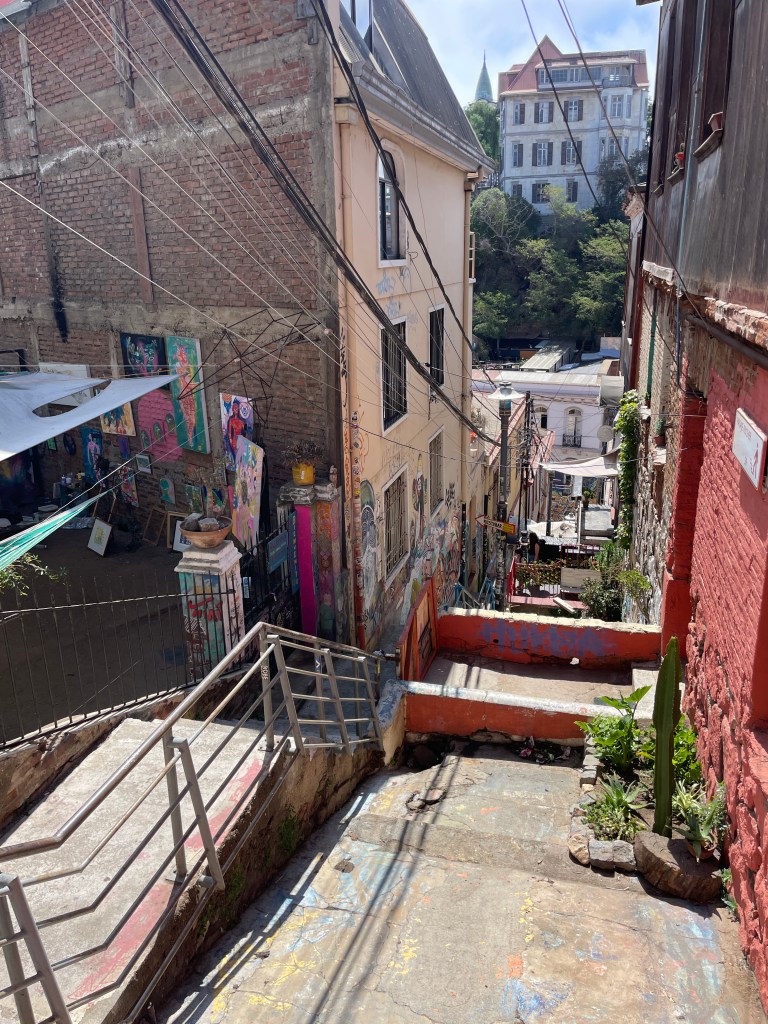
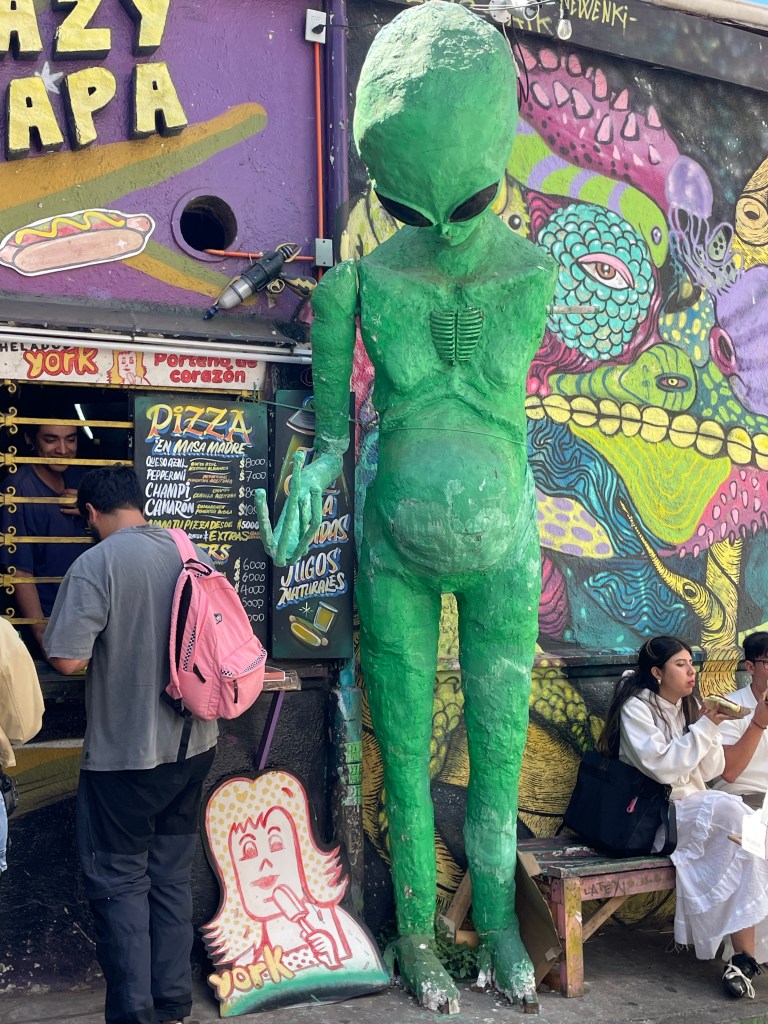
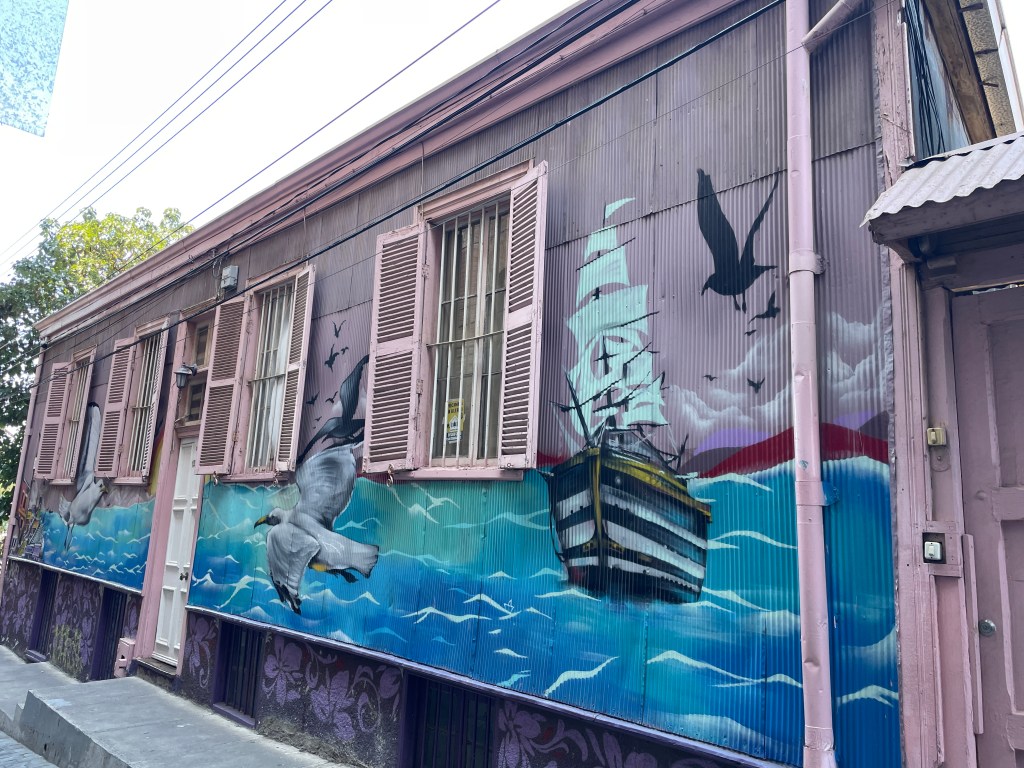
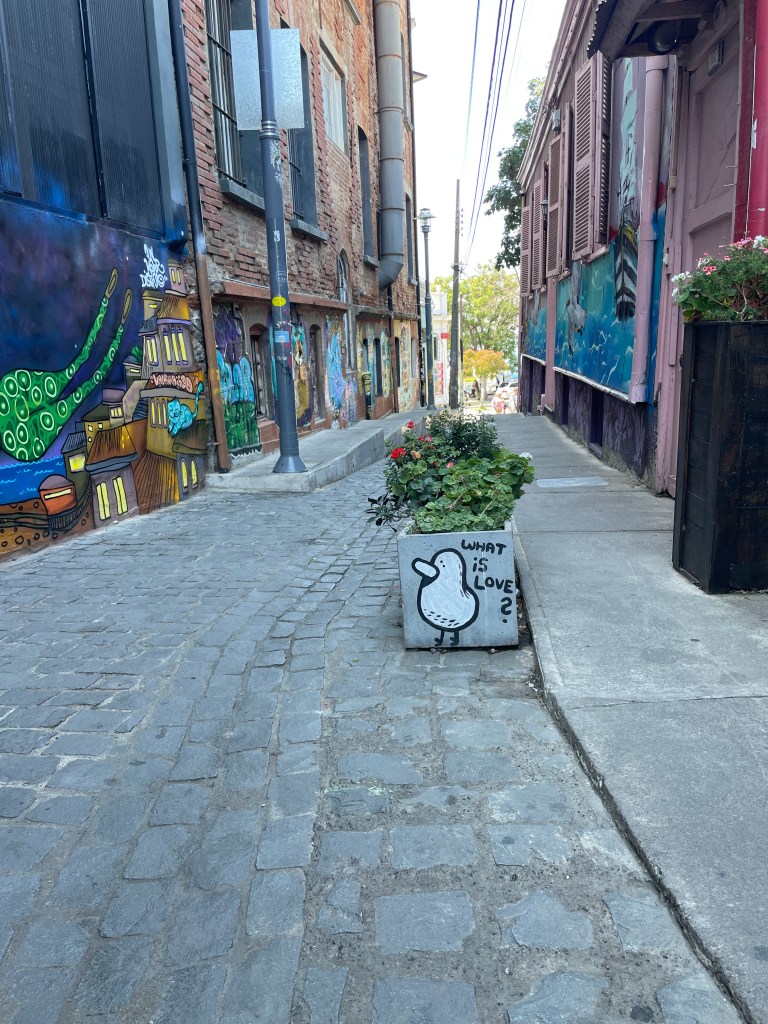
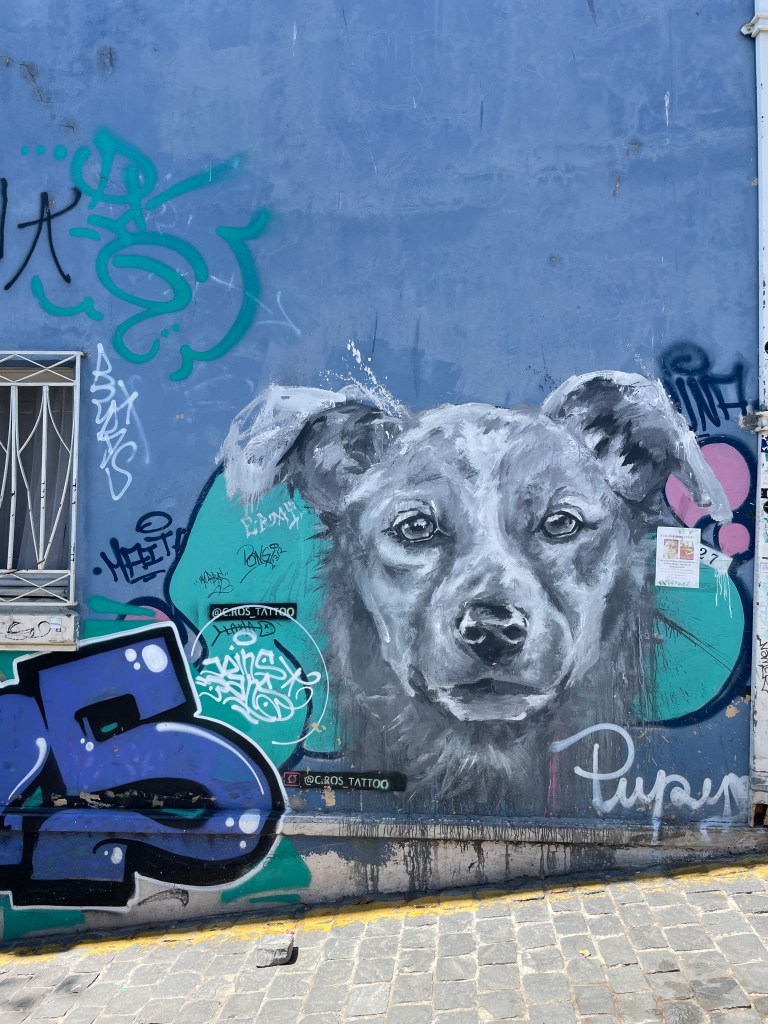
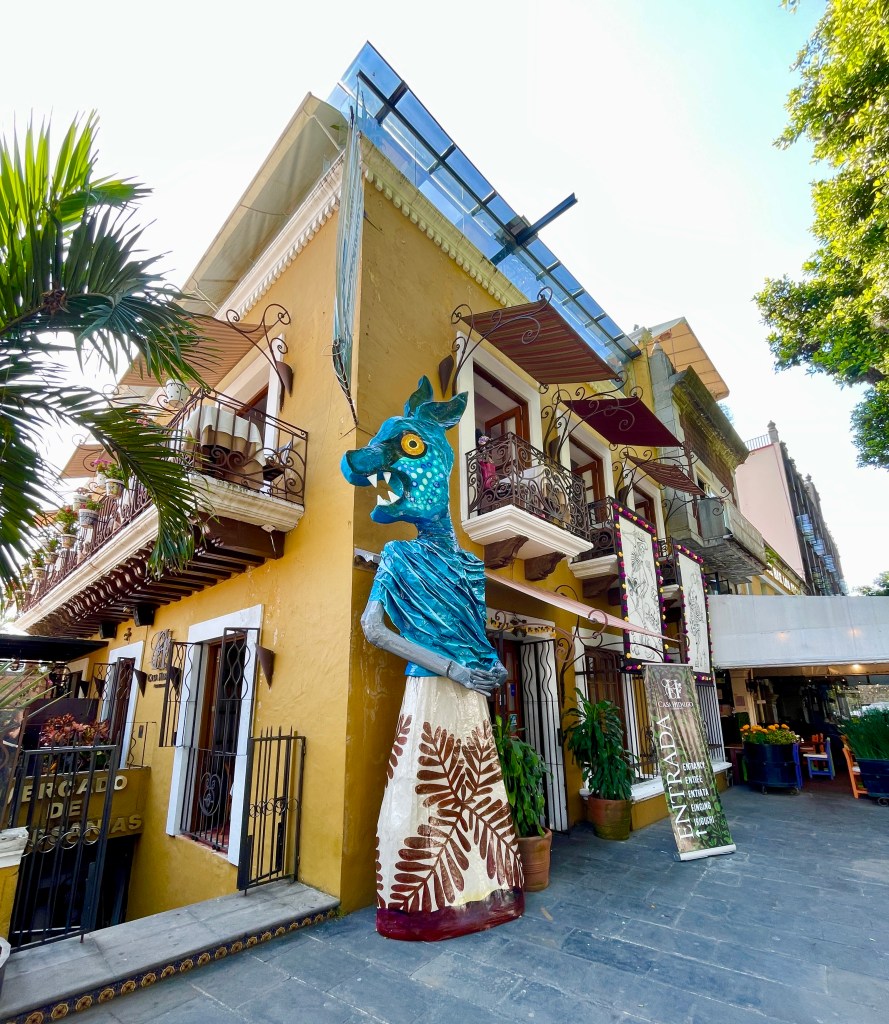
From the Palace of Cortez we walked down the cobble streets, ducking into an alley and surprised ourselves by finding an incredible taco place. I wish I could remember the name but here is the view from the upstairs of the eatery.

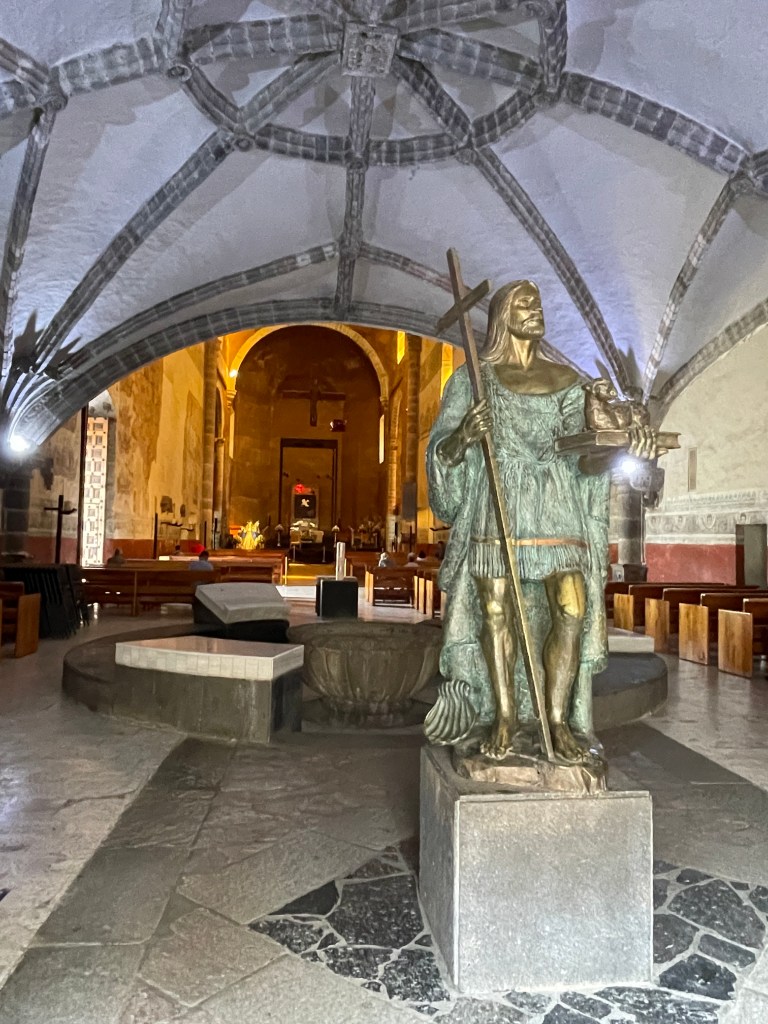
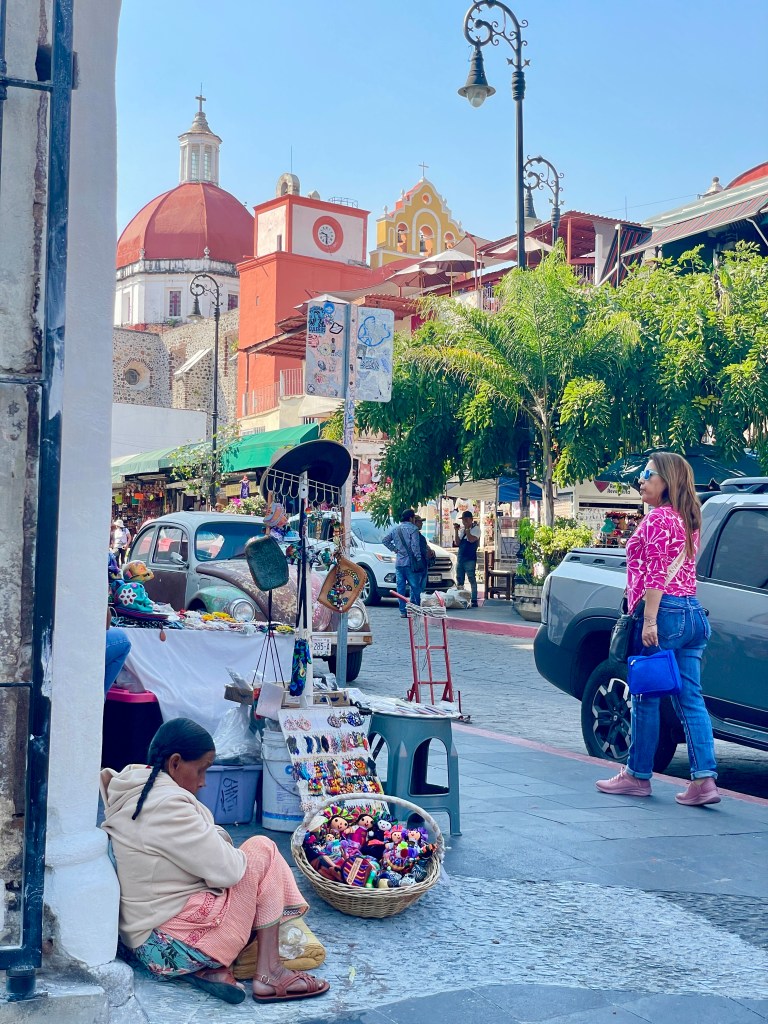
From there we meandered the streets arriving at the Catedral de Cuernavaca also known as the Templo de la Asuncion de Maria. Work was started by the Franciscans using indigenous forced labor in 1526 and the religious complex also houses the Templo de la Tercera Orden de San Francisco (pink) and the Capilla del Carmen (yellow) . At the left side of the Catedral is the Museo de Arte Sacro which showcases close to 100 paintings, sculptures, and religious artifacts from the 16th to 20th centuries.

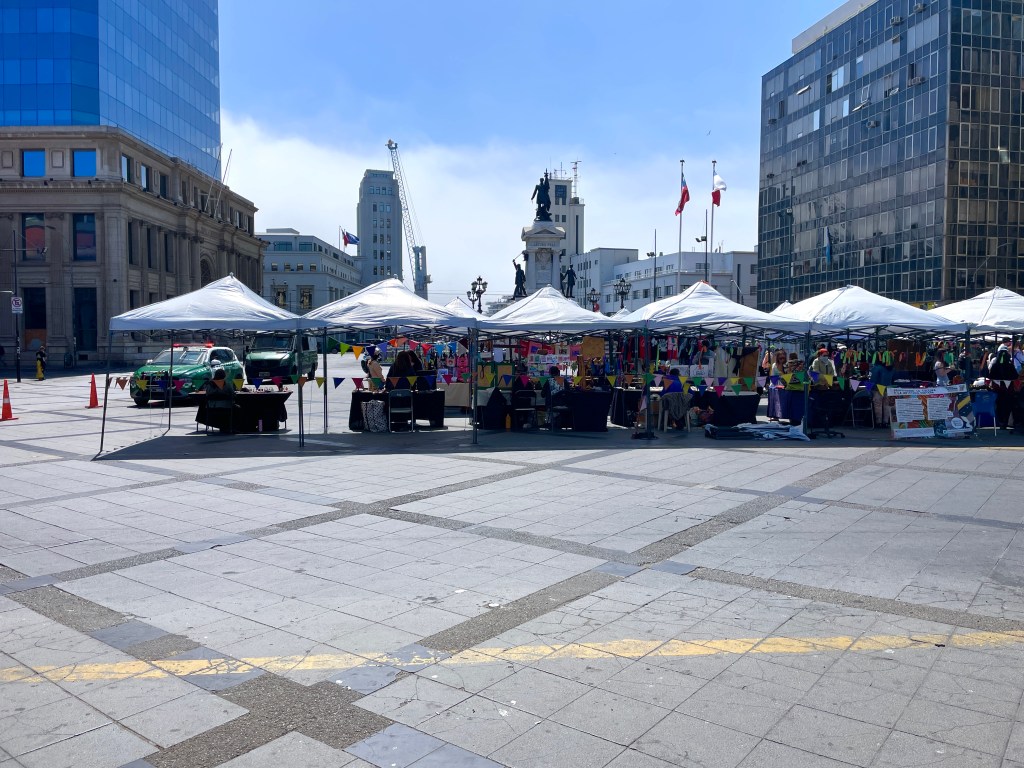
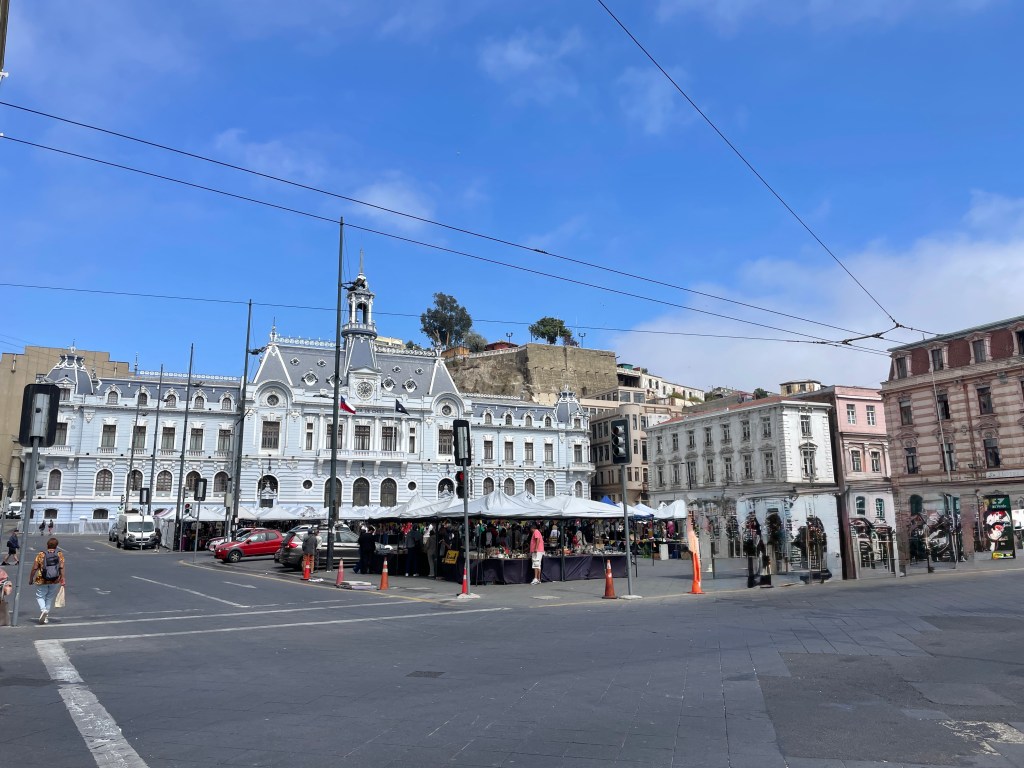
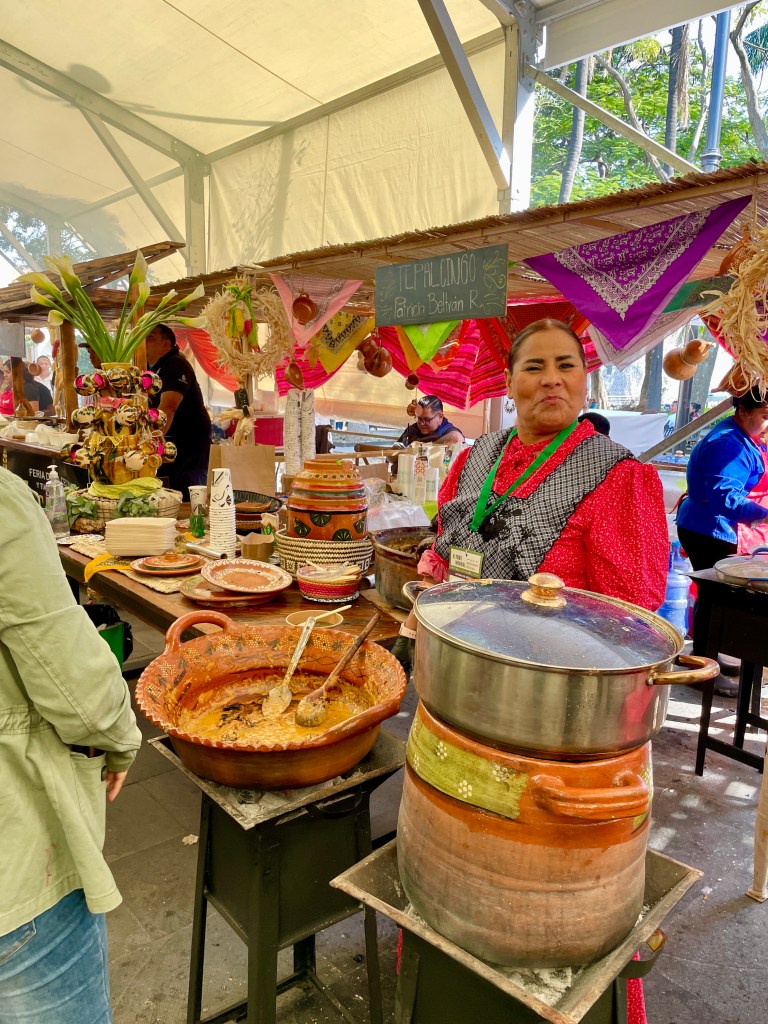
From here we wandered further… passing the theatre and library until we arrived at a food festival in the middle of the historic square. It was fantastic and we enjoyed seeing various regional foods from all over the country. Unfortunately, due to time constraints we missed the UNESCO World Heritage Site known as the Archaeological Zone of Xochicalco

Being drawn further in by all the spices and herbs wafting as we passed by booth after booth was the perfect way to end our day in Cuernavaca. I hope someday you will get to walk the streets of this enchanting city yourself to experience small city charm in a very big way.

A Painfully Noisy Day

Before you set off on a trip, you tend to believe that your time away will be nothing but glorious. Today was not that day.

It started with my computer that decided it did not want to wake up when I did. As a matter of fact, it hasn’t woken up all day. This is obviously a very bad sign, especially when you are living in the middle of rural Costa Rica and there’s nowhere that can fix it . Therefore, I’m attempting to write this blog by speaking into a microphone. We shall see how it goes, but I would expect a lot of typos that I’m probably too lazy to fix.

After I discovered the bad news about my computer, I decided to take a walk. It was a lovely morning … cloudy with mist hanging over the mountains and not yet hot. I had one cup of coffee in and enough caffeine to probably get me to the next village when I heard this.:

After that excitement, I drove to Nicoya where I was delighted to find a new store with all sorts of gluten-free items. Of course, it was expensive but great to find as I started home. A huge thunderstorm arrived. The thunderstorms are very loud because they echo across the valley. It’s kind of cool and I like them. However, I lost my GPS and therefore my way home. I ended up only God knows where in the back country, even further back than I currently am, trying to find my way out. Eventually, I made it home, unlocked the gate in the pouring rain, looked up, to see what all the racket was. It was these beautiful parrots. Take a listen and a look: (For some reason you have to press the triangles even though there is no movie… then it shows up)


Parrots

All is well until right after I finish filming this when I slipped on a wet rock and landed on my shoulder, you know the one with the torn rotator cuff. At first, I thought I broke my wrist, but I didn’t. Thank goodness, but I did screw up the shoulder again. I’d like to say the video of the parrots was worth it… We shall see about that!

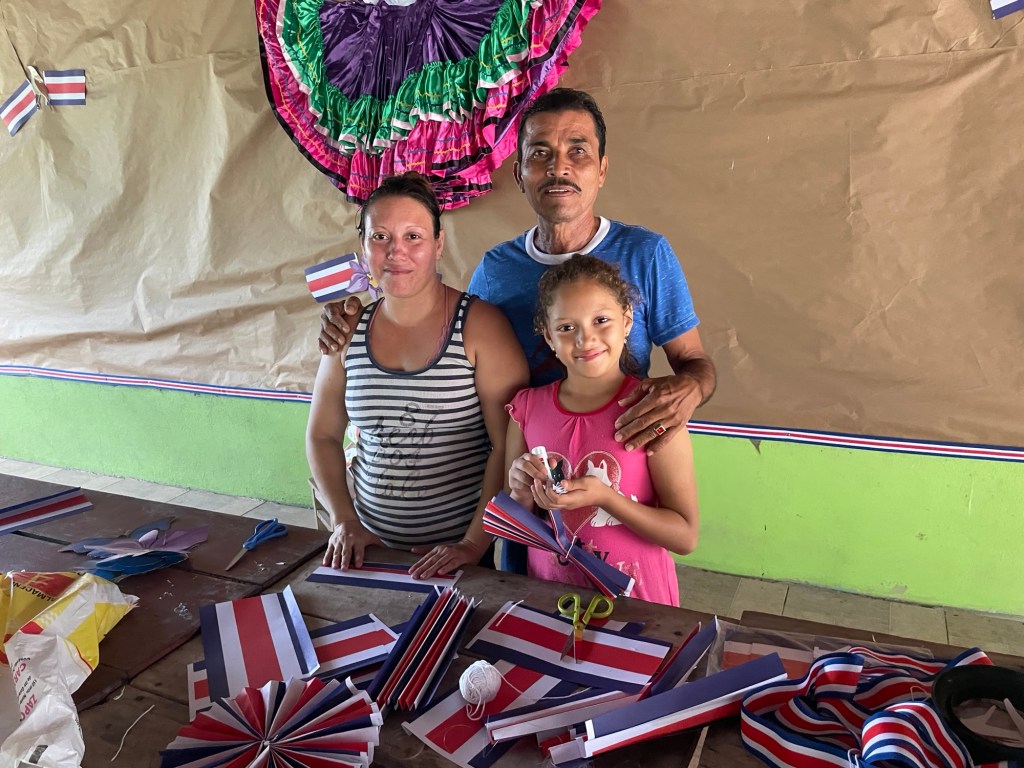
Today is the festival so I will be going to the school at 4 PM to help celebrate. I was invited and I think it has something to do with beans. It is also Costa Rica’s Independence Day so I guess I will find out how beans tie into that But I’m excited and honored that I was asked to come. I’ll let you know how it goes. 


THE CHURCHES-LIFE OF THE CITY

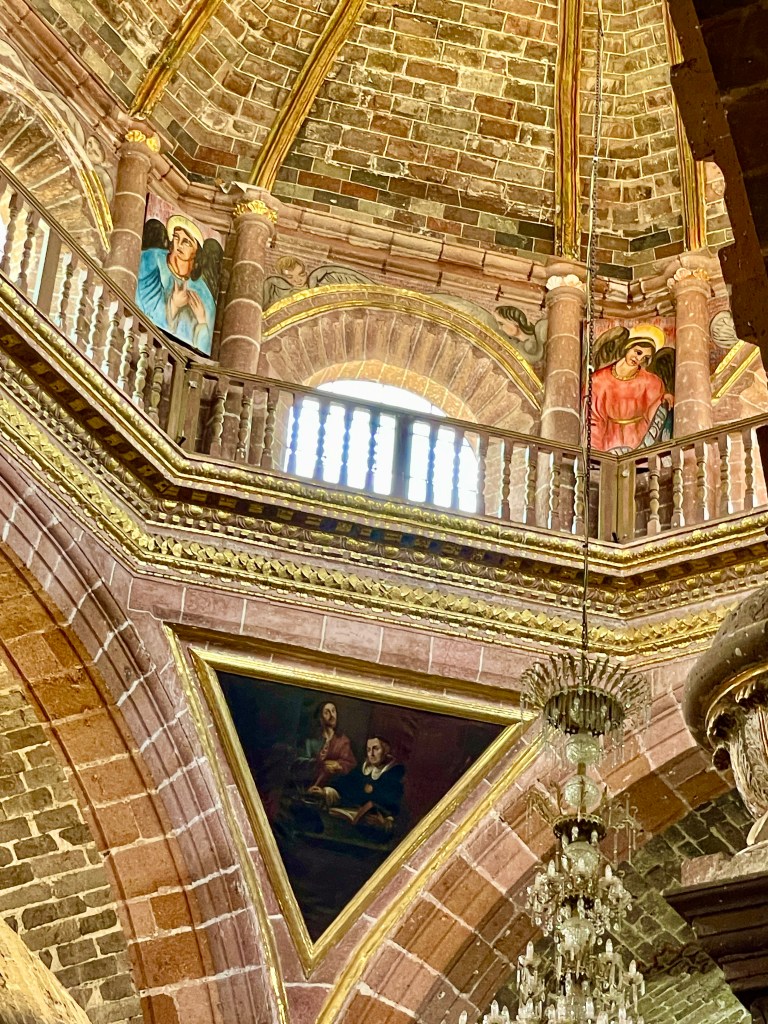
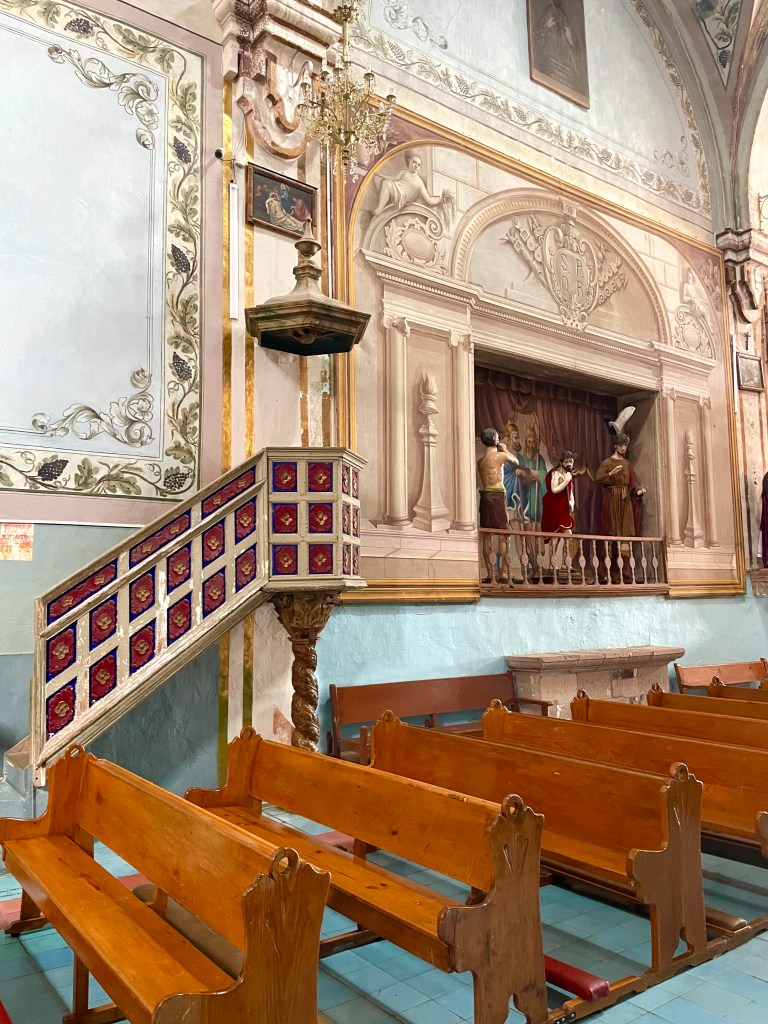
I have been to so many churches since I arrived here. I love the architecture that these old buildings possess. The artwork, murals, painted ceilings, and biblical depictions are all inspiring (okay, a few are frightening) and help us have an insight to those things that drew people to the Catholic Church in earlier times. The thick walls of the church also provide a respite from the heat and also from life’s troubles. Perhaps what I enjoy the most though is just walking in, sitting down, and listening to the music and the chants echo off the walls of the sanctuary. It gives me a sense of peace and serenity that I can carry with me the entire day.

Parroquia de San Miguel Arcangel- San Miguel Allende

With over 40 churches in San Miguel it is difficult to choose a favorite but Parroquia de San Miguel Arcángel is definitely the most well known and perhaps the most beloved of area residents. Towering over the city, the construction of the church began in the 1600’s under the auspices of the Franciscan Friars, after a smaller church from the 1500’s was demolished. The building is a surprising blend of different Neo-Gothic European influences and the resulting Spanish colonization that swept over these lands. This immense church was completed in stages at various points in history but it was when a local master stone mason, Zeferino Gutierrez, began construction of the current facade in 1880 that the Neo-Gothic architecture was put into place. Gutierrez had no drawings to guide him and he designed Parroquia de San Miguel Arcángel after seeing pictures of the great cathedrals in Europe. To think that one man had such vision as to be able to change the entire feel of a city just amazes me.

The interior of the main building is vast. Yet, there are several different less imposing chapels including the Chapel of the Third Order with frescoes throughout which depict the life of St. Francis of Assisi.

The Chapel of the Third Order

Across from Parroquia de San Miguel Arcángel is a city plaza with tall shade trees and park benches. It is here that you can truly feel the vibe of San Miguel and absorb the influence of the city and the locals who surround you. So take a load off…sit…listen to the church bells ring across the valley…and let yourself sink into a nation that still reveres its history and the people who still help to influence it today.

Basílica de Nuestra Señora del Pueblito

Another Church that I fell in love with was located in the town of Pueblito and is known as the Basílica de Nuestra Señora del Pueblito. It is the church that I mentioned in my post about El Cerrito, The Pyramid of Pueblito, and it is the one that you are suppose to be able to hear the sermon from the pulpit all the way up the hill.

This church is much smaller then the one mentioned in San Miguel and it has it’s own special kind of charm that is quaint yet powerful which is evidenced by the faithful who attend daily mass.

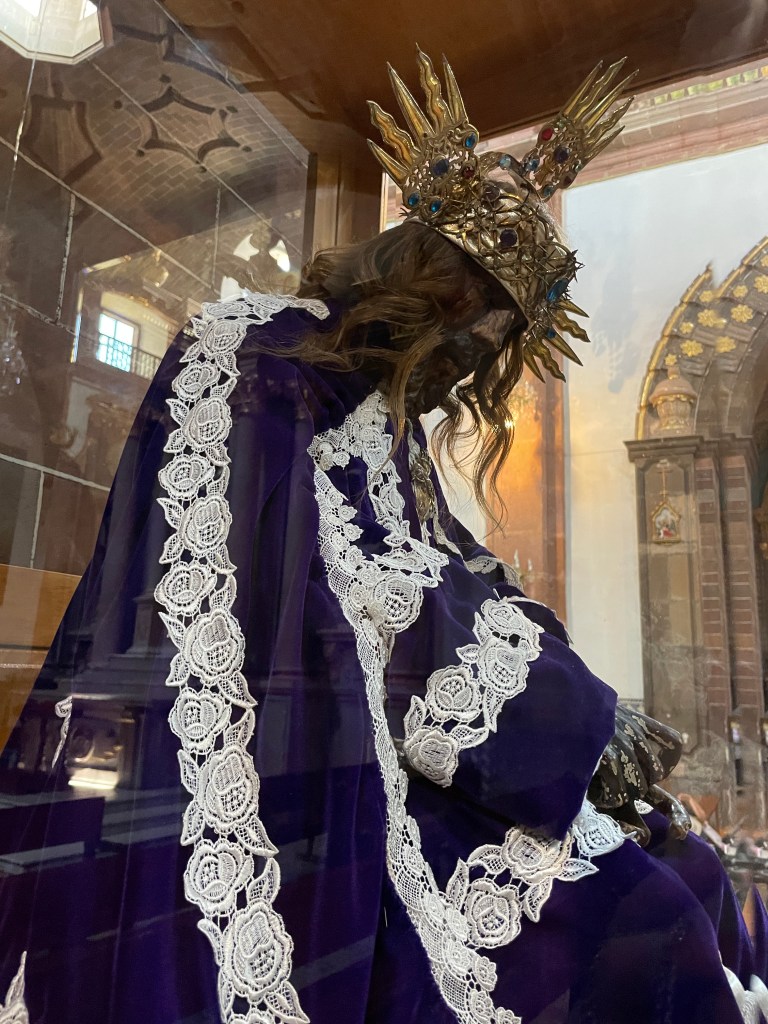
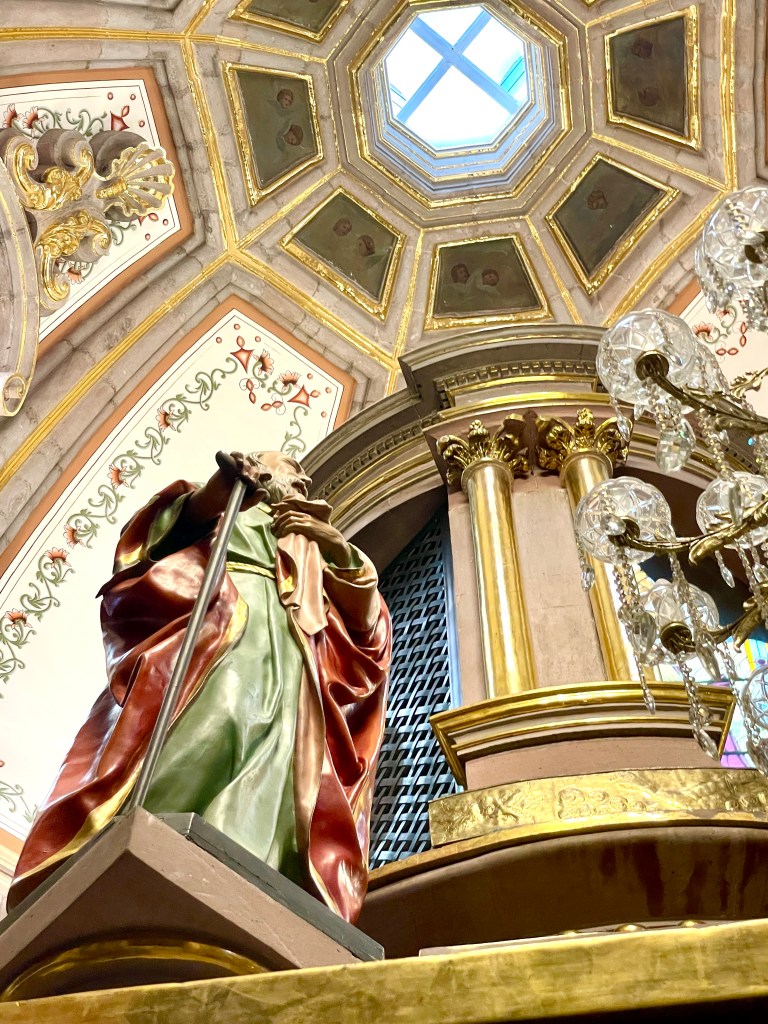
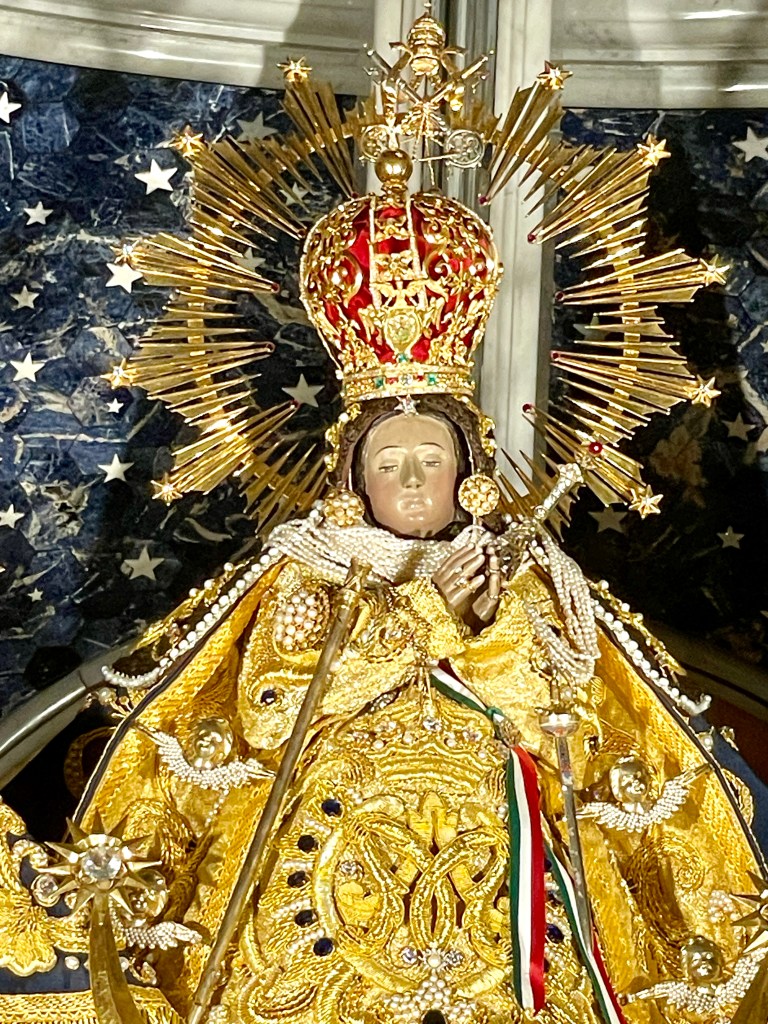
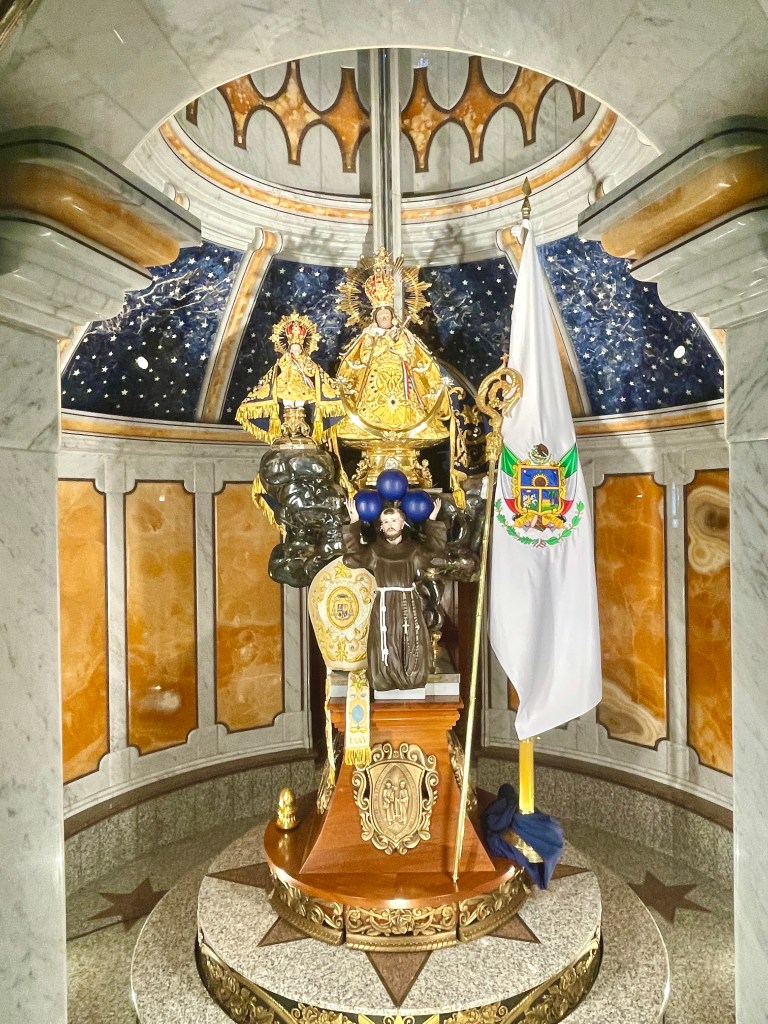
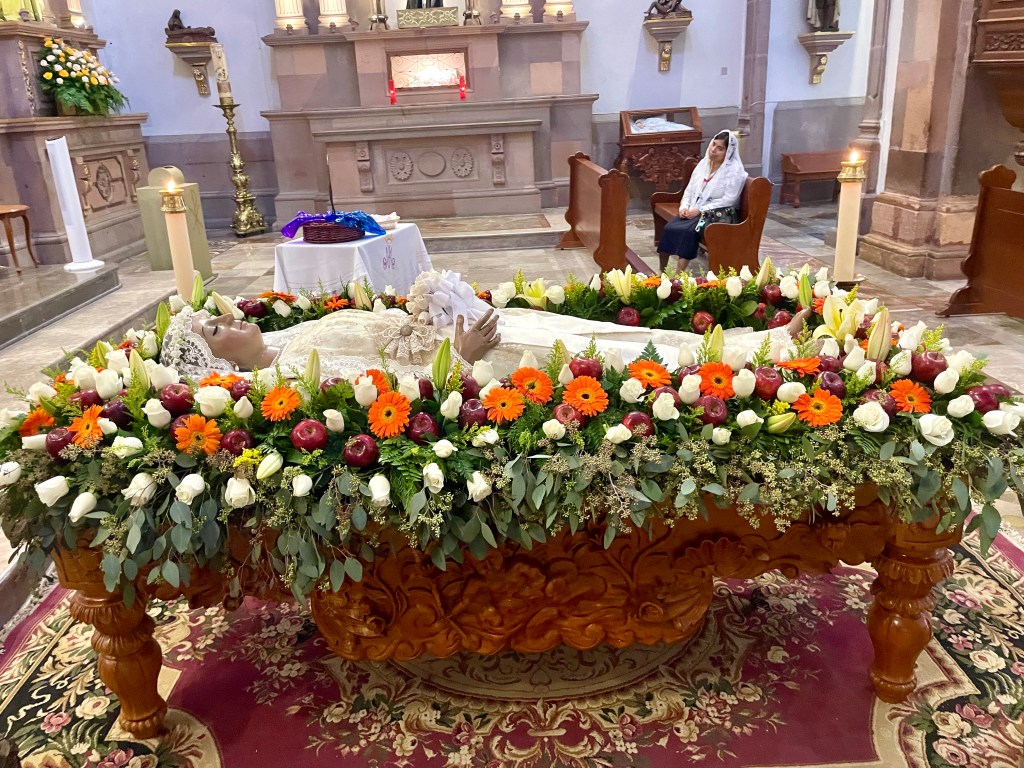
Basílica de Nuestra Señora del Pueblito had its beginnings in 1632 when Friar Nicolas Zamora placed the image of Immaculate Conception near the temple where he built the first adobe structure to house her. Approval for the present day building was granted in 1720 and construction was completed in 1750. Religious festivals for Mary are mainly celebrated in mid-February when the town comes alive. However, when we were there last week, the life-size body of the Virgin, was displayed below the altar where the faithful believed that the next day she would be lifted up to heaven.

While small this church has so much to see and admire its the people whose dedication impressed me. When we were there a painter was hanging off a ladder busy painting the nave while services for the Virgin were ongoing during this week of celebration and the church was being cleaned top to bottom.

I think one of the things that made me aware of the dichotomy of past times and the modern demands of today was this sign I spied within the inner courtyard of the church. I will admit I chuckled out loud. I hope you enjoy it and a smile graces your face too.

BERNAL, MEXICO- A Quaint Colonial Town

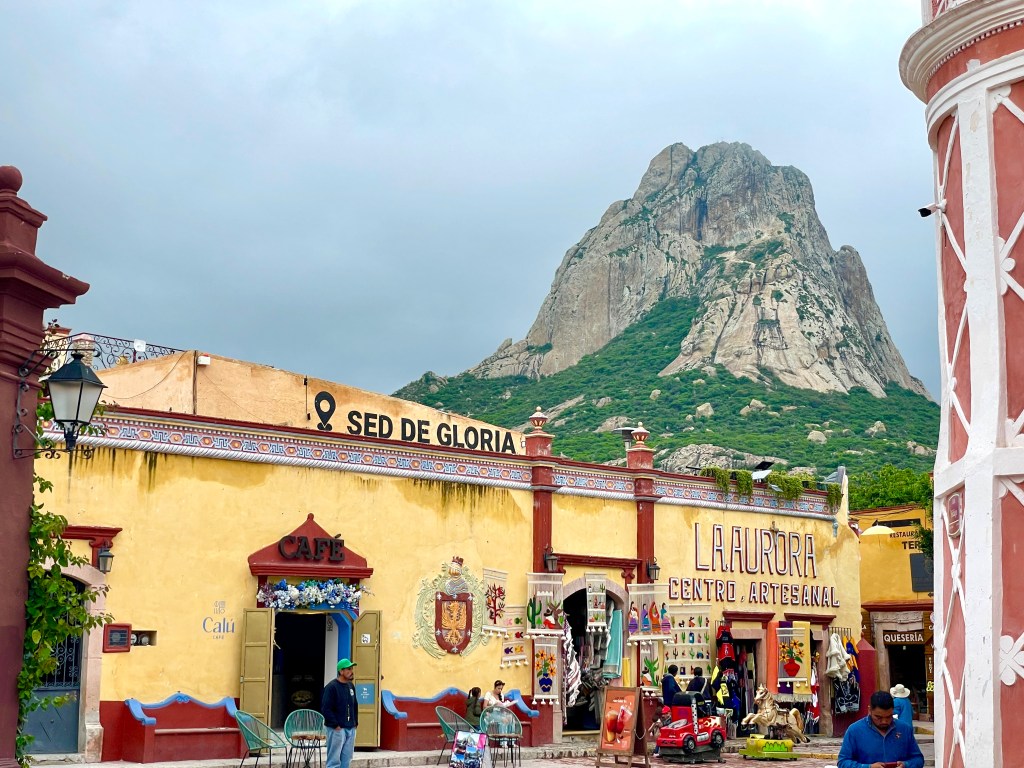
This week I had the good luck to travel to Bernal, Mexico, a small and quaint colonial town about an hour outside of Queretaro. Officially known as San Sebastián Bernal it was founded in 1642 by a Spanish soldier. It is well-known for its monolithic rock which is the third tallest in the entire world and twice yearly during the equinox; pilgrimages are made by the faithful dressed entirely in white to climb the rock which they believe provides healing and luck.

In 2005 the town was also declared a Pueblo Magico due to the magical symbolic stories and history of the town and its famous mountain. Because it is a lone mountain on a fairly flat plain many believe that it is the remnants of a huge meteor that plunged into the earth. One can only get to the top of the mountain with a special permit in hand along with special climbing equipment but for the rest of us the hike goes about half-way to the top. It is a strenuous hike so be prepared.

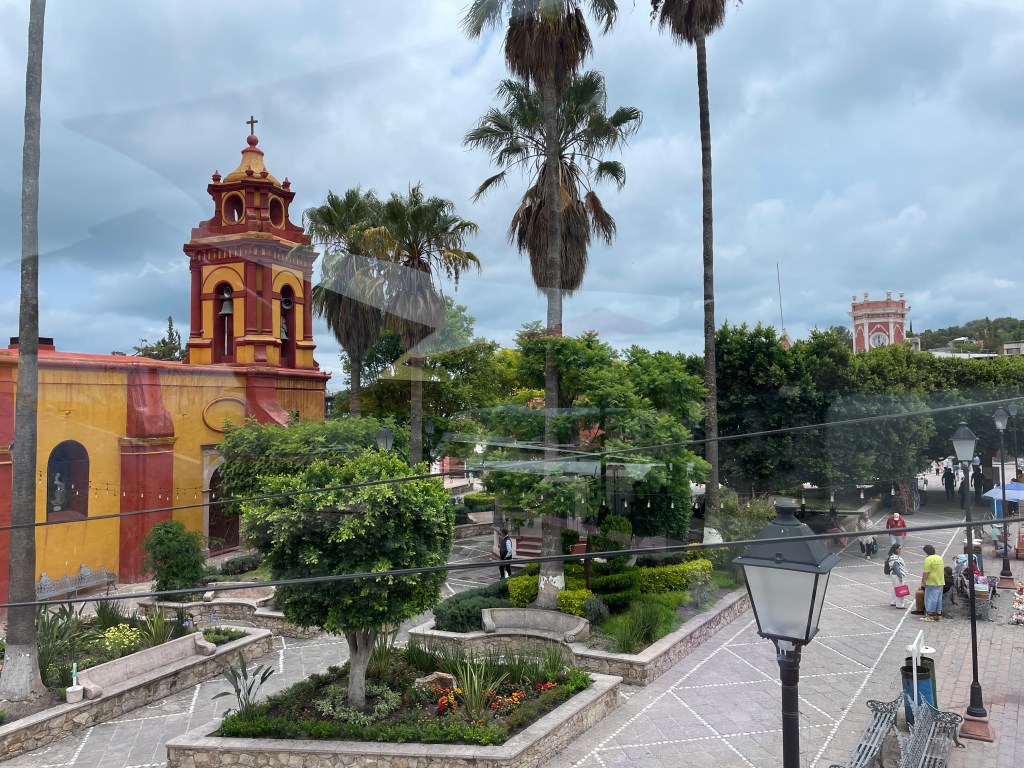
Another site to visit is the Temple of Saint Sebastian the Martyr which is located in the main square. It was built around 1700. The colors are intense and the garden is serene and magical with beautiful flowers and plants popping up near the stone gazebo.

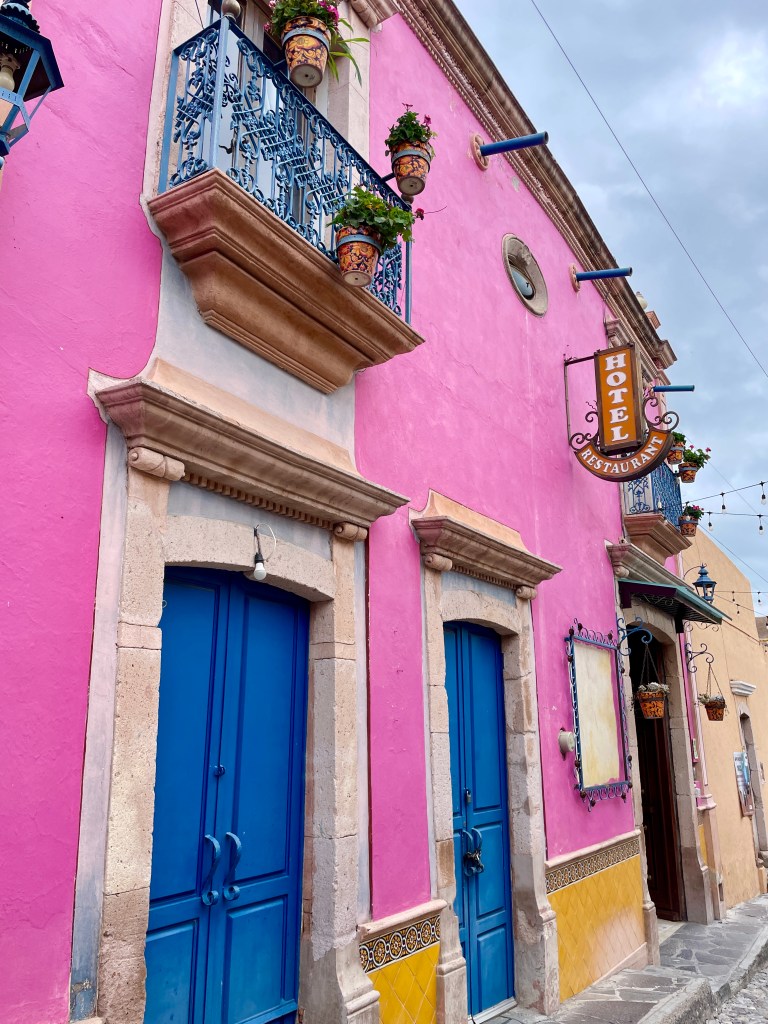
Around the main square you will find many small shops and single vendors dressed in traditional garb that sell various Mexican crafts. I picked up some beautiful scarves for $5 each and you can also find beaded and unique clothing as well. One of the most interesting stores is to visit is the Lucero Ramos Estilo Entice. The woman who owns this amazing place designs and crafts all her own clothing. Her colors are rich and inviting and the styles will compliment any shopper.

There are several good places to eat serving yummy authentic Mexican dishes. One of them has great rooftop views which affords a sky high view of the entire area.

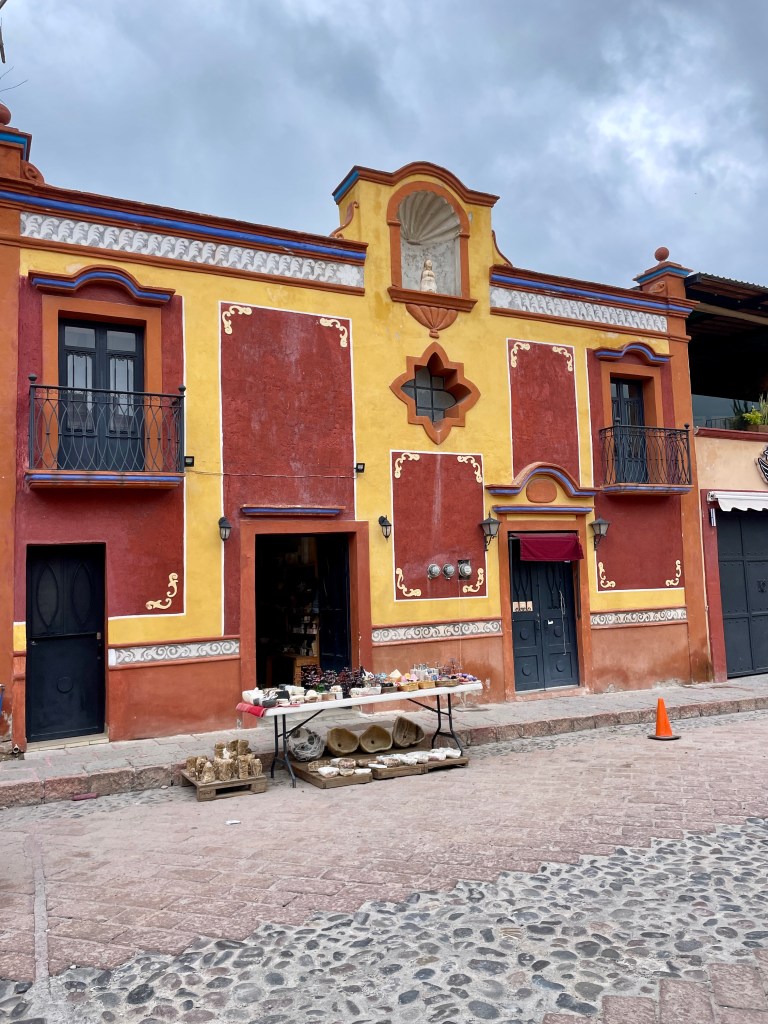
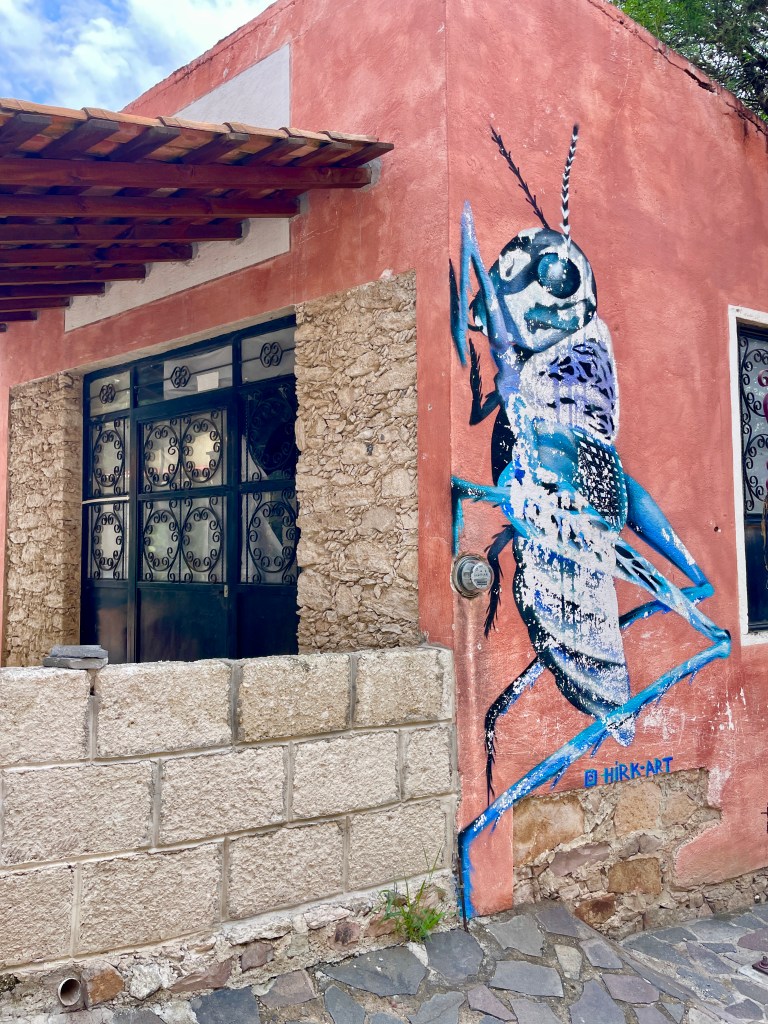
Here are a few more pictures of this gorgeous little town. I can definitely recommend a visit to this quieter region of Mexico which is surrounded by beautiful green hills and plenty of history which I find completely enchanting.

Sundance-Utah

DSC00018

One of the loveliest places I have been is actor/activist Robert Redford’s Sundance. Redford bought the place and has since turned it into a premier resort which doesn’t have a resort feeling at all. The only word I can use to describe it is…serene.

The last time we were there we took in lunch at the Foundry Grill. It is a place that is designed to look like a high-end rustic cabin complete with chinking. The atmosphere is slick but elegant and the menu was superb.

We then took the Scenic Lift to the top of Ray’s Summit where we spent several hours hiking through this pristine mountain trail. The vistas are incredible and the fresh air refreshes as you hike through the pines. Mountain biking,fly fishing, skiing, zip lining and spa services are also available. But what I really loved was the Art Studio where I watched the in-residence glass blowers. To be able to take that original blob and bend and shape it into something spectacular just amazes me. Guests can also take workshops in painting, pottery and making jewelry.

While I have never stayed in the rooms or cabins that are available for rent; it is my understanding that they are immaculate and decorated in a style to fit this mountain resort. Be forewarned they are pricey.

Everything about Sundance is what you would expect of something Robert Redford would develop from beautiful architecture, to babbling brooks and impressive artwork. And every time I come back I am amazed at the changes. The first time I visited was around 1980 when it was just a  fairly quiet patch of beautiful ground. Now it is a destination that seeks to preserve the quiet essence of this beautiful area with a dignity not often found in a place that is rated one of the top resorts in the USA.


Valkenburg Caves-Valkenburg, Netherlands

What brought us to the charming town of Valkenburg was my 13th G-Grandfather, Jan Van Valkenburg (1515-1575). It was his home town and I wanted to see it. And we did. It was fabulous. But what touched us more were the caves (Cauberg Cavern-Gemeentegrot/Fluweelengrot ) radiating out beneath the center of the city and did they ever have a story to tell. So we listened.DSC05816

You can enjoy the caves either by guided walking tour or by “train.” I would advise walking. The walk is easy not steep and you will be given plenty of time to ask any and all questions that your heart desires.

As for the history of the caves, the Romans began excavating them 2,000 years ago for use as building material in and around the area and significant buildings still stand today as a testament of its worth. The caves have also been used for centuries as a sanctuary for refugees during the French Revolution and more recent wars.

Be sure to step up close to the walls and you will see limestone littered with fossils and shells proof of an underwater world that existed here 100 million years ago. It is fascinating to see all the “fossil gold” left behind.

Yet,  the real treasure in the caves is the art work left by miners and residents of the town  since  before the 1700’s. Drawn in charcoal and created by the dim light thrown off by candles and later, lanterns, these works of art depict a living history of what was known or imagined by these dedicated artisans.  In addition to the paintings there are also huge statues carved into the walls throughout the entire labyrinth of corridors that run under the city.

But perhaps the most compelling picture is the Liberation of the City by the Americans in on September 17, 1944. It is a tribute to those brave men who worked to reclaim this city from the Germans and deed her once again to its citizens. And below the painting you will find the signatures of some of the soldiers who participated in the liberation.

DSC05866

But perhaps even more astonishing is this fact: that during the 10-day battle the towns 10,000 residents all lived in the caves together while fierce fighting raged in the streets. It gives you pause as you wander with your guide thinking about what it must have been like underneath the city not knowing if you might live or die.

At the end of the tour you will be lead to another set of tunnels in which various eras of artwork are projected onto the walls of the cave creating a living-breathing art show that  surrounds you and disorientates you at some level.Very cool!

DSC05887

While we did not visit during Christmas it is my understanding that a huge Christmas Market is held on weekends during the weeks prior to the holiday. Here you will find crafts and fine works of art offered for sale by local craftsmen.

Entrance fee about 5 Euros

Hint: Wear a jacket as it is chilly deep underground.

Sonora Celtic Festival-Sonora, CA

IMG_5265
IMG_5250

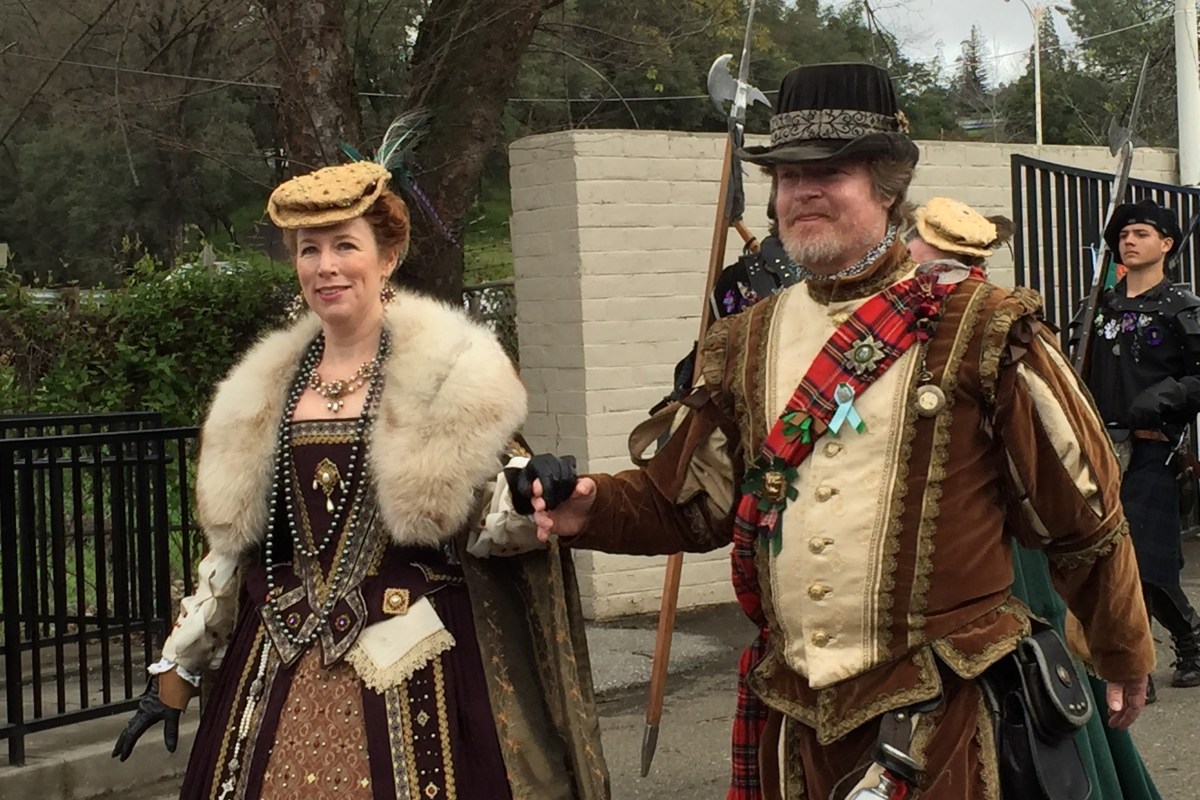
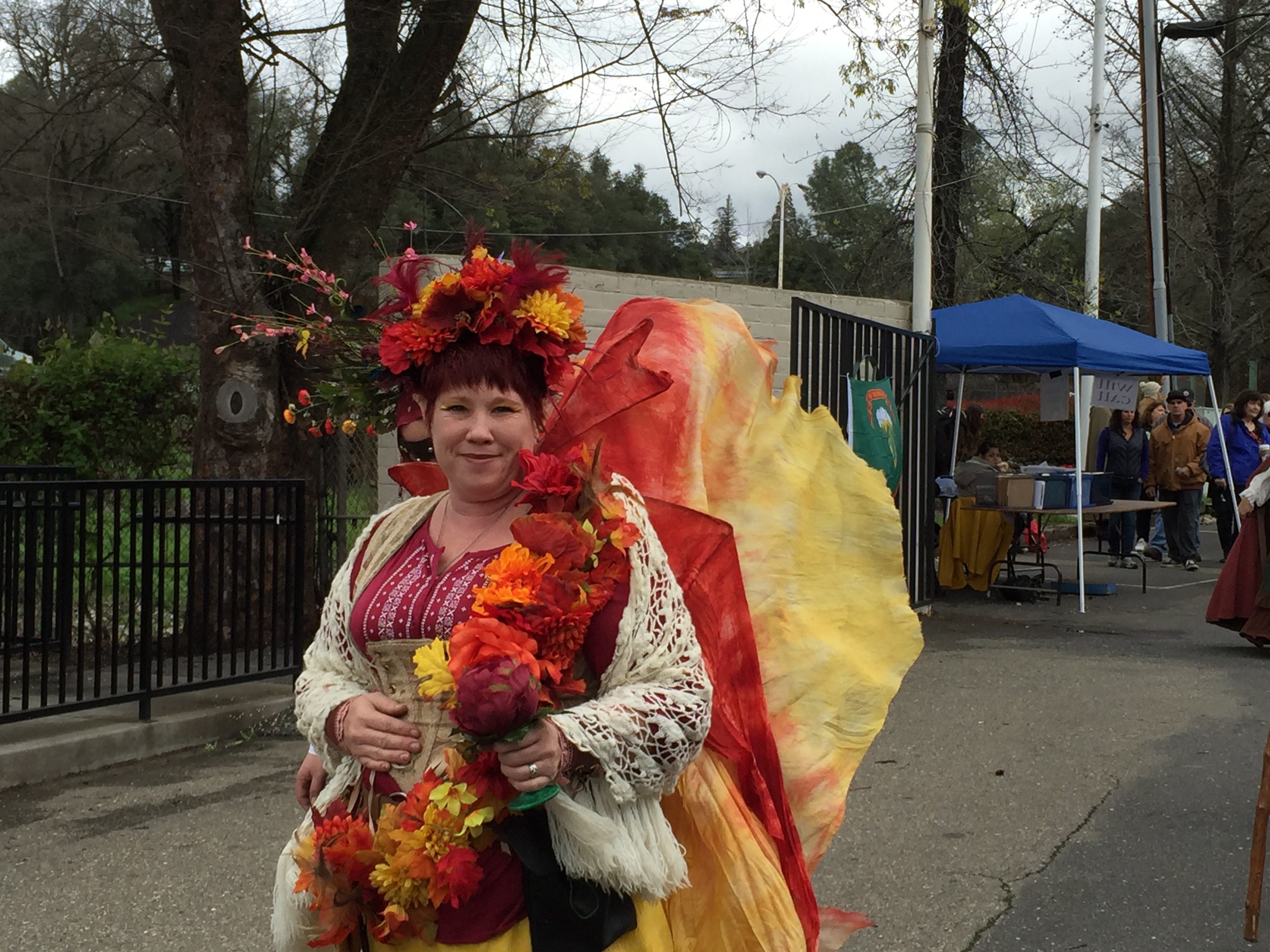
The Sonora Celtic Festival is undoubtedly one of the biggest Celtic festivals in the nation and with thirty years experience of throwing a HUGE shindig these people know how to put on a show.

This years bands were once again totally amazing. With Celtica, Wicked Tinkers, Tempest and Golden Bough fronting the stage you couldn’t help but rock and reel. Of course there are many amazing pipe bands who drone you out including the Stag and Thistle Pipe Band out of Fresno, California.

One of the largest living history villages celebrating over 2000 years of Celtic history is set up for the weekend. Here you will find dedicated folk cooking, eating, dressing, and celebrating as they did so long ago. Jousting by the Imperial Knights and The Highland Throwers also give you a thrilling taste of the sport back in the day. And whatever you do stay out of the way of the armored fighters or you might just feel the slick metallic edge of the sword against your neck.

IMG_5357


While there you must stop into the clan booths and find out about “your people” and the history of the clans in Scotland. There are also over 100 Celtic craftsmen, artisans and vendors displaying their wares.

And of course there is the food. Roasted turkey legs, meat pies and haggis are a few of the family favorites which we eat while watching the Irish step and Scottish highland dancers. But the best offering  bar none is the whiskies and ales. You must do a taste test to discover your favorite belly warming drink.

The Sonora Celtic Festival is held every March in Sonora, California. To learn more visit:

http://www.sonoracelticfaire.com/